877-929-7665
What Does the Cheapest Inground Pool Cost?
Quick Answer: What is the Cheapest Inground Pool?
Vinyl liner pools carry the lowest upfront installation cost at $25,000 to $65,000. Fiberglass pools typically run $45,000 to $100,000 or more installed. Gunite pools have the widest price range at $50,000 to $120,000 or more. Upfront cost tells only part of the story, though. Annual maintenance, vinyl liner replacement cycles, and concrete resurfacing requirements affect long-term ownership cost significantly.
Finding the cheapest inground pool type to install is a reasonable starting point, but it doesn’t accurately reflect inground pool cost over 10, 20, or 50 years of ownership.
What Is the Cheapest Inground Pool to Install?
Vinyl liner pools are the least expensive inground option for initial installation. Fiberglass pools typically fall in the middle, while gunite pools carry the widest range and most often land at the high end.
Vinyl Liner Pool Cost: $25,000-$65,000
Vinyl liner pools are generally the most affordable inground pools to build, with an average installed cost of $25,000 to $65,000. That range makes them the entry point for most buyers choosing an inground pool on a tighter budget.
The lower upfront cost comes with a recurring expense built into the pool’s design. Vinyl liners need replacement every 5 to 15 years, and each replacement typically costs $3,000 to $7,500, according to HomeGuide. Custom shapes beyond a standard rectangle add to both the initial liner cost and future replacement costs, because custom liners require specialized manufacturing.
 Fiberglass Pool Cost: $45,000-$100,000+
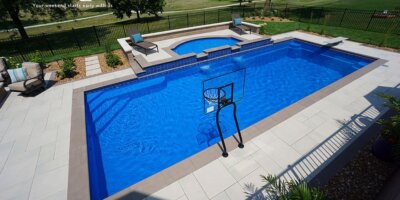
Fiberglass pools typically cost $45,000 to $100,000 or more installed, according to a 2026 survey of independent builders in the Thursday Pools dealer network. A commonly used industry baseline for estimating a fiberglass pool’s starting cost is at least $2,000 per linear foot for the shell and core installation.
For a full cost breakdown by size, design, and region, see the Fiberglass Pool Cost Guide.
The price of a fiberglass pool stays relatively consistent across shapes because the shell comes pre-manufactured. A freeform fiberglass pool and a rectangle of similar length typically cost within the same range. Beach entry designs tend to run 15 to 20 percent more than a standard design of comparable size.
Fiberglass built-in features, including wide steps, wraparound bench seating, tanning ledges, and swim-outs, come molded into the shell at no additional construction cost. In a vinyl liner or gunite pool, those same features are custom-built and add to both the upfront price and ongoing maintenance considerations.
Gunite Pool Cost: $50,000-$120,000+
Gunite pool installation costs range from $50,000 to $120,000 or more, making gunite the most expensive pool type on average. The range is wide because gunite pools are built entirely on-site, and every design decision on shape complexity, size, depth, and features adds labor and material cost. A basic rectangle in a region with high gunite installation volume can land at the lower end. An elaborate custom design in a high-cost market can push well above $120,000.
Sunbelt markets like Texas, Arizona, and Florida see the highest concentration of gunite installations, partly because those climates don’t subject concrete to the same freeze-thaw stress as northern states. Where gunite installation is high-volume, pricing can be more competitive.
What Does Each Inground Pool Type Cost to Maintain Over Time?
Upfront installation is one number. Long-term ownership is a different calculation.
Annual Maintenance Costs
Fiberglass pools typically cost $500 to $1,500 per year to maintain, primarily because the smooth, non-porous gelcoat surface resists algae and requires fewer chemicals than the other pool types. Most fiberglass owners manage the weekly routine of skimming, testing, and basket cleaning in about an hour.
Vinyl liner pools typically cost $1,000 to $2,000 per year in maintenance. The liner surface is more prone to algae and requires more cleaning effort, closer to two to three hours per week on average.
Gunite pools typically cost $2,000 to $4,000 per year to maintain. Concrete is porous, which means algae takes hold more easily and chemical use runs higher. Expect four to eight hours per week of maintenance, plus the recurring cost of acid washing every three to five years.
Long-Term Resurfacing and Replacement Costs
Vinyl liner pools require a new liner every 5 to 15 years. At $3,000 to $7,500 per cycle, per HomeGuide, this is a predictable but recurring cost over the life of the pool.
Gunite pools require resurfacing every 10 to 15 years, typically at $6,000 to $15,000 or more per cycle, per HomeGuide. The porous surface accumulates algae and mineral deposits over time and eventually degrades to the point where a fresh plaster finish is needed.
Fiberglass pools don’t require liner replacements or resurfacing work. The gelcoat surface is non-porous and, with proper chemistry and care, doesn’t degrade the same way that concrete or vinyl does.
Maintenance Comparison
| Pool Type | Annual Maintenance | Estimated 10- to 15-Year Maintenance Cost |
| Fiberglass | $500-$1,500 per year | $3,000-$5,000 |
| Vinyl liner | $1,000-$2,000 per year | $6,000-$10,000+ (plus liner replacement) |
| Gunite (concrete) | $2,000-$4,000 per year | $20,000+ (plus resurfacing) |
What Factors Make Any Inground Pool More or Less Expensive?
Several variables affect the final project total regardless of pool type.
Pool Size
Smaller pools cost less to install and less to maintain. A compact pool requires less excavation, less water, less chemical maintenance, and less surrounding decking than a large pool. For buyers prioritizing affordability, small pool designs are the starting point.
Pool Shape
For vinyl liner and gunite pools, shape directly affects cost. Simple rectangles cost less because they require less custom labor at installation and, for vinyl, less custom liner fabrication. For fiberglass pools, shape doesn’t significantly affect the price because shells are manufactured at a set cost regardless of contour.
Site Conditions
Rocky soil, clay-heavy ground, steep slopes, and limited yard access all add to installation costs. Excavation in difficult soil conditions can cost significantly more than standard work. Limited access may require crane service to place the pool shell, adding several thousand dollars.
Features and Add-Ons
Heaters, automatic covers, bubblers, deck jets, LED lighting, slides, and water features all add to the project total. Safety fencing, required in most jurisdictions, is frequently excluded from base quotes. According to the 2026 survey of independent Thursday Pools dealers, homeowners can expect to pay an average of $8,115 for a 300-linear-feet fence, depending on material and linear footage.
Region
Labor rates, permit costs, and material supply all vary by location. The same pool project can cost meaningfully more in a high-cost coastal market than in a Midwest suburb, independent of the pool type.
Find the Most Affordable Pool for Your Backyard
The cheapest pool for your backyard depends on your priorities. If the lowest upfront cost matters most, vinyl liner pools are often the easiest and most affordable path to pool ownership. If the lowest total cost over a decade matters more, fiberglass pools typically come out ahead once factoring in maintenance and replacement cycles.
A local Thursday Pools independent dealer can assess your yard, review your budget, and walk you through which designs and pool types fit your goals. The Pool Cost Calculator and Pool Cost Checklist are also good starting points before your first dealer conversation.
Frequently Asked Questions About Cheapest Inground Pool Costs
What is the cheapest type of inground pool?
Vinyl liner pools carry the lowest upfront installation cost at $25,000 to $65,000. Fiberglass pools typically run $45,000 to $100,000 or more installed. Gunite pools range from $50,000 to $120,000 or more. Over time, fiberglass pools typically cost the least to own because they don’t require liner replacement or resurfacing like other pool types.
What is the cheapest inground pool to maintain?
Fiberglass pools are the least expensive inground pool type to maintain. Annual maintenance typically runs $500 to $1,500 per year, compared to $1,000 to $2,000 for vinyl liner pools and $2,000 to $4,000 for gunite pools. Fiberglass pools also avoid the liner replacement costs ($3,000-$7,500 every 5-15 years) that vinyl owners face and the resurfacing costs ($6,000-$15,000 every 10-15 years) that gunite owners face.
How can I reduce the cost of an inground pool?
Choosing a smaller pool is the most direct way to reduce cost. Simpler shapes reduce construction costs in vinyl liner and gunite pools. Avoiding expensive add-ons, such as auto covers, water features, and heaters, at installation keeps the base project lower. For fiberglass buyers, built-in features like steps and benches come at no extra cost, so the savings on those elements are already built in. Comparing fully itemized quotes from multiple dealers is essential, since base estimates can exclude permits, electrical, fencing, and dirt hauling.
Is fiberglass or vinyl liner cheaper?
Vinyl liner pools cost less to install upfront. Fiberglass pools typically cost less over 10 to 15 years of ownership because they don’t require liner replacement. At $3,000 to $7,500 per liner replacement every 5 to 15 years, the cumulative cost narrows the gap between vinyl and fiberglass relatively quickly.
What is not included in a cheap inground pool quote?
Many base inground pool quotes exclude permits, electrical work, safety fencing, water fill, dirt hauling, decking, pool covers, and yard restoration. These line items can add $10,000 to $30,000 or more to the total project cost, depending on location and scope. Always request an itemized quote and ask specifically about each of those items before comparing estimates from different contractors.
Does a cheap inground pool add value to your home?
Inground pools generally add value in markets where outdoor recreation is a priority, particularly in warmer climates. A pool in good condition tends to be viewed more favorably by buyers than one with visible deferred maintenance. A fiberglass pool with no resurfacing needs and low ongoing maintenance presents as a lower-cost ownership experience to potential buyers compared to a gunite pool due for resurfacing.
What is the cheapest inground pool for a small yard?
For small yards, compact fiberglass designs such as plunge pools and small rectangle models starting around 12′ x 25′ provide the smallest footprint at predictable cost. Vinyl liner pools in a small rectangle shape are the least expensive starting point on price alone. Both types can work in limited spaces, though fiberglass offers the advantage of built-in features and lower long-term maintenance.