877-929-7665
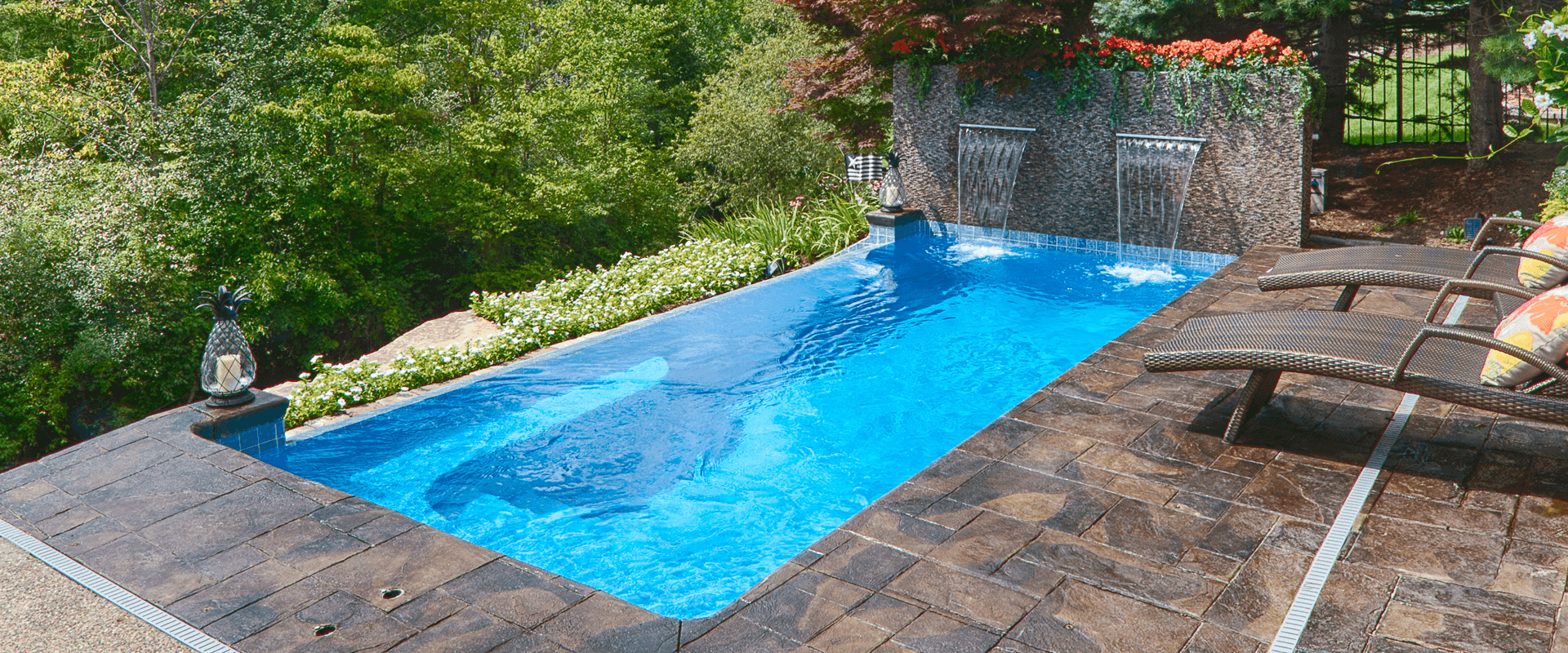
How Much Does a Fiberglass Pool Cost in Michigan?
Based on a 2026 survey of independent pool builders in the Thursday Pools dealer network, a standard fiberglass pool installation in Michigan averages $85,357 for a small pool, $103,214 for a medium pool, and $116,786 for a large pool. Your final cost will depend on details like pool size, yard conditions, local permit requirements, and the optional upgrades you choose.
Michigan’s relatively short swim season, typically running from Memorial Day through Labor Day, makes every pool investment decision more deliberate. Homeowners across the Detroit metro, Grand Rapids, Traverse City, and Ann Arbor are increasingly choosing features like pool heaters and automatic covers to stretch the season and maximize the return on their investment. Fiberglass holds up well through Michigan’s freeze-thaw cycles, with a flexible shell that resists the ground movement and hydrostatic pressure common in clay-heavy soils throughout the state.
Geography adds real variation to project costs. Sandy lakeshore lots along Lake Michigan require different site preparation than the clay-heavy soils common around Lansing and Flint. Sloped lots in hilly areas like Traverse City or the hills of Oakland County often need grading work before excavation can begin. Urban properties in established neighborhoods may present tight access that requires specialty equipment to get the pool shell into position.
A local independent Thursday Pools dealer can help you evaluate your site, understand permit requirements, and choose the right pool and upgrades for Michigan living.
What is the Average Cost of a Fiberglass Pool Installation in Michigan?
Thursday Pools surveys its network of independent dealers across the country each year to track real-world installation costs. The figures below reflect current market conditions in Michigan based on our 2026 survey of 15 independent dealers and pool builders across the state.
Based on the 2026 survey of independent Thursday Pools dealers in Michigan, installed fiberglass pool costs average $85,357 for small pools, $103,214 for medium pools, and $116,786 for large pools.
AVERAGE MICHIGAN FIBERGLASS POOL INSTALLATION BY SIZE |
|||
|---|---|---|---|
| Pool Type | Small Fiberglass Pools | Medium Fiberglass Pools | Large Fiberglass Pools |
| Size Range | Up to 26 feet long or 400 square feet | 26 to 34 feet long or 400 to 600 square feet | 35 feet and longer or 600+ square feet |
| Average Cost | $85,357 | $103,214 | $116,786 |
What Does a Standard Fiberglass Pool Installation in Michigan Include?
Most Michigan dealers include the following in a base package: the pool shell, excavation, basic pump and filtration equipment, plumbing, basic electrical, permits, a single pool light, initial water fill, dirt hauling, concrete decking approximately 3 feet around the pool, delivery, and labor. What individual dealers include can vary, so always compare proposals carefully. Expanded decking, fencing, landscaping, pool covers, and optional features typically cost extra.
Contact a nearby Thursday Pools dealer for a custom quote and to learn about financing options for your Michigan pool installation.
What Do Popular Fiberglass Pool Models Cost Installed in Michigan?
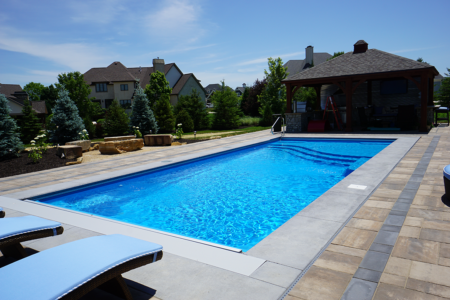
ASPEN (12’ x 25’)
Aspen makes a strong case for space-savvy design, from compact lakeside retreats in Petoskey to suburban backyards in Grand Rapids or Novi. At 25 feet, its integrated tanning ledge, open swim lane, and easy-access steps deliver full pool functionality without demanding a sprawling yard. It fits equally well in tighter urban lots and rural properties with room to spare.
Based on 2026 feedback from Thursday Pools dealers throughout Michigan, the average installed cost for a small fiberglass pool like Aspen or other designs less than 26 feet long and 400 square feet is $85,357.
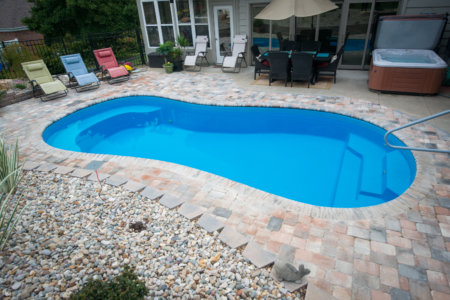
TITUS (14’ x 33’)
Titus brings a calm, flowing presence to mid-size backyards across Michigan, from tree-lined neighborhoods in Kalamazoo to newer developments in Midland or Bloomfield Hills. Wide entry steps, perimeter bench seating, and a full-length conversation bench create purposeful gathering spaces, while the open swim lane handles laps, games, and family use with equal ease.
According to 2026 survey responses from independent Thursday Pools dealers throughout Michigan, the average installed cost for a medium-sized fiberglass pool like the Titus is $103,214.
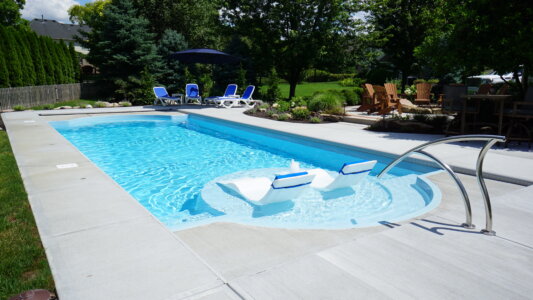
CATHEDRAL LX (16’ x 40’)
Cathedral LX is built for Michigan’s larger properties, from scenic acreage outside Traverse City to show-stopping backyard builds in Bloomfield Hills or spacious suburban lots across Oakland and Washtenaw Counties. Its formal design pairs traditional elegance with modern functionality, including grand entry steps, a spacious tanning ledge, and an expansive swim lane with consistent depth. Cathedral LX adapts well to Michigan’s diverse landscapes, whether surrounded by natural woodlands or anchoring a full outdoor living space with a pergola, fire feature, or spa setup.
The average cost for a standard installation of a large fiberglass pool like Cathedral LX in Michigan is $116,786.
What Yard Conditions Affect Fiberglass Pool Installation Costs in Michigan?
Michigan’s varied terrain and soil conditions can differ significantly across the state. Before breaking ground, a professional installer assesses your site for conditions that may require extra preparation.
Soil Type
Michigan’s geology creates distinct challenges depending on where you are in the state. Sandy soils are common along the Lake Michigan shoreline and in the western portions of the Lower Peninsula. While easier to excavate, looser sandy soil may require reinforced backfilling to ensure long-term pool stability. Clay-heavy soil, widespread around Lansing, Flint, and inland areas of the Lower Peninsula, retains water and may need enhanced drainage solutions to protect the pool structure. Rocky soil, more common in the Upper Peninsula and in areas with glacial till, can require specialized excavation equipment and additional labor. A pre-installation site assessment identifies what your specific soil requires before the project begins.
Slope and Grade
Sloped lots, common in areas like Traverse City, the hills of Oakland County, and much of the western side of the state, often require grading, retaining walls, or other leveling work before excavation can proceed. A relatively flat, level yard keeps installation more straightforward and predictable.
Backyard Access
Wide, open access makes a fiberglass pool installation more efficient. Properties with narrow gates, mature trees, tight side yards, or other access constraints common in established neighborhoods around Ann Arbor, Detroit suburbs, or older urban areas may need specialty equipment, additional labor, or crane service to move the one-piece pool shell into position.
| AVERAGE ADDITIONAL YARD-RELATED EXPENSES IN MICHIGAN
|
|
| Excavating Sandy Soil | $1,555 |
| Excavating Clay-Heavy Soil | $2,545 |
| Excavating Rocky Soil | $2,691 |
| Above-Average Slope Requiring Extra Grading | $5,045 |
| Limited Yard Access | $2,727 |
Based on Thursday Pools’ 2026 independent dealer survey, site-condition upcharges in Michigan range from about $1,555 for excavating sandy soil to $5,045 for working in yards with above-average slopes requiring extra grading.
What Are Michigan’s Swimming Pool Fence Requirements?
Michigan adopts its residential building codes statewide under the Stille-DeRossett-Hale Single State Construction Code Act (1972 PA 230, MCL 125.1501 et seq.). That law requires all Michigan residential pool construction to comply with the Michigan Residential Code (MRC), which governs pool barrier requirements across the state.
Under the Michigan Residential Code, residential pool barriers must meet the following requirements:
- The barrier must be at least 48 inches tall, measured from outside ground level on the side of the barrier facing away from the pool.
- The maximum vertical clearance between the ground and the bottom of the barrier must not exceed 2 inches.
- Openings in the barrier must not allow passage of a 4-inch-diameter sphere.
- Gates must be self-closing and self-latching, and must open outward away from the pool.
- Gate latches must be located on the pool side of the gate, or at least 54 inches above the ground on the exterior side.
- Barriers must not contain footholds, handholds, or other features that would allow a child to climb over.
- Doors and windows of the home that provide direct access to the pool area may be used as part of the enclosure, provided they are equipped with alarms meeting UL 2017 standards.
Building permits are required statewide for all residential swimming pools, hot tubs, and spas under MCL 125.1501. Local municipalities may adopt requirements more stringent than the MRC baseline. Always verify current requirements with your local municipality and county building department before installation. Local building officials can confirm what additional requirements apply in your specific jurisdiction.
For a 300-linear-foot basic pool fence, Michigan dealers estimate an average cost of $9,750. Final pricing varies by material, height, gate requirements, terrain, and local code compliance.
How Much Do Fiberglass Pool Upgrades Cost in Michigan?
Optional features can expand what your pool does and extend your swimming season throughout Michigan’s shorter warm-weather window. The right upgrades enhance comfort, convenience, and safety while maximizing your investment. The averages below come from Thursday Pools’ 2026 dealer survey in Michigan.
Water Quality and System Controls
Pool Heater
- Average Cost in Michigan: $5,520
- A pool heater is one of the highest-value upgrades for Michigan homeowners, extending the swim season into May and September and keeping water comfortable when temperatures drop in the evenings.
UV Filter System
- Average Cost in Michigan: $2,230
- A UV system passes pool water through an ultraviolet light chamber that destroys bacteria, algae, and chloramines so chlorine works more efficiently and you need less of it to maintain safe, sanitary water.
Pool Automation and Smart Control System
- Average Cost in Michigan: $4,210
- Manage temperature, lighting, and filtration from a smartphone or tablet.
Patio and Hardscape
Poured Concrete Patio (Approx. 1,200 sq. ft.)
- Average Cost in Michigan: $10,990
- A durable, low-maintenance decking option that handles Michigan’s freeze-thaw cycles when properly installed with expansion joints and adequate base preparation.
Paver Patio (Approx. 1,200 sq. ft.)
- Average Cost in Michigan: $11,600
- Available in a range of materials, from concrete pavers to natural stone, with a more finished aesthetic than poured concrete. Pavers allow for easier repair when Michigan’s winter ground movement shifts individual units.
Safety and Covers
Fence (300 Linear ft.)
- Average Cost in Michigan: $9,750
- Final cost varies by material choices, total fence length, and local code requirements.
Non-Automatic Safety Pool Cover
- Average Cost in Michigan: $4,750
- A manual option for securing the pool and keeping debris out between uses.
Automatic Pool Cover
- Average Cost in Michigan: $18,890
- One-touch operation to protect the pool, retain heat, and reduce evaporation. For Michigan homeowners, automatic covers provide meaningful energy savings by retaining heat during cool evenings and extending the effective swim season.
Water Features
Deck Jets
- Average Cost in Michigan: $2,040 per jet
- Arc water from the coping into the pool, adding visual movement and ambient sound to the pool area.
Bubblers
- Average Cost in Michigan: $1,580 per bubbler
- On a tanning ledge or beach entry, create movement and the sounds of a babbling brook in shallow pool water.
Cascade or Waterfall
- Average Cost in Michigan: $5,360
- Add a flowing water element and natural sound to the pool environment.
Cleaning and Maintenance
Automatic Pool Cleaning and Vacuuming System
- Average Cost in Michigan: $2,770
- Keep the pool floor and walls clean with minimal manual effort.
Lighting and Tile
LED Pool Lights
- Average Cost in Michigan: $1,189 per light
- Adds ambiance and visibility for evening and nighttime use, particularly valuable during Michigan’s shorter summer evenings.
Specialty Waterline Tile
- Average Cost in Michigan: $3,370
- Installed along the waterline for a custom, finished appearance at the pool edge.
Recreation
Simple Pool Slide*
- Average Cost in Michigan: $5,010
- A standard slide for family use.
Deluxe Pool Slide*
- Average Cost in Michigan: $7,670
- More height and design details than a basic model.
Diving Board (Type 1 Diving Pools Only)*
- Average Cost in Michigan: $4,190
- Only manufacturer-designated Type 1 diving pools support diving board installation. Homeowners should use only manufacturer-approved diving boards with pool models designated as diving pools and must consult a licensed professional to verify compliance with all local building codes and safety requirements before installation.
*Thursday Pools strongly advises against pool slides and diving boards due to safety concerns. The inclusion of a diving board or slide with any fiberglass pool must be carefully reviewed by a licensed professional to ensure compliance with all local building codes, safety regulations, and manufacturer guidelines. Not all fiberglass pool models are suitable for diving or slide use. It is the responsibility of the homeowner and installer to ensure proper installation and usage. Always prioritize safety and consult a qualified expert before adding any diving or sliding feature to your pool.
Landscaping and Extras
Surrounding Landscaping
- Average Cost in Michigan: $9,910
- Includes decorative rocks, plantings, trees, bushes, flower beds, and similar elements that connect the pool to the rest of the yard.
Add-On Spa
- Average Cost in Michigan: $19,760
- A separate spa unit for relaxing hydrotherapy, neighboring or independent of the main pool.
Frequently Asked Questions About Michigan Fiberglass Pool Costs
How much does a fiberglass pool cost in Michigan?
A fiberglass pool in Michigan costs an average of $85,357 for a small pool, $103,214 for a medium pool, and $116,786 for a large pool, based on Thursday Pools’ 2026 survey of the state’s independent dealers.
What does a standard fiberglass pool installation in Michigan include?
A standard fiberglass pool installation in Michigan typically includes:
- Excavation and Dirt Hauling: Soil removal and site preparation.
- Pool Shell and Delivery: The physical fiberglass pool shell unit delivered to your home.
- Filtration System: Basic pump, filter, and plumbing.
- Standard Decking: Approximately 3 feet of concrete surrounding the pool.
- Permits and Basic Electrical: Includes local municipal filings and one LED pool light.
What yard conditions raise fiberglass pool installation costs in Michigan?
Sandy soil along the Lake Michigan shoreline may need reinforced backfilling for long-term stability. Clay-heavy soils common around Lansing and Flint can create drainage challenges that require extra handling during installation. Rocky soil in the Upper Peninsula and areas with glacial till requires specialized excavation equipment. Sloped lots — common in Traverse City, Oakland County, and much of the western Lower Peninsula — often need grading work to create a level base. Limited backyard access in established urban neighborhoods may require crane service or specialty equipment. Based on the 2026 Michigan dealer survey, site-condition upcharges range from about $1,555 for excavating sandy soil to $5,045 for working in yards with above-average slopes requiring extra grading.
What are Michigan’s pool fence requirements?
Michigan adopts residential building codes statewide under the Stille-DeRossett-Hale Single State Construction Code Act (1972 PA 230, MCL 125.1501 et seq.), which mandates compliance with the Michigan Residential Code for all residential pool construction. The MRC requires barriers at least 48 inches tall measured from outside ground level, a maximum 2-inch ground clearance, openings no larger than 4 inches in diameter, and self-closing, self-latching gates that open away from the pool. Gate latches must be on the pool side of the gate or at least 54 inches above the ground. Building permits are required statewide for all residential pools. Local municipalities may impose requirements beyond the MRC baseline — homeowners should verify current local requirements with their building department before installation.
The 2026 Thursday Pools survey of Michigan independent dealers shows an average cost of $9,750 for a 300-linear-foot basic fence, with final costs varying by material, height, gate requirements, terrain, and local code compliance.
How much do common pool upgrades add to the cost in Michigan?
Upgrade costs vary widely depending on the feature:
- A pool heater averages $5,520.
- An automatic pool cover averages $18,890.
- A paver patio of approximately 1,200 square feet averages $11,600.
- An add-on spa averages $19,760.
- Smaller additions like deck jets ($2,040 per jet), bubblers ($1,580 per bubbler), and LED lights ($1,189 per light) add cost in more manageable increments.
How do I get an accurate cost estimate for a fiberglass pool in Michigan?
The most accurate estimate comes from a local independent Thursday Pools dealer who can assess your yard, review local permit requirements, and give you a project-specific quote. Survey averages provide a useful starting point, but site conditions, design choices, and local labor rates determine what you actually pay.
Get Your Personalized Michigan Estimate
Survey averages give you a realistic starting point, but your actual cost depends on your yard, your location in Michigan, and the design details and upgrades you choose. A local independent Thursday Pools dealer can assess your site, walk you through pool options that fit your budget, and give you a project-specific quote, whether you’re in Detroit, Grand Rapids, Ann Arbor, Traverse City, Kalamazoo, Lansing, or anywhere across the state.
Thursday Pools manufactures fiberglass pool shells and does not install pools. Pools are installed by locally owned independent dealers. Consumers should consult a local independent dealer for the most accurate and updated information based on the unique conditions of their region and property.