877-929-7665
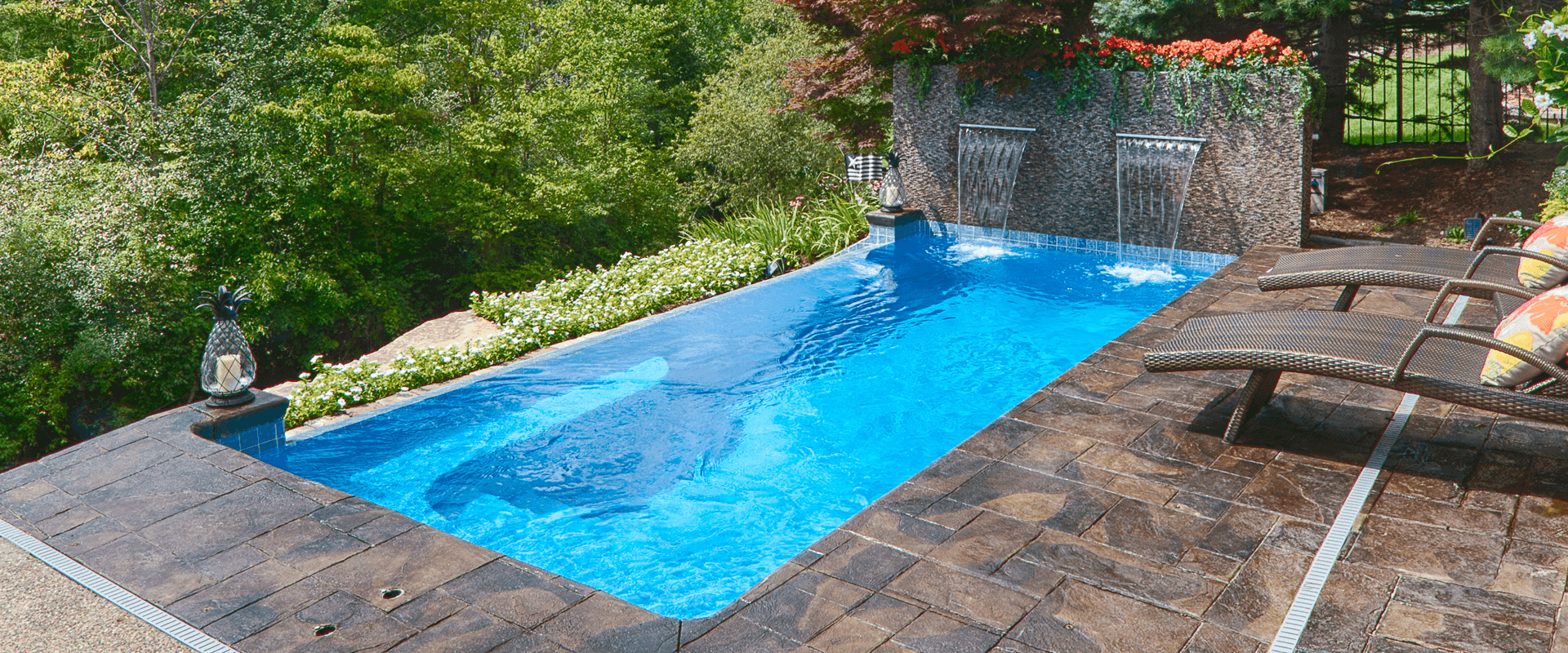
How Much Does a Fiberglass Pool Cost in Minnesota?
Based on a 2026 survey of independent Thursday Pools dealers across Minnesota, a standard fiberglass pool installation in Minnesota averages $86,250 for a small pool, $105,000 for a medium pool, and $125,000 for a large pool. Your final cost will depend on details like pool size, yard conditions, local permit requirements, and the optional upgrades you choose.
Minnesota’s varied terrain can add complexity to the installation-cost picture. Rocky and clay-heavy glacial soils are common throughout the northern and central parts of the state, including the communities around Duluth, Brainerd, and St. Cloud, where excavation can require specialized equipment and additional preparation. Sandy loam in parts of southern Minnesota and the Twin Cities corridor is easier to excavate, but may need reinforced backfilling for long-term pool stability. Sloped lots, common around the lakes of Central Minnesota and the rolling terrain of the western metro, often require grading work before installation can begin. In dense suburban communities from Minnetonka to Woodbury, tight access conditions can require crane service to deliver the one-piece fiberglass shell.
A local independent Thursday Pools dealer can evaluate your site, navigate local permit and fence requirements, and help you build a pool package built for Minnesota summers.
What is the Average Cost of a Fiberglass Pool Installation in Minnesota?
Thursday Pools surveys its network of independent dealers across the country each year to track real-world installation costs. The figures below reflect current market conditions in Minnesota based on our 2026 survey of 5 independent Thursday Pools dealers across the state.
Based on the 2026 survey of independent Thursday Pools dealers in Minnesota, installed fiberglass pool costs average $86,250 for small pools, $105,000 for medium pools, and $125,000 for large pools.
AVERAGE MINNESOTA FIBERGLASS POOL INSTALLATION BY SIZE |
|||
|---|---|---|---|
| Pool Type | Small Fiberglass Pools | Medium Fiberglass Pools | Large Fiberglass Pools |
| Size Range | Up to 26 ft Long or 400 ft² | 26 to 34 ft Long or 400 to 600 ft² | 35 ft and Longer or 600+ ft² |
| Average Cost | $86,250 | $105,000 | $125,000 |
What Does a Standard Fiberglass Pool Installation in Minnesota Include?
Most Minnesota dealers include the following in a base package: the pool shell, excavation, basic pump and filtration equipment, plumbing, basic electrical, permits, a single pool light, initial water fill, dirt hauling, concrete decking approximately 3 feet around the pool, delivery, and labor. What individual dealers include can vary, so always compare proposals carefully. Expanded decking, fencing, landscaping, pool covers, and optional features typically cost extra.
Contact a nearby Thursday Pools dealer for a custom quote and to learn about financing options for your Minnesota pool installation.
What Do Popular Fiberglass Pool Models Cost Installed in Minnesota?
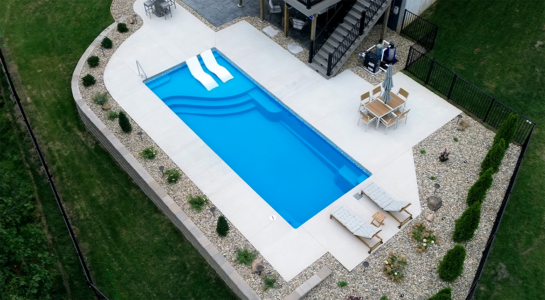
ASPEN (12’ x 25’)
Aspen is a compact, efficient design for Minnesota homeowners who want a full pool experience in a manageable footprint. It’s a natural fit for the suburban lots of Minneapolis, St. Paul, Rochester, and communities throughout the metro. A built-in tanning ledge, open central swim lane, and wide entry steps deliver genuine functionality without overcommitting on yard space. Its clean, rectangular lines hold up beautifully next to both classic Minnesota lake-cabin aesthetics and contemporary outdoor living setups.
Based on 2026 feedback from Thursday Pools dealers throughout Minnesota, the average installed cost for a small fiberglass pool like Aspen or other designs less than 26 feet long and 400 square feet is $86,250.
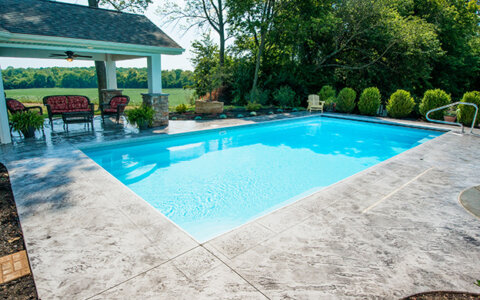
GOLIATH (14’ x 33’)
Goliath is a versatile mid-size design that fits comfortably in many Minnesota backyards while still delivering a spacious, family-friendly pool experience. Its broad tanning ledge, wraparound bench seating, and open swim lane make it a natural gathering place equally suited for active family summers in Edina or Minnetonka and lakefront retreat builds throughout central Minnesota’s lake country.
According to 2026 survey responses from independent Thursday Pools dealers throughout Minnesota, the average installed cost for a medium-sized fiberglass pool like Goliath is $105,000.
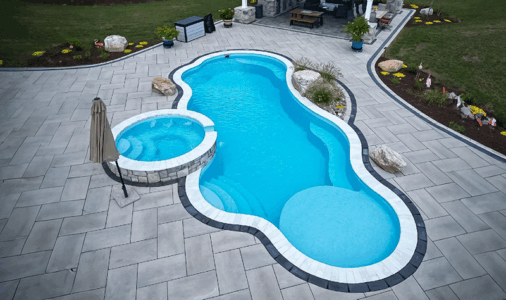
WELLSPRING (16’ x 40’)
Wellspring is built for Minnesota homeowners with larger properties and bigger outdoor living ambitions on spacious lots in Wayzata and Orono, rural acreages in the Brainerd Lakes area, or open properties throughout Southern Minnesota with room to build something exceptional. An expansive sun shelf, graceful curves, wraparound bench seating, and a generous swim area make Wellspring a true backyard destination, equally suited for quiet weekday mornings and weekend gatherings.
The average cost for a standard installation of a large fiberglass pool like Wellspring in Minnesota is $125,000.
What Yard Conditions Affect Fiberglass Pool Installation Costs in Minnesota?
Minnesota’s varied terrain means that what’s beneath the surface of your backyard can significantly shape project costs. Before breaking ground, a professional installer will assess your site for conditions that may require extra preparation.
Soil Type
Minnesota’s post-glacial geology creates distinct challenges across the state. Rocky soil is more common in the northeastern Arrowhead region, the terrain around Duluth, and parts of Central Minnesota, where glacial deposits left behind dense, boulder-heavy ground that requires specialized excavation equipment. Clay-heavy soils are widespread throughout the Twin Cities metro, including areas around Bloomington, Edina, and St. Cloud, requiring careful drainage planning during installation. Sandy loam in parts of Southern Minnesota and the western Twin Cities corridor is easier to excavate but may need reinforced backfilling to maintain long-term pool stability.
Slope and Grade
Minnesota’s lake country and the rolling terrain around many of its most popular communities create sloped properties throughout the state. Lakefront lots in the Brainerd Lakes area, Minnetonka, Orono, and Wayzata, as well as properties near the Mississippi bluffs and the St. Croix Valley, often require grading work, retaining walls, or other leveling preparation before excavation can proceed.
Backyard Access
Wide-open access makes a fiberglass pool installation more efficient. Dense suburban neighborhoods across the Twin Cities metro and older established communities with mature trees, tight lot lines, and established fencing frequently require specialty equipment or crane service to position the one-piece pool shell.
| AVERAGE ADDITIONAL YARD-RELATED EXPENSES IN MINNESOTA
|
|
| Excavating Rocky Soil | $675 |
| Excavating Sandy Soil | $2,375 |
| Excavating Clay-Heavy Soil | $150 |
| Above-Average Slope Requiring Extra Grading | $4,000 |
| Limited Yard Access | $5,750 |
Based on Thursday Pools’ 2026 independent dealer survey, site-condition upcharges in Minnesota range from about $150 for excavating clay-heavy soil to $5,750 for navigating limited yard access.
What Are Minnesota’s Swimming Pool Fence Requirements?
Minnesota’s residential pool barrier and fencing requirements are set by local municipalities under their own building codes and ordinances, informed by the pool barrier provisions of the 2020 Minnesota State Building Code.
Because requirements vary across the state’s cities and counties, homeowners should always verify with their local building department before installation. The City of Minneapolis, for example, requires a fence or enclosure at least 4 feet tall completely surrounding any outdoor residential pool, with all fence openings and points of entry equipped with self-closing, self-latching gates. Gate latch devices must be placed at the top of the gate or otherwise positioned out of reach of children. The gap between the bottom of the fence and the ground may not exceed 4 inches.
Other major Minnesota municipalities impose stricter requirements. The City of Minnetonka requires a non-climbable fence at least 5 feet tall, and the City of St. Paul requires 4-foot fencing that obscures public views of the pool. Openings in barriers are generally limited to no larger than 4 inches statewide. Some cities have adopted the ISPSC gate latch standard of 54 inches above the ground or, if lower, positioned on the pool side of the gate.
Always verify current pool barrier and fencing requirements with your local building department, county, and HOA before installation.
For a 300-linear-foot basic pool fence, Minnesota dealers estimate an average cost of $13,900. Final pricing varies by material, height, gate requirements, terrain, and local ordinance compliance.
How Much Do Fiberglass Pool Upgrades Cost in Minnesota?
Optional features can expand what your pool does and extend your swimming season throughout Minnesota’s climate. The right upgrades enhance comfort, convenience, and safety while maximizing your investment. The averages below come from Thursday Pools’ 2026 dealer survey in Minnesota.
Water Quality and System Controls
Pool Heater
- Average Cost in Minnesota: $3,450
- A pool heater is among the highest-value upgrades available for Minnesota homeowners to extend comfortable swimming from May into September, keeping water inviting when temperatures drop in the evenings, and making every hour of the short Midwest season count.
UV Filter System
- Average Cost in Minnesota: $1,250
- A UV system passes pool water through an ultraviolet light chamber that destroys bacteria, algae, and chloramines so chlorine works more efficiently and you need less of it to maintain safe, sanitary water.
Pool Automation and Smart Control System
- Average Cost in Minnesota: $2,000
- Manage temperature, lighting, and filtration from a smartphone or tablet.
Patio and Hardscape
Poured Concrete Patio (Approx. 1,200 sq. ft.)
- Average Cost in Minnesota: $16,000
- A durable, low-maintenance decking option that handles Minnesota’s significant freeze-thaw cycles when properly installed with expansion joints and adequate base preparation.
Paver Patio (Approx. 1,200 sq. ft.)
- Average Cost in Minnesota: $12,000
- Available in concrete pavers or natural stone. Individual units can be repaired or replaced when Minnesota’s winters shift them.
Safety and Covers
Fence (300 Linear ft.)
- Average Cost in Minnesota: $13,900
- Final cost varies by material choices, total fence length, and local ordinance requirements.
Non-Automatic Safety Pool Cover
- Average Cost in Minnesota: $7,500
- A manual option for securing the pool and keeping debris out between uses.
Automatic Pool Cover
- Average Cost in Minnesota: $16,500
- One-touch operation to protect the pool, retain heat, and reduce evaporation. For Minnesota homeowners managing a shorter season, automatic covers provide meaningful energy savings and extend comfortable use at both ends of the swim season.
Water Features
Deck Jets
- Average Cost in Minnesota: $1,250 per jet
- Arc water from the coping into the pool, adding visual movement and ambient sound to the pool area.
Bubblers
- Average Cost in Minnesota: $1,900 per bubbler
- On a tanning ledge or beach entry, create movement and the sounds of a babbling brook in shallow pool water.
Cascade or Waterfall
- Average Cost in Minnesota: $4,800
- Add a flowing water element and natural sound to the pool environment.
Cleaning and Maintenance
Automatic Pool Cleaning and Vacuuming System
- Average Cost in Minnesota: $1,175
- Keep the pool floor and walls clean with minimal manual effort.
Lighting and Tile
LED Pool Lights
- Average Cost in Minnesota: $1,100 per light
- Adds ambiance and visibility for evening and nighttime use.
Specialty Waterline Tile
- Average Cost in Minnesota: $5,500
- Installed along the waterline for a custom, finished appearance at the pool edge.
Recreation
Simple Pool Slide*
- Average Cost in Minnesota: $4,800
- A standard slide for family use.
Deluxe Pool Slide*
- Average Cost in Minnesota: $8,500
- More height and design details than a basic model.
Diving Board (Type 1 Diving Pools Only)*
- Average Cost in Minnesota: $4,000
- Only manufacturer-designated Type 1 diving pools support diving board installation. Homeowners should use only manufacturer-approved diving boards with pool models designated as diving pools and must consult a licensed professional to verify compliance with all local building codes and safety requirements before installation.
*Thursday Pools strongly advises against pool slides and diving boards due to safety concerns. The inclusion of a diving board or slide with any fiberglass pool must be carefully reviewed by a licensed professional to ensure compliance with all local building codes, safety regulations, and manufacturer guidelines. Not all fiberglass pool models are suitable for diving or slide use. It is the responsibility of the homeowner and installer to ensure proper installation and usage. Always prioritize safety and consult a qualified expert before adding any diving or sliding feature to your pool.
Landscaping and Extras
Surrounding Landscaping
- Average Cost in Minnesota: $11,000
- Includes decorative rocks, plantings, trees, bushes, flower beds, and similar elements that connect the pool to the rest of the yard.
Add-On Spa
- Average Cost in Minnesota: $24,000
- A separate spa unit for relaxing hydrotherapy, neighboring or independent of the main pool.
Frequently Asked Questions About Minnesota Fiberglass Pool Costs
How much does a fiberglass pool cost in Minnesota?
A fiberglass pool in Minnesota costs an average of $86,250 for a small pool, $105,000 for a medium pool, and $125,000 for a large pool, based on Thursday Pools’ 2026 survey of the state’s independent dealers.
What does a standard fiberglass pool installation in Minnesota include?
A standard fiberglass pool installation in Minnesota typically includes:
- Excavation and Dirt Hauling: Soil removal and site preparation.
- Pool Shell and Delivery: The physical fiberglass pool shell unit delivered to your home.
- Filtration System: Basic pump, filter, and plumbing.
- Standard Decking: Approximately 3 feet of concrete surrounding the pool.
- Permits and Basic Electrical: Includes local municipal filings and one LED pool light.
What yard conditions raise fiberglass pool installation costs in Minnesota?
Rocky soil in Northeastern Minnesota and parts of the central lakes region requires specialized excavation equipment and additional labor. Clay-heavy soils throughout the Twin Cities metro and Central Minnesota create drainage challenges during installation. Sandy loam in Southern Minnesota and parts of the western metro is easier to excavate but may need reinforced backfilling for long-term stability. Sloped lakefront properties and rolling terrain in the Brainerd Lakes area and western metro often require grading work. Limited backyard access in dense suburban neighborhoods frequently requires crane service. Based on the 2026 Minnesota dealer survey, site-condition upcharges range from about $150 for excavating clay-heavy soil to $5,750 for navigating limited yard access.
What are Minnesota’s pool fence requirements?
Minnesota’s residential barrier requirements are set by local municipalities. The City of Minneapolis, for example, requires a fence at least 4 feet tall with self-closing, self-latching gates and no openings greater than 4 inches. Other cities are stricter, such as Minnetonka, requiring a non-climbable fence at least 5 feet tall. Always verify current requirements with your local building department before installation.
The 2026 Thursday Pools survey of Minnesota independent dealers shows an average cost of $13,900 for a 300-linear-foot basic fence, with final costs varying by material, height, gate requirements, terrain, and local ordinance compliance.
How much do common pool upgrades add to the cost in Minnesota?
Upgrade costs vary widely depending on the feature:
- A pool heater averages $3,450.
- An automatic pool cover averages $16,500.
- A paver patio of approximately 1,200 square feet averages $12,000.
- An add-on spa averages $24,000.
- Smaller additions like deck jets ($1,250 per jet), bubblers ($1,900 per bubbler), and LED lights ($1,100 per light) add cost in more manageable increments.
How do I get an accurate cost estimate for a fiberglass pool in Minnesota?
The most accurate estimate comes from a local independent Thursday Pools dealer who can assess your yard, review local permit requirements, and give you a project-specific quote. Survey averages provide a useful starting point, but site conditions, design choices, and local labor rates determine what you actually pay.
Get Your Personalized Minnesota Pool Estimate
Survey averages give you a realistic starting point, but your actual cost depends on your yard, your location in Minnesota, and the design details and upgrades you choose. A local independent Thursday Pools dealer can assess your site, walk you through pool options that fit your budget, and give you a project-specific quote, whether you’re in the Twin Cities, Rochester, Duluth, Brainerd, St. Cloud, Mankato, or anywhere across the state.
Thursday Pools manufactures fiberglass pool shells and does not install pools. Pools are installed by locally owned independent dealers. Consumers should consult a local independent dealer for the most accurate and updated information based on the unique conditions of their region and property.