877-929-7665
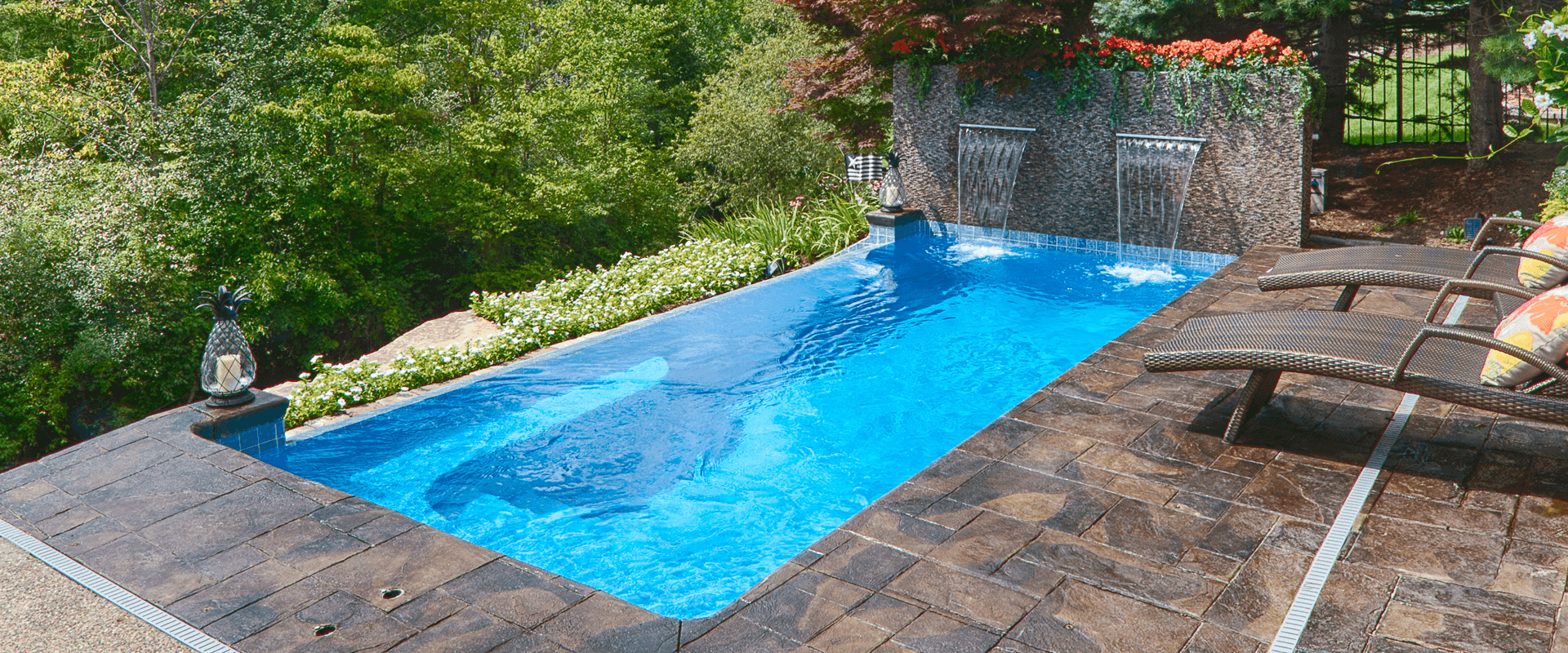
Inground Pool Shapes Guide
Quick Answer: What Are the Different Inground Pool Shapes?
The most common inground pool shapes and styles are rectangle, freeform, Roman, Grecian, kidney, round, plunge, and spool. Rectangle pools maximize swim space and suit most yard sizes. Freeform pools create a natural or resort-style aesthetic. Roman and Grecian pools offer a formal, architectural look. Plunge pools and spools serve compact yards. The right shape depends on yard size, pool type, budget, maintenance preference, and how you plan to use the pool.
Inground pool shape affects more than appearances. It determines how much an installation costs, how well the pool fits the yard, how easy the pool is to maintain, and whether features like automatic safety covers or robotic cleaners work as intended. This guide covers every common inground pool shape, how each one compares across fiberglass, vinyl, and gunite pool types, how shapes influence cost and maintenance, and how to match a shape to your yard size and the way your household uses a pool.
What Inground Pool Shapes Are Available in Fiberglass, Vinyl, and Gunite?
Quick Answer: Do All Inground Pool Types Come in the Same Shapes?
No. Gunite pools accommodate any shape with no limits on size, depth, or design. Vinyl liner pools support a wide range of shapes, with builders able to configure wall panels into most configurations. Fiberglass pools come in manufacturer-specified shapes, limited to approximately 16 feet wide by transportation requirements, but include built-in features at no extra construction cost that other pool types charge for separately.
Fiberglass, vinyl liner, and gunite pools each bring different shape possibilities, cost implications, and trade-offs. Understanding how pool type affects shape availability helps narrow the decision before diving into specific designs.
| Pool Type | Shape Flexibility | How Complex Shapes Affect Cost | Built-In Features |
|---|---|---|---|
| Fiberglass | Manufacturer-specified designs with shells up to 16 feet wide | Minimal: Shell price stays consistent across shapes | Steps, benches, tanning ledges, and swim-outs molded into the shell |
| Gunite (Concrete) | Unlimited for any shape, size, or depth | Significant: Complex and custom designs add substantial labor and material cost | Custom-built on-site with each feature adding to the project cost |
| Vinyl Liner | Wide range with builders able to configure panels | Moderate to high: Freeform shapes raise upfront cost and future liner replacement cost | Drop-in or vinyl-covered benches with limited built-in options |
Fiberglass Pool Shape Considerations
Fiberglass pool shells arrive pre-manufactured from the factory, which means transportation sets the practical upper limit on width around 16 feet. Within that constraint, fiberglass pool manufacturers like Thursday Pools now offer a wide range of rectangles, freeform designs, Roman and Grecian shapes, plunge pools, and specialty configurations. Many designs include features like built-in steps, benches, tanning ledges, and more already molded in that gunite and vinyl buyers pay to have custom-built on-site.
Fiberglass pool pricing also stays relatively consistent across shapes. Choosing a freeform fiberglass pool over a rectangle does not add the same kind of cost premium it would in gunite or vinyl because the shell is manufactured to a fixed design regardless of its contour.
Explore Thursday Pools’ fiberglass pool design lineup.
Gunite Pool Shape Considerations
Gunite pools offer the broadest design latitude of the three pool types. Because concrete is poured and shaped on-site, pool builders can create any shape, at any depth, in any configuration. This unlimited flexibility makes gunite popular with homeowners with highly specific design requirements, such as unusual lot shapes, very large pools, or designs that integrate seamlessly with complex landscaping.
That flexibility comes with cost consequences. Standard gunite shapes cost more than comparable fiberglass designs to begin with. Custom or complex freeform designs add labor for forming, grading, and finishing the concrete, pushing costs higher still. Gunite pools also take the longest to build, often three to six months or more, with complex shapes extending the timeline further.
For a direct comparison, see our guide to choosing between gunite vs. fiberglass pools.
Vinyl Liner Pool Shape Considerations
Vinyl liner pools use interconnected steel, aluminum, or polymer wall panels that builders can configure into most shapes before pouring concrete to set them in place. Standard rectangles cost the least to build and the least to reline when the vinyl liner eventually needs replacement. Freeform and custom vinyl liner configurations require more materials and more precise liner fabrication, raising both upfront installation cost and future liner replacement cost.
For a direct comparison of fiberglass versus vinyl, see our guide to deciding between fiberglass vs. vinyl liner pools.
What Are the Most Popular Inground Pool Shapes?
Quick Answer: What Are the Most Common Inground Pool Shapes?
Rectangle, freeform, and Roman are the most popular inground pool shapes. Rectangle pools suit most yards and activities, and work particularly well for lap swimming and automatic covers. Freeform pools suit natural landscapes and resort-style aesthetics. Roman or Grecian designs add an architectural, formal look.
| Pool Shape | Best For | Key Considerations |
|---|---|---|
| Rectangle | Lap swimming, narrow yards, automatic covers, clean modern designs | Most versatile shape compatible with all pool types |
| Freeform | Natural or resort-style landscapes, relaxation-focused yards | Curves require more manual cleaning attention |
| Roman | Formal entertaining, wide yards, classic architectural look | Rounded ends and wide entry steps need horizontal space |
| Grecian | Geometric elegance with softer lines than a rectangle | Similar to Roman but with angled corners and straight ends |
| Plunge Pool | Small yards, soaking, and cool-down spots | Compact footprint not designed for lap swimming |
| Round/Circular | Social spaces and compact relaxation areas | Encourages gathering, but not efficient for lap swimming |
| Kidney | Natural lagoon feel | Visual-interest curves can collect debris at indentation |
| Spool | Compact yards needing pool and spa functions | Combines soaking, hydrotherapy jets, and some swimming in one unit |
Rectangle Inground Pools
A rectangle pool is the most versatile inground pool shape available. Straight edges maximize swimming space, simplify installation across all three pool types, and work in most yard configurations, including narrow lots where other shapes would waste usable space. Rectangle pools also support automatic pool covers, which require straight parallel edges. Most robotic cleaners work more efficiently in rectangles than in shapes with curves, bends, and irregular corners.
Rectangle pools suit lap swimmers, active families, and homeowners who want a clean, modern aesthetic. Fiberglass, gunite, and vinyl liner manufacturers all offer rectangular designs, making it the most widely available inground pool shape.
Explore Thursday Pools’ rectangle fiberglass pool designs.
Freeform Inground Pools
Freeform pools use flowing, irregular curves to mimic natural bodies of water. The absence of straight edges creates a more casual, resort-style atmosphere that pairs well with natural landscaping, tropical plants, and informal outdoor living spaces. Freeform shapes contrast visually with the structured lines of homes and fences in a way many homeowners find appealing.
In gunite and vinyl, freeform shapes typically cost more than rectangles due to the additional labor involved in forming and finishing irregular curves. In fiberglass, freeform shells are priced comparably to other shapes in the lineup. Freeform pools in any material require more manual cleaning effort at curves and irregular edges, where debris tends to accumulate and robotic cleaners cover less consistently.
Browse Thursday Pools’ freeform fiberglass designs.
Roman and Grecian Inground Pools
Roman pools combine a rectangular base with semicircular rounded ends, producing wide, sweeping entry steps that evoke the look of classical architecture. Grecian pools share a similar footprint, but use slightly angled corners and straight sides rather than rounded ends, offering a more geometric, formal appearance.
Roman and Grecian pools suit formal landscapes, traditional home styles, and homeowners who want the structural simplicity of a rectangular layout with more architectural interest.
See Thursday Pools’ Roman fiberglass pool designs.
Plunge Pools
A plunge pool is a compact inground pool designed for soaking and relaxation rather than laps or active swimming. Most plunge pools range from 8 to 25 feet in length and 6 to 12 feet in width, a footprint that fits yards too small for a full-size pool and costs less to install, heat, and maintain. Some plunge pool designs across fiberglass, gunite, and vinyl configurations can accommodate hydrotherapy jets, adding spa functionality to the compact space.
Explore Thursday Pools’ fiberglass Plunge Pool Series.
Round and Circular Inground Pools
Round and circular pools prioritize social use over lap swimming. Their symmetrical shape encourages interaction across the water, making them well-suited for gatherings, family relaxation, and smaller entertaining spaces. Wraparound bench seating integrates naturally into circular designs, keeping swimmers comfortably in the pool without needing to exit for conversation. Round pools are not the most space-efficient option and offer limited compatibility with automatic covers.
Kidney Inground Pools
Kidney pools use a curved, indented silhouette that creates two distinct lounge zones without requiring a large footprint. The shape evokes a natural pond or lagoon feel and suits organic, less structured landscapes. Kidney pools allow swimmers and loungers to occupy different parts of the pool without competing for space. The curved edges and interior indent can trap debris and require more brushing than a rectangle. Kidney designs appear across gunite, vinyl, and some fiberglass lineups. In gunite and vinyl, the shape adds some cost over a comparable rectangle.
Spool Pools
A spool, a term combining “spa” and “pool,” is a compact water feature that functions as both a small swimming pool and a hot tub, typically ranging from 10 to 16 feet in length. Spools include hydrotherapy jets and bench seating while providing enough volume to wade, float, and move around. In climates with longer warm seasons, spools can serve as the primary outdoor relaxation space without the footprint or maintenance demands of a full-size pool. Spools work particularly well for homeowners who want some swimming capability alongside spa benefits, without the space or budget commitment a full pool requires.
LEARN MORE: Get Inspiration From Our Pool Idea Book
Download the eBookRectangle vs. Freeform Pool: Which Is Right for You?
Quick Answer: Should You Choose a Rectangle or Freeform Pool?
Of the two most popular inground pool shapes, rectangle pools work better for lap swimming, narrow yards, and automatic pool covers. Freeform pools suit wider or irregular yards, natural landscaping, and homeowners who prioritize aesthetic over swim lanes. For fiberglass buyers, both options are available at comparable price points. For gunite and vinyl buyers, freeform shapes typically cost more than rectangles.
| Rectangle Pool | Freeform Pool | |
|---|---|---|
| Visual Style | Modern, clean, formal | Natural, organic, lagoon-like |
| Best Activity | Lap swimming, games, active family use | Relaxing, socializing, landscape integration |
| Yard Fit | Highly efficient in narrow yards | Better suited to wider or irregular yards |
| Automatic Cover Compatibility | Compatible with hidden cover tracks requiring straight parallel edges | Compatible but not as seamless — the cover tracks will run along the top of the pool deck or as part of a deck on deck application |
| Robotic Cleaner Efficiency | High with predictable and straight edges | Lower with curves and irregular areas reducing coverage efficiency |
| Maintenance Impact | Typically easier with better water circulation | May need more manual attention at curves |
| Cost in Gunite or Vinyl | Generally more cost-effective | Complex curves add labor and material cost |
| Cost in Fiberglass | Comparable across shape categories | Comparable across shape categories |
What Pool Shape Is Best for Your Lifestyle?
Quick Answer: How Do You Choose a Pool Shape for Your Lifestyle?
Active families and competitive swimmers typically get the most from a rectangle inground pool. Homeowners focused on entertaining often prefer a large rectangle or freeform design with distinct lounge and swim zones. Resort-style relaxation pairs best with freeform and kidney shapes that integrate into landscaping. Fitness-focused lap swimmers need a rectangle long enough for meaningful training, or a plunge pool with resistance jets.
| Your Primary Goal | Best Pool Shape | Why |
|---|---|---|
| Lap Swimming and Fitness Training | Rectangle | Straight lanes with no curves to interrupt swimming stroke |
| Active Family Games | Rectangle | Maximum open water space and compatibility with volleyball or basketball nets |
| Entertaining Large Groups | Large rectangle or freeform | Open swimming room and distinct social zones |
| Resort-Style Relaxation | Freeform or kidney | Flowing curves complement natural landscaping |
| Formal, Classic Aesthetic | Roman or Grecian | Architectural entry steps and geometric elegance |
| Compact Yard Relaxation | Plunge pool or spool | Small footprint for full relaxation in minimal space |
| Narrow Yard Fit | Rectangle, Roman, or Grecian | Straight sides align with property lines |
| Automatic Cover Compatibility | Rectangle | Required by most automatic cover track systems to create a seamless look |
| Easiest Routine Maintenance | Rectangle | Better circulation and robotic cleaner effectiveness |
Active Families and Backyard Competitors
Active households benefit most from a rectangular pool. The straight, unobstructed swim lanes provide room for racing, swimming drills, and organized water games. Volleyball nets and basketball hoops mount most securely and naturally in pools with consistent parallel walls. Built-in bench seating in fiberglass or gunite designs gives players a place to recover between rounds without leaving the pool.
A rectangular design with a tanning ledge at one end and bench seating along the walls gives an active household everything, including open water for competition, seating for spectators, and a shallow lounging area for young swimmers.
Homeowners Who Entertain
Large gatherings need space for multiple activities to happen at once. A large rectangle handles open swim lanes, water games, and enough room for a crowd to spread out. For homeowners who prefer a more dynamic, layered atmosphere, a freeform design creates natural pockets, including shallow lounge areas in one curve and deeper open water in another, so guests can self-sort rather than competing for the same space.
Roman-shaped pools with their wide, welcoming entry steps suit formal entertaining contexts particularly well. The broad steps function as a social gathering point and accommodate guests entering and exiting the pool in groups rather than single-file.
Resort-Style and Relaxation-Focused Homeowners
Freeform pools suit homeowners who want the pool to feel like it belongs to the landscape rather than sitting on top of it. Their flowing curves integrate naturally with plantings, rock work, waterfalls, and informal decking. A freeform design with a beach entry, tanning ledge, and surrounding garden can create the visual impression of a natural retreat without leaving home.
Kidney pools offer a related but more compact interpretation of the same aesthetic. Their curved shape and natural silhouette suit smaller yards where a full-size freeform feels too large.
Lap Swimmers and Fitness-Focused Owners
Lap swimming demands length and straight lanes. A rectangle pool with open water gives dedicated swimmers the necessary space for meaningful training. When yard dimensions limit length, a swim jet system in a shorter pool provides resistance that simulates open-water conditions.
LEARN MORE: Choosing an Inground Pool Shape for Your Family's Stage in Life
Read the BlogWhat Pool Shape Is Best for Your Yard Size?
Quick Answer: What Pool Shape Works Best in My Yard?
Small yards typically suit plunge pools, spools, or compact rectangles. Narrow yards almost always work best with rectangle or Roman shapes where straight sides align efficiently with property lines. Large yards accommodate most shapes, though bigger pools raise installation cost, operating cost, and maintenance time regardless of shape. Local setback rules and utility line locations can further limit which shapes fit a given site.
Small Yards
Small yards favor compact, efficient designs that leave enough space for decking, safety barriers, and comfortable movement around the pool. Plunge pools and spools offer the best footprint-to-function ratio in tight spaces, providing soaking depth and hydrotherapy options in a fraction of the square footage a standard pool requires.
For homeowners who want some swimming capability in a small yard, a compact rectangle typically outperforms freeform designs in the same square footage. Straight edges use the available ground more efficiently than curves, and rectangles are compatible with automatic covers that help reduce cleaning and maintenance work.
Explore Thursday Pools’ Plunge Pool Series.
Narrow Yards
Narrow yards almost always work best with a rectangle, Roman, or Grecian pool. The straight sides of these shapes run parallel to the property lines, making efficient use of limited width without fighting the yard’s geometry. A rectangle 12 to 16 feet wide and 28 to 40 feet long fits many standard suburban lots with room for decking on both long sides.
Freeform and kidney shapes lose their visual appeal in narrow yards, where the width restriction prevents the curves from expressing themselves. Forcing a freeform shape into a narrow corridor tends to result in a design that reads more like an elongated oval than a true freeform.
Large Yards
Large yards accommodate nearly any pool shape, which makes the decision less about what fits and more about what suits the household’s lifestyle, aesthetic, and maintenance preference. In a large yard, the clearest shape constraint is usually the homeowner’s budget. Larger pools in any shape cost more to install, heat, fill, and maintain over time.
Custom shapes with multi-zone designs, where a deeper swim area connects to a shallower lounge area, work particularly well in large yards. These configurations suit families with young children who need a shallow zone and older swimmers who want a full-depth open area.
LEARN MORE: Is My Backyard Big Enough for a Swimming Pool?
Read the BlogHow Does Pool Shape Affect Inground Pool Cost?
Quick Answer: Does Pool Shape Change the Cost of an Inground Pool?
Yes, but the effect varies by pool type. Fiberglass pool pricing stays relatively consistent across shapes because the shell is manufactured to a set design regardless of contour. In gunite and vinyl liner pools, more complex shapes, like freeform designs with custom curves, add labor and material cost. Larger shapes cost more across all three pool types. Automatic cover compatibility with rectangle pools can also reduce long-term maintenance cost.
For fiberglass pool buyers, shape has little effect on cost, for the reasons covered earlier in this guide. Pool size remains the bigger cost variable than shape.
For gunite buyers, shape directly affects cost. Standard rectangles represent the simplest concrete forming work. Roman and Grecian designs add complexity at the curved ends. True freeform designs require more skilled labor, and the work takes longer, both raising the total project cost.
For vinyl liner buyers, complex shapes raise two costs: the upfront panel configuration during installation and the liner fabrication cost at replacement time. Standard rectangle liners are the least expensive to purchase and install; custom freeform liners require custom manufacturing, raising the price of every future replacement for the life of the pool.
LEARN MORE: How Much Does An Inground Pool Cost?
Read the GuideWhat Pool Shape Is Easiest to Maintain?
Quick Answer: Which Inground Pool Shape Requires the Least Maintenance?
Rectangle pools require the least maintenance. Straight, parallel edges promote consistent water circulation from skimmers to returns, reducing dead spots where algae and debris can accumulate. Robotic pool cleaners cover rectangles more efficiently and thoroughly than curved shapes. Automatic covers keep debris out entirely in rectangle pools, further cutting weekly maintenance time. Freeform, kidney, and irregular shapes require more manual brushing and vacuuming at curves and corners.
Water circulation is the most important maintenance-related factor that a pool’s shape affects. Because water flow between skimmers and returns is directional by design, pool shape directly affects how evenly that circulation reaches every part of the pool. In a rectangle, jets can be aimed in a simple, continuous pattern across straight walls, which keeps the entire surface active and reduces areas where debris can settle. Freeform and kidney pools introduce curves and indentations that call for more deliberate engineering to achieve that same even flow. Builders typically account for this with extra skimmers, more deliberate jet placement, and continuous low-speed pump cycling, keeping water moving through areas a rectangle would circulate by default. When this design work is done well, these shapes maintain healthy circulation; when it’s overlooked, low-circulation zones can develop, and debris or algae may build up between cleaning cycles.
Automatic cover compatibility adds to this advantage over time, cutting weekly cleaning time compared to an uncovered pool of any shape. For homeowners maintaining the pool themselves, that combination of better circulation and cover compatibility adds up to a meaningfully lower weekly time investment than a complex freeform design.
LEARN MORE: DIY or Pool Maintenance Pro for Inground Pool Care?
Read the BlogWhat Pool Shapes Does Thursday Pools Make?
Quick Answer: What Pool Shapes Does Thursday Pools Offer?
Thursday Pools manufactures fiberglass pool shells in rectangle, freeform, Roman, and plunge pool configurations. Every Thursday Pools shell includes built-in features molded directly into the shell at no additional construction cost. All shells are built in Fortville, Indiana, and available through an independent dealer network across the United States and Canada.
The Thursday Pools lineup includes:
Rectangle fiberglass pools in lengths from approximately 16 to 41 feet, with multiple width options and feature configurations including tanning ledges, beach entries, bench seating, dual deep-end swim-outs, and automatic cover compatibility.
Freeform fiberglass pools in flowing, organic shapes suited to natural landscapes and resort-style backyards, with built-in benches, tanning ledges, and courtesy ledges.
Roman fiberglass pools in classic architectural shapes with rounded ends, wide entry steps, and bench seating for formal landscapes and traditional home styles.
The Plunge Pool Series features designs in compact configurations for smaller yards with steps, bench seating, and hydrotherapy or swim-resistance jet compatibility in select models.
Frequently Asked Questions About Inground Pool Shapes
What is the most popular inground pool shape?
Rectangle pools are the most popular inground pool shape across all three pool types. Their versatility across yard sizes, activities, and budgets makes them the default starting point for most buyers. Rectangle designs also dominate the fiberglass pool market because they support automatic covers, accommodate the widest range of built-in features, and work well in the narrow-to-mid-width lots that characterize most suburban backyards.
What pool shape is best for a small yard?
What pool shape is best for a narrow yard?
What pool shape is easiest to maintain?
Are freeform pools harder to maintain than rectangles?
Does pool shape affect cost?
Can fiberglass pools be custom shapes?
What is a spool pool?
What pool shape is best for lap swimming?
What is the difference between a Roman and a Grecian pool?
- What Inground Pool Shapes Are Available in Fiberglass, Vinyl, and Gunite?
- What Are the Most Popular Inground Pool Shapes?
- Rectangle vs. Freeform Pool: Which Is Right for You?
- What Pool Shape Is Best for Your Lifestyle?
- What Pool Shape Is Best for Your Yard Size?
- How Does Pool Shape Affect Inground Pool Cost?
- What Pool Shape Is Easiest to Maintain?
- What Pool Shapes Does Thursday Pools Make?
- Frequently Asked Questions About Inground Pool Shapes