Dear General;
Our family got a new inground pool last summer, and our pool installer told us that we need to keep an eye on our groundwater pressure and levels in the springtime. What advice can you give us pool owner newbies about springtime pool maintenance, and what do I need to know about the possibility of groundwater damaging our pool in the spring?
Signed; Waiting for Spring in Walnut Ridge
Dear Waiting;
 Your pool installer is correct. There IS quite a lot to think about in the spring, and the risks from excess groundwater pressure should be top-of-mind as we get ready to open our pools for the season.
When your pool was installed, your pool builder probably explained all about groundwater pressure and how their installation process was intended to protect your pool from it (along with a host of other forgotten tips). No one really expects pool owners to memorize every detail about their pools. So, I’m glad you asked about groundwater and spring pool maintenance. Here’s what you need to know:
Groundwater pressure is no joke.
I can’t stress this enough. Spring showers, coupled with thawing snow, saturate the ground around your pool. Your pool is probably backfilled with pea gravel, crushed gravel or sand. The backfill creates a natural place for groundwater to migrate and accumulate. Groundwater pressure is no joke.
- On vinyl liner pools: Your liner can float. This is a very bad thing and will be an expensive fix. Your pool builder will have to drain the pool, control the surface water, fix any pool base that has washed out, reset the liner and then refill your pool, which means you’ll have to start over with water stabilization and treatment. To add insult to injury, this process can only take place when it’s warm enough to get the liner reset which means you’ll lose swim time. Another problem is that liners that float will develop wrinkles that may never go away, and you’ll have to choose between buying a new liner or living with the wrinkles.
- On fiberglass pools and concrete pools: The force of excess groundwater can cause cracks in your pool walls. In extreme cases, such as flooding in the spring, both fiberglass pools and gunite (concrete) pools could potentially pop out of the ground, particularly if the water level is very low or the pool has been drained.
How your pool was installed and what your groundwater alleviation plan is.
To balance the pressure of groundwater as you’re taking off your cover and getting ready to open your pool for the spring, there are several systems pool builders use:
- A sump pit. In my installing days, we always put a sump pit next to the pool (usually in the deck with a skimmer lid). This allowed a way to visually inspect and pump out any groundwater that had accumulated around the pool.
- A wellpoint (also known as a driven point) system. Wellpoint systems consist of a series of small diameter wells that are connected by a header pipe to a wellpoint pump.
- A pipe around the pool. Some installers will simply run a pipe from the over dig around the pool to a remote sump pit.
No matter what groundwater alleviation system your pool has, it’s important that you understand it and know what to look for and how to remedy groundwater pressure on your pool.
What’s under the cover.
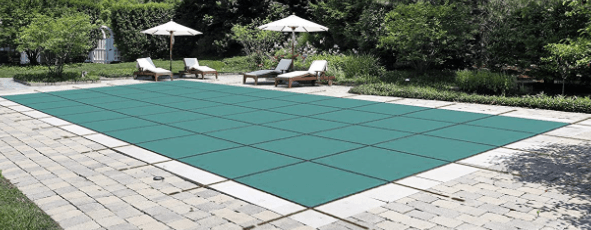
Hopefully, you’ve kept an eye on your cover and the water level underneath it all winter. Now, it’s time to see what’s going on under there. Whether you have a standard winter cover or an automatic pool safety cover, your first step is to pump off the standing water. While you’re doing this, you need to add water to the pool to ensure that your water level is high enough to counteract groundwater pressure.
So, what have we learned? If you said, “Groundwater is no joke,” you win the grand prize. It’s physics. Groundwater pressure is a pretty basic concept. All the water has to go somewhere. So, take a minute now to go out to your pool and check your water level under your winter cover. You’ll save yourself time and money by keeping groundwater pressure at bay.
Until next time; The General
About the General
The General is our guest blogger. He speaks from years of pool building experience and shares his expertise with our readers monthly. He’s also a great storyteller and really fun at a party.


 Pros of Salt Water Pools-The Benefits of Owning a Saltwater Pool
 Cons of Salt Pools-The Disadvantage of Owning a Saltwater Pool