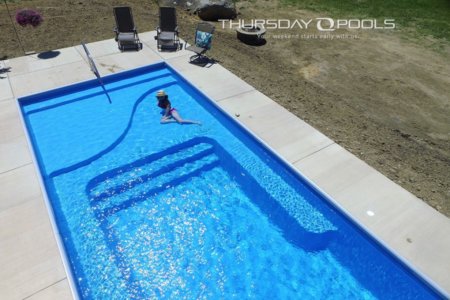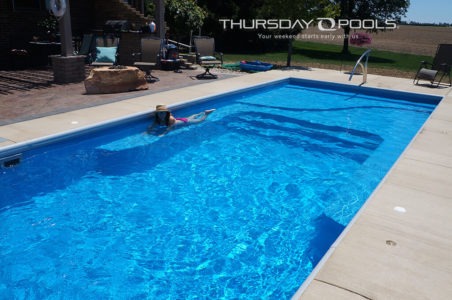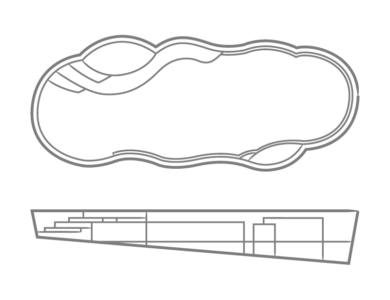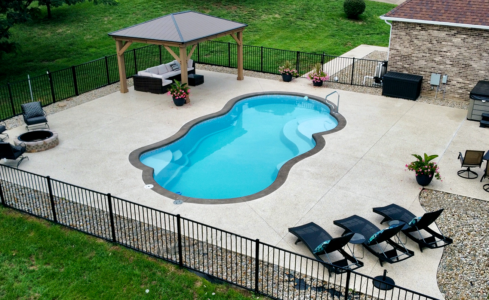
Fiberglass Pool Installations Done Right: Timing Is Everything

Fiberglass Pool Installation

What may have begun as a simple curiosity and an online search of “fiberglass pools for sale,” “fiberglass pool cost,” or even “fiberglass pools near me” has now come down to how long it will take to install your  fiberglass pool. Good news! A fiberglass pool installation can be quick and painless when it’s done right. Becoming familiar with the fiberglass pool installation process can help ease your mind and manage timeline expectations as you go through this all-new inground pool journey.

LET’S TALK FIBERGLASS POOL INSTALLATION TIMELINE

Waiting is the most challenging part of getting a new quality fiberglass inground pool! However, fiberglass installation is faster than other pool types.

How fast can an inground pool be installed? An experienced and efficient pool professional can install a new fiberglass pool and have it swim-ready in as little as three weeks! By comparison, vinyl liner pools can take up to eight weeks, and concrete (gunite) pools can take up to six months.

But remember, every project is different, and actual timings can vary. Project timelines may increase during busy install seasons or due to unforeseen supply chain issues. Effective communication with the local pool professional will give you the most accurate timeline projection and ensure everyone is on the same page.

Let’s explore the installation process for fiberglass pools, along with some guidelines for approximately how long each phase might take. We’ll also take a quick look at some of the other variables, such as the accessibility of your site, your soil conditions, the weather, and local code requirements or inspections that could impact the process and your timeline.

HOW LONG DOES IT TAKE TO INSTALL A FIBERGLASS POOL FROM START TO FINISH? LET’S BREAK IT DOWN!

When we cite timelines for a fiberglass pool installation, we are speaking based on experience and data from independent dealers within our dealer network. Timeline estimates are not for a do-it-yourself fiberglass pool install or a fiberglass pool kit—they’re for fiberglass pool shells crafted by manufacturers with high quality-control standards working with an established network of dealers and fiberglass pool installers. 

Pre-Installation: Permit Application and Approval

Permit application and approval can take as little as a few weeks or as long as several months, depending on where you live. Since this part happens before excavation, we don’t typically count it as part of how long it takes to install the pool. However, it’s important to allot time in your schedule for this process. It’s not something that should wait until the last minute. The pool builder will likely be handling the acquisition of the permits for you as part of the installation process, but they’ll need some documentation from you to get started.

Almost all the following phases are weather-dependent, so you and the pool dealer must watch your local forecast! Account for your local weather patterns as part of your installation timeline. Some dealers may shift and shuffle parts of certain phases based on their construction approach and not all builders will adhere to the following timeline verbatim. 


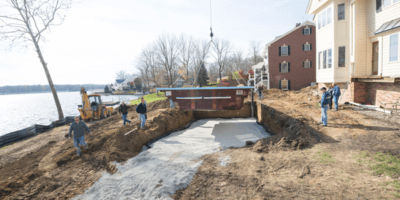
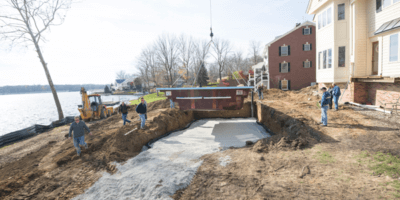
Phase One (2-3 days): Site Excavation and Setting the Pool 
Fiberglass Pool Installation

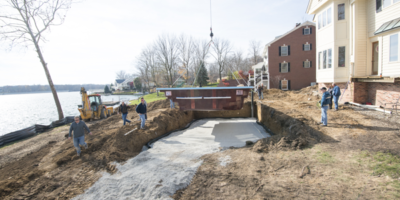
The pool builder will outline the dimensions for excavation using “dig specs” for your pool design provided by the fiberglass pool shell manufacturer.

The excavated area will be approximately four inches deeper and about a foot larger than the pool’s diameter to add backfill material under and around the shell.

The pool builder will add the base material your fiberglass pool shell will rest on and carefully level it.

Generally, pool installers will complete all pre-plumbing tasks at this installation stage.

The builder will use an excavator or crane to set your fiberglass pool shell in the hole.


Phase Two (2-3 days): Installing Remaining Plumbing, Electrical and Filtration Systems 

The pool builder will install the pool pump and filtration system lines, valves, and any other wiring needed for lights or other water features.


Phase Three (2-3 days): Backfilling the Shell and Filling the Pool 

The pool installer will add backfill around the outside of the pool shell while adding water inside the pool. These processes must happen in tandem so that the pressure on the shell is equal on both sides.

If your fiberglass pool design features a built-in tanning ledge but not  Backfill Eliminator® technology, you’ll need to allow an extra day or so for the backfill process. Tanning ledges are more challenging to backfill than any other area of the pool shell.

Opting for waterline tile in your pool design may add a day or two to the project’s installation timeline.


Phase Four (Time Varies): Inspection 

The local building and construction inspections department in your area must now inspect your pool installation.

Timing for scheduling and completing an inspection can vary significantly based on your local government agency’s availability.

The pool installer should be familiar with local agencies and officials in your area and can be an invaluable resource in planning for and scheduling this all-important step.


Phase Five (3-5 days): Coping, Decking and Auto-Cover Installation 

The pool builders will now install the coping—the top of the pool wall—around the edge of the shell.

If your design incorporates an automatic pool cover, at this point, builders will complete the rest of the “pre-pour” portion and prep work for your pool cover installation.

The pool area is now ready for whatever type of decking and pool patio surroundings you’ve chosen for the outdoor living space.

While the concrete is curing, the pool builders can begin cleaning up the site. Once the concrete cures, builders will complete the post-pour installation of your pool’s automatic safety cover.


Phase Six (2-3 days): Clean Up, Water Balancing, and Other Add-Ons 

The pool installer will remove their equipment and clean their construction materials from your property.

Before swimming, you must ensure your pool water is safe, clean, and healthy for the pool shell and your family. If your local pool builder also offers pool maintenance service, you might ask them to help you balance your water for the first time. Otherwise, you may need to bring in a pool service pro to help. Online resources, such as the  Orenda Calculator™, can be an excellent tool for helping to balance your fiberglass pool’s water using the Langelier Saturation Index (LSI).

If your project requires  new landscaping, fencing, or other features to enhance your backyard swimming pool oasis, you’ll need to add the time those contractors quoted you into your timeline.

What Factors Can Impact My Pool Installation Timeline? 

When the stars align, everything falls right into place, and proceeds without significant surprises or scheduling delays, talented and experienced pool dealers can complete a fiberglass pool install in as little as three weeks. 

You’ll want to play it safe and build a little bit of a buffer and cushion into your personal project timeline, however. Mother Nature may have her say on your schedule, or excavation may turn up ground and soil conditions necessitating extra steps in the process. 

Rain or other adverse weather conditions can potentially delay a fiberglass pool installation by days or even weeks depending on the severity and duration. Rain can impact and delay nearly every phase of construction, from excavation and leveling to the installation of plumbing work, electrical systems, concrete decking, surrounding landscaping, and other finishing touches.

Soil types and local geographic conditions in your area can also significantly impact your timeline. Underground rock, clay- or sand-heavy soils, and excessive groundwater are among the potential conditions that an independent dealer near you will have a local familiarity with and know how to approach.

No homeowner should ever have to experience fiberglass pool purchase regrets. Understanding what a fiberglass pool installation done right looks like will prepare you for the changes to come to your backyard. Then, once the installation is complete and your new pool is open, you can start  enhancing your swimming pool area with outdoor living features. 

For design advice, a detailed estimate, or answers to your questions, book a consultation with an independent dealer near you.
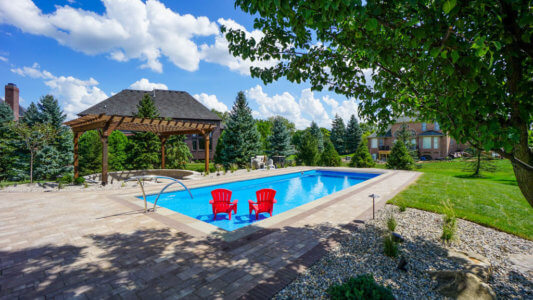
What’s the Best Time to Buy a Pool?

The best time to buy a pool is NOW! Planning of your new fiberglass pool oasis should begin well in advance of when you want your swimming pool installation to begin. You’ll want to start reaching out to inground pool builders a minimum of six months prior to your anticipated installation time. Some builders are booked a year in advance! So, the earlier you start planning, the better.

best time to buy a poolObviously, summer is the time when we think about pools the most (especially when we don’t have one). But if you shop in the summer, you’ll likely have to wait until the following summer to enjoy your new pool. Starting in the spring will at least give you a headstart on pool installation season, but it still might be too late to get on your builder’s calendar for that year. So, fall and winter are great times to think about getting a new fiberglass inground pool. However, no matter when you start shopping, the only thing that really matters is finding the perfect pool for your family. And, as they say, there’s no time like the present. There are reasons to shop for a new fiberglass pool in every season, so let’s take a deeper dive!
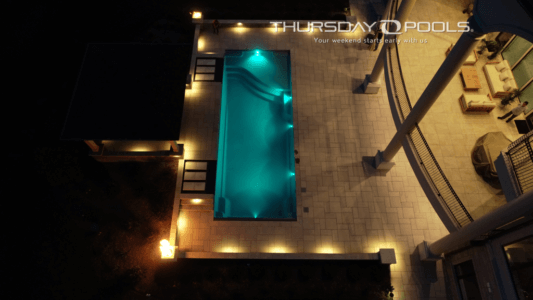
Fall

Fall is a great time of year to plan your fiberglass pool project. First of all, pool installers are just wrapping up their summer installation schedules. They’ll take a moment to catch their breath, and then they’ll be ready to dive into the spring installation schedule for next year. If you move quickly, and it’s a warm fall, you might even be able to get started on installation before the snow flies! Fall is also a great time to plant trees and flowers, so if your pool is installed in the fall, you can finish the landscaping around your new backyard swimming pool oasis as well.

Winter

Winter is the best time to shop for your new fiberglass pool. Imagine the looks on the kids’ faces if you wrapped up a picture of a beautiful new pool and put it under the tree, or if you showed them a video of a new fiberglass swimming pool on Christmas morning.

If you get all of your pool project’s details nailed down before the ground is covered in snow, you might be first on the list for spring installations, and you’ll be enjoying your new fiberglass pool the minute it’s warm enough to do so.

And here are a few more reasons why the best time to buy a pool is winter: Some (not all) pool builders offer discounts for winter purchases. Also, new fiberglass pool designs typically become available around the first of the year.

Spring

Spring seems like an obvious time to start thinking about spending the upcoming summer lounging by your new pool. And what better way to spend that tax refund than to help finance your new fiberglass swimming pool? However, if you wait until April or later to begin planning your pool project, you might find that your pool builder of choice is already booked through the end of summer. At the same time, it’s never too late to begin planning. If you start in the spring and plan your pool project quickly, you might still be able to get in the swim before the summer starts to cool down, or at least get on the waitlist before someone else.


best time to buy a pool

Summer

To summer pool shoppers, we say, “Welcome! Better late than never!” Feel free to call your local pool builder, but don’t be disappointed if they don’t get back to you immediately. Trying to order a pool in July is like waiting until noon on Valentine’s Day to order flowers. It’s not impossible, but a lot of other people have already had the same idea, and you’ll most likely have to try harder. Still, it’s worth the effort!

So, what are you waiting for? It’s time to take the plunge.


#fiberglasspools #beachentrypools #zeroentrypools #ingroundfiberglasspools #poolcost #fiberglasspoolcost #beachentrypoolcost

The Hidden Costs of Installing an Inground Pool

Inground pool quotes are often not all-inclusive. The estimate a builder provides on day one typically covers the pool structure, the excavation, and the core installation, but may stop there. Permits, fencing, decking, landscaping, and more line items may appear later as hidden costs of installing an inground pool.

Why Inground Pool Quotes Can Look Lower Than the Final Total

Two buyers with identical pools can receive quotes that differ by $20,000 or more. The gap usually comes down to scope: one quote includes premium decking, fencing, and landscaping, while the other covers only the pool and core installation. 

The only way to compare quotes accurately is to confirm what each one includes and excludes before you use it to make decisions. A low base quote isn’t a bargain if it leaves out $15,000 in fencing and electrical work you’ll have to pay for anyway.

For a full breakdown of inground pool cost by pool type, including fiberglass, vinyl liner, and concrete, see our complete Inground Pool Cost Guide.

What Does an Inground Pool Installation Quote Typically Include?

Thursday Pools photo of workers installing pool

Most standard installation packages cover the pool structure (shell, steel framing, or concrete depending on pool type), excavation and backfill, delivery, a pump and filter system, basic electrical setup, rough plumbing, and often a handrail. Most basic quotes do not always include the costs of permits, full electrical work, safety fencing, water fill, dirt hauling, pool covers, decking beyond a basic perimeter, landscaping, and yard restoration.

What Are the Most Common Extra Costs During Inground Pool Installation?

Permits and Inspections

Most municipalities require a building permit before pool excavation can begin. Separate permits for electrical and plumbing work may also be required. Permit costs typically run between $100 and $1,000, according to Pool Research, though the range varies significantly by jurisdiction. Some dealers or contractors handle the application, but the cost is yours to cover.

Excavation and Site Preparation

Site-specific conditions change excavation costs more than most buyers expect. Rocky soil requires heavier equipment and takes longer to excavate, clay-heavy soil needs drainage solutions, and sandy soil may need additional stabilization around the pool shell. Sloped yards can require grading or retaining walls before installation can proceed.

According to a 2026 survey of independent pool builders in the Thursday Pools dealer network, navigating soil conditions, elevation changes, or limited access can cost between $1,500 to $4,500 or more.

Safety Fencing

Many states and municipalities require fencing around residential pools. Specific requirements, including barrier height, material, gate types, self-latching mechanisms, and other regulations, vary by location. Your contractor should know the local code, but the cost is not always included in the base quote.

According to a 2026 survey of Thursday Pools independent dealers, the average cost for a standard 300-linear-foot fence is just more than $8,000.

Electrical Work

Pool equipment, including pumps, filtration systems, heaters, lighting, and automation controls, all require electrical connections. The complexity of that work depends on your home’s panel capacity, the distance from the equipment pad to the main panel, and the scope of lighting or automation you want.

Your pool dealer may or may not offer full electrical wiring and installation as part of their pool installation package. Either way, we recommend budgeting at least $2,000 to $5,000 for pool electrical work, though more complex setups or homes that need a panel upgrade can cost up to $10,000 or more. Confirm with your contractor whether electrical work is included in the base installation package.

Water Fill

Filling an inground pool for the first time requires a significant volume of water. Depending on pool size and local water rates, the initial fill can cost up to $2,000, according to HomeGuide

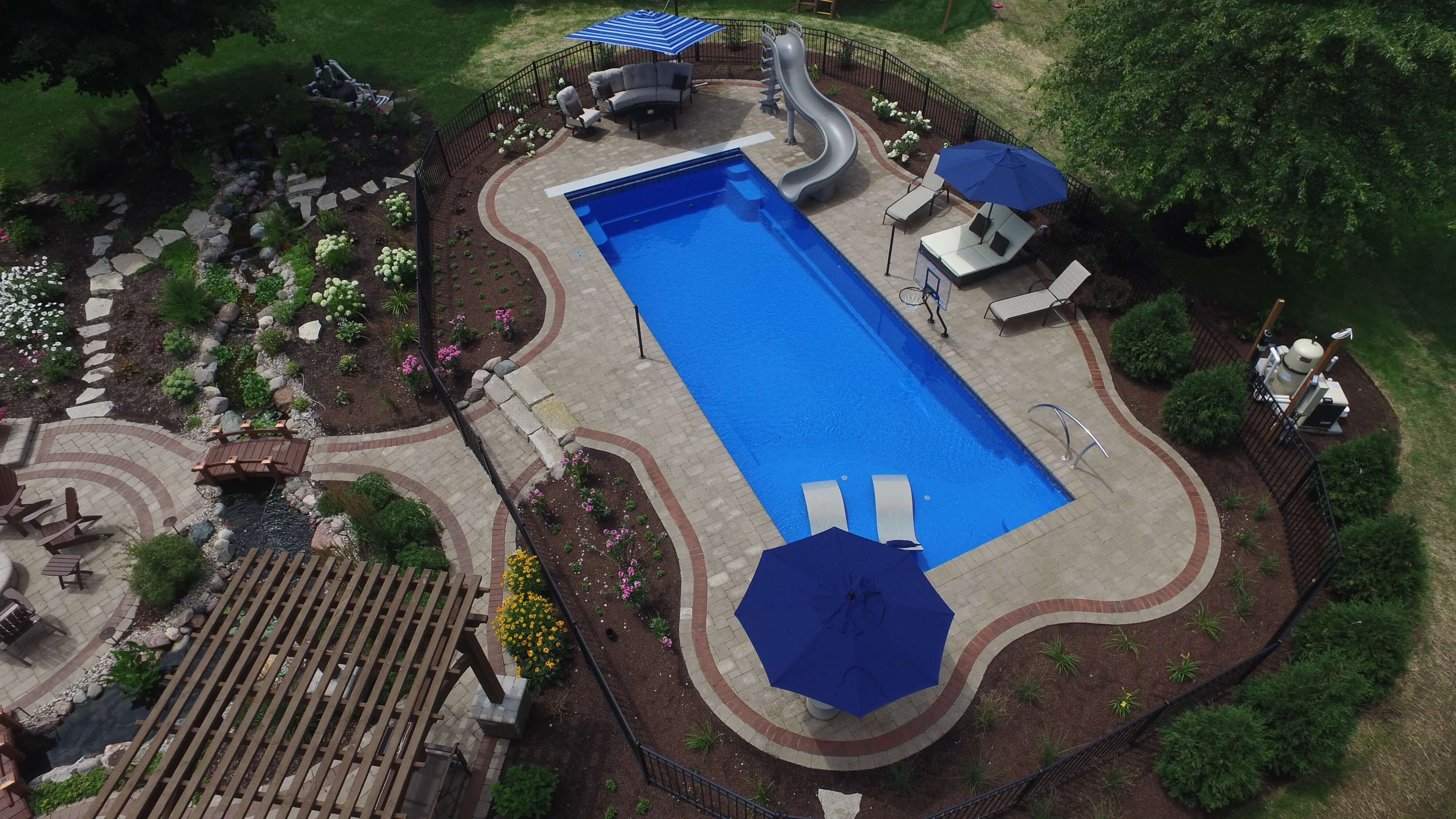
Decking, Landscaping, and Yard Restoration

Construction equipment will occupy your backyard for weeks and can leave the surrounding yard in rough shape. Post-installation restoration, including grading, sod, and landscaping, is typically not included in a base pool quote.

Decking adds significantly to the project total. A 1,200-square-foot poured concrete patio averages just over $12,500, according to 2026 data from Thursday Pools independent dealers. Paver patios of the same size run just over $13,000. Premium materials like stamped concrete or natural stone cost more.

Pool Covers

A pool cover is not optional if you live where winters freeze. The type you choose affects both upfront cost and long-term maintenance convenience.

  • Winter covers average $75-$250, according to HomeGuide.
  • Manual retractable safety covers average around $4,000, according to the 2026 Thursday Pools dealer survey.
  • The 2026 Thursday Pools dealer survey shows that automatic pool covers average $17,580 installed.

Automatic covers provide the most convenience and protection, but they require an electrical hookup and need to be factored into the electrical budget. In many cases, installing the auto cover and running the electrical simultaneously reduces total cost.

What Are the Ongoing Costs of Owning an Inground Pool?

Installation is a one-time expense. The following costs may seem hidden initially, but will recur for the life of the pool.

Regular Maintenance

Inground pool ownership requires staying on top of tasks like skimming the surface, vacuuming debris, and maintaining correct water chemistry levels for safe water and surface protection. In our experience, fiberglass pool owners typically spend $500 to $1,500 per year on DIY maintenance, while vinyl liner pool owners spend $1,000 to $2,000 per year. Gunite pool owners spend more, from $2,000 to $4,000 annually, because the porous concrete surface requires additional chemicals to control algae.

Equipment Maintenance and Repairs

Pumps, filters, heaters, and plumbing components require periodic maintenance and eventual replacement. Budget for routine upkeep and set aside a reserve for unexpected equipment failures.

Utility Costs

Running a pool pump, heater, and lighting adds to your electricity and water bill throughout the season. Energy-efficient variable-speed pumps and covers that reduce evaporation both help lower operating costs over time.

Winterization

In climates with a freeze-thaw cycle, closing the pool properly each fall protects the plumbing, equipment, and structure. Winterization typically involves blowing out plumbing lines, treating water chemistry, covering the pool, and storing or protecting equipment. Labor and materials add an annual cost. 

Resurfacing or Liner Replacement

Concrete pools need resurfacing every 10-15 years, typically at $6,000 to $15,000 or more, according to HomeGuide. Vinyl liner pools need a new liner every 5-15 years, typically costing $3,000 to $7,500, per HomeGuide. Fiberglass pools do not require periodic resurfacing, and there is no liner to replace.

How Does an Inground Pool Affect Homeowners’ Insurance?

Pools are classified as an “attractive nuisance” under most homeowners’ insurance policies, which means they increase your liability exposure in the eyes of your insurer. Expect your annual premium to rise after installation. The specific increase varies by carrier, location, coverage level, and what safety features, such as fencing, alarms, or an automatic cover, you have in place.

Contact your homeowners’ insurance provider before installation to understand the impact on your policy. Adding required safety features upfront can reduce both liability risk and premium impact.

Questions to Ask Your Contractor Before You Sign

Before committing to any inground pool quote, get clear answers to the following questions:

  1. Does this quote include permits, inspection fees, and permit applications?
  2. Is all electrical work, not just the panel, included?
  3. Does the quote include dirt hauling and excavated material removal?
  4. What decking is included, and what does additional patio work cost?
  5. Is fencing included, and does it meet local code requirements?
  6. Is the initial water fill included?
  7. Is any pool cover included, and what is the cost to upgrade to an automatic cover?
  8. Is basic yard restoration or landscaping included?

Talk to a Local Thursday Pools Dealer Before You Budget

Installation costs vary by yard, location, soil type, access conditions, and what you want surrounding the pool. The most accurate budget comes from a dealer who has seen your specific site. An authorized Thursday Pools independent dealer will assess your yard and give you a project estimate that accounts for your site, project scope, and budget. You can also try our Pool Cost Calculator for a ballpark starting point before your first dealer conversation.

Frequently Asked Questions About Inground Pool Installation Costs

What costs are typically not included in an inground pool installation quote?

Base installation quotes most often exclude permits and inspection fees, safety fencing, the full scope of electrical work, water fill, dirt hauling, decking beyond a small perimeter, landscaping, yard restoration, pool covers, and pool heaters. Getting a fully itemized quote makes it possible to compare proposals accurately and avoid budget surprises.

How much does it cost to install an inground pool, including all expenses?

A fiberglass pool typically runs $45,000 to $100,000 or more for the base installation, according to a 2026 Thursday Pools independent dealer network survey. Adding fencing, full decking, electrical work, a heater, and an automatic cover can push the total significantly higher. For a full breakdown by pool type, see our Inground Pool Cost Guide.

Do I need a permit to install an inground pool?

Yes. In most jurisdictions, a building permit is required before excavation can begin. Separate permits for electrical and plumbing work may also apply. Permit costs typically run $100 to $1,000, though the amount varies by location. Your contractor should manage the application process, but the cost is typically not included in the base installation quote.

Does inground pool fencing have to meet local code?

Yes. Most municipalities and states have specific fencing requirements for residential pools, covering minimum height, gate specifications, and latching mechanisms. Requirements vary by location, and your builder should know the local codes. According to a 2026 survey of Thursday Pools independent dealers, the average cost for a standard 300-linear-foot fence is just more than $8,000.

How much does inground pool electrical work cost?

Pool electrical work typically runs $2,000 to $5,000 at minimum in our experience, and up to $10,000 or more for complex setups or homes that need a panel upgrade. This cost is frequently excluded from base installation quotes. Confirm what is included before signing, and get a separate electrical estimate if it is not covered.

Will installing an inground pool raise my homeowners’ insurance?

Yes. Pools are classified as attractive nuisances, and most homeowners’ insurance policies will increase annual premiums after installation. The impact depends on your carrier, coverage level, location, and what safety features you have installed. Contact your insurance provider before installation to understand the impact on your policy.

Which type of inground pool has the lowest lifetime cost?

Fiberglass pools typically carry the lowest lifetime maintenance cost because they do not require periodic resurfacing or liner replacement. Concrete pools need resurfacing every 10-15 years at $6,000 to $15,000 or more. Vinyl liner pools need a new liner every 5-15 years at $3,000 to $7,500 per replacement. Fiberglass pools require no resurfacing or liner replacements.

What questions should I ask before signing a pool installation contract?

Ask specifically whether the inground pool quote includes permits, dirt hauling, electrical work, safety fencing, water fill, decking, an initial pool cover, and yard restoration. Ask for an itemized breakdown so you can compare quotes from different contractors on equal terms.

Choosing the Perfect Furniture for Your Tanning Ledge


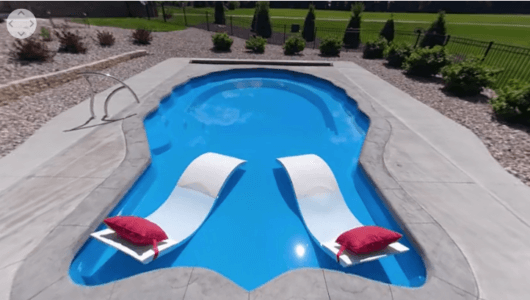
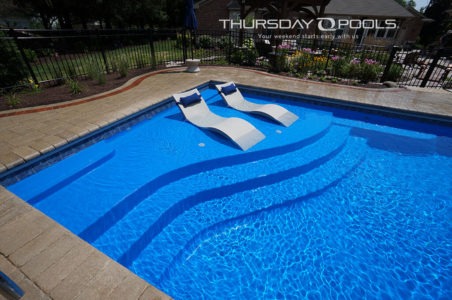
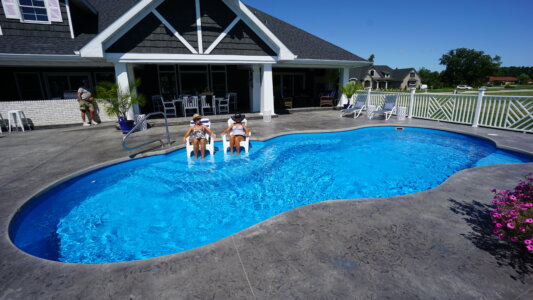
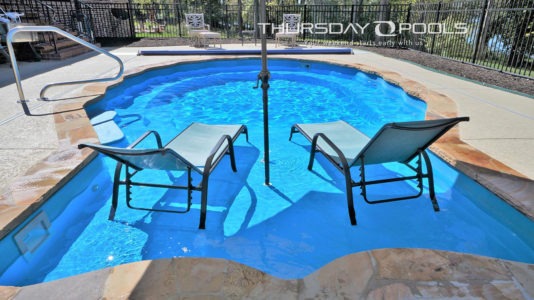
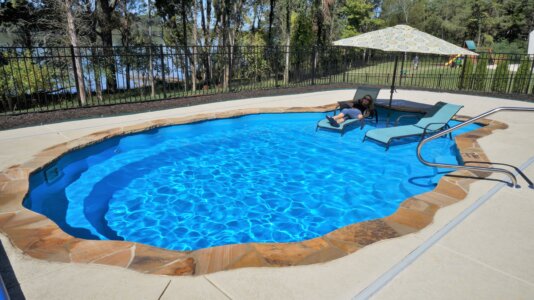
Built-in tanning ledges in fiberglass pools are dreamy. Understandably, they’re a highly sought-after feature with fiberglass pool owners. Tanning ledges are ideal spots to relax after a long day and to perfect your summer glow. Practically an outdoor living room, you’ll spend hours there relaxing and entertaining your friends and family, so you want it to be comfortable, cozy and stylish. An amazing variety of furniture and accessory options exist based on your tanning ledge’s shape and size. In this post, we’ll show you some perfect tanning ledge furniture and accessory ideas for the whole swim season.


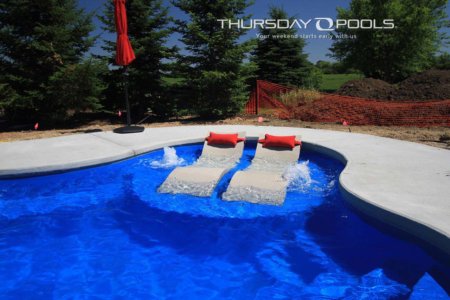
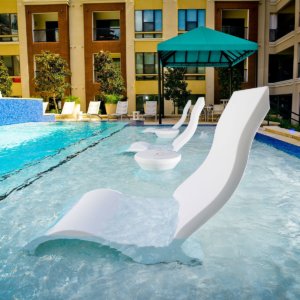
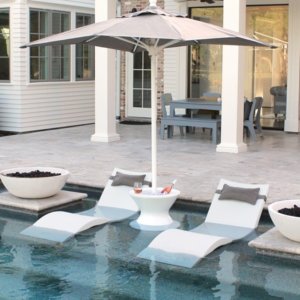
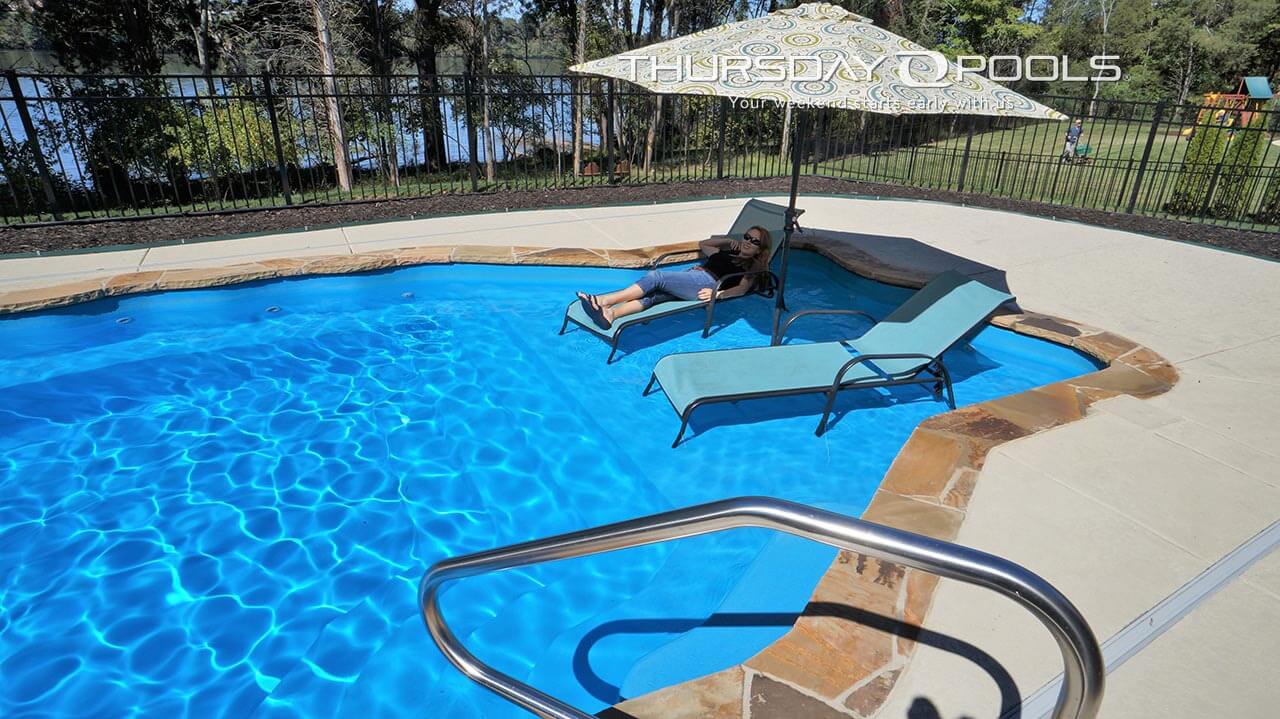
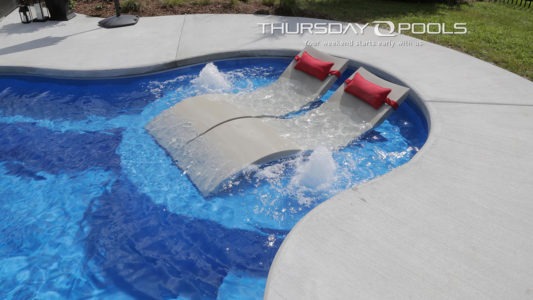
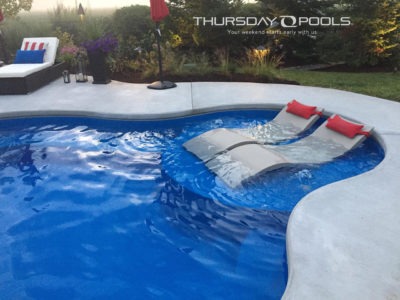
tanning ledge chaiseTanning Ledge Chaise: A chaise gives you a contoured, comfortable place to relax on your tanning ledge. Because it leans back a bit, it’s great for tanning and napping. While other options will allow you to sit up a bit more, chaises are ideal for ledges with up to 9” of water. The chaises pictured here come in a great variety of colors so you can customize them to best fit your pool area’s theme.


tanning ledge chair


Tanning Ledge Chair:  If you’d rather be able to sit up and enjoy the the view, you can get a tanning ledge seat in a more upright, high-back chair style. Whether you want to read your book club’s latest novel or keep a close eye on the kiddos, this chair will give you a comfortable, upright seating option while allowing you to soak up the sun. Chairs like this also work on tanning ledges up to 9” deep.


Tanning Ledge Chair or Chaise Headrest Pillow: No tanning ledge chaise lounge or chair is complete without a place to rest your head. These headrest pillows are the perfect complement to a tanning ledge chair or chaise. They are made with marine grade fabric, so they’re fade-resistant and mold-free. Most tanning ledge chair or chaise headrest pillows come with cool features like a handy side pocket for your phone. They’re available in an awesome array of colors and you can even have them monogrammed!


tanning ledge shade

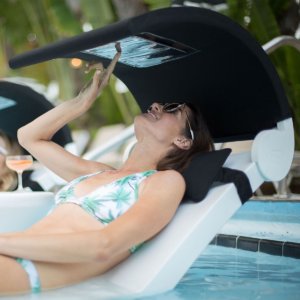
Tanning Ledge Chaise Shade: Use this shade to keep the sun out of your eyes, or better yet, use it as your own personal media center. It’s viewing window is touch screen compatible and fits devices up to 11” so you can watch a movie, read, shop or do whatever you do on your device with wireless internet.


tanning ledge daybed


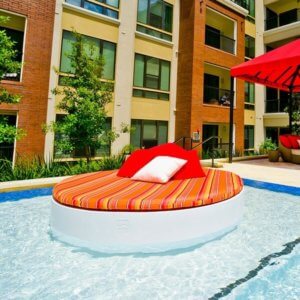
Tanning Ledge Round Daybed: For next-level luxury and relaxation, check out a circular daybed for your tanning ledge. The whole family can take naps, play a game, or just spend some quality time. These daybeds come with an umbrella sleeve and boast loads of options for cushion colors and patterns. They’re six feet in diameter, so you’ll need a good-sized tanning ledge to accommodate a daybed. They’ll work well with fiberglass pools with large tanning shelves such as the Aspen and Lil Bob LX.


tanning ledge table


Tanning Ledge Tables:  While you’re relaxing in the water on your tanning ledge, you’ll need a spot to set down your beverages, book, shades and tanning lotion. There are great table options in a variety of shapes and sizes, and some even come with umbrella sleeves and a built-in cooler to keep your poolside beverages chilled!


tanning ledge umbrella Tanning Ledge Umbrellas: Even with the water on your tanning ledge keeping you cool, you might want an umbrella to shade a wider area. Tanning ledge umbrellas come in a variety of colors, shapes and sizes, and you can even choose the pole finish that best matches the theme of your backyard paradise!
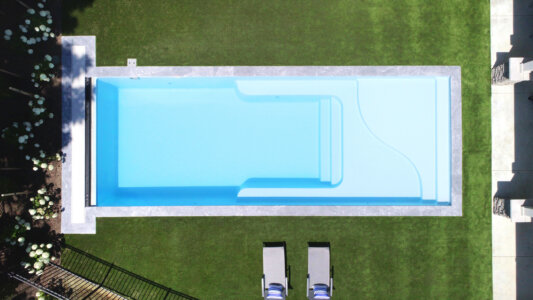


Thursday Pools offers many options for fiberglass pool designs with built-in tanning ledges, including: Aspen, Cathedral LX, Wellspring, Lil Bob LX and Sun Day, along with our two new beach entry designs— Grace and Sandal (Patent US 10,358,837 and 10,472,839).

beach entry tanning ledge

Whether you’re installing a new fiberglass pool of your dreams or just looking to add some comfort and style to your existing fiberglass pool’s awesome tanning ledge, there are so many great options to create an outdoor living space that will lend to a lifetime of memories and fun…options that will make you never want to leave your ledge!

Which Thursday Pools Pool Designs are Best for Tanning Ledges?

Fiberglass pools with tanning ledges are in high demand. And why wouldn’t they be? While soaking up the sun’s rays feels glorious, it can also get pretty hot. Being able to relax on a ledge lounger on a tanning ledge with just enough water to keep you cool is … well … just about as good as it gets.

Regardless of the size of your yard and which other features interest you if you’ve decided that you’re ready to take the plunge with an inground fiberglass pool, make sure you choose one with a tanning ledge (especially if you have a furry family member who also loves to swim.)

Read on to learn more about our best fiberglass pool designs with a tanning ledge, and pick the one that’s right for you.  After that, the only decision you’ll have to make is who to share it with because everyone will be vying for a spot!


Aspen  

Thursday Pools Aspen 16' x 40'

Aspen with tanning ledge Aspen with tanning ledge Aspen with tanning ledge

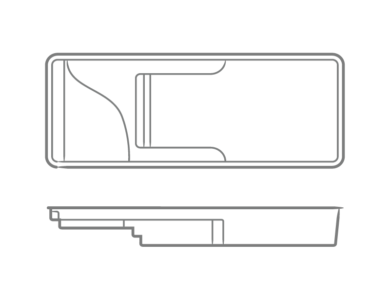
The Aspen design is our top-selling fiberglass pool design. The large, expansive tanning ledge gives you ample room to relax and play. Place a couple of loungers on this tanning ledge, and you’ll still have room for little ones to splash around. This rectangular design easily accommodates an automatic safety cover and boasts a wide-open swim area. The depth of this tanning ledge is 12”, which will give you a water depth of 6” to 8”.  Aspen is available in multiple sizes.

Check out the Aspen specs: 16’x 40’, 16’x 35’, 14’x 35’, 14’x 30′, and 14’x25′.


Cathedral LX

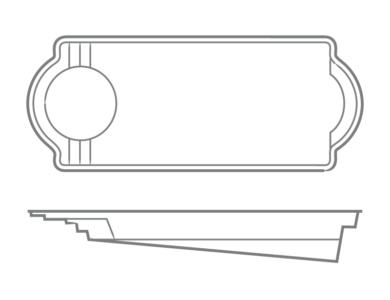
Thursday Pools Cathedral LX Pool shape outline 16x40 6'

Thursday Pools Cathedral LX Thursday Pools Cathedral LX Thursday Pools Cathedral LX

A recent addition to our tanning ledge design options, the Cathedral LX keeps the classic lines of our original Roman-end Cathedral pool design and adds a little luxury. This design includes a luxurious 9’ diameter tanning ledge area that easily accommodates a couple of ledge loungers. The depth of this tanning ledge is 12” which equates to a water depth of 6” to 8”.  The Cathedral LX has an open swim area and features a deep-end bench for those who want to sit and soak. This pool design is available in two different sizes.

Check out the Cathedral LX specs: 16’x 40 and
16’x 36’.


Wellspring

Thursday Pools Wellspring shape outline 6x40 5'10

Wellspring With Tanning Ledge Wellspring With Tanning Ledge Wellspring With Tanning Ledge

The unique free-form shape of the Wellspring features a circular tanning ledge with an 8’ diameter. This tanning ledge is set off by itself, leaving a wide-open swim area. It’s one of our smaller tanning ledges but can still accommodate a pair of ledge loungers. The depth of this tanning ledge is 12” so it will also give you a water depth on the ledge of 6” to 8”, depending on how full your pool is.  This design is available in two sizes.

Check out the Wellspring specs: 16’x 40’ and 16’x 36’.


Lil Bob LX

Thursday Pools Lil Bob LX shape outline 1.5x35.5 4'6


Thursday Pools Lil Bob LX Thursday Pools Lil Bob LX Thursday Pools Lil Bob LX

The Lil Bob LX was inspired by another top-selling design, our original Lil Bob. This design combined all the beloved features of the Lil Bob and added a unique tanning ledge to the design. The Lil Bob LX tanning ledge is split into multiple levels offering you different options of water depth. The top ledge is our traditional tanning ledge depth of 12” providing you with 6” to 8” of water to lounge in. The bottom ledge is at our wading pool depth of 18” providing 12” to 14” of water to enjoy. Even with the split levels, the top ledge can still snugly accommodate two loungers.

Check out the Lil Bob LX specs: 13.5’x 35.5’.


Sun Day

Thursday Pools Sun Day 16x39 6' Pool shape outline

Thursday Pools Sun Day Thursday Pools Sun Day Sun Day Pool by Thursday Pools

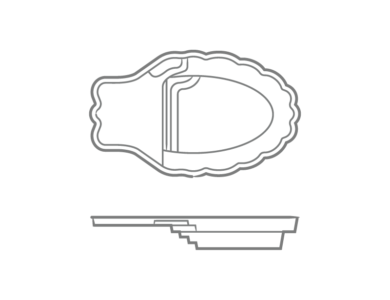
If you are looking for maybe just a little less tanning area and a little more style, the Sun Day free-form design may be the perfect option. The Sun Day features a small tanning shelf that is 12” deep in the deep end of the pool. While the small tanning ledge cannot accommodate a lounger or chair, it’s a perfect spot for you to stretch out and relax. Another great feature of this pool design is the large splash pad at the pool’s entry. The splash pad is 8” deep which gives you 2”-4” of water and provides an ideal spot for your toddler to play. The Sun Day features multiple size options.

Check out the Sun Day specs: 16’x39’, 16’x34.5’or 15’x30’.

Pearl

Thursday Pools Pearl Pool shape outline 15x25 3'9

Thursday Pools Pearl Thursday Pools Pearl Thursday Pools Pearl

Our petite Pearl is a unique gem of a pool design. From the wrap-around bench to the spacious tanning ledge, this pool is all about relaxation. Pearl’s tanning ledge is 12” deep, giving you 6” to 8” of water depth. The 9’ x 9’ open tanning area gives you plenty of room for furniture and more. The tanning ledge is set apart from the entry stairs so the sun worshippers won’t be disturbed by other swimmers entering and exiting. Pearl is also perfect to outfit with spa jets to create a perfect little backyard getaway.

Check out the Pearl specs: 15’x 25’

Beach Entry Designs Take Tanning Ledges to the Next Level

If you love the idea of a tanning ledge because of the versatility it gives you in terms of enjoying the best of both worlds at the water’s edge, then you may find our NEW beach entry designs even more intriguing. We’re proud to have created the world’s first beach entry fiberglass pools.

Beach entry fiberglass pools give you the ultimate in luxury and relaxation, with the laid-back feel of a day at the beach without the drive to the beach (or the sandy swimsuits!)

We’d like to introduce you to the two newest members of our Thursday Pools family–our beach entry designs, Grace and Sandal (Patent US 10,358,837 and 10,472,839).

Grace follows the clean lines of our top-selling Aspen design. It’s rectangular in shape and offers the same wide-open swim areas that Aspen does. It also features dual, deep-end seats for deeper water lounging and a deep-end courtesy ledge.

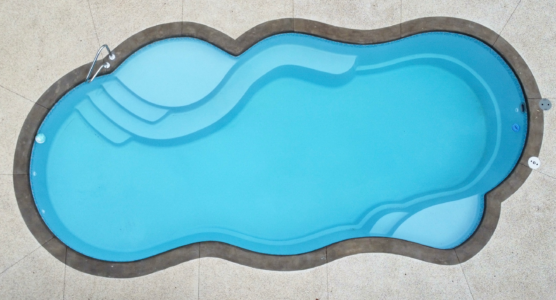
Sandal is our free-from beach entry fiberglass pool design. It features the easy style and playful curves of our Sun Day design along with the sun shelf and deep-end courtesy ledge.

No matter which pool you choose, you’re guaranteed a lifetime of enjoyment and memories with your friends and family.

What is a Beach Entry (or Zero Entry) Pool, and Why Should I Want One?

Are beach entry and zero entry the same?

Yes! The two terms are used interchangeably. Whichever term you use, they’re trending big-time in the pool world right now. You may not have seen one yet, but you probably will soon. You might have experienced a beach (or zero) entry pool at a high-end resort or water park. If you felt like you were walking into the ocean while you were actually walking into an inground swimming pool, you’ve experienced a beach entry pool.

beach entry pool

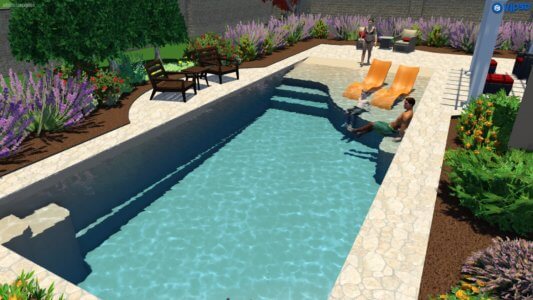
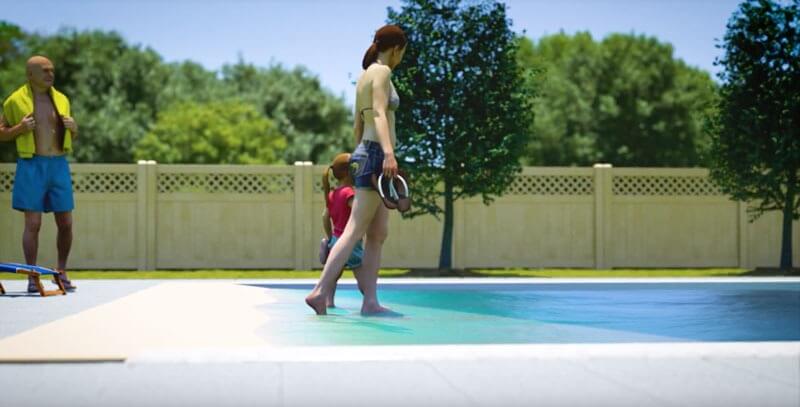
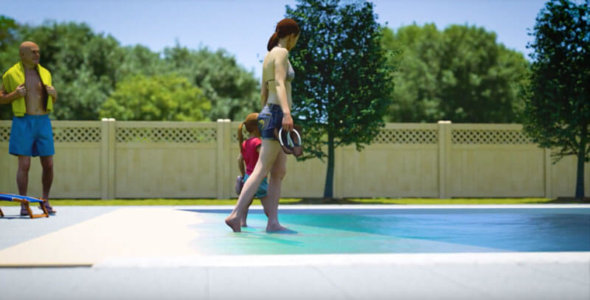
Essentially, a beach entry pool, or zero entry pool, is an inground swimming pool designed with an entry that has a very slight slope into the pool, providing you with a long, slow, gradual entry. On a pool that has a beach entry, the initial entry into the pool begins dry, or with zero water on it, which is where the term “zero entry” pool comes from.

beach entry pool | \ ˈbēch  \ ˈen-trē  \ˈpül | (noun): A beach entry pool, or zero entry pool, is an inground swimming pool designed with no step or a zero riser from the floor that has a very slight slope into the pool providing a long, slow, gradual entry where the initial entry into the pool begins dry, or with zero water on it.

Can I get a beach entry pool?

Yes! Until recently, beach entry pools have only been available in gunite (or concrete) pools. However, they have recently become available in fiberglass pools (Patent US 10,472,839), along with other highly sought-after features like tanning ledges and built-in benches. As “staycations” become more popular, families are looking to add inground fiberglass pools with luxury features to their own backyards to create a private backyard oasis they can enjoy for years to come.

Will a zero entry pool fit in my backyard?beach entry sandal

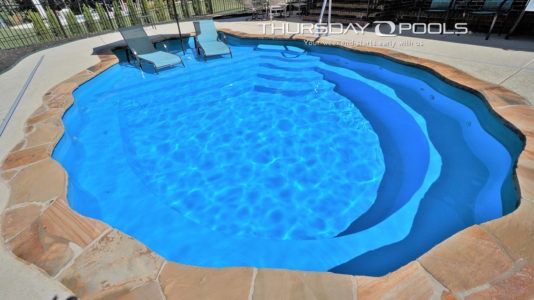
Possibly, but you might need a combination of a beach and standard entry. According to the International Swimming Pool and Spa Code, the slopes for zero-entry pools cannot exceed a 1:7 slope ratio. So, for every seven feet in distance, the pool can have no more than one foot in depth. Since space for inground swimming pools can be limited in most people’s backyards, residential beach entry fiberglass pools are typically a combination of a sloping beach entry and traditional steps. They will often have a beach entry up to a certain point and then transition to the full depth of the pool with a few steps down.

Are beach entry fiberglass pools ADA compliant?

They’re not, but they can certainly make entry and exit much easier for children, older adults or those who might otherwise have a challenge with stairs. ADA requirements call for a maximum slope ratio of 1:12 that must continue to a depth of 30 inches (or to the maximum depth of the pool if it’s less than 30 inches.) Additionally, ADA requirements for handrails and landings would apply.  

Why should I want a zero entry fiberglass pool?

Because they’re awesome! If you’ve been thinking about creating an amazing retreat in your backyard that will be a place for your family and friends to relax, enjoy and make memories that will last a lifetime, a zero entry fiberglass pool is the perfect way to do that. It’s all the joy of a day at the beach, minus the drive, the lugging of the bags, coolers and blankets, and of course, the sand in your swimsuit bottoms! Check out the fabulous options available in beach entry fiberglass pools today and make your perfect day at the beach merely steps away.

How Do I Know If I Have A Groundwater Issue?

Groundwater is virtually everywhere. It lies below the earth’s surface in the cracks and spaces of soil, rock, clay, and sand. In some areas, it may be closer to the surface than in others. The upper level of which the ground saturates with water is known as the water table. Often homeowners know they have a ground water issue when they have a high-water table. Their yard may remain soft and wet for many days after rain. Your water table does vary over time and is generally at its highest later winter/ early spring. Even if you do not have a high-water table, you still need to be aware that ground water exists and can have damaging effects on your fiberglass pool if it is not accounted for properly.  
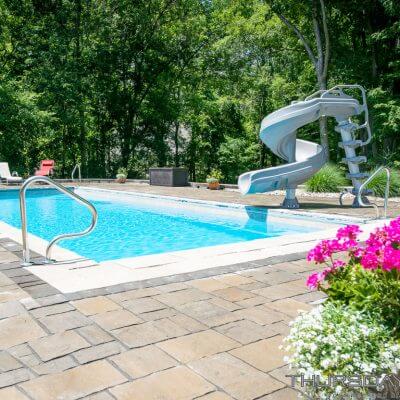
Here are some ways you and your pool builder can prevent and reduce the risk of groundwater issues:

Install a well pit or sump pit. A well pit or sump pit is usually an 8”-10” corrugated pipe that runs from the top of the deck to 1’ below the deepest depth of an inground swimming pool.  The well pit allows you the ability to visually see when groundwater is present and when necessary to be able to drop a pump to pump the groundwater away from the pool.  

Install a perimeter drain. Install a perimeter drain around the base of the excavated pool area. A perimeter drain will provide the water an easy path to the well pit.

Maintain proper water level. Most groundwater damage to inground pools happens when a pool is empty, or the water level is low. This provides an easy opportunity for the groundwater pressure outside the pool to exceed the internal pressure of the pool.

Reroute downspouts. Ensure that downspouts are rerouted out and around the pool.

Regardless of whether or not you believe you have a groundwater issue, these simple steps can drastically reduce the risk of groundwater issues associated with inground pools. Talk to your pool builder about including them as part of your inground pool project.

Top Five Pool Options Every Inground Swimming Pool Buyer Should Consider

The market for inground swimming pool options is enormous and can be overwhelming, but there are only a handful that every inground pool owner should consider. Here are some important swimming pool options that you should consider and why. We have also included some budget saving tips.

  1. pool optionsAutomatic Pool Covers. Automatic pool covers do more than protect your loved ones and pets; they make owning your own pool easy. Automatic safety covers protect your inground pool from water evaporation loss which aids in keeping heat and chemicals in; helping you keep pool chemicals and heating costs down. They also aid in keeping debris out allowing you more time for fun and frolicking rather than vacuuming or skimming leaves. For those folks who winterize their pool, it can double as your winter cover which allows you to avoid the hassle of dragging out the water tubes and tarp or strapping down your safety cover. Who doesn’t want to avoid that hassle? As a side note, most pool companies charge less for winterization when pool owners have an automatic safety cover.
    Pool Budget Saving Tip: Adding on an automatic safety cover when purchasing your inground pool options is a large expense and often is not in the budget. In lieu of a complete purchase, ask your pool builder about prepping for a future automatic safety cover install. Many times pool builders can set the box and tracks laying the groundwork for a future install that will be easy and more cost effective than a retrofit.
  2. Heater. For those of us that don’t live in the sunbelt, we are always looking for ways to extend our swim season. A heater is a great way to do that. Yes, they can be costly to run especially gas heaters, but you likely will only run the heater in early spring and late fall. Electric heat pumps are more efficient and less expensive to operate, but they are slower to heat and have a higher initial cost. If you decide to go with a heat pump, they offer a chiller option that you might consider.
    Pool Budget Saving Tip: Heaters are easy pool options to add on later and don’t necessarily have to be installed at the time of your inground pool purchase. Just be sure that you leave enough room in your equipment area. The heater must be a minimum of 8 feet away from a window so plan ahead.
  3. Inground pool lighting. Inground pool lighting can elevate the entire mood of your backyard patio area and provide safety for late night swimmers. This is one of those inground pool options that if you are considering it, now would be the time to opt for it. In-pool lighting is difficult to add on to an inground pool later and will cost you a lot more after the fact.
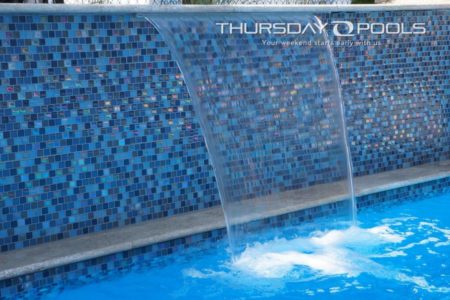
  4. pool optionsWater Features. The sound of moving water is mesmerizing and provides health benefits such as stress relief and relaxation. The best part about adding a water feature as one of your pool options is it allows you to enjoy the pool without even being in it. Adding a water feature to your inground pool can be as simple as a deck jet or as elaborate as a custom waterfall. Water features that circulate the pool water are not easily added on later and should be planned for during the construction phase of your project.
    Pool Budget Saving Tip: If it isn’t in your initial “pool options budget” to add a water feature, ask your pool builder about pre-plumbing and stubbing up for a future water feature addition.
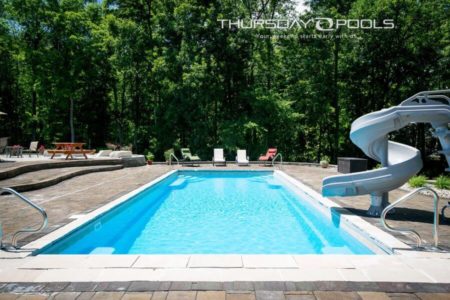
  5. pool optionsSlides and Sports. Slides and water sports can bring out the competitive spirit in any family and raise the fun level. The options for inground pool slides have grown tremendously over the last decade. Extreme slides such as SR Smith’s Turbo Twister® or Inter-fab’s X-Stream® are some popular pool slide choices. Because all pool slides operate using a water line installed during construction, they are not easily retrofitted to existing pools. There are a lot of options for on deck applications for inground pool sports like volleyball and basketball; the best most unobtrusive pool options require an anchor socket to be installed in the deck during construction.
    Pool Budget Saving Tip: You can pre-plumb your pool with a water line for a slide to add later on but it does take some planning. You will want to decide what slide you will want in the future and make sure that you have the footprint large enough on your patio area to accommodate it along with the proper size plumbing line. You will also want to make sure that it meets the slides safety requirements for depth and entry.  You can hold off on purchasing the basketball and volleyball units, but I would strongly recommend at least having the deck anchors installed.