Backyard Pool or Timeshare: Which One’s Better Long-Term?

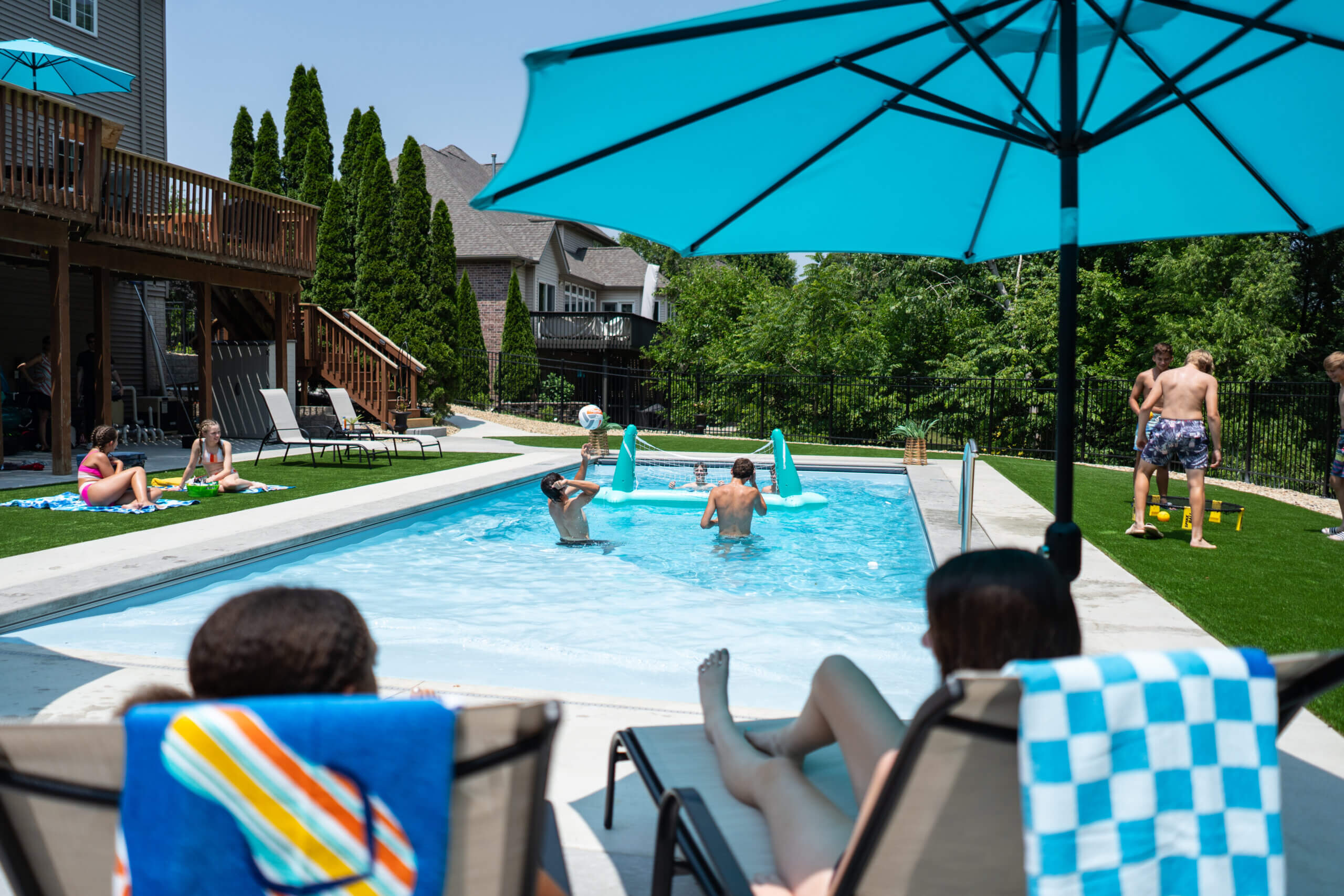
Thursday Pools lifestyle photo of kids playing in pool

Thinking about making a big investment to bring more fun, relaxation, and connection into your life? Two options often come up: a timeshare in a vacation hotspot or a backyard fiberglass pool. Both offer luxury and hold promise for ultimate relaxation. 


While we’re in the fiberglass pool business and definitely have a favorite, this guide is not about pitching you—it’s about helping you decide what truly fits your life. Read on as we break down lifestyle differences, ongoing costs, and long-term satisfaction to help you make the best choice for your family.


Lifestyle Considerations: Fixed Getaways or Flexible Fun?


Timeshare Life: Travel Plans Required

A timeshare offers a great taste of the good life. It’s dedicated vacation accommodations in a beautiful setting without the full responsibility of ownership, but that doesn’t mean it’s carefree.


Most timeshare owners get access only during a specific week or must use a points system to “book” stays well in advance. Changing your dates, switching to another resort, or trading points can be complicated or not permitted.


Even if you’re free to travel almost any time, a timeshare demands a lot of logistical planning. You’ll need to arrange flights, pack for the trip, coordinate with the resort’s schedule, and navigate availability. It likely will not be as enjoyable for those who prefer spontaneity. 


Backyard Pool Life: On-Demand Enjoyment

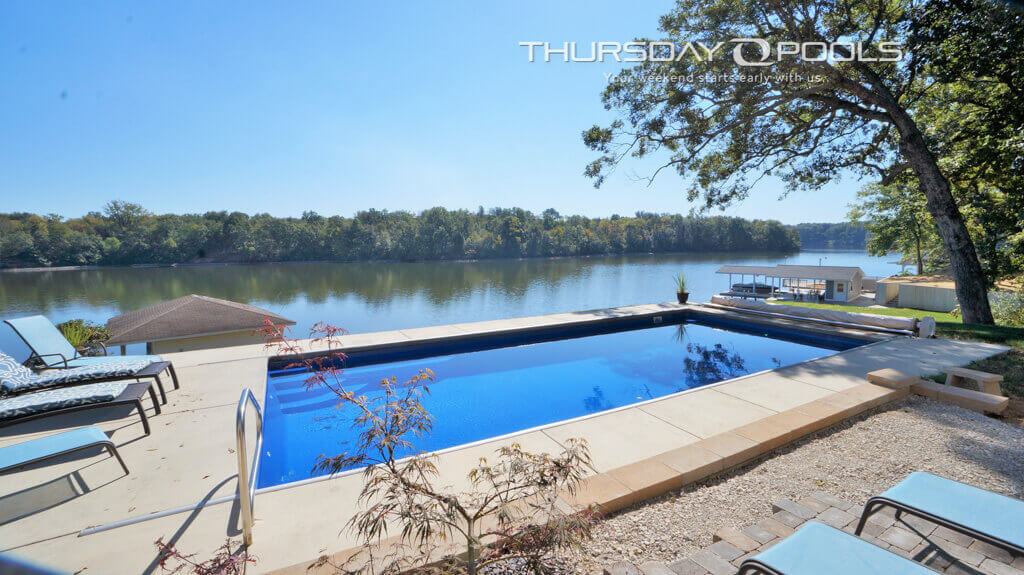
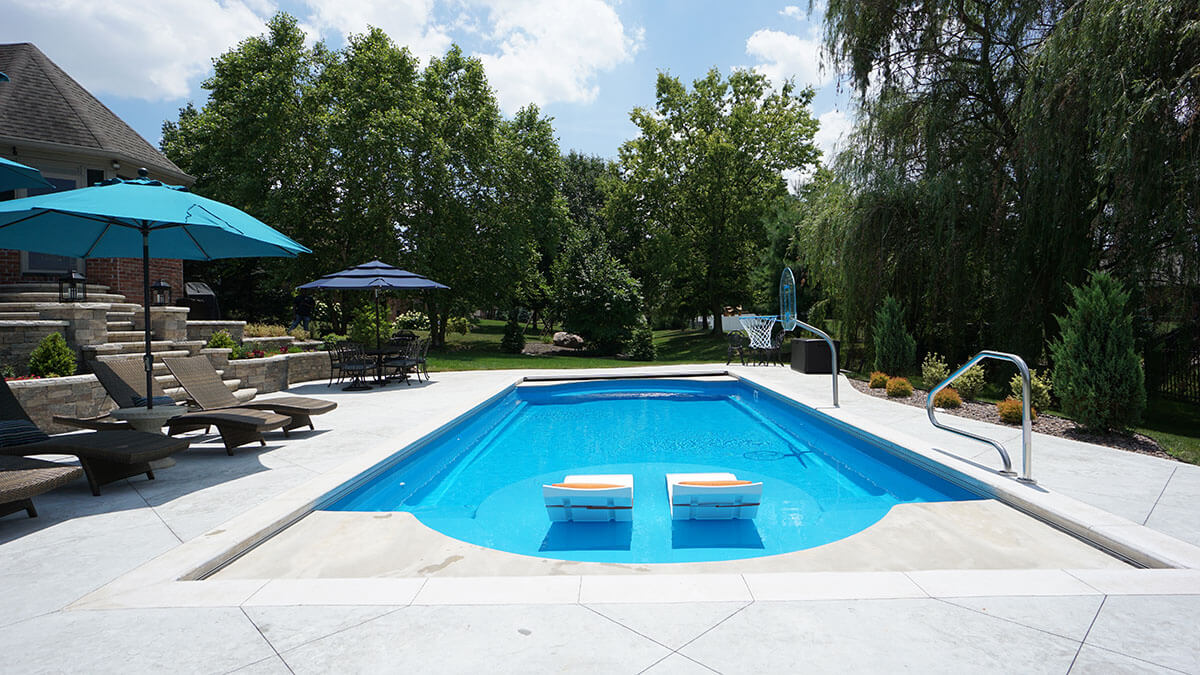
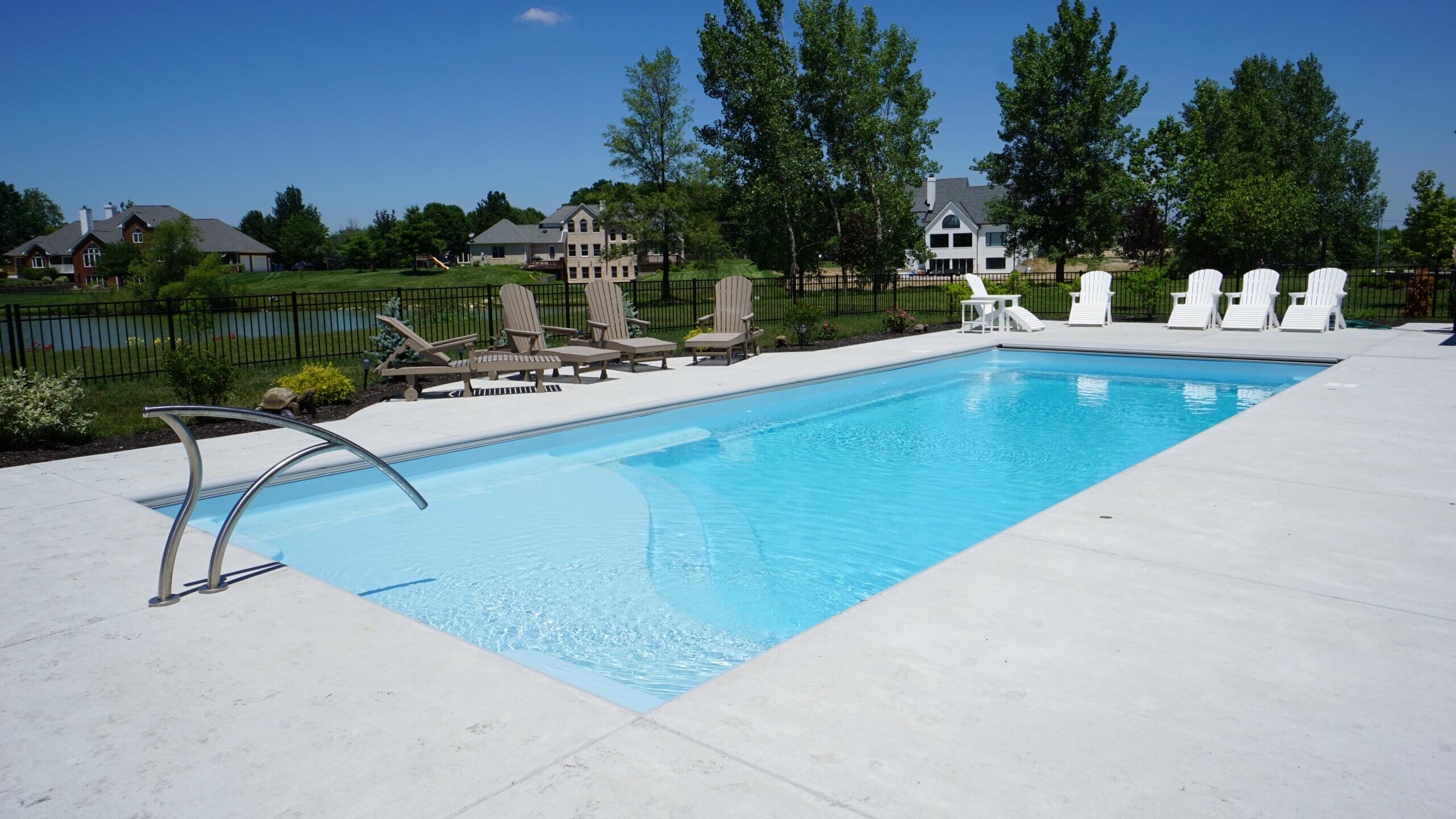
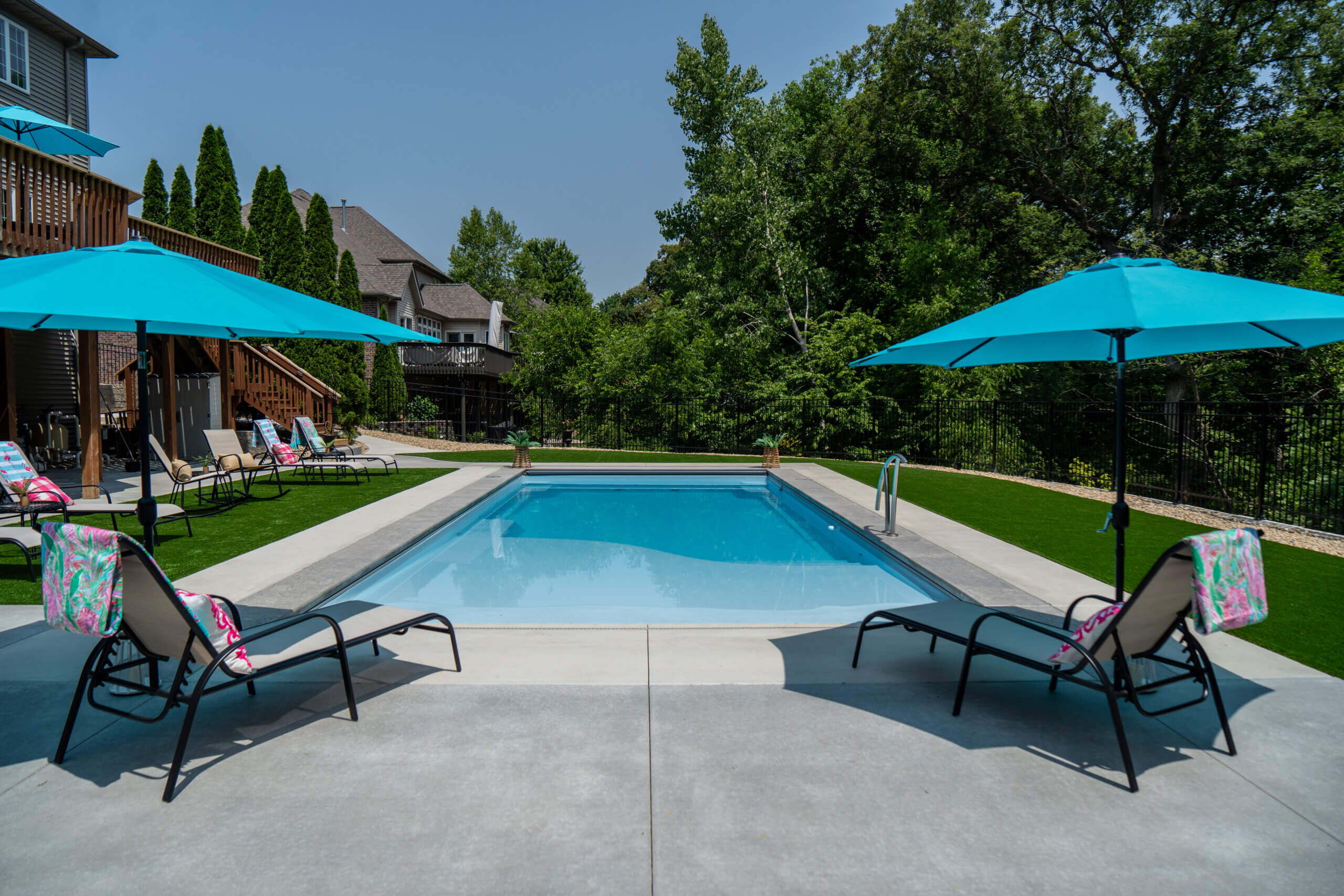
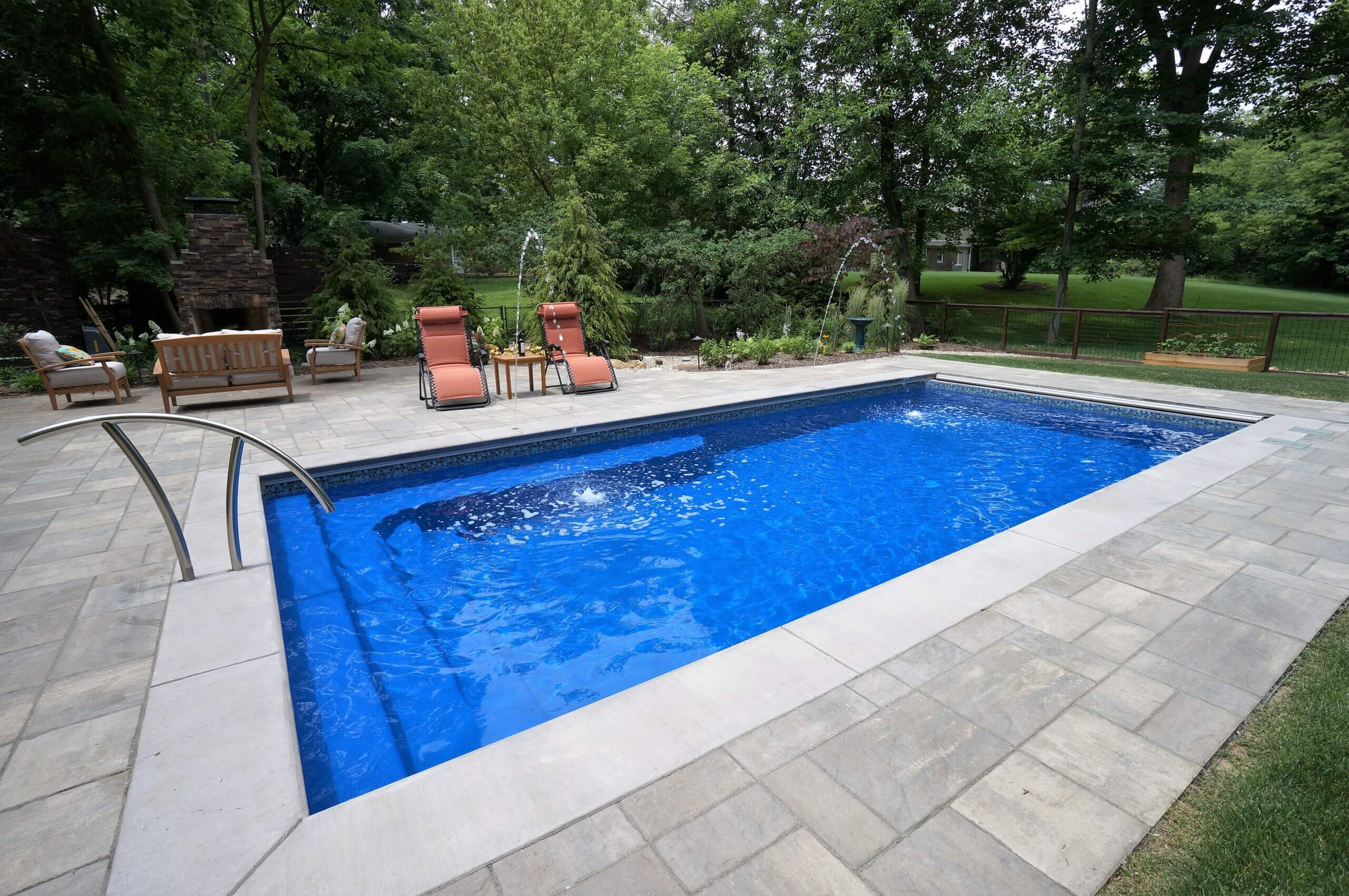
With an inground fiberglass pool right outside your door, you control the experience. Morning swims, sunset soaks, spontaneous Saturday gatherings—it’s all on your terms, no reservations required.


Unlike a timeshare where amenities like the pool, hot tub, or grills are often shared with other guests, a backyard pool means everything’s yours. No getting up at the crack of dawn to get your favorite poolside lounge chair. No waiting your turn at the grill. No quiet hours, check-in times, or posted rules. Just full access to your space, any time the weather’s right.


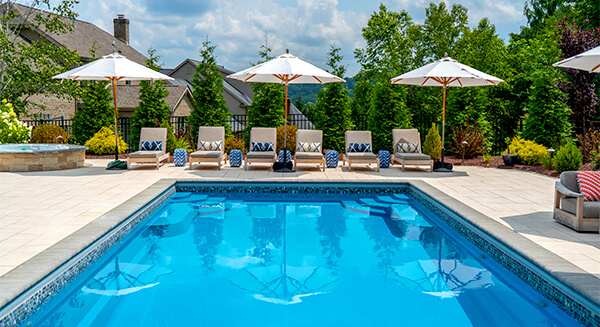
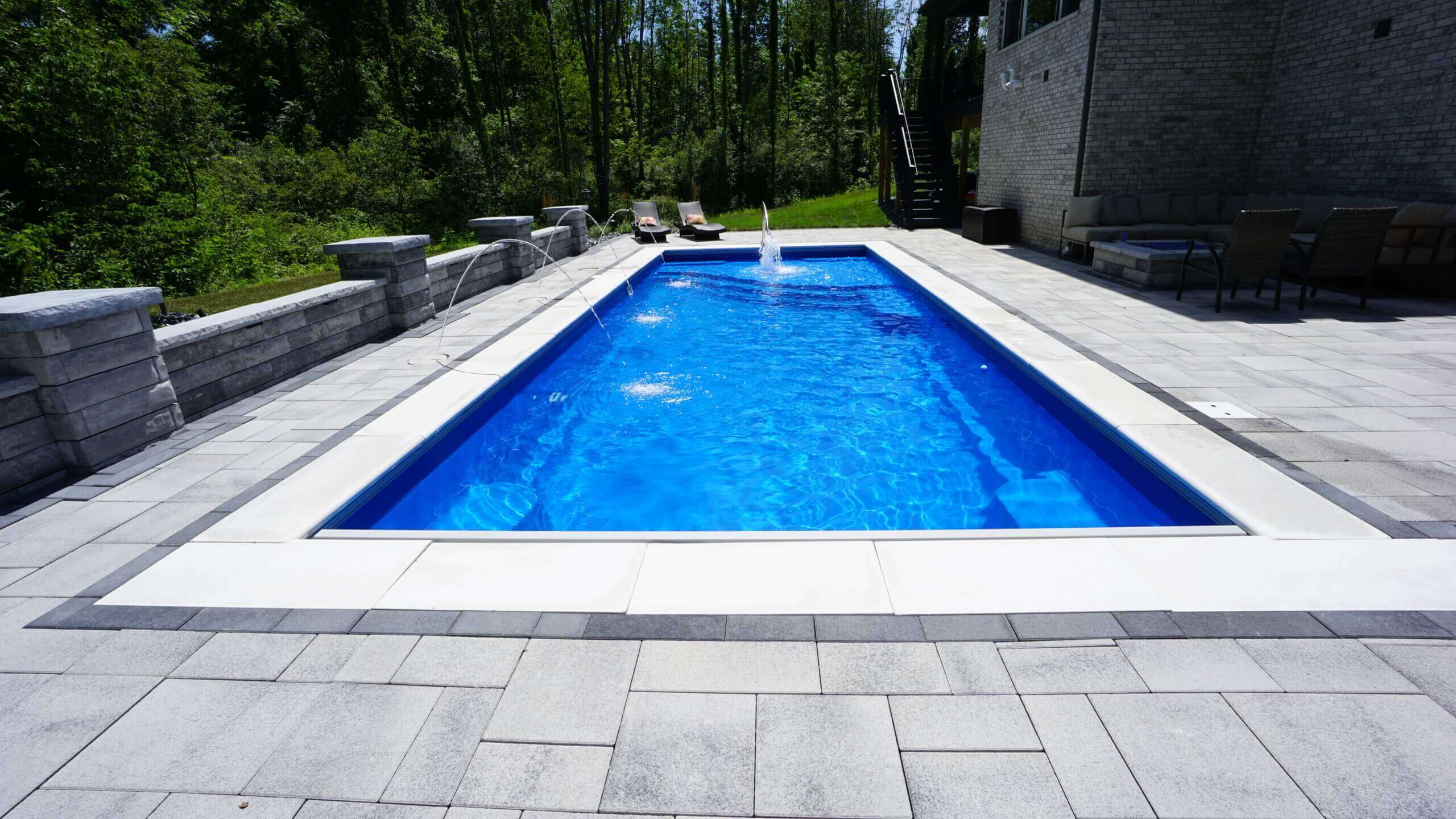
You can host poolside dinners, grill with friends while the kids swim, or sneak in a peaceful evening float in total privacy. Add smart automation, lights, water features, or a built-in bar—it’s your backyard, and it’s built around how you relax.


Financial Considerations: What Will You Spend—and What Will You Get?


Timeshares: Ongoing Fees and Limited Returns

The American Resort Development Association (ARDA) 2024 State of the Vacation Timeshare Industry report shows that the average upfront price for a timeshare interval exceeded $24,000 in 2023. That may be notably less than many fiberglass pool installations, but that’s only the beginning.


Every year, timeshare owners must pay mandatory maintenance fees. According to the ARDA’s report, the average timeshare maintenance fee increased 8% in 2023 to $1,260 per weekly interval. These fees typically only increase over time, and properties require them whether or not you use your timeshare. Add in special assessments for repairs or upgrades, travel expenses, and financing costs—often featuring much higher interest rates than traditional mortgages—and you could be spending thousands annually just to keep the right to access a single week of vacation.


According to Vacation Ownership Consultants, many timeshare owners find themselves unpleasantly surprised by hidden or unexpected costs such as exchange fees, booking charges, and transfer penalties. And when you’re ready to walk away? Timeshares are not an investment you can expect to appreciate in value. They depreciate quickly and can be difficult to unload, hurting their resale value.


Pools: Today’s Home Upgrade with Long-Lasting Value

Yes, installing a backyard swimming pool is a significant investment. Fiberglass pool costs for many new projects can range from $40,000–$120,000 or more depending on size, design, location, and optional add-ons such as a premium pool deck or expansive outdoor living space. But an inground pool is also a lasting investment. A well-maintained pool becomes part of your home and an asset that enhances your property’s value and appeal.


Unlike porous concrete or vinyl pools that demand replacement liners or occasional resealing, fiberglass pools have minimal ongoing maintenance needs. The smooth, non-porous surface resists algae, meaning you’ll spend less money on chemicals and less time on cleaning efforts. There’s no need for costly resurfacing or liner replacements, which can save homeowners thousands over the life of the pool. Plus, there are no annual fees or dues. 


When it one day becomes time to sell your home, many buyers view a pool as a premium feature—especially one with thoughtful design considerations and is part of a beautifully landscaped outdoor living space. According to a Bankrate article, a pool can add 5% to 8% in value to a home on average.


Freedom and Control: Who’s Really in Charge?


With a Timeshare…

Because you don’t fully own the property with a timeshare, your ability to use it is often shaped by the resort’s schedules, rules, and availability. Passing it down to family isn’t always straightforward, and if you ever decide to walk away, exiting the contract can be complicated—sometimes requiring legal help.


With a Backyard Pool…

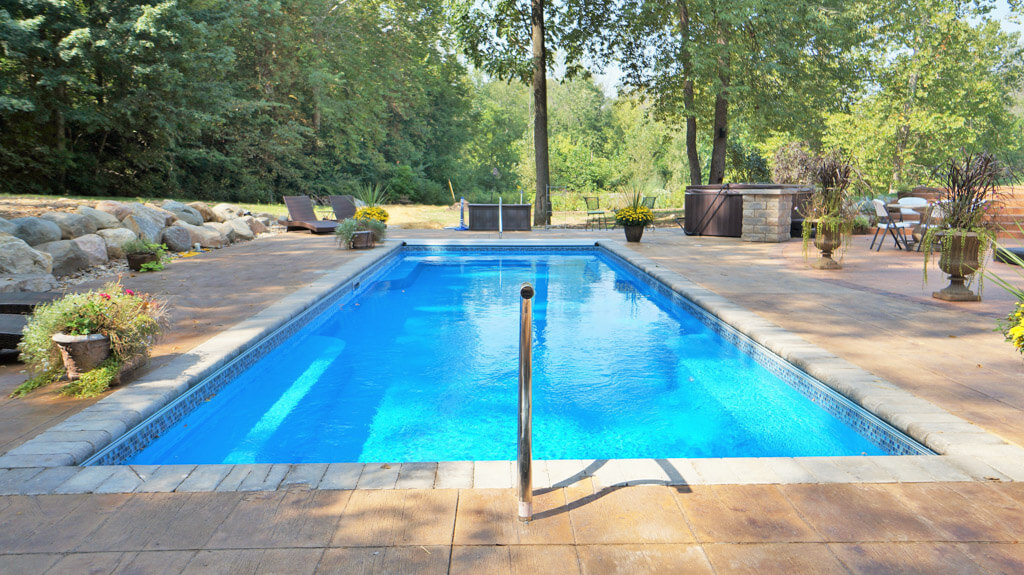
You are the sole decision-maker. There’s no management company telling you when or how you can use your backyard retreat. You can swim at sunrise or entertain at midnight. Upgrade it. Add on. Enjoy it 365 days a year or whenever the weather cooperates. An inground fiberglass pool in your backyard is truly and entirely yours, ready whenever you’ve got an itch to scratch—or splash.


Final Thoughts: Your Lifestyle, Your Choice

Timeshares and fiberglass pools both offer a taste of luxury—but only one becomes a seamless part of your everyday life.


If you love to travel, don’t mind planning months ahead, and are comfortable with annual fees, a timeshare might check the right boxes. But if you’re looking for something that brings more joy to your day-to-day—a way to unwind without packing a bag or booking a week off—a backyard fiberglass pool gives you more freedom, more flexibility, and more value over time.


Ready to Make a Splash?

Use our Pool Cost Calculator to explore pricing, or check out our Pool Selector Tool to find a design that fits your life. When you’re ready, connect with a local independent Thursday Pools dealer—no pressure, just helpful info to get you started.

How Much Does a Fiberglass Pool Cost in Virginia?

Based on a 2026 survey of independent fiberglass pool builders in the Thursday Pools dealer network, a standard fiberglass pool installation in Virginia averages $72,000 for a small pool, $91,000 for a medium pool, and $104,000 for a large pool. Your final cost will depend on details like pool size, yard conditions, local permit requirements, and the optional upgrades you choose.

Virginia’s varied geography directly impacts pool installation costs. From the sandy Coastal Plain stretching from Virginia Beach to Richmond to clay-heavy Piedmont soil across Northern and Central Virginia, to the rocky Blue Ridge and Appalachian terrain, soil types shape excavation final project costs. Sloped lots are common throughout Roanoke, Charlottesville, and the Shenandoah Valley, often requiring leveling work before installation can begin. Dense suburban neighborhoods from Fairfax County to the Richmond suburbs may present tight access conditions that require specialty equipment to deliver the pool shell.

A local independent Thursday Pools dealer can evaluate your site, navigate local permit requirements, and help you build the right pool package for your property and your climate.


What is the Average Cost of a Fiberglass Pool Installation in Virginia?

Thursday Pools surveys its network of independent dealers across the country each year to track real-world installation costs. The figures below reflect current market conditions in Virginia based on our 2026 dealer survey.

Based on the 2026 survey of independent Thursday Pools dealers in Virginia, installed fiberglass pool costs average $72,000 for small pools, $91,000 for medium pools, and $104,000 for large pools.

AVERAGE VIRGINIA FIBERGLASS POOL INSTALLATION BY SIZE

Pool Type Small Fiberglass Pools Medium Fiberglass Pools Large Fiberglass Pools
Size Range Up to 26 ft Long or 400 ft² 26 to 34 ft Long or 400 to 600 ft² 35 ft and Longer or 600+ ft²
Average Cost $72,000 $91,000 $104,000

What Does a Standard Fiberglass Pool Installation in Virginia Include?

Most Virginia dealers include the following in a base package: the pool shell, excavation, basic pump and filtration equipment, plumbing, basic electrical, permits, a single pool light, initial water fill, dirt hauling, concrete decking approximately 3 feet around the pool, delivery, and labor. What individual dealers include can vary, so always compare proposals carefully. Expanded decking, fencing, landscaping, pool covers, and optional features typically cost extra.

Contact a nearby Thursday Pools dealer for a custom quote and to learn about financing options for your Virginia pool installation.


What Do Popular Fiberglass Pool Models Cost Installed in Virginia?
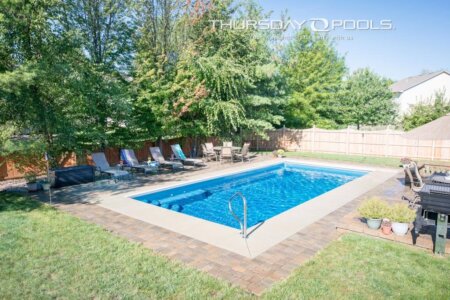
GOLIATH (12’ x 25’)

Goliath’s smallest size is a compact, capable design that delivers full pool functionality without demanding a large footprint across suburban lots in Arlington, Alexandria, and tighter urban properties in Richmond and Norfolk. Built-in entry steps, perimeter bench seating, and an open swim lane make it equally useful for morning workouts and casual afternoons.

Based on 2026 feedback from Thursday Pools dealers throughout Virginia, the average installed cost for a small fiberglass pool like Goliath or other designs less than 26 feet long and 400 square feet is $72,000.
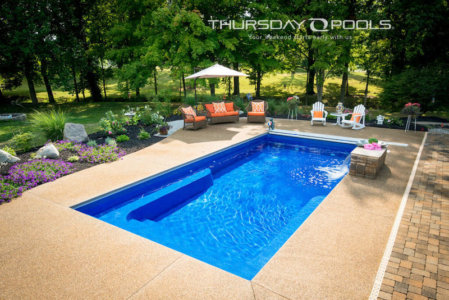
 

Ocean Lil Bob pool with Thursday Pools logo

LIL BOB (13.5’ x 27.5’)

Lil Bob brings versatility to mid-size Virginia backyards. It’s equally at home in suburban Roanoke, a neighborhood lot in Charlottesville, or a Richmond-area development where homeowners want a capable pool without overcommitting on square footage. A flat-bottom layout handles water games, casual fitness, and family use with equal ease. Wide entry steps double as seating, and the perimeter bench seating creates a comfortable gathering space that works whether you’re hosting a dozen guests or winding down after work.

According to 2026 survey responses from independent Thursday Pools dealers throughout Virginia, the average installed cost for a medium-sized fiberglass pool like Lil Bob is $91,000.
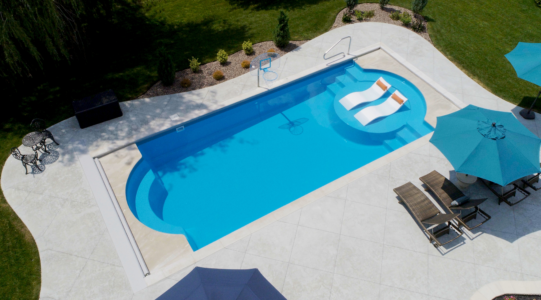
 

Thursday Pools Cathedral LX

CATHEDRAL LX (16’ x 40’)

Cathedral LX is for Virginia properties where the yard can support a statement, such as larger lots in Loudoun County and Fairfax County wine country, lakeside retreats at Smith Mountain Lake, or spacious Shenandoah Valley acreage. Its formal design pairs traditional elegance with modern functionality. Grand entry steps, a generous tanning ledge, and an expansive swim space with an architectural presence anchors a full outdoor living setup.

The average cost for a standard installation of a large fiberglass pool like Cathedral LX in Virginia is $104,000.


What Yard Conditions Affect Fiberglass Pool Installation Costs in Virginia?

Virginia’s diverse terrain means site conditions can vary from one backyard to the next. Before breaking ground, a professional installer will assess your site for conditions that may require extra preparation.

Soil Type

Virginia’s geology creates distinct excavation challenges depending on where you are in the state. Sandy soils along the Coastal Plain, from Virginia Beach to the Northern Neck, are easier to excavate but may require reinforced backfilling for long-term pool stability. Clay-heavy soils are prevalent throughout the Piedmont and much of Northern Virginia, including Fairfax, Loudoun, and Prince William Counties, creating drainage challenges that require careful handling during installation. Rocky soil is common in the Blue Ridge foothills, across the Shenandoah Valley, and throughout much of Southwest Virginia, often requiring specialized excavation equipment and additional labor. A pre-installation site assessment identifies what your specific soil requires before the project begins.

Slope and Grade

Sloped lots are common throughout Virginia’s western regions, the foothills of the Blue Ridge, and many communities in Roanoke, Charlottesville, and the Shenandoah Valley. Properties with significant grade changes may need grading, retaining walls, or other leveling work before excavation can proceed. A relatively flat, level yard keeps installation more straightforward and predictable.

Backyard Access

Wide-open access makes a fiberglass pool installation more efficient. Dense Northern Virginia suburbs, where tight lot lines, mature trees, HOA fence requirements, and narrow side yards are common, frequently require crane service or specialty delivery approaches to move the one-piece pool shell into position.


AVERAGE ADDITIONAL YARD-RELATED EXPENSES IN VIRGINIA


Excavating Sandy Soil $2,025
Excavating Clay Soil $2,450
Excavating Rocky Soil $5,450
Above-Average Slope Requiring Extra Grading $6,750
Limited Yard Access  $5,325


Based on Thursday Pools’ 2026 independent dealer survey, site-condition upcharges in Virginia range from about $2,025 for excavating sandy soil to $6,750 for above-average slopes requiring extra grading.


What Are Virginia’s Swimming Pool Fence Requirements?

Residential pool barrier requirements in Virginia are governed by the Virginia Uniform Statewide Building Code (USBC), requiring all swimming pools to comply with the International Swimming Pool and Spa Code (ISPSC).

The ISPSC establishes the specific barrier requirements that apply statewide to new residential pool construction:

  • The barrier must be at least 48 inches tall, measured on the exterior side of the barrier facing away from the pool.
  • The maximum vertical clearance between the ground and the bottom of the barrier must not exceed 2 inches on non-solid surfaces such as grass or gravel, or 4 inches on solid surfaces such as concrete.
  • Openings in the barrier must not allow passage of a 4-inch-diameter sphere.
  • Barriers must not contain footholds, handholds, or other features that would allow a child to climb over.
  • Gates must be self-closing and self-latching, and must open outward away from the pool.

Local Virginia municipalities have the authority to adopt pool fencing ordinances that may exceed the statewide USBC baseline. Requirements vary by jurisdiction, and homeowners should always verify current local requirements before installation.

For a 300-linear-foot basic pool fence, Virginia dealers estimate an average cost of $6,550. Final pricing varies by material, height, gate requirements, terrain, and local code compliance.


How Much Do Fiberglass Pool Upgrades Cost in Virginia?

Optional features can expand what your pool does and extend your swimming season throughout Virginia’s warm-weather months. The right upgrades enhance comfort, convenience, and safety while maximizing your investment. The averages below come from Thursday Pools’ 2026 dealer survey in Virginia.

Water Quality and System Controls

Pool Heater

  • Average Cost in Virginia: $5,200
  • Extend your swim season by maintaining comfortable water temperatures during cooler months, maximizing enjoyment through Virginia’s mild spring and fall seasons.

UV Filter System

  • Average Cost in Virginia: $1,450
  • A UV system passes pool water through an ultraviolet light chamber that destroys bacteria, algae, and chloramines so chlorine works more efficiently and you need less of it to maintain safe, sanitary water.

Pool Automation and Smart Control System

  • Average Cost in Virginia: $3,250
  • Manage temperature, lighting, and filtration from a smartphone or tablet.


Patio and Hardscape

Poured Concrete Patio (Approx. 1,200 sq. ft.)

  • Average Cost in Virginia: $17,000
  • A durable, low-maintenance decking option that handles Virginia’s seasonal temperature variation.

Paver Patio (Approx. 1,200 sq. ft.)

  • Average Cost in Virginia: $20,000
  • Available in a range of materials, from concrete pavers to natural stone, with a more finished aesthetic than poured concrete.


Safety and Covers

Fence (300 Linear ft.)

  • Average Cost in Virginia: $9,000
  • Final cost varies by material choices, total fence length, and local code requirements.

Non-Automatic Safety Pool Cover

  • Average Cost in Virginia: $5,000
  • A manual option for securing the pool and keeping debris out between uses.

Automatic Pool Cover

  • Average Cost in Virginia: $19,050
  • One-touch operation to protect the pool, retain heat, and reduce evaporation.


Water Features

Deck Jets

  • Average Cost in Virginia: $1,550 per jet
  • Arc water from the coping into the pool, adding visual movement and ambient sound to the pool area.

Bubblers

  • Average Cost in Virginia: $1,700 per bubbler
  • On a tanning ledge or beach entry, create movement and the sounds of a babbling brook in shallow pool water.

Cascade or Waterfall

  • Average Cost in Virginia: $6,450
  • Add a flowing water element and natural sound to the pool environment.


Cleaning and Maintenance

Automatic Pool Cleaning and Vacuuming System

  • Average Cost in Virginia: $1,550
  • Keep the pool floor and walls clean with minimal manual effort.


Lighting and Tile

LED Pool Lights

  • Average Cost in Virginia: $1,460 per light
  • Adds ambiance and visibility for evening and nighttime use.

Specialty Waterline Tile

  • Average Cost in Virginia: $3,670
  • Installed along the waterline for a custom, finished appearance at the pool edge.


Recreation

Simple Pool Slide*

  • Average Cost in Virginia: $4,470
  • A standard slide for family use.

Deluxe Pool Slide*

  • Average Cost in Virginia: $5,900
  • More height and design details than a basic model.

Diving Board (Type 1 Diving Pools Only)*

  • Average Cost in Virginia: $1,870
  • Only manufacturer-designated Type 1 diving pools support diving board installation. Homeowners should use only manufacturer-approved diving boards with pool models designated as diving pools and must consult a licensed professional to verify compliance with all local building codes and safety requirements before installation.

*Thursday Pools strongly advises against pool slides and diving boards due to safety concerns. The inclusion of a diving board or slide with any fiberglass pool must be carefully reviewed by a licensed professional to ensure compliance with all local building codes, safety regulations, and manufacturer guidelines. Not all fiberglass pool models are suitable for diving or slide use. It is the responsibility of the homeowner and installer to ensure proper installation and usage. Always prioritize safety and consult a qualified expert before adding any diving or sliding feature to your pool.


Landscaping and Extras

Surrounding Landscaping

  • Average Cost in Virginia: $7,400
  • Includes decorative rocks, plantings, trees, bushes, flower beds, and similar elements that connect the pool to the rest of the yard.

Add-On Spa

  • Average Cost in Virginia: $20,650
  • A separate spa unit for relaxing hydrotherapy, neighboring or independent of the main pool.


Frequently Asked Questions About Virginia Fiberglass Pool Costs

How much does a fiberglass pool cost in Virginia?

A fiberglass pool in Virginia costs an average of $72,000 for a small pool, $91,000 for a medium pool, and $104,000 for a large pool, based on Thursday Pools’ 2026 survey of the state’s independent dealers.

What does a standard fiberglass pool installation in Virginia include?

A standard fiberglass pool installation in Virginia typically includes:

  • Excavation and Dirt Hauling: Soil removal and site preparation.
  • Pool Shell and Delivery: The physical fiberglass pool shell unit delivered to your home.
  • Filtration System: Basic pump, filter, and plumbing.
  • Standard Decking: Approximately 3 feet of concrete surrounding the pool.
  • Permits and Basic Electrical: Includes local municipal filings and one LED pool light.

What yard conditions raise fiberglass pool installation costs in Virginia?

Rocky soil in the Blue Ridge foothills and Southwest Virginia requires specialized excavation equipment and additional labor. Clay-heavy soil throughout the Piedmont and Northern Virginia can create drainage challenges during installation. Sandy soils along Virginia’s Coastal Plain are easier to excavate but may need reinforced backfilling for long-term stability. Sloped lots in the Shenandoah Valley, Roanoke, and Charlottesville areas often require grading work before a level base can be established. Limited backyard access in dense Northern Virginia suburbs frequently requires crane service or specialty equipment. Based on the 2026 Virginia dealer survey, site-condition upcharges range from about $2,025 for excavating sandy soil to $6,750 for above-average slopes requiring extra grading.

What are Virginia’s pool fence requirements?

Virginia’s Uniform Statewide Building Code (USBC) requires all residential swimming pools to comply with the International Swimming Pool and Spa Code (ISPSC). Barriers must be at least 48 inches tall on the exterior side, with no more than 2 inches of clearance between the ground and the bottom of the barrier on non-solid surfaces and no more than 4 inches on solid surfaces. Openings must not allow passage of a 4-inch sphere. Gates must be self-closing, self-latching, and open outward away from the pool. Virginia additionally allows local municipalities to adopt their own pool fencing ordinances that may exceed the statewide baseline. Always verify current local requirements with your building department before installation.

The 2026 Thursday Pools survey of Virginia independent dealers shows an average cost of $6,533 for a 300-linear-foot basic fence, with final costs varying by material, height, gate requirements, terrain, and local code compliance.

How much do common pool upgrades add to the cost in Virginia?

Upgrade costs vary widely depending on the feature:

  • A pool heater averages $5,200.
  • An automatic pool cover averages $19,050.
  • A paver patio of approximately 1,200 square feet averages $20,000.
  • An add-on spa averages $20,650.
  • Smaller additions like deck jets ($1,550 per jet), bubblers ($1,700 per bubbler), and LED lights ($1,460 per light) add cost in more manageable increments.

How do I get an accurate cost estimate for a fiberglass pool in Virginia?

The most accurate estimate comes from a local independent Thursday Pools dealer who can assess your yard, review local permit requirements, and give you a project-specific quote. Survey averages provide a useful starting point, but site conditions, design choices, and local labor rates determine what you actually pay.


Get Your Personalized Virginia Pool Estimate

Survey averages give you a realistic starting point, but your actual cost depends on your yard, your location in Virginia, and the design details and upgrades you choose. A local independent Thursday Pools dealer can assess your site, walk you through pool options that fit your budget, and give you a project-specific quote, whether you’re in Northern Virginia, Richmond, Virginia Beach, Norfolk, Roanoke, Charlottesville, or anywhere across the state.


Thursday Pools manufactures fiberglass pool shells and does not install pools. Pools are installed by locally owned independent dealers. Consumers should consult a local independent dealer for the most accurate and updated information based on the unique conditions of their region and property.
Fiberglass Pool Installation Costs: Understanding Your Options

Inground Pool Costs in 2025

If you are considering a fiberglass pool and are comparing costs, you may be interested in knowing that there are often options to meet different budgets. As the pool shell manufacturer, we do not sell our pools directly to the consumer; however, our vast network of independent dealers works directly with homeowners to meet their needs based on budget, aesthetics, and other factors. Like a new home build, fiberglass pool costs can vary significantly depending on where you live and the additional features you choose. From basic setups to more luxurious options with custom add-ons, let’s explore some fiberglass pool installation options your pool dealer may offer you. 


Note: All cost estimates that follow are based on a medium-sized pool (around 14×35 feet). Many factors can affect your actual price, so it’s important to get written estimates from your pool dealer.


Basic Fiberglass Pool Installation 

A Basic Installation is ideal for homeowners who do not need the pool installer to provide any landscaping. It covers the essentials to get your pool up and running but omits other features you may need to use the space. For example, you would be responsible for adding a deck around the pool area. You’ll likely be offered the following in this entry-level installation:


  • Fiberglass Pool Shell: a single one-piece structure
  • Handrail: a safety device for easy pool entry
  • Shipping: the pool shell is delivered by truck to your backyard
  • Pump and Filter System: the basic mechanicals needed to keep water clean and circulating
  • Building Permit: official government document giving the installer permission to build the pool on your property
  • Excavation and Backfill: digging the hole for the pool and filling the space left by the excavation with a material like gravel
  • Water Fill: water for the initial pool fill could come from a hose, water service truck, or fire hydrant
  • Rough Grading: leveling and smoothing the ground to establish the basic shape of the land
  • Basic Electrical Setup: for powering the pool equipment


Basic Installation Estimated Cost Range: $55,000 – $80,000

Your dealer’s costs for this package depend on many factors, including your location, the size of the pool shell, and specifics like excavation depth and soil makeup. However, if you’re looking for the essentials at a bare minimum, this package offers a budget-friendly entry point.


Turnkey Fiberglass Pool Installation 

For homeowners wanting a more complete setup, a Turnkey Installation includes everything in the Basic Installation and more. It adds foundational elements to give the pool area a more polished, ready-to-use look. This installation type often includes:

  • All Basic Installation Features (listed above)
  • Maintenance and Cleaning Equipment 
  • 3-foot Concrete Decking around the pool perimeter
  • Additional Grading and Electrical Work for improved safety and appearance


Turnkey Installation Estimated Cost Range: $60,000 – $90,000

The concrete deck around the pool perimeter is a valuable addition, providing a neat boundary and space for poolside lounging. This turnkey package prepares your pool for immediate use with some amenities that enhance functionality and appearance. 


Enhanced Installation with Add-Ons

Homeowners seeking a resort-like backyard experience may want to consider an Enhanced Installation with add-ons to elevate the aesthetics and functionality of their pool. This level of customization allows you to tailor the pool area to your tastes with features that add style and comfort. Some common add-ons and their typical costs include:

  1. Waterline Pool Tiles: Adding decorative tiles along the waterline provides a luxury aesthetic. Tiles typically range between $2,500 and $7,500, depending on the tile style and pool size.
  2. Water Features: Pool deck jets, costing between $500 to $1,200 each, create graceful arcs of water into the pool for a touch of elegance. Bubblers—small fountains placed on tanning ledges or beach entries—are around $1,000 each, adding a playful touch. Custom rock waterfalls bring the look and sounds of nature to your outdoor space and typically range from $2,000 to $8,800 or more.
  3. Pool Heater: Extending your swimming season with a pool heater can be a worthwhile investment. Heater types include natural gas/propane, electric, heat pumps, and solar, typically ranging from $1,600 to $6,500.
  4. Automatic Pool Covers: Pool covers offer safety, keep the water clear of debris, and help maintain water temperature. Automatic covers cost between $8,000 and $20,000 and add to your installation costs.
  5. Landscaping: Enhancing the area around the pool with landscaping, like shrubs, pathways, or flower beds, helps your pool seamlessly blend with its natural surroundings. Professional landscaping around the pool typically costs between $3,000 and $5,000.


Estimated Cost Range for Enhanced Installation: $85,000 – $150,000 (or more)

With these add-ons, you’re investing in a more complete outdoor living space that offers luxury, convenience, and visual appeal.


Help Choosing Your Fiberglass Pool Installation

Your fiberglass pool installation balances your desired features and budget for your outdoor space. From a simple basic installation to a fully customized backyard oasis, fiberglass pools offer options that fit most budgets and styles. Your pool dealers may even tailor your package, allowing you to start with a simple design and upgrade as your budget allows. Schedule a consultation to start costing your pool project and get the pool of your dreams without hidden surprises!

What is a Pre-Construction Meeting for Installing a Fiberglass Pool?

A pre-construction meeting isn’t always a part of every pool dealers’ fiberglass pool installation process, but proactive and prepared homeowners should always advocate for one. This meeting typically involves the homeowners, the dealer’s sales and design teams, and the construction superintendent to help align expectations and ensure a smooth construction process from the very beginning. An effective pre-construction meeting should reflect your pool builders’ commitment to excellence, transparency, and meticulous planning and organization.

Why Do You Need a Pre-Construction Meeting?

1. Preparation and Clarity: A pre-construction meeting allows you to get answers to critical questions, preparing you for what’s to come as your yard undergoes a facelift. This meeting is a time-saver, enhancing efficiency and establishing effective communication throughout the project.

Dealers and homeowners can hash out essential details, such as whether builders should move a fence or determine the source of the initial water fill. Even if your pool builder handles multiple roles and responsibilities for your project, a meeting approximately ten days before beginning construction ensures everyone is on the same page regarding the contract, design, and construction process.

2. Comprehensive Planning: This pre-construction meeting ensures all necessary checks are complete. In the pool industry, there can sometimes be considerable gaps between things being said, assumed, and actually done. The pre-construction meeting addresses common issues by discussing details such as pool elevation, electrical box type, and landscaping decisions. A structured approach helps ensure attention to every detail and paves the way for a seamless construction process.

What to Expect in a Pre-Construction Meeting


A well-planned and efficiently run pre-construction meeting typically lasts 90 minutes to two hours, depending on the complexity of your pool project. Here’s what you can expect:

On-Site Walkthrough: The pool builder will walk the yard with you, marking landmark pool locations and noting any underground utilities to avoid during construction. This thorough walkthrough ensures the construction team clearly understands the yard’s layout and potential obstacles during the build.

Visual Aids and Models: The dealer may use visual aids such as 3D models, video walkthroughs, or custom concept art sketches to help homeowners better understand the project scope and outcome. These tools can illustrate the pool’s placement, landscaping, and additional lighting or water features.

Timeline and Milestones: Setting a clear timeline and defining milestones is another crucial aspect of the pre-construction meeting. Knowing key dates and timelines for excavation, pool delivery, and other installation milestones helps homeowners and builders stay organized and manage expectations.

Elevation Setting: A benchmark is set so you can visualize the finished elevation of your pool. This step is crucial for understanding how the pool will integrate with your backyard’s existing landscape and managing water flow and drainage.

Review of Local Regulations: Understanding and complying with local regulations and permits related to backyard renovations and construction is essential. Your pool builder should outline any necessary licenses, permits, and regulatory requirements, ensuring that your project meets all legal standards.

Rainfall and Drainage Discussion: There should be a discussion about managing rainfall in and around your pool and decking. Proper drainage is vital to prevent water damage and maintain the integrity of your entire pool area.

Dig-Day Preparation: Your dealer will prepare you for the big dig day, providing insights into what to expect as heavy machinery begins excavating. Understanding this phase helps manage expectations and reduces stress on the day of the dig.

Contract Review: The pre-construction meeting usually includes a final review of the project contract, clarifying what it contains and what responsibilities fall to the homeowner or other parties. This review helps prevent misunderstandings and ensures all parties understand their obligations and expectations clearly.

Post-Construction Expectations: Finally, early discussion of post-construction pool maintenance and care responsibilities helps ensure homeowners are ready to keep their new pool in top condition. Fiberglass pools are relatively lower maintenance than other pool types, but maintenance and water chemistry are still necessary to protect your investment for year-round safety and enduring enjoyment.

Contact a Thursday Pools Dealer 


If your dealer doesn’t offer a pre-construction meeting, ask for one. A professional approach to your pool installation should begin with it. This proactive step ensures your pool installation is efficient and smooth, setting the stage for a beautifully finished pool. Reach out to connect with an independent Thursday Pools dealer in your area today.

What You Need to Know About the Cost of Fiberglass Pools in 2024: The Essentials and Extras

Curious about the financial commitment required for a fiberglass pool? You are not alone. Cost is one of the most common questions among prospective pool owners. Understanding what goes into fiberglass pool cost not only determines the pool design you can afford but also influences the additional features and accessories you might choose to enhance your pool experience. Based on our industry experience, a full fiberglass pool package in 2024—including pool installation, a patio, and a handful of essential accessories—can cost between $70,000 and $135,000.

Essential Fiberglass Pool Costs

Initial Costs

  • Professional Installation: In our experience, professional installation packages typically range from $35,000 to $60,000. Including the pool shell, excavation, backfilling, and setting up the pool, the installation process is relatively quick compared to other types of pools, often completed within a couple weeks.
  • Permits and Site Preparation: Permit costs range from $50 to $200. Site preparation, including excavation, can range from $3,200 to $20,000, depending on the complexity of the site. The terrain and accessibility of your backyard can significantly affect these costs. For instance, rocky or uneven terrain may require additional excavation work, increasing the overall expense.

Maintenance

  • Annual Maintenance: Fiberglass pools have lower maintenance costs than other pool types, averaging $600 to $1200 per year. Whether you perform the maintenance or hire a pool professional, you should consider maintenance costs for cleaning, balancing the water, opening, and closing the pool.

Insurance and Taxes

  • Homeowner’s Insurance: Installing a pool increases your home’s value, potentially raising your property taxes and homeowner’s insurance premiums. Expect an increase of $17 to $25 monthly in insurance costs. It’s advisable to consult with your insurance provider to understand how a pool will affect your premiums.
  • Property Taxes: A new pool can increase property value by five to seven percent, which may result in higher property taxes. The exact increase will depend on local tax regulations and the assessed value of your property.

Extra Pool Costs

Optional Features and Enhancements

  • Automatic Covers: Prices begin at about $8,000. Automatic covers enhance safety and reduce maintenance by keeping debris out of the pool.
  • Lighting: Installing lights in the pool ranges from $500 to $2,000. LED and fiber optic lighting systems can enhance the pool’s aesthetics and safety for night-time swimming.
  • Water Features: Costs between $5,000 and $15,000. Waterfalls, fountains, and other features can add a touch of luxury and tranquility to your pool area.
  • Deck Jets and Bubblers: Pool deck jets cost range from $500 to $1,200 each and can create elegant water arcs into the pool. Bubblers, small fountains installed on tanning ledges or beach entries, cost about $1,000 each and add a playful element to the pool.

Additional Infrastructure

  • Fencing: Required by many jurisdictions for safety. Average costs range from $2,000 to $13,500 for a 200 to 300 linear-foot fence but varies depending on the material and length needed. Options include chain-link, mesh, wrought iron, aluminum, vinyl, and wood. Each type has different cost implications and aesthetic effects.
  • Electrical Work: Essential for operating filtration systems, lighting, and other features, electrical costs average $2,250. Pool electrical work typically includes pumps, heaters, and wiring for lighting systems.
  • Pool Covers: Safety covers range from $1,000 to $20,000, depending on the type. Winter, manual, and automatic covers vary significantly in price and convenience. Winter covers are the least expensive but also the least convenient, while automatic covers are the most costly but offer the best convenience and safety.
  • Heating Systems: Installing a pool heater can extend your swimming season. Gas heaters cost between $1,500 and $6,000, while solar heaters range from $1,5000 to $7,000. Heat pumps, which are energy-efficient, cost between $2,000 and $6500.

Get an Estimate on Your Fiberglass Pool

Investing in a fiberglass pool is a significant decision. By understanding the costs involved and exploring your options, you can make an informed choice that enhances your lifestyle and adds value to your property. Contact an independent dealer today to get an estimate, or try our  Pool Cost Calculator for a ballpark estimate.

Start Making Waves: Fiberglass Pool Financing Advice

Hello, soon-to-be pool owner! If you’re already dreaming of your ideal inground Fiberglass swimming pool and have figured out your budget, the next step is to look into pool financing options to turn those dreams into reality. Navigating pool financing can seem daunting, but with the right information and resources, you can make informed decisions and bring your backyard oasis to life. Let’s plunge into the essentials, starting with a key aspect: the fiberglass pool cost.


Understanding Fiberglass Pool Costs

As of 2024, a turnkey fiberglass installation, including the installed pool, a patio, and a handful of essential accessories, costs between $70,000 and $135,000. Additional costs may arise from landscaping, decking, fencing, and ongoing maintenance. It’s essential to consider these when budgeting for your pool project to avoid unexpected financial strain.


Understanding Pool Loans

Imagine this: You can access pool loans up to $500,000 with annual interest rates ranging from 5.99% to 13%. These personal loans are great because they don’t require home equity or a property appraisal. For a ballpark figure, a $30,000 loan over 20 years usually has monthly repayments of about $225 to $250.


How You Receive the Funds

Once approved, depending on the lender, the loan amount may be directly provided to you in one total payment or it may be provided directly to the builder and dispersed at different stages of the project. Many contractors prefer this direct-to-consumer funding approach, which allows you to directly manage costs for the pool and any additional features like landscaping or accessories.

Pool Financing Advice

Interest Rates and Monthly Payments

Loan interest rates are stable, and you can find loans across all 50 states. For a quick reference, monthly payments on a $30,000 loan might be around $225, scaling up to about $360 for a $50,000 loan over 20 years. If you know how much you want to borrow, you can calculate your monthly payments online.

Pool Interest Rates

What Qualifies as ‘Good Credit’?

Lenders typically look for a strong credit history, including diverse accounts like credit cards, car loans, and mortgages. They value consistent on-time payments, the ability to save (demonstrated by significant down payments), and a favorable debt-to-income ratio. Stable and sufficient income is crucial to secure loan approval. Generally, a credit score of around 600 is acceptable for getting a loan offer from HFS Financial.


Specialized Companies for Pool Financing

Several finance companies offer loans on inground pools. Please note that Thursday Pools is not affiliated with, nor do we receive any payment from the following companies. 

  1. HFS Financial: Known for offering up to $500,000 in loans specifically for pool projects, HFS Financial provides terms of up to 20 years. Longer terms allow for manageable monthly payments and extensive financing options tailored to the scope of your pool project.
  2. Lyon Financial: With a long history in the pool loan industry, Lyon Financial offers various loan amounts up to $500,000. They emphasize unsecured loans, which don’t require home equity, making it easier for homeowners to get the financing they need without leveraging their property.
  3. LightStream: A division of SunTrust Bank (now part of Truist), LightStream offers pool loans with competitive rates and terms. They focus on unsecured loans that can be used for various home improvement projects, including pools. Their streamlined process is convenient for borrowers looking for quick approvals and flexible terms.
  4. Viking Capital: Viking Capital provides pool financing solutions for pool purchases and related home improvements. They offer loans up to a certain amount, requiring specific credit qualifications. Their expertise in the pool industry ensures that their financing options are well-suited to meet the needs of pool buyers.
  5. Paramount Capital: Paramount Capital helps customers find financing for new pool construction and remodeling projects. They offer tailored financing solutions to meet the specific requirements of pool installations, ensuring that homeowners can access the funds they need for their projects.


Preparing for Financing

Before applying for financing, it’s essential to get your financial house in order. Here are some steps to take:

  • Check Your Credit Score: A higher credit score can qualify you for better interest rates and terms.
  • Evaluate Your Budget: Ensure you can comfortably afford the monthly payments without straining your finances.
  • Compare Offers: Don’t settle for the first loan offer. Compare multiple lenders’ rates, terms, and fees to find the best deal.
  • Get Pre-Approved: Pre-approval can give you a clear idea of how much you can borrow and at what terms, helping you set a realistic budget for your pool.

Preparing Finances

Overlooked Costs and Considerations

When budgeting for your fiberglass pool, it’s important to consider additional costs beyond the initial installation. 

  • Maintenance: Regular maintenance is essential to keep your pool in good condition. Whether you do it yourself or hire a pool professional, maintenance costs include cleaning, keeping the water balanced, and opening and closing the pool.
  • Insurance: Adding a pool to your property can increase homeowners’ premiums. Check with your insurance provider to understand how your policy might change.
  • Utilities: Running a pool pump, heater, and other equipment will increase utility bills. Energy-efficient options can help mitigate these costs.
  • Landscaping and Decor: Post-installation landscaping, furniture, and decor can enhance the look of your pool area, but it will also add to the overall cost.


Contact an Independent Thursday Pools Dealer to Get Started!

Navigating pool financing requires careful planning and consideration of various factors, from understanding the fiberglass pool cost to exploring financing options and preparing for overlooked expenses. Doing your homework and making informed decisions can turn your dream of owning a fiberglass pool into a reality without causing financial strain. Are you ready to make a splash now? Contact an independent dealer to schedule a design consultation or get an estimate.

When is the Best Time to Open My Pool?

It’s that time of the year! Spring is finally here! The weather is warming up, and the prime summer swim season is almost upon us. If this is your first season as a pool owner, or you just need an annual refresher, you may wonder when the best time is and what the best practices are for opening your pool. As a manufacturer of fiberglass pools, Thursday Pools does not install or maintain customers’ pools. However, we’re very familiar with pool-opening maintenance based on vast experience working with independent pool dealers, installers, and professionals across the country. 


The Best Time to Open Your Pool


Your pool opening and closing schedule will vary based on where you live. Once you’ve made it past the last dangers of a damaging freeze, it’s time to get ready. The sooner you open your fiberglass inground pool, the sooner you’ll have fun in the sun with all your family and friends.


How to Reopen a Fiberglass Pool


  1. Check Your Water Level

What is the first thing you should do when opening a pool? You’ll need to check that your water level is up to the midway point on your skimmer before you remove your pool cover. Even with your pool tightly covered, your water level will likely lower over the winter. Groundwater levels are often at their highest in the spring, especially if you have a lot of snow in the winter. If groundwater pressure is unequalized, it can cause catastrophic damage to your fiberglass inground pool.


  1. Remove Your Pool Cover

With your water level correct, pump off any water on the pool cover. Be sure to pump away from your pool so you aren’t just adding more groundwater around it. If you have a leaf blower, it might be helpful to blow off any leaves or other debris. After that, the process depends on which kind of pool cover you have:


  • Automatic Pool Covers: Your pool opening will be easier if you have an automatic pool cover. Be sure to open it gradually with your touchpad, checking that your cover isn’t sticking or crooked in the tracks as you go. 
  • Standard Winter Covers: Be sure to check your cover’s manufacturer’s instructions for proper removal practices. The cover will require cleaning and sanitation before storing it away for the fall’s pool closing. Removing your pool cover the wrong way can cause unwanted debris to fall into the pool and contaminate your water, adding to maintenance and cleaning needs.


  1. Check Your Equipment

Once your water is at the proper level and your cover is off, you can turn on and check all your pool equipment. Pumps, filters, filter media, skimmer baskets, and lights sitting idle in the elements all winter might need tuning up or replacing. Before the summer swimming season fully kicks off is the best time to find out something needs attention. Most professional pool opening service providers will perform a complete check and alert you to any problem areas or necessary repairs. If all is working well, leave your pump on and let the water circulate for at least 12 hours.


  1. Check Your Pool Water Chemistry

After your water has a chance to circulate, test the water chemistry for balance. Water balance can be more challenging at the start of the season. Whether or not you have a pool service pro open your pool, you might need help balancing your water after a long winter. Many swimming pool professionals provide computerized water analysis to test for water balance factors. It’s always a good idea to professionally test your pool water regularly to keep track of the most critical components for safe and healthy water. If you properly balance your water when opening your pool, you’ll have an easier time keeping your water chemistry in balance throughout the swim season. 


  1. Give the Pool a Spring Cleaning

Ring in the new swim season by giving your pool’s surfaces a good scrub. Be sure to use a soft brush or sponge, and avoid abrasive cleaners that can damage the finish. Next, it’s time to vacuum. Begin in the shallow end and work your way down the slope of the pool. Thoroughly clean around the steps and other crevices where debris can accumulate.


  1. Inspect Your Safety Equipment and Pool Accessories

Take time in the spring to inspect, maintain, or replace safety equipment, pool accessories, and outdoor furniture so that you can relax with poolside peace of mind on opening day and all summer.


Looking for more information on opening your fiberglass pool and performing ongoing maintenance? Explore Thursday Pools’ Ultimate Fiberglass Pool Maintenance Guide for a thorough look at everything you need to know.


And if you’re ready for personalized advice, connect with a local independent Thursday Pools dealer near you.


Frequently Asked Questions About Opening a Fiberglass Pool


  1. When should I open my fiberglass pool in the spring?

Open your pool once the risk of hard freezes has passed. Opening early gives you more time to enjoy the season and makes water chemistry adjustments easier before the pool is in heavy use.


  1. Do I need to refill my fiberglass pool before removing the cover?

Yes. If evaporation has lowered the water level over the winter, make sure it’s back to the midpoint of the skimmer before uncovering to protect the shell and ensure proper circulation.


  1. How do I remove my pool cover without making a mess?

First, pump away standing water and clear debris with a blower or broom. Carefully follow your cover manufacturer’s instructions to avoid dumping dirty water and leaves into the pool.


  1. What equipment should I check when reopening my pool?

Inspect your pump, filter, skimmer baskets, and lights for any signs of wear, leaks, or damage. If everything appears in good condition, start the system and let the pump run at least 12 hours to circulate the water. If you see problems, call a pool professional before operating the equipment.


  1. Why is balancing water chemistry so important at pool opening?

Even if your pool was winterized correctly, chemistry shifts over months of inactivity. Testing and adjusting pH, chlorine, alkalinity, calcium, and CYA right away prevents staining or scaling and makes water easier to maintain all season.

How to Protect Your Pool Water Balance During the Off-season


As the vibrant days of summer fade into the crisp air of autumn, fiberglass pool owners face the critical task of preparing their pools for the off-season. However, the upcoming period of dormancy does not equate to a halt in maintenance efforts. Instead, the off-season requires a strategic approach to ensure your pool water is neither corrosive nor scaling and will be ready for the next swimming season. Smart homeowners must understand the essential steps for monitoring the pool’s water chemistry balance during the colder months to safeguard against potential damage that winter can bring.


Water Chemistry Challenges in the Off-Season

Fiberglass pools, celebrated for their durability and longevity, are not immune to all the challenges of changing seasons. Fiberglass pool shells are generally resilient against winter conditions thanks to their flexibility, which can withstand stress from freezing temperatures. However, harsh winter conditions can still threaten the water balance and the pool surface if you do not properly winterize the pool. The risk of damage escalates during winter when colder water temperatures can render the water more aggressive. This aggressiveness primarily stems from the water’s chemistry balance shifting with temperature changes, potentially leading to issues that can compromise the integrity of your pool’s finish.


Seasonal Cleaning and Preparation

The first step in your off-season maintenance routine should be thoroughly cleaning your pool. End-of-season cleaning includes wiping down the waterline with a soft brush to eliminate any buildup of debris, sunscreen, body oils, and other contaminants that may have accumulated over the swimming season. Brush all pool surfaces, paying extra attention to corners and steps where algae and bacteria might accumulate. Remove all leaves, debris, and dirt from the water using a skimmer, and vacuum the pool thoroughly to eliminate any settled particles or algae. A clean pool goes beyond attractive aesthetics to create a stable foundation for your off-season water balance efforts.


The Role of a Pool Cover

Investing in a high-quality pool cover offers multiple benefits throughout the year, with its importance magnified during the off-season. A pool cover acts as a barrier against debris, reduces water evaporation, and helps maintain the pool’s water chemistry balance by minimizing external influences. 


Especially important for households with children or pets, a properly secured winter pool cover can also prevent accidental falls into the pool. Safety covers can withstand a person’s weight, providing an extra layer of protection when the pool is not in use. More than a convenience, a pool cover offers peace of mind and ensures your pool remains clean, sealed, and safe throughout the winter.


Enjoy the Benefits of Proactive Off-Season Maintenance

The effort you put into off-season maintenance directly impacts the longevity and condition of your fiberglass pool. By taking steps to clean your pool, adjust its water chemistry for the cold, periodically check its balance, and secure it with a pool cover, you protect your investment and make for an easier and more efficient opening in the spring.


A proactive approach ensures your pool remains a source of enjoyment and relaxation for many years without extensive repairs or adjustments when the swim season arrives. Embrace the off-season as an opportunity to ensure your fiberglass pool’s continued health, beauty, and enjoyment.


Frequently Asked Questions About Off-Season Pool Water Chemistry


Why is water chemistry so important during the off-season?

Cold water can shift your pool’s chemistry and become more aggressive. Keeping pH, total alkalinity, and calcium in check, and routine use of a stain and scale product, helps protect your fiberglass surface and equipment throughout the winter months.


Do I need to clean my pool before closing for the season?

Yes. A thorough cleaning is essential. Brush all surfaces, skim, and vacuum to eliminate algae, dirt, and debris. A clean pool sets the stage for stable water chemistry all winter long.


What role does a pool cover play in off-season maintenance?

A high-quality pool cover keeps debris, dirt, and leaves out of the water, reduces evaporation, and helps preserve your pool’s chemical balance. Covers make winter care easier and spring openings faster.


Should I check my pool’s water chemistry during the winter?

Yes. Weather permitting, check the water’s balance periodically. Cold water’s chemistry can still shift over time, and making small adjustments ensures it remains stable. Regular checks prevent surprises at spring opening and help extend the life and beauty of your fiberglass pool.


What are the most common mistakes pool owners make during the off-season?

The biggest mistakes include failing to balance water chemistry for colder temperatures, skipping a thorough cleaning before closing, and not using a quality pool cover. Neglecting these steps can lead to algae growth, staining, scaling, or corrosion that makes spring opening more difficult and costly.


How does proper off-season care make spring opening easier?

When you clean, balance, and cover your pool correctly before winter, you prevent debris buildup and chemical imbalances. That means fewer surprises—like cloudy water, stains, or equipment issues—when you reopen. A proactive approach saves time, reduces costs, and helps you start swimming sooner in the spring.

What Does Routine Fiberglass Pool Maintenance Look Like?

Benefits of owning a fiberglass pool include reduced upkeep demands and the guarantee of continuous enjoyment during the warmer months. However, it’s essential to recognize that consistent maintenance efforts are still necessary. Maintaining pool water chemistry is critical to ensure your pool remains a radiant and inviting space to spend time with family and friends. 


Starting the Season Right

Opening your fiberglass pool marks the commencement of the swimming season and sets the stage for a season of fun and relaxation. Once you open your pool, commit to conducting daily tests to adjust your pool’s chemistry until the water’s chemistry factors fall within the following ranges:

  • pH: 7.2 to 7.4
  • Total Alkalinity (TA): 80 to 120 ppm
  • Cyanuric Acid (CYA): 30 to 50 ppm
  • Calcium Hardness (CH): Less than 120 ppm (do not add calcium)
  • Total Dissolved Solids (TDS): Less than 1,500 ppm (or up to 1,000 ppm above your salt level)


This crucial first step ensures your pool water is neither too corrosive nor scaling, protecting the integrity and appearance of the fiberglass gel coat.


Maintaining Chlorine Levels

Once your fiberglass pool’s other water chemistry factors are within the recommended ranges, adding sanitizer maintains chlorine levels within a safe range of 1 to 3 parts per million (ppm), optimal for disinfecting the pool without damaging the fiberglass surface. Monitoring and adjusting chlorine levels is a fundamental aspect of routine maintenance that keeps the water clear, clean, and safe for swimmers.


Weekly Checks and Adjustments

Your pool’s water chemistry can quickly fluctuate even after establishing a balanced baseline due to various events such as changes in swimmer load, weather conditions, organic debris, water evaporation, and more. Perform weekly tests to monitor water chemistry, checking the chlorine, pH, alkalinity, and other factors are within recommended ranges. These regular check-ins help catch and correct minor imbalances before they become bigger issues.


Water Level and Filtration Maintenance

Maintaining the pool’s water level is another vital aspect of routine care. The water level should always be halfway to the top of the skimmer window to ensure efficient filtration and circulation. Regularly check and clean the filter and skimmer baskets to prevent clogs and maintain proper function. Vacuuming your pool to remove debris and sediment keeps the water clearer and reduces the strain on your pool’s filtration system.


Gentle Cleaning for Long-Lasting Shine

The non-porous gelcoat surface of fiberglass pools is highly stain-resistant, making cleaning a breeze. A soft microfiber cloth, sponge, or pool brush with nylon bristles should suffice. Some household cleaners contain harsh chemicals unsuitable for fiberglass pool surfaces and may cause damage over time. Always use cleaners specifically designed for fiberglass pools, as aggressive cleaning agents can damage the gelcoat, leading to unnecessary wear and repair costs. Metal scrapers or putty knives can gouge or scratch the fiberglass when used to remove debris or scale. Avoid using highly abrasive tools such as wire and stiff-bristle brushes or steel wool. 


The Value of Prevention

In pool maintenance, an ounce of prevention is worth a pound of cure. Regular, proactive care keeps your pool looking and performing its best and extends the life of your investment. Fortunately, the inherent durability and ease of care with fiberglass pools mean that maintaining balanced water chemistry requires less effort than you might think. Test kits and resources such as the Thursday Pools Fiberglass Pool Care Guide can help quickly provide direction on how to balance your pool water best.


Understanding Low Maintenance Isn’t Maintenance-Free

While we celebrate fiberglass pools for their low maintenance needs, it’s important to remember that “less maintenance” doesn’t mean “maintenance-free.” The foundation of a healthy, long-lasting pool is achieving balanced water chemistry through frequent and routine testing, precise adjustments, and regular cleaning. By embracing these responsibilities, you’ll ensure your pool remains a beautiful source of joy, relaxation, and pride.


Looking for more information on fiberglass pool care? Explore Thursday Pools’ Ultimate Fiberglass Pool Maintenance Guide for a thorough look at everything you need to know.


And if you’re ready for personalized advice, connect with a local independent Thursday Pools dealer near you.


Routine Fiberglass Pool Maintenance Frequently Asked Questions


  1. How often should I test my fiberglass pool water?

Test your pool daily when you first open it for the season until the critical water chemistry factors remain within the recommended ranges. After that, weekly tests help keep chlorine, pH, and alkalinity levels in check.


  1. What’s the ideal chlorine level for a fiberglass pool?

Keep free chlorine between 1 and 3 ppm. This range keeps the water safe and sparkling without damaging the fiberglass gelcoat.


  1. How should I clean my fiberglass pool surface?

Use a soft microfiber cloth, sponge, or a nylon-bristle pool brush. Avoid harsh chemicals, stiff brushes, or metal tools that can scratch or damage the gelcoat.


  1. Where should my pool water level be for proper circulation?

Keep the water level halfway up the skimmer window to ensure the filtration system runs efficiently and helps prevent pump and skimming issues.


  1. Do fiberglass pools really need less maintenance than other pools?

Yes, it is widely accepted in the pool industry that fiberglass pools are lower maintenance than other pool types. However, “less maintenance” doesn’t mean “maintenance-free.” Fiberglass pools resist algae and staining, so they require fewer chemicals and less scrubbing, but you still need regular testing, cleaning, and filter care to maintain your pool’s aesthetic and longevity.

Five Essential Steps to Maintain Your Pool’s Finish

For many homeowners, the benefit of reduced maintenance responsibilities is influential in their decision to install a fiberglass pool in their backyard. The non-porous surface of a fiberglass pool significantly lessens the likelihood of algae growth and reduces the demand for chemicals to maintain water balance. This inherent characteristic of fiberglass pools substantially contributes to their appeal, offering homeowners more time to enjoy their aquatic sanctuary with less laborious upkeep. However, it’s crucial to understand that “lower maintenance” does not equate to “maintenance-free.” Maintaining your pool’s vibrant, smooth finish is just as important as keeping the water clear and inviting. While the allure of crystal-clear water is undeniable, the unseen balance of water chemistry plays a crucial role in preserving the integrity and appearance of your pool. 


Step 1: Use a Stain and Scale Control Product Regularly


Even well-balanced water can carry minerals that deposit on your pool’s surface, leading to staining or scale buildup. A reliable stain and scale control product helps prevent fiberglass pool discoloration with chelating agents that can effectively shield your pool from calcium. In our experience, products like SC-1000 by Orenda and Scale & Stain Eliminator by Pool Stain Removers work well and should be part of your regular pool maintenance routine.


Step 2: Maintain Chlorine Levels Between 1-3 ppm


Chlorine protects your pool from harmful bacteria and algae. While chlorine is essential, too much can harm your pool’s finish. Keep free chlorine between 1 and 3 ppm. Beware of exceeding 5 ppm, as high chlorine levels can cause irreversible damage to your pool’s surface, leading to discoloration and degradation of the gelcoat.


Step 3: Avoid Calcium Hypochlorite


While calcium hypochlorite is common in various pool contexts for shock treatments, it poses risks for fiberglass pool surfaces due to its propensity to elevate pH levels and deliver a high dose of free chlorine. Liquid chlorine is a preferable alternative, offering a safer means to manage pool hygiene without the associated risks of calcium hypochlorite. Nevertheless, vigilance is required to prevent the adverse effects of excessive chlorine, ensuring the pool’s surface remains pristine.


Step 4: Keep pH Between 7.2 and 7.4


Maintaining a pH range between 7.2 and 7.4 keeps your chlorine effective and protects the pool’s surface. A pH above 7.6 can contribute to scaling and discoloration, while a pH that’s too low can lead to etching. Regular testing and adjustments help keep this critical pool maintenance parameter within range.


Step 5: Maintain Calcium Hardness Below 120 ppm


Fiberglass pools don’t need the same high calcium levels as concrete pools. Keeping calcium hardness less than 120 ppm helps prevent scale buildup and maintains the beauty of your surface finish. Do not add calcium-based products. If your water’s calcium hardness is greater than 120 ppm, use a chelating stain and scale control product to prevent scaling and discoloration.


Bonus Tip: Don’t Assume Your Pool Pros Know it All!


The pool maintenance industry is constantly evolving, with new products and refined best practices emerging regularly. As a pool owner, staying informed about these developments is beneficial to ensure your pool receives the best care possible.


Engage with your pool maintenance professionals and inquire whether they are familiar with specific parameters for fiberglass pools. Fiberglass pools are unique, and maintenance pros should treat them as such.


By following these five essential tips and staying on top of your water chemistry, you’ll protect your pool’s beauty and performance for years to come. Pool ownership is a journey. When you have the right knowledge, it’s a journey you can enjoy with confidence.


Looking for more information on fiberglass pool care? Explore Thursday Pools’ Ultimate Fiberglass Pool Maintenance Guide for a thorough look at everything you need to know.


And if you’re ready for personalized advice, connect with a local independent Thursday Pools dealer near you.


Frequently Asked Questions About Maintaining a Fiberglass Pool Finish


How do I protect my fiberglass pool’s finish?

Test your water often, keep chlorine between 1-3 ppm, maintain pH between 7.2-7.4, and use a stain and scale control product that chelates calcium. These steps prevent discoloration, scaling, and surface damage.


Why should I avoid calcium hypochlorite in a fiberglass pool?

Calcium hypochlorite raises pH and delivers a strong chlorine dose that can harm your pool’s gelcoat. Use liquid chlorine instead to sanitize safely.


What calcium hardness level works best for fiberglass pools?

Keep calcium hardness below 120 ppm. Higher levels can cause scale buildup and discoloration. Use a stain and scale control product that chelates calcium if you have naturally hard water with high calcium hardness, such as SC-1000 by Orenda or Scale & Stain Eliminator by Pool Stain Removers.


Does clear water always mean my pool water is balanced?

No. Water can look crystal clear but still be corrosive or scaling. Always test and adjust based on the LSI balance, especially as water temperature changes.


Should I rely on a pool service professional for water balance?

Stay informed and ask questions. Fiberglass pools require specific care, and not every pool professional knows the latest best practices. Double-check your pool’s water chemistry balance yourself regularly.