How Much Does a Fiberglass Pool Cost in Arkansas?

Based on a 2026 survey of independent fiberglass pool builders in the Thursday Pools dealer network, a standard fiberglass pool installation in Arkansas averages $50,000 for a small pool, $70,000 for a medium pool, and $88,333 for a large pool. Your final cost will depend on details like pool size, yard conditions, local permit requirements, and the optional upgrades you choose.

Arkansas’ hot, humid summers and occasional winter cold snaps make durability a key consideration when choosing an inground pool. Fiberglass is well-suited to the Natural State’s climate with a smooth, non-porous surface that resists algae growth, and fiberglass flexes rather than cracks through seasonal temperature shifts. Beyond climate, local geography also shapes installation costs. In areas like Little Rock and Fayetteville, rocky or clay-heavy soil can require extra excavation preparation. Rural properties with expansive yards typically offer more flexibility in pool size and layout, while tighter suburban lots may introduce access constraints.

Optional features like pool heaters for extending the swim season, automatic covers for easy maintenance, and landscaping to complement the surroundings all add to the total investment. A local independent Thursday Pools dealer can help you decide which additions fit your property and your budget.


What is the Average Cost of a Fiberglass Pool Installation in Arkansas?

Thursday Pools surveys its network of independent dealers across the country each year to track real-world installation costs

Based on the 2026 survey of independent Thursday Pools dealers in Arkansas, installed fiberglass pool costs average $50,000 for small pools, $70,000 for medium pools, and $88,333 for large pools.

AVERAGE ARKANSAS FIBERGLASS POOL INSTALLATION BY SIZE

Pool Type Small Fiberglass Pools Medium Fiberglass Pools Large Fiberglass Pools
Size Range Up to 26 feet long or 400 square feet 26 to 34 feet long or 400 to 600 square feet 35 feet and longer or 600+ square feet
Average Cost $50,000 $70,000 $83,333


What Does a Standard Fiberglass Pool Installation in Arkansas Include?

Most Arkansas fiberglass pool dealers include the following in a base package: the pool shell, excavation, basic pump and filtration equipment, plumbing, basic electrical, permits, a single pool light, initial water fill, dirt hauling, concrete decking approximately 3 feet around the pool, delivery, and labor. What individual dealers include can vary, so always compare proposals carefully. Expanded decking, fencing, landscaping, pool covers, and optional features typically cost extra.

Contact a nearby Thursday Pools dealer for a custom quote and to learn about financing options for your Arkansas pool installation.


What Do Popular Fiberglass Pool Models Cost Installed in Arkansas?

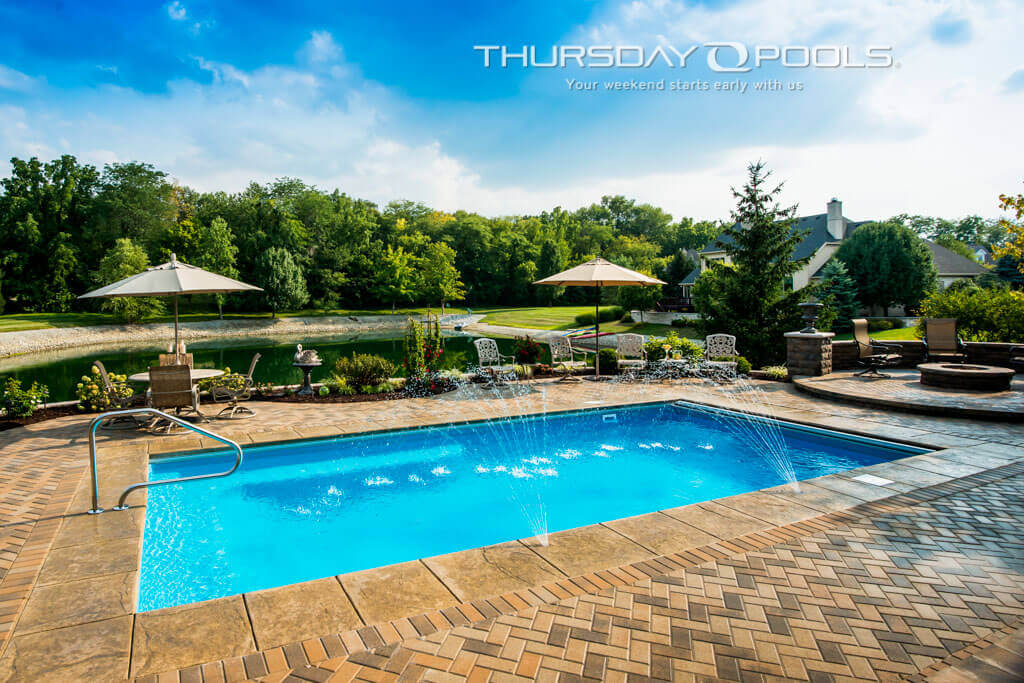
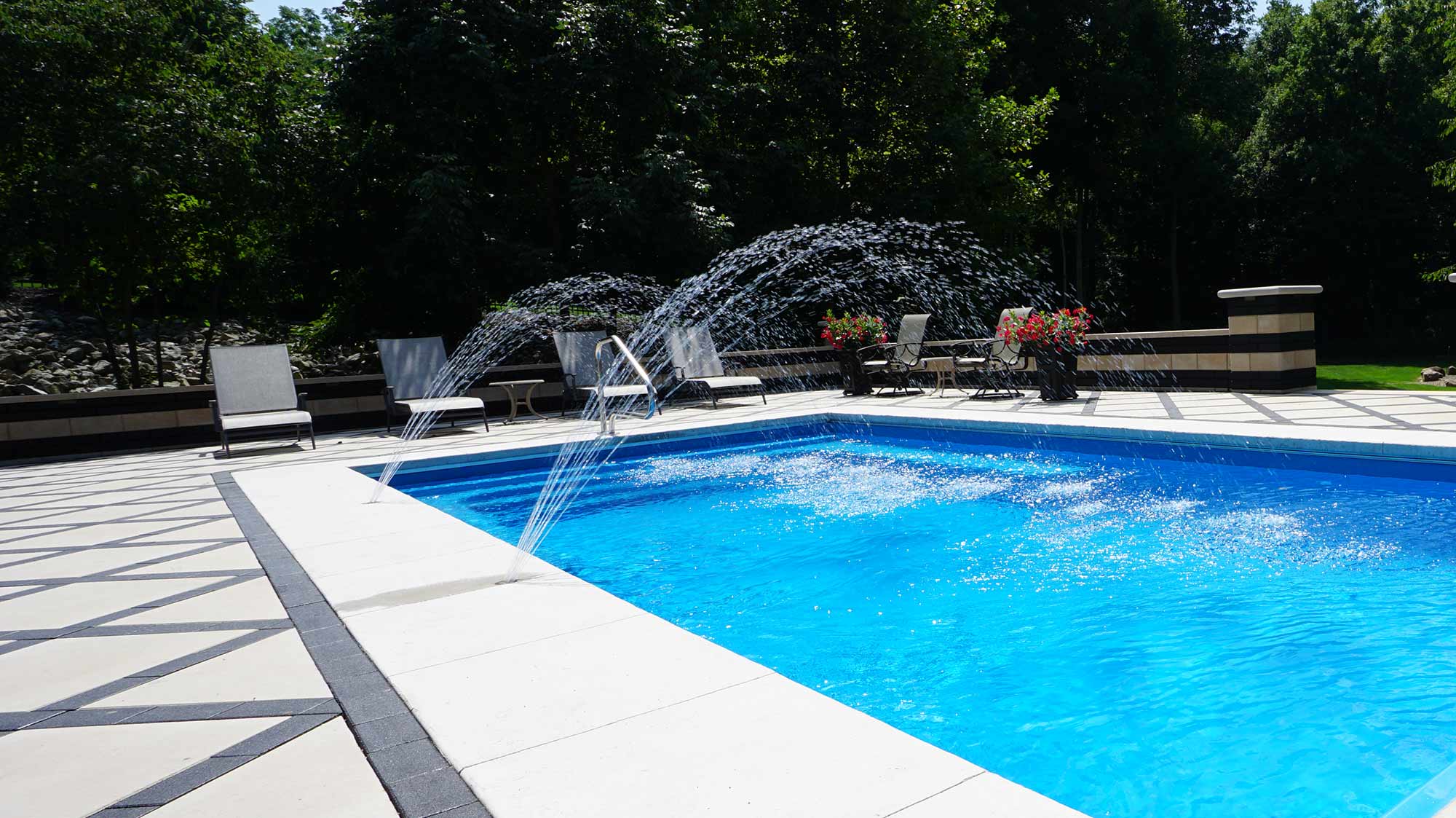
Thursday Pools Ocean Goliath Pool with pool border

GOLIATH (12’ x 25’)

Goliath is a versatile choice for Arkansas homeowners looking for a compact yet capable fiberglass pool that fits well in suburban backyards across the state. At 25 feet in length, this model packs built-in entry steps and wraparound bench seating around an open swim lane without demanding a sprawling yard. It adapts equally well to tighter metro lots in Little Rock or Fayetteville and rural properties with room to spare.

Based on 2026 feedback from Thursday Pools dealers throughout Arkansas, the average installed cost for a small fiberglass pool like Goliath or other designs less than 26 feet long and 400 square feet is $50,000.


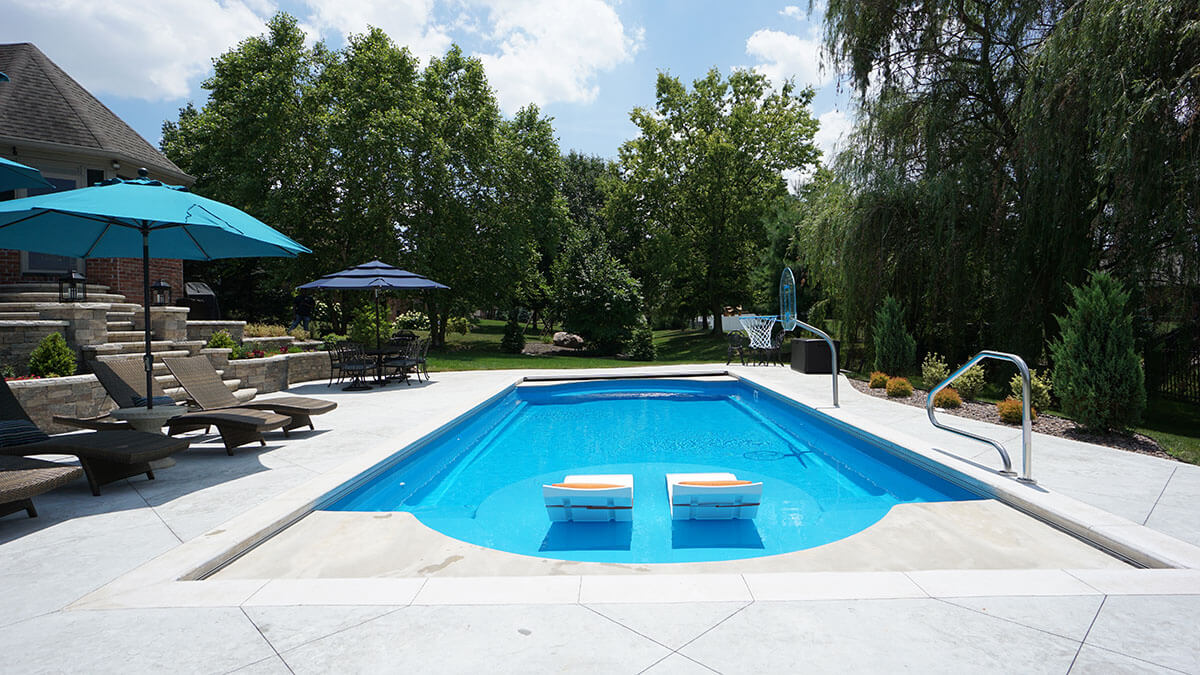
Thursday Pools Caribbean Sparkle Titus Pool

TITUS (14’ x 33’)

Titus brings graceful curves and mellow lines to mid-size backyards across Arkansas. Wide entry steps with built-in seating on one end and a full-length conversation bench at the other create a natural gathering place, while a generous open swim lane provides room for laps, games, and family use. The design fits comfortably in most suburban lots while still delivering a full pool experience.

According to 2026 survey responses from independent Thursday Pools dealers in Arkansas, the average installed cost for a medium-sized fiberglass pool like Titus is $70,000.


Mack Daddy Pool Model Image

MACK DADDY (16’ x 36’)

Mack Daddy is built for Arkansas homeowners who want the full package. Thursday Pools’ first design to feature a fully integrated spa with a spillway, Mack Daddy also includes a spacious tanning ledge, a conversation area with wraparound benches and wide entry steps, and an open swim lane at uniform flat-bottom depth.

Larger Arkansas properties, whether in the spacious suburbs of Bentonville or the rural terrain of the Ozarks, have room to accommodate a pool of this scale. The average cost for a standard installation of a large fiberglass pool like Mack Daddy in Arkansas is $88,333.


What Yard Conditions Affect Fiberglass Pool Installation Costs in Arkansas?

Arkansas’ diverse landscape means soil conditions and site challenges can vary from one backyard location to the next. Before breaking ground, a professional installer will assess your site for conditions that may require extra preparation.

Soil Type

Arkansas’ geology can create distinct soil challenges across the state. Rocky soil, common in the Ozarks and throughout Central and Northern Arkansas, often requires specialized excavation equipment and additional labor. Clay-heavy soils, found across much of the state’s central regions, can create drainage concerns and require special handling during installation. Sandy soils in Southern Arkansas may need additional stabilization to prevent pool shifting over time. A pre-installation site assessment will identify what your specific soil requires before the project begins.

Slope and Grade

Properties in hilly terrain, particularly in the Ozark and Ouachita regions, may need grading, retaining walls, or other leveling work before excavation can proceed. A relatively flat, level yard keeps installation more straightforward and predictable.

Backyard Access

Wide-open access makes a fiberglass pool installation more efficient. Properties with narrow gates, tight side yards, or other access constraints may need specialty equipment, additional labor, or crane service to move the one-piece pool shell into position. Established neighborhoods in Little Rock, Fayetteville, Jonesboro, and other urban areas are more likely to present access limitations that can affect both timeline and cost.


AVERAGE ADDITIONAL YARD-RELATED EXPENSES IN ARKANSAS


Excavating Sandy Soil $567
Excavating Clay-Heavy Soil $567
Excavating Rocky Soil $3,567
Above-Average Slope Requiring Extra Grading $5,633
Limited Access Yards  $7,100

Based on Thursday Pools’ 2026 independent dealer survey, site-condition upcharges range from about $567 for excavating sandy or clay-heavy soil to $7,100 for navigating limited yard access.


What Are Arkansas’ Swimming Pool Fence Requirements?

The Arkansas Department of Health (ADH) does not regulate single-family residential pools from a single statewide level, although the state does direct homeowners to the U.S. Consumer Product Safety Commission’s Safety Barrier Guidelines for Residential Pools.

Arkansas municipalities largely default to the International Residential Code’s Appendix G for residential pool barriers, which includes pool barrier requirements such as:

  • The barrier must be at least 48 inches tall, measured on the exterior side of the fence or wall facing away from the pool.
  • The maximum vertical clearance between the ground and the bottom of the barrier must not exceed 2 inches.
  • Openings in the barrier must not allow passage of a 4-inch-diameter sphere.
  • Gates must be self-closing and self-latching, and must open outward away from the pool.
  • Where the self-latching mechanism is located less than 54 inches above the ground, it must be positioned on the pool side of the gate.
  • Barriers must not contain footholds, handholds, or other features that would allow a child to climb over.

Local jurisdictions may adopt stricter standards or additional requirements beyond these baseline specifications. Always verify requirements with your local municipality, county building department, and HOA before installation. Local building officials can provide current permit requirements and any amendments your jurisdiction has made to the IRC baseline.

For a 300-linear-foot basic pool fence, Arkansas dealers estimate an average cost of $4,500. Final pricing varies by material, height, gate requirements, terrain, and local code compliance.


How Much Do Fiberglass Pool Upgrades Cost in Arkansas?

Optional features can expand what your pool does and extend your swimming season throughout Arkansas’ climate. The right upgrades enhance comfort, convenience, and safety while maximizing your investment. The averages below come from Thursday Pools’ 2026 dealer survey in Arkansas.

Water Quality and System Controls

Pool Heater

  • Average Cost in Arkansas: $5,700
  • Extend your swim season by keeping the water at a comfortable temperature during cooler months, maximizing your investment through Arkansas’ mild winters and shoulder seasons.

UV Filter System

  • Average Cost in Arkansas: $2,167
  • A UV system passes pool water through an ultraviolet light chamber that destroys bacteria, algae, and chloramines so chlorine works more efficiently and you need less of it to maintain safe, sanitary water.

Pool Automation and Smart Control System

  • Average Cost in Arkansas: $2,933
  • Manage temperature, lighting, and filtration from a smartphone or tablet.


Patio and Hardscape

Poured Concrete Patio (Approx. 1,200 sq. ft.)

  • Average Cost in Arkansas: $14,567
  • A durable, low-maintenance decking option that handles Arkansas’ seasonal temperature variation.

Paver Patio (Approx. 1,200 sq. ft.)

  • Average Cost in Arkansas: $20,000
  • Available in a range of materials, from concrete pavers to natural stone, with a more finished aesthetic than poured concrete. Brick and concrete pavers perform best through Arkansas’ freeze-thaw cycles.


Safety and Covers

Fence (300 Linear ft.)

  • Average Cost in Arkansas: $4,500
  • Final cost varies by material choices, total fence length, and local code requirements.

Non-Automatic Safety Pool Cover

  • Average Cost in Arkansas: $2,267
  • A manual option for securing the pool and keeping debris out between uses.

Automatic Pool Cover

  • Average Cost in Arkansas: $19,200
  • One-touch operation to protect the pool, retain heat, and reduce evaporation.


Water Features

Deck Jets

  • Average Cost in Arkansas: $600 per jet
  • Arc water from the coping into the pool, adding visual movement and ambient sound to the pool area.

Bubblers

  • Average Cost in Arkansas: $1,633 per bubbler
  • On a tanning ledge or beach entry, create movement and the sounds of a babbling brook in shallow pool water.

Cascade or Waterfall

  • Average Cost in Arkansas: $8,500
  • Add a flowing water element and natural sound to the pool environment.


Cleaning and Maintenance

Automatic Pool Cleaning and Vacuuming System

  • Average Cost in Arkansas: $2,967
  • Keep the pool floor and walls clean with minimal manual effort.


Lighting and Tile

LED Pool Lights

  • Average Cost in Arkansas: $831 per light
  • Adds ambiance and visibility for evening and nighttime use.

Specialty Waterline Tile

  • Average Cost in Arkansas: $2,500
  • Installed along the waterline for a custom, finished appearance at the pool edge.


Recreation

Simple Pool Slide*

  • Average Cost in Arkansas: $5,000
  • A standard slide for family use.

Deluxe Pool Slide*

  • Average Cost in Arkansas: $8,133
  • More height and design details than a basic model.

Diving Board (Type 1 Diving Pools Only)*

  • Average Cost in Arkansas: $1,800
  • Only manufacturer-designated Type 1 diving pools support diving board installation. Homeowners should use only manufacturer-approved diving boards with pool models designated as diving pools and must consult a licensed professional to verify compliance with all local building codes and safety requirements before installation.

*Thursday Pools strongly advises against pool slides and diving boards due to safety concerns. The inclusion of a diving board or slide with any fiberglass pool must be carefully reviewed by a licensed professional to ensure compliance with all local building codes, safety regulations, and manufacturer guidelines. Not all fiberglass pool models are suitable for diving or slide use. It is the responsibility of the homeowner and installer to ensure proper installation and usage. Always prioritize safety and consult a qualified expert before adding any diving or sliding feature to your pool.


Landscaping and Extras

Surrounding Landscaping

  • Average Cost in Arkansas: $5,833
  • Includes decorative rocks, plantings, trees, bushes, flower beds, and similar elements that connect the pool to the rest of the yard.

Add-On Spa

  • Average Cost in Arkansas: $27,067
  • A separate spa unit for relaxing hydrotherapy, neighboring or independent of the main pool.


Frequently Asked Questions About Arkansas Fiberglass Pool Costs

How much does a fiberglass pool cost in Arkansas?

A fiberglass pool in Arkansas costs an average of $50,000 for a small pool, $70,000 for a medium pool, and $88,333 for a large pool, based on Thursday Pools’ 2026 survey of the state’s independent dealers.

What does a standard fiberglass pool installation in Arkansas include?

A standard fiberglass pool installation in Arkansas typically includes:

  • Excavation and Dirt Hauling: Soil removal and site preparation.
  • Pool Shell and Delivery: The physical fiberglass pool shell unit delivered to your home.
  • Filtration System: Basic pump, filter, and plumbing.
  • Standard Decking: Approximately 3 feet of concrete surrounding the pool.
  • Permits and Basic Electrical: Includes local municipal filings and one LED pool light.

What yard conditions raise fiberglass pool installation costs in Arkansas?

Rocky soil in the Ozarks and central Arkansas requires specialized excavation equipment and additional labor. Clay-heavy and sandy soils, while less costly to excavate, can each require extra handling to ensure stable installation. Sloped yards, common throughout Arkansas’ hillier regions, often need grading work to create a level base. Limited backyard access, such as narrow gates or tight side yards, can require crane service or specialty equipment. Based on Thursday Pools’ 2026 Arkansas dealer survey, site-condition upcharges range from about $567 for working with sandy or clay-heavy soil to $7,100 for navigating limited yard access.

What are Arkansas’ pool fence requirements?

Most Arkansas municipalities adopt the International Residential Code, which requires barriers at least 48 inches tall, a maximum 2-inch ground clearance, openings no larger than 4 inches, and self-closing, self-latching gates that open away from the pool. Local jurisdictions may apply stricter standards. Homeowners should verify current requirements with their municipality and county building department before installation.

The 2026 Thursday Pools survey of Arkansas independent dealers shows an average cost of $4,500 for a 300-linear-foot basic fence, with final costs varying by material, height, gate requirements, terrain, and local code compliance.

How much do common pool upgrades add to the cost in Arkansas?

Upgrade costs vary widely depending on the feature:

  • A pool heater averages $5,700.
  • An automatic pool cover averages $19,200.
  • A paver patio of approximately 1,200 square feet averages $20,000.
  • An add-on spa averages $27,067.
  • Smaller additions like deck jets ($600 per jet), bubblers ($1,633 per bubbler), and LED lights ($831 per light) add cost in more manageable increments.

How do I get an accurate cost estimate for a fiberglass pool in Arkansas?

The most accurate estimate comes from a local independent Thursday Pools dealer who can assess your yard, review local permit requirements, and give you a project-specific quote. Survey averages provide a useful starting point, but site conditions, design choices, and local labor rates determine what you actually pay.


Get Your Personalized Arkansas Estimate

Survey averages give you a realistic starting point, but your actual cost depends on your yard, your location in Arkansas, and the design details and upgrades you choose. A local independent Thursday Pools dealer can assess your site, walk you through pool options that fit your budget, and give you a project-specific quote, whether you’re in Little Rock, Fayetteville, Hot Springs, Jonesboro, Bentonville, or anywhere across the state.


Thursday Pools manufactures fiberglass pool shells and does not install pools. Pools are installed by locally owned independent dealers. Consumers should consult a local independent dealer for the most accurate and updated information based on the unique conditions of their region and property.
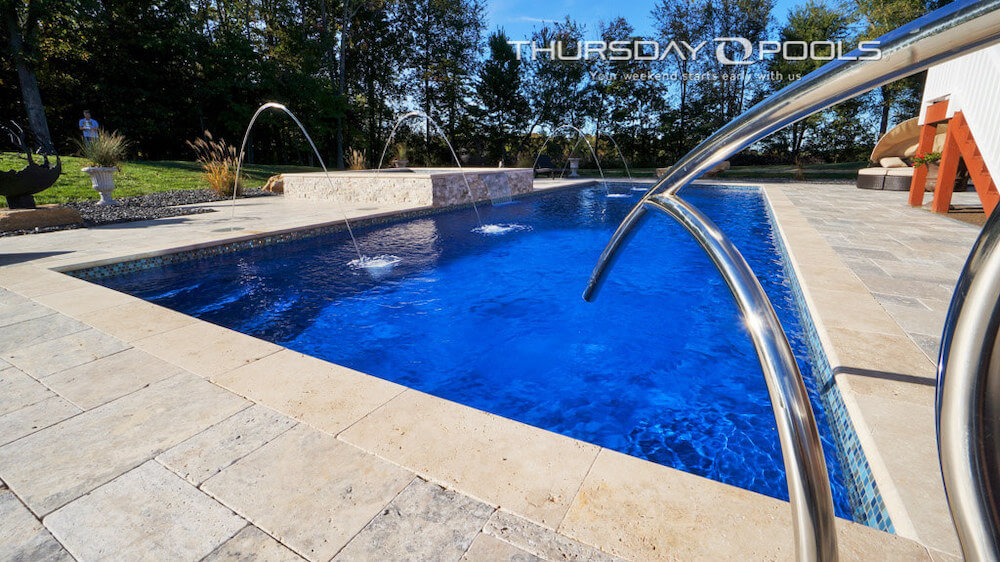
Fiberglass Pool Installation Costs: Understanding Your Options

Inground Pool Costs in 2025

Fiberglass Pool Installation Cost Breakdown

If you are considering a fiberglass pool and are comparing costs, you may be interested in knowing that there are often options to meet different budgets. As the pool shell manufacturer, we do not sell our pools directly to the consumer; however, our network of independent dealers works directly with homeowners to meet their needs based on budget, aesthetics, and other factors. Like a new home build, fiberglass pool costs can vary significantly depending on where you live and the additional features you choose. From basic setups to more luxurious options with custom add-ons, here are the fiberglass pool installation options your dealer may offer, based on Thursday Pools’ 2026 Independent Dealer Survey.


Note: All cost estimates that follow are based on a medium-sized pool (between 13.5’x28’ and 14×36 feet) and reflect Thursday Pools’ 2026 Independent Dealer Survey data. Many factors can affect your actual price, so it’s important to get written estimates from your pool dealer.


Basic Fiberglass Pool Installation Costs

A Basic Installation is ideal for homeowners who do not need the pool installer to provide any landscaping. It covers the essentials to get your pool up and running but omits other features you may need to use the space. For example, you would be responsible for adding a deck around the pool area. You’ll likely be offered the following in this entry-level installation:

  • Fiberglass Pool Shell: a single one-piece structure
  • Handrail: a safety device for easy pool entry
  • Shipping: the pool shell is delivered by truck to your backyard
  • Pump and Filter System: the basic mechanicals needed to keep water clean and circulating
  • Building Permit: official government document giving the installer permission to build the pool on your property
  • Excavation and Backfill: digging the hole for the pool and filling the space left by the excavation with a material like gravel
  • Water Fill: water for the initial pool fill could come from a hose, water service truck, or fire hydrant
  • Rough Grading: leveling and smoothing the ground to establish the basic shape of the land
  • Basic Electrical Setup: for powering the pool equipment


Basic Installation Estimated Cost Range: $55,000 – $80,000

Your dealer’s costs for this package depend on many factors, including your location, the size of the pool shell, and specifics like excavation depth and soil makeup. 


Turnkey Fiberglass Pool Installation Costs

For homeowners wanting a more complete setup, a Turnkey Installation includes everything in the Basic Installation and more. It adds foundational elements to give the pool area a more polished, ready-to-use look. This installation type often includes:

  • All Basic Installation Features (listed above)
  • Maintenance and Cleaning Equipment
  • 3-foot Concrete Decking around the pool perimeter
  • Additional Grading and Electrical Work for improved safety and appearance


Turnkey Installation Estimated Cost Range: $65,000 – $100,000+

The concrete deck around the pool perimeter is a valuable addition, providing a neat boundary and space for poolside lounging. 


Enhanced Fiberglass Pool Installation With Add-Ons

Homeowners seeking a resort-like backyard experience may want to consider an Enhanced Installation with add-ons to elevate the aesthetics and functionality of their pool. Some common add-ons and their typical costs include:

  • Waterline Pool Tiles: Adding decorative tiles along the waterline provides a luxury aesthetic. Tiles typically range between $2,500 and $7,500, depending on the tile style and pool size.
  • Water Features: Pool deck jets, costing between $500 and $1,200 each, create graceful arcs of water into the pool for a touch of elegance. Bubblers, small fountains placed on tanning ledges or beach entries, are around $1,000 each, adding a playful touch. Custom rock waterfalls bring the look and sounds of nature to your outdoor space and typically range from $2,000 to $8,800 or more.
  • Pool Heater: Extending your swimming season with a pool heater can be a worthwhile investment. Heater types include natural gas/propane, electric, heat pumps, and solar, typically ranging from $3,000 to $5,000 or more.
  • Automatic Pool Covers: Pool covers offer safety, keep the water clear of debris, and help maintain water temperature. Automatic covers typically cost $10,000 to $20,000 or more, averaging $17,580.
  • Landscaping: Enhancing the area around the pool with landscaping, like shrubs, pathways, or flower beds, helps your pool seamlessly blend with its natural surroundings. Homeowners spend an average of more than $6,700 on professional landscaping around the pool.


Estimated Cost Range for Enhanced Installation: $90,000 – $150,000+


Choosing the Right Fiberglass Pool Installation Package

Which package makes sense for you comes down to how much of the finishing work you want your dealer to handle versus doing yourself, and how much you want to spend upfront on amenities and landscaping. Your pool dealer may even tailor your package, allowing you to start with a simple design and upgrade as your budget allows. Schedule a consultation to start planning your pool project and get the pool of your dreams without hidden surprises!

Want a deeper look at how these costs come together during installation? Read our guide, Everything You Need to Know About Fiberglass Pool Installation.


Frequently Asked Questions


How much does fiberglass pool installation cost?

Fiberglass pool installation typically ranges from $55,000 for a basic package to $150,000 or more for a fully enhanced installation with premium add-ons, according to Thursday Pools’ 2026 Independent Dealer Survey. Your final cost depends on your location, pool size, site conditions, and the features you choose.


What’s included in a basic fiberglass pool installation?

A basic installation covers the essentials: the pool shell, handrail, shipping, pump and filter system, building permit, excavation and backfill, water fill, rough grading, and basic electrical setup. It does not include decking or landscaping, which you would add separately.


What’s the difference between a basic and a turnkey fiberglass pool installation?

A turnkey installation includes everything in a basic package, plus maintenance and cleaning equipment, three feet of concrete decking around the pool, and additional grading and electrical work. It’s designed to leave your pool ready to use right away, while a basic installation leaves decking and finishing touches up to you.


What add-ons increase fiberglass pool installation costs the most?

Automatic pool covers and custom rock waterfalls tend to add the most to an installation budget, followed by pool heaters and waterline tile. Landscaping and smaller water features like deck jets or bubblers typically add a more modest amount to your total project cost.

Are Fiberglass Pools Worth the Extra Cost?

Thursday Pools Lil Bob pool with water featuresYou’ve heard a lot about how great fiberglass pools are. You may be interested in lower maintenance and long-lasting, or maybe you like built-in tanning ledges or the fact that they’re pet friendly. Still, the one question you can’t get out of your mind is, “Are fiberglass pools worth the extra cost?” While they have surged in popularity over the last decade, fiberglass pool costs can exceed other pool-type costs. On average, you can expect to spend between $40,000 and $100,000 on a fiberglass pool, depending on various factors. To help decide if the investment is worth it, consider both the monetary and non-monetary short and long-term benefits of  fiberglass pools.

Durability and Longevity

One of the biggest selling points of fiberglass pools is their durability. Unlike vinyl pools that can tear or concrete pools that may crack over time, fiberglass pools are made from a flexible yet durable material that is resistant to cracking and damage. Fiberglass pools withstand ground shifts and changes in temperature, which can lead to wear and tear in other pool types.

Fiberglass is an appealing choice for homeowners who want a pool that will stand the test of time with minimal need for repair. This longevity can also mean that the upfront investment balances out over the pool’s lifetime, as you’re likely to face fewer repair and replacement-related costs than other pool types.

Lower Maintenance Requirements

Fiberglass surfaces are non-porous, so they don’t attract algae and other debris as readily as concrete pools. This characteristic can save you countless hours of scrubbing and reduce your need for harsh chemicals to keep the pool water clean. Over the years, lower maintenance costs can add up to significant savings. So, while the initial installation cost may be higher, the savings in chemicals and maintenance time can make fiberglass pools more economical in the long run.

Pet-Friendly and Family-Friendly Design

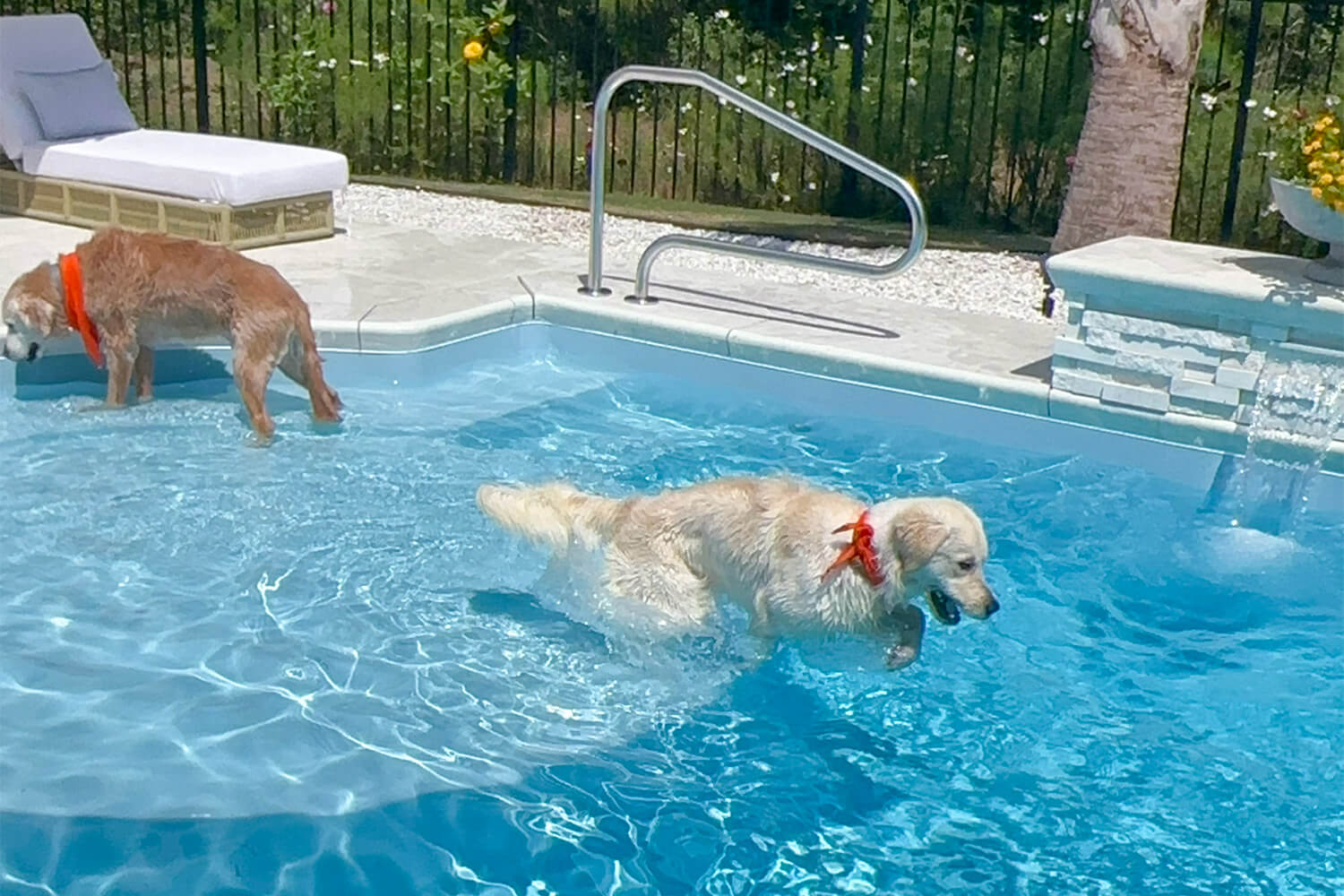
Fiberglass pools are also known for being pet-friendly and family-friendly. The non-abrasive, smooth surface is gentle on human and pet skin, reducing the risk of scratches and abrasions with concrete pools. Additionally, if you consider your pets your family, you can play with them in the pool without worrying about their claws causing damage. Fiberglass pools have many options, like built-in tanning ledges and beach entries for shallow areas perfect for younger children or pets. These family-friendly features add to the pool’s overall value and can be an important factor for families considering the longevity and usability of their pool.

Quick Installation Process

Fiberglass pools are an excellent choice if you’re eager to enjoy your new pool without a prolonged installation process. Installation for fiberglass pools is generally quicker than for pool types that are built on-site. Fiberglass pools can typically be installed in just a few weeks, leading to less disruption in your yard and a faster path to enjoying your investment.

Environmental Impact

Fiberglass pools offer some eco-friendly advantages for homeowners trying to lower their carbon footprint. Because of their non-porous surface, they require fewer chemicals to keep the water clean, reducing the number of harmful substances released into the environment. Additionally, fiberglass pools require fewer repairs over time, so they consume fewer materials and resources, resulting in a lower overall environmental impact than other pool types.

Resale Value

Another consideration when evaluating whether a fiberglass pool is worth the extra cost is the impact on your home’s resale value. While not everyone wants a pool, a fiberglass pool can be a strong selling point for those who do. With reduced upkeep costs and durable construction, a lower-maintenance pool may appeal to potential buyers just as it does to you. If you live in an area where pools are highly desirable, a well-maintained fiberglass pool can definitely add value to your property.

Peace of Mind with a Strong Warranty

A warranty can be significant when evaluating whether a fiberglass pool is worth the investment. Fiberglass pool manufacturers often offer long-term warranties that provide reassurance about the pool’s longevity and quality. For example, Thursday Pools provides a limited lifetime structural warranty and a 15-year surface warranty against osmotic blistering. Thursday Pools also provides a one-time transferable warranty, meaning if you decide to sell your home, the warranty can transfer to the new owner. Fiberglass pool warranty coverage contrasts with on-site built pools like vinyl and concrete, which typically have much shorter or non-existent warranties.


Are You Ready to Learn More?

So, are fiberglass pools worth the extra cost? That depends on what you value. By weighing what’s important to you, you can avoid buyer’s remorse and focus on what matters most–making memories. We hope you continue your research and urge you to  consult a dealer, ask questions, and never stop dreaming.

How Much Will It Cost to Build an Inground Pool in 2025?

Are you planning on turning your backyard into your private paradise next year? With the rising popularity of outdoor living spaces, adding an  inground pool is one of the most rewarding upgrades homeowners make. But before plunging in, you are likely wondering, “How much will it actually cost to build a pool in 2025?” Inground pool costs can vary widely depending on factors like design, materials, and location, making it essential to understand what you’re investing in. Whether you want to build a sleek modern staycation location or a luxurious resort-style retreat, understanding the cost factors can help you plan more effectively.


Inground Pool Costs in 2025

2024 Inground Pool Cost Summary

Before discussing next year’s potential pool prices, let’s start with today’s market. As a baseline, here are the average costs of inground pools as of 2024:

These prices include the installation but do not account for additional features, landscaping, or ongoing maintenance costs.


What Other Key Factors Affect Pool Costs?

Beyond the basic pool types, universal factors will influence the cost of all 2025 pool installations. The following five are among the most significant and impactful.

  1. Excavation Costs: The cost of excavating your yard varies depending on factors such as soil type, digging depth, terrain complexity, and obstructions. Average excavation costs range from $2.50 to $15.00 per cubic yard. Softer soils like sand are the least expensive to excavate, while more challenging conditions, such as rocky soil or bedrock, can cost $50 to over $200 per cubic yard.
  2. Pool Safety: Your insurance company, state government, or local agencies may require pool fencing. Fencing costs average around $15 to $25 per linear foot
  3. Patio & Decking: Some decking around your pool perimeter may be included in your pool quote, but you may want to extend your living space beyond it. Basic concrete decks may cost  $5 to $15 per square foot, while higher-end materials, such as paver patios, can range between  $8 to $50 per square foot.
  4. Pool Equipment & Features: Pool heaters, automatic covers, underwater lighting, and other features are optional, but they can provide priceless comfort and safety. A pool heater with installation ranges from $1,500 to $6,000 for gas, propane, electric resistance, and heat pumps. Solar pool heaters cost between $2,500 and $6,500. An automatic pool cover costs $8,000 to $20,000 installed and $1,000 to $3,600 for a manual cover. Inground pool lights cost $700 to $1,800.

Factors Affecting Pool Prices in 2025

While we wish we had a crystal ball, we can’t predict pool prices with certainty. However, we can look at a few factors that may affect the market in 2025. The following predictions are based on the most recent U.S. economic forecast from Deloitte Global Economics Research Center.

  1. Inflation and Interest Rates: The forecast suggests that inflation will continue to be a concern. However, it is expected to moderate slightly as the Federal Reserve cuts interest rates gradually throughout 2024 and into 2025. Nevertheless, rates will still be higher than pre-pandemic levels, so financing pool construction could remain expensive. High borrowing costs will add to overall project expenses, particularly if you plan to finance your pool.​
  2. Labor Market Pressures: Although job growth is expected to slow in 2025, the labor market remains relatively tight, which could keep wages elevated. Higher wages for skilled construction workers will likely continue to drive up labor costs associated with pool installations. This factor contributes to the overall increase in pool prices, especially for labor-intensive types like gunite pools​.
  3. Consumer Spending and Confidence: Consumer spending is expected to slow as excess savings built up during the pandemic deplete and inflation affects disposable income. However, spending on home improvements, such as pools, may still see interest as homeowners focus on enhancing their living spaces. Continued demand could increase prices as contractors manage backlogs and prioritize high-paying projects.

All considered, a price increase for all pool types is possible. One key takeaway is that the more labor-intensive the installation, the more likely prices will increase. Fiberglass pools are the least labor-intensive because they are pre-manufactured off-site and delivered as a single unit. The installation process is much quicker, often taking just a few days to a couple of weeks, with minimal on-site work required beyond excavation and setting the pool into place.


Money Saving Tips for Pool Buyers in 2025

  1. Prioritize Features: Focus on essential features first and consider adding non-essential upgrades later. This approach helps manage costs while still achieving your desired pool experience.
  2. Consider Financing Options: If high interest rates persist, explore all financing options, including home equity loans or pool-specific financing, to find the best terms.
  3. Invest in Energy-Efficient Equipment: Choose energy-efficient options such as variable-speed pumps, LED lighting, and solar heaters. These reduce long-term operating costs and make your pool more eco-friendly, providing ongoing savings on energy bills.
  4. Keep Maintenance Costs Low: Regular maintenance can prevent costly repairs in the future. Investing in a pool cover can help reduce evaporation and keep debris out, saving on water and chemical costs. Efficiently managing your pool’s water levels and chemical balance also helps maintain the pool’s condition while keeping costs manageable.


Building a pool will always be a significant investment, and the type of inground pool you choose in 2025 can significantly impact upfront and long-term costs. Working with a reputable pool dealer and builder who understands your vision and can advise on cost-saving ideas is crucial no matter when or which option you choose.

Begin building a clearer picture of what your inground pool might cost with Thursday Pools’ Pool Cost Calculator, or book a consultation and on-site evaluation with an independent pool dealer near you.

What You Need to Know About the Cost of Fiberglass Pools in 2024: The Essentials and Extras

Curious about the financial commitment required for a fiberglass pool? You are not alone. Cost is one of the most common questions among prospective pool owners. Understanding what goes into fiberglass pool cost not only determines the pool design you can afford but also influences the additional features and accessories you might choose to enhance your pool experience. Based on our industry experience, a full fiberglass pool package in 2024—including pool installation, a patio, and a handful of essential accessories—can cost between $70,000 and $135,000.

Essential Fiberglass Pool Costs

Initial Costs

  • Professional Installation: In our experience, professional installation packages typically range from $35,000 to $60,000. Including the pool shell, excavation, backfilling, and setting up the pool, the installation process is relatively quick compared to other types of pools, often completed within a couple weeks.
  • Permits and Site Preparation: Permit costs range from $50 to $200. Site preparation, including excavation, can range from $3,200 to $20,000, depending on the complexity of the site. The terrain and accessibility of your backyard can significantly affect these costs. For instance, rocky or uneven terrain may require additional excavation work, increasing the overall expense.

Maintenance

  • Annual Maintenance: Fiberglass pools have lower maintenance costs than other pool types, averaging $600 to $1200 per year. Whether you perform the maintenance or hire a pool professional, you should consider maintenance costs for cleaning, balancing the water, opening, and closing the pool.

Insurance and Taxes

  • Homeowner’s Insurance: Installing a pool increases your home’s value, potentially raising your property taxes and homeowner’s insurance premiums. Expect an increase of $17 to $25 monthly in insurance costs. It’s advisable to consult with your insurance provider to understand how a pool will affect your premiums.
  • Property Taxes: A new pool can increase property value by five to seven percent, which may result in higher property taxes. The exact increase will depend on local tax regulations and the assessed value of your property.

Extra Pool Costs

Optional Features and Enhancements

  • Automatic Covers: Prices begin at about $8,000. Automatic covers enhance safety and reduce maintenance by keeping debris out of the pool.
  • Lighting: Installing lights in the pool ranges from $500 to $2,000. LED and fiber optic lighting systems can enhance the pool’s aesthetics and safety for night-time swimming.
  • Water Features: Costs between $5,000 and $15,000. Waterfalls, fountains, and other features can add a touch of luxury and tranquility to your pool area.
  • Deck Jets and Bubblers: Pool deck jets cost range from $500 to $1,200 each and can create elegant water arcs into the pool. Bubblers, small fountains installed on tanning ledges or beach entries, cost about $1,000 each and add a playful element to the pool.

Additional Infrastructure

  • Fencing: Required by many jurisdictions for safety. Average costs range from $2,000 to $13,500 for a 200 to 300 linear-foot fence but varies depending on the material and length needed. Options include chain-link, mesh, wrought iron, aluminum, vinyl, and wood. Each type has different cost implications and aesthetic effects.
  • Electrical Work: Essential for operating filtration systems, lighting, and other features, electrical costs average $2,250. Pool electrical work typically includes pumps, heaters, and wiring for lighting systems.
  • Pool Covers: Safety covers range from $1,000 to $20,000, depending on the type. Winter, manual, and automatic covers vary significantly in price and convenience. Winter covers are the least expensive but also the least convenient, while automatic covers are the most costly but offer the best convenience and safety.
  • Heating Systems: Installing a pool heater can extend your swimming season. Gas heaters cost between $1,500 and $6,000, while solar heaters range from $1,5000 to $7,000. Heat pumps, which are energy-efficient, cost between $2,000 and $6500.

Get an Estimate on Your Fiberglass Pool

Investing in a fiberglass pool is a significant decision. By understanding the costs involved and exploring your options, you can make an informed choice that enhances your lifestyle and adds value to your property. Contact an independent dealer today to get an estimate, or try our  Pool Cost Calculator for a ballpark estimate.

How Much Does a Fiberglass Pool Cost in Ohio?

Based on a 2026 survey of independent fiberglass pool builders in the Thursday Pools dealer network, a standard fiberglass pool installation in Ohio averages $76,136 for a small pool, $91,818 for a medium-sized pool, and $109,545 for a large pool. Final costs depend on pool size, yard conditions, permit requirements, and selected upgrades.

Ohio’s geography creates real variation in pool installation costs from one part of the state to another. In Columbus, Cincinnati, and Cleveland, permit and zoning requirements can increase costs. Rocky terrain in Eastern and Southeastern Ohio often requires more excavation and labor. Flatter, more accessible sites in Central and Western Ohio, including areas near Dayton and Toledo, typically keep costs lower. Soil conditions, from clay-heavy to rocky, also directly impact excavation and site preparation expenses.

Optional upgrades like pool heaters, automatic covers, and custom patios increase your total cost but also enhance pool usability and value. A local independent Thursday Pools dealer can help you select additions that suit your yard and budget.


What is the Average Cost of a Fiberglass Pool Installation in Ohio?

By conducting a 2025 survey of our independent dealers across Ohio, Thursday Pools gathered valuable data to provide an overview of the average cost of installing a fiberglass pool in the state. If you’re just beginning to explore fiberglass pool costs in your area, you’re in the right place to start your research.


AVERAGE OHIO FIBERGLASS POOL INSTALLATION BY SIZE

Pool Type Small Fiberglass Pools Medium Fiberglass Pools Large Fiberglass Pools
Size Range Up to 26 feet long or 400 square feet 26 to 34 feet long or 400 to 600 square feet 35 feet and longer or 600+ square feet
Average Cost $76,136 $91,818 $109,545


What Counts as a Standard Pool Installation?

Most Ohio dealers include the pool shell, excavation, basic pump and filtration equipment, plumbing, basic electrical, permits, one pool light, initial water fill, dirt hauling, about 3 feet of concrete decking around the pool, delivery, and labor in their base package. Dealer offerings may vary, so compare proposals carefully. Expanded decking, fencing, landscaping, pool covers, and other optional features usually cost extra.

Contact a local Thursday Pools dealer for a custom quote and information on financing options for your Ohio pool installation.

What Do Popular Fiberglass Pool Models Cost Installed in Ohio?

Thursday Pools pearl pool with decorative hardscaping border

PEARL (15’ x 25’)

Pearl is a unique, scallop-shaped pool with wraparound bench seating along its interior perimeter and centrally located entry steps that keep the layout open and accessible. Its compact footprint fits well in typical Ohio suburban backyards, including tighter lots in Columbus, Cincinnati, and Cleveland neighborhoods.

Based on 2026 feedback from Thursday Pools dealers across Ohio, the average installed cost for a small fiberglass pool like Pearl or other designs less than 26 feet long and 400 square feet is $76,136.


Thursday Pools Aspen Aerial wide shot

ASPEN (14’ x 30’)

Aspen offers a balance of size and built-in functionality that works well for Ohio homeowners looking for a mid-size pool. Wide entry steps, bench seating, and a tanning ledge give the pool multiple use zones within a rectangular footprint that fits most suburban yards.

According to 2026 survey responses from independent Thursday Pools dealers in Ohio, the average installed cost for a medium fiberglass pool like the 14′ x 30′ Aspen is $91,818.


GOLIATH (16’ x 41’)

Goliath suits large Ohio backyards that can accommodate a full-length pool design. Dual-corner entry steps lead into a wide, open swim lane. Built-in bench seating at the entry and swim-out benches in the deep end give swimmers places to rest and gather without taking space from the main swimming area.

Due to its size, at 41 feet long and more than 600 square feet, larger pools like the Goliath typically come at a higher installed cost. In Ohio, the 2026 average installed cost for a large fiberglass pool is $109,545.


What Yard Conditions Affect Fiberglass Pool Installation Costs in Ohio?

Ohio’s diverse soil types and terrain can significantly impact installation costs. Before starting, a professional installer will assess your site for any conditions that may require additional preparation.

Soil Type

Ohio soil ranges from clay-heavy ground across much of the state’s suburban and central areas to rocky conditions in the Appalachian foothills of Southeastern Ohio. Clay-filled soil can create drainage and stability concerns. Rocky soil requires heavier excavation equipment and more labor. Sandy soil, found in areas near Lake Erie, may need additional stabilization to properly support the pool shell. A pre-installation site assessment can identify what your soil requires before the project begins.

Slope and Grade

Yards with a slope often require grading, retaining walls, or other leveling work before excavation and installation can move forward. That site prep adds time and cost. Homes in hillier parts of Ohio, particularly in the Appalachian Plateau or along the Ohio River valley, are more likely to encounter this. A flat, level yard typically keeps installation more straightforward and predictable.

Backyard Access

Easy and open access make a fiberglass pool installation more efficient. Properties with narrow gates, tight side yards, or other access constraints may need specialty equipment, additional labor, or crane service to move the pool shell into position. Access limits can affect the timeline and cost of even a straightforward pool design.


Yard Condition

Average Additional Cost in Ohio

Excavating Rocky Soil $1,985
Excavating Sandy Soil $2,135
Excavating Clay-Heavy Soil $1,155
Above-Average Slope Requiring Extra Grading $2,735
Limited Yard Access $3,465


According to the 2026 Ohio dealer survey, site-condition upcharges range from about $1,155 for clay-heavy soil excavation to $3,465 for limited yard access.

What Are Ohio’s Swimming Pool Fence Requirements?

The Ohio Administrative Code requires residential pool barriers to meet specific safety standards to protect users, especially children. Key requirements include:

  • The barrier must be at least 48 inches tall and form a continuous enclosure around the pool.
  • The bottom of the barrier must sit no more than 2 inches above the ground.
  • Gates and doors must be self-closing and self-latching.
  • Latches positioned less than 54 inches above the ground must be located on the pool-facing side of the gate.

Always review swimming pool barrier and safety regulations for your county or municipality before installation. Local authorities may enforce additional requirements beyond state standards.

Ohio dealers estimate an average cost of $6,547 for a basic 300-linear-foot pool fence. Final pricing varies by material, height, gate requirements, terrain, and local code.


How Much Do Fiberglass Pool Upgrades Cost in Ohio?

Optional features can extend your pool’s functionality and seasonal use. The following averages are from Thursday Pools’ 2026 dealer survey of independent Ohio installers.

Water Quality and System Controls

Pool Heater 

  • Average Cost in Ohio: $4,288 
  • Extend your swim season by maintaining comfortable water temperatures into the cooler fall months.

UV Filter System 

  • Average Cost in Ohio: $2,529 
  • A UV system passes pool water through an ultraviolet light chamber that destroys bacteria, algae, and chloramines so chlorine works more efficiently and you need less of it to maintain safe, sanitary water.

Pool Automation and Smart Control System 

  • Average Cost in Ohio: $4,794 
  • Control temperature, lighting, and filtration from your smartphone or tablet.


Patio and Hardscape

Poured Concrete Patio (Approx. 1,200 sq. ft.) 

  • Average Cost in Ohio: $12,018 
  • A durable, low-maintenance decking option that holds up well through Ohio’s temperature extremes and freeze-thaw cycles.

Paver Patio (Approx. 1,200 sq. ft.) 

  • Average Cost in Ohio: $11,600 
  • Available in materials ranging from concrete to natural stone, paver patios offer a more custom look than poured concrete.


Safety and Covers

Fence (300 Linear ft.) 

  • Average Cost in Ohio: $6,547 
  • Required by the Ohio Administrative Code, final fencing costs vary by material, total length, and local code requirements.

Non-Automatic Safety Pool Cover 

  • Average Cost in Ohio: $4,635 
  • A manual option for securing the pool and keeping debris out between uses.

Automatic Pool Cover 

  • Average Cost in Ohio: $17,888 
  • Automatic covers offer one-touch operation to protect the pool, retain heat, and reduce evaporation. Many Ohio homeowners prioritize this upgrade for safety and convenience.


Water Features

Deck Jets 

  • Average Cost in Ohio: $1,518 per jet 
  • Deck jets arc water from the coping into the pool, adding visual movement and ambient sound to the pool area.

Bubblers 

  • Average Cost in Ohio: $2,288 per bubbler 
  • Bubblers on a tanning ledge or beach entry create movement and the sound of a babbling brook in shallow pool water.

Cascade or Waterfall 

  • Average Cost in Ohio: $4,647 
  • Cascades or waterfalls add flowing water and natural sound to the pool environment.


Cleaning and Maintenance

Automatic Pool Cleaning and Vacuuming System 

  • Average Cost in Ohio: $1,953 
  • Automatic cleaning systems keep the pool floor and walls clean with minimal manual effort.


Lighting and Tile

LED Pool Lights 

  • Average Cost in Ohio: $1,770 per light 
  • LED pool lights add ambiance and visibility for evening and nighttime use.

Specialty Waterline Tile 

  • Average Cost in Ohio: $3,971 
  • Specialty waterline tile is installed along the pool edge for a custom, finished appearance.


Recreation

Simple Pool Slide* 

  • Average Cost in Ohio: $4,735 
  • A simple pool slide provides all-ages family fun.

Deluxe Pool Slide* 

  • Average Cost in Ohio: $9,482 
  • A deluxe pool slide offers more height and design features than a basic model.

Diving Board (Type 1 Diving Pools Only)* 

  • Average Cost in Ohio: $5,594 
  • Only manufacturer-designated Type 1 diving pools support diving board installation. Homeowners should use only manufacturer-approved diving boards with designated pool models and must consult a licensed professional to verify compliance with all local building codes and safety requirements before installation.

*Thursday Pools strongly advises against pool slides and diving boards due to safety concerns. The inclusion of a diving board or slide with any fiberglass pool must be carefully reviewed by a licensed professional to ensure compliance with all local building codes, safety regulations, and manufacturer guidelines. Not all fiberglass pool models are suitable for diving or slide use. It is the responsibility of the homeowner and installer to ensure proper installation and usage. Always prioritize safety and consult a qualified expert before adding any diving or sliding feature to your pool.


Landscaping and Extras

Surrounding Landscaping 

  • Average Cost in Ohio: $4,541 
  • Landscaping includes decorative rocks, plantings, trees, bushes, flower beds, and similar elements that connect the pool to the rest of the yard.

Add-On Spa 

  • Average Cost in Ohio: $23,747 
  • An add-on spa provides relaxing hydrotherapy and can be installed adjacent to or separate from the main pool.


Frequently Asked Questions About Ohio Fiberglass Pool Costs

How much does a fiberglass pool cost in Ohio?

A fiberglass pool in Ohio costs an average of $76,136 for a small pool, $91,818 for a medium pool, and $109,545 for a large pool, based on Thursday Pools’ 2026 dealer survey of 25 Ohio installers.

What does a standard fiberglass pool installation in Ohio include?

Our 2026 Ohio dealer survey shows that a standard fiberglass pool installation typically includes:

  • Excavation and Dirt Hauling: Soil removal and site preparation.
  • Pool Shell and Delivery: The physical fiberglass pool shell unit delivered to your home.
  • Filtration System: Basic pump, filter, and plumbing.
  • Standard Decking: Approximately 3 feet of concrete surrounding the pool.
  • Permits and Basic Electrical: Includes local Ohio municipal filings and one LED pool light.

What yard conditions raise fiberglass pool installation costs in Ohio?

Rocky, sandy, or clay-heavy soil can each require additional excavation work or site stabilization before the pool shell goes in. Sloped yards, common in eastern Ohio’s Appalachian foothills and along the Ohio River, often need grading work to create a level base. Limited backyard access, such as narrow gates or tight side yards, can require crane service or specialized equipment. Based on Thursday Pools’ 2026 Ohio dealer survey, site-condition upcharges range from about $1,155 for clay-heavy soil excavation to $3,465 for navigating limited yard access.

What are Ohio’s pool fence requirements?

Ohio requires pool barriers to be at least 48 inches tall and form a continuous enclosure, with self-closing, self-latching gates. The bottom of the barrier must be no more than 2 inches above the ground. Latches less than 54 inches above the ground must be on the pool-facing side of the gate. Local county and municipality rules may exceed the state minimum, so always verify requirements before installation. The 2026 Ohio Thursday Pools dealer survey average for a 300-linear-foot basic fence is $6,547, with final costs varying by material, height, terrain, and local code.

How much do common pool upgrades add to the cost in Ohio?

Upgrade costs vary widely depending on the feature. A pool heater averages $4,288. An automatic pool cover averages $17,888. A paver patio of approximately 1,200 square feet averages $11,600. An add-on spa averages $23,747. Smaller additions like deck jets ($1,518 per jet), bubblers ($2,288 per bubbler), and LED lights ($1,770 per light) add cost in more modest increments.

How do I get an accurate cost estimate for a fiberglass pool in Ohio?

The most accurate estimate comes from a local independent Thursday Pools dealer who can assess your yard, review local permit requirements, and give you a project-specific quote. Survey averages provide a useful starting point, but site conditions, design choices, and local labor rates determine what you actually pay.


Get Your Personalized Ohio Pool Estimate

Survey averages give you a realistic starting point, but your actual cost depends on your yard, your location in Ohio, and the design details and extra features you choose. A local independent Thursday Pools dealer can assess your site, walk you through pool options that fit your budget, and give you a project-specific quote whether you’re in Columbus, Cincinnati, Cleveland, or anywhere across the state.


Thursday Pools manufactures fiberglass pool shells and does not install pools. Pools are installed by locally owned independent dealers. Consumers should consult a local independent dealer for the most accurate and updated information based on the unique conditions of their region and property.
How Much Does a Fiberglass Pool Cost in Indiana?

Based on a 2026 survey of independent fiberglass pool builders in the Thursday Pools dealer network, a standard fiberglass pool installation in Indiana averages $68,333 for a small pool, $86,905 for a medium pool, and $98,333 for a large pool. Your final cost will depend on details like pool size, yard conditions, local permit requirements, and the optional upgrades you choose.

Indiana’s geography creates real variation in pool installation costs from one part of the state to another. In metro areas like Indianapolis and Fort Wayne, local permit requirements and zoning regulations can add to the project cost. In more rural parts of Southern Indiana or up near Lake Michigan, more open sites and fewer regulatory layers can simplify the process and keep costs more predictable. Soil conditions vary across the state as well, from clay-heavy ground in Central Indiana to sandier soils in some northern areas, and those differences can affect excavation complexity and site-prep costs directly.

Optional upgrades such as pool heaters, automatic covers, and custom patio surfaces add to your total, but they also determine how much use and year-round value you get from the pool. A local independent Thursday Pools dealer can help you decide which additions fit your yard and your budget.


What is the Average Cost of a Fiberglass Pool Installation in Indiana?

Thursday Pools surveys its network of independent dealers across the country each year to track real-world installation costs. The figures below come from the responses of 23 dealers operating throughout the state.

Based on the 2026 survey of independent Thursday Pools dealers in Indiana, installed fiberglass pool costs average $68,333 for small pools, $86,905 for medium pools, and $98,333 for large pools.


AVERAGE INDIANA FIBERGLASS POOL INSTALLATION BY SIZE

Pool Type Small Fiberglass Pools Medium Fiberglass Pools Large Fiberglass Pools
Size Range Up to 26 feet long or 400 square feet 26 to 34 feet long or 400 to 600 square feet 35 feet and longer or 600+ square feet
Average Cost $68,333 $86,905 $98,333


What Counts as a Standard Pool Installation?

Most Indiana dealers include the following in a base package: the pool shell, excavation, basic pump and filtration equipment, plumbing, basic electrical, permits, a single pool light, initial water fill, dirt hauling, concrete decking approximately 3 feet around the pool, delivery, and labor. What individual dealers include can vary, so always compare proposals carefully. Expanded decking, fencing, landscaping, pool covers, and optional features typically cost extra.

Contact a nearby Thursday Pools dealer for a custom quote and to learn about financing options for your Indiana pool installation.


What Do Popular Fiberglass Pool Models Cost Installed in Indiana?

Thursday Pools front view of Aspen pool with water features and house in background fiberglass pool cost in Illinois

ASPEN (12’ x 25’)

Aspen is available in five sizes, with the smallest option well-suited to compact backyards in Indiana’s urban and suburban neighborhoods. Its interior includes room for swimming and a built-in tanning ledge platform for lounging or keeping an eye on younger swimmers in the water.

Based on 2026 feedback from Thursday Pools dealers across Indiana, the average installed cost for a small fiberglass pool like Aspen or other designs less than 26 feet long and 400 square feet is $68,333.


Thursday Pools Sunday Pool with border surrounding pool

SUN DAY (15’ x 30’)

Sun Day combines a freeform design with a functional interior layout, making it a strong fit for mid-size to larger yards throughout Indiana. Available in three sizes, the compact Sun Day works well in most suburban backyards while leaving room for patio space and additional landscaping. Interior highlights include a large landing pad, built-in entry stairs, wraparound benches, a deep-end courtesy ledge, and a separate swim-out sun shelf.

According to 2026 survey responses from independent Thursday Pools dealers in Indiana, the average installed cost for a medium-sized fiberglass pool like the 15′ x 30′ Sun Day is $86,905.


Mack Daddy Pool Model Image

MACK DADDY (16’ x 36’)

Mack Daddy suits large backyards that can accommodate a full-featured pool design. It includes an integrated spa with a spillway, a spacious tanning ledge, wraparound benches, wide entry steps, and a large open swim lane with a consistent flat-bottom depth practical for both lap swimming and general use.

Due to its size, at 36 feet long and more than 600 square feet, larger pools like the Mack Daddy typically come at a higher installed cost. In Indiana, the 2026 average installed cost for a large fiberglass pool is $98,333.


What Yard Conditions Affect Fiberglass Pool Installation Costs in Indiana?

Indiana’s varied soil types and terrain can affect installation costs significantly, sometimes more than homeowners expect. Before breaking ground, a professional installer assesses your site for conditions that may require extra preparation.

Soil Type

Indiana soil ranges from clay-heavy ground across much of Central and Southern Indiana to sandier conditions in some northern areas near Lake Michigan. Clay soil can create drainage and stability concerns. Rocky soil requires heavier excavation equipment and more labor. Sandy soil may need additional stabilization to properly support the pool shell. A pre-installation site assessment can identify what your soil requires before the project begins.

Slope and Grade

Yards with a slope often require grading, retaining walls, or other leveling work before excavation and installation can move forward. That site prep adds time and cost. A flat, level yard typically keeps installation more straightforward and predictable.

Backyard Access

Wide, open access makes a fiberglass pool installation more efficient. Properties with narrow gates, tight side yards, or other access constraints may need specialty equipment, additional labor, or crane service to move the pool shell into position. Access limits can affect the timeline and cost of even a straightforward pool design.


Yard Condition

Average Additional Cost in Indiana

Excavating Rocky Soil $2,268
Excavating Sandy Soil $1,868
Excavating Clay-Heavy Soil $1,047
Above-Average Slope Requiring Extra Grading $3,174
Limited Yard Access $2,363


Based on the 2026 Indiana dealer survey, site-condition upcharges range from about $1,047 for clay soil excavation to $3,174 for above-average slope grading.


What Are Indiana’s Swimming Pool Fence Requirements?

The Indiana Department of Health requires swimming pool fences to meet specific safety standards to protect users, especially children. Key requirements include:

  • The fence must stand at least 4 feet tall and form a continuous barrier around the pool.
  • Gates must be self-closing and self-latching, with the latch positioned at least 54 inches above the ground.
  • No gap between fence slats can exceed 4 inches.
  • Fence materials must be durable and sturdy enough to resist being knocked over or climbed.

Always check swimming pool fencing and safety regulations for your local county or municipality before installation. Many areas have requirements that go beyond the state baseline and are updated regularly.

For a 300-linear-foot basic pool fence, Indiana dealers estimate an average cost of $5,075. Final pricing varies by material, height, gate requirements, terrain, and local code.

How Much Do Fiberglass Pool Upgrades Cost in Indiana?

Optional features can expand what your pool does and how long you use it each season. The averages below come from Thursday Pools’ 2026 dealer survey of independent installers across Indiana.


Water Quality & System Controls

Pool Heater

  • Average Cost in Indiana: $4,700
  • Extend your swim season by keeping the water at a comfortable temperature into cooler fall months.

UV Filter System

  • Average Cost in Indiana: $1,994
  • A UV system passes pool water through an ultraviolet light chamber that destroys bacteria, algae, and chloramines so chlorine works more efficiently and you need less of it to maintain safe, sanitary water.

Pool Automation and Smart Control System

  • Average Cost in Indiana: $4,950
  • Manage temperature, lighting, and filtration from a smartphone or tablet.


Patio and Hardscape

Poured Concrete Patio (Approx. 1,200 sq. ft.)

  • Average Cost in Indiana: $9,912
  • A durable, low-maintenance decking option holds up well through Indiana’s freeze-thaw cycles.

Paver Patio (Approx. 1,200 sq. ft.)

  • Average Cost in Indiana: $11,888 average
  • Available in a range of materials, from concrete pavers to natural stone, with a more finished aesthetic than poured concrete.


Safety and Covers

Fence (300 Linear ft.)

  • Average Cost in Indiana: $5,075
  • Required by the Indiana Department of Health. Final cost varies by material choices, total fence length, and local code requirements.

Non-Automatic Safety Pool Cover

  • Average Cost in Indiana: $3,944
  • A manual option for securing the pool and keeping debris out between uses.

Automatic Pool Cover

  • Average Cost in Indiana: $14,806
  • Enjoy one-touch operation to protect the pool, retain heat, and reduce evaporation. Many Indiana homeowners prioritize this upgrade for safety and convenience.


Water Features

Deck Jets

  • Average Cost in Indiana: $794 per jet
  • Arc water from the coping into the pool, adding visual movement and ambient sound to the pool area.

Bubblers

  • Average Cost in Indiana: $1,438 per bubbler
  • On a tanning ledge or beach entry, create movement and the sounds of a babbling brook in shallow pool water.

Cascade or Waterfall

  • Average Cost in Indiana: $3,400
  • Add a flowing water element and natural sound to the pool environment.


Cleaning and Maintenance

Automatic Pool Cleaning and Vacuuming System

  • Average Cost in Indiana: $2,044
  • Keep the pool floor and walls clean with minimal manual effort.


Lighting and Tile

LED Pool Lights

  • Average Cost in Indiana: $1,152 per light
  • Adds ambiance and visibility for evening and nighttime use.

Specialty Waterline Tile

  • Average Cost in Indiana: $3,831
  • Installed along the waterline for a custom, finished appearance at the pool edge.


Recreation

Simple Pool Slide*

  • Average Cost in Indiana: $4,231
  • A standard slide for family use.

Deluxe Pool Slide*

  • Average Cost in Indiana: $6,869
  • More height and design details than a basic model.

Diving Board (Type 1 Diving Pools Only)*

  • Average Cost in Indiana: $2,450
  • Only manufacturer-designated Type 1 diving pools support diving board installation. Homeowners should use only manufacturer-approved diving boards with pool models designated as diving pools and must consult a licensed professional to verify compliance with all local building codes and safety requirements before installation.

*Thursday Pools strongly advises against pool slides and diving boards due to safety concerns. The inclusion of a diving board or slide with any fiberglass pool must be carefully reviewed by a licensed professional to ensure compliance with all local building codes, safety regulations, and manufacturer guidelines. Not all fiberglass pool models are suitable for diving or slide use. It is the responsibility of the homeowner and installer to ensure proper installation and usage. Always prioritize safety and consult a qualified expert before adding any diving or sliding feature to your pool.


Landscaping and Extras

Surrounding Landscaping

  • Average Cost in Indiana: $4,212
  • Includes decorative rocks, plantings, trees, bushes, flower beds, and similar elements that connect the pool to the rest of the yard.

Add-On Spa

  • Average Cost in Indiana: $16,481
  • A separate spa unit for relaxing hydrotherapy, neighboring or independent of the main pool.

Frequently Asked Questions About Indiana Fiberglass Pool Costs

How much does a fiberglass pool cost in Indiana?

A fiberglass pool in Indiana costs an average of $68,333 for a small pool, $86,905 for a medium pool, and $98,333 for a large pool, based on Thursday Pools’ 2026 dealer survey of 23 Indiana installers. 

What does a standard fiberglass pool installation in Indiana include?

Our 2026 Indiana dealer survey shows that a standard fiberglass pool installation typically includes:

  • Excavation and Dirt Hauling: Soil removal and site preparation.
  • Pool Shell and Delivery: The physical fiberglass pool shell unit delivered to your home.
  • Filtration System: Basic pump, filter, and plumbing.
  • Standard Decking: Approximately 3 feet of concrete surrounding the pool.
  • Permits and Basic Electrical: Includes local Indiana municipal filings and one LED pool light.

What yard conditions raise fiberglass pool installation costs in Indiana?

Rocky, sandy, or clay-heavy soil can each require additional excavation work or site stabilization before the pool shell goes in. Sloped yards often need grading work to create a level base. Limited backyard access, such as narrow gates or tight side yards, can require crane service or specialized equipment. Based on the 2026 Indiana dealer survey, site-condition upcharges range from about $1,047 for clay soil excavation to $3,174 for above-average slope grading.

What are Indiana’s pool fence requirements?

Indiana requires pool fences to be at least 4 feet tall and form a continuous barrier, with self-closing, self-latching gates and no gaps larger than 4 inches between slats. Gate latches must be at least 54 inches above the ground. Local county and municipality rules may exceed the state minimum, so always verify requirements before installation. The 2026 Indiana Thursday Pools dealer survey average for a 300-linear-foot basic fence is $5,075, with final costs varying by material, height, terrain, and local code.

How much do common pool upgrades add to the cost in Indiana?

Upgrade costs vary widely depending on the feature:

  • A pool heater averages $4,700.
  • An automatic pool cover averages $14,806.
  • A paver patio of approximately 1,200 square feet averages $11,888.
  • An add-on spa averages $16,481.
  • Smaller additions like deck jets ($794 per jet), bubblers ($1,438 per bubbler), and LED lights ($1,152 per light) add cost in more modest increments. 

How do I get an accurate cost estimate for a fiberglass pool in Indiana?

The most accurate estimate comes from a local independent Thursday Pools dealer who can assess your yard, review local permit requirements, and give you a project-specific quote. Survey averages provide a useful starting point, but site conditions, design choices, and local labor rates determine what you actually pay.

Get Your Personalized Indiana Pool Estimate

Survey averages give you a realistic starting point, but your actual cost depends on your yard, your location in Indiana, and the design details and extra features you choose. A local independent Thursday Pools dealer can assess your site, walk you through pool options that fit your budget, and give you a project-specific quote—whether you’re in Indianapolis, Fort Wayne, or anywhere across the state.


Thursday Pools manufactures fiberglass pool shells and does not install pools. Pools are installed by locally owned independent dealers. Consumers should consult a local independent dealer for the most accurate and updated information based on the unique conditions of their region and property.
How Long Does a Fiberglass Pool Last?

What Type of Inground Pool is Most Cost-Effective? Comparing Inground Pool Types

Whether or not you have unlimited funds to build a pool, you probably wouldn’t buy one without considering how much an inground pool costs. Perhaps you ended up on this blog post by searching, “What type of pool is most cost-effective?” or “What kind of inground pool is cheapest to build?” or even “What type of pool is cheapest to maintain?” Regardless of how you got here, the honest answer to these questions is, “It depends.” Inground pools come in three main types: gunite (concrete), vinyl liner, and fiberglass. The initial purchase price, as well as lifetime costs, vary depending on the type you choose. Let’s explore the costs associated with each type of inground pool, breaking down their installation prices and some of their long-term maintenance costs to help you make an informed decision.Thursday Pools Fiberglass Pool

Vinyl Liner Pools

Vinyl liner pools are often considered a budget-friendly choice, making them popular among homeowners seeking to minimize upfront costs. However, higher maintenance and replacement expenses can offset the lower initial investment over time.

  • Initial Purchase Price: The average cost of installing a vinyl liner pool is between  $25,000 and $65,000. This cost covers basic installation but does not account for long-term upkeep or customizations. For our calculations, we’ll use $65,000.
  • Liner Replacement: Vinyl liners need replacing approximately every ten years. Each replacement costs between  $3,000 to $7,500, averaging about $5,250 per replacement. Over a 25-year lifespan, expect to replace the liner twice, totaling about $10,500.
  • Filter Cartridge Replacement: The filter cartridges need replacement every three years, costing between  $250 and $1,200, averaging $725. Over the pool’s lifespan, replacing filter cartridges eight times would cost approximately $5,800.
  • Pool Pump Replacement: On average, pool pumps typically need replacing every ten years, costing between  $300 and $2700 per pump. With an average cost of $1,500 each time, pool pumps add up to $3,000 over 25 years.
  • Heater Replacement: The pool heater, essential for maintaining comfortable water temperatures, usually requires replacement once every 11 years. At $3,400 per heater, heater replacements cost $6,800 over the life of the pool.
  • Chemicals, Opening & Closing: The average cost of pool chemicals for a vinyl liner pool is about  $400 per season, totaling $10,000 over 25 years. Additionally, opening and closing the pool each year costs approximately  $325 and $375, respectively, leading to a combined cost of $17,500 over 25 years.
  • Total Cost Over Lifetime: Adding up all these expenses, the total lifetime cost of a vinyl liner pool is approximately $118,600, averaging $4,744 per year. While vinyl liner pools offer a lower upfront cost, the regular need for liner replacements and other maintenance makes them more expensive over time.

Gunite (Concrete) Pools

Gunite pools are known for their durability and customization options. They are often the go-to choice for homeowners wanting a pool that can be uniquely shaped and designed. However, these benefits come at a higher cost.

  • Initial Purchase Price: The average cost of installing a concrete pool is between  $50,000 and $120,000, making it the most expensive option upfront. This price reflects the complex construction process involving hand-shaping the pool with rebar and concrete. We’ll use $120,000 for our calculation.
  • Resurfacing (Plaster Refinishing): Concrete pools require resurfacing every ten years to maintain their integrity and appearance. Each refinishing costs  $6,000 to $15,000, or $10,500 on average. Over 40 years, you may resurface the pool four times, totaling $42,000 over the pool’s life.
  • Filter Cartridge Replacement: Similar to vinyl pools, concrete pool filters need replacing every three years, costing about  $725 each time. Over the pool’s 40-year lifespan, this adds up to approximately $9,425.
  • Pool Pump Replacement: Concrete pools usually require pump replacements every ten years at  $1,500 per replacement, totaling about $4,500 over the pool’s lifespan.
  • Heater Replacement: With three  $3,400 replacements over 40 years, the cost adds up to $10,200.
  • Chemicals, Opening & Closing: Concrete pools require more chemicals, costing around  $750 per season due to their porous surface. Over 40 years, chemical costs alone reach about $30,000. Annually  opening and closing the pool adds another $28,000 over the pool’s lifespan.
  • Total Cost Over Lifetime: Including all necessary replacements and maintenance, the total lifetime cost of a concrete pool is estimated at $244,125, averaging $6,103 per year. While concrete pools offer the most customization, their higher initial cost, high maintenance needs, and resurfacing costs make them the most expensive option.

Fiberglass Pools

Fiberglass pools are often considered the most cost-effective inground pool option. These pools are pre-molded and installed in one piece, lowering construction and maintenance costs.

  • Initial Purchase Price: Installing a fiberglass pool costs between  $30,000 and $85,000. This price reflects the ease of installation and the lower labor costs compared to concrete pools. Like the other pool types, we’ll use the higher end, $85,000, for our calculations.
  • Refinishing: Fiberglass pools don’t need resurfacing as long as they are well-maintained and the water remains balanced, providing significant savings over the life of the pool.
  • Filter Cartridge Replacement: Fiberglass pool filters need replacement every three years, costing  $725 each time. Over a 60-year lifespan, expect to spend about $13,775 on filter replacements.
  • Pool Pump Replacement: The average lifespan of a pool pump is about ten years, with replacements costing around  $1,500 each time. Over 60 years, this totals approximately $7,500.
  • Heater Replacement: Pool heaters for fiberglass pools need replacement every 11 years. Over 60 years, at an average of  $3,400 per instance, this cost adds up to $17,000.
  • Chemicals, Opening & Closing: Fiberglass pools have smooth, non-porous surfaces that resist algae, significantly reducing the need for chemicals. On average, expect to spend about  $175 per season on chemicals, totaling $10,500 over the pool’s lifetime. Annual opening and closing costs are around $325 and $375, equaling $42,000 over 60 years.
  • Total Cost Over Lifetime: The total lifetime cost of a fiberglass pool is about $175,775, with an average annual cost of $2,930. These pools offer the best value due to their durability, low maintenance, and long lifespan.

Which Pool Type is Most Cost-Effective?

While vinyl liner pools have the lowest upfront cost, their ongoing maintenance and liner replacement needs add up. Though highly customizable, concrete pools have the highest initial and long-term costs. As demonstrated in the lifetime calculations, fiberglass pools balance durability, low maintenance, and overall cost, making them the most cost-effective choice over time. Try our fiberglass  pool cost calculator for a ballpark estimate of your pool installation, or  schedule a consultation with a builder for advice and a detailed estimate.