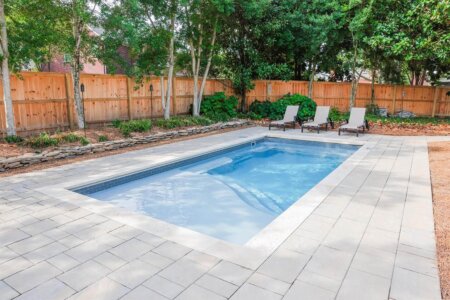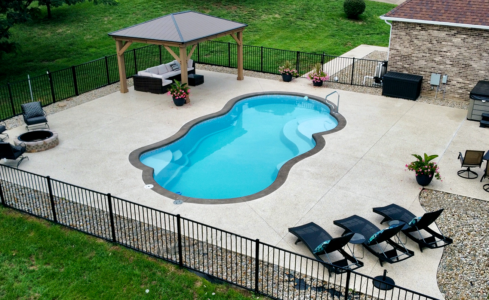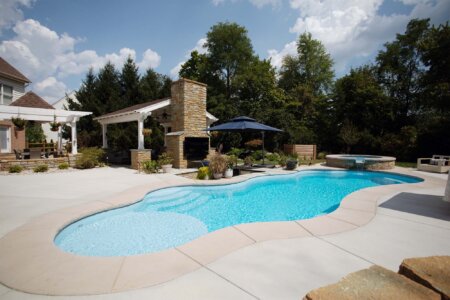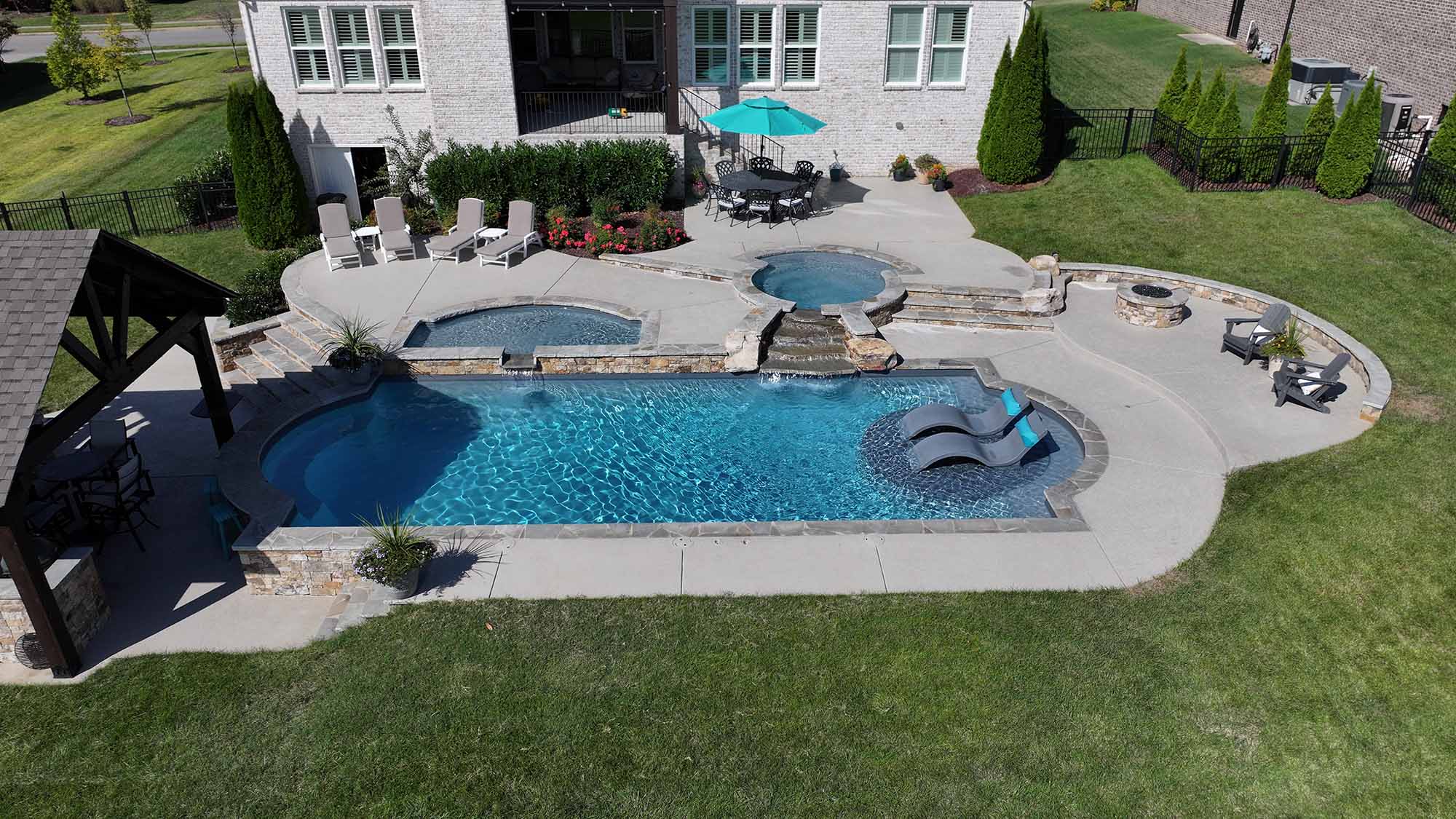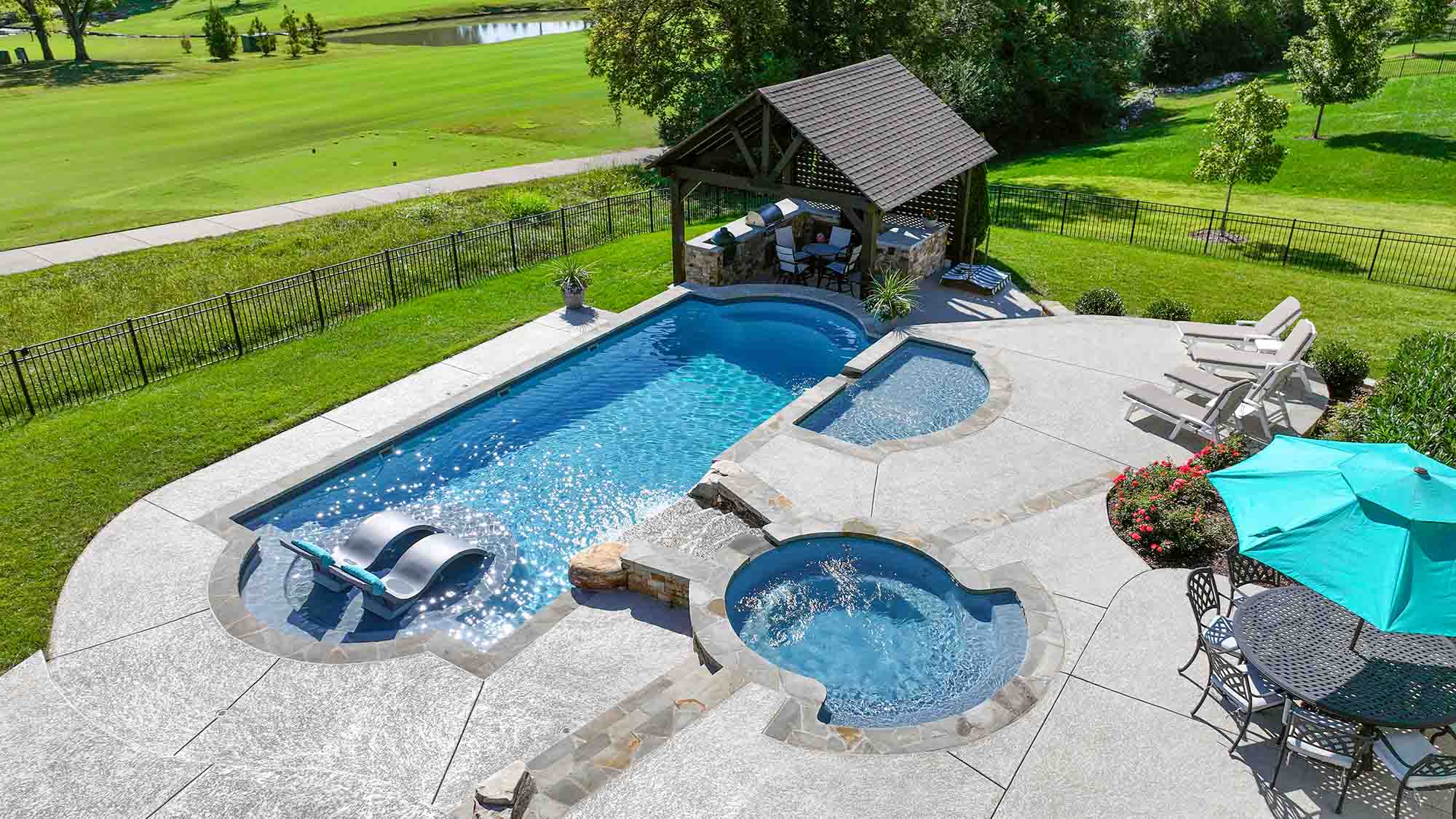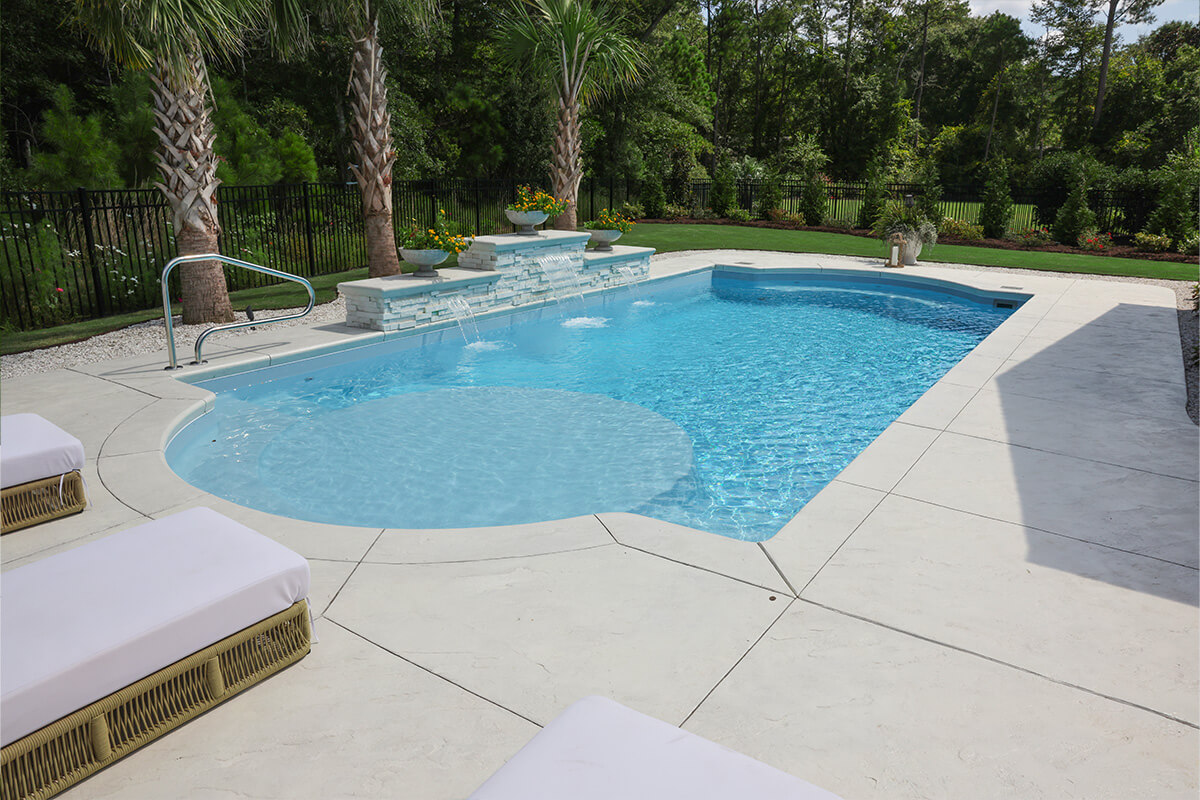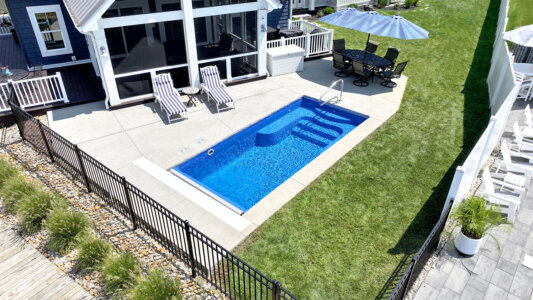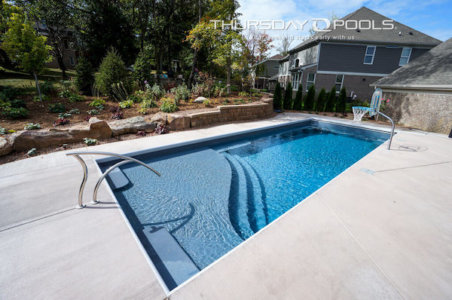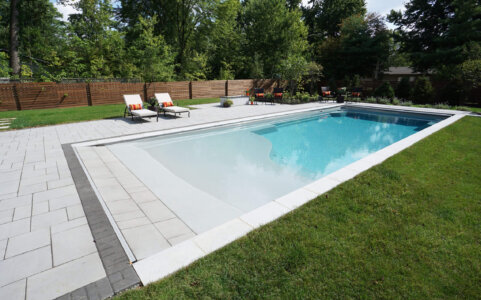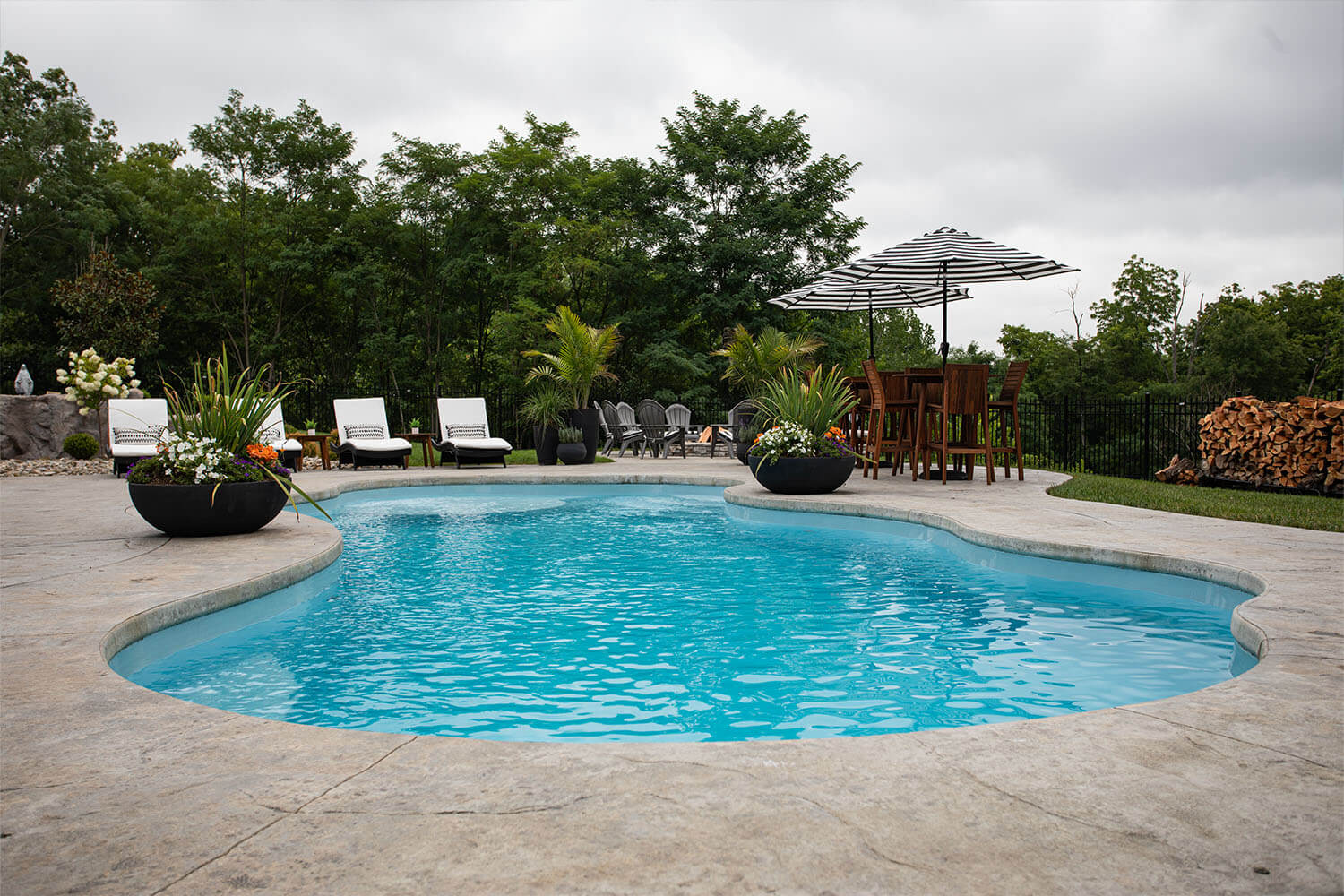
How Much Does a Fiberglass Pool Cost in Nebraska?

Based on a 2026 survey of independent fiberglass pool builders in the Thursday Pools dealer network, a standard fiberglass pool installation in Nebraska averages $85,000 for a small pool, $95,000 for a medium pool, and $105,000 for a large pool. Your final cost will depend on details like pool size, yard conditions, local permit requirements, and the optional upgrades you choose.

Nebraska’s warm summers and sunny days from June through early September make a backyard pool a genuinely high-use investment for the warm-weather months it’s in season. Much of the state’s terrain is flat and accommodating for pool installation, but conditions vary meaningfully depending on where you are. In the loess hills along the Missouri River near Omaha, sloped terrain can require leveling work before excavation begins. Clay-heavy soils common in the greater Omaha and Lincoln metros can complicate drainage during installation. Rocky conditions, while uncommon in Nebraska’s agricultural heartland, do appear in parts of the state. And in established urban neighborhoods from Omaha’s midtown to Lincoln’s older suburbs, tight lot access can require specialty equipment to deliver the one-piece fiberglass shell.

Pool heaters, automatic covers, and spas are among the most popular upgrades Nebraska homeowners choose — tools for stretching a warm-weather season that ends earlier than they’d like and for building a backyard that earns its investment through the full summer. A local independent Thursday Pools dealer can evaluate your site, navigate local permit requirements, and help you build the right pool package for your property.


What is the Average Cost of a Fiberglass Pool Installation in Nebraska?

Thursday Pools surveys its network of independent dealers across the country each year to track real-world installation costs. The figures below reflect current market conditions in Nebraska based on our 2026 dealer survey.

Based on the 2026 survey of independent Thursday Pools dealers in Nebraska, installed fiberglass pool costs average $85,000 for small pools, $95,000 for medium pools, and $105,000 for large pools.


AVERAGE NEBRASKA FIBERGLASS POOL INSTALLATION BY SIZE

Pool Type Small Fiberglass Pools Medium Fiberglass Pools Large Fiberglass Pools
Size Range Up to 26 feet long or 400 square feet 26 to 34 feet long or 400 to 600 square 35 feet and longer or 600+ square feet
Average Cost $85,000 $95,000 $105,000

What Does a Standard Fiberglass Pool Installation in Nebraska Include?

Most Nebraska dealers include the following in a base package: the pool shell, excavation, basic pump and filtration equipment, plumbing, basic electrical, permits, a single pool light, initial water fill, dirt hauling, concrete decking approximately 3 feet around the pool, delivery, and labor. What individual dealers include can vary, so always compare proposals carefully. Expanded decking, fencing, landscaping, pool covers, and optional features typically cost extra.

Contact a nearby Thursday Pools dealer for a custom quote and to learn about financing options for your Nebraska pool installation.


What Do Popular Fiberglass Pool Models Cost Installed in Nebraska?

Aspen Maya by Thursday Pools

ASPEN (12′ x 25′)

Aspen is a compact, well-designed pool that delivers full functionality without demanding a large footprint. It’s a natural fit for the suburban lots common across Omaha’s metro, Lincoln’s established neighborhoods, and the growing communities of Bellevue, Papillion, and Elkhorn. A built-in tanning ledge, open swim lane, and wide entry steps give Aspen purposeful features in a footprint that works where larger models can’t.

Based on 2026 feedback from Thursday Pools dealers throughout Nebraska, the average installed cost for a small fiberglass pool like Aspen or other designs less than 26 feet long and 400 square feet is $85,000.


Thursday Pools Wet Deck with waterfall into Cathedral pool

CATHEDRAL (14′ x 33′)

Cathedral brings classic Roman-style design to mid-size Nebraska backyards. It’s equally at home in Omaha’s western suburbs, the spacious lots of Kearney and Grand Island, and the newer developments stretching across the Lincoln and Omaha metro areas. Wide entry steps, wraparound bench seating, and an open central swim lane create a gathering space that handles both active family use and relaxed evenings with equal grace.

According to 2026 survey responses from independent Thursday Pools dealers throughout Nebraska, the average installed cost for a medium-sized fiberglass pool like Cathedral is $95,000.


Mack Daddy fiberglass pool

MACK DADDY (16′ x 36′)

Mack Daddy is built for Nebraska homeowners ready to invest in the full package. Thursday Pools’ first design to feature a fully integrated spa with a spillway, Mack Daddy also includes a spacious tanning ledge, a conversation area with wraparound benches and wide entry steps, and an open swim lane at uniform flat-bottom depth. Larger suburban lots in Omaha’s western suburbs, rural acreages across central Nebraska, and properties with room to build something memorable are natural fits.

The average cost for a standard installation of a large fiberglass pool like Mack Daddy in Nebraska is $105,000.


What Yard Conditions Affect Fiberglass Pool Installation Costs in Nebraska?

Nebraska’s varied soil conditions and terrain can shape project costs in ways homeowners don’t always anticipate. Before breaking ground, a professional installer will assess your site for conditions that may require extra preparation.

Soil Type

Nebraska’s geology creates distinct challenges depending on where you are in the state. Clay-heavy soils are common throughout much of Eastern Nebraska, including the greater Omaha and Lincoln metro areas, retaining moisture and requiring careful drainage planning during installation. Sandy soils appear along the Republican and Platte river valleys in the state’s central and western regions, where looser ground excavates easily but may need reinforced backfilling for long-term pool stability. Rocky conditions, while uncommon in Nebraska’s flat agricultural interior, can appear in specific geological formations and require specialized excavation equipment.

Slope and Grade

The loess hills along Nebraska’s eastern border near Omaha and the rolling terrain in parts of the Platte River valley can create sloped properties that require grading or retaining wall work before installation can proceed. Much of the state’s interior is flat, which keeps slope-related costs minimal for most Nebraska homeowners.

Backyard Access

Established urban neighborhoods in Omaha and Lincoln, and older suburban communities across the state, sometimes feature tight lot lines, mature trees, and narrow access points that require specialty equipment to deliver the one-piece fiberglass shell.


AVERAGE ADDITIONAL YARD-RELATED EXPENSES IN NEBRASKA


Excavating Sandy Soil $1,569
Excavating Clay-Heavy Soil $2,532
Excavating Rocky Soil $2,932
Above-Average Slope Requiring Extra Grading $3,087
Limited Yard Access  $4,000

Based on 2026 pricing data, site-condition upcharges in Nebraska range from about $1,569 for excavating sandy soil to $4,000 for navigating limited yard access.


What Are Nebraska’s Swimming Pool Fence Requirements?

Nebraska’s residential pool barrier and fencing requirements are determined and enforced by local municipalities.

The City of Lincoln, for example, requires that all family swimming pool enclosures use barriers meeting ASTM F1908-08 fence standards, with all gates and doors equipped with self-closing and self-latching devices. A dwelling or accessory building may form part of the enclosure where appropriate. 

Nebraska’s major cities that have adopted the International Residential Code, including both Omaha and Lincoln, enforce pool barrier standards consistent with the IRC baseline: barriers at least 48 inches tall on the exterior side, no openings larger than 4 inches, self-closing and self-latching gates, and gate latches at least 54 inches above the ground. Requirements vary by municipality and may be more or less stringent than this baseline. Always verify current pool barrier and fencing requirements with your local building department before installation.

For a 300-linear-foot basic pool fence, Nebraska dealers estimate an average cost of $10,770. Final pricing varies by material, height, gate requirements, terrain, and local ordinance compliance.


How Much Do Fiberglass Pool Upgrades Cost in Nebraska?

Optional features can expand what your pool does and extend your swimming season throughout Nebraska’s climate. The right upgrades enhance comfort, convenience, and safety while maximizing your investment. 

Water Quality and System Controls

Pool Heater

  • Average Cost in Nebraska: $5,600
  • A pool heater is one of the most practical upgrades available for Nebraska homeowners to extend the swimming season.

UV Filter System

  • Average Cost in Nebraska: $2,641
  • A UV system passes pool water through an ultraviolet light chamber that destroys bacteria, algae, and chloramines so chlorine works more efficiently and you need less of it to maintain safe, sanitary water.

Pool Automation and Smart Control System

  • Average Cost in Nebraska: $5,100
  • Manage temperature, lighting, and filtration from a smartphone or tablet.


Patio and Hardscape

Poured Concrete Patio (Approx. 1,200 sq. ft.)

  • Average Cost in Nebraska: $12,000
  • A durable, low-maintenance decking option that handles Nebraska’s freeze-thaw cycles when properly installed with expansion joints.

Paver Patio (Approx. 1,200 sq. ft.)

  • Average Cost in Nebraska: $20,000
  • Available in a range of materials, from concrete pavers to natural stone, with a more finished aesthetic than poured concrete.


Safety and Covers

Fence (300 Linear ft.)

  • Average Cost in Nebraska: $10,770
  • Final cost varies by material choices, total fence length, and local code requirements.

Non-Automatic Safety Pool Cover

  • Average Cost in Nebraska: $5,000
  • A manual option for securing the pool and keeping debris out between uses.

Automatic Pool Cover

  • Average Cost in Nebraska: $23,300
  • One-touch operation to protect the pool, retain heat, and reduce evaporation.


Water Features

Deck Jets

  • Average Cost in Nebraska: $1,145 per jet
  • Arc water from the coping into the pool, adding visual movement and ambient sound to the pool area.

Bubblers

  • Average Cost in Nebraska: $1,200 per bubbler
  • On a tanning ledge or beach entry, create movement and the sounds of a babbling brook in shallow pool water.

Cascade or Waterfall

  • Average Cost in Nebraska: $2,200
  • Add a flowing water element and natural sound to the pool environment.


Cleaning and Maintenance

Automatic Pool Cleaning and Vacuuming System

  • Average Cost in Nebraska: $2,300
  • Keep the pool floor and walls clean with minimal manual effort.


Lighting and Tile

LED Pool Lights

  • Average Cost in Nebraska: $825 per light
  • Adds ambiance and visibility for evening and nighttime use.

Specialty Waterline Tile

  • Average Cost in Nebraska: $4,100
  • Installed along the waterline for a custom, finished appearance at the pool edge.


Recreation

Simple Pool Slide*

  • Average Cost in Nebraska: $5,100
  • A standard slide for family use.

Deluxe Pool Slide*

  • Average Cost in Nebraska: $8,200
  • More height and design details than a basic model.

Diving Board (Type 1 Diving Pools Only)*

  • Average Cost in Nebraska: $2,500
  • Only manufacturer-designated Type 1 diving pools support diving board installation. Homeowners should use only manufacturer-approved diving boards with pool models designated as diving pools and must consult a licensed professional to verify compliance with all local building codes and safety requirements before installation.

*Thursday Pools strongly advises against pool slides and diving boards due to safety concerns. The inclusion of a diving board or slide with any fiberglass pool must be carefully reviewed by a licensed professional to ensure compliance with all local building codes, safety regulations, and manufacturer guidelines. Not all fiberglass pool models are suitable for diving or slide use. It is the responsibility of the homeowner and installer to ensure proper installation and usage. Always prioritize safety and consult a qualified expert before adding any diving or sliding feature to your pool.


Landscaping and Extras

Surrounding Landscaping

  • Average Cost in Nebraska: $15,300
  • Includes decorative rocks, plantings, trees, bushes, flower beds, and similar elements that connect the pool to the rest of the yard.

Add-On Spa

  • Average Cost in Nebraska: $12,000
  • A separate spa unit for relaxing hydrotherapy, neighboring or independent of the main pool.


Frequently Asked Questions About Nebraska Fiberglass Pool Costs

How much does a fiberglass pool cost in Nebraska?

A fiberglass pool in Nebraska costs an average of $85,000 for a small pool, $95,000 for a medium pool, and $105,000 for a large pool, based on Thursday Pools’ 2026 survey of the state’s independent dealers.

What does a standard fiberglass pool installation in Nebraska include?

A standard fiberglass pool installation in Nebraska typically includes:

  • Excavation and Dirt Hauling: Soil removal and site preparation.
  • Pool Shell and Delivery: The physical fiberglass pool shell unit delivered to your home.
  • Filtration System: Basic pump, filter, and plumbing.
  • Standard Decking: Approximately 3 feet of concrete surrounding the pool.
  • Permits and Basic Electrical: Includes local municipal filings and one LED pool light.

What yard conditions raise fiberglass pool installation costs in Nebraska?

Clay-heavy soils throughout the Omaha and Lincoln metros can create drainage challenges during installation. Sandy soils along Nebraska’s river valleys are easier to excavate but may need reinforced backfilling for stability. Rocky conditions in specific geological areas require specialized excavation equipment. Sloped terrain in the loess hills near Omaha can require grading work before a level base is established. Limited backyard access in established urban and suburban neighborhoods may require crane service or specialty equipment. Based on 2026 pricing data, site-condition upcharges in Nebraska range from about $1,569 for excavating sandy soil to $4,000 for navigating limited yard access.

What are Nebraska’s pool fence requirements?

Nebraska’s residential pool fencing and barrier requirements are set by local municipalities. The City of Lincoln’s Municipal Code (Chapter 8.36.020) requires barriers meeting ASTM F1908-08 fence standards with self-closing, self-latching gates. Nebraska cities that have adopted the International Residential Code generally require barriers at least 48 inches tall, no openings allowing a 4-inch sphere to pass through, self-closing and self-latching gates, and gate latches at least 54 inches above the ground. Requirements vary by municipality. Always verify with your local building department before installation.

2026 pricing data suggests an average cost of $10,770 for a 300-linear-foot basic fence in Nebraska, with final costs varying by material, height, gate requirements, terrain, and local ordinance compliance.

How much do common pool upgrades add to the cost in Nebraska?

Upgrade costs vary widely depending on the feature:

  • A pool heater averages $5,600.
  • An automatic pool cover averages $23,300.
  • A paver patio of approximately 1,200 square feet averages $20,000.
  • An add-on spa averages $12,000.
  • Smaller additions like deck jets ($1,145 per jet), bubblers ($1,200 per bubbler), and LED lights ($825 per light) add cost in more manageable increments.

How do I get an accurate cost estimate for a fiberglass pool in Nebraska?

The most accurate estimate comes from a local independent Thursday Pools dealer who can assess your yard, review local permit requirements, and give you a project-specific quote. Survey averages provide a useful starting point, but site conditions, design choices, and local labor rates determine what you actually pay.


Get Your Personalized Nebraska Pool Estimate

Survey averages give you a realistic starting point, but your actual cost depends on your yard, your location in Nebraska, and the design details and upgrades you choose. A local independent Thursday Pools dealer can assess your site, walk you through pool options that fit your budget, and give you a project-specific quote, whether you’re in Omaha, Lincoln, Bellevue, Grand Island, Kearney, Fremont, or anywhere across the state.


Thursday Pools manufactures fiberglass pool shells and does not install pools. Pools are installed by locally owned independent dealers. Consumers should consult a local independent dealer for the most accurate and updated information based on the unique conditions of their region and property.
Pool Financing: A Homeowner’s Guide to Paying for a Pool

Best Pool Financing Companies for Fiberglass Pool Projects

If you’re comparing pool financing companies, you’re probably trying to answer the practical question of which lender or financing path makes the most sense for your project, your budget, and your timeline. This guide breaks down several common options homeowners consider, including specialty pool loan companies, general lenders, and home equity routes, so you can compare them with clearer expectations. Thursday Pools does not endorse one lender over another.


What to Look for in Pool Loan Companies

Before you compare lenders, it helps to understand the size of the project you may be financing. Many turnkey fiberglass pool projects fall within the $70,000 to $135,000 range, depending on size, access, geography, and extras. The right lender for your installation must have the right loan structure, funding process, and repayment terms for the full scope of the project.


Some companies that finance pools focus on unsecured loans. Others connect you to staged funding, builder-direct payments, or multiple loan options from lending partners. A few key questions can help narrow the field for your purposes fast:


  • Do you want to avoid borrowing against your home?
  • Do you need one lump sum or staged payments during construction?
  • Do you care more about lower monthly payments or lower total interest?
  • Do you have strong home equity, or would an unsecured option fit better?


Your financing choice often comes down to three things: how large the full project is, whether you want to borrow against home equity, and what payment range feels comfortable month to month.


Lyon Financial vs. HFS Financial for Pool Financing

Lyon Financial and HFS Financial both show up often in conversations about the best pool financing companies, but they structure their offers and products a little differently.


Lyon Financial focuses heavily on swimming pool lending, offering nationwide pool loans up to $200,000, terms up to 30 years, and builder-direct staged payments that the borrower approves during construction. The builder-payment model can appeal to homeowners who want funding to track the project schedule instead of receiving one lump sum upfront. Lyon also emphasizes unsecured options, which means no home equity requirement for many borrowers.


HFS Financial also focuses on pool and home improvement lending while emphasizing fixed-rate personal loans, no prepayment penalties, no home equity requirement, and terms from 1 to 20 years. HFS says it offers loan amounts from $5,000 to $300,000 on some programs and highlights direct-to-consumer funding, which gives homeowners more control over how they pay for the pool and related work. Homeowners can check prequalification through HFS without a hard credit pull.


Lyon may appeal more if you’d like staged builder payments and longer terms, while HFS may be more appealing if you want a fixed-rate unsecured loan with direct borrower control over funds. The right fit depends on how you want the money to move during your project. 


LightStream and Other Lenders for Pool Loans

LightStream sits a little differently among pool lenders because it doesn’t focus only on pools. It offers unsecured loans for many types of projects. Swimming pool loan terms range from 24 to 240 months, and approved borrowers can get access to financing funds quickly.


That setup fits borrowers who want speed, a clean online process, and a lender that treats the pool as one type of home project rather than a specialized category.


LightStream works best for borrowers who want a fast, fully online process and do not need construction-stage draw payments tied to the builder schedule. The potential tradeoff is that general home-improvement lenders may not build their disbursement process around pool construction in the same way some pool-specific lenders do. 


Viking Capital and Dealer-Connected Pool Loan Lenders

Viking Capital works differently from other pool financing companies by acting more like a consultant than a direct lender. Viking works with pool builders and financing partners to match borrowers with loan options that fit their project and credit profile.


With one application and a soft credit pull, borrowers can review options before committing. Viking offers unsecured loan terms up to 20 years for projects that typically start around $25,000, with up to 100% financing available on some pool builds. It also uses a draw schedule that sends payments directly to the builder as the project moves forward instead of releasing one lump sum at closing.


Viking’s structure may appeal to homeowners who want financing tied more closely to construction progress. The tradeoff is transparency, as rates are not published upfront. They are disclosed during the consultation process based on your credit profile and loan structure. Ask for the full term sheet, including rate, fees, repayment term, and disbursement schedule.


Swimming Pool Financing Companies vs. Home Equity Options

Not every buyer ends up using specialized swimming pool financing companies. Some choose a home equity loan or home equity line of credit (HELOC) through a bank or credit union instead.


The choice usually comes down to a simple tradeoff. Home equity products may offer lower rates, but they take longer, involve more paperwork, and use your home as collateral. Specialized pool loan companies may move faster and offer unsecured loans, but the rates can run higher. If speed matters most, lender-direct or dealer-connected pool financing may win out for you. If long-term borrowing cost matters most, home equity deserves a close look.


How to Compare the Best Pool Financing Companies

Advertised rates only tell you part of the story. Before you choose between pool financing companies, compare:

  • Maximum loan amount
  • Loan term length
  • Fixed vs. variable rate
  • Unsecured vs. home-secured structure
  • Staged payments vs. lump-sum funding
  • Prepayment penalties
  • Speed to approval and funding


Because many fiberglass pool projects fall in the $70,000 to $135,000 range, lender fit matters just as much as headline pricing. A lender that works well for a smaller home project may not work as well for a larger pool-and-patio budget. Some lenders let you check prequalification without a hard credit pull. HFS allows you to check if you’re prequalified without impacting your credit.


Compare Your Pool Financing Options Before You Apply

Before you choose between pool financing companies, run the math on the full project. Try out the Thursday Pools Financing Calculator to estimate possible payments based on loan amount, rate, and term. Then connect with a local independent dealer to talk through your pool plans, site conditions, and the financing paths that make the most sense for your budget. 


Frequently Asked Questions About Pool Financing Companies


What companies offer financing for swimming pools?

  • Several known pool financing companies and lenders offer options for swimming pools, including:
    • Lyon Financial
    • HFS Financial
    • LightStream
    • Viking Capital
  • Some buyers also use home equity loans or HELOCs through banks and credit unions. The biggest difference is that some lenders specialize in pools, while others offer broader home-improvement loans that can be used for pool projects.


What credit score do you need for pool financing?

  • Requirements vary, but many lenders prefer scores in the 680 to 700 range or higher. Some programs may work with borrowers in the mid-600s, especially if the overall credit profile is strong. Better credit usually improves both approval odds and pricing. 


How much can you finance for a swimming pool?

  • Loan amounts vary by lender, income, credit, and project type, ranging from about $20,000 on the low end to $200,000 or $300,000 on some programs. Try the Thursday Pools Financing Calculator to test various payment scenarios before you apply.


Is it better to finance a pool through a lender or home equity?

  • Pool lenders often move faster and may offer unsecured loans, which means you do not have to borrow against your home. Home equity loans and HELOCs often offer lower rates, but they usually take longer and require sufficient home equity. The better option depends on whether you value speed, lower rates, or keeping your home out of the financing structure.

Pool Financing Options: How to Choose the Right Path for Your Fiberglass Pool

Cathedral LX fiberglass pool in Diamond finishIf you’re researching pool financing options, you’re probably asking a practical question, not a dreamy one: How do I make this work without stretching my budget too far? That’s exactly where smart pool financing starts. Most homeowners do not pay for a fiberglass pool one way alone. They compare options, weigh tradeoffs, and choose the path that fits their savings, equity, timeline, and comfort with monthly payments.

How to Finance a Pool: Start With the Full Project Budget

Before you compare pool financing options, get clear on the total project. Fiberglass pool pricing depends on pool size, site conditions, access, geography, patio and landscaping choices, and add-ons like heaters, covers, lighting, and fencing. That matters because the best financing options for a $60,000 project may not be the best options for an $85,000 or $120,000 backyard project.

Pool Loan Options and Personal Loans

When people ask how to finance a pool, pool loans usually come up first. In practice, these often work like unsecured personal loans. That can make them useful for buyers who want speed or who do not want to borrow against their home. The tradeoff is cost. Unsecured loans often carry higher rates and lower borrowing limits than equity-based options.

This route can make sense when you want a simple approval process, you have strong credit, or you need funding that works well alongside other sources. It can also help if you want to move quickly on the construction timing. Specialty pool lenders may offer larger unsecured loan amounts and longer terms, but your rate and approval still depend on credit, income, and overall financial profile.

Swimming Pool Financing Options: Home Equity Loan vs. HELOC

For many homeowners, the best way to finance a pool comes down to home equity. A home equity loan gives you a fixed amount borrowed against your home’s equity. That structure works well when you know your project budget and want predictable payments.

A home equity line of credit (HELOC) works differently. It gives you a line of credit that you can draw from as needed, with flexibility that can help when your project includes staged expenses like decking, landscaping, fencing, or later upgrades.

The tradeoff with both options is simple. Rates often look better than unsecured loans, but your home secures the debt. You also need enough equity to qualify, and you may face appraisal, closing, or lender fees depending on the product.

Ways to Finance a Pool With Cash-Out Refinancing or Dealer Financing

A cash-out refinance replaces your current mortgage with a larger one and gives you the difference in cash. This option can help homeowners tap equity for improvements, but it can also extend repayment and increase risk if payments become too heavy. It usually makes the most sense when rates are favorable, and you have meaningful equity built up.

Some homeowners also explore pool dealer financing programs, which usually means your builder or dealer conveniently connects you with a financing partner. Be sure to compare dealer options against outside lenders so you understand the rates, terms, fees, and monthly payments clearly.

Is Paying Cash the Best Way to Finance a Pool?

Not every conversation about swimming pool financing options should end with a loan. Paying with cash out of pocket for at least a portion of the price tag can lower interest rates, reduce total project cost, and give you more flexibility later. It also pairs well with a hybrid strategy, such as using savings for the pool shell and financing only the patio or upgrades.

What’s the Best Way to Finance a Pool?

The honest answer is that the best way to finance a pool depends on three things

  1. Your credit profile
  2. Your available home equity
  3. The size of the backyard project you want to build

If a low rate matters most, home equity products usually deserve a close look. If speed and simplicity matter most, pool loans or personal loans may fit better. If you want the lowest total cost, paying cash often wins out. Many homeowners land somewhere in the middle and use a combination.

Compare Pool Financing Options Before You Commit

A smart next step is to run the numbers before you talk yourself into or out of any backyard pool project. Try out the Thursday Pools Financing Calculator to estimate potential daily or weekly payments based on loan amount, interest rate, and term. Then connect with a local independent dealer to talk through your pool vision, your site, and the financing possibilities that fit your budget.


FAQ: Pool Financing Options

What are the most common pool financing options?

The most common pool financing options are pool loans from specialty lenders, home equity loans, HELOCs, cash-out refinancing, personal loans, and paying cash. Many buyers use a combination instead of relying on one source.

What is the best way to finance a swimming pool?

Best for lower rates usually means a home equity loan or HELOC. Best for speed and simplicity often means a pool loan or personal loan. Best for lowest overall cost means paying cash. The right answer depends on your credit score, home equity, and total project budget.

What credit score is needed to finance a pool?

Requirements vary by lender, but higher scores usually unlock better rates and terms. Some lenders may consider borrowers in the mid-600s, while stronger credit generally improves approval odds and pricing.

How much can you finance for a swimming pool?

Loan amounts vary widely by lender and borrower profile. Some specialty lenders advertise loans from $20,000 up to $200,000 or more, while your actual approval depends on credit, income, and overall financial picture. Many fiberglass pool projects fall somewhere within the $50,000 to $120,000 range.

Is it better to finance a pool or pay cash?

Paying cash avoids interest and lowers the total project cost. Financing preserves savings, spreads cost over time, and can make a larger backyard plan possible sooner. Many homeowners choose a mix of cash plus financing.

How long are pool financing terms?

Terms vary by product, but 7- to 20-year repayment windows are common. Longer terms usually have lower monthly payments, while shorter terms reduce total interest paid.

How Much Does a Fiberglass Pool Cost in Washington?

Towering evergreens, mountain views, and crisp, clean air—Washington’s natural beauty makes it the perfect backdrop for a backyard pool. The Pacific Northwest might be known for its misty mornings and cooler climate, but summer brings warm sunny days that invite you into a pool. If you’re researching fiberglass pool cost in Washington, it’s important to understand how regional conditions can influence your overall investment. From rocky terrain around Spokane to loamy soils in the Puget Sound region, and whether you’re tucked into a wooded lot near Bellingham or enjoying open space around the Tri-Cities, local geography and site prep needs play a crucial role in shaping your pool installation costs.

Customization is at the heart of creating a poolscape that fits your lifestyle, and your design choices can have a significant impact on cost. Add-ons like an integrated spa, heating system, or expansive patio space can transform your yard, but they also affect your bottom line. With local permitting and fencing regulations to budget for, too, the planning process can quickly become complex. Choosing a trusted Washington fiberglass pool dealer can help you navigate these factors and bring your backyard vision to life on time and on budget.


What’s the Average Fiberglass Pool Cost in Washington? Survey Says…

Thursday Pools collected local cost data through a 2025 survey of our independent dealers across Washington to help you understand the average cost of installing a fiberglass pool in the Evergreen State. If you’re just beginning your research into fiberglass pool pricing in your area, this is the place to start. Our goal is to give you a realistic, data-backed snapshot of what it might cost to turn your outdoor space into a private backyard retreat.


AVERAGE WASHINGTON FIBERGLASS POOL INSTALLATION BY SIZE

Pool Type Small Fiberglass Pools Medium Fiberglass Pools Large Fiberglass Pools
Size Range Up to 26 ft Long or 400 ft² 26 to 34 ft Long or 400 to 600 ft² 35 ft and Longer or 600+ ft²
Average Cost $110,000 $120,000 $130,000


Think of these numbers as mile markers, not a final destination. Washington’s landscape is as varied as its weather—dense tree coverage, hilly terrain, and high water tables can all affect your project scope and pricing. Your personal design choices and pool model preference play a big role, too. The best way to move from average estimates to a custom quote tailored to your yard is to connect with a local Thursday Pools dealer  who knows the terrain and has experience using Washington’s natural beauty to create a staycation destination.


Estimated Installation Costs for Popular Fiberglass Pool Designs in Washington


Thursday Pools pearl pool with decorative hardscaping border

PEARL (15’ x 25’)

Compact, elegant, and full of features, the Pearl is a standout choice for Washington homeowners who want luxury without sacrificing yard space. Its petite footprint is ideal for tighter urban lots in areas like Seattle, Tacoma, or Bellevue, where smart design and space efficiency matter. The built-in tanning ledge and wraparound bench seating elevate comfort, while the scalloped shape adds unique visual interest.

According to our 2025 survey of Thursday Pools dealers in Washington, the average cost for a standard installation of the Pearl or other compact fiberglass pools up to 26 feet long or 400 square feet is $110,000.


Aspen 16x40 in California by Thursday Pools

ASPEN (14’ x 30’)

The 30-foot-long Aspen is a mid-sized pool that delivers big on comfort and versatility. Its generous tanning ledge, full-length entry steps, and deep-end swim-outs create a space to host both active swimmers and laid-back loungers. With its sleek rectangular design, the Aspen fits beautifully into most mid-sized properties across Washington, from suburban neighborhoods around Spokane to scenic backyards of Olympia.

Based on Washington dealer survey responses, the average cost for a standard installation of the Aspen or similar fiberglass pools between 26 and 34 feet or 400 to 600 square feet is $120,000.


Thursday Pools California Sandal Beach Entry with hardscaping border

SANDAL (16’ x 39’)

The Sandal offers a true resort-style experience in your backyard. Featuring a sloping beach-entry design, this pool invites you to walk in like you would at the shoreline. It’s ideal for families, sunbathers, or anyone seeking a touch of luxury, and is a bold choice for expansive properties in rural or high-end neighborhoods near places like Redmond, Vancouver, or Walla Walla. With its gentle slope, integrated lounging area, and spacious swim zone, the Sandal is as stylish as it is functional.

According to our survey of Washington Thursday Pools dealers, the average cost for a standard installation of the Sandal or other large fiberglass pools 35 feet or 600 square feet and larger is $130,000.


Evaluating Your Washington Property for a Fiberglass Pool Installation

Washington’s dramatic landscapes offer beautiful settings for fiberglass pools, but can also present unique installation challenges. Western areas like Seattle, Tacoma, and Everett often have dense clay soils and high water tables, which can complicate excavation and require added drainage or engineering work. Central and Eastern Washington homes around Spokane, Yakima, and the Tri-Cities can have rockier terrain or loamy soils that may require different excavation strategies or stabilization efforts.

Yard layout and topography are other significant cost factors. Sloped lots are common across the state, particularly near the Cascades or in lakefront communities, and may need grading or retaining walls to create a level base for your pool shell.

Access issues can also impact installation costs. In urban or older neighborhoods such as Seattle’s Capitol Hill or Queen Anne, tight streets and narrow lots with limited access might call for renting a crane to position the pool shell. Even in more suburban or rural settings, landscaping, trees, and terrain can add complexity.

Working with a local pool expert who knows Washington’s varied conditions ensures your installation goes smoothly and helps avoid surprises that could affect your budget or timeline.

Pool Safety Barrier Guidelines for Washington Residential Installations

Washington requires enclosing all pools with a safety barrier at least 4 feet high with a self-closing, self-latching, and outward-swinging gate. These fencing barriers are critical for preventing unauthorized and unsupervised access, especially by young children or family pets. 

Local municipalities may enforce additional pool fencing requirements to budget for, such as mandating higher barriers, stipulating certain materials, or implementing regulations on allowed fence openings.

It is essential to verify the exact Washington code requirements or local HOA regulations before construction. Consulting with an experienced fiberglass pool professional familiar with Washington’s regulations can help ensure your barrier meets all safety standards, protects your loved ones, and prevents costly compliance issues.

Washington homeowners can expect to spend $11,600 for a 300-linear-foot pool fence, based on responses to our 2025 survey of local independent Thursday Pools dealers.


Elevate Your Washington Fiberglass Pool with Popular Upgrades

Transforming your yard and elevating your fiberglass pool means more than installing the shell. It’s about customizing features that fit your lifestyle and preferences. While not essential, these popular add-ons can enhance comfort, convenience, and style to help make the most of your outdoor space. Drawing from insights shared by Thursday Pools’ trusted dealers across the state, here’s a look at some of the most in-demand upgrades and their average costs to guide your planning.


Pool Heating & Water Care Solutions

Pool Heater Average Cost in Washington: $8,000
Extend your swimming season by keeping pool water warm even during chilly Northwest evenings. A reliable heater ensures your pool stays inviting when temperatures drop.

UV Filtration System Average Cost in Washington: $2,300
Washington’s abundant rain and organic debris can affect water clarity. UV filtration helps reduce chemical use by neutralizing bacteria and algae, leaving your pool sparkling clean with less maintenance.

Automatic Pool Cleaner and Vacuum System Average Cost in Washington: $2,000
Save time on pool upkeep with an automatic cleaning system designed to keep your pool spotless even when you’re busy elsewhere.

Pool Automation and Smart Control System Average Cost in Washington: $8,400
Manage your pool’s temperature, filtration, and lighting remotely with smart controls—perfect for Washington homeowners who want seamless pool management at their fingertips.


Pool Covering & Safety Options

Automatic Pool Cover Average Cost in Washington: $16,000
Enhance safety and energy efficiency with an automatic cover that protects your pool from debris and reduces heat loss.

Manual Safety Pool Cover Average Cost in Washington: $4,900
Affordably secure your pool from unwanted access and keep out leaves, dirt, and other debris.


Poolside Surfaces & Landscape Enhancements

Concrete Patio (Approx. 1,200 sq. ft.) Average Cost in Washington: $7,100
Durable and weather-resistant, concrete patios provide a stable poolside surface that withstands Northwest rain and temperature swings.

Paver Patio (Approx. 1,200 sq. ft.) Average Cost in Washington: $9,900
Choose from natural stone, brick, or concrete pavers to add texture and slip resistance while creating a stylish, safe outdoor space.

Landscaping Average Cost in Washington: $16,000
Integrate native plants and thoughtful landscaping to complement your pool area and enhance aesthetic appeal.


Distinctive Features & Elegant Touches

Specialty Waterline Tile Average Cost in Washington: $6,500
Add a custom, elegant touch to your pool’s edge with decorative waterline tiles, elevating the overall look of your backyard retreat.

LED Pool Lights Average Cost in Washington: $2,400 per light
Set the perfect ambiance for evening swims with energy-efficient LED lighting in white or color-changing options.

Deck Jets Average Cost in Washington: $5,000 per jet
Introduce flowing water features that create graceful arcs and soothing sounds around your pool deck.

Bubblers Average Cost in Washington: $5,200 per bubbler
Perfect for shallow areas or tanning ledges, bubblers add a playful and relaxing splashing water effect.

Cascading Waterfalls Average Cost in Washington: $13,700
Bring the tranquil sound of flowing water to your backyard with a waterfall feature that doubles as a stunning focal point.

Add-On Spa Average Cost in Washington: $16,000
Create a spa-like experience with a connected spillover spa for relaxation and hydrotherapy benefits.


Recreational Slides & Diving Accessories

Simple Pool Slide Average Cost in Washington: $9,800*
Add family-friendly fun with a straightforward slide designed for safety and enjoyment.

Deluxe Pool Slide Average Cost in Washington: $13,400*
For a more thrilling experience, a deluxe slide offers extra curves and height for added excitement.

Diving Board (Type 1 Diving Pools Only) Average Cost in Washington: $8,200*
Diving boards require pools that meet strict depth and slope criteria. Professional installation and planning are essential for safety and code compliance.

*Thursday Pools strongly advises against including diving boards and slides due to safety concerns. A licensed professional must review any such additions to ensure compliance with local building codes, safety regulations, and manufacturer guidelines. Not all fiberglass pool models are suitable for diving or slide use. Homeowners and installers are responsible for proper installation and usage. Always prioritize safety and consult a qualified expert before adding diving or sliding features to your pool.


Create Your Perfect Washington Backyard Retreat with a Custom Fiberglass Pool

Installing a fiberglass pool in Washington is about more than adding home value. It’s about creating a versatile outdoor space that complements the Pacific Northwest lifestyle. Whether you’re enjoying the lush greenery of the Puget Sound region or the open skies of Eastern Washington, a custom pool offers a haven for relaxation, recreation, and memorable gatherings.

Washington’s diverse climate and landscapes mean that every backyard presents unique opportunities and challenges. Working with a knowledgeable local Thursday Pools dealer ensures your pool design perfectly suits your property’s terrain and your personal preferences. 

Start your journey today by using the Thursday Pools Pool Cost Calculator for a realistic pricing estimate, explore the Pool Selector Tool to find the ideal pool design, and connect with a trusted dealer near you when you’re ready.


Get Your Personalized Estimate


Thursday Pools manufactures fiberglass pool shells and does not install pools. Pools are installed by locally owned independent dealers. Consumers should consult a local independent dealer for the most accurate and updated information based on the unique conditions of their region and property.

How Much Does a Fiberglass Pool Cost in Colorado?

Based on a 2026 survey of independent fiberglass pool builders in the Thursday Pools dealer network, a standard fiberglass pool installation in Colorado averages $88,000 for a small pool, $104,000 for a medium pool, and $121,000 for a large pool. Your final cost will depend on details like pool size, yard conditions, local permit requirements, and the optional upgrades you choose.

Colorado offers an exceptional backdrop for outdoor living with more than 300 days of sunshine per year, warm dry summers, and stunning mountain views that make a backyard pool a natural extension of the Colorado lifestyle. That geography also shapes installation costs. Rocky soil is common throughout the Front Range, the foothills, and many mountain communities, and excavating through it requires specialized equipment and additional labor. Along the Eastern Plains, loose sandy soils excavate more easily but may need reinforcement to prevent pool shifting over time. Clay-heavy ground is widespread across many Denver suburbs and requires careful drainage planning. Sloped properties, common in communities like Evergreen, Boulder, and the broader foothills, often need grading or retaining walls before installation can begin.

Colorado summers deliver ideal pool conditions from late May through September, and many Colorado homeowners invest in pool heaters and automatic covers to push that window further into spring and fall. A local independent Thursday Pools dealer can evaluate your site, understand your local permit requirements, and help you build a pool and upgrades package that fits your yard.


What is the Average Cost of a Fiberglass Pool Installation in Colorado?

Thursday Pools surveys its network of independent dealers across the country each year to track real-world installation costs. The figures below reflect current market conditions in Colorado based on our 2026 dealer survey.

Based on the 2026 survey of independent Thursday Pools dealers in Colorado, installed fiberglass pool costs average $88,000 for small pools, $104,000 for medium pools, and $121,000 for large pools.


AVERAGE COLORADO FIBERGLASS POOL INSTALLATION BY SIZE

Pool Type Small Fiberglass Pools Medium Fiberglass Pools Large Fiberglass Pools
Size Range Up to 26 ft Long or 400 ft² 26 to 34 ft Long or 400 to 600 ft² 35 ft and Longer or 600+ ft²
Average Cost $88,000 $104,000 $121,000


What Does a Standard Fiberglass Pool Installation in Colorado Include?

Most Colorado dealers include the following in a base package: the pool shell, excavation, basic pump and filtration equipment, plumbing, basic electrical, permits, a single pool light, initial water fill, dirt hauling, concrete decking approximately 3 feet around the pool, delivery, and labor. What individual dealers include can vary, so always compare proposals carefully. Expanded decking, fencing, landscaping, pool covers, and optional features typically cost extra.

Contact a nearby Thursday Pools dealer for a custom quote and to learn about financing options for your Colorado pool installation.


What Do Popular Fiberglass Pool Models Cost Installed in Colorado?

Thursday Pool Caribbean Sparkle Titus pool

TITUS (12’ x 26’) 

Titus is a compact, refined pool design built for Colorado homeowners making the most of a manageable footprint. It’s a natural fit for the urban lots of Denver and Fort Collins, the tighter suburban yards of Longmont and Loveland, and any property where efficiency matters as much as elegance. Wraparound bench seating, clean entry steps, and a graceful silhouette make it equally well-suited for quiet morning swims and relaxed evening gatherings.

Based on 2026 feedback from Thursday Pools dealers throughout Colorado, the average installed cost for a small fiberglass pool like Titus or other designs less than 26 feet long and 400 square feet is $88,000.


Thursday Pools Sun Day

SUN DAY (15’ x 30’) 

Sun Day brings resort-style elegance to mid-size Colorado backyards, from established neighborhoods in Colorado Springs and Castle Rock to the newer developments stretching across the northern Front Range. Its freeform curves create a relaxed, organic shape that complements Colorado’s natural landscapes, while a built-in tanning ledge, perimeter bench seating, and open swim zone give it functionality for both active and low-key use.

According to 2026 survey responses from independent Thursday Pools dealers throughout Colorado, the average installed cost for a medium-sized fiberglass pool like Sun Day is $104,000.


Ariel view of the caribben sparkle rectangular pool with stair entry and bench seating

SPIRIT (13.5’ x 40’) 

Spirit is built for Colorado properties where the yard can support a statement. At 40 feet long, it delivers a full-length swim lane, wraparound bench seating, and wide entry steps in a design that anchors the entire outdoor living space. Spacious lots in Parker, Evergreen, and across Northern Colorado’s ranch-style communities have room for a pool of this scale, and Spirit’s clean, timeless lines hold their own whether surrounded by mountain views or contemporary hardscaping.

The average cost for a standard installation of a large fiberglass pool like Spirit in Colorado is $121,000.


What Yard Conditions Affect Fiberglass Pool Installation Costs in Colorado?

Colorado’s diverse terrain and soil conditions can affect installation costs significantly. Before breaking ground, a professional installer will assess your site for conditions that may require extra preparation.

Soil Type

Colorado’s geology creates distinct challenges across the state. Rocky soil is prevalent throughout the Front Range, the foothills, and mountain communities from Fort Collins to Pueblo, where excavation often requires specialized equipment and significantly more labor than flat, soft-soil sites. Clay-heavy soils are common across many Denver suburban areas and much of the urban corridor, holding moisture and requiring careful drainage planning to protect the pool structure over time. Sandy soils in areas like Pueblo and the Eastern Plains excavate more easily but may need reinforced backfilling to prevent pool shifting. A pre-installation site assessment can identify what your specific soil requires before the project begins.

Slope and Grade

Sloped lots are common throughout Colorado’s foothills communities, including Evergreen, Golden, Boulder, and others stretching west from Denver. These properties often require grading work, retaining walls, or significant leveling preparation before excavation can proceed. The scope of that work varies widely depending on grade severity, which is why slope is one of the most variable cost factors in Colorado pool installations.

Backyard Access

Wide-open access makes a fiberglass pool installation more efficient. Dense urban neighborhoods in Denver, Boulder, Colorado Springs, and other established suburban communities with mature landscaping and limited side yards can present access constraints that require crane service or specialty equipment to deliver the one-piece pool shell.


AVERAGE ADDITIONAL YARD-RELATED EXPENSES IN COLORADO


Excavating Sandy Soil $3,900
Excavating Clay Soil $4,350
Excavating Rocky Soil $12,500
Above-Average Slope Requiring Extra Grading $9,350
Limited Yard Access  $4,350

Based on Thursday Pools’ 2026 independent dealer survey, site-condition upcharges in Colorado range from about $3,900 for excavating sandy soil to $12,500 for working in rocky soil.


What Are Colorado’s Swimming Pool Fence Requirements?

Colorado’s pool barrier and fencing requirements are set by local municipalities and counties, and can vary across the state.

The City and County of Denver, for example, shows how local requirements typically look. Denver requires a building permit for all outdoor residential pools, barriers, and fences, and its Swimming Pools, Spas, and Water Features permit program through the Community Planning and Development department specifies the following for residential pool barriers:

  • The pool must be visible through the barrier. Solid or opaque enclosures are not permitted as pool barriers under Denver’s code.
  • Openings in the barrier must not exceed 4 inches in width.
  • Gates must be self-closing with a positive latching closure located at a minimum of 54 inches above the ground.
  • Where an approved safety cover is used, it must be certified and labeled to ASTM F1346 standards.

Requirements vary across Colorado’s municipalities. Some jurisdictions follow the International Swimming Pool and Spa Code (ISPSC) baseline of 48 inches for barrier height, while others may specify different heights, materials, or setback requirements. HOA rules can add further requirements beyond municipal codes. Always verify current pool barrier and fencing requirements in your area before installation.

For a 300-linear-foot basic pool fence, Colorado dealers estimate an average cost of $8,050. Final pricing varies by material, height, gate requirements, terrain, and local code compliance.


How Much Do Fiberglass Pool Upgrades Cost in Colorado?

Optional features can expand what your pool does and extend your swimming season throughout Colorado’s climate. The right upgrades enhance comfort, convenience, and safety while maximizing your investment. The averages below come from Thursday Pools’ 2026 dealer survey in Colorado.

Water Quality and System Controls

Pool Heater

  • Average Cost in Colorado: $9,000
  • A pool heater is one of the most impactful upgrades for Colorado homeowners, extending the swim season into May and September and keeping water comfortable at higher elevations where evenings cool quickly.

UV Filter System

  • Average Cost in Colorado: $2,450
  • A UV system passes pool water through an ultraviolet light chamber that destroys bacteria, algae, and chloramines so chlorine works more efficiently and you need less of it to maintain safe, sanitary water.

Pool Automation and Smart Control System

  • Average Cost in Colorado: $4,350
  • Manage temperature, lighting, and filtration from a smartphone or tablet.


Patio and Hardscape

Poured Concrete Patio (Approx. 1,200 sq. ft.)

  • Average Cost in Colorado: $14,900
  • A durable, low-maintenance decking option that handles Colorado’s significant freeze-thaw cycles when properly installed with expansion joints and adequate base preparation.

Paver Patio (Approx. 1,200 sq. ft.)

  • Average Cost in Colorado: $14,600
  • Available in a range of materials, from concrete pavers to natural stone. Flagstone and earthy-toned pavers complement Colorado’s mountain-inspired outdoor aesthetics particularly well, and individual units can be repaired or replaced when freeze-thaw movement shifts them.


Safety and Covers

Fence (300 Linear ft.)

  • Average Cost in Colorado: $8,050
  • Final cost varies by material choices, total fence length, and local code requirements.

Non-Automatic Safety Pool Cover

  • Average Cost in Colorado: $4,950
  • A manual option for securing the pool and keeping debris out between uses.

Automatic Pool Cover

  • Average Cost in Colorado: $19,150
  • One-touch operation to protect the pool, retain heat, and reduce evaporation. For Colorado homeowners, automatic covers provide meaningful energy savings during cool evenings and extend the usable swim season on both ends.

Water Features

Deck Jets

  • Average Cost in Colorado: $1,650 per jet
  • Arc water from the coping into the pool, adding visual movement and ambient sound to the pool area.

Bubblers

  • Average Cost in Colorado: $1,800 per bubbler
  • On a tanning ledge or beach entry, create movement and the sounds of a babbling brook in shallow pool water for a fitting complement to Colorado’s mountain stream aesthetic.

Cascade or Waterfall

  • Average Cost in Colorado: $5,750
  • Add a flowing water element and natural sound to the pool environment.


Cleaning and Maintenance

Automatic Pool Cleaning and Vacuuming System

  • Average Cost in Colorado: $3,550
  • Keep the pool floor and walls clean with minimal manual effort, especially during Colorado’s wind-prone and dust-active seasons.


Lighting and Tile

LED Pool Lights

  • Average Cost in Colorado: $2,125 per light
  • Adds ambiance and visibility for evening and nighttime use as a popular addition for Colorado’s warm, clear summer nights.

Specialty Waterline Tile

  • Average Cost in Colorado: $4,700
  • Installed along the waterline for a custom, finished appearance at the pool edge.


Recreation

Simple Pool Slide*

  • Average Cost in Colorado: $7,050
  • A standard slide for family use.

Deluxe Pool Slide*

  • Average Cost in Colorado: $9,550
  • More height and design details than a basic model.

Diving Board (Type 1 Diving Pools Only)*

  • Average Cost in Colorado: $4,650
  • Only manufacturer-designated Type 1 diving pools support diving board installation. Homeowners should use only manufacturer-approved diving boards with pool models designated as diving pools and must consult a licensed professional to verify compliance with all local building codes and safety requirements before installation.

*Thursday Pools strongly advises against pool slides and diving boards due to safety concerns. The inclusion of a diving board or slide with any fiberglass pool must be carefully reviewed by a licensed professional to ensure compliance with all local building codes, safety regulations, and manufacturer guidelines. Not all fiberglass pool models are suitable for diving or slide use. It is the responsibility of the homeowner and installer to ensure proper installation and usage. Always prioritize safety and consult a qualified expert before adding any diving or sliding feature to your pool.


Landscaping and Extras

Surrounding Landscaping

  • Average Cost in Colorado: $8,250
  • Includes decorative rocks, plantings, trees, bushes, flower beds, and similar elements that connect the pool to the rest of the yard. Native drought-tolerant plantings and natural boulders are particularly popular choices that complement both the pool and Colorado’s natural landscape.

Add-On Spa

  • Average Cost in Colorado: $20,600
  • A separate spa unit for relaxing hydrotherapy, neighboring or independent of the main pool.


Frequently Asked Questions About Colorado Fiberglass Pool Costs

How much does a fiberglass pool cost in Colorado?

A fiberglass pool in Colorado costs an average of $88,000 for a small pool, $104,000 for a medium pool, and $121,000 for a large pool, based on Thursday Pools’ 2026 survey of the state’s independent dealers.

What does a standard fiberglass pool installation in Colorado include?

A standard fiberglass pool installation in Colorado typically includes:

  • Excavation and Dirt Hauling: Soil removal and site preparation.
  • Pool Shell and Delivery: The physical fiberglass pool shell unit delivered to your home.
  • Filtration System: Basic pump, filter, and plumbing.
  • Standard Decking: Approximately 3 feet of concrete surrounding the pool.
  • Permits and Basic Electrical: Includes local municipal filings and one LED pool light.

What yard conditions raise fiberglass pool installation costs in Colorado?

Rocky soil throughout the Front Range and foothills is one of the most significant excavation cost factors in Colorado, requiring specialized equipment and substantially more labor than soft-soil sites. Clay-heavy soils across Denver’s suburbs create drainage challenges during installation. Sandy soils on the Eastern Plains are easier to excavate but may need reinforced backfilling for long-term stability. Sloped properties in foothills communities like Evergreen and Golden often require significant grading or retaining wall work. Limited backyard access in dense urban neighborhoods may require crane service or specialty equipment. Based on the 2026 Colorado dealer survey, site-condition upcharges range from about $3,900 for excavating sandy soil to $12,500 for working in rocky soil.

What are Colorado’s pool fence requirements?

Colorado residential pool barrier and fencing requirements are set by local municipalities. Denver’s residential pool permit program, for example, requires that barriers be see-through, that fence openings not exceed 4 inches in width, and that gate latches be positioned at a minimum of 54 inches above the ground. Most Colorado jurisdictions that have pool barrier requirements follow the International Swimming Pool and Spa Code (ISPSC) minimum of 48 inches for barrier height, though some require taller barriers and additional specifications. Always verify current requirements with your local building department before installation.

The 2026 Thursday Pools survey of Colorado independent dealers shows an average cost of $8,050 for a 300-linear-foot basic fence, with final costs varying by material, height, gate requirements, terrain, and local code compliance.

How much do common pool upgrades add to the cost in Colorado?

Upgrade costs vary widely depending on the feature:

  • A pool heater averages $9,000.
  • An automatic pool cover averages $19,150.
  • A paver patio of approximately 1,200 square feet averages $14,600.
  • An add-on spa averages $20,600.
  • Smaller additions like deck jets ($1,650 per jet), bubblers ($1,800 per bubbler), and LED lights ($2,125 per light) add cost in more manageable increments.

How do I get an accurate cost estimate for a fiberglass pool in Colorado?

The most accurate estimate comes from a local independent Thursday Pools dealer who can assess your yard, review local permit requirements, and give you a project-specific quote. Survey averages provide a useful starting point, but site conditions, design choices, and local labor rates determine what you actually pay.


Get Your Personalized Colorado Pool Estimate

Survey averages give you a realistic starting point, but your actual cost depends on your yard, your location in Colorado, and the design details and upgrades you choose. A local independent Thursday Pools dealer can assess your site, walk you through pool options that fit your budget, and give you a project-specific quote, whether you’re in Denver, Colorado Springs, Fort Collins, Boulder, Pueblo, Castle Rock, or anywhere across the state.


Thursday Pools manufactures fiberglass pool shells and does not install pools. Pools are installed by locally owned independent dealers. Consumers should consult a local independent dealer for the most accurate and updated information based on the unique conditions of their region and property.
How Much Does a Fiberglass Pool Cost in Massachusetts?

Based on a 2026 survey of independent fiberglass pool builders in the Thursday Pools dealer network, a standard fiberglass pool installation in Massachusetts averages $70,000 for a small pool, $102,500 for a medium pool, and $125,000 for a large pool. Your final cost will depend on details like pool size, yard conditions, local permit requirements, and the optional upgrades you choose.

Along the South Shore and Cape Cod, sandy soils make inground pool excavation faster but require careful reinforcement to keep the shell stable over time. Inland through the Pioneer Valley, the Connecticut River corridor, and across the central part of the state, clay-heavy and occasionally rocky ground demands more preparation and more specialized equipment. The rocky glacial terrain around Boston’s North Shore, from Gloucester to Newburyport, can be among the most challenging in the region to excavate. And throughout eastern Massachusetts, dense established neighborhoods present tight access conditions that require crane service or specialty equipment to position the one-piece fiberglass pool shell.

Pool heaters, automatic covers, and spas are among the most popular upgrades across the state, as they’re practical investments for maximizing a relatively short but warm and enthusiastic outdoor living season. A local independent Thursday Pools dealer can help you evaluate your site, navigate local permit requirements, and build a pool package that fits your property and your climate.


What is the Average Cost of a Fiberglass Pool Installation in Massachusetts?

Thursday Pools surveys its network of independent dealers across the country each year to track real-world installation costs.

Based on the 2026 survey of independent Thursday Pools dealers in Massachusetts, installed fiberglass pool costs average $70,000 for small pools, $102,500 for medium pools, and $125,000 for large pools.

AVERAGE MASSACHUSETTS FIBERGLASS POOL INSTALLATION BY SIZE

Pool Type Small Fiberglass Pools Medium Fiberglass Pools Large Fiberglass Pools
Size Range Up to 26 ft Long or 400 ft² 26 to 34 ft Long or 400 to 600 ft² 35 ft and Longer or 600+ ft²
Average Cost $70,000 $102,500 $125,000


What Does a Standard Fiberglass Pool Installation in Massachusetts Include?

Most Massachusetts dealers include the following in a base package: the pool shell, excavation, basic pump and filtration equipment, plumbing, basic electrical, permits, a single pool light, initial water fill, dirt hauling, concrete decking approximately 3 feet around the pool, delivery, and labor. What individual dealers include can vary, so always compare proposals carefully. Expanded decking, fencing, landscaping, pool covers, and optional features typically cost extra.

Contact a nearby Thursday Pools dealer for a custom quote and to learn about financing options for your Massachusetts pool installation.


What Do Popular Fiberglass Pool Models Cost Installed in Massachusetts?

Sea Turtle in Maya by Thursday Pools

SEA TURTLE (9.5′ x 19.5′)

Sea Turtle is a compact, elegant pool built for Massachusetts homeowners making the most of a smaller backyard footprint, from tight historic lots in Concord and Lexington to compact beachside properties on Cape Cod and Martha’s Vineyard. At just less than 20 feet long, Sea Turtle fits where larger pools simply can’t, delivering a tanning ledge and perimeter bench seating in a design that’s as thoughtful as it is space-efficient.

Based on 2026 feedback from Thursday Pools dealers throughout Massachusetts, the average installed cost for a small fiberglass pool like Sea Turtle or other designs less than 26 feet long and 400 square feet is $70,000.


Thursday Pools Gray Diamond Aspen Pool

ASPEN (14′ x 30′)

Aspen brings a refined rectangular design to mid-size Massachusetts backyards. It’s equally at home in the spacious suburban lots of Westborough and Hopkinton, the coastal properties of Cohasset and Duxbury, or the historic neighborhoods of Northampton and Amherst. A generous tanning ledge, wide entry steps, and open central swim lane give Aspen a polished, purposeful presence that works for casual afternoon swims and active family use alike.

According to 2026 survey responses from independent Thursday Pools dealers throughout Massachusetts, the average installed cost for a medium-sized fiberglass pool like Aspen is $102,500.


Thursday Pools Diamond Grace Beach Entry pool Will a Fiberglass Beach Entry Pool Fit in My Yard

GRACE BEACH ENTRY (16′ x 40′)

Grace Beach Entry brings the feel of a gentle ocean shoreline to Massachusetts backyards that have the space to support it, from sprawling lots on the North Shore to large properties along the South Shore or open acreages in the Berkshires. The patented zero-entry slope transitions seamlessly from dry land into the water, creating an accessible, family-friendly wading zone. Wide non-skid steps, extended bench seating, and a deep-end courtesy ledge give Grace Beach Entry purposeful zones for every kind of pool user.

The average cost for a standard installation of a large fiberglass pool like Grace Beach Entry in Massachusetts is $125,000.


What Yard Conditions Affect Fiberglass Pool Installation Costs in Massachusetts?

Massachusetts’s dense, varied terrain means that what’s below the surface can shape project costs as much as what’s above it. Before breaking ground, a professional installer assesses your site for conditions that may require extra preparation.

Soil Type

Massachusetts’s geology creates different excavation challenges depending on where you are. Rocky soil is common throughout the North Shore, the South Shore, and much of Eastern Massachusetts, requiring specialized equipment and additional labor. Sandy soils dominate Cape Cod, the Islands, and many coastal communities, where looser ground moves quickly but may need reinforced backfilling for long-term pool stability. Clay-heavy soils are found throughout the Pioneer Valley and interior communities, creating drainage challenges that require careful handling during installation.

Slope and Grade

Sloped lots are common throughout central Massachusetts, the Berkshires, and hilly communities across the state. Properties with significant grade changes may need grading, retaining walls, or other leveling work before excavation can proceed. A relatively flat, level yard keeps installation more straightforward and predictable.

Backyard Access

Wide-open access makes a fiberglass pool installation more efficient. Dense urban neighborhoods across Boston, Cambridge, Springfield, and many historic Massachusetts towns often have mature trees, established fencing, narrow driveways, or tight side yards that require crane service or specialty equipment to position the one-piece pool shell.


AVERAGE ADDITIONAL YARD-RELATED EXPENSES IN MASSACHUSETTS


Excavating Sandy Soil $5,250
Excavating Clay Soil $9,550
Excavating Rocky Soil $3,650
Above-Average Slope Requiring Extra Grading $5,300
Limited Yard Access  $3,400


Based on Thursday Pools’ 2026 independent dealer survey, site-condition upcharges in Massachusetts range from about $3,400 for navigating limited yard access to $9,550 for excavating clay-heavy soil.

What Are Massachusetts’s Swimming Pool Fence Requirements?

Massachusetts establishes residential pool barrier requirements through the Massachusetts State Building Code (780 CMR), administered by the State Board of Building Regulations and Standards. The governing section for outdoor private pools is 780 CMR 421.10.1, which adopts and amends the International Residential Code’s pool barrier provisions.

Under 780 CMR 421.10.1, residential pool barriers must meet the following requirements:

  • The barrier must be at least 48 inches tall, measured on the exterior side of the barrier facing away from the pool.
  • The maximum vertical clearance between finished ground level and the bottom of the barrier must not exceed 2 inches on the exterior side.
  • No opening in the barrier may allow passage of a 4-inch-diameter sphere. Chain link fences must have a maximum mesh size of 1¼ inches (or 1¾ inches if slats are installed).
  • Where horizontal fence members are less than 45 inches apart, they must be located on the pool side of the fence, and vertical members must be no more than 1¾ inches apart.
  • Barriers must not contain indentations, protrusions, footholds, or handholds that would allow a child to climb over.
  • Pedestrian access gates must be self-closing and self-latching, and must open outward away from the pool.
  • Gate latch release mechanisms located less than 54 inches from the bottom of the gate must be positioned on the pool side of the gate, at least 3 inches below the top of the gate, with no openings larger than ½ inch within 18 inches of the release mechanism.
  • Where a house wall forms part of the barrier, all doors with direct pool access must be equipped with an alarm producing an audible warning of at least 85 dBA for a minimum of 30 seconds when the door is opened.
  • A building permit is required before installation.

Local municipalities may impose requirements stricter than the state baseline. The City of Boston, for example, requires the surrounding barrier to be at least 6 feet tall if the pool is located within 10 feet of any property line. Always verify current local requirements with your municipal building department or board of health before installation.

For a 300-linear-foot basic pool fence, Massachusetts dealers estimate an average cost of $12,500. Final pricing varies by material, height, gate requirements, terrain, and local code compliance.

How Much Do Fiberglass Pool Upgrades Cost in Massachusetts?

Optional features can expand what your pool does and extend your swimming season throughout Massachusetts’s climate. The right upgrades enhance comfort, convenience, and safety while maximizing your investment. The averages below come from Thursday Pools’ 2026 dealer survey in Massachusetts.

Water Quality and System Controls

Pool Heater

  • Average Cost in Massachusetts: $7,000
  • A pool heater is one of the most valuable upgrades available for Massachusetts homeowners looking to extend the comfortable swimming season.

UV Filter System

  • Average Cost in Massachusetts: $2,500
  • A UV system passes pool water through an ultraviolet light chamber that destroys bacteria, algae, and chloramines so chlorine works more efficiently and you need less of it to maintain safe, sanitary water.

Pool Automation and Smart Control System

  • Average Cost in Massachusetts: $4,700
  • Manage temperature, lighting, and filtration from a smartphone or tablet.

Patio and Hardscape

Poured Concrete Patio (Approx. 1,200 sq. ft.)

  • Average Cost in Massachusetts: $14,000
  • A durable, low-maintenance decking option that handles New England’s significant freeze-thaw cycles when properly installed with expansion joints and adequate base preparation.

Paver Patio (Approx. 1,200 sq. ft.)

  • Average Cost in Massachusetts: $20,000
  • Available in brick, concrete pavers, or natural stone. Brick and bluestone pavers complement the colonial architectural tradition common throughout Massachusetts, and individual units can be repaired or replaced when winter ground movement shifts them.

Safety and Covers

Fence (300 Linear ft.)

  • Average Cost in Massachusetts: $12,500
  • Final cost varies by material choices, total fence length, and local code requirements.

Non-Automatic Safety Pool Cover

  • Average Cost in Massachusetts: $3,200
  • A manual option for securing the pool and keeping debris out between uses.

Automatic Pool Cover

  • Average Cost in Massachusetts: $20,500
  • One-touch operation to protect the pool, retain heat, and reduce evaporation. Automatic covers are among the most practical pool investments available, reducing heating costs and making it easier to open and close the pool each year.

Water Features

Deck Jets

  • Average Cost in Massachusetts: $1,500 per jet
  • Arc water from the coping into the pool, adding visual movement and ambient sound to the pool area.

Bubblers

  • Average Cost in Massachusetts: $1,400 per bubbler
  • On a tanning ledge or beach entry, create movement and the sounds of a babbling brook in shallow pool water.

Cascade or Waterfall

  • Average Cost in Massachusetts: $2,200
  • Add a flowing water element and natural sound to the pool environment.

Cleaning and Maintenance

Automatic Pool Cleaning and Vacuuming System

  • Average Cost in Massachusetts: $3,000
  • Keep the pool floor and walls clean with minimal manual effort.

Lighting and Tile

LED Pool Lights

  • Average Cost in Massachusetts: $1,122 per light
  • Adds ambiance and visibility for evening and nighttime use.

Specialty Waterline Tile

  • Average Cost in Massachusetts: $6,300
  • Installed along the waterline for a custom, finished appearance at the pool edge.

Recreation

Simple Pool Slide*

  • Average Cost in Massachusetts: $5,700
  • A standard slide for family use.

Deluxe Pool Slide*

  • Average Cost in Massachusetts: $10,800
  • More height and design details than a basic model.

Diving Board (Type 1 Diving Pools Only)*

  • Average Cost in Massachusetts: $2,700
  • Only manufacturer-designated Type 1 diving pools support diving board installation. Homeowners should use only manufacturer-approved diving boards with pool models designated as diving pools and must consult a licensed professional to verify compliance with all local building codes and safety requirements before installation.

*Thursday Pools strongly advises against pool slides and diving boards due to safety concerns. The inclusion of a diving board or slide with any fiberglass pool must be carefully reviewed by a licensed professional to ensure compliance with all local building codes, safety regulations, and manufacturer guidelines. Not all fiberglass pool models are suitable for diving or slide use. It is the responsibility of the homeowner and installer to ensure proper installation and usage. Always prioritize safety and consult a qualified expert before adding any diving or sliding feature to your pool.


Landscaping and Extras

Surrounding Landscaping

  • Average Cost in Massachusetts: $7,400
  • Includes decorative rocks, plantings, trees, bushes, flower beds, and similar elements that connect the pool to the rest of the yard. Native plantings and natural stone complement Massachusetts’s landscapes particularly well.

Add-On Spa

  • Average Cost in Massachusetts: $23,600
  • A separate spa unit for relaxing hydrotherapy, neighboring or independent of the main pool.


Frequently Asked Questions About Massachusetts Fiberglass Pool Costs

How much does a fiberglass pool cost in Massachusetts?

A fiberglass pool in Massachusetts costs an average of $70,000 for a small pool, $102,500 for a medium pool, and $125,000 for a large pool, based on Thursday Pools’ 2026 survey of the state’s independent dealers.

What does a standard fiberglass pool installation in Massachusetts include?

A standard fiberglass pool installation in Massachusetts typically includes:

  • Excavation and Dirt Hauling: Soil removal and site preparation.
  • Pool Shell and Delivery: The physical fiberglass pool shell unit delivered to your home.
  • Filtration System: Basic pump, filter, and plumbing.
  • Standard Decking: Approximately 3 feet of concrete surrounding the pool.
  • Permits and Basic Electrical: Includes local municipal filings and one LED pool light.

What yard conditions raise fiberglass pool installation costs in Massachusetts?

Rocky soil throughout the North Shore, South Shore, and much of Eastern Massachusetts requires specialized excavation equipment and additional labor. Clay-heavy soils in the Pioneer Valley and interior communities create drainage challenges during installation. Sandy soils on Cape Cod and coastal communities are easier to excavate but need reinforced backfilling for long-term stability. Sloped properties throughout the Berkshires and Central Massachusetts often require grading work. Limited backyard access in dense urban and historic neighborhoods across Boston, Cambridge, and Worcester frequently requires crane service. Based on the 2026 Massachusetts dealer survey, site-condition upcharges range from about $3,400 for navigating limited yard access to $9,550 for excavating clay-heavy soil.

What are Massachusetts’s pool fence requirements?

Massachusetts establishes residential pool barrier requirements through the Massachusetts State Building Code (780 CMR), specifically section 421.10.1. Barriers must be at least 48 inches tall on the exterior side, with no more than 2 inches of ground clearance, no openings allowing a 4-inch sphere to pass through, and self-closing, self-latching gates opening outward from the pool. Gate latch mechanisms located less than 54 inches from the bottom of the gate must be positioned on the pool side at least 3 inches below the top of the gate. Where a house wall forms part of the barrier, doors with direct pool access must have audible alarms. A building permit is required before installation. Local municipalities may apply stricter requirements.

The 2026 Thursday Pools survey of Massachusetts independent dealers shows an average cost of $12,500 for a 300-linear-foot basic fence, with final costs varying by material, height, gate requirements, terrain, and local code compliance.

How much do common pool upgrades add to the cost in Massachusetts?

Upgrade costs vary widely depending on the feature:

  • A pool heater averages $7,000.
  • An automatic pool cover averages $20,500.
  • A paver patio of approximately 1,200 square feet averages $20,000.
  • An add-on spa averages $23,600.
  • Smaller additions like deck jets ($1,500 per jet), bubblers ($1,400 per bubbler), and LED lights ($1,122 per light) add cost in more manageable increments.

How do I get an accurate cost estimate for a fiberglass pool in Massachusetts?

The most accurate estimate comes from a local independent Thursday Pools dealer who can assess your yard, review local permit requirements, and give you a project-specific quote. Survey averages provide a useful starting point, but site conditions, design choices, and local labor rates determine what you actually pay.


Get Your Personalized Massachusetts Pool Estimate

Survey averages give you a realistic starting point, but your actual cost depends on your yard, your location in Massachusetts, and the design details and upgrades you choose. A local independent Thursday Pools dealer can assess your site, walk you through pool options that fit your budget, and give you a project-specific quote, whether you’re in Boston, Worcester, Springfield, Cape Cod, the South Shore, the North Shore, the Berkshires, or anywhere across the state.


Thursday Pools manufactures fiberglass pool shells and does not install pools. Pools are installed by locally owned independent dealers. Consumers should consult a local independent dealer for the most accurate and updated information based on the unique conditions of their region and property.
How Much Does a Fiberglass Pool Cost in Connecticut?

Based on a 2026 survey of independent fiberglass pool builders in the Thursday Pools dealer network, a standard fiberglass pool installation in Connecticut averages $75,000 for a small pool, $95,000 for a medium pool, and $115,000 for a large pool. Your final cost will depend on details like pool size, yard conditions, local permit requirements, and the optional upgrades you choose.

Rocky outcroppings common throughout the state, from Fairfield County’s hillside neighborhoods to the northwest hills around Litchfield and Torrington, can require specialized excavation equipment and additional labor. In coastal communities along Long Island Sound, sandy soils excavate quickly but may need reinforcement for long-term pool stability. Clay-heavy ground throughout much of Connecticut’s interior can create drainage challenges that require careful handling during installation. And in densely built communities across Fairfield County, Hartford’s suburbs, and New Haven, tight lots and established landscaping frequently require crane service or specialty equipment to position the one-piece fiberglass shell.

Connecticut’s swim season typically runs from Memorial Day through Labor Day, with warm, humid summers and crisp early spring and fall months that reward homeowners who invest in pool heaters and automatic covers. A local independent Thursday Pools dealer can evaluate your site, navigate local permit requirements, and help you build a pool package that fits your Connecticut property and lifestyle.


What is the Average Cost of a Fiberglass Pool Installation in Connecticut?

Thursday Pools surveys its network of independent dealers across the country each year to track real-world installation costs. The figures below reflect current market conditions in Connecticut based on our 2026 dealer survey.

Based on the 2026 survey of independent Thursday Pools dealers in Connecticut, installed fiberglass pool costs average $75,000 for small pools, $95,000 for medium pools, and $115,000 for large pools.


AVERAGE CONNECTICUT FIBERGLASS POOL INSTALLATION BY SIZE

Pool Type Small Fiberglass Pools Medium Fiberglass Pools Large Fiberglass Pools
Size Range Up to 26 feet long or 400 square feet 26 to 34 feet long or 400 to 600 square feet 35 feet and longer or 600+ square
Average Cost $75,000 $95,000 $115,000

What Does a Standard Fiberglass Pool Installation in Connecticut Include?

Most Connecticut dealers include the following in a base package: the pool shell, excavation, basic pump and filtration equipment, plumbing, basic electrical, permits, a single pool light, initial water fill, dirt hauling, concrete decking approximately 3 feet around the pool, delivery, and labor. What individual dealers include can vary, so always compare proposals carefully. Expanded decking, fencing, landscaping, pool covers, and optional features typically cost extra.

Contact a nearby Thursday Pools dealer for a custom quote and to learn about financing options for your Connecticut pool installation.

What Do Popular Fiberglass Pool Models Cost Installed in Connecticut?

Aspen 12x25 in Arctic Shimmer by Thursday Pools

ASPEN (12′ x 25′)

Aspen is a clean, compact design for Connecticut homeowners making the most of a smaller backyard footprint, from the historic neighborhoods of Hartford and New Haven to the tight suburban lots common throughout Fairfield County. A built-in tanning ledge, open central swim lane, and wide entry steps deliver functionality in a package that works where larger pools simply can’t fit. Its rectangular form pairs well with everything from classic New England architecture to modern outdoor living setups.

Based on 2026 feedback from Thursday Pools dealers throughout Connecticut, the average installed cost for a small fiberglass pool like Aspen or other designs less than 26 feet long and 400 square feet is $75,000.


Cathedral Maya pool with Water Features and logo

CATHEDRAL (14′ x 33′)

Cathedral brings a graceful Roman-style design to mid-size Connecticut backyards. It’s a natural fit for the leafy suburban lots of West Hartford, Guilford, and Madison, or the coastal properties along Old Saybrook and Westbrook. Gently rounded ends, wide entry steps, and wraparound bench seating create an elegant gathering space that looks equally at home next to a fieldstone patio or modern hardscaping. Its proportions work well in a standard Connecticut suburban yard without overcommitting on square footage.

According to 2026 survey responses from independent Thursday Pools dealers throughout Connecticut, the average installed cost for a medium-sized fiberglass pool like Cathedral is $95,000.


Thursday Pools Sandel Beach Entry with two lounge chairs in pool

SANDAL BEACH ENTRY (16′ x 39′)

Sandal Beach Entry is built for Connecticut homeowners with larger lots who want to bring beach-inspired ease to their backyard. A gently sloping zero-entry design transitions seamlessly from dry ground into the water, making it naturally accessible for guests of every age. Wide entry steps, built-in bench seating, and a generous swim corridor create a pool that earns its footprint on spacious properties throughout Litchfield County, the Quiet Corner, and the larger suburban lots along Connecticut’s Gold Coast.

The average cost for a standard installation of a large fiberglass pool like Sandal Beach Entry in Connecticut is $115,000.


What Yard Conditions Affect Fiberglass Pool Installation Costs in Connecticut?

Connecticut’s varied New England terrain means site conditions can vary from one backyard to the next. Before breaking ground, a professional installer will assess your site for conditions that may require extra preparation.

Soil Type

Rocky ledge and glacial till are common throughout much of the state, particularly in the northwest hills, the central highlands, and many Fairfield County communities, where excavation through rock requires specialized equipment and more labor. Sandy soils appear along coastal communities from Greenwich to Stonington, where looser ground moves quickly but may need reinforced backfilling for long-term pool stability. Clay-heavy soils in Connecticut’s interior communities and river valleys retain moisture and require careful drainage planning during installation.

Slope and Grade

Sloped properties are common throughout Connecticut’s hilly terrain, particularly in Litchfield County, the northwest corner, and the hillside neighborhoods of many suburban towns. Properties with significant grade changes may need grading, retaining walls, or other leveling work before excavation can proceed.

Backyard Access

Dense suburban neighborhoods across Fairfield County and the Hartford and New Haven metro areas frequently feature mature landscaping, established fencing, tight lot lines, and narrow driveways that require specialty equipment or crane service to deliver the one-piece pool shell.

AVERAGE YARD-RELATED EXPENSES IN DELAWARE


Excavating Sandy Soil $2,800
Excavating Clay-Heavy Soil $3,778
Excavating Rocky Soil $1,758
Above-Average Slope Requiring Extra Grading $2,000
Limited Yard Access  $4,000

Based on 2026 pricing data, site-condition upcharges in Connecticut range from about $1,758 for excavating rocky soil to $4,000 for navigating limited yard access.

What Are Connecticut’s Swimming Pool Fence Requirements?

Connecticut requires a physical fence or barrier around all residential inground pools deeper than 24 inches. House bill, sHB 5169 updated Connecticut’s pool barrier requirements and eliminated the previous exemption that had allowed automatic pool covers to substitute for a fence.

Under the Connecticut State Building Code (Section R326.6) and Connecticut law, residential pool barriers must meet the following requirements:

  • The barrier must be at least 48 inches tall, measured on the exterior side of the barrier facing away from the pool.
  • The maximum vertical clearance between grade and the bottom of the barrier must not exceed 2 inches, measured on the exterior side.
  • Openings in the barrier must not allow passage of a 4-inch-diameter sphere.
  • For barriers with horizontal members spaced less than 45 inches apart, vertical members must not exceed 1¾ inches apart. Where horizontal members are 45 inches apart or more, vertical members must not exceed 4 inches apart.
  • Chain link fences must have a maximum mesh size of 2¼ inches square; lattice fencing must have diagonal openings no greater than 1¾ inches.
  • Gates must be equipped with self-closing hinges that open outward away from the pool, and must have both a lock and a self-latching device.
  • Where the gate latch release mechanism is located less than 54 inches from the bottom of the gate, the release mechanism must be on the pool side of the gate, at least 3 inches below the top of the gate, and no opening within 18 inches of the release mechanism may exceed ½ inch.
  • A pool alarm is required that emits at least 50 decibels when a person or object weighing 15 pounds or more enters the water.

Local municipalities may impose requirements more restrictive than the statewide code. Always verify current requirements with your local building department before installation.

For a 300-linear-foot basic pool fence, pricing data suggests an average cost of approximately $10,625 in Connecticut. Final pricing varies by material, height, gate requirements, terrain, and local code compliance.

How Much Do Fiberglass Pool Upgrades Cost in Connecticut?

Optional features can expand what your pool does and extend your swimming season throughout Connecticut’s climate. The right upgrades enhance comfort, convenience, and safety while maximizing your investment.

Water Quality and System Controls

Pool Heater

  • Average Cost in Connecticut: $5,558
  • A pool heater is one of the most practical upgrades available for Connecticut homeowners, extending comfortable swimming into May and September and keeping water inviting through New England’s cool evenings.

UV Filter System

  • Average Cost in Connecticut: $2,563
  • A UV system passes pool water through an ultraviolet light chamber that destroys bacteria, algae, and chloramines so chlorine works more efficiently and you need less of it to maintain safe, sanitary water.

Pool Automation and Smart Control System

  • Average Cost in Connecticut: $5,279
  • Manage temperature, lighting, and filtration from a smartphone or tablet.

Patio and Hardscape

Poured Concrete Patio (Approx. 1,200 sq. ft.)

  • Average Cost in Connecticut: $12,613
  • A durable, low-maintenance decking option that handles Connecticut’s significant freeze-thaw cycles when properly installed.

Paver Patio (Approx. 1,200 sq. ft.)

  • Average Cost in Connecticut: $16,100
  • Available in brick, concrete pavers, or natural stone. Bluestone and granite complement New England architecture particularly well. Individual units can be repaired or replaced when Connecticut’s winters shift them.

Safety and Covers

Fence (300 Linear ft.)

  • Average Cost in Connecticut: $10,625
  • Connecticut requires a physical fence around all in-ground pools. Final costs vary by material, height, and gate requirements.

Non-Automatic Safety Pool Cover

  • Average Cost in Connecticut: $2,854
  • A manual option for securing the pool and keeping debris out between uses.

Automatic Pool Cover

  • Average Cost in Connecticut: $17,592
  • One-touch operation to protect the pool, retain heat, and reduce evaporation. 

Water Features

Deck Jets

  • Average Cost in Connecticut: $1,046 per jet
  • Arc water from the coping into the pool, adding visual movement and ambient sound to the pool area.

Bubblers

  • Average Cost in Connecticut: $1,425 per bubbler
  • On a tanning ledge or beach entry, create movement and the sounds of a babbling brook in shallow pool water.

Cascade or Waterfall

  • Average Cost in Connecticut: $3,246
  • Add a flowing water element and natural sound to the pool environment.

Cleaning and Maintenance

Automatic Pool Cleaning and Vacuuming System

  • Average Cost in Connecticut: $1,906
  • Keep the pool floor and walls clean with minimal manual effort.

Lighting and Tile

LED Pool Lights

  • Average Cost in Connecticut: $1,257 per light
  • Adds ambiance and visibility for evening and nighttime use.

Specialty Waterline Tile

  • Average Cost in Connecticut: $3,896
  • Installed along the waterline for a custom, finished appearance at the pool edge.

Recreation

Simple Pool Slide*

  • Average Cost in Connecticut: $4,156
  • A standard slide for family use.

Deluxe Pool Slide*

  • Average Cost in Connecticut: $7,689
  • More height and design details than a basic model.

Diving Board (Type 1 Diving Pools Only)*

  • Average Cost in Connecticut: $1,856
  • Only manufacturer-designated Type 1 diving pools support diving board installation. Homeowners should use only manufacturer-approved diving boards with pool models designated as diving pools and must consult a licensed professional to verify compliance with all local building codes and safety requirements before installation.

*Thursday Pools strongly advises against pool slides and diving boards due to safety concerns. The inclusion of a diving board or slide with any fiberglass pool must be carefully reviewed by a licensed professional to ensure compliance with all local building codes, safety regulations, and manufacturer guidelines. Not all fiberglass pool models are suitable for diving or slide use. It is the responsibility of the homeowner and installer to ensure proper installation and usage. Always prioritize safety and consult a qualified expert before adding any diving or sliding feature to your pool.

Landscaping and Extras

Surrounding Landscaping

  • Average Cost in Connecticut: $4,858
  • Includes decorative rocks, plantings, trees, bushes, flower beds, and similar elements that connect the pool to the rest of the yard.

Add-On Spa

  • Average Cost in Connecticut: $16,846
  • A separate spa unit for relaxing hydrotherapy, neighboring or independent of the main pool.

Frequently Asked Questions About Connecticut Fiberglass Pool Costs

How much does a fiberglass pool cost in Connecticut?

A fiberglass pool in Connecticut costs an average of $75,000 for a small pool, $95,000 for a medium pool, and $115,000 for a large pool, based on Thursday Pools’ 2026 survey of the state’s independent dealers.

What does a standard fiberglass pool installation in Connecticut include?

A standard fiberglass pool installation in Connecticut typically includes:

  • Excavation and Dirt Hauling: Soil removal and site preparation.
  • Pool Shell and Delivery: The physical fiberglass pool shell unit delivered to your home.
  • Filtration System: Basic pump, filter, and plumbing.
  • Standard Decking: Approximately 3 feet of concrete surrounding the pool.
  • Permits and Basic Electrical: Includes local municipal filings and one LED pool light.

What yard conditions raise fiberglass pool installation costs in Connecticut?

Rocky ledge and glacial till throughout much of Connecticut require specialized excavation equipment and additional labor. Clay-heavy soils in interior communities create drainage challenges during installation. Sandy coastal soils are easier to excavate but may need reinforced backfilling for long-term stability. Sloped properties in the northwest hills and many suburban towns often require grading work. Limited backyard access in dense Fairfield County and Hartford-area neighborhoods frequently requires crane service or specialty equipment. Based on 2026 pricing data, site-condition upcharges in Connecticut range from about $1,758 for excavating rocky soil to $4,000 for navigating limited yard access.

What are Connecticut’s pool fence requirements?

Connecticut requires a physical fence or barrier around all residential in-ground pools deeper than 24 inches. Public Act 24 (HB 5169), signed in April 2024, eliminated automatic pool covers as an alternative to fencing. Under the Connecticut State Building Code (Section R326.6), barriers must be at least 48 inches tall on the exterior side, with no more than 2 inches of ground clearance, and openings no larger than 4 inches in diameter. Gates must be self-closing, opening outward, with a lock and self-latching device. A pool alarm emitting at least 50 decibels when triggered is also required. Local municipalities may impose stricter requirements. Always verify with your local building department before installation.

Dealer survey pricing data suggests an average cost of approximately $10,625 for a 300-linear-foot basic fence in Connecticut, with final costs varying by material, height, gate requirements, terrain, and local code compliance.

How much do common pool upgrades add to the cost in Connecticut?

Upgrade costs vary widely depending on the feature:

  • A pool heater averages $5,558.
  • An automatic pool cover averages $17,592.
  • A paver patio of approximately 1,200 square feet averages $16,100.
  • An add-on spa averages $16,846.
  • Smaller additions like deck jets ($1,046 per jet), bubblers ($1,425 per bubbler), and LED lights ($1,257 per light) add cost in more manageable increments.

How do I get an accurate cost estimate for a fiberglass pool in Connecticut?

The most accurate estimate comes from a local independent Thursday Pools dealer who can assess your yard, review local permit requirements, and give you a project-specific quote. Survey averages provide a useful starting point, but site conditions, design choices, and local labor rates determine what you actually pay.

Get Your Personalized Connecticut Pool Estimate

Survey averages give you a realistic starting point, but your actual cost depends on your yard, your location in Connecticut, and the design details and upgrades you choose. A local independent Thursday Pools dealer can assess your site, walk you through pool options that fit your budget, and give you a project-specific quote, whether you’re in Fairfield County, Hartford, New Haven, Mystic, Litchfield, Stamford, or anywhere across the state.


Thursday Pools manufactures fiberglass pool shells and does not install pools. Pools are installed by locally owned independent dealers. Consumers should consult a local independent dealer for the most accurate and updated information based on the unique conditions of their region and property.
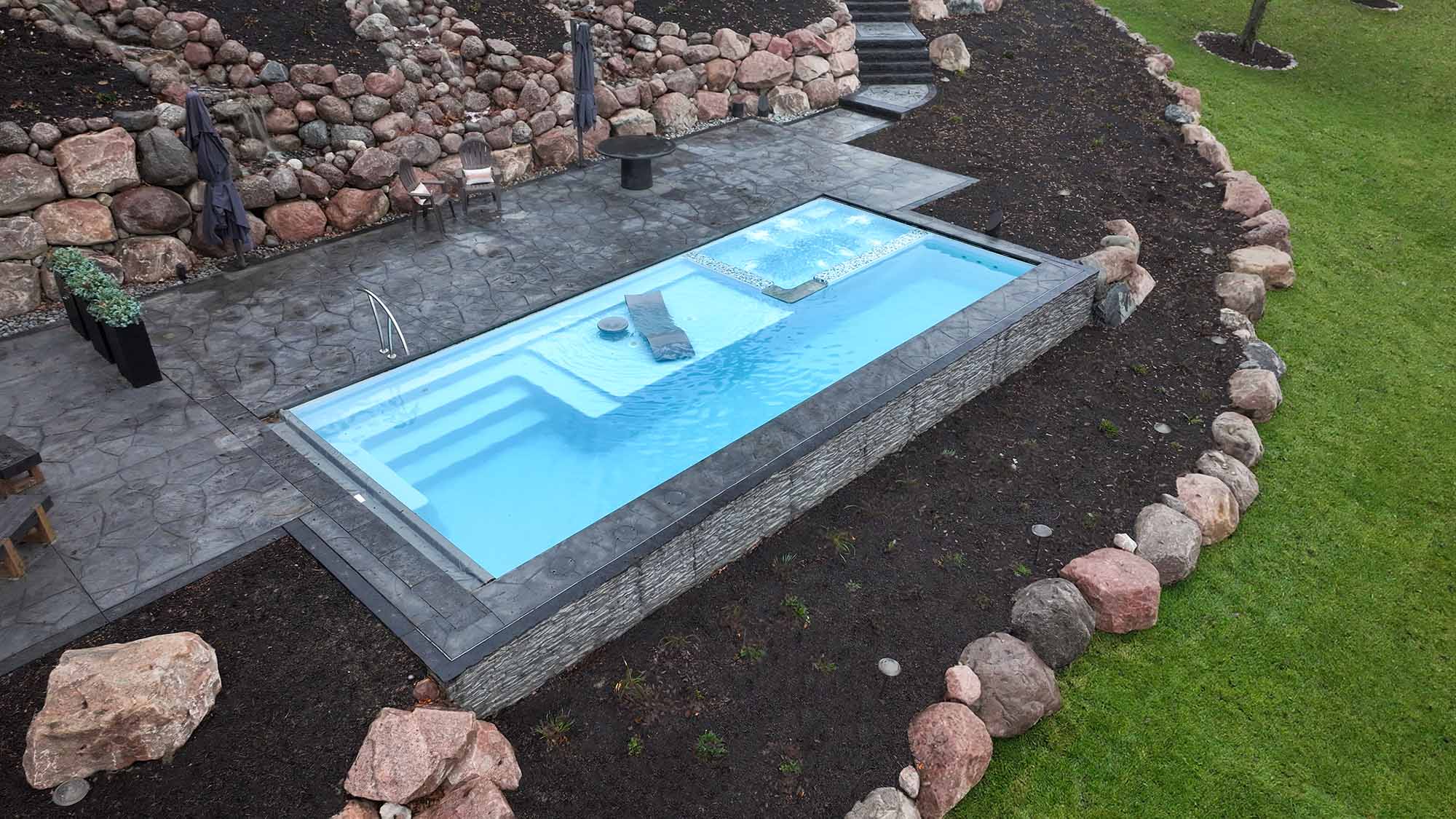
How Much Does an Inground Pool Cost in 2026?

Aspen 16x40 in MayaFor many homeowners, adding a pool creates a lasting space for connection, recreation, and relaxation. But costs are shifting with the economy, labor market, and materials. Whether you know what type of inground pool you want or are still researching pool types and materials and building a budget, final inground pool costs in 2026 will depend on the size and shape you choose, location and site conditions, the extra add-ons you want, and even what’s happening in the broader economy. 


2026 Inground Pool Costs by Pool Type

Homeowners’ final inground pool price tags can vary wildly based on location across the country, pool type, and design decisions. Most 2026 inground pool projects include standard installation services, but do not account for additional premium features, lavish landscaping, or a luxurious outdoor living space around the pool.


Vinyl liner pools feature moderate installation pricing ranging from $35,000 to $80,000. Don’t forget liner replacements every 5 to 15 years, costing between $3,000 and $7,500.


Concrete (gunite) pools are highly customizable, but the most expensive to install and maintain. A 2026 concrete inground pool installation can cost from $50,000 to $120,000 or more, and will need $300 to $1,000 acid wash treatments every 3 to 5 years, as well as $8,000 to $10,000 resurfacing every 10 to 15 years.


Fiberglass pools are our specialty, and Thursday Pools can offer unique insight into 2026 fiberglass pool costs through a recent survey of our independent dealer network. 


  • Small fiberglass pools (less than 26 feet long or 400 square feet) average approximately $74,000.


  • Medium fiberglass pools (between 27 and 34 feet long or 400 to 600 square feet) average around $109,000.


  • Large fiberglass pools (35 feet and longer or more than 600 square feet) average near $113,000.


Economic Forces Influencing 2026 Pool Costs

Your location, pool type, and pool size are among the most impactful factors for 2026 inground pool costs, but other macroeconomic currents will also influence prices.


1. Construction Spending and Tariff Pressures

Tariffs on materials like lumber, steel, and aluminum will continue to push up 2026 construction costs. Fiberglass inground pools don’t rely on wood and metal as much as other pool types, but rising costs in areas such as labor, excavation, and concrete work can ripple into all projects and budgets.


2. Tight Construction Labor Market

A 2025 Associated Builders and Contractors model estimates the construction industry needs 439,000 net new workers before the end of the year to meet anticipated demand—and then another 499,000 new workers in 2026. A gap in construction labor supply and demand inflates wages, stretches schedules, and can drive up inground pool installation bids. 


3. Inflation and Interest Rate Outlook

The Kiplinger Special Report on business costs for 2026 expects the Federal Reserve to cut interest rates by 2% by the end of the year, with inflation easing toward 3% and economic growth remaining modest. A softer cost of capital could lower financing costs for inground pool builds, while slower inflation may relieve pressure on materials and labor costs. Lower rates typically reduce contractors’ borrowing costs, which can help keep inground pool installation quotes in check.


Variables Shaping Your 2026 Inground Pool Budget

Even with overall estimates for inground pool installations handy, some details can significantly shift your 2026 inground pool investment.


Permits

Local license fees vary wildly and depend on your city, county, or neighborhood’s regulations and approval processes. Your local pool builder should be familiar with the area’s ordinances and municipalities’ inspection requirements. Permits can cost from $100 to $1,000 or more. Ask your pool dealer who is responsible for acquiring the necessary permits, and whether or not they are part of your installation costs. 


Excavation

Every inground pool needs a hole in the ground, but soil type, accessibility, and sloping yards can change digging complexities and cost. Excavation for a 2026 inground pool dig averages from $1,000 to $5,000. Softer loam soil with a balance of sand, silt, and clay is easiest to excavate, while challenging conditions, such as rocky soil or uneven terrain, could add costs from a few hundred to several thousand dollars to address. Ask your dealer whether their excavation costs also include hauling away dirt.


Fencing

Safety comes first, and many state or local municipalities have codes requiring 4- or 5-foot barrier fencing surrounding new 2026 inground pool builds. Depending on the quality and aesthetics of the fence’s material, homeowners should budget to spend between $10 and $45 per linear foot. For a typical 200- to 300-foot fence, that’s an average total cost between $2,000 and $13,500.


Electrical Work

Reliable electricity is essential for your inground pool’s pump, filter, lights, and other critical equipment or decorative touches. The average cost to hire an electrician for larger projects like an inground pool installation is between $2,000 and $10,000. Your local pool dealer may offer electrical wiring and installation work as part of their standard installation package—either way, we recommend budgeting for at least $3,000 to $5,000 at minimum in electrical work.


Pool Cover

Temporary inground pool covers cost much less than automatic safety covers, which come at a higher price but also enhance convenience and peace of mind. 

  • Winter covers can be inconvenient and cumbersome when closing your inground pool for the season, but they are a relatively inexpensive option with an average cost between $75 and $250.
  • Manual retractable pool covers install a reel with a mechanical roller to cover and uncover the pool quickly, and have an average cost range of $1,500 to $6,000.
  • Automatic pool covers are the most convenient option to open or close your inground pool at the touch of a button. A motor moves the retractable cover along a hidden track system under the pool decking, with installations averaging $8,000 to $20,000.


Pool Heater

Depending on where you live, a pool heater may be an essential inclusion or a luxurious add-on to lengthen your swimming season into cooler evenings and early spring or late fall weather. An electric resistance, natural gas, or propane inground pool heater can cost between $1,200 and $6,000 to install. Solar pool heaters and energy-efficient heat pumps average from $2,000 to $6,500, but feature lower monthly operating costs.


Patio, Decking, and Landscaping

Your inground pool may be the main draw, but the entire outdoor design should reflect your lifestyle and fit your vision. Paving, plantings, hardscape features, and other outdoor living space elements can boost enjoyment—but also your budget. Pool builders often include 3 feet of concrete decking around the pool perimeter, but lavish landscaping, a custom patio, and an outdoor living space with a fire pit or outdoor kitchen are typically additional expenses. Depending on the material—from poured or stamped concrete to brick, pavers, or natural stone—a 20-foot by 20-foot patio can average between $2,000 and $14,000.


FAQs: Saving Money on Your 2026 Inground Pool

Q: How can I keep pool costs manageable without sacrificing quality?
A: Prioritize must-haves first—like pool size, safety features, and basic decking. Extras such as water features or outdoor kitchens can always be added later once the core installation is complete.

Q: Are energy-efficient pool upgrades really worth it?
A: Yes. Variable-speed pumps, LED lighting, and heat pumps may cost more upfront, but they significantly reduce monthly operating expenses and typically pay for themselves over time.

Q: How can I avoid expensive repairs down the road?
A: Plan for maintenance from the start. A good pool cover, routine cleaning, and keeping water chemistry within ranges will protect your pool’s structure and equipment, saving money on repairs.


Planning for Your 2026 Inground Pool and Lifelong Investment

Building an inground pool in 2026 will require careful planning, but it remains one of the most rewarding upgrades you can make to your home. By factoring in size, pool type, site conditions, and the broader economic forces at play, you’ll be better prepared to shape a realistic budget.

To get a clearer picture, use the Thursday Pools Pool Cost Calculator and explore financing options with the Financing Calculator to see how monthly payments may fit your household budget. Then connect with an independent Thursday Pools dealer for tailored guidance. With the right preparation, your 2026 pool project can set the stage for years of enjoyment and value.

How Much Does a Fiberglass Pool Cost in Minnesota?

Based on a 2026 survey of independent Thursday Pools dealers across Minnesota, a standard fiberglass pool installation in Minnesota averages $86,250 for a small pool, $105,000 for a medium pool, and $125,000 for a large pool. Your final cost will depend on details like pool size, yard conditions, local permit requirements, and the optional upgrades you choose.

Minnesota’s varied terrain can add complexity to the installation-cost picture. Rocky and clay-heavy glacial soils are common throughout the northern and central parts of the state, including the communities around Duluth, Brainerd, and St. Cloud, where excavation can require specialized equipment and additional preparation. Sandy loam in parts of southern Minnesota and the Twin Cities corridor is easier to excavate, but may need reinforced backfilling for long-term pool stability. Sloped lots, common around the lakes of Central Minnesota and the rolling terrain of the western metro, often require grading work before installation can begin. In dense suburban communities from Minnetonka to Woodbury, tight access conditions can require crane service to deliver the one-piece fiberglass shell.

A local independent Thursday Pools dealer can evaluate your site, navigate local permit and fence requirements, and help you build a pool package built for Minnesota summers.


What is the Average Cost of a Fiberglass Pool Installation in Minnesota?

Thursday Pools surveys its network of independent dealers across the country each year to track real-world installation costs. The figures below reflect current market conditions in Minnesota based on our 2026 survey of 5 independent Thursday Pools dealers across the state.

Based on the 2026 survey of independent Thursday Pools dealers in Minnesota, installed fiberglass pool costs average $86,250 for small pools, $105,000 for medium pools, and $125,000 for large pools.


AVERAGE MINNESOTA FIBERGLASS POOL INSTALLATION BY SIZE

Pool Type Small Fiberglass Pools Medium Fiberglass Pools Large Fiberglass Pools
Size Range Up to 26 ft Long or 400 ft² 26 to 34 ft Long or 400 to 600 ft² 35 ft and Longer or 600+ ft²
Average Cost $86,250 $105,000 $125,000


What Does a Standard Fiberglass Pool Installation in Minnesota Include?

Most Minnesota dealers include the following in a base package: the pool shell, excavation, basic pump and filtration equipment, plumbing, basic electrical, permits, a single pool light, initial water fill, dirt hauling, concrete decking approximately 3 feet around the pool, delivery, and labor. What individual dealers include can vary, so always compare proposals carefully. Expanded decking, fencing, landscaping, pool covers, and optional features typically cost extra.

Contact a nearby Thursday Pools dealer for a custom quote and to learn about financing options for your Minnesota pool installation.


What Do Popular Fiberglass Pool Models Cost Installed in Minnesota?

Apen 14 x 35 in California

ASPEN (12’ x 25’)

Aspen is a compact, efficient design for Minnesota homeowners who want a full pool experience in a manageable footprint. It’s a natural fit for the suburban lots of Minneapolis, St. Paul, Rochester, and communities throughout the metro. A built-in tanning ledge, open central swim lane, and wide entry steps deliver genuine functionality without overcommitting on yard space. Its clean, rectangular lines hold up beautifully next to both classic Minnesota lake-cabin aesthetics and contemporary outdoor living setups.

Based on 2026 feedback from Thursday Pools dealers throughout Minnesota, the average installed cost for a small fiberglass pool like Aspen or other designs less than 26 feet long and 400 square feet is $86,250.

Goliath fiberglass pool in color Caribbean Sparkle

GOLIATH (14’ x 33’)

Goliath is a versatile mid-size design that fits comfortably in many Minnesota backyards while still delivering a spacious, family-friendly pool experience. Its broad tanning ledge, wraparound bench seating, and open swim lane make it a natural gathering place equally suited for active family summers in Edina or Minnetonka and lakefront retreat builds throughout central Minnesota’s lake country.

According to 2026 survey responses from independent Thursday Pools dealers throughout Minnesota, the average installed cost for a medium-sized fiberglass pool like Goliath is $105,000.

Wellspring by Thursday Pools

WELLSPRING (16’ x 40’)

Wellspring is built for Minnesota homeowners with larger properties and bigger outdoor living ambitions on spacious lots in Wayzata and Orono, rural acreages in the Brainerd Lakes area, or open properties throughout Southern Minnesota with room to build something exceptional. An expansive sun shelf, graceful curves, wraparound bench seating, and a generous swim area make Wellspring a true backyard destination, equally suited for quiet weekday mornings and weekend gatherings.

The average cost for a standard installation of a large fiberglass pool like Wellspring in Minnesota is $125,000.


What Yard Conditions Affect Fiberglass Pool Installation Costs in Minnesota?

Minnesota’s varied terrain means that what’s beneath the surface of your backyard can significantly shape project costs. Before breaking ground, a professional installer will assess your site for conditions that may require extra preparation.

Soil Type

Minnesota’s post-glacial geology creates distinct challenges across the state. Rocky soil is more common in the northeastern Arrowhead region, the terrain around Duluth, and parts of Central Minnesota, where glacial deposits left behind dense, boulder-heavy ground that requires specialized excavation equipment. Clay-heavy soils are widespread throughout the Twin Cities metro, including areas around Bloomington, Edina, and St. Cloud, requiring careful drainage planning during installation. Sandy loam in parts of Southern Minnesota and the western Twin Cities corridor is easier to excavate but may need reinforced backfilling to maintain long-term pool stability.

Slope and Grade

Minnesota’s lake country and the rolling terrain around many of its most popular communities create sloped properties throughout the state. Lakefront lots in the Brainerd Lakes area, Minnetonka, Orono, and Wayzata, as well as properties near the Mississippi bluffs and the St. Croix Valley, often require grading work, retaining walls, or other leveling preparation before excavation can proceed.

Backyard Access

Wide-open access makes a fiberglass pool installation more efficient. Dense suburban neighborhoods across the Twin Cities metro and older established communities with mature trees, tight lot lines, and established fencing frequently require specialty equipment or crane service to position the one-piece pool shell.

AVERAGE ADDITIONAL YARD-RELATED EXPENSES IN MINNESOTA


Excavating Rocky Soil $675
Excavating Sandy Soil $2,375
Excavating Clay-Heavy Soil $150
Above-Average Slope Requiring Extra Grading  $4,000
Limited Yard Access $5,750

Based on Thursday Pools’ 2026 independent dealer survey, site-condition upcharges in Minnesota range from about $150 for excavating clay-heavy soil to $5,750 for navigating limited yard access.

What Are Minnesota’s Swimming Pool Fence Requirements?

Minnesota’s residential pool barrier and fencing requirements are set by local municipalities under their own building codes and ordinances, informed by the pool barrier provisions of the 2020 Minnesota State Building Code.

Because requirements vary across the state’s cities and counties, homeowners should always verify with their local building department before installation. The City of Minneapolis, for example, requires a fence or enclosure at least 4 feet tall completely surrounding any outdoor residential pool, with all fence openings and points of entry equipped with self-closing, self-latching gates. Gate latch devices must be placed at the top of the gate or otherwise positioned out of reach of children. The gap between the bottom of the fence and the ground may not exceed 4 inches.

Other major Minnesota municipalities impose stricter requirements. The City of Minnetonka requires a non-climbable fence at least 5 feet tall, and the City of St. Paul requires 4-foot fencing that obscures public views of the pool. Openings in barriers are generally limited to no larger than 4 inches statewide. Some cities have adopted the ISPSC gate latch standard of 54 inches above the ground or, if lower, positioned on the pool side of the gate.

Always verify current pool barrier and fencing requirements with your local building department, county, and HOA before installation.

For a 300-linear-foot basic pool fence, Minnesota dealers estimate an average cost of $13,900. Final pricing varies by material, height, gate requirements, terrain, and local ordinance compliance.

How Much Do Fiberglass Pool Upgrades Cost in Minnesota?

Optional features can expand what your pool does and extend your swimming season throughout Minnesota’s climate. The right upgrades enhance comfort, convenience, and safety while maximizing your investment. The averages below come from Thursday Pools’ 2026 dealer survey in Minnesota.

Water Quality and System Controls

Pool Heater

  • Average Cost in Minnesota: $3,450
  • A pool heater is among the highest-value upgrades available for Minnesota homeowners to extend comfortable swimming from May into September, keeping water inviting when temperatures drop in the evenings, and making every hour of the short Midwest season count.

UV Filter System

  • Average Cost in Minnesota: $1,250
  • A UV system passes pool water through an ultraviolet light chamber that destroys bacteria, algae, and chloramines so chlorine works more efficiently and you need less of it to maintain safe, sanitary water.

Pool Automation and Smart Control System

  • Average Cost in Minnesota: $2,000
  • Manage temperature, lighting, and filtration from a smartphone or tablet.

Patio and Hardscape

Poured Concrete Patio (Approx. 1,200 sq. ft.)

  • Average Cost in Minnesota: $16,000
  • A durable, low-maintenance decking option that handles Minnesota’s significant freeze-thaw cycles when properly installed with expansion joints and adequate base preparation.

Paver Patio (Approx. 1,200 sq. ft.)

  • Average Cost in Minnesota: $12,000
  • Available in concrete pavers or natural stone. Individual units can be repaired or replaced when Minnesota’s winters shift them.

Safety and Covers

Fence (300 Linear ft.)

  • Average Cost in Minnesota: $13,900
  • Final cost varies by material choices, total fence length, and local ordinance requirements.

Non-Automatic Safety Pool Cover

  • Average Cost in Minnesota: $7,500
  • A manual option for securing the pool and keeping debris out between uses.

Automatic Pool Cover

  • Average Cost in Minnesota: $16,500
  • One-touch operation to protect the pool, retain heat, and reduce evaporation. For Minnesota homeowners managing a shorter season, automatic covers provide meaningful energy savings and extend comfortable use at both ends of the swim season.

Water Features

Deck Jets

  • Average Cost in Minnesota: $1,250 per jet
  • Arc water from the coping into the pool, adding visual movement and ambient sound to the pool area.

Bubblers

  • Average Cost in Minnesota: $1,900 per bubbler
  • On a tanning ledge or beach entry, create movement and the sounds of a babbling brook in shallow pool water.

Cascade or Waterfall

  • Average Cost in Minnesota: $4,800
  • Add a flowing water element and natural sound to the pool environment.

Cleaning and Maintenance

Automatic Pool Cleaning and Vacuuming System

  • Average Cost in Minnesota: $1,175
  • Keep the pool floor and walls clean with minimal manual effort.

Lighting and Tile

LED Pool Lights

  • Average Cost in Minnesota: $1,100 per light
  • Adds ambiance and visibility for evening and nighttime use.

Specialty Waterline Tile

  • Average Cost in Minnesota: $5,500
  • Installed along the waterline for a custom, finished appearance at the pool edge.

Recreation

Simple Pool Slide*

  • Average Cost in Minnesota: $4,800
  • A standard slide for family use.

Deluxe Pool Slide*

  • Average Cost in Minnesota: $8,500
  • More height and design details than a basic model.

Diving Board (Type 1 Diving Pools Only)*

  • Average Cost in Minnesota: $4,000
  • Only manufacturer-designated Type 1 diving pools support diving board installation. Homeowners should use only manufacturer-approved diving boards with pool models designated as diving pools and must consult a licensed professional to verify compliance with all local building codes and safety requirements before installation.

*Thursday Pools strongly advises against pool slides and diving boards due to safety concerns. The inclusion of a diving board or slide with any fiberglass pool must be carefully reviewed by a licensed professional to ensure compliance with all local building codes, safety regulations, and manufacturer guidelines. Not all fiberglass pool models are suitable for diving or slide use. It is the responsibility of the homeowner and installer to ensure proper installation and usage. Always prioritize safety and consult a qualified expert before adding any diving or sliding feature to your pool.

Landscaping and Extras

Surrounding Landscaping

  • Average Cost in Minnesota: $11,000
  • Includes decorative rocks, plantings, trees, bushes, flower beds, and similar elements that connect the pool to the rest of the yard.

Add-On Spa

  • Average Cost in Minnesota: $24,000
  • A separate spa unit for relaxing hydrotherapy, neighboring or independent of the main pool.

Frequently Asked Questions About Minnesota Fiberglass Pool Costs

How much does a fiberglass pool cost in Minnesota?

A fiberglass pool in Minnesota costs an average of $86,250 for a small pool, $105,000 for a medium pool, and $125,000 for a large pool, based on Thursday Pools’ 2026 survey of the state’s independent dealers.

What does a standard fiberglass pool installation in Minnesota include?

A standard fiberglass pool installation in Minnesota typically includes:

  • Excavation and Dirt Hauling: Soil removal and site preparation.
  • Pool Shell and Delivery: The physical fiberglass pool shell unit delivered to your home.
  • Filtration System: Basic pump, filter, and plumbing.
  • Standard Decking: Approximately 3 feet of concrete surrounding the pool.
  • Permits and Basic Electrical: Includes local municipal filings and one LED pool light.

What yard conditions raise fiberglass pool installation costs in Minnesota?

Rocky soil in Northeastern Minnesota and parts of the central lakes region requires specialized excavation equipment and additional labor. Clay-heavy soils throughout the Twin Cities metro and Central Minnesota create drainage challenges during installation. Sandy loam in Southern Minnesota and parts of the western metro is easier to excavate but may need reinforced backfilling for long-term stability. Sloped lakefront properties and rolling terrain in the Brainerd Lakes area and western metro often require grading work. Limited backyard access in dense suburban neighborhoods frequently requires crane service. Based on the 2026 Minnesota dealer survey, site-condition upcharges range from about $150 for excavating clay-heavy soil to $5,750 for navigating limited yard access.

What are Minnesota’s pool fence requirements?

Minnesota’s residential barrier requirements are set by local municipalities. The City of Minneapolis, for example, requires a fence at least 4 feet tall with self-closing, self-latching gates and no openings greater than 4 inches. Other cities are stricter, such as Minnetonka, requiring a non-climbable fence at least 5 feet tall. Always verify current requirements with your local building department before installation.

The 2026 Thursday Pools survey of Minnesota independent dealers shows an average cost of $13,900 for a 300-linear-foot basic fence, with final costs varying by material, height, gate requirements, terrain, and local ordinance compliance.

How much do common pool upgrades add to the cost in Minnesota?

Upgrade costs vary widely depending on the feature:

  • A pool heater averages $3,450.
  • An automatic pool cover averages $16,500.
  • A paver patio of approximately 1,200 square feet averages $12,000.
  • An add-on spa averages $24,000.
  • Smaller additions like deck jets ($1,250 per jet), bubblers ($1,900 per bubbler), and LED lights ($1,100 per light) add cost in more manageable increments.

How do I get an accurate cost estimate for a fiberglass pool in Minnesota?

The most accurate estimate comes from a local independent Thursday Pools dealer who can assess your yard, review local permit requirements, and give you a project-specific quote. Survey averages provide a useful starting point, but site conditions, design choices, and local labor rates determine what you actually pay.

Get Your Personalized Minnesota Pool Estimate

Survey averages give you a realistic starting point, but your actual cost depends on your yard, your location in Minnesota, and the design details and upgrades you choose. A local independent Thursday Pools dealer can assess your site, walk you through pool options that fit your budget, and give you a project-specific quote, whether you’re in the Twin Cities, Rochester, Duluth, Brainerd, St. Cloud, Mankato, or anywhere across the state.


Thursday Pools manufactures fiberglass pool shells and does not install pools. Pools are installed by locally owned independent dealers. Consumers should consult a local independent dealer for the most accurate and updated information based on the unique conditions of their region and property.