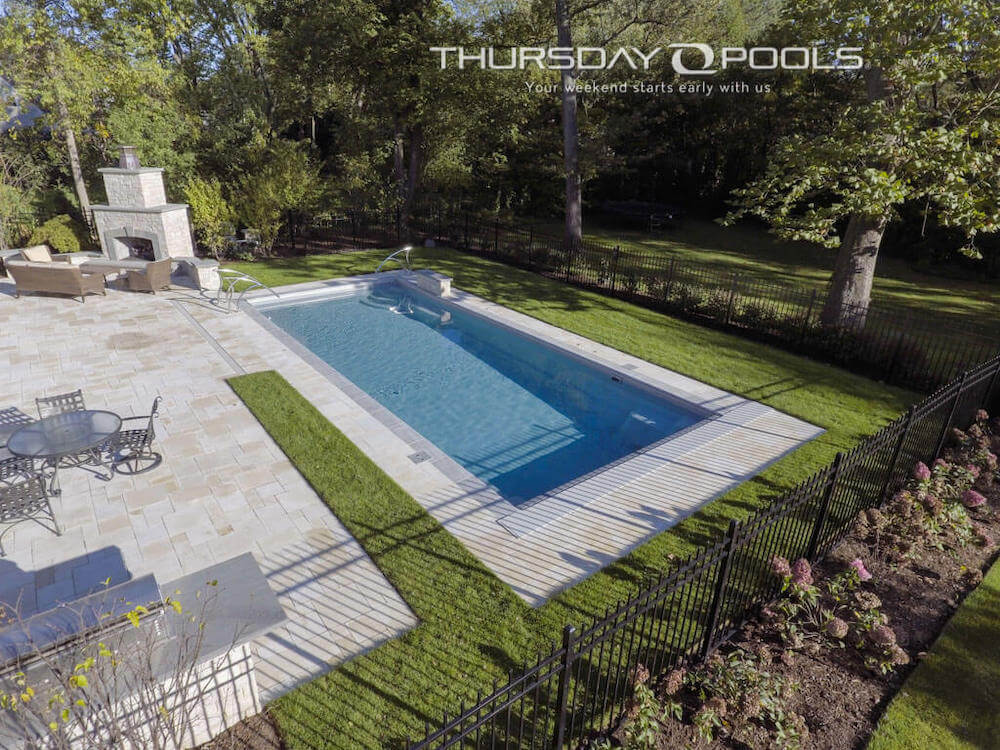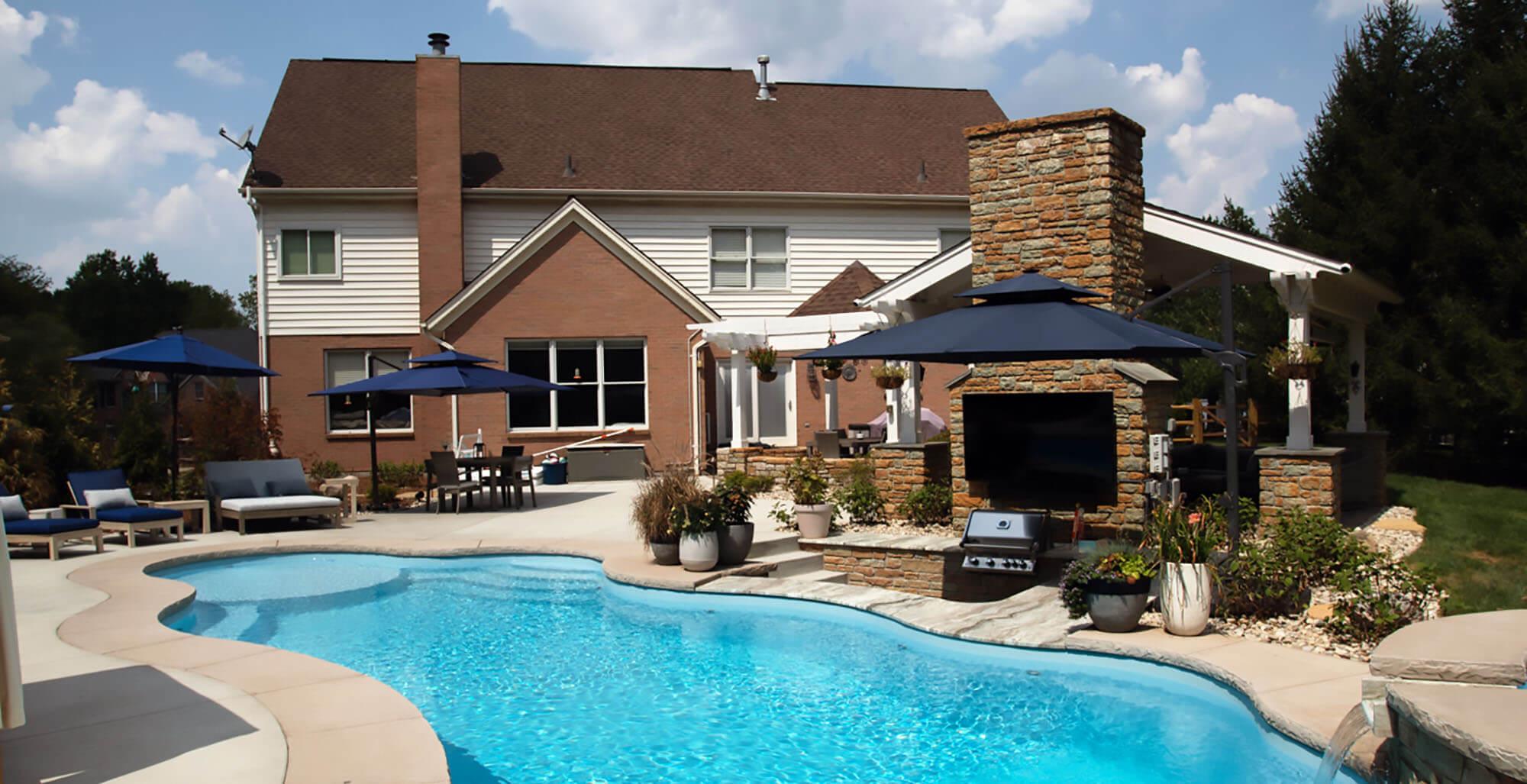
How Much Does a Fiberglass Pool Cost in South Carolina?

Based on a 2026 survey of independent fiberglass pool builders in the Thursday Pools dealer network, a standard fiberglass pool installation in South Carolina averages $75,000 for a small pool, $87,500 for a medium pool, and $97,500 for a large pool. Your final cost will depend on details like pool size, yard conditions, local permit requirements, and the optional upgrades you choose.

South Carolina’s geography creates real variation in pool installation costs from one part of the state to another. In coastal markets like Charleston, Myrtle Beach, and Hilton Head, sandy soil conditions and flood zone considerations can affect site prep requirements and permit complexity. In the Upstate around Greenville and Spartanburg, clay-heavy or rocky terrain can require more excavation work and add to the project cost. In the Midlands around Columbia, conditions vary enough that a site assessment before installation is always worth doing. Regardless of where you are in the state, South Carolina’s long swim season is one of the best arguments for getting the pool decision right from the start.

Optional upgrades such as pool heaters, automatic covers, and custom patio surfaces add to your total, but they also determine how much use and year-round value you get from the pool. A local independent Thursday Pools dealer can help you decide which additions fit your yard and your budget.


What is the Average Cost of a Fiberglass Pool Installation in South Carolina?

Thursday Pools surveys its network of independent dealers across the country each year to track real-world installation costs. The figures below come from the responses of dealers operating throughout the state.

Based on the 2026 survey of independent Thursday Pools dealers in South Carolina, installed fiberglass pools cost on average $75,000 for small pools, $87,500 for medium pools, and $97,500 for large pools.


AVERAGE SOUTH CAROLINA FIBERGLASS POOL INSTALLATION BY SIZE

Pool Type Small Fiberglass Pools Medium Fiberglass Pools Large Fiberglass Pools
Size Range Up to 26 feet long or 400 square feet 26 to 34 feet long or 400 to 600 square feet 35 feet and longer or 600+ square feet
Average Cost $75,000 $87,500 $97,500


While these numbers offer a useful benchmark, they’re just one piece of the puzzle. From the sandy lowcountry to the clay-heavy terrain of the Upstate, South Carolina’s varying soil types and site conditions can influence the final cost of your pool project. Then come the personal touches—custom features, finishes, and outdoor upgrades—that can shape your overall budget. The best way to get a clear, accurate estimate?

Talk with a knowledgeable Thursday Pools dealer in your region who understands the ins and outs of building fiberglass pools across the Palmetto State.


What Counts as a Standard Pool Installation?

Most South Carolina dealers include the following in a base package: the pool shell, excavation, basic pump and filtration equipment, plumbing, basic electrical, permits, a single pool light, initial water fill, dirt hauling, concrete decking approximately 3 feet around the pool, delivery, and labor. What individual dealers include can vary, so always compare proposals carefully. Expanded decking, fencing, landscaping, pool covers, and optional features typically cost extra.

Contact a nearby Thursday Pools dealer for a custom quote and to learn about financing options for your South Carolina pool installation.


What Do Popular Fiberglass Pool Models Cost Installed in South Carolina?

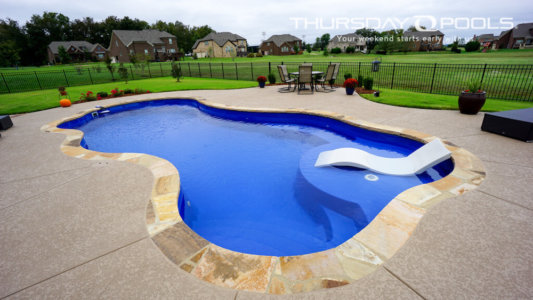
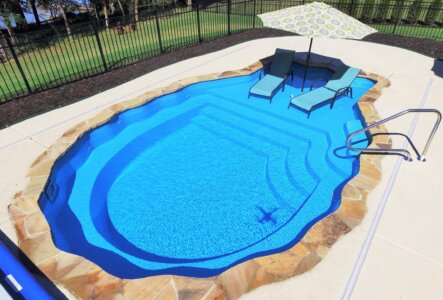
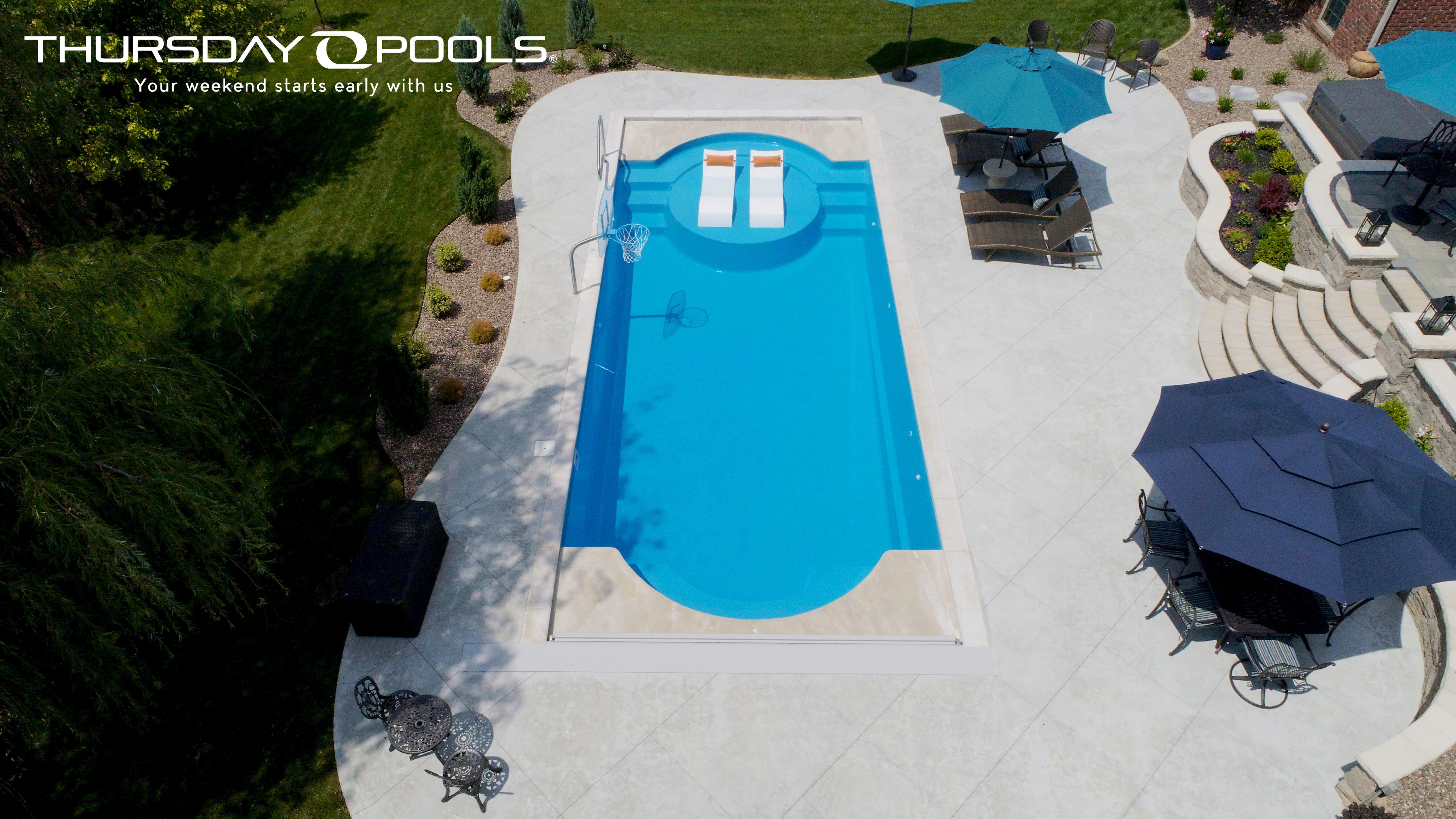
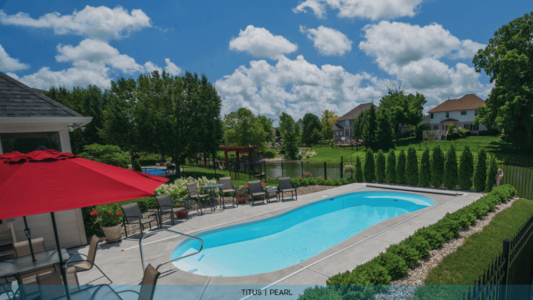
Thursday Pools' Titus Pearl Pool with a freeform shape

TITUS (12’ x 26’)

Titus is a compact freeform pool well-suited to smaller backyards across South Carolina’s urban and suburban neighborhoods, from older Charleston lots to tighter properties in Columbia’s growing suburbs. Its interior includes wide entry steps, integrated bench seating, and a natural shape that works well in yards where a strict rectangular footprint would feel out of place.

Based on 2026 feedback from Thursday Pools dealers across South Carolina, the average installed cost for a small fiberglass pool like Titus or other designs less than 26 feet long and 400 square feet is $75,000.


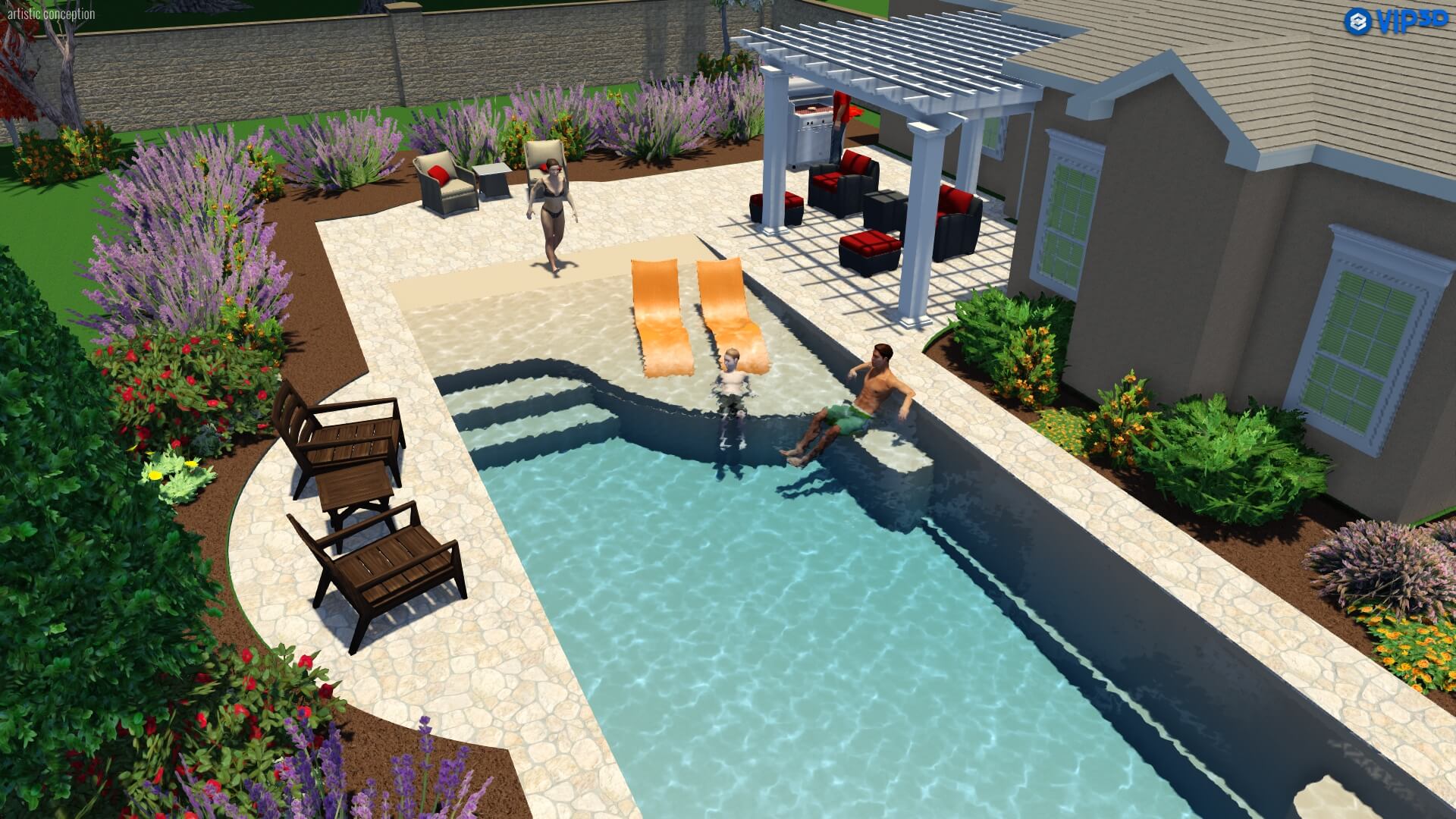
Lil Bob LX Diamond by Thursday Pools

LIL BOB (13.5’ x 27.5’)

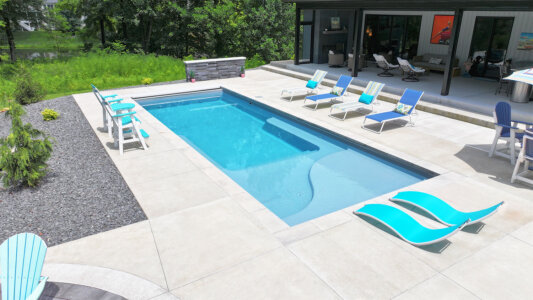
Lil Bob delivers a clean rectangular layout with a uniform flat-bottom depth that makes the full pool usable from end to end. Dual elongated benches run along opposite sides of the interior, and full-width entry steps keep access straightforward. For mid-size South Carolina backyards, including suburban lots in Greenville, Summerville, or along the Grand Strand, it fits without overwhelming the yard.

According to 2026 survey responses from independent Thursday Pools dealers in South Carolina, the average installed cost for a medium-sized fiberglass pool like the 13.5′ x 27.5′ Lil Bob is $87,500.


Monolith by Thursday Pools

MONOLITH (16’ x 40’)

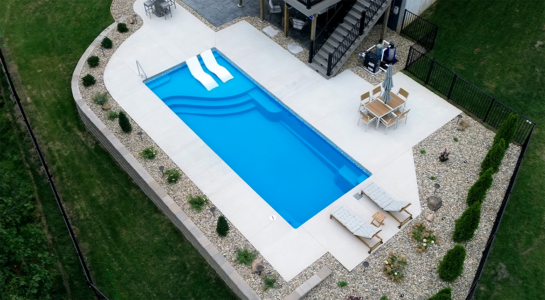
Monolith offers a spacious fiberglass pool design for homeowners with plenty of wide-open yard space. The Monolith is perfect for those who enjoy swimming laps, hosting pool parties and social gatherings, or simply floating adrift in a spacious pool’s wide-open waters. Featuring a large, flat-bottomed shallow end, dual deep-end swim-outs with benches, and angled non-skid entry steps, the Monolith ensures comfort and accessibility for all swimmers. 

Due to its size, at 40 feet long and more than 600 square feet, larger pools like Monolith typically come at a higher installed cost. In South Carolina, the 2026 average installed cost for a large fiberglass pool is $97,500.


What Yard Conditions Affect Fiberglass Pool Installation Costs in South Carolina?

South Carolina’s varied soil types and terrain can affect installation costs. Before breaking ground, a professional installer assesses your site for conditions that may require extra preparation.

Soil Type

South Carolina soil varies widely by region. Along the coast and in the Lowcountry, sandy soils are common and generally easier to excavate, though they sometimes require stabilization measures to properly support the pool shell. In the Upstate and Piedmont regions, clay-heavy or rocky ground can create drainage concerns and require more equipment and labor. A pre-installation site assessment identifies what your soil requires before the project begins.

Slope and Grade

Yards with a slope often require grading, retaining walls, or other leveling work before excavation and installation can move forward. Properties in hillier terrain around Greenville, Spartanburg, and the Blue Ridge foothills are more likely to encounter this. A flat, level yard typically keeps installation more straightforward and predictable.

Backyard Access

Wide, open access makes a fiberglass pool installation more efficient. Properties with narrow gates, tight side yards, or other access constraints may need specialty equipment, additional labor, or crane service to move the pool shell into position. In denser neighborhoods, particularly in historic districts of Charleston or older Columbia suburbs, access limits can affect both the timeline and the cost.


Yard Condition

Average Additional Cost in South Carolina

Excavating Rocky Soil $450
Excavating Sandy Soil $350
Excavating Clay-Heavy Soil $450
Above-Average Slope Requiring Extra Grading $2,200
Limited Yard Access $1,750


Based on the 2026 South Carolina dealer survey, site-condition upcharges range from about $350 for sandy soil excavation to $2,200 for above-average slope grading.

What Are South Carolina’s Swimming Pool Fence Requirements?

South Carolina follows the International Swimming Pool and Spa Code (ISPSC) as the statewide baseline for residential pool barrier requirements. Key requirements include:

  • The barrier must stand at least 48 inches tall, measured from the outside ground level.
  • The gap between the ground and the bottom of the barrier must not exceed 2 inches on non-solid surfaces such as grass or gravel.
  • No opening in the barrier may allow passage of a 4-inch diameter sphere.
  • Gates must be self-closing and self-latching, and must swing away from the pool.
  • Gate latches positioned less than 54 inches above the ground must be located on the pool-facing side of the gate.

Local counties and municipalities can and do enforce requirements beyond the ISPSC baseline. Greenville County, for example, requires a signed pool fence affidavit and climb-resistant design with tamper-proof gates. HOA rules can add further requirements, particularly in planned communities along the Grand Strand and in Lowcountry developments. Always verify your county, municipal, and HOA requirements before installation begins.

For a 300-linear-foot basic pool fence, South Carolina dealers estimate an average cost of $10,250. Final pricing varies by material, height, gate requirements, terrain, and local code.


How Much Do Fiberglass Pool Upgrades Cost in South Carolina?

Optional features can expand what your pool does and how long you use it each season. South Carolina’s climate already gives homeowners one of the longest outdoor swimming seasons in the country, and the right upgrades can extend that advantage further. The averages below come from Thursday Pools’ 2026 dealer survey of independent installers across South Carolina.

Water Quality and System Controls

Pool Heater

  • Average Cost in South Carolina: $7,750
  • Extend your swim season by keeping the water at a comfortable temperature into cooler spring and fall evenings, and get more months of use out of a pool you’ve already invested in.

Pool Automation and Smart Control System

  • Average Cost in South Carolina: $1,600
  • Manage temperature, lighting, and filtration from a smartphone or tablet.


Patio and Hardscape

Poured Concrete Patio (Approx. 1,200 sq. ft.)

  • Average Cost in South Carolina: $19,100
  • A durable surface option that handles South Carolina’s heat and humidity, and holds up through occasional freeze-thaw cycles in the Upstate.

Paver Patio (Approx. 1,200 sq. ft.)

  • Average Cost in South Carolina: $11,750
  • Available in a range of materials, from concrete pavers to natural stone, with a more finished aesthetic than poured concrete.


Safety and Covers

Fence (300 Linear ft.)

  • Average Cost in South Carolina: $10,250
  • Required by most local South Carolina municipalities. Final cost varies by material choices, total fence length, and local code requirements.

Non-Automatic Safety Pool Cover

  • Average Cost in South Carolina: $1,750
  • A manual option for securing the pool and keeping debris out between uses.

Automatic Pool Cover

  • Average Cost in South Carolina: $19,750
  • One-touch operation to protect the pool, retain heat, and reduce evaporation.


Water Features

Deck Jets

  • Average Cost in South Carolina: $400 per jet
  • Arc water from the coping into the pool, adding visual movement and ambient sound to the pool area.

Bubblers

  • Average Cost in South Carolina: $1,150 per bubbler
  • On a tanning ledge or beach entry, create movement and the sounds of a babbling brook in shallow pool water.

Cascade or Waterfall

  • Average Cost in South Carolina: $2,250
  • Add a flowing water element and natural sound to the pool environment.


Cleaning and Maintenance

Automatic Pool Cleaning and Vacuuming System

  • Average Cost in South Carolina: $600
  • Keep the pool floor and walls clean with minimal manual effort.


Lighting

LED Pool Lights

  • Average Cost in South Carolina: $638 per light
  • Adds ambiance and visibility for evening and nighttime use.


Recreation

Simple Pool Slide*

  • Average Cost in South Carolina: $3,500
  • A standard slide for family use.

Diving Board (Type 1 Diving Pools Only)*

  • Average Cost in South Carolina: $1,500
  • Only manufacturer-designated Type 1 diving pools support diving board installation. Homeowners should use only manufacturer-approved diving boards with pool models designated as diving pools and must consult a licensed professional to verify compliance with all local building codes and safety requirements before installation.

*Thursday Pools strongly advises against pool slides and diving boards due to safety concerns. The inclusion of a diving board or slide with any fiberglass pool must be carefully reviewed by a licensed professional to ensure compliance with all local building codes, safety regulations, and manufacturer guidelines. Not all fiberglass pool models are suitable for diving or slide use. It is the responsibility of the homeowner and installer to ensure proper installation and usage. Always prioritize safety and consult a qualified expert before adding any diving or sliding feature to your pool.


Landscaping and Extras

Surrounding Landscaping

  • Average Cost in South Carolina: $4,000
  • Includes decorative rocks, plantings, trees, bushes, flower beds, and similar elements that connect the pool to the rest of the yard.

Add-On Spa

  • Average Cost in South Carolina: $11,750
  • A separate spa unit for relaxing hydrotherapy, neighboring or independent of the main pool.


Frequently Asked Questions About South Carolina Fiberglass Pool Costs

How much does a fiberglass pool cost in South Carolina?

A fiberglass pool in South Carolina costs an average of $75,000 for a small pool, $87,500 for a medium pool, and $97,500 for a large pool, based on Thursday Pools’ 2026 dealer survey of South Carolina installers.

What does a standard fiberglass pool installation in South Carolina include?

Our 2026 South Carolina dealer survey shows that a standard fiberglass pool installation typically includes:

  • Excavation and Dirt Hauling: Soil removal and site preparation.
  • Pool Shell and Delivery: The physical fiberglass pool shell unit delivered to your home.
  • Filtration System: Basic pump, filter, and plumbing.
  • Standard Decking: Approximately 3 feet of concrete surrounding the pool.
  • Permits and Basic Electrical: Includes local South Carolina municipal filings and one LED pool light.

What yard conditions raise fiberglass pool installation costs in South Carolina?

Sandy soil in the Lowcountry and along the coast sometimes requires stabilization before the pool shell goes in. Clay-heavy or rocky soil in the Upstate can require more excavation work and equipment. Sloped yards need grading or retaining walls to create a level base. Limited backyard access from narrow gates or tight urban lots in historic districts can require crane service or specialty equipment. Based on the 2026 South Carolina dealer survey, site-condition upcharges range from about $350 for sandy soil excavation to $2,200 for above-average slope grading.

What are South Carolina’s pool fence requirements?

Many South Carolina municipalities follow the International Swimming Pool and Spa Code (ISPSC) as a statewide baseline for residential pool barrier regulations. Local governments and HOAs can enforce requirements beyond the ISPCS baselines, which typically require an enclosure at least 4 feet tall with a self-closing, self-latching gate. Always verify your county and HOA requirements before installation. The 2026 South Carolina Thursday Pools dealer survey average for a 300-linear-foot basic fence is $10,250, with final costs varying by material, height, terrain, and local code.

How much do common pool upgrades add to the cost in South Carolina?

Upgrade costs vary widely depending on the feature. A pool heater averages $7,750. An automatic pool cover averages $19,750. A poured concrete patio of approximately 1,200 square feet averages $19,100. An add-on spa averages $11,750. Smaller additions like deck jets ($400 per jet), bubblers ($1,150 per bubbler), and LED lights ($638 per light) add cost in more modest increments.

How do I get an accurate cost estimate for a fiberglass pool in South Carolina?

The most accurate estimate comes from a local independent Thursday Pools dealer who can assess your yard, review local permit and HOA requirements, and give you a project-specific quote. Survey averages provide a useful starting point, but site conditions, design choices, and local labor rates determine what you actually pay.


Get Your Personalized South Carolina Pool Estimate

Survey averages give you a realistic starting point, but your actual cost depends on your yard, your location in South Carolina, and the design details and upgrades you choose. A local independent Thursday Pools dealer can assess your site, walk you through pool options that fit your budget, and give you a project-specific quote whether you’re in Charleston, Columbia, Greenville, Myrtle Beach, or anywhere across the state.


Thursday Pools manufactures fiberglass pool shells and does not install pools. Pools are installed by locally owned independent dealers. Consumers should consult a local independent dealer for the most accurate and updated information based on the unique conditions of their region and property.
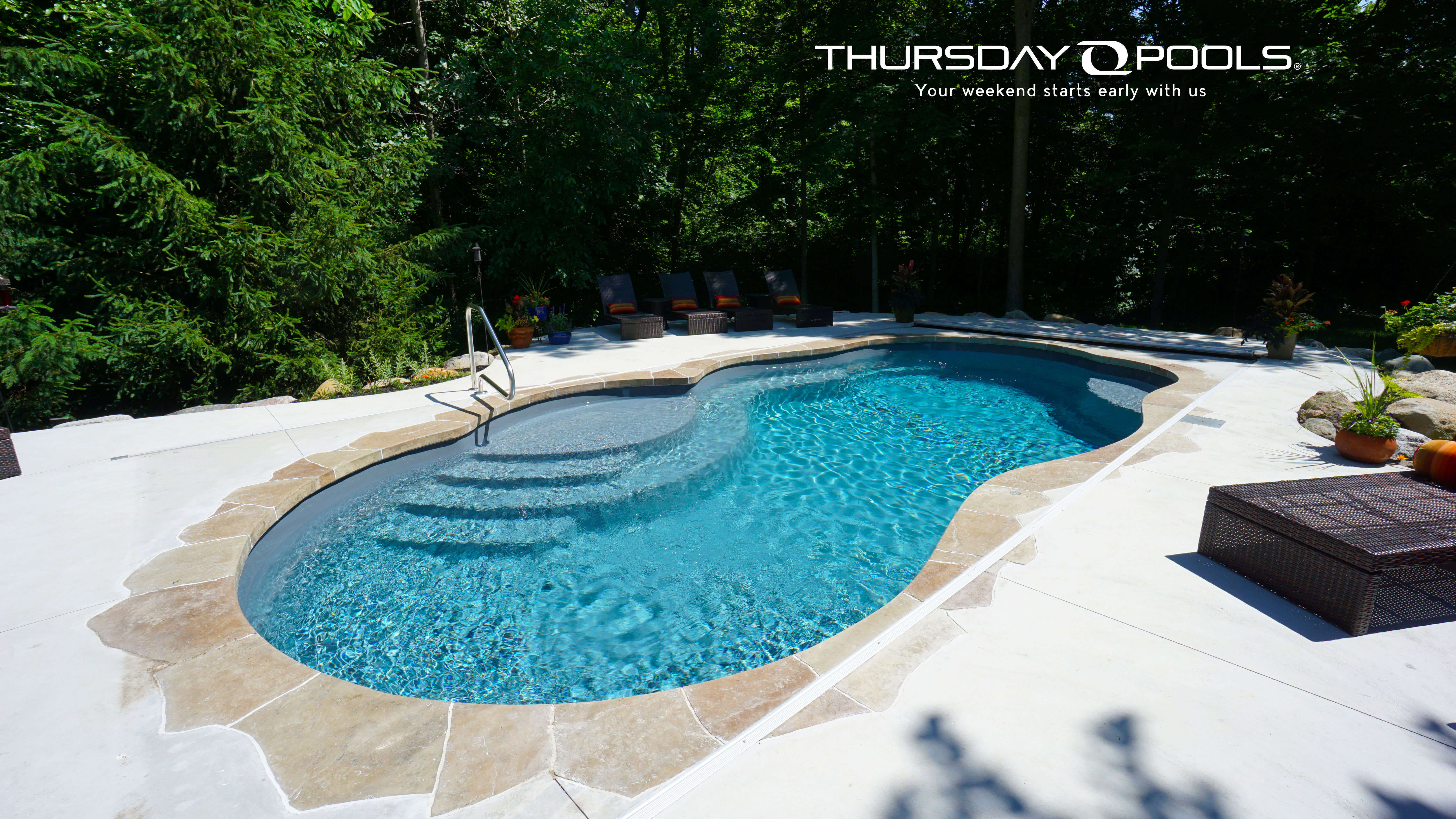
How Much Does a Fiberglass Pool Cost in Alabama?

How Much Does a Fiberglass Pool Cost in Alabama?

Based on a 2026 survey of independent fiberglass pool builders in the Thursday Pools dealer network, a standard fiberglass pool installation in Alabama averages $80,000 for a small pool, $100,000 for a medium pool, and $120,000 for a large pool. Your final cost will depend on details like pool size, yard conditions, local permit requirements, and the optional upgrades you choose.


Alabama’s diverse geography creates real variation in pool installation costs from one part of the state to another. In metro areas like Birmingham, Montgomery, and Mobile, local permit requirements and zoning regulations can add to the project cost. In the Appalachian foothills of North Alabama, rocky terrain often requires additional excavation equipment and labor. Along the Gulf Coast, sandy soils may need extra stabilization measures. In the Black Belt region of central Alabama, clay-heavy soils can create drainage and stability concerns that affect installation complexity and cost directly.


Optional upgrades such as pool heaters, automatic covers, and custom patio surfaces add to your total, but they also determine how much use and year-round value you get from the pool. A local independent Thursday Pools dealer can help you decide which additions fit your yard and your budget.

What is the Average Cost of a Fiberglass Pool Installation in Alabama?

Thursday Pools surveys its network of independent dealers across the country each year to track real-world installation costs.


Based on the 2026 survey of independent Thursday Pools dealers in Alabama, installed fiberglass pool costs average $80,000 for small pools, $100,000 for medium pools, and $120,000 for large pools.


AVERAGE ALABAMA FIBERGLASS POOL INSTALLATION BY SIZE

Pool Type Small Fiberglass Pools Medium Fiberglass Pools Large Fiberglass Pools
Size Range Up to 26 feet long or 400 feet squared 26 to 34 feet long or 400 to 600 square feet 35 feet and longer or 600+ feet squared
Average Cost $80,000 $100,000 $120,000


What Does a Standard Fiberglass Pool Installation in Alabama Include?

Most Alabama dealers include the following in a base package: the pool shell, excavation, basic pump and filtration equipment, plumbing, basic electrical, permits, a single pool light, initial water fill, dirt hauling, concrete decking approximately 3 feet around the pool, delivery, and labor. What individual dealers include can vary, so always compare proposals carefully. Expanded decking, fencing, landscaping, pool covers, and optional features typically cost extra.

Contact a nearby Thursday Pools dealer for a custom quote and to learn about financing options for your Alabama pool installation.

What Do Popular Fiberglass Pool Models Cost Installed in Alabama?

Thursday Pools pearl pool with decorative hardscaping border

PEARL (15′ x 25′)

Pearl is popular for Alabama homeowners seeking luxury and space efficiency. At just less than 16 feet in length, this compact fiberglass pool fits seamlessly into smaller yards, making it perfect for urban settings in cities like Birmingham, Huntsville, or Montgomery. A built-in tanning ledge and wraparound bench seating complement the elegant scalloped design, creating a stylish and functional space for relaxation and socializing.

Based on 2026 feedback from independent Thursday Pools dealers across Alabama, the average installed cost for a small fiberglass pool like Pearl or other designs less than 26 feet long and 400 square feet is $80,000.


Thursday Pools Caribbean Spark Pool with Cathedral design

CATHEDRAL (14′ x 33′ 5′)

Cathedral offers a versatile design with ample space for swimming and leisure with a touch of backyard elegance. Its gracefully curved ends provide visual appeal and maximize the swim area. The wide entry steps and built-in benches enhance accessibility and are ideal for relaxation and gatherings.

According to 2026 survey responses from independent Thursday Pools dealers in Alabama, the average installed cost for a medium-sized fiberglass pool like the Cathedral is $100,000.


Apen 14 x 35 in California

ASPEN (16′ x 40′)

Aspen offers a large fiberglass pool design for expansive properties seeking style and functionality. Measuring 16 feet by 40 feet, the Aspen is ideal for homeowners who want a spacious area for swimming, hosting parties, or simply relaxing in luxury. Featuring a large tanning ledge, full-length steps, and deep-end swim-outs with benches, the Aspen offers comfort and accessibility for everyone.

Due to its size, at 40 feet long and more than 600 square feet, larger pools like Aspen typically come at a higher installed cost. In Alabama, the 2026 average installed cost for a large fiberglass pool is $120,000.

What Yard Conditions Affect Fiberglass Pool Installation Costs in Alabama?

Alabama’s varied soil types and terrain can affect installation costs significantly, sometimes more than homeowners expect. Before breaking ground, a professional installer must assess your site for conditions that may require extra preparation.

Soil Type

Alabama soil varies considerably across the state’s diverse regions. In North Alabama’s Appalachian foothills, rocky conditions can require heavier excavation equipment and more labor. The Black Belt region’s clay-heavy ground can create drainage and stability concerns. Along the Gulf Coast, sandy soils are generally easier to work with but may need additional stabilization measures. In the Tennessee Valley, loamy soils provide relatively straightforward excavation conditions. A pre-installation site assessment identifies what your soil requires before the project begins.

Slope and Grade

Yards with a slope often require grading, retaining walls, or other leveling work before excavation and installation can move forward. Properties in Alabama’s rolling hills, particularly around Birmingham and Huntsville, and the foothills of the Appalachian Mountains are more likely to encounter this. A flat, level yard typically keeps installation more straightforward and predictable.

Backyard Access

Wide, open access makes a fiberglass pool installation more efficient. Properties with narrow gates, tight side yards, or other access constraints may need specialty equipment, additional labor, or crane service to move the pool shell into position. In denser neighborhoods, particularly in Birmingham’s older suburbs or Mobile’s historic districts, access limits can affect both the timeline and the cost.


AVERAGE ADDITIONAL YARD-RELATED EXPENSES IN ALABAMA


Excavating Rocky Soil $5,100
Excavating Sandy Soil $1,000
Excavating Clay-Heavy Soil $1,000
Above-Average Slope Requiring Extra Grading $8,000
Limited Yard Access  $10,000

Based on the 2026 Alabama dealer survey, site-condition upcharges range from about $1,000 for sandy or clay soil excavation to $10,000 for overcoming limited yard access.

What Are Alabama’s Swimming Pool Fence Requirements?

Alabama follows the  International Building Code (IBC) Section 3109 for residential swimming pool barriers as a baseline. Some counties, including Baldwin, Jefferson, and Mobile, have more restrictive local regulations beyond the statewide requirements.

Under the IBC Section 3109, residential swimming pools must have barriers that meet specific safety standards. Common requirements include:

  • The barrier must be at least 48 inches tall, measured from the outside ground level.
  • The gap between the ground and the bottom of the barrier often must not exceed 2 inches.
  • Gates must be self-closing and self-latching, and must swing outward away from the pool.
  • Gate latches positioned less than 54 inches above the ground must be located on the pool-facing side of the gate.
  • The barrier cannot have footholds or handholds that could be used for climbing.
  • Openings in the barrier must not allow passage of a 4-inch-diameter sphere.

Some jurisdictions also follow the  Alabama Administrative Code Section 660-5-29-.03, which requires pools to be enclosed by a fence or a solid wall with a minimum height of 4 feet and a locking gate.

Always check swimming pool barrier and safety regulations for your local county or municipality before installation. Local rules can vary, and some Alabama jurisdictions may adopt stricter requirements than the baseline model code.

For a 300-linear-foot basic pool fence, Alabama dealers estimate an average cost of $20,000. Final pricing varies by material, height, gate requirements, terrain, and local code.


How Much Do Fiberglass Pool Upgrades Cost in Alabama?

Optional features can expand what your pool does and how long you use it each season. Alabama’s warm climate gives homeowners a solid outdoor swimming season, but the right upgrades extend that advantage further and bring additional comfort or convenience. The averages below come from Thursday Pools’ 2026 dealer survey of independent installers across Alabama.

Water Quality & System Controls

Pool Heater

  • Average Cost in Alabama: $7,500
  • Extend your swim season by keeping the water at a comfortable temperature into cooler fall and winter months.

UV Filter System

  • Average Cost in Alabama: $3,600
  • A UV system passes pool water through an ultraviolet light chamber that destroys bacteria, algae, and chloramines so chlorine works more efficiently and you need less of it to maintain safe, sanitary water.

Pool Automation and Smart Control System

  • Average Cost in Alabama: $4,300
  • Manage temperature, lighting, and filtration from a smartphone or tablet.


Patio and Hardscape

Poured Concrete Patio (Approx. 1,200 sq. ft.)

  • Average Cost in Alabama: $20,000
  • A durable, low-maintenance decking option that handles Alabama’s humidity and occasional freeze events.

Paver Patio (Approx. 1,200 sq. ft.)

  • Average Cost in Alabama: $20,000
  • Available in a range of materials, from concrete pavers to natural stone, with a more finished aesthetic than poured concrete.


Safety and Covers

Fence (300 Linear ft.)

  • Average Cost in Alabama: $20,000
  • Final cost varies by material choices, total fence length, and local code requirements.

Non-Automatic Safety Pool Cover

  • Average Cost in Alabama: $10,100
  • A manual option for securing the pool and keeping debris out between uses.

Automatic Pool Cover

  • Average Cost in Alabama: $18,100
  • One-touch operation to protect the pool, retain heat, and reduce evaporation. Many Alabama homeowners prioritize this upgrade for safety and convenience.


Water Features

Deck Jets

  • Average Cost in Alabama: $1,200 per jet
  • Arc water from the coping into the pool, adding visual movement and ambient sound to the pool area.

Bubblers

  • Average Cost in Alabama: $1,800 per bubbler
  • On a tanning ledge or beach entry, create movement and the sounds of a babbling brook in shallow pool water.

Cascade or Waterfall

  • Average Cost in Alabama: $4,000
  • Add a flowing water element and natural sound to the pool environment.


Cleaning and Maintenance

Automatic Pool Cleaning and Vacuuming System

  • Average Cost in Alabama: $1,600
  • Keep the pool floor and walls clean with minimal manual effort.


Lighting and Tile

LED Pool Lights

  • Average Cost in Alabama: $2,173 per light
  • Adds ambiance and visibility for evening and nighttime use.

Specialty Waterline Tile

  • Average Cost in Alabama: $6,200
  • Installed along the waterline for a custom, finished appearance at the pool edge.


Recreation

Simple Pool Slide*

  • Average Cost in Alabama: $6,400
  • A standard slide for family use.

Deluxe Pool Slide*

  • Average Cost in Alabama: $8,900
  • More height and design details than a basic model.

Diving Board (Type 1 Diving Pools Only)*

  • Average Cost in Alabama: $7,100
  • Only manufacturer-designated Type 1 diving pools support diving board installation. Homeowners should use only manufacturer-approved diving boards with pool models designated as diving pools and must consult a licensed professional to verify compliance with all local building codes and safety requirements before installation.

Thursday Pools strongly advises against pool slides and diving boards due to safety concerns. The inclusion of a diving board or slide with any fiberglass pool must be carefully reviewed by a licensed professional to ensure compliance with all local building codes, safety regulations, and manufacturer guidelines. Not all fiberglass pool models are suitable for diving or slide use. It is the responsibility of the homeowner and installer to ensure proper installation and usage. Always prioritize safety and consult a qualified expert before adding any diving or sliding feature to your pool.

Landscaping and Extras

Surrounding Landscaping

  • Average Cost in Alabama: $20,000
  • Includes decorative rocks, plantings, trees, bushes, flower beds, and similar elements that connect the pool to the rest of the yard.

Add-On Spa

  • Average Cost in Alabama: $10,500
  • A separate spa unit for relaxing hydrotherapy, neighboring or independent of the main pool.


Frequently Asked Questions About Alabama Fiberglass Pool Costs

How much does a fiberglass pool cost in Alabama?

A fiberglass pool in Alabama costs an average of $80,000 for a small pool, $100,000 for a medium pool, and $120,000 for a large pool, based on Thursday Pools’ 2026 dealer survey.

What does a standard fiberglass pool installation in Alabama include?

Our 2026 Alabama dealer survey shows that a standard fiberglass pool installation typically includes:

  • Excavation and Dirt Hauling: Soil removal and site preparation.
  • Pool Shell and Delivery: The physical fiberglass pool shell unit delivered to your home.
  • Filtration System: Basic pump, filter, and plumbing.
  • Standard Decking: Approximately 3 feet of concrete surrounding the pool.
  • Permits and Basic Electrical: Includes local Alabama municipal filings and one LED pool light.

What yard conditions raise fiberglass pool installation costs in Alabama?

Rocky soil in North Alabama’s Appalachian foothills requires heavier excavation equipment and more labor. Clay-heavy soil in the Black Belt region can create drainage concerns. Sandy soils along the Gulf Coast may need additional stabilization measures. Sloped yards, common throughout Alabama’s rolling terrain, often need grading work to create a level base. Limited backyard access, such as narrow gates or tight side yards in urban neighborhoods, can require crane service or specialty equipment. Based on the 2026 Alabama dealer survey, site-condition upcharges range from about $1,000 for sandy or clay soil excavation to $10,000 for limited yard access.

What are Alabama’s pool fence requirements?

Alabama follows International Building Code (IBC) Section 3109 for residential swimming pool barriers. Common requirements include barriers at least 48 inches tall, limited ground clearance of 2 inches maximum, self-closing and self-latching gates that swing away from the pool, child-resistant latch placement, and designs that limit footholds or handholds. Some counties may have additional local regulations. Local rules can vary, so homeowners should verify requirements with their county or municipality before installation.

How much do common pool upgrades add to the cost in Alabama?

Upgrade costs vary widely depending on the feature:

  • A pool heater averages $7,500.
  • An automatic pool cover averages $18,100.
  • A paver patio of approximately 1,200 square feet averages $20,000.
  • An add-on spa averages $10,500.
  • Smaller additions like deck jets ($1,200 per jet), bubblers ($1,800 per bubbler), and LED lights ($2,173 per light) add cost in more modest increments.

How do I get an accurate cost estimate for a fiberglass pool in Alabama?

The most accurate estimate comes from a local independent Thursday Pools dealer who can assess your yard, review local permit requirements, and give you a project-specific quote. Survey averages provide a useful starting point, but site conditions, design choices, and local labor rates determine what you actually pay.


Get Your Personalized Alabama Pool Estimate

Survey averages give you a realistic starting point, but your actual cost depends on your yard, your location in Alabama, and the design details and upgrades you choose. A local independent Thursday Pools dealer can assess your site, walk you through pool options that fit your budget, and give you a project-specific quote, whether you’re in Birmingham, Montgomery, Mobile, Huntsville, or anywhere across the state.


Thursday Pools manufactures fiberglass pool shells and does not install pools. Pools are installed by locally owned independent dealers. Consumers should consult a local independent dealer for the most accurate and updated information based on the unique conditions of their region and property.
Six Money-Saving Tips to Lower Your Pool Installation Costs

You have decided to purchase a fiberglass inground pool—congratulations! As you’re narrowing your choices and making plans for your backyard’s new addition, you may want to consider a few ways to save money on your pool installation cost. What you pay for a  fiberglass pool can vary greatly depending on numerous factors, but a few options can help lower the overall price. Getting the right fiberglass inground pool is a big decision, and homeowners need information on their options. This blog post explores advice and ways to help lower your initial construction costs.

  1. Choosing the Right Pool Pros

Everyone has their specialties and things at which they excel. As a homeowner, there’s no expectation that you’re an expert in pool installation. Trusting a fiberglass pool dealer you’ve researched and feel comfortable working with can help you save money in the long run.

If the pool dealer is established, highly experienced, and comes personally recommended, that can help save you from many potential headaches (or even swimming pool buyer’s remorse). Trying to save a few bucks on your inground pool cost upfront can result in significant repairs and maintenance expenses in the long run. 

  1. Buy Your Pool in Winter

The winter swimming offseason is a great time to buy a pool. While dealers can install pools year-round in the southern and western regions of the country, colder weather can slow down pool installations in the Midwest and similar climates. You might even be able to take advantage of additional cost-savings if you’re willing to commit to a spring installation but make your pool purchase the fall or winter before. It’s always worth asking.

  1. Select a Simpler Design

While springing for the largest and most elaborate fiberglass pool design is tempting, opting for a more straightforward shell and fewer additional features can significantly reduce costs. Consider selecting a smaller design without intricate surroundings or extra elements like attached spas or elaborate water features. Scaling back such amenities saves homeowners money on the initial purchase, required materials, and the labor involved. A conservative approach to your backyard pool project makes for a more affordable installation and a faster, hassle-free experience.

  1. Build Your Perfect Pool in Phases

Maybe some features and options you’re interested in aren’t the cheapest inground pool options. That’s okay! You don’t have to pay upfront for every bell, whistle, and additional feature.

If your pool budget is tight, ask the dealer to design the project so you can add additional features later. Maybe the fire pit or some of the surrounding landscaping can wait until next year. While options like robotic pool cleaners and automatic pool covers are great, you can always upgrade and purchase them later.

  1. Can You DIY Anything?

Thursday Pools does not recommend DIY installations for fiberglass pools. 

However, some homeowners, who may be electricians or skilled tradespeople, could perform electrical work or pour concrete into the patio. Green-thumbed homeowners can likely do some grading, seeding, and landscaping. They may even be able to purchase building permits and variances as needed. Others may remove trees, install fences, build retaining walls, move sprinkler systems, lay electrical lines, reroute water lines, move septic systems, remove old wood decks, or install gas lines.

You could save on pool installation costs if you have the necessary training and skills. However, if you’re not an experienced contractor, you might cost yourself more in the long run. Ultimately, having an insured, independent dealer do the dirty work is probably best.

  1. Explore Your Financing Options

Explore various financing options for managing installation costs and making your dream pool more attainable. Many dealers offer financing plans that spread pool costs over several years with a competitive interest rate, making monthly payments more manageable on your budget. Look for special promotions, low-interest offers, and flexible terms to find the best deal for your financial situation. Home improvement loans or home equity lines of credit are other cost-effective possibilities to finance your pool through your bank, credit union, or specialized lender.

Save Money with Thursday Pools 

The sooner you do it, the more money you may be able to save on your pool installation cost. Like most other great things in life, industry watchers don’t project the price of pools to drop anytime soon. It goes without saying, but the sooner you do it, the more money you’ll save. Ready to go ahead, take the plunge, and make a splash?

If you’d like to receive a ballpark pricing estimate for your dream fiberglass pool project, check out our innovative inground pool cost estimator! The  Pool Cost Calculator can give you an idea of how certain factors impact pricing.

Learn more about the options and possibilities for financing a fiberglass pool project with our free ebook, “Financing the Pool of Your Dreams,” and reach out to book a design consultation and learning session with a local independent dealer in your area.

How Much More Does a Beach Entry Pool Design Cost?

Is your family full of beach lovers? Have you ever sprung for a vacation destination just a few short steps from the coast? What if you could bring that beach vacation experience to your very own backyard? Now you can with patented (US Patent 10,472,839) zero entry, or beach entry, fiberglass pools. A beach entry pool costs more than some alternatives, but unlike an expensive beach vacation, it can be enjoyed for years to come.

Beach Entry

Once only an option in high-end resorts or custom gunite pools, inground fiberglass beach entry pools are now available for residential installations. And while they might seem like an expensive luxury, they may be more affordable than you think—and much cheaper than buying a house on the beach!

Here are some helpful facts about just how affordable it can be to turn your backyard into a truly unique oasis with a beach entry pool that brings the shore to your door every day this summer.


  • Select your pool size and design. It’s simply a question of time and material costs. Costs can vary considerably based on several site factors and specifications for each pool installation, but homeowners can expect the final costs of a Thursday Pools fiberglass pool project to approach somewhere around $80,000-$100,000 on average.


  • A simple splash or fully loaded? The cost of every fiberglass pool varies from one installation to the next based on a handful of variables. In addition to your pool’s size, features such as the surrounding deck design, automatic covers, other safety considerations, and optional accessories can increase both comfort and convenience, but can also significantly add to your total costs.


  • Bring on the beach. Strictly speaking for the fiberglass shell alone, adding the elegance and enjoyment of a beach entry design only runs approximately 15 to 20 percent more than a standard fiberglass pool design of similar size and shape. The additional specialty materials, labor, and site work will also add a little more to your installation costs. But in the long run, it’s an investment that will pay dividends in years of family fun and enjoyment.


Beach Entry


Ready to take the plunge and get more information? Start with our pool cost calculator, or connect with a local independent dealer today to find the fiberglass beach entry pool that’s right for you.


How Much Do Add-On Features Add to Pool Cost?

When you’re looking into an inground  fiberglass pool pool cost is often one of the first considerations. While resources like pool cost calculators can provide base package pricing, they might not account for add-on features—both essential and non-essential—that can significantly impact your budget. Think of heaters, lighting, tiling, covers, and more. If your dream pool includes all the bells and whistles, this guide will help you understand how much these features might cost so you can plan and budget wisely.

LED Pool Lighting

LED lights don’t just brighten your pool; they transform it into a stunning nighttime retreat. They provide ambiance and visibility, extending the usability of your pool well into the evening. To achieve the desired effect, you’ll need to calculate the lumens required based on your pool’s size and surface color. You’ll need a minimum of eight lumens per square foot of pool water surface area (which is roughly equivalent to one watt per square foot.) Depending on your pool’s size and the light output (or lumens,) you may need multiple LED pool lights to get the effect you’re after. Keep in mind that the pool surface color can also impact light visibility. The darker the pool surface color, the more the light will be absorbed.

Estimated Addition to Pool Cost: $1,500–$3,500.

Pool Tile

Perimeter tile (also called waterline tile) and inlaid pool tile can dramatically impact the look and feel of a swimming pool. Tile can also designate steps, depths, and ledges to enhance swimmers’ safety. Pool tiles are typically available in ceramic, porcelain, or glass and come in multiple sizes, patterns, and designs. All of these options will impact the cost of your pool tile. The price varies based on material and customization.

Estimated Addition to Pool Cost: $4,500–$8,500 for waterline tile. Custom inlaid tiles and mosaics can cost significantly more. You’ll need to get an estimate from a pool builder for these tile types.

Water Features

From simple additions like deck jets and bubblers to extravagant custom waterfalls, water features can elevate your pool’s look and feel. They’re perfect for adding a touch of fun or a resort-like vibe to your backyard. Deck jets and bubblers are simple water features that add ambiance for less. Higher-end water features like cascades and custom rock waterfalls cost more and offer a luxury experience.

Estimated Addition to Pool Cost: Bubblers range from $1,000 to $2,500 each, while deck jets range from $1,000 to $1,500. Certain cascade/waterfall features can add anywhere from $1,300 to $25,000 to your pool cost.

Pool Heaters (and Chillers!)

Control your pool’s temperature for year-round enjoyment. Pool heaters extend your pool swimming season and allow you to enjoy a quick dip even when temperatures start to fall. Some heat pumps even offer a chiller option whether you live in a warmer climate or just want to keep your pool water cool and refreshing in the hottest part of the summer.

Estimated Addition to Pool Cost: Natural gas or propane heaters cost, on average, between $1,500 to $2,500. Electric pool heaters or heat pumps typically cost about twice as much as natural gas or propane pool heaters; they’ll run between $2,000 -$5,000. The chiller option adds about $1,500-$3,500 to the cost of a standard heat pump.

Pool Covers 

Most pool owners in regions where the seasons change choose to purchase some type of pool cover. Options range from basic winter covers to top-of-the-line automatic safety covers. Automatic pool covers provide the security of a safety cover with the additional bonus of automatically opening or closing the pool cover more quickly with the touch of a button. They can also save you money by keeping heat in and debris out, reducing your heating bills and chemical costs. Because they run on a track system, automatic covers are best suited for rectangular-shaped pools, while other pool cover types fit a variety of shapes.

Estimated Addition to Pool Cost: Basic winter covers will cost between $50 and $350, depending on the pool size and material quality. Safety covers are custom-made and cost between $1,700 and $5,000 (considerably more if your pool is multi-tiered.) Installation is an additional cost. Automatic safety covers can range between $12,000 and $17,000 depending on the size of your pool and the mounting style you choose.

Slides

Pool slide options have come a long way in the last decade. Once simple designs now incorporate more complex shapes and water features. If a slide is on your must-have list, be sure to look into safety precautions. Please note: Thursday Pools strongly recommends that slides not be installed or used with its pools, given the inherent dangers associated with slides in residential pools

Estimated Addition to Pool Cost: Traditional pool slides cost between $4,500 and $6,000. More feature-rich pool slides range from $8,000 to $12,000.

Automatic Pool Cleaners

It’s important to keep your pool clean. Save time and energy with robotic pool cleaners that can handle cleaning so you can focus on enjoying your pool. There are dozens of automatic pool cleaners on the market, and the choices can be overwhelming. Be sure to consult with your pool builder about which brands or types they recommend for your pool, and do your research to see which ones have the functions that meet your needs.

Estimated Addition to Pool Cost: Most automatic pool cleaners range from $1,500 to $3,000. Many of them will also come with optional storage and transportation carts at an additional cost.

Is Owning a Pool Expensive? 

Owning an inground swimming pool has definite benefits but isn’t a small purchase. A pool is often one of the larger purchases a homeowner can make when upgrading their outdoor living space. 

Consider the upfront costs associated with having the pool installed and the lifetime costs of maintaining the pool. The upfront pool cost will be exactly that – more money you’ll have to pay in one short amount of time. However, maintenance costs must also be considered and will vary based on pool type.

And remember, many of the add-ons we discussed here don’t necessarily have to be included in the initial installation of the pool and may be added on later, so if you think you might like to have these features down the road, be sure to factor those into your overall pool budget. If you’re looking to get some ballpark figures for a fiberglass pool (including many of the add-ons mentioned above), check out our  fiberglass inground pool cost estimator. Book a design consultation today if you’d like to have a more direct discussion with a pool builder near you!

The Hidden Costs of Installing an Inground Pool

Inground pool quotes are often not all-inclusive. The estimate a builder provides on day one typically covers the pool structure, the excavation, and the core installation, but may stop there. Permits, fencing, decking, landscaping, and more line items may appear later as hidden costs of installing an inground pool.

Why Inground Pool Quotes Can Look Lower Than the Final Total

Two buyers with identical pools can receive quotes that differ by $20,000 or more. The gap usually comes down to scope: one quote includes premium decking, fencing, and landscaping, while the other covers only the pool and core installation. 

The only way to compare quotes accurately is to confirm what each one includes and excludes before you use it to make decisions. A low base quote isn’t a bargain if it leaves out $15,000 in fencing and electrical work you’ll have to pay for anyway.

For a full breakdown of inground pool cost by pool type, including fiberglass, vinyl liner, and concrete, see our complete Inground Pool Cost Guide.

What Does an Inground Pool Installation Quote Typically Include?

Thursday Pools photo of workers installing pool

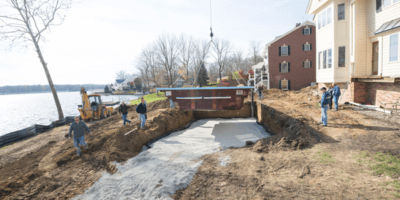
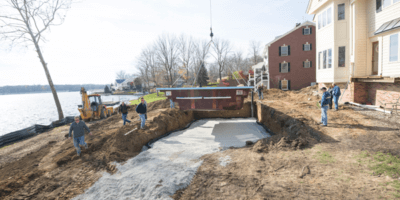
Most standard installation packages cover the pool structure (shell, steel framing, or concrete depending on pool type), excavation and backfill, delivery, a pump and filter system, basic electrical setup, rough plumbing, and often a handrail. Most basic quotes do not always include the costs of permits, full electrical work, safety fencing, water fill, dirt hauling, pool covers, decking beyond a basic perimeter, landscaping, and yard restoration.

What Are the Most Common Extra Costs During Inground Pool Installation?

Permits and Inspections

Most municipalities require a building permit before pool excavation can begin. Separate permits for electrical and plumbing work may also be required. Permit costs typically run between $100 and $1,000, according to Pool Research, though the range varies significantly by jurisdiction. Some dealers or contractors handle the application, but the cost is yours to cover.

Excavation and Site Preparation

Site-specific conditions change excavation costs more than most buyers expect. Rocky soil requires heavier equipment and takes longer to excavate, clay-heavy soil needs drainage solutions, and sandy soil may need additional stabilization around the pool shell. Sloped yards can require grading or retaining walls before installation can proceed.

According to a 2026 survey of independent pool builders in the Thursday Pools dealer network, navigating soil conditions, elevation changes, or limited access can cost between $1,500 to $4,500 or more.

Safety Fencing

Many states and municipalities require fencing around residential pools. Specific requirements, including barrier height, material, gate types, self-latching mechanisms, and other regulations, vary by location. Your contractor should know the local code, but the cost is not always included in the base quote.

According to a 2026 survey of Thursday Pools independent dealers, the average cost for a standard 300-linear-foot fence is just more than $8,000.

Electrical Work

Pool equipment, including pumps, filtration systems, heaters, lighting, and automation controls, all require electrical connections. The complexity of that work depends on your home’s panel capacity, the distance from the equipment pad to the main panel, and the scope of lighting or automation you want.

Your pool dealer may or may not offer full electrical wiring and installation as part of their pool installation package. Either way, we recommend budgeting at least $2,000 to $5,000 for pool electrical work, though more complex setups or homes that need a panel upgrade can cost up to $10,000 or more. Confirm with your contractor whether electrical work is included in the base installation package.

Water Fill

Filling an inground pool for the first time requires a significant volume of water. Depending on pool size and local water rates, the initial fill can cost up to $2,000, according to HomeGuide

Decking, Landscaping, and Yard Restoration

Construction equipment will occupy your backyard for weeks and can leave the surrounding yard in rough shape. Post-installation restoration, including grading, sod, and landscaping, is typically not included in a base pool quote.

Decking adds significantly to the project total. A 1,200-square-foot poured concrete patio averages just over $12,500, according to 2026 data from Thursday Pools independent dealers. Paver patios of the same size run just over $13,000. Premium materials like stamped concrete or natural stone cost more.

Pool Covers

A pool cover is not optional if you live where winters freeze. The type you choose affects both upfront cost and long-term maintenance convenience.

  • Winter covers average $75-$250, according to HomeGuide.
  • Manual retractable safety covers average around $4,000, according to the 2026 Thursday Pools dealer survey.
  • The 2026 Thursday Pools dealer survey shows that automatic pool covers average $17,580 installed.

Automatic covers provide the most convenience and protection, but they require an electrical hookup and need to be factored into the electrical budget. In many cases, installing the auto cover and running the electrical simultaneously reduces total cost.

What Are the Ongoing Costs of Owning an Inground Pool?

Installation is a one-time expense. The following costs may seem hidden initially, but will recur for the life of the pool.

Regular Maintenance

Inground pool ownership requires staying on top of tasks like skimming the surface, vacuuming debris, and maintaining correct water chemistry levels for safe water and surface protection. In our experience, fiberglass pool owners typically spend $500 to $1,500 per year on DIY maintenance, while vinyl liner pool owners spend $1,000 to $2,000 per year. Gunite pool owners spend more, from $2,000 to $4,000 annually, because the porous concrete surface requires additional chemicals to control algae.

Equipment Maintenance and Repairs

Pumps, filters, heaters, and plumbing components require periodic maintenance and eventual replacement. Budget for routine upkeep and set aside a reserve for unexpected equipment failures.

Utility Costs

Running a pool pump, heater, and lighting adds to your electricity and water bill throughout the season. Energy-efficient variable-speed pumps and covers that reduce evaporation both help lower operating costs over time.

Winterization

In climates with a freeze-thaw cycle, closing the pool properly each fall protects the plumbing, equipment, and structure. Winterization typically involves blowing out plumbing lines, treating water chemistry, covering the pool, and storing or protecting equipment. Labor and materials add an annual cost. 

Resurfacing or Liner Replacement

Concrete pools need resurfacing every 10-15 years, typically at $6,000 to $15,000 or more, according to HomeGuide. Vinyl liner pools need a new liner every 5-15 years, typically costing $3,000 to $7,500, per HomeGuide. Fiberglass pools do not require periodic resurfacing, and there is no liner to replace.

How Does an Inground Pool Affect Homeowners’ Insurance?

Pools are classified as an “attractive nuisance” under most homeowners’ insurance policies, which means they increase your liability exposure in the eyes of your insurer. Expect your annual premium to rise after installation. The specific increase varies by carrier, location, coverage level, and what safety features, such as fencing, alarms, or an automatic cover, you have in place.

Contact your homeowners’ insurance provider before installation to understand the impact on your policy. Adding required safety features upfront can reduce both liability risk and premium impact.

Questions to Ask Your Contractor Before You Sign

Before committing to any inground pool quote, get clear answers to the following questions:

  1. Does this quote include permits, inspection fees, and permit applications?
  2. Is all electrical work, not just the panel, included?
  3. Does the quote include dirt hauling and excavated material removal?
  4. What decking is included, and what does additional patio work cost?
  5. Is fencing included, and does it meet local code requirements?
  6. Is the initial water fill included?
  7. Is any pool cover included, and what is the cost to upgrade to an automatic cover?
  8. Is basic yard restoration or landscaping included?

Talk to a Local Thursday Pools Dealer Before You Budget

Installation costs vary by yard, location, soil type, access conditions, and what you want surrounding the pool. The most accurate budget comes from a dealer who has seen your specific site. An authorized Thursday Pools independent dealer will assess your yard and give you a project estimate that accounts for your site, project scope, and budget. You can also try our Pool Cost Calculator for a ballpark starting point before your first dealer conversation.

Frequently Asked Questions About Inground Pool Installation Costs

What costs are typically not included in an inground pool installation quote?

Base installation quotes most often exclude permits and inspection fees, safety fencing, the full scope of electrical work, water fill, dirt hauling, decking beyond a small perimeter, landscaping, yard restoration, pool covers, and pool heaters. Getting a fully itemized quote makes it possible to compare proposals accurately and avoid budget surprises.

How much does it cost to install an inground pool, including all expenses?

A fiberglass pool typically runs $45,000 to $100,000 or more for the base installation, according to a 2026 Thursday Pools independent dealer network survey. Adding fencing, full decking, electrical work, a heater, and an automatic cover can push the total significantly higher. For a full breakdown by pool type, see our Inground Pool Cost Guide.

Do I need a permit to install an inground pool?

Yes. In most jurisdictions, a building permit is required before excavation can begin. Separate permits for electrical and plumbing work may also apply. Permit costs typically run $100 to $1,000, though the amount varies by location. Your contractor should manage the application process, but the cost is typically not included in the base installation quote.

Does inground pool fencing have to meet local code?

Yes. Most municipalities and states have specific fencing requirements for residential pools, covering minimum height, gate specifications, and latching mechanisms. Requirements vary by location, and your builder should know the local codes. According to a 2026 survey of Thursday Pools independent dealers, the average cost for a standard 300-linear-foot fence is just more than $8,000.

How much does inground pool electrical work cost?

Pool electrical work typically runs $2,000 to $5,000 at minimum in our experience, and up to $10,000 or more for complex setups or homes that need a panel upgrade. This cost is frequently excluded from base installation quotes. Confirm what is included before signing, and get a separate electrical estimate if it is not covered.

Will installing an inground pool raise my homeowners’ insurance?

Yes. Pools are classified as attractive nuisances, and most homeowners’ insurance policies will increase annual premiums after installation. The impact depends on your carrier, coverage level, location, and what safety features you have installed. Contact your insurance provider before installation to understand the impact on your policy.

Which type of inground pool has the lowest lifetime cost?

Fiberglass pools typically carry the lowest lifetime maintenance cost because they do not require periodic resurfacing or liner replacement. Concrete pools need resurfacing every 10-15 years at $6,000 to $15,000 or more. Vinyl liner pools need a new liner every 5-15 years at $3,000 to $7,500 per replacement. Fiberglass pools require no resurfacing or liner replacements.

What questions should I ask before signing a pool installation contract?

Ask specifically whether the inground pool quote includes permits, dirt hauling, electrical work, safety fencing, water fill, decking, an initial pool cover, and yard restoration. Ask for an itemized breakdown so you can compare quotes from different contractors on equal terms.

Ask the General; What Can I Expect with New Pool Costs and Accessories?

accessories for poolsDear General:

You can’t possibly imagine how badly my family wants a pool. But we don’t know where to start. What can I expect with new pool costs and accessories?  How can I get us from the dreaming stage to the swimming stage?

Signed;

Pool-less in Plainfield


Dear Pool-less;

Don’t despair. You have to start somewhere. As is the case with any big project, you have to break it down. While I can’t tell you exactly what your new pool will cost and what you might need in addition to the pool, I can give you some advice to help you get started. You’ll need to get in-home estimates from your local pool professionals and decide how you’d like to finance your pool. So let’s break down how you can get a little closer to that “swimming stage.”

Pool Cost

On average here in the Midwest, a basic inground fiberglass pool or inground vinyl liner pool installed with a pump, filter, chlorinator with a simple concrete deck surround (and don’t forget, water) will typically fall somewhere between $25,000 and $65,000 without the optional accessories we’ll discuss later in the post. That said, there are many factors that will affect the overall cost of your pool.

  1. Your location. Unless you happen to have a backyard that’s perfectly level, full of easy-to-dig soil and unobstructed on all sides, your pool builder will have to factor in the challenges of your particular installation location into the price of your pool. You might need to have dirt hauled in. You’ll most likely need to have dirt hauled away.
  2. Pool size. Obviously, a larger pool costs more than a smaller one. You could ballpark estimate about $1800 per linear foot. Also take into consideration how you’ll be using your pool and how much room you’ll need in the rest of the yard for decking, furniture and landscaping.accessories for pools
  3. Pool design and features. A rectangular pool with basic features will be less expensive than a freeform pool with added features such as a beach entry or tanning ledges. Again, think about what’s important to you and your family–do you want to be able to exercise in your new pool? Play games? Or just relax in a little cool water at the end of a long day. Make a list of the features you want and communicate those priorities to your pool estimator.
  4. Your pool builder. Pool companies range from small, independent builders who will oversee every step of your project from start to finish, to big companies with multiple crews that are juggling numerous installations at once. One type is not necessarily better than another. It all comes down to which company you have a good feeling about. Do your research, and always get more than one estimate. Ask for references. Consider experience, honesty, quality, reputation, referrals and design ability. Also ask yourself–”Do I like these people? Would I want them to build my pool?”

Accessories for Pools

accessories for poolsThe term pool accessories refers to everything other than the pool itself, and there are plenty accessories for pools to consider. There are cool built-in features, like tanning ledges, beach entries for freeform pools, beach entries for rectangular pools, infinity edges, wading pools, wet decks and bubblers. There are great add-on features to pump up the atmosphere and fun, like wall and step jets, waterfalls, fountains, custom lighting, diving boards, slides, pool floats and sports equipment. There are convenient ways to keep your pool covered, comfortable, clean and safe, using heaters, chillers, automatic cleaning systems, alternative water purifiers, solar blankets, winter covers and automatic pool covers. And then there’s everything that will surround and enhance your pool, such as landscaping, concrete decking, patio furniture, fencing, ledge loungers and designer handrails. It’s quite a list, isn’t it?  You might not need all of those things, but you’ll need to factor in what you do want when you’re thinking about cost.

Of everything I’ve listed above, probably the biggest consideration in terms of cost is concrete decking. (And fencing, if you need it.) There are so many concrete styles, coatings, and stamping options to choose from, and you’ll probably end up wanting a little more patio than you originally thought. Remember though, it’s a one-time investment, and you want to make sure you’ll have plenty of room to party around the pool. accessories for poolsKeep in mind that any accessory that is structural needs to be done during construction, so you’ll need to talk to your pool builder up front about that. Many of the other accessories are optional, and you can always add them in the years to come, while you’re enjoying your pool.
In future posts, we’ll go into more detail on all of these accessories. There’s so much to talk about, so stay tuned! But for now, it’s once again time to for me to grab a float and enjoy my pool.

Until next time…

The General


Who is The General?

The man, the myth, the legend….we just call him The General. His organized, systematic approach to pool installations over the years had his crew members calling him “The General” and it stuck. The General has over 30 years’ experience in the pool and spa industry, working for one of Pool and Spa News’ Top 50 Pool Builders.”

Over that time, he designed, sold, project-managed and installed over a thousand inground swimming pools. As a pool owner himself, he’s the perfect authority to give you the inside scoop, with amazing tips and tricks to make pool ownership a breeze!

6 Tips to Reduce Inground Pool Operating Costs

Buyers often only look at upfront costs when pricing and comparing  inground pools. However, ongoing pool operating costs can add up over the lifetime ownership of your pool. While all pool types have some of the same expenses, understanding the differences in operating costs among fiberglass, vinyl liner, and gunite pools can help you make smarter choices to keep the costs in check. From testing your water chemistry to maintaining equipment, check out our tips on reducing your  inground pool costs.


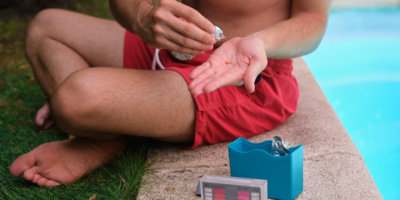
Thursday Pools is using a pH and cl kit to test the swimming pool's water quality.Tip 1: Test Your Pool Water Regularly

According to  HomeGuide, annual pool chemical costs average $175 for a fiberglass pool, $400 for a vinyl pool, and $750 for a concrete pool. However, your actual cost will depend on the amount of chemicals you need to maintain balanced water chemistry. Trying to correct problems after you have “lost your pool” can result in extra, unnecessary expense, so test often to help maintain better control. Regularly test your water using a DIY test kit, take a sample to a pool store, or use a professional pool service for a more thorough analysis. In addition to the usual pH and chlorine levels, professionals assess a wider range of factors, such as alkalinity, calcium hardness, and stabilizer levels, ensuring that any imbalance is detected before it becomes a costly problem. 


Tip 2: Add Chemicals in the Evening

To get the most out of your pool chemicals, regardless of pool type, add them in the evening or at night when the sun is down. Adding pool chemicals in the evening is ideal for all pool types to help ensure that they work optimally, extending their efficacy and reducing the frequency of reapplication. Chemicals like chlorine degrade quickly under sunlight, so evening application allows them to work overnight without UV interference, ensuring better absorption and balanced water. This timing also improves the overall effectiveness of algaecides, pH adjusters, and other treatments, keeping your pool water clear and properly maintained.


TIP 3: Keep Your Pool Clean

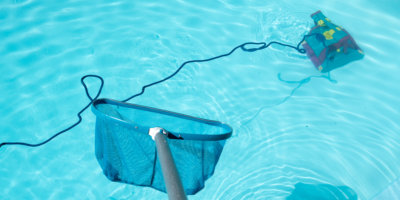
Thursday Pools' robot underwater cleaner and pool skimmer

When you regularly backwash, skim, brush, vacuum, and monitor your pressure gauge, you’re less likely to have prematurely expensive repairs. Fiberglass pools are more algae-resistant than other pool types, so you’ll automatically save time and money on cleaning. Maintaining a clean pool improves the efficiency of your pool’s filtration system, reducing wear and tear on equipment. Costs for pump replacements, filter repairs, and other common issues vary depending on the pool type and equipment brand.  Considering all pool types, HomeGuide estimates that replacing a pool pump motor averages $150 to $800, and repairing it costs $50 to $300. A new inground pool filter costs $385 to $1,600. Repairing minor issues in your heater or heating tubes can cost $100 to $300, and replacing your heater averages $1,600 to 5,200. Set reminders or regularly schedule cleaning to save money in the long run. 


TIP 4: Save Water by Managing Usage and Covering Your Pool

Water conservation is a critical aspect of reducing inground pool operating costs. During the swim season, pools require refills as they lose water due to evaporation, improper backwashing, and kids splashing. On average, pools lose about two inches of water per week, up to around 2,000 gallons per month. Depending on local water rates, this ongoing cost can range from  $4 to $20 monthly​. Pool covers can dramatically reduce evaporation by up to 90%. They also help maintain your pool’s temperature, lowering heating costs. Monitor splashing and limit it by setting clear rules for pool play. Not only does this save water, but it also reduces the need to add and rebalance your pool’s chemicals. Follow the manufacturer’s guidelines for filter backwashing to avoid unnecessary water loss.


TIP 5: Heat Your Water More Efficiently 

Heating your pool can be one of the most significant ongoing expenses, so it’s important to manage it wisely. Fiberglass pools retain heat better than other pool types due to their insulating properties, making them more energy-efficient and less costly to heat. Electric resistance heaters consume a lot of electricity, with operating costs ranging from $175 to $600 per month. Gas pool heaters quickly warm up the water, but they average between $200 to $500 or more per month to run. On the other hand, heat pumps are much more energy-efficient, costing about $50 to $150 per month, though they take longer to heat the water. Solar pool heaters use electricity only to circulate water, making them the most cost-effective at around $10 to $25 per month. Regardless of your pool heater type, set your pool heater between 78-82 degrees to maintain a comfortable temperature without overworking the heater. 


TIP 6: Save Energy 3 Ways

Your pool pump plays a vital role in water circulation and filtration, so efficiently running it can save money. Consider switching to a variable-speed pump, which uses less energy than a single-speed pump and allows you to adjust the flow rate based on your pool’s needs. A timer can automatically control when the pump runs, optimizing usage during off-peak hours to reduce energy consumption. This simple addition can significantly cut down your electric bills. It’s easy to forget to turn off your pool lights, especially after an evening swim. Unfortunately, keeping the lights on when the pool isn’t in use can unnecessarily add to your electricity costs. Make it a habit to check that all lights are off before heading inside for the night. Accidentally leaving the backwash running or overfilling your pool wastes water and incurs additional heating and chemical balancing costs. Set reminders or timers when performing these tasks to avoid costly errors.


Get Your Pool Cost Questions Answered

Keeping your inground pool operating costs low is all about regular maintenance, efficient use of equipment, and smart choices. Whether you choose a fiberglass, vinyl, or gunite pool, taking proactive steps can significantly lower your ongoing expenses and keep your pool running smoothly. If you have questions about inground pool costs or are ready to take the plunge and purchase,  consult a pool dealer near you.

Before Buying a Pool ebook

Everything You Need to Know Before Buying a Pool!


Thursday Pools Before Buying a Swimming Pool eBook cover


Many pool owners will tell you that there are many details that they wish they would have known about before purchasing their swimming pools. Download our What I Wish I Knew Before Buying a Pool Guide to help you avoid becoming this person.

Download

Ask the General: How Do I Control Heating Costs in My Pool?

Pool tips and tricks; controlling heating costs Dear General;

I absolutely LOVE my new inground fiberglass swimming pool. What I’m not sure I’m going to love is my pool heating bill. Do you have any tips and tricks for controlling swimming pool heating costs?

Signed– Don’t Want My Dollars Going Down the Pool Drain.

Dear Dollars;

I hear you. No one wants to see their hard-earned money going down the swimming pool drain. Let’s take a look at the various kinds of heaters and ways you can save your money for more fun things.

______________________________________________________________________

Four types of heaters

First of all, pool heaters are NOT the most energy efficient appliances you’ll ever run across. The most popular options are electric and gas. Some folks also use solar or, in rare cases, wood burning. Which is best? That depends on who you ask. Let’s break it down.

Electric

Electric heat pumps use electricity to capture heat and move it from one place to another. In other words, they take the ambient heat surrounding your pool and transfer it into the pool. The electric heat pump manufacturers report that they are the most efficient.

Gas

Gas pool heaters use either natural gas or propane. As the pump circulates the pool’s water, the water drawn from the pool passes through a filter and then to the heater. The gas burns in the heater’s combustion chamber, generating heat that transfers to the water, and that water is returned to the pool.The gas heater manufacturers report they are the most efficient.

Solar

Solar heating units take the heat from the sun and introduce it to the water. They involve a solar collector — the device through which pool water is circulated to be heated by the sun. A filter removes debris before water is pumped through the collector. Then, a pump circulates water through the filter and collector and returns it to the pool. Solar heat manufacturers report they are the most efficient.

Wood burning

Wood burning heaters also use a heat exchanger (similar to gas units) to heat the water. Cold pool water is pumped from the pool via a submersible pump into a coil of copper pipe mounted above the fire, inside the fire pit or grill. By the time the water makes it out of the pipe, the fire has heated the water. This is similar to how a standard hot water heater works.This system is most often used in rural areas. The wood burner manufacturers report they are the most efficient. (Have you noticed a pattern here?)

So which one is the best and most efficient? Well, that’s a tough question to answer. It really depends on pool heating costs in your area and what you already have in your home. Regardless of the heating option you choose, here are some tips and tricks to save money on your pool heating costs:

  • Cover it up. When the pool is not in use, close it off with an automatic safety cover or a solar blanket.
  • Limit run time. Water features like fountains, waterfalls and bubblers are wonderful, but you really only need to run them when you’re in the pool. Turn them off when you get out.
  • Maintain your landscaping. Trim trees and bushes that restrict sunlight from your pool.
  • Block the wind. Install barriers, such as fences or shrubs, that will keep wind from hitting your pool surface and cooling the water.
  • Mind your thermostat. Keep the temperature set between 78-82°. Each degree over that adds about 10% to your pool heating costs.

Maintenance is Key

Ultimately, the key to successfully and efficiently heating your swimming pool is to be proactive with your heater maintenance. You also need to keep your water balanced for optimal performance. Have a certified technician give the heater, along with all your pool equipment, a health checkup every year. Most pool companies will perform a thorough check when they open your pool (or at regular intervals if you live somewhere where your pool is open year-round.) Whether you choose a large service or a one-man show, make sure they are honest, on time, established, insured, heater-certified, knowledgeable and professional. Ask for a checkup report, just like the one you get from the company that services your furnace and air conditioner. They come in handy when you’re dealing with a manufacturer’s warranty.

Now, it’s time to grab a float, relax and enjoy the pool.

Until next time…

The General

______________________________________________________________________

Who is The General?

The man, the myth, the legend….we just call him The General. His organized, systematic approach to pool installations over the years had his crew members calling him “The General” and it stuck. The General has over 30 years’ experience in the pool and spa industry, working for one of Pool and Spa News’ “Top 50 Pool Builders.”

Over that time, he designed, sold, project-managed and installed over a thousand inground swimming pools. As a pool owner himself, he’s the perfect authority to give you the inside scoop, with amazing tips and tricks to make pool ownership a breeze!