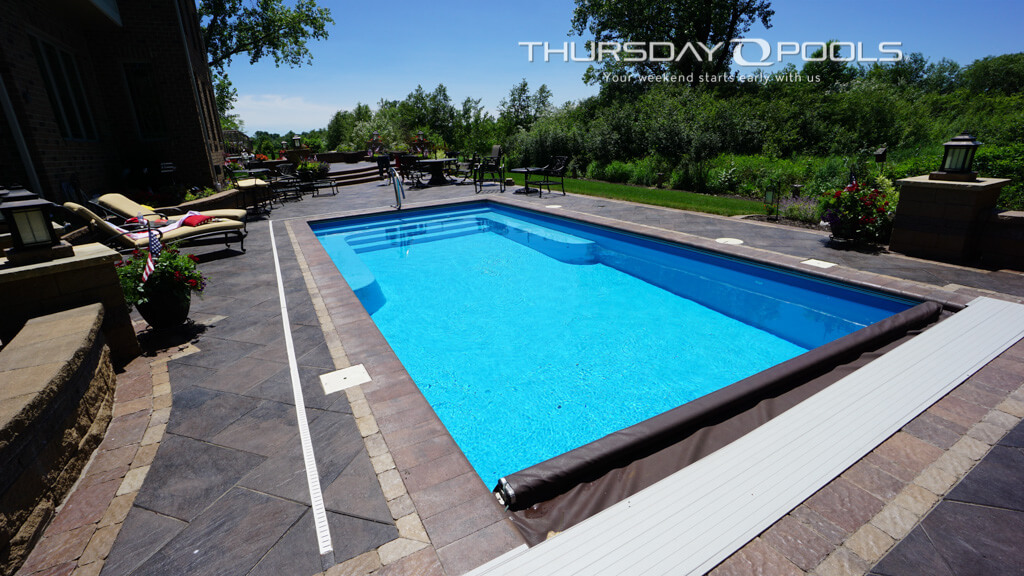
How Much Does a Fiberglass Pool Cost in Georgia?

A fiberglass pool in Georgia typically costs between $65,000 and $90,000. Based on a 2026 survey of independent fiberglass pool builders in the Thursday Pools dealer network, a standard fiberglass pool installation in Georgia averages $65,000 for a small pool, $75,000 for a medium pool, and $90,000 for a large pool. Your final cost will depend on details like pool size, yard conditions, local permit requirements, and the optional upgrades you choose.

Georgia’s diverse geography creates real variation in pool installation costs from one part of the state to another. In metro areas like Atlanta, Savannah, and Augusta, local permit requirements and zoning regulations can add to the project cost. Around the North Georgia mountains, rocky soil conditions are often notorious for requiring additional excavation equipment and labor. 

Optional upgrades and surrounding add-ons, such as pool heaters, automatic covers, or custom patio surfaces, will increase your total, but they also determine how much use and year-round value you get from Georgia’s extended swimming season. A  local independent Thursday Pools dealer can help you decide which additions fit your yard and your budget.

What is the Average Cost of a Fiberglass Pool Installation in Georgia?

Thursday Pools surveys its network of independent dealers across the country each year to track real-world installation costs.

Based on the 2026 survey of independent Thursday Pools dealers in Georgia, installed fiberglass pool costs average $65,000 for small pools, $75,000 for medium pools, and $90,000 for large pools.


AVERAGE GEORGIA FIBERGLASS POOL INSTALLATION BY SIZE

Pool Type Small Fiberglass Pools Medium Fiberglass Pools Large Fiberglass Pools
Size Range Up to 26 feet long or 400 square feet 26 to 34 feet long or 400 to 600 square feet 35 feet and longer or 600+ square feet
Average Cost $65,000 $75,000 $90,000

What Does a Standard Fiberglass Pool Installation in Georgia Include?

Most Georgia dealers include the following in a base package: the pool shell, excavation, basic pump and filtration equipment, plumbing, basic electrical, permits, a single pool light, initial water fill, dirt hauling, concrete decking approximately 3 feet around the pool, delivery, and labor. What individual dealers include can vary, so always compare proposals carefully. Expanded decking, fencing, landscaping, pool covers, and optional features typically cost extra.

Contact a nearby Thursday Pools dealer for a custom quote and to learn about financing options for your Georgia pool installation.


What Do Popular Fiberglass Pool Models Cost Installed in Georgia?

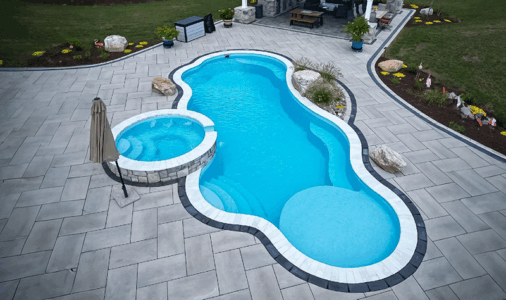
Thursday Pools pearl pool with decorative hardscaping border

PEARL (15′ x 25′)

Pearl is a fantastic choice for Georgia homeowners looking for a compact yet elegant fiberglass pool. It fits well in smaller and mid-sized backyards in areas like Atlanta, Marietta, or Augusta. The pool features a spacious tanning ledge and built-in wraparound benches, making it ideal for lounging and socializing.

Based on 2026 feedback from independent Thursday Pools dealers in Georgia, the average installed cost for a small fiberglass pool like Pearl or other designs less than 26 feet long and 400 square feet is $65,000.


Thursday Pools Caribbean Spark Pool with Cathedral design

CATHEDRAL (14′ x 33′)

Cathedral is an ideal fiberglass pool for Georgia homeowners seeking space and versatility. Its expansive rectangular shape with domed ends offers plenty of room for swimming, exercise, or family fun, making it perfect for homes in areas like Atlanta, Peachtree City, or Albany. Cathedral features dual corner entry steps and integrated benches, providing a relaxing spot to unwind after enjoying the Georgia sunshine.

According to 2026 survey responses from independent Thursday Pools dealers in Georgia, the average installed cost for a medium-sized fiberglass pool like the Cathedral is $75,000.


Thursday Pools Monolith Ocean Pool in Michigan

MONOLITH (16′ x 40′)

Monolith offers a striking, full-sized fiberglass pool that combines luxury with practicality for Georgia homeowners with more room to work with. Measuring 40 feet in length, the expansive Monolith is ideal for those who want ample space for swimming laps, hosting poolside gatherings, or simply enjoying the outdoors. Monolith features a full-length swim lane, built-in tanning ledge, and dual-end benches.

Due to its size, at 40 feet long and more than 600 square feet, larger pools like Monolith typically come at a higher installed cost. In Georgia, the 2026 average installed cost for a large fiberglass pool is $90,000.

What Yard Conditions Affect Fiberglass Pool Installation Costs in Georgia?

Georgia’s varied soil types and terrain can affect installation costs significantly, sometimes more than homeowners expect. Before breaking ground, a professional installer assesses your site for conditions that may require extra preparation.

Soil Type

Georgia soil varies across the state, with North Georgia’s rocky conditions typically requiring heavier excavation equipment and more labor. Sandy soil along the coastal plains is easier to work with, but may require additional stabilization, while clay-heavy soil in the central Piedmont region may create drainage concerns. Both are generally less expensive than rocky ground, however. A pre-installation site assessment identifies what your soil requires before the project begins.

Slope and Grade

Yards with a slope often require grading, retaining walls, or other leveling work before excavation and installation can move forward. Properties in Georgia’s mountainous regions and rolling Piedmont hills are more likely to deal with this. A flat, level yard typically keeps installation more straightforward and predictable.

Backyard Access

Wide, open access makes a fiberglass pool installation more efficient. Properties with narrow gates, tight side yards, or other access constraints may need specialty equipment, additional labor, or crane service to move the pool shell into position. In denser neighborhoods, particularly in Atlanta’s suburbs or Augusta’s established areas, access limits can affect both the timeline and the cost.

AVERAGE ADDITIONAL YARD-RELATED EXPENSES IN GEORGIA


Excavating Sandy Soil $1,500
Excavating Clay-Heavy Soil $1,200
Excavating Rocky Soil $3,000
Above-Average Slope Requiring Extra Grading $5,000
Limited Yard Access  $1,000

Based on Thursday Pools’ 2026 independent dealer survey, site-condition upcharges range from about $1,000 for navigating limited yard access to $5,000 for overcoming above-average slopes requiring extra grading.

What Are Georgia’s Swimming Pool Fence Requirements?

Georgia requires residential swimming pools to comply with barrier requirements under the Georgia State Minimum Standard Swimming Pool and Spa Code, which follows the International Swimming Pool and Spa Code (ISPSC).

Under Georgia’s pool safety code, residential pool barriers must meet specific safety standards. Common requirements include:

  • The barrier must be at least 48 inches tall, measured from the ground to the top of the fence on the side facing away from the pool.
  • The gap between the ground and the bottom of the barrier must not exceed 4 inches.
  • Gates must be self-closing and self-latching, and must open outward away from the pool.
  • Gate latches positioned less than 54 inches above the ground must be located on the pool-facing side of the gate.
  • Openings in the barrier must not allow passage of a 4-inch-diameter sphere. Where the ground surface is loose, such as gravel or mulch, the maximum clearance is 2 inches.
  • The barrier cannot have footholds or handholds that could be used for climbing.

Local jurisdictions may have additional requirements. Counties like Paulding and others enforce these statewide standards and may have specific permit requirements.

Always check swimming pool barrier and safety regulations for your local county or municipality before installation. Local rules can vary, and some Georgia jurisdictions may adopt stricter requirements than the baseline model code.

For a 300-linear-foot basic pool fence, Georgia dealers estimate an average cost of $8,000. Final pricing varies by material, height, gate requirements, terrain, and local code.

How Much Do Fiberglass Pool Upgrades Cost in Georgia?

Optional features can expand what your pool does and how long you use it each season. Georgia’s climate gives homeowners a solid outdoor swimming season, but the right upgrades extend that advantage further and bring additional comfort or convenience. The averages below come from Thursday Pools’ 2026 dealer survey.

Water Quality and System Controls

Pool Heater

  • Average Cost in Georgia: $6,500
  • Extend your swim season by keeping the water at a comfortable temperature into cooler fall and winter months, maximizing your investment in Georgia’s mild winters.

UV Filter System

  • Average Cost in Georgia: $2,800
  • A UV system passes pool water through an ultraviolet light chamber that destroys bacteria, algae, and chloramines so chlorine works more efficiently and you need less of it to maintain safe, sanitary water.

Pool Automation and Smart Control System

  • Average Cost in Georgia: $5,600
  • Manage temperature, lighting, and filtration from a smartphone or tablet.


Patio and Hardscape

Poured Concrete Patio (Approx. 1,200 sq. ft.)

  • Average Cost in Georgia: $14,000
  • A durable, low-maintenance decking option that handles Georgia’s humidity and weather variations.

Paver Patio (Approx. 1,200 sq. ft.)

  • Average Cost in Georgia: $16,000
  • Available in a range of materials, from concrete pavers to natural stone, with a more finished aesthetic than poured concrete.


Safety and Covers

Fence (300 Linear ft.)

  • Average Cost in Georgia: $8,000
  • Final cost varies by material choices, total fence length, and local code requirements.

Non-Automatic Safety Pool Cover

  • Average Cost in Georgia: $5,000
  • A manual option for securing the pool and keeping debris out between uses.

Automatic Pool Cover

  • Average Cost in Georgia: $18,000
  • One-touch operation to protect the pool, retain heat, and reduce evaporation. Many Georgia homeowners prioritize this upgrade for safety and convenience.


Water Features

Deck Jets

  • Average Cost in Georgia: $800 per jet
  • Arc water from the coping into the pool, adding visual movement and ambient sound to the pool area.

Bubblers

  • Average Cost in Georgia: $1,200 per bubbler
  • On a tanning ledge or beach entry, create movement and the sounds of a babbling brook in shallow pool water.

Cascade or Waterfall

  • Average Cost in Georgia: $5,000
  • Add a flowing water element and natural sound to the pool environment.


Cleaning and Maintenance

Automatic Pool Cleaning and Vacuuming System

  • Average Cost in Georgia: $1,700
  • Keep the pool floor and walls clean with minimal manual effort.


Lighting and Tile

LED Pool Lights

  • Average Cost in Georgia: $1,625 per light
  • Adds ambiance and visibility for evening and nighttime use.

Specialty Waterline Tile

  • Average Cost in Georgia: $3,700
  • Installed along the waterline for a custom, finished appearance at the pool edge.


Recreation

Simple Pool Slide*

  • Average Cost in Georgia: $5,500
  • A standard slide for family use.

Deluxe Pool Slide*

  • Average Cost in Georgia: $12,000
  • More height and design details than a basic model.

Diving Board (Type 1 Diving Pools Only)*

  • Average Cost in Georgia: $4,600
  • Only manufacturer-designated Type 1 diving pools support diving board installation. Homeowners should use only manufacturer-approved diving boards with pool models designated as diving pools and must consult a licensed professional to verify compliance with all local building codes and safety requirements before installation.

*Thursday Pools strongly advises against pool slides and diving boards due to safety concerns. The inclusion of a diving board or slide with any fiberglass pool must be carefully reviewed by a licensed professional to ensure compliance with all local building codes, safety regulations, and manufacturer guidelines. Not all fiberglass pool models are suitable for diving or slide use. It is the responsibility of the homeowner and installer to ensure proper installation and usage. Always prioritize safety and consult a qualified expert before adding any diving or sliding feature to your pool.


Landscaping and Extras

Surrounding Landscaping

  • Average Cost in Georgia: $13,000
  • Includes decorative rocks, plantings, trees, bushes, flower beds, and similar elements that connect the pool to the rest of the yard.

Add-On Spa

  • Average Cost in Georgia: $18,500
  • A separate spa unit for relaxing hydrotherapy, neighboring or independent of the main pool.


Frequently Asked Questions About Georgia Fiberglass Pool Costs

How much does a fiberglass pool cost in Georgia?

A fiberglass pool in Georgia costs an average of $65,000 for a small pool, $75,000 for a medium pool, and $90,000 for a large pool, based on Thursday Pools’ 2026 survey of the state’s independent dealers.

What does a standard fiberglass pool installation in Georgia include?

A standard fiberglass pool installation in Georgia typically includes:

  • Excavation and Dirt Hauling: Soil removal and site preparation.
  • Pool Shell and Delivery: The physical fiberglass pool shell unit delivered to your home.
  • Filtration System: Basic pump, filter, and plumbing.
  • Standard Decking: Approximately 3 feet of concrete surrounding the pool.
  • Permits and Basic Electrical: Includes local Georgia municipal filings and one LED pool light.

What yard conditions raise fiberglass pool installation costs in Georgia?

Rocky soil in North Georgia’s mountains requires heavier excavation equipment and more labor. Clay-heavy soil in the central Piedmont can create drainage concerns, while sandy soils in coastal areas may need additional stabilization measures. Sloped yards, common throughout Georgia’s varied terrain, often need grading work to create a level base. Limited backyard access, such as narrow gates or tight side yards in urban neighborhoods, can require crane service or specialty equipment. Based on the 2026 Georgia dealer survey, site-condition upcharges range from about $1,000 for navigating limited yard access to $5,000 for extra grading in yards with above-average slopes.

What are Georgia’s pool fence requirements?

Georgia requires residential pools to meet the Georgia State Minimum Standard Swimming Pool and Spa Code, which follows the International Swimming Pool and Spa Code (ISPSC). Common requirements include barriers at least 48 inches tall, limited ground clearance of 4 inches maximum, self-closing and self-latching gates that swing away from the pool, child-resistant latch placement, and designs that limit footholds or handholds. Openings must not allow passage of a 4-inch sphere. Local rules can vary, so homeowners should verify requirements with their county or municipality before installation.

The 2026 Thursday Pools survey of Georgia independent dealers says the average cost for a 300-linear-foot basic fence is $8,000, with final costs varying by material, height, gate requirements, terrain, and local code.

How much do common pool upgrades add to the cost in Georgia?

Upgrade costs vary widely depending on the feature:

  • A pool heater averages $6,500.
  • An automatic pool cover averages $18,000.
  • A paver patio of approximately 1,200 square feet averages $16,000.
  • An add-on spa averages $18,500.
  • Smaller additions like deck jets ($800 per jet), bubblers ($1,200 per bubbler), and LED lights ($1,625 per light) add cost in more modest increments.

How do I get an accurate cost estimate for a fiberglass pool in Georgia?

The most accurate estimate comes from a local independent Thursday Pools dealer who can assess your yard, review local permit requirements, and give you a project-specific quote. Survey averages provide a useful starting point, but site conditions, design choices, and local labor rates determine what you actually pay.


Get Your Personalized Georgia Pool Estimate

Survey averages give you a realistic starting point, but your actual cost depends on your yard, your location in Georgia, and the design details and upgrades you choose. A local independent Thursday Pools dealer can assess your site, walk you through pool options that fit your budget, and give you a project-specific quote, whether you’re in Atlanta, Savannah, Augusta, Columbus, or anywhere across the state.


Thursday Pools manufactures fiberglass pool shells and does not install pools. Pools are installed by locally owned independent dealers. Consumers should consult a local independent dealer for the most accurate and updated information based on the unique conditions of their region and property.
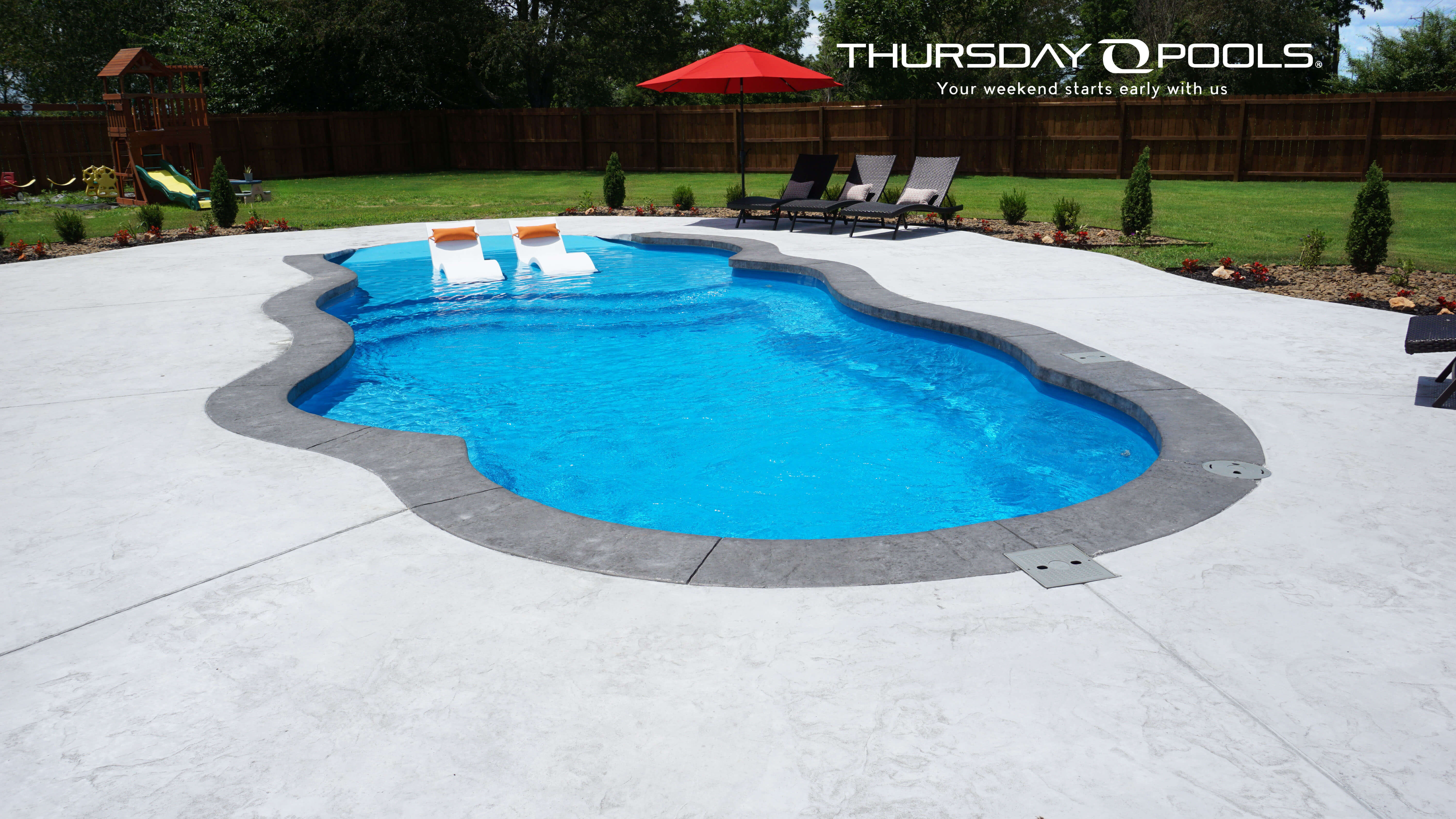
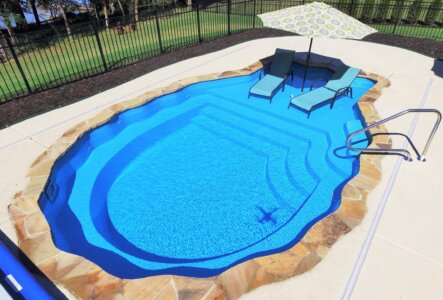
How Much Does a Fiberglass Pool Cost in Utah?

Based on a 2026 survey of independent fiberglass pool builders in the Thursday Pools dealer network, a standard installation in Utah averages $121,667 for a small pool, $133,333 for a medium pool, and $150,000 for a large pool. Your final cost will depend on details like pool size, yard conditions, local permit requirements, and the optional upgrades you choose.


Utah’s diverse geography creates real variation in pool installation costs across the state. In metro areas like Salt Lake City, Provo, and Ogden, local permit requirements and zoning regulations can add complexity to project costs. The mountainous terrain throughout northern Utah often presents rocky soil conditions requiring specialized excavation equipment and additional labor. In valley areas and lower elevations, clay-heavy soils are common and can create drainage and stability challenges during installation.


Optional features such as pool heaters, automatic covers, and custom stone decking add to your total investment but also extend your swimming season and enhance the overall value you get from Utah’s warm summers and mild climate. A local independent Thursday Pools dealer can help you decide which additions fit your property and your budget.

What is the Average Cost of a Fiberglass Pool Installation in Utah?


Thursday Pools surveys its network of independent dealers across the country each year to track real-world installation costs. 


Based on the 2026 survey of independent Thursday Pools dealers in Utah, installed fiberglass pool costs average $121,667 for small pools, $133,333 for medium pools, and $150,000 for large pools.


AVERAGE UTAH FIBERGLASS POOL INSTALLATION BY SIZE

Pool Type Small Fiberglass Pools Medium Fiberglass Pools Large Fiberglass Pools
Size Range Up to 26 feet long or 400 square feet 26 to 34 feet long or 400 to 600 square feet 35 feet and longer or 600+ square feet
Average Cost $121,667 $133,333 $150,000


What Does a Standard Fiberglass Pool Installation in Utah Include?

Most Utah dealers include the following in a base package: the pool shell, excavation, basic pump and filtration equipment, plumbing, basic electrical, permits, a single pool light, initial water fill, dirt hauling, concrete decking approximately 3 feet around the pool, delivery, and labor. What individual dealers include can vary, so always compare proposals carefully. Expanded decking, fencing, landscaping, pool covers, and optional features typically cost extra.


Contact a nearby Thursday Pools dealer for a custom quote and to learn about financing options for your Utah pool installation.

What Do Popular Fiberglass Pool Models Cost Installed in Utah?

SEA TURTLE (9.5′ x 19.5′)

Sea Turtle is a fantastic choice for Utah homeowners looking for a compact yet elegant fiberglass pool that fits well in smaller backyards. At just 19.5 feet in length, this petite model is perfect for urban areas in Salt Lake City, Provo, or Ogden. The pool features built-in bench seating and offers a refreshing retreat from Utah’s summer heat without the maintenance demands of a full-sized pool.

Based on 2026 feedback from Thursday Pools dealers across Utah, the average installed cost for a small fiberglass pool like Sea Turtle or other designs less than 26 feet long and 400 square feet is $121,667.

GOLIATH (14′ x 33′)

Goliath is a spacious fiberglass pool that accommodates active families throughout Utah. Its expansive rectangular shape provides a generous swim lane for exercise or play in the state’s sunny climate. The pool features dual corner entry steps with integrated benches, offering comfortable seating in the shallow end for socializing or unwinding.

According to 2026 survey responses from independent Thursday Pools dealers in Utah, the average installed cost for a medium-sized fiberglass pool like the Goliath is $133,333

Thursday Pools California Spirit pool featuring safety handle

SPIRIT (13.5′ x 40′)

Spirit brings a modern fiberglass pool design to Utah properties seeking elegance and efficient use of space. Measuring 40 feet in length, the Spirit suits homeowners who want a pool that combines exercise-friendly features with areas for relaxation. With a built-in tanning ledge, full-length swim lane, and dual-end benches, the Spirit is ideal for lap swimmers and loungers alike.

The Spirit and similar 40-foot models are great for suburban or rural Utah properties with room for a streamlined yet stylish pool. The average cost for a standard installation of a large fiberglass pool like Spirit, based on 2026 independent dealer survey responses, is $150,000.


What Yard Conditions Affect Fiberglass Pool Installation Costs in Utah?

Utah’s varied terrain and soil conditions can affect installation costs, sometimes more than homeowners expect. Before breaking ground, a professional installer will assess your site for conditions that may require extra preparation.

Soil Type

Utah’s diverse geology creates distinct soil challenges across the state. In mountainous regions throughout northern and central Utah, rocky soil conditions often require specialized excavation equipment and additional labor costs. Valley areas and lower elevations commonly have clay-heavy soils that can create drainage concerns and require special handling during installation. Sandy soils, while less common, appear in specific geological areas and may need additional stabilization measures. A pre-installation site assessment can identify what your specific soil requires before the project begins.

Slope and Grade

Utah’s mountainous terrain means many properties have significant slopes that require grading, retaining walls, or other leveling work before excavation and installation can proceed. Properties in areas like Park City, the foothills around Salt Lake City, or mountainous regions statewide are more likely to encounter this challenge. A relatively flat, level yard typically keeps installation more straightforward and predictable.

Backyard Access

Wide, open access makes a fiberglass pool installation more efficient. Properties with narrow gates, tight side yards, or other access constraints may need specialty equipment, additional labor, or crane service to move the pool shell into position. In established neighborhoods, particularly in Salt Lake City, Provo, or other urban areas, access limitations can affect both the timeline and the cost of installation.

AVERAGE ADDITIONAL YARD-RELATED EXPENSES IN UTAH


Excavating Sandy Soil $1,333
Excavating Clay-Heavy Soil $1,100
Excavating Rocky Soil $2,100
Above-Average Slope Requiring Extra Grading  $3,867
Limited Yard Access $2,667

Based on Thursday Pools’ 2026 independent dealer survey, site-condition upcharges range from about $1,100 for clay-heavy soil to $3,867 for above-average slopes requiring extra grading.


What Are Utah’s Swimming Pool Fence Requirements?


Utah requires residential swimming pools to comply with barrier requirements under the Utah Swimming Pool and Spa Code, which follows the International Swimming Pool and Spa Code (ISPSC).


Under Utah’s pool safety code, residential pool barriers must meet specific safety standards:

  • The barrier must be at least 48 inches tall, measured from the ground to the top of the barrier on the side facing away from the pool.
  • The gap between the ground and the bottom of the barrier must not exceed 4 inches on solid surfaces like concrete or pavers, or 2 inches on non-solid surfaces, such as grass or gravel.
  • Gates must be self-closing and self-latching, and must open outward away from the pool.
  • Gate latches must be at least 54 inches above the ground, or between 34-48 inches if located on the pool side of the gate.
  • Openings in the barrier must not allow passage of a 4-inch-diameter sphere.
  • The barrier cannot have footholds or handholds that could be used for climbing.


Local jurisdictions may have additional requirements beyond the statewide minimums. Some Utah counties and cities may require taller barriers, specific materials, or enhanced safety features.


Always check swimming pool barrier regulations for your local county or municipality before installation. Local building departments can provide current requirements and permit information for your area.


For a 300-linear-foot basic pool fence, Utah dealers in Thursday Pools’ 2026 survey estimate an average cost of $3,467. Final pricing varies by material, height, gate requirements, terrain, and local code compliance.


How Much Do Fiberglass Pool Upgrades Cost in Utah?


Optional features can expand what your pool does and extend your swimming season throughout Utah’s climate. The right upgrades enhance comfort, convenience, and safety while maximizing your investment. The averages below come from Thursday Pools’ 2026 dealer survey in Utah.


Water Quality and System Controls


Pool Heater

  • Average Cost in Utah: $4,500
  • Extend your swim season by keeping the water at a comfortable temperature during cooler months, maximizing your investment in Utah’s mild winters.


UV Filter System

  • Average Cost in Utah: $400
  • A UV system passes pool water through an ultraviolet light chamber that destroys bacteria, algae, and chloramines so chlorine works more efficiently and you need less of it to maintain safe, sanitary water.


Pool Automation and Smart Control System

  • Average Cost in Utah: $4,500
  • Manage temperature, lighting, and filtration from a smartphone or tablet.


Patio and Hardscape


Poured Concrete Patio (Approx. 1,200 sq. ft.)

  • Average Cost in Utah: $14,267
  • A durable, low-maintenance decking option that handles Utah’s temperature variations and dry climate.


Paver Patio (Approx. 1,200 sq. ft.)

  • Average Cost in Utah: $17,100
  • Available in a range of materials, from concrete pavers to natural stone, with a more finished aesthetic than poured concrete.


Safety and Covers


Fence (300 Linear ft.)

  • Average Cost in Utah: $3,467
  • Final cost varies by material choices, total fence length, and local code requirements.


Non-Automatic Safety Pool Cover

  • Average Cost in Utah: $1,333
  • A manual option for securing the pool and keeping debris out between uses.


Automatic Pool Cover

  • Average Cost in Utah: $15,333
  • One-touch operation to protect the pool, retain heat, and reduce evaporation. Many Utah homeowners prioritize this upgrade for safety and convenience.


Water Features


Deck Jets

  • Average Cost in Utah: $800 per jet
  • Arc water from the coping into the pool, adding visual movement and ambient sound to the pool area.


Bubblers

  • Average Cost in Utah: $700 per bubbler
  • On a tanning ledge or beach entry, create movement and the sounds of a babbling brook in shallow pool water.


Cascade or Waterfall

  • Average Cost in Utah: $967
  • Add a flowing water element and natural sound to the pool environment.


Cleaning and Maintenance


Automatic Pool Cleaning and Vacuuming System

  • Average Cost in Utah: $1,000
  • Keep the pool floor and walls clean with minimal manual effort.


Lighting and Tile


LED Pool Lights

  • Average Cost in Utah: $5,333 per light
  • Adds ambiance and visibility for evening and nighttime use.


Specialty Waterline Tile

  • Average Cost in Utah: $5,700
  • Installed along the waterline for a custom, finished appearance at the pool edge.


Landscaping and Extras


Surrounding Landscaping

  • Average Cost in Utah: $6,733
  • Includes decorative rocks, plantings, trees, bushes, flower beds, and similar elements that connect the pool to the rest of the yard.


Add-On Spa

  • Average Cost in Utah: $21,000
  • A separate spa unit for relaxing hydrotherapy, neighboring or independent of the main pool.


Recreation


Simple Pool Slide*

  • Average Cost in Utah: $6,000
  • A standard slide for family use.


Deluxe Pool Slide*

  • Average Cost in Utah: $7,667
  • More height and design details than a basic model.


Diving Board (Type 1 Diving Pools Only)*

  • Average Cost in Utah: $3,833
  • Only manufacturer-designated Type 1 diving pools support diving board installation. Homeowners should use only manufacturer-approved diving boards with pool models designated as diving pools and must consult a licensed professional to verify compliance with all local building codes and safety requirements before installation.


*Thursday Pools strongly advises against pool slides and diving boards due to safety concerns. The inclusion of a diving board or slide with any fiberglass pool must be carefully reviewed by a licensed professional to ensure compliance with all local building codes, safety regulations, and manufacturer guidelines. Not all fiberglass pool models are suitable for diving or slide use. It is the responsibility of the homeowner and installer to ensure proper installation and usage. Always prioritize safety and consult a qualified expert before adding any diving or sliding feature to your pool.

Frequently Asked Questions About Utah Fiberglass Pool Costs


How much does a fiberglass pool cost in Utah?

A fiberglass pool in Utah costs an average of $121,667 for a small pool, $133,333 for a medium pool, and $150,000 for a large pool, based on Thursday Pools’ 2026 survey of the state’s independent dealers.


What does a standard fiberglass pool installation in Utah include?

A standard fiberglass pool installation in Utah typically includes:

  • Excavation and Dirt Hauling: Soil removal and site preparation.
  • Pool Shell and Delivery: The physical fiberglass pool shell unit delivered to your home.
  • Filtration System: Basic pump, filter, and plumbing.
  • Standard Decking: Approximately 3 feet of concrete surrounding the pool.
  • Permits and Basic Electrical: Includes local Utah municipal filings and one LED pool light.


What yard conditions raise fiberglass pool installation costs in Utah?

Rocky soil throughout Utah’s mountainous regions often requires specialized excavation equipment and additional labor. Clay-heavy soil in valley areas and lower elevations can create drainage and stability concerns during installation. Sandy soils in certain geological areas may need additional stabilization measures. Sloped yards, common throughout Utah’s mountainous terrain, often need grading work to create a level base. Limited backyard access, such as narrow gates or tight side yards in urban neighborhoods, can require crane service or specialty equipment. Based on the 2026 Utah dealer survey, site-condition upcharges range from about $1,100 for excavating clay-heavy soil to $3,867 for extra grading to overcome above-average slopes.


What are Utah’s pool fence requirements?

Utah requires residential pools to meet the Utah Swimming Pool and Spa Code, which follows the International Swimming Pool and Spa Code (ISPSC). Common requirements include barriers at least 48 inches tall, limited ground clearance of 4 inches maximum on solid surfaces or 2 inches on non-solid surfaces, self-closing and self-latching gates that swing away from the pool, child-resistant latch placement, and designs that limit footholds or handholds. Openings must not allow passage of a 4-inch sphere. Local rules can vary, so homeowners should verify requirements with their county or municipality before installation.


The 2026 Thursday Pools survey of Utah independent dealers shows an average cost of $3,467 for a 300-linear-foot basic fence, with final costs varying by material, height, gate requirements, terrain, and local code compliance.


How much do common pool upgrades add to the cost in Utah?

Upgrade costs vary widely depending on the feature:

  • A pool heater averages $4,500.
  • An automatic pool cover averages $15,333.
  • A paver patio of approximately 1,200 square feet averages $17,100.
  • An add-on spa averages $21,000.
  • Smaller additions like deck jets ($800 per jet), bubblers ($700 per bubbler), and LED lights ($5,333 per light) add cost in more manageable increments.


How do I get an accurate cost estimate for a fiberglass pool in Utah?

The most accurate estimate comes from a local independent Thursday Pools dealer who can assess your yard, review local permit requirements, and give you a project-specific quote. Survey averages provide a useful starting point, but site conditions, design choices, and local labor rates determine what you actually pay.


Get Your Personalized Utah Pool Estimate


Survey averages give you a realistic starting point, but your actual cost depends on your yard, your location in Utah, and the design details and upgrades you choose. A local independent Thursday Pools dealer can assess your site, walk you through pool options that fit your budget, and give you a project-specific quote, whether you’re in Salt Lake City, Provo, Ogden, Park City, or anywhere across the state.


Thursday Pools manufactures fiberglass pool shells and does not install pools. Pools are installed by locally owned independent dealers. Consumers should consult a local independent dealer for the most accurate and updated information based on the unique conditions of their region and property.
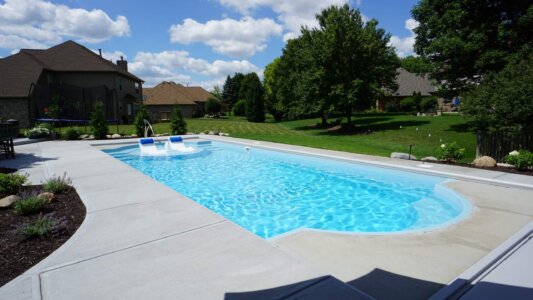
How Much Does It Cost to Resurface Your Pool?

Depending on the pool’s age and when  pool maintenance gets away from pool owners, the pool’s surface will show it, leading to questions like, “Is it worth resurfacing a pool?” or “How much does it cost to resurface your pool?” Like so many questions homeowners ask, the answer to these questions is, “It depends.” Let’s start by breaking down pool resurfacing costs by pool type. (We should also note: these prices listed here are based on the experiences of our team as well as independent dealers within our network.)

About Fiberglass Pool Maintenance

Fiberglass composites have taken off as the material of choice for many builders and homeowners. The market share for fiberglass pools more than doubled in the early 2000s and has shown steady growth since then. According to  Business Research Insights, the market expects a 5.5 % compound annual growth rate (CAGR) by 2031. Several  factors account for the popularity of fiberglass, including the development of better fiberglass manufacturing processes and the incorporation of attractive pool features like tanning ledges, wrap-around benches, and beach entries. 

The gel coat and structure of fiberglass are incredibly durable. A fiberglass pool may last for many years without needing resurfacing. In other words, if properly maintained, it can stay in beautiful working order for as long as you are in your home. Fiberglass is not maintenance-free, but the pool industry generally credits it for requiring less maintenance than other inground pool options. As an added benefit, fiberglass pools are the  most environmentally friendly inground pools.

Fiberglass Pools Resurfacing Costs

Resurfacing fiberglass pool costs may vary as you have a couple of pool resurfacing options. One is thermoplastic coating. Thermoplastic coating takes just a few days, and you can fill the pool immediately. You can choose a selection of colors that work for either fiberglass or concrete pools. Depending on the pool size, the cost can range from $16,000 to $26,000.

The other option for resurfacing your fiberglass pool is epoxy paint. Epoxy paint is relatively simple and can deliver a quality look for concrete and fiberglass. However, it only works on bare surfaces, might only last five years or so, and requires around two weeks to cure. It can be done between $2,500-$3,000, and you may even be able to do it yourself.

About Gunite Pool Maintenance

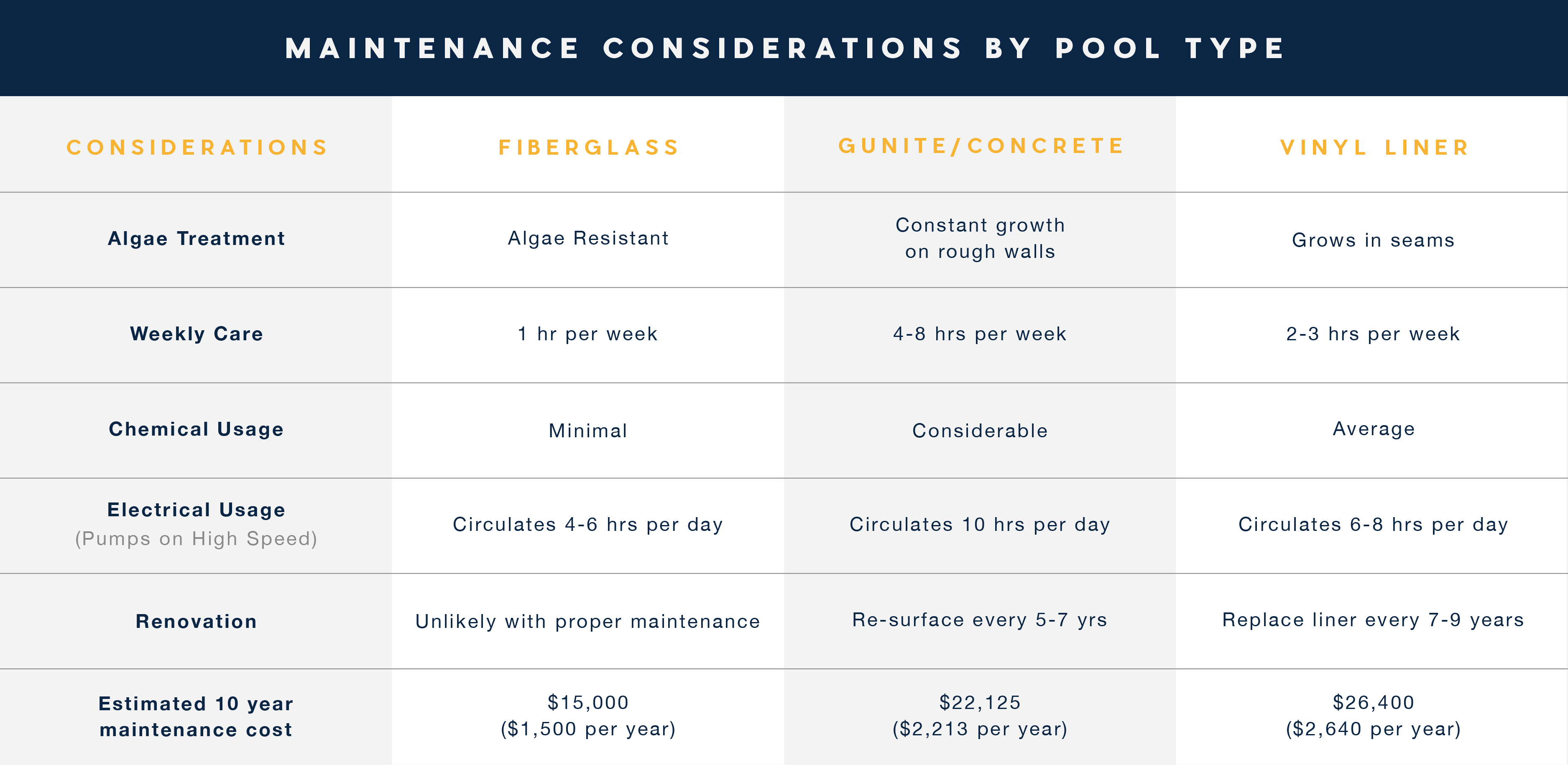
Gunite, or concrete pools, require the most resources for maintenance. The more expensive regular maintenance requirements for inground pools include chemical usage, surface care, and electrical load. Gunite pools typically need to be resurfaced as soon as five to seven years, depending on your climate, maintenance regimen, and water chemistry balance. The surface is susceptible to algae, requiring more maintenance and chemical use.

Gunite Pool Resurfacing Costs

When resurfacing is needed, you may get away with a relatively inexpensive epoxy paint option if no paint is on the surface. Otherwise, you probably need to go the route of pool tile, aggregate, or pool plaster (Note: if you’ve heard of plastering a pool, replastering a pool is not the same as resurfacing). These options often land in the $15,000-$25,000 range or more, with tile generally being the highest cost. Some homeowners are replacing their older gunite pool with a fiberglass pool.

About Vinyl Liner Pool Maintenance

Vinyl liners can be very sensitive to imbalances in water chemistry. Improper water balance can cause the liner to fade, wrinkle, or deteriorate more quickly. The seams are a place where algae can more easily grow, requiring more chemical use. Vinyl liners are also more prone to tearing, which is something to  watch if you have pets. Even well-maintained liners usually need to be replaced every seven to nine years.

Vinyl Liner Pools Resurfacing Costs

Each time you replace the vinyl liner, your costs range from $6,000 to $12,000. With a rip, you may be able to patch at a cost of a few hundred dollars. If the presence of algae becomes a problem, you may need to enlist the support of a professional pool cleaner.

Regardless of pool type, if you’re actively searching for “pool resurfacing near me,” contacting a pool builder in your area is a good place to start for a more accurate quote. If you want to talk to someone about how much it costs to resurface your pool, don’t hesitate to  contact an independent dealer in your area for more information.

Maintenance Considerations by Pool Type

More on Comparing Pool Types

Has all this talk made you want to learn more about the different pool types?  If you want to dig deeper into comparisons,  download our eBook that does just that. The eBook compares factors like upfront cost, maintenance time and cost, installation time, warranties, available features, and more.

How Much Does an Inground Pool Cost?

How Much Does a Fiberglass Pool Cost in North Carolina?

How Much Does a Fiberglass Pool Cost in North Carolina?

If you’re planning a backyard transformation, you’re likely asking the ultimate question: How much is this going to cost? Based on a 2026 survey of independent fiberglass pool builders in the Thursday Pools dealer network, a standard installation in North Carolina averages $80,000 for a small pool, $99,286 for a medium pool, and $112,143 for a large pool. Your final cost will depend on details like pool size, yard conditions, local permit requirements, and the optional upgrades you choose.

North Carolina’s diverse geography creates variation in pool installation costs from one part of the state to another. In metro areas like Charlotte, Raleigh, and Greensboro, local permit requirements and zoning regulations can add to the project cost. In the Appalachian foothills and Blue Ridge Mountains, rocky terrain often requires additional excavation equipment and labor. Along the Outer Banks and coastal plains, sandy soils may need extra stabilization measures. In the central Piedmont region, clay-heavy soils can create drainage concerns that affect installation complexity and cost.

Optional upgrades such as pool heaters, automatic covers, or a custom outdoor living space will add to your total, but they also shape how much use and year-round value you get from the pool. A  local independent Thursday Pools dealer can help you decide which additions fit your yard and your budget.

What is the Average Cost of a Fiberglass Pool Installation in North Carolina?

Thursday Pools surveys its network of independent dealers across the country each year to track real-world installation costs.

Based on the 2026 survey of independent Thursday Pools dealers in North Carolina, installed fiberglass pool costs average $80,000 for small pools, $99,286 for medium pools, and $112,143 for large pools.


AVERAGE NORTH CAROLINA FIBERGLASS POOL INSTALLATION BY SIZE

Pool Type Small Fiberglass Pools Medium Fiberglass Pools Large Fiberglass Pools
Size Range Up to 26 feet long or 400 square feet 26 to 34 feet long or 400 to 600 square feet 35 feet and longer or 600+ square feet
Average Cost $80,000 $99,286 $112,143

What Does a Standard Fiberglass Pool Installation in North Carolina Include?

Most North Carolina dealers include the following in a base package: the pool shell, excavation, basic pump and filtration equipment, plumbing, basic electrical, permits, a single pool light, initial water fill, dirt hauling, concrete decking approximately 3 feet around the pool, delivery, and labor. What individual dealers include can vary, so always compare proposals carefully. Expanded decking, fencing, landscaping, pool covers, and optional features typically cost extra.

Contact a nearby Thursday Pools dealer for a custom quote and to learn about financing options for your North Carolina pool installation.

What Do Popular Fiberglass Pool Models Cost Installed in North Carolina?

Sea Turtle in Caribbean Sparkle by Thursday Pools

SEA TURTLE (9.5′ x 19.5′)

Sea Turtle is a top choice for North Carolina homeowners seeking a compact yet versatile fiberglass pool. Measuring 9.5 feet by 19.5 feet, this pool’s rectangular design is ideal for smaller backyards, particularly in urban areas like Raleigh, Charlotte, or Greensboro. Its flat bottom allows easy walking and standing, making it perfect for social gatherings, games, or relaxation. Sea Turtle features wraparound benches that your builder can outfit with therapy jets, providing a spa-like experience.

Based on 2026 feedback from Thursday Pools dealers across North Carolina, the average installed cost for a small fiberglass pool like Sea Turtle or other designs less than 26 feet long and 400 square feet is $80,000.


Lil Bob LX Diamond by Thursday Pools

LIL BOB (13.5′ x 27.5′)

Lil Bob offers a perfect blend of functionality and style for North Carolina homeowners looking for a medium-sized pool. There’s plenty of room for swimming and relaxation, making Lil Bob an ideal choice for families and those who love entertaining. The wide entry steps and built-in benches ensure comfort and easy access, whether hosting a poolside gathering or enjoying a quiet swim. This pool combines versatility with a sleek, modern aesthetic that enhances any backyard.

According to 2026 survey responses from independent Thursday Pools dealers in North Carolina, the average installed cost for a medium-sized fiberglass pool like Lil Bob is $99,286.


Wellspring by Thursday Pools

WELLSPRING (16′ x 40′)

With its flowing design and generous layout, Wellspring is a standout choice for North Carolina homeowners who want a large, luxurious space for swimming, entertaining, and unwinding. Available in lengths up to 40 feet, it’s well-suited for expansive properties and outdoor living areas. Featuring an 8-foot diameter sun shelf, wraparound benches, and expanded entry steps, Wellspring weaves together comfort, elegance, and versatility in one striking design.

Due to its size, at 40 feet long and more than 600 square feet, larger pools like Wellspring typically come at a higher installed cost. In North Carolina, the 2026 average installed cost for a large fiberglass pool is $112,143.

What Yard Conditions Affect Fiberglass Pool Installation Costs in North Carolina?

North Carolina’s varied soil types and terrain can affect installation costs significantly, sometimes more than homeowners expect. Before breaking ground, a professional installer will assess your site for conditions that may require extra preparation.

Soil Type

North Carolina soil varies considerably across regions of the state. In the western mountains and foothills, rocky conditions can require heavier excavation equipment and more labor. The central Piedmont’s clay-heavy ground can create drainage and stability concerns. In the eastern coastal plain, sandy soils are generally easier to work with but may need additional stabilization. A pre-installation site assessment can identify what your soil requires before the project begins.

Slope and Grade

Yards with a slope often require grading, retaining walls, or other leveling work before excavation and installation can move forward. Properties in North Carolina’s mountainous regions, rolling Piedmont hills, and even some coastal areas are more likely to encounter this. A flat, level yard typically keeps installation more straightforward and predictable.

Backyard Access

Wide, open access makes a fiberglass pool installation more efficient. Properties with narrow gates, tight side yards, or other access constraints may need specialty equipment, additional labor, or crane service to move the pool shell into position. In denser neighborhoods, particularly in Charlotte’s suburbs or Raleigh’s established areas, access limits can affect both the timeline and the cost.


AVERAGE ADDITIONAL YARD-RELATED EXPENSES IN NORTH CAROLINA


Excavating Rocky Soil $4,450
Excavating Sandy $2,317
Excavating Clay-Heavy Soil $1,200
Above-Average Slope Requiring Extra Grading $2,817
Limited Yard Access  $4,667

Based on the 2026 North Carolina dealer survey, site-condition upcharges range from about $1,200 for clay soil excavation to $4,667 for limited yard access.

What Are North Carolina’s Swimming Pool Fence Requirements?

North Carolina requires residential swimming pools to meet strict barrier requirements under  Appendix V of the North Carolina Residential Code, which is based on the International Residential Code. 

Under the North Carolina Residential Code, pool barriers must meet specific safety standards. Common requirements include:

  • The barrier must be at least 48 inches tall, measured from the finished ground level on the outside of the fence.
  • The gap between the ground and the bottom of the barrier must not exceed 2 inches to prevent children or pets from crawling underneath.
  • Gates must be self-closing and self-latching, and must swing outward away from the pool.
  • Gate latches positioned less than 54 inches above the ground must be located on the pool-facing side of the gate.
  • Openings in the barrier must not allow passage of a 4-inch-diameter sphere.
  • The barrier cannot have footholds or handholds that could be used for climbing.

Local jurisdictions may have additional requirements. For example, some cities like  Raleigh and counties like  Wake County enforce the statewide standards and have their own requirements. Always check swimming pool barrier and safety regulations for your local county or municipality before installation. Local rules can vary, and some North Carolina jurisdictions may adopt stricter requirements than the baseline model code.

For a 300-linear-foot basic pool fence, North Carolina dealers estimate an average cost of $10,860. Final pricing varies by material, height, gate requirements, terrain, and local code.

How Much Do Fiberglass Pool Upgrades Cost in North Carolina?

Optional features can expand what your pool does and how long you use it each season. North Carolina’s climate gives homeowners a solid outdoor swimming season, but the right upgrades extend that advantage further with additional comfort or convenience. The averages below come from Thursday Pools’ 2026 dealer survey of independent installers across North Carolina.

Water Quality and System Controls

Pool Heater

  • Average Cost in North Carolina: $7,600
  • Extend your swim season by keeping the water at a comfortable temperature into cooler fall and spring months.

UV Filter System

  • Average Cost in North Carolina: $3,200
  • A UV system passes pool water through an ultraviolet light chamber that destroys bacteria, algae, and chloramines so chlorine works more efficiently and you need less of it to maintain safe, sanitary water.

Pool Automation and Smart Control System

  • Average Cost in North Carolina: $3,180
  • Manage temperature, lighting, and filtration from a smartphone or tablet.


Patio and Hardscape

Poured Concrete Patio (Approx. 1,200 sq. ft.)

  • Average Cost in North Carolina: $12,880
  • A durable, low-maintenance decking option that handles North Carolina’s weather variations and seasonal temperature changes.

Paver Patio (Approx. 1,200 sq. ft.)

  • Average Cost in North Carolina: $15,080
  • Available in a range of materials, from concrete pavers to natural stone, with a more finished aesthetic than poured concrete.


Safety and Covers

Fence (300 Linear ft.)

  • Average Cost in North Carolina: $10,860
  • Final cost varies by material choices, total fence length, and local code requirements.

Non-Automatic Safety Pool Cover

  • Average Cost in North Carolina: $4,940
  • A manual option for securing the pool and keeping debris out between uses.

Automatic Pool Cover

  • Average Cost in North Carolina: $17,520
  • One-touch operation to protect the pool, retain heat, and reduce evaporation. Many North Carolina homeowners prioritize this upgrade for safety and convenience.


Water Features

Deck Jets

  • Average Cost in North Carolina: $1,000 per jet
  • Arc water from the coping into the pool, adding visual movement and ambient sound to the pool area.

Bubblers

  • Average Cost in North Carolina: $1,420 per bubbler
  • On a tanning ledge or beach entry, create movement and the sounds of a babbling brook in shallow pool water.

Cascade or Waterfall

  • Average Cost in North Carolina: $6,360
  • Add a flowing water element and natural sound to the pool environment.


Cleaning and Maintenance

Automatic Pool Cleaning and Vacuuming System

  • Average Cost in North Carolina: $2,080
  • Keep the pool floor and walls clean with minimal manual effort.


Lighting and Tile

LED Pool Lights

  • Average Cost in North Carolina: $1,579 per light
  • Adds ambiance and visibility for evening and nighttime use.

Specialty Waterline Tile

  • Average Cost in North Carolina: $6,060
  • Installed along the waterline for a custom, finished appearance at the pool edge.


Landscaping and Extras

Surrounding Landscaping

  • Average Cost in North Carolina: $6,500
  • Includes decorative rocks, plantings, trees, bushes, flower beds, and similar elements that connect the pool to the rest of the yard.

Add-On Spa

  • Average Cost in North Carolina: $20,560
  • A separate spa unit for relaxing hydrotherapy, neighboring or independent of the main pool.


Recreation

Simple Pool Slide*

  • Average Cost in North Carolina: $6,640
  • A standard slide for family use.

Deluxe Pool Slide*

  • Average Cost in North Carolina: $9,180
  • More height and design details than a basic model.

Diving Board (Type 1 Diving Pools Only)*

  • Average Cost in North Carolina: $6,560
  • Only manufacturer-designated Type 1 diving pools support diving board installation. Homeowners should use only manufacturer-approved diving boards with pool models designated as diving pools and must consult a licensed professional to verify compliance with all local building codes and safety requirements before installation.

*Thursday Pools strongly advises against pool slides and diving boards due to safety concerns. The inclusion of a diving board or slide with any fiberglass pool must be carefully reviewed by a licensed professional to ensure compliance with all local building codes, safety regulations, and manufacturer guidelines. Not all fiberglass pool models are suitable for diving or slide use. It is the responsibility of the homeowner and installer to ensure proper installation and usage. Always prioritize safety and consult a qualified expert before adding any diving or sliding feature to your pool.

Frequently Asked Questions About North Carolina Fiberglass Pool Costs

How much does a fiberglass pool cost in North Carolina?

A fiberglass pool in North Carolina costs an average of $80,000 for a small pool, $99,286 for a medium pool, and $112,143 for a large pool, based on Thursday Pools’ 2026 dealer survey of nine independent dealers across the Tar Heel State.

What does a standard fiberglass pool installation in North Carolina include?

Our 2026 North Carolina dealer survey shows that a standard fiberglass pool installation typically includes:

  • Excavation and Dirt Hauling: Soil removal and site preparation.
  • Pool Shell and Delivery: The physical fiberglass pool shell unit delivered to your home.
  • Filtration System: Basic pump, filter, and plumbing.
  • Standard Decking: Approximately 3 feet of concrete surrounding the pool.
  • Permits and Basic Electrical: Includes local North Carolina municipal filings and one LED pool light.

What yard conditions raise fiberglass pool installation costs in North Carolina?

Rocky soil in western North Carolina’s mountains and foothills requires heavier excavation equipment and more labor. Clay-heavy soil in the central Piedmont can create drainage concerns. Sandy soils in the eastern coastal plain may need additional stabilization measures. Sloped yards, common throughout North Carolina’s varied terrain, often need grading work to create a level base. Limited backyard access, such as narrow gates or tight side yards in urban neighborhoods, can require crane service or specialty equipment. Based on the 2026 North Carolina dealer survey, site-condition upcharges range from about $1,200 for excavating clay soil to $4,667 for overcoming limited yard access.

What are North Carolina’s pool fence requirements?

North Carolina requires residential pools to meet Appendix V of the North Carolina Residential Code. Common requirements include barriers at least 48 inches tall, limited ground clearance of 2 inches maximum, self-closing and self-latching gates that swing away from the pool, child-resistant latch placement, and designs that limit footholds or handholds. Openings must not allow passage of a 4-inch sphere. Local rules can vary, so homeowners should verify requirements with their county or municipality before installation.

The 2026 North Carolina Thursday Pools dealer survey average for a 300-linear-foot basic fence is $10,860, with final costs varying by material, height, gate requirements, terrain, and local code.

How much do common pool upgrades add to the cost in North Carolina?

Upgrade costs vary widely depending on the feature:

  • A pool heater averages $7,600.
  • An automatic pool cover averages $17,520.
  • A paver patio of approximately 1,200 square feet averages $15,080.
  • An add-on spa averages $20,560.
  • Smaller additions like deck jets ($1,000 per jet), bubblers ($1,420 per bubbler), and LED lights ($1,579 per light) add cost in more modest increments.

How do I get an accurate cost estimate for a fiberglass pool in North Carolina?

The most accurate estimate comes from a  local independent Thursday Pools dealer who can assess your yard, review local permit requirements, and give you a project-specific quote. Survey averages provide a useful starting point, but site conditions, design choices, and local labor rates determine what you actually pay.

Get Your Personalized North Carolina Pool Estimate

Survey averages give you a realistic starting point, but your actual cost depends on your yard, your location in North Carolina, and the design details and upgrades you choose. A local independent Thursday Pools dealer can assess your site, walk you through pool options that fit your budget, and give you a project-specific quote, whether you’re in Charlotte, Raleigh, Greensboro, Asheville, or anywhere across the state.


Thursday Pools manufactures fiberglass pool shells and does not install pools. Pools are installed by locally owned independent dealers. Consumers should consult a local independent dealer for the most accurate and updated information based on the unique conditions of their region and property.
Vinyl Gunite Fiberglass Comparison ebook

Get the facts before you buy!


Investing in an inground swimming pool is a big decision. It’s important to understand which type of pool best meets your family’s unique needs. Check out our comprehensive pool comparison and arm yourself with the knowledge you need to make the best choice for you

In this eBook, we compare all three pool types based on the following characteristics: 

  • Speed of Installation
  • Surface Comfort 
  • Surface Durability
  • Maintenance Time and Cost
  • Customizable
  • High-End Features 
  • Upfront Cost 
  • Competitive Warranty
  • Environmentally-Friendly  
  • Overall Investment


Download

How Much Does a Fiberglass Pool Cost in Texas?

Based on a 2026 survey of independent fiberglass pool builders in the Thursday Pools dealer network, a standard fiberglass pool installation in Texas averages $55,000 for a small pool, $70,000 for a medium pool, and $87,500 for a large pool. Your final cost will depend on details like pool size, yard conditions, local permit requirements, and the optional upgrades you choose.

Texas’s varied landscape can create real variation in pool installation costs from one part of the state to another. In metro areas like Dallas, Houston, and Austin, local permit requirements, tighter lot sizes, and overhead obstructions can add to the overall project cost. Rocky soil in the Hill Country and West Texas can call for specialized excavation equipment and extra labor. Clay-heavy soils common in East Texas can create drainage and stability challenges that require additional site preparation. In coastal and river valley areas, sandy soils may need reinforcement to properly support the pool shell over time.

Optional upgrades like pool heaters, automatic covers, and custom patio surfaces add to your total cost but also determine how much use and year-round value you get from the pool. A local independent Thursday Pools dealer can help you decide which additions fit your yard and your budget.


What is the Average Cost of a Fiberglass Pool Installation in Texas?

Thursday Pools surveys its network of independent dealers across the country each year to track real-world installation costs. The figures below reflect current market conditions in Texas based on our 2026 survey of independent Thursday Pools dealers across the state.

Based on the 2026 survey of independent Thursday Pools dealers in Texas, installed fiberglass pool costs average $55,000 for small pools, $70,000 for medium pools, and $87,500 for large pools.

AVERAGE TEXAS FIBERGLASS POOL INSTALLATION BY SIZE

Pool Type Small Fiberglass Pools Medium Fiberglass Pools Large Fiberglass Pools
Size Range Up to 26 feet long or 400 square feet 26 to 34 feet long or 400 to 600 square feet 35 feet and longer or 600+ square feet
Average Cost $55,000 $70,000 $87,500


What Does a Standard Fiberglass Pool Installation in Texas Include?

Most Texas dealers include the following in a base package: the pool shell, excavation, basic pump and filtration equipment, plumbing, basic electrical, permits, a single pool light, initial water fill, dirt hauling, concrete decking approximately 3 feet around the pool, delivery, and labor. What individual dealers include can vary, so always compare proposals carefully. Expanded decking, fencing, landscaping, pool covers, and optional features typically cost extra.

Contact a nearby Thursday Pools dealer for a custom quote and to learn about financing options for your Texas pool installation.


What Do Popular Fiberglass Pool Models Cost Installed in Texas?

SEA TURTLE (9.5’ x 19.5’)

Sea Turtle is a compact and capable fiberglass pool for Texas homeowners with smaller yards or a preference for efficiency. At just less than 20 feet long, this model fits comfortably on urban and suburban lots across Austin, Plano, and San Antonio without sacrificing comfort or style. Wide entry steps and built-in bench seating make it a welcoming retreat from the Texas heat while giving younger swimmers a safe, manageable space to play.

Based on 2026 feedback from Thursday Pools dealers across Texas, the average installed cost for a small fiberglass pool like Sea Turtle or other designs less than 26 feet long and 400 square feet is $55,000.


Sunday pool with Thursday Pools logo

SUN DAY (15’ x 30’)

Sun Day is tailor-made for laid-back entertaining and seamless integration into suburban backyards from The Woodlands to San Antonio. Its gentle curves, wraparound benches, and built-in sun shelf create a space that’s equal parts social hub and serene retreat. A wide landing pad, deep-end courtesy ledge, and integrated entry steps round out the comfort and safety features, giving swimmers of all ages room to relax and play.

According to 2026 survey responses from independent Thursday Pools dealers in Texas, the average installed cost for a medium-sized fiberglass pool like Sun Day is $70,000.


Thursday Pools California Spirit pool featuring safety handle

SPIRIT (13.5’ x 40’)

Spirit offers something for everyone in households that want it all. This spacious design features a fully integrated spa with a spillway, a generous tanning ledge, wraparound benches with entry steps, and a flat-bottom swim lane. It’s got everything needed for both active swimming and leisurely afternoons. Spirit is well-suited for larger Texas properties, from the open ranch land of Central Texas to spacious suburban lots throughout the DFW Metroplex.

Due to its size at 40 feet long, larger pools like Spirit typically come at a higher installed cost. In Texas, the 2026 average installed cost for a large fiberglass pool is $87,500.

What Yard Conditions Affect Fiberglass Pool Installation Costs in Texas?

Texas’ varied terrain and soil conditions can affect installation costs. Before breaking ground, a professional installer will assess your site for conditions that may require extra preparation.

Soil Type

Texas soil varies dramatically depending on where you live. Rocky soil in the Hill Country and West Texas can demand specialized excavation equipment and considerably more labor. Clay-heavy soil, prevalent across much of the state’s eastern half and in cities like Dallas and Tyler, creates drainage and stability challenges that require careful site preparation. Sandy soils, common in coastal South Texas and river valley areas, may need reinforcement to properly support the pool shell over time. A pre-installation site assessment can identify what your specific soil requires before the project begins.

Slope and Grade

Yards with a slope often require grading, retaining walls, or other leveling work before excavation and installation can move forward. Properties in the Hill Country, around the Balcones Escarpment, or in hilly suburban neighborhoods are more likely to encounter this. A flat, level yard typically keeps installation more straightforward and predictable.

Backyard Access

Wide-open access makes a fiberglass pool installation more efficient. Properties with narrow gates, tight side yards, or other access constraints may need specialty equipment, additional labor, or crane service to move the pool shell into position. In densely developed neighborhoods, particularly in established areas of Houston, Dallas, or Austin, access limitations can affect both the project’s timeline and the cost.


AVERAGE ADDITIONAL YARD-RELATED EXPENSES IN TEXAS


Excavating Sandy Soil $1,489
Excavating Clay Soil $722
Excavating Rocky Soil $5,000
Above-Average Slope Requiring Extra Grading $2,000
Limited Yard Access  $3,500

Based on Thursday Pools’ 2026 independent dealer survey, site-condition upcharges in Texas range from $722 for excavating clay-heavy soil to $5,000 for excavating rocky terrain.


What Are Texas’s Swimming Pool Fence Requirements?

Texas has established pool enclosure standards at the state level through Health and Safety Code Chapter 757, which sets specifications for pool yard enclosures. Most Texas municipalities adopt and apply these standards or equivalent requirements from the International Residential Code (IRC).

Common requirements across Texas municipalities include:

  • The barrier must completely enclose the pool area.
  • The barrier must be at least 48 inches tall, measured from the outside ground level.
  • Openings in or under the barrier must not allow passage of a 4-inch-diameter sphere.
  • The barrier must not contain footholds or handholds that could be used for climbing.
  • Gates must be self-closing and self-latching, and must swing outward away from the pool.
  • Gate latches must be positioned high enough to prevent access by young children, typically at least 54 to 60 inches above the ground, or located on the pool side of the gate.

It is worth noting that some Texas municipalities have adopted stricter standards than the state baseline. Austin’s local amendments to the International Swimming Pool and Spa Code, for example, require chain link pool barriers to be at least 60 inches tall. Because permit requirements, setback rules, and barrier standards vary by city and county, always verify the specific requirements with your local building or planning department before starting your project. A knowledgeable local independent Thursday Pools dealer can also help navigate your area’s permit process.

For a 300-linear-foot basic pool fence, Texas dealers estimate an average cost of $8,000. Final pricing varies by material, height, gate requirements, terrain, and local code compliance.


How Much Do Fiberglass Pool Upgrades Cost in Texas?

Optional features can expand what your pool does and how long you use it each season. The right upgrades enhance comfort, convenience, and safety while maximizing your investment in Texas’s long, warm outdoor season. The averages below come from Thursday Pools’ 2026 dealer survey of independent installers across Texas.

Water Quality and System Controls

Pool Heater

  • Average Cost in Texas: $6,900
  • Extend your swim season by maintaining comfortable water temperatures into cooler spring and fall months, maximizing your investment across Texas’ transitional seasons.

UV Filter System

  • Average Cost in Texas: $1,500
  • A UV system passes pool water through an ultraviolet light chamber that destroys bacteria, algae, and chloramines so chlorine works more efficiently and you need less of it to maintain safe, sanitary water.

Pool Automation and Smart Control System

  • Average Cost in Texas: $5,000
  • Manage temperature, lighting, and filtration from a smartphone or tablet.


Patio and Hardscape

Poured Concrete Patio (Approx. 1,200 sq. ft.)

  • Average Cost in Texas: $10,000
  • A durable, low-maintenance decking option that holds up well through Texas’s temperature extremes and occasional severe weather.

Paver Patio (Approx. 1,200 sq. ft.)

  • Average Cost in Texas: $15,000
  • Available in a range of materials, from concrete pavers to premium natural stone, with a more polished aesthetic than poured concrete.


Safety and Covers

Fence (300 Linear ft.)

  • Average Cost in Texas: $8,000
  • Final cost varies by material choices, total fence length, and local code requirements.

Non-Automatic Safety Pool Cover

  • Average Cost in Texas: $5,000
  • A manual option for securing the pool and keeping debris out between uses.

Automatic Pool Cover

  • Average Cost in Texas: $15,000
  • One-touch operation to protect the pool, retain heat, and reduce evaporation.


Water Features

Deck Jets

  • Average Cost in Texas: $800 per jet
  • Arc water from the coping into the pool, adding visual movement and ambient sound to the pool area.

Bubblers

  • Average Cost in Texas: $1,200 per bubbler
  • On a tanning ledge or beach entry, create movement and the sounds of a babbling brook in shallow pool water.

Cascade or Waterfall

  • Average Cost in Texas: $4,500
  • Add a flowing water element and natural sound to the pool environment.


Cleaning and Maintenance

Automatic Pool Cleaning and Vacuuming System

  • Average Cost in Texas: $3,500
  • Keep the pool floor and walls clean with minimal manual effort.


Lighting and Tile

LED Pool Lights

  • Average Cost in Texas: $1,200 per light
  • Adds ambiance and visibility for evening and nighttime use.

Specialty Waterline Tile

  • Average Cost in Texas: $3,500
  • Installed along the waterline for a custom, finished appearance at the pool edge.


Recreation

Simple Pool Slide*

  • Average Cost in Texas: $6,500
  • A standard slide for family use.

Deluxe Pool Slide*

  • Average Cost in Texas: $10,500
  • More height and design details than a basic model.

Diving Board (Type 1 Diving Pools Only)*

  • Average Cost in Texas: $2,183
  • Only manufacturer-designated Type 1 diving pools support diving board installation. Homeowners should use only manufacturer-approved diving boards with pool models designated as diving pools and must consult a licensed professional to verify compliance with all local building codes and safety requirements before installation.

*Thursday Pools strongly advises against pool slides and diving boards due to safety concerns. The inclusion of a diving board or slide with any fiberglass pool must be carefully reviewed by a licensed professional to ensure compliance with all local building codes, safety regulations, and manufacturer guidelines. Not all fiberglass pool models are suitable for diving or slide use. It is the responsibility of the homeowner and installer to ensure proper installation and usage. Always prioritize safety and consult a qualified expert before adding any diving or sliding feature to your pool.


Landscaping and Extras

Surrounding Landscaping

  • Average Cost in Texas: $5,000
  • Includes decorative rocks, plantings, trees, bushes, flower beds, and similar elements that connect the pool to the rest of the yard.

Add-On Spa

  • Average Cost in Texas: $17,700
  • A separate spa unit for relaxing hydrotherapy, neighboring or independent of the main pool.


Frequently Asked Questions About Texas Fiberglass Pool Costs

How much does a fiberglass pool cost in Texas?

A fiberglass pool in Texas costs an average of $55,000 for a small pool, $70,000 for a medium pool, and $87,500 for a large pool, based on Thursday Pools’ 2026 survey of independent Texas dealers.

What does a standard fiberglass pool installation in Texas include?

Our 2026 Texas dealer survey shows that a standard fiberglass pool installation typically includes:

  • Excavation and Dirt Hauling: Soil removal and site preparation.
  • Pool Shell and Delivery: The physical fiberglass pool shell unit delivered to your home.
  • Filtration System: Basic pump, filter, and plumbing.
  • Standard Decking: Approximately 3 feet of concrete surrounding the pool.
  • Permits and Basic Electrical: Includes local Texas municipal filings and one LED pool light.

What yard conditions raise fiberglass pool installation costs in Texas?

Rocky soil in the Hill Country and West Texas requires heavier excavation equipment and more labor. Clay-heavy soil across much of East Texas can create drainage and stability concerns during installation. Sloped yards, common throughout the state’s hilly regions, often need grading work to create a level base. Limited backyard access, such as narrow gates or tight side yards in densely developed urban neighborhoods, can require crane service or specialty equipment. Based on the 2026 Texas dealer survey, the most significant site-condition upcharges include excavating rocky soil at $5,000 and navigating limited yard access at $3,500.

What are Texas’s pool fence requirements?

Texas establishes pool enclosure standards through Health and Safety Code Chapter 757, which requires pool yard enclosures to be at least 48 inches tall with gates that are self-closing, self-latching, and swing outward away from the pool. Most Texas municipalities adopt these or equivalent standards through local building codes and apply them to private residential pools. Because permit requirements and setback rules vary by city and county, always verify current requirements with your local building department before installation.

The 2026 Texas Thursday Pools dealer survey average for a 300-linear-foot basic fence is $8,000, with final costs varying by material, height, gate requirements, terrain, and local code compliance.

How much do common pool upgrades add to the cost in Texas?

Upgrade costs vary widely depending on the feature:

  • A pool heater averages $6,900.
  • An automatic pool cover averages $15,000.
  • A poured concrete patio of approximately 1,200 square feet averages $10,000.
  • An add-on spa averages $17,700.
  • Smaller additions like deck jets ($800 per jet), bubblers ($1,200 per bubbler), and LED lights ($1,200 per light) add cost in more modest increments.

How do I get an accurate cost estimate for a fiberglass pool in Texas?

The most accurate estimate comes from a local independent Thursday Pools dealer who can assess your yard, review local permit requirements, and give you a project-specific quote. Survey averages provide a useful starting point, but site conditions, design choices, and local labor rates determine what you actually pay.


Get Your Personalized Texas Pool Estimate

Survey averages give you a realistic starting point, but your actual cost depends on your yard, your location in Texas, and the design details and upgrades you choose. A local independent Thursday Pools dealer can assess your site, walk you through pool options that fit your budget, and give you a project-specific quote, whether you’re in Houston, Dallas, Austin, San Antonio, or anywhere across the state.


Thursday Pools manufactures fiberglass pool shells and does not install pools. Pools are installed by locally owned independent dealers. Consumers should consult a local independent dealer for the most accurate and updated information based on the unique conditions of their region and property.
How Much Does a Fiberglass Pool Cost in Kentucky?

Based on a 2026 survey of independent fiberglass pool builders in the Thursday Pools dealer network, a standard fiberglass pool installation in Kentucky averages $76,667 for a small pool, $100,000 for a medium pool, and $116,667 for a large pool. Your final cost will depend on details like pool size, yard conditions, local permit requirements, and the optional upgrades you choose.

Kentucky’s varied geography creates variation in pool installation costs from one part of the state to another. In metro areas like Louisville and Lexington, local permit requirements, tighter lots, and access constraints in established neighborhoods can add to the overall project cost. Rocky conditions in the Appalachian foothills of Eastern Kentucky and in parts of Central Kentucky can require specialized excavation equipment and additional labor. Clay-heavy soils, common throughout the Bluegrass region, can create drainage challenges that need careful site preparation. In Western Kentucky, looser soils may require reinforcement to properly support the pool shell over time.

Optional upgrades like pool heaters, automatic covers, and custom patio surfaces add to your total cost but also extend your swimming season and enhance the overall value you get from your pool. A local independent Thursday Pools dealer can help you decide which additions fit your property and your budget.

What is the Average Cost of a Fiberglass Pool Installation in Kentucky?

Thursday Pools surveys its network of independent dealers across the country each year to track real-world installation costs. The figures below reflect current market conditions in Kentucky based on our 2026 survey of independent Thursday Pools dealers across the state.

Based on the 2026 survey of independent Thursday Pools dealers in Kentucky, installed fiberglass pool costs average $76,667 for small pools, $100,000 for medium pools, and $116,667 for large pools.


AVERAGE KENTUCKY FIBERGLASS POOL INSTALLATION BY SIZE

Pool Type Small Fiberglass Pools Medium Fiberglass Pools Large Fiberglass Pools
Size Range Up to 26 feet long or 400 square feet 26 to 34 feet long or 400 to 600 square feet 35 feet and longer or 600+ square feet
Average Cost $76,667 $100,000 $116,667

What Does a Standard Fiberglass Pool Installation in Kentucky Include?

Most Kentucky pool dealers include the following in a base package: the pool shell, excavation, basic pump and filtration equipment, plumbing, basic electrical, permits, a single pool light, initial water fill, dirt hauling, concrete decking approximately 3 feet around the pool, delivery, and labor. What individual dealers include can vary, so always compare proposals carefully. Expanded decking, fencing, landscaping, pool covers, and optional features typically cost extra.

Contact a nearby Thursday Pools dealer for a custom quote and to learn about financing options for your Kentucky pool installation.


What Do Popular Fiberglass Pool Models Cost Installed in Kentucky?

Thursday Pools Sea Turtle with waterfall feature

SEA TURTLE (9.5’ x 19.5’)

Sea Turtle is a compact and distinctive fiberglass pool for Kentucky homeowners with smaller yards or a preference for an intimate swimming experience. Its unique design pairs an open swim area with built-in entry steps and comfortable bench seating, making it equally suited for relaxation and active use. At just less than 20 feet long, Sea Turtle fits comfortably on city lots and suburban backyards throughout Louisville, Lexington, and Bowling Green without demanding a large footprint.

Based on 2026 feedback from Thursday Pools dealers across Kentucky, the average installed cost for a small fiberglass pool like Sea Turtle or other designs less than 26 feet long and 400 square feet is $76,667.


Thursday Pools Maya Fiberglass pool with Hendricks Pavers

ASPEN (14’ x 30’)

Aspen combines sleek lines and graceful curves to create a mid-size pool that brings people together naturally. Wide entry steps follow a built-in tanning ledge at one end, while deep-end swim-out seating at the other gives everyone a comfortable place to land. Whether you’re looking for a space to swim laps, exercise, or simply unwind after a long day, Aspen delivers a well-balanced layout that works beautifully in suburban backyards from Elizabethtown to Paducah.

According to 2026 survey responses from independent Thursday Pools dealers in Kentucky, the average installed cost for a medium-sized fiberglass pool like Aspen is $100,000.


Thursday Pools Maya Wellspring pool with white lounge chairs

WELLSPRING (16’ x 40’)

Wellspring brings resort-style elegance to Kentucky properties with the space to accommodate a full-featured design. This freeform pool features a spacious sun shelf ideal for in-water lounging, wrap-around bench seating, wide entry steps, and a deep-end conversation area that invites guests to relax and stay awhile. Its organic shape blends naturally with surrounding landscaping, making it an outstanding fit for the rolling hills and expansive rural properties that define so much of the Kentucky countryside.

Due to its size, at 40 feet long and more than 600 square feet, larger pools like Wellspring typically come at a higher installed cost. In Kentucky, the 2026 average installed cost for a large fiberglass pool is $116,667.

What Yard Conditions Affect Fiberglass Pool Installation Costs in Kentucky?

Kentucky’s varied terrain and soil conditions can affect installation costs significantly. Before breaking ground, a professional installer will assess your site for conditions that may require extra preparation.

Soil Type

Kentucky’s geology varies from one region to the next. Rocky conditions in the Appalachian foothills of Eastern Kentucky and in parts of Central Kentucky’s limestone-rich terrain can require specialized excavation equipment and more labor. Clay-heavy soil throughout the Bluegrass region around Lexington and Frankfort can create drainage and stability challenges that require careful site preparation. Looser, sandier soils in Western Kentucky near the river bottoms may need reinforcement to properly support the pool shell over time. A pre-installation site assessment can identify what your specific soil requires before the project begins.

Slope and Grade

Many Kentucky properties feature meaningful grade changes, particularly in hilly communities around Eastern Kentucky and in the knobs region south of Louisville. These slopes often require grading, retaining walls, or other leveling work before excavation and installation can proceed. A relatively flat, level yard typically keeps installation more straightforward and predictable.

Backyard Access

Wide-open access makes a fiberglass pool installation more efficient. Properties with narrow gates, tight side yards, or other access constraints may need specialty equipment, additional labor, or crane service to move the pool shell into position. Older, established neighborhoods in Louisville and Lexington are more likely to present access challenges that affect both timeline and cost.

COMMON ADDITIONAL YARD-RELATED COSTS IN KENTUCKY


Excavating Sandy Soil $2,133
Excavating Clay-Heavy Soil $1,300
Excavating Rocky Soil $4,233
Above Average Slope Requiring Extra Grading $5,300
Limited Access Yards  $4,800

What Are Kentucky’s Swimming Pool Fence Requirements?

Kentucky homeowners benefit from one of the more straightforward regulatory environments for residential pool barriers in the country. The Kentucky Residential Code (KRC), administered by the Kentucky Department of Housing, Buildings and Construction, establishes a single, uniform statewide standard for residential construction. Pool barrier requirements are set statewide under Section R326 of the KRC, which adopts the IRC’s Appendix G for in-ground swimming pools.

Under the Kentucky Residential Code, residential pool barriers must meet the following requirements:

  • The barrier must completely enclose the pool area.
  • The barrier must be at least 48 inches tall, measured from the outside ground level.
  • The vertical clearance between the ground and the bottom of the barrier must not exceed 2 inches.
  • Openings in or under the barrier must not allow passage of a 4-inch-diameter sphere.
  • The barrier must not contain footholds or handholds that could be used for climbing.
  • Gates must be self-closing and self-latching, and must swing outward away from the pool.
  • Where the gate latch is located less than 54 inches above the ground, it must be positioned on the pool-facing side of the gate.

Always confirm permit requirements and any site-specific conditions with your local building department before beginning your project. A knowledgeable local independent Thursday Pools dealer can also help navigate your area’s permit process.

For a 300-linear-foot basic pool fence, Kentucky dealers estimate an average cost of $9,033. Final pricing varies by material, height, gate requirements, terrain, and local code compliance.

How Much Do Fiberglass Pool Upgrades Cost in Kentucky?

Optional features can expand what your pool does and how long you use it each season. The right upgrades enhance comfort, convenience, and safety while maximizing your investment across Kentucky’s warm-weather months. The averages below come from Thursday Pools’ 2026 dealer survey of independent installers across Kentucky.

Water Quality and System Controls

Pool Heater

  • Average Cost in Kentucky: $6,200
  • Extend your swim season by maintaining comfortable water temperatures into Kentucky’s cooler spring mornings and fall evenings.

UV Filter System

  • Average Cost in Kentucky: $3,433
  • A UV system passes pool water through an ultraviolet light chamber that destroys bacteria, algae, and chloramines so chlorine works more efficiently and you need less of it to maintain safe, sanitary water.

Pool Automation and Smart Control System

  • Average Cost in Kentucky: $6,233
  • Manage temperature, lighting, and filtration from a smartphone or tablet, whether you’re poolside or away for the weekend.


Patio and Hardscape

Poured Concrete Patio (Approx. 1,200 sq. ft.)

  • Average Cost in Kentucky: $15,500
  • A durable, low-maintenance decking option that holds up well through Kentucky’s seasonal temperature swings and freeze-thaw cycles.

Paver Patio (Approx. 1,200 sq. ft.)

  • Average Cost in Kentucky: $18,033
  • Available in a range of materials, from concrete pavers to premium natural stone, with a more polished aesthetic than poured concrete.


Safety and Covers

Fence (300 Linear ft.)

  • Average Cost in Kentucky: $9,033
  • Final cost varies by material choices, total fence length, and local code requirements.

Non-Automatic Safety Pool Cover

  • Average Cost in Kentucky: $4,067
  • A manual option for securing the pool and keeping debris out between uses — especially helpful through Kentucky’s longer off-season.

Automatic Pool Cover

  • Average Cost in Kentucky: $17,733
  • One-touch operation to protect the pool, retain heat, and reduce evaporation.


Water Features

Deck Jets

  • Average Cost in Kentucky: $1,033 per jet
  • Arc water from the coping into the pool, adding visual movement and ambient sound to the pool area.

Bubblers

  • Average Cost in Kentucky: $1,067 per bubbler
  • On a tanning ledge or beach entry, create movement and the sounds of a babbling brook in shallow pool water.

Cascade or Waterfall

  • Average Cost in Kentucky: $3,033
  • Add a flowing water element and natural sound to the pool environment.


Cleaning and Maintenance

Automatic Pool Cleaning and Vacuuming System

  • Average Cost in Kentucky: $4,533
  • Keep the pool floor and walls clean with minimal manual effort.


Lighting and Tile

LED Pool Lights

  • Average Cost in Kentucky: $1,663 per light
  • Adds ambiance and visibility for evening and nighttime use.

Specialty Waterline Tile

  • Average Cost in Kentucky: $6,233
  • Installed along the waterline for a custom, finished appearance at the pool edge.


Recreation

Simple Pool Slide*

  • Average Cost in Kentucky: $5,933
  • A standard slide for family use.

Deluxe Pool Slide*

  • Average Cost in Kentucky: $12,800
  • More height and design details than a basic model.

Diving Board (Type 1 Diving Pools Only)*

  • Average Cost in Kentucky: $4,267
  • Only manufacturer-designated Type 1 diving pools support diving board installation. Homeowners should use only manufacturer-approved diving boards with pool models designated as diving pools and must consult a licensed professional to verify compliance with all local building codes and safety requirements before installation.

*Thursday Pools strongly advises against pool slides and diving boards due to safety concerns. The inclusion of a diving board or slide with any fiberglass pool must be carefully reviewed by a licensed professional to ensure compliance with all local building codes, safety regulations, and manufacturer guidelines. Not all fiberglass pool models are suitable for diving or slide use. It is the responsibility of the homeowner and installer to ensure proper installation and usage. Always prioritize safety and consult a qualified expert before adding any diving or sliding feature to your pool.


Landscaping and Extras

Surrounding Landscaping

  • Average Cost in Kentucky: $8,000
  • Includes decorative rocks, plantings, trees, bushes, flower beds, and similar elements that connect the pool to the rest of the yard.

Add-On Spa

  • Average Cost in Kentucky: $23,433
  • A separate spa unit for relaxing hydrotherapy, neighboring or independent of the main pool.


Frequently Asked Questions About Kentucky Fiberglass Pool Costs

How much does a fiberglass pool cost in Kentucky?

A fiberglass pool in Kentucky costs an average of $76,667 for a small pool, $100,000 for a medium pool, and $116,667 for a large pool, based on Thursday Pools’ 2026 survey of independent Kentucky dealers.

What does a standard fiberglass pool installation in Kentucky include?

Our 2026 Kentucky dealer survey shows that a standard fiberglass pool installation typically includes:

  • Excavation and Dirt Hauling: Soil removal and site preparation.
  • Pool Shell and Delivery: The physical fiberglass pool shell unit delivered to your home.
  • Filtration System: Basic pump, filter, and plumbing.
  • Standard Decking: Approximately 3 feet of concrete surrounding the pool.
  • Permits and Basic Electrical: Includes local Kentucky municipal filings and one LED pool light.

What yard conditions raise fiberglass pool installation costs in Kentucky?

Rocky conditions in Eastern Kentucky and parts of Central Kentucky require heavier excavation equipment and more labor. Clay-heavy soil throughout the Bluegrass region can create drainage and stability concerns during installation. Sloping yards often need grading work to create a level base. Limited backyard access, such as narrow side yards or tight lot lines in older urban neighborhoods, can require crane service or specialty equipment. Based on the 2026 survey of Kentucky’s independent Thursday Pools dealers, the most significant site-condition upcharges include grading for above-average slopes at $5,300 and navigating limited yard access at $4,800.

What are Kentucky’s pool fence requirements?

Kentucky’s residential pool barrier requirements are set statewide through the Kentucky Residential Code (KRC), administered by the Department of Housing, Buildings and Construction. Under Section R326 of the KRC and the adopted IRC Appendix G, residential pools must be enclosed by a barrier at least 48 inches tall, with a maximum 2-inch gap at the ground, no openings larger than 4 inches in diameter, and self-closing, self-latching gates that swing outward away from the pool. Gate latches positioned less than 54 inches above the ground must be located on the pool-facing side of the gate. Always confirm permit requirements with your local building department before installation.

The 2026 Kentucky Thursday Pools dealer survey average for a 300-linear-foot basic fence is $9,033, with final costs varying by material, height, gate requirements, terrain, and local code compliance.

How much do common pool upgrades add to the cost in Kentucky?

Upgrade costs vary widely depending on the feature:

  • A pool heater averages $6,200.
  • An automatic pool cover averages $17,733.
  • A poured concrete patio of approximately 1,200 square feet averages $15,500.
  • An add-on spa averages $23,433.
  • Smaller additions like deck jets ($1,033 per jet), bubblers ($1,067 per bubbler), and LED lights ($1,663 per light) add cost in more modest increments.

How do I get an accurate cost estimate for a fiberglass pool in Kentucky?

The most accurate estimate comes from a local independent Thursday Pools dealer who can assess your yard, review local permit requirements, and give you a project-specific quote. Survey averages provide a useful starting point, but site conditions, design choices, and local labor rates determine what you actually pay.


Get Your Personalized Kentucky Estimate

Survey averages give you a realistic starting point, but your actual cost depends on your yard, your location in Kentucky, and the design details and upgrades you choose. A local independent Thursday Pools dealer can assess your site, walk you through pool options that fit your budget, and give you a project-specific quote, whether you’re in Louisville, Lexington, Bowling Green, Elizabethtown, or anywhere across the state.


Thursday Pools manufactures fiberglass pool shells and does not install pools. Pools are installed by locally owned independent dealers. Consumers should consult a local independent dealer for the most accurate and updated information based on the unique conditions of their region and property.