Topic: Fiberglass Pools
Is a Fiberglass Pool Shell Right For Your Pool?
If you are looking into buying and researching inground pools, you have likely discovered that pool forms are made of concrete, vinyl-liner, or a fiberglass pool shell. In this post, we’ll take a closer look at fiberglass pool shells so you can determine if one may be right for you.
What is a fiberglass pool made of?
Fiberglass has become a well-known material in the past 50 years. It’s used to make boats, automobile parts and, of course, pools! Fiberglass material is quite literally fibers of glass. In the manufacturing process, fiberglass is flexible and thin, almost hair-like. Unlike hard, solid shards of glass, fiberglass doesn’t shatter or cut you because the fibers are heated until they’re molten and become a sticky, gooey texture. It is then forced through superfine holes that create glass filaments that are so thin that they are measured in microns.
These thin threads of fiberglass are woven into larger swatches of material. For strength and durability, a fiberglass pool shell is made of more than fiberglass. What makes the material even stronger than metals by weight is the thermoplastic polymer resins that are added.
Through years of testing and our commitment to continuous improvement, Thursday Pools has developed durably-crafted composite pools. We’ve gotten our fiberglass pool shell recipe just right by manufacturing it in multiple layers of the best available ingredients.
We take quality and durability seriously. To assess precisely how many layers of strength are needed throughout high-stress points and each area of the pool, our engineers conducted finite element analysis (FEA). The results affect how many layers of the following ingredients will be required throughout the pool shell.
- Gel Coat
Our pool surface gel coat is designed to last and look luxurious. It’s smooth, resistant to algae, and a dog’s claws won’t cause a scratch. Thursday Pools uses a high-quality gel coat so you can feel confident in your purchase, knowing that your pool surface is one of the most tested and reputable on the market. - Vinyl Ester Resin Barrier Coat
Our vinyl ester resin barrier coat helps enhance the longevity and performance of the fiberglass structure by providing an additional layer of protection against moisture and chemical degradation. Our vinyl ester barrier coat prevents potential blistering and protects the surface finish of your pool. - Chopped and Hand-Laid Fiberglass
For several pool layers, fiberglass is combined with 100 percent isophthalic polyester resin and no fillers. This type of resin is used where strength and durability are a must. Despite the costs and time involved, Thursday Pools uses both equipment-applied chopped fiberglass and hand-laid applied fiberglass to achieve the optimal physical properties that a best-in-class fiberglass pool requires. - Custom Stitch Mats
Our hand-laid stitch mats provide additional strength, stability, and reinforcement. The stitching helps hold the fibers in place, preventing them from shifting or becoming misaligned, enhancing the pool shell’s structural integrity and impact resistance.
Honeycomb Core
Thursday Pools uses a honeycomb core structure to add vertical and horizontal supports throughout the pool. This construction technique applies to all horizontal surfaces above the floor, such as steps, benches, and tanning ledges. It is also reinforced in vertical strips along the pool wall.
Should I buy a fiberglass inground pool?
Fiberglass pool shells are beautiful, durable, and even somewhat flexible, making them more able to withstand weather conditions and ground movement. The malleability of fiberglass also allows us to create unique features such as sun shelves, tanning ledges, benches, swim-outs, steps, and even a zero entry. Here are some other questions to ask:
- What shapes and sizes do fiberglass pool shells come in? We manufacture a variety of fiberglass pool shapes to fulfill your backyard dreams. We craft our pools to fit how our customers use them the most—rectangle, freeform, big, and small. We have a pool for every personality and yard type! Our smallest pool (the sea turtle) is 9.5′ x 19.5′ and 4’6″ deep while our biggest pool (the Goliath) is 16′ x 41′ and 6’8″ deep. Plus, we build just about every size in between.
- How long do fiberglass pools last? Can a fiberglass pool last 50 years? Yes! Fiberglass pools will last well over 50 years if you get it through a reputable manufacturer that uses high-quality materials and if the installation is done properly. We inspect each pool shell thoroughly before shipping it out and only distribute our pools through our dealer network to ensure proper installation.
- If anything were to go wrong (and we hope it doesn’t), we’ve got you covered! Our 15-year surface warranty will warrant the surface of the pool from osmotic blistering. And our one-time transferable 35-year structural warranty protects against any leak due to structural failures caused by workmanship and material used in the manufacturing for the lifetime of the pool.
- Are fiberglass pools affordable? When shopping for a fiberglass pool, how much do fiberglass pools cost? is probably one of the first questions you’ll ask. The cost of a fiberglass pool will vary depending on your particular project, pool size, and even where you’re located. That said, the average cost of an inground pool is $45,000 – $65,000.
Every inground pool install is unique. There may be hidden cost factors that you will need to consider, such as site preparation, access, permits, fencing, restoration, electrical, and dirt hauling. Click to get an estimate, or try using our pool cost calculator. It will give you a ballpark figure based on the size of the pool and other items that are unique to your project. For more information, contact a dealer in your area!
Large and Deep Fiberglass Pool Options
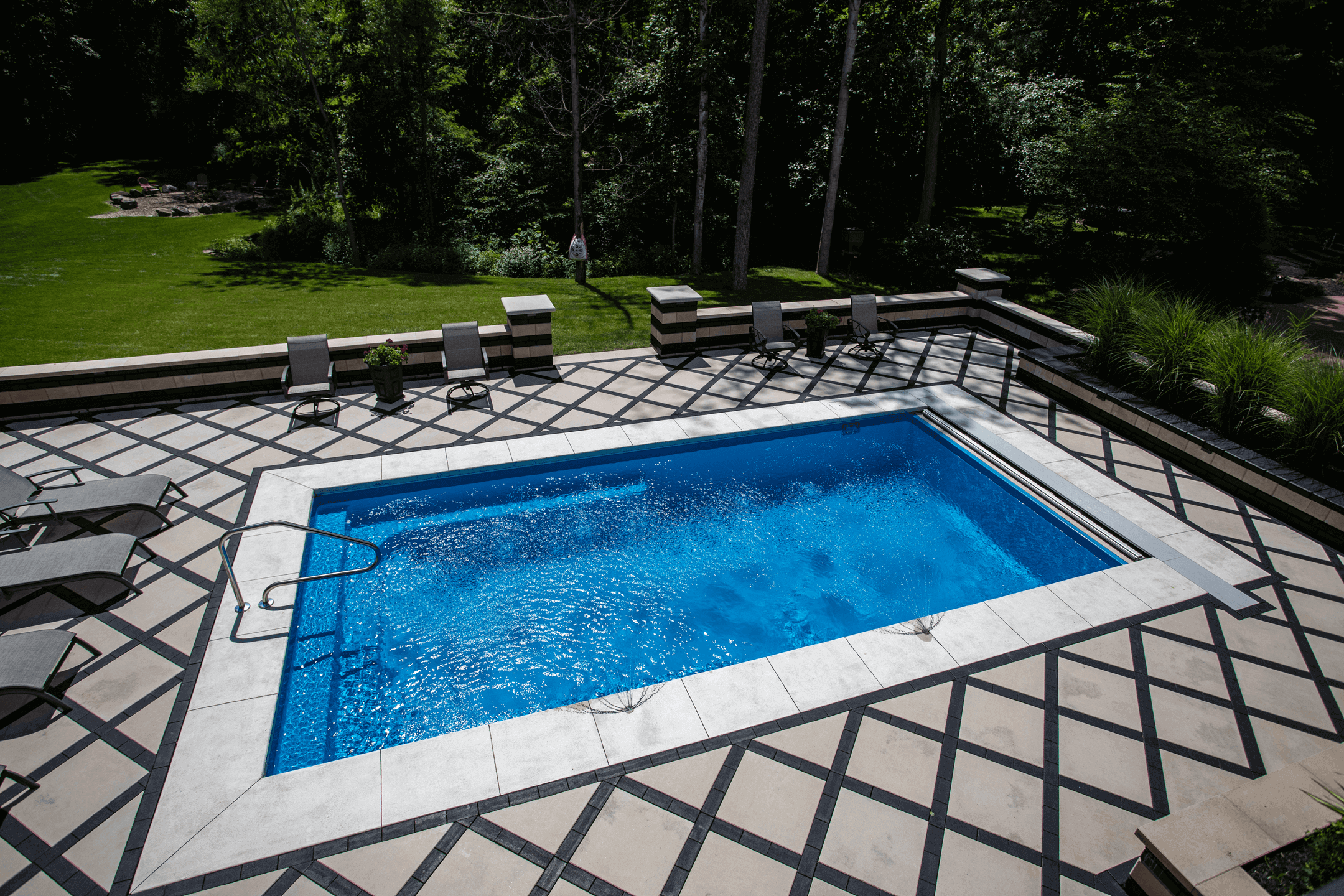
Pool owners love fiberglass pools for many reasons. Fiberglass pools are low-maintenance, quick to install and require fewer chemicals. Because fiberglass pools don’t have liners to replace or concrete that will eventually need to be replastered, they have the lowest lifetime cost of ownership over vinyl and gunite pools. They also have a smooth, durable finish that’s totally pet friendly, making them a sure bet for everyone in the family to love.
So why would anyone choose anything other than fiberglass? Well, there really aren’t too many reasons! However, for pool buyers looking for a large inground pool, the options in fiberglass are somewhat limited. Whereas gunite and vinyl pools are built on-site, fiberglass pools are made in a factory, out of a mold, and then transported in one piece to the home of their lucky new pool owners. There’s a limit to the size of what can be safely loaded, unloaded and transported, and on-site physical barriers like fences and trees also have to be taken into consideration for delivery.
Alas, there are some large fiberglass pool options that allow swimming pool owners the best of both worlds–big and low-maintenance. For your convenience, we have created comparison charts of large pools by various manufacturers in both rectangular and freeform shapes. While there are many similarities, certain aspects may be more appealing to you.
While large and deep fiberglass pools offer more than ample swim area for families, not everyone needs that much depth. If you want a pool that’s still generously sized but maybe not quite so deep, check out Thursday Pools models like Goliath, Aspen, or the Cathedral LX. With so many amazing options to choose from, you’re sure to find the perfect pool for you!
What Can Damage a Fiberglass Pool?
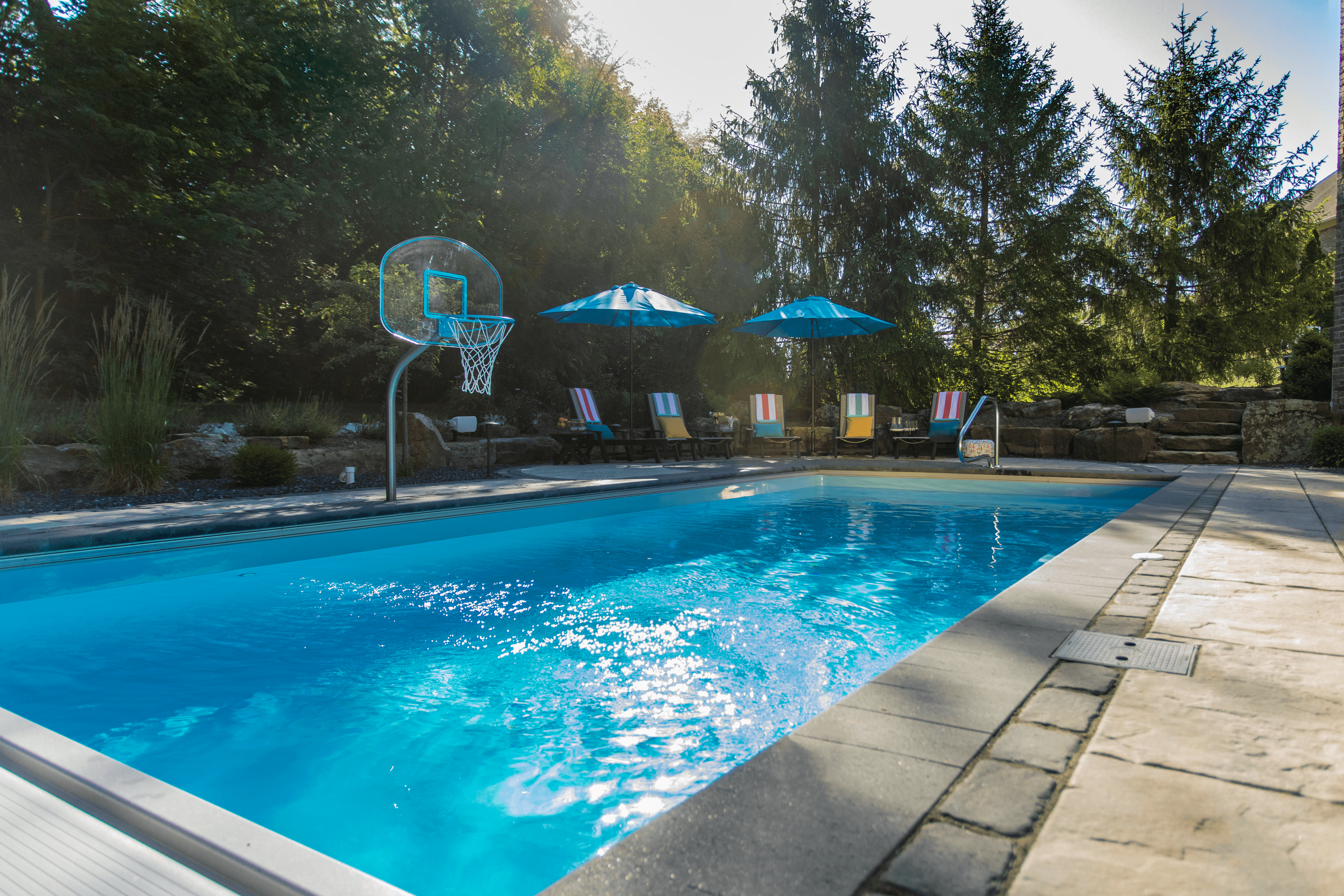
It’s only natural to want to do as much research as possible before making a significant decision and investment into a major home addition like an inground fiberglass pool. You’ll want to learn and consider details such as installation costs, maintenance responsibilities, and how long it will last. A durable pool shell helps protect your investment, so you’re likely asking questions like, “What can damage a fiberglass pool?” or, “Can you scratch a fiberglass pool?” Worried about fiberglass pool gelcoat problems or bulging walls? Understanding how common fiberglass pool damage can happen can help you prevent it with your pool or know when repairs are necessary.
Common Causes of Fiberglass Pool Damage
Fiberglass pools are famously durable, but they’re not indestructible.
Structural Stress
Improper installation or soil movement can place uneven pressure on the pool shell, leading to bulging walls or cracks. Professional repair and proper backfilling during installation are essential to restore stability.
Sharp or Heavy Objects
Dragging metal, glass, or other sharp items across the surface can scratch the gelcoat finish. Shallow scratches may buff out, but deeper damage may require a gelcoat repair.
Improper Draining
Completely draining a fiberglass pool without professional supervision can allow groundwater pressure to push against the shell, causing cracks or shifting. Always work with a qualified installer if your pool needs draining.
Harsh Cleaning Tools
Wire brushes, stiff bristles, or metal scrapers can scratch or gouge the gelcoat. Stick with soft cloths, nylon brushes, and fiberglass-safe cleaning products to keep the surface smooth and shining.
Extreme Weather
Ground freezing, flooding, or other severe weather events can stress the pool’s structure if it isn’t properly protected. Preventive measures like winter covers and proper water balance help reduce the risk.
Pool Water Chemistry
Imbalanced water doesn’t always cause direct visible damage, but it creates conditions that accelerate staining, scaling, or gelcoat deterioration. Keeping water properly balanced protects your pool’s beauty and performance for years.
How Does Fiberglass Pool Chemistry Protect Against Pool Damage?
Water chemistry can be tricky for pool owners to master, but understanding how it works and best practices can help ensure the best preventative care possible for your pool shell. Fiberglass pool shells developing discoloration and turning a chalky white is often a result of a water chemistry imbalance.
Fiberglass pool surfaces are very durable, but they are not indestructible. Water balance is vital to ensuring surface finish protection in your fiberglass pool. Balanced pool water is neutral, meaning that the water is neither corrosive nor scaling.
High calcium levels can contribute to rising pH, leading to white deposits and surface discoloration on your fiberglass pool. With elevated calcium and pH levels, the result is often irreversible damage to the gelcoat finish. The good news? It’s also 100% preventable with proper water care.
Our fiberglass pool owner’s manual recommends calcium levels remain below 120 parts per million (ppm). Source water can often run above 120 ppm, in which case using a stain and scale control product is imperative. In our experience, Pool Stain Remover’s Scale and Stain Eliminator and Orenda’s SC-1000 do a good job chelating calcium and keeping it from discoloring your pool finish.
We recommend keeping chlorine residual levels in your pool between 1 and 3 ppm. Exceeding 5 ppm can damage the pool surface.
The pH level, which measures the acidity or basicity of water, should be between 7.2 and 7.4. Total alkalinity measures the amount of bicarbonate material in pool water and indicates the water’s capacity to withstand changes in pH. We recommend total alkalinity levels between 80 and 120 ppm.
Finally, cyanuric acid prevents the decomposition of free chlorine in the pool water. As a stabilizer for chlorine, we recommend cyanuric acid levels be between 20 and 50 ppm. As levels rise above 100 ppm, chlorine is not as effective at killing bacteria and algae.
Preventing and Fixing Fiberglass Pool Issues
Discoloration and Residue: Regular water testing, maintaining proper water chemistry, and certain equipment add-ons can prevent discoloration and deposits on a fiberglass pool’s surface by suspending calcium and reducing the need for high levels of chlorine. Getting guidance from a local pool maintenance professional is often the best way to address discoloration and residue issues, but homeowners can usually perform effective maintenance methods.
Spider Cracks: Fiberglass pool gelcoat repair methods are available to restore the gelcoat after cracking. Your independent pool builder or maintenance professionals will be able to point you in the right direction for obtaining gelcoat repair services.
Pool Wall Bulging: Bulging in fiberglass pool walls can happen when groundwater pressure combines with the ground’s natural tendency to shift, but it is often due to incorrect installation practices. The best way to prevent wall bulging is to choose a manufacturer that accounts for both flexibility and rigidity in their pools’ structures. Some innovations, like the Thursday Pools Geo-Anchoring Pool Wall®, provide additional structural support by anchoring the pool to the earth to help prevent bulging or shifting.
Prevent Damage and Protect Your Pool
We always applaud those who do their research before splashing into the world of fiberglass pool ownership. To learn more about preventing and repairing potential fiberglass pool damage, connect with a local independent Thursday Pools dealer near you.
Fiberglass Pool Damage Frequently Asked Questions
-
Can a fiberglass pool crack?
Yes, but it’s uncommon. Cracks usually result from improper installation, soil movement, or draining the pool without professional oversight. Working with expert installers and following proper backfilling and drainage practices minimizes the risk.
-
What causes scratches on a fiberglass pool surface?
Scratches happen when sharp or heavy objects (like metal, glass, or rough brushes) drag across the gelcoat. To protect your finish, always use fiberglass-safe cleaning tools, pool toys, and accessories.
-
Is it safe to drain a fiberglass pool?
Not without professional help. Fully draining a fiberglass pool can allow groundwater pressure to push against the shell, leading to cracks or bulging, and it may void your warranty. Always consult a pool professional before lowering the water level in a fiberglass pool.
-
How does water chemistry damage fiberglass pools?
Imbalanced water can discolor the gelcoat, cause chalky buildup, or shorten the life of your pool’s finish. Keep pH (7.2–7.4), chlorine (1–3 ppm), calcium hardness (under 120 ppm), and alkalinity (80–120 ppm) within fiberglass-specific ranges to protect your pool.
-
What should I do if my fiberglass pool develops discoloration or bulging walls?
Discoloration often improves with proper water balance and stain prevention products. Bulging walls require professional evaluation, but structural innovations like Thursday Pools’ Geo-Anchoring Pool Wall® can help prevent the problem in the first place.
Fiberglass Inground Pool Shapes
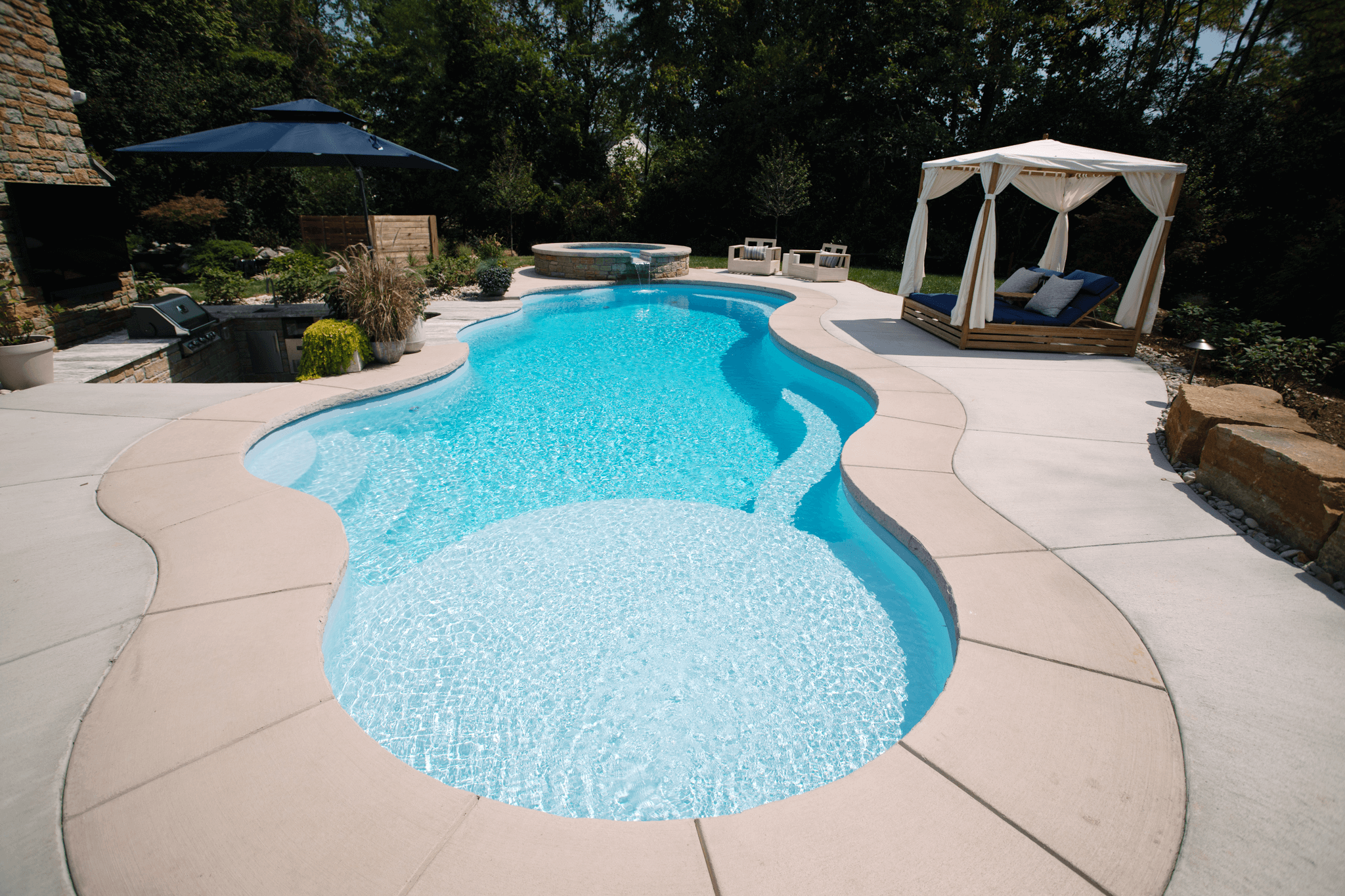
Everything You Need To Know About Beach Entry (Or Zero Entry) Fiberglass Pools
Standard Warranty Registration and Acknowledgement Agreement

Thursday Pools would like to thank you for choosing a Thursday fiberglass swimming pool. We are honored to be a small part of the memories you will have in and around your new fiberglass pool for many years to come.
Please follow these next steps to complete your warranty registration.
1) Read Acknowledgement and Agreement
2) Read Warranty and Safety Documentation
3) Submit the Form
1) Read Acknowledgement and Agreement
To ensure you understand the relationship between the manufacturer and the installer and the proper care and safe use of your new pool, please take a few minutes to review the information carefully and complete the form below. Completing the form below will ensure your order is processed by the dealer without any delay and allow for an efficient response to any warranty issues you may have in the future. Your pool shell warranty will not begin until the day the pool is installed.
ACKNOWLEDGEMENT AND AGREEMENT OF THE LIMITED ROLE OF
THURSDAY POOLS, LLC AND RIVER POOLS FRANCHISING, LLC
The dealer’s customer listed below acknowledges and agrees as follows:
Thursday Pools, LLC (“Thursday”) manufactures pool shells for the brands Thursday Pools® and
River Pools® and sells those pool shells to independently owned and operated franchisees and dealers
(collectively referred to herein as “Installers”). Thursday does not install pool shells and is not involved in
Installers’ pool installations.
River Pools Franchising, LLC (“Franchising”) provides independently owned and operated
River Pools franchisees with the right to market the River Pools brand of pool shells as a franchisee.
Franchising does not manufacture pool shells. Franchising does not install pools shells and is not involved
in Installer pool installations.
Installers enter into contracts with customers to install pool shells, and Installers purchase pool
shells from Thursday. Neither Thursday nor Franchising is a party to the Installer’s contract with the
customer, and Installers are not agents of either Thursday or Franchising for any purpose. Customer
acknowledges that it is contracting only with Installers and, other than the warranty on the pool shell, its
sole recourse is against Installers. Customer further acknowledges and agrees that Installer is not an agent,
express or implied, of either Thursday or Franchising and Installer has no authority to act on behalf of
Thursday or Franchising. Thursday is only a supplier of a pool shell to the Installers. Neither Thursday
nor Franchising is a guarantor of Installer’s performance or an endorser of Installer’s services, and neither
Thursday or Franchising is responsible for Installer’s installation or other contract performance.
Installers place orders for pool shells with Thursday, and Thursday makes the pool shells
available for pickup by Installer’s carrier at the time prescribed by Thursday and upon full payment by
Installer for the pool shell. Installers then make arrangements for transporting the pool shell. Customer
acknowledges that Thursday’s obligations to customer are limited to the warranty on the pool shell, and
customer further acknowledges that Franchising has no obligations to customer.
Customer’s acknowledgement and acceptance of these terms are a condition precedent to
customer’s contract with Installers to install a Thursday Pools or River Pools branded pool shell, and to
Thursday’s obligation to sell a pool shell to Installers. These terms are not and may not be changed by any
written or verbal statements or marketing materials and may be changed only by a writing signed by the
chief executive officer of Thursday and Franchising.
Customer acknowledges that customer has read and understands these terms and conditions; and
that customer has consulted, or been provided an opportunity to consult, with legal counsel of customer’s
choosing before signing below. If customer has any questions regarding the foregoing, please contact
Thursday at 877-929-7665 ext. 0, or sales@thursdaypools.com.
2) Read the Warranty and Safety Documentation
Below are important documents regarding the care and use of your new fiberglass swimming pool. Please download them and keep them for your records.
- Standard Transferable Fiberglass Pool Warranty
- Thursday Pools Owner’s Manual
- Fiberglass Pool Care Guide
- PHTA – Children Aren’t Waterproof
- PHTA – Layers of Protection Start with You
- PHTA – Entrap Avoidance Guidelines
- PHTA – The Sensible Way To Enjoy Your Inground Swimming Pool
- PHTA – Pool and Spa Emergency Procedures
- Acknowledgment and Agreement Document
*Upon completion of this registration, you will receive an email with all of these documents.
3) Submit the Form
The Best Robotic Cleaners For Inground Fiberglass Pools
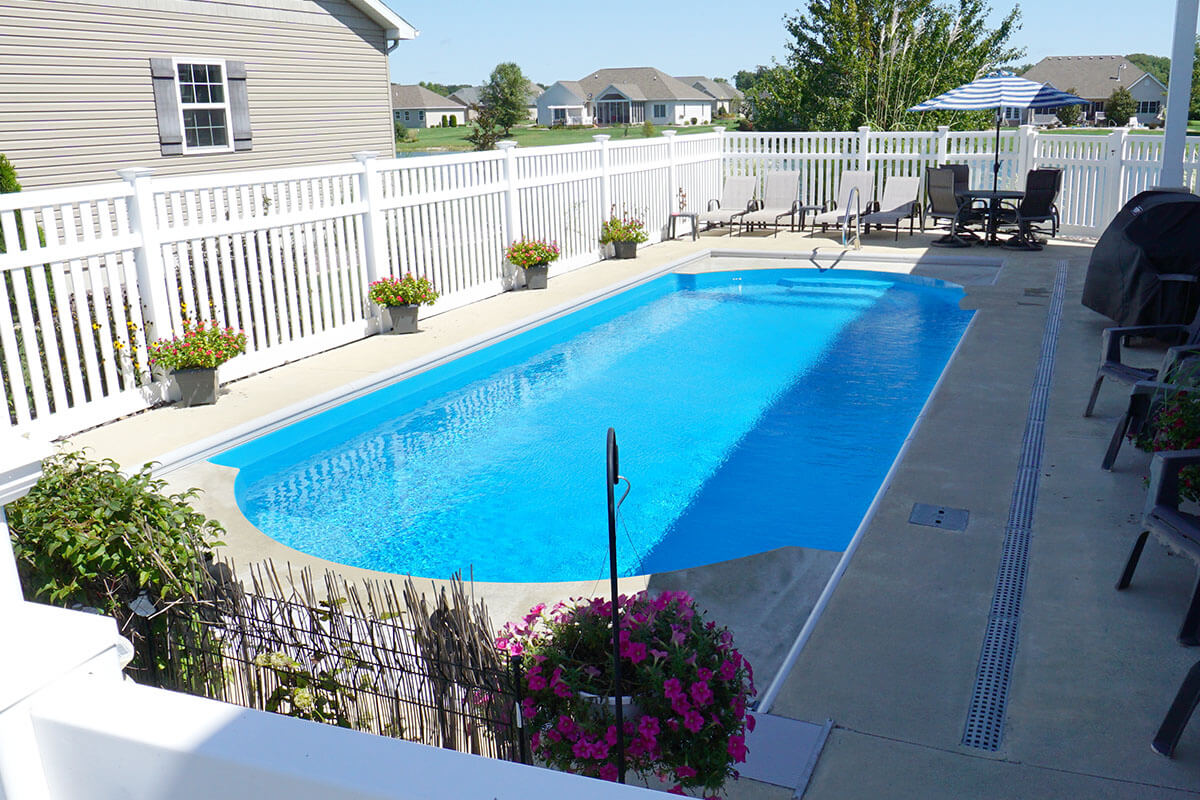
Every fiberglass pool owner should have a thorough and working knowledge of necessary pool maintenance. It’s essential to stay on top of care and maintenance from the time you open your pool in the spring through closing it for the winter. Robotic pool cleaners can be a great help when it comes to keeping dirt and debris out of your pool, saving you time and effort. With an overwhelming amount of options available on the market, all with various features and benefits you may or may not need, deciding on a robotic pool cleaner can feel overwhelming. In our experience, the following four models are great at getting the job done while you sit back and relax.
Hayward TigerShark
A Hayward TigerShark robot can clean a 20’ x 40’ pool’s floors, walls, and waterline in just three hours. There are three configurations to choose from, including the standard TigerShark, the TigerShark Plus with remote control capabilities, and the TigerShark QC featuring a patented 90-minute quick-cleaning alternative mode. All the TigerShark models have an easy-to-clean cartridge filter system and a 24-volt motor to conserve energy and save you pool maintenance costs over time.
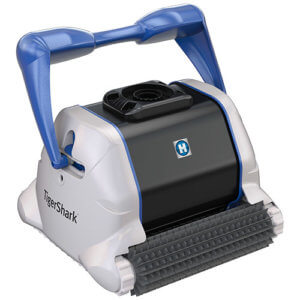 Average Price: Less than $1,500
Highlights:
- Easy-to-clean cartridge
- Lightweight design
- On-board pump for intense vacuum power
- Pool length: Up to 40 feet
- 1- to 3-year warranty depending on model
- Cordless
- Programmable
Dolphin Nautilus CC Plus with Wi-Fi
Dolphin’s Nautilus CC Plus with Wi-Fi features an award-winning design backed by more than 25 years of technology innovations. The unit weighs less than 21 pounds and includes a 2.5-year warranty. A swivel system enables tangle-free operation, and a smart navigation system allows the vacuum to clean a pool in approximately two hours. The Nautilus CC Plus features rubber tracks that grip the pool surface in order to get into tight corners, up walls, and across tanning ledges. A fine filter traps algae, dirt, bacteria, and biofilm, while a high-RPM system provides a deep clean.
With Wi-Fi connectivity, you can run the Nautilus CC Plus from anywhere with just a few taps on the cleaner’s smartphone app.
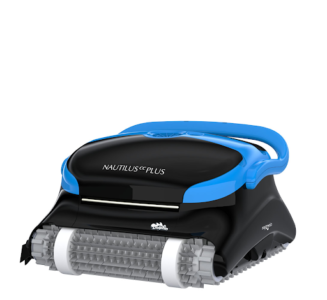 Average Price: Less than $900
Highlights:
- East-to-clean cartridge
- Lightweight design
- Pool Length: Up to 33 feet
- 2.5-year warranty
- Swivel cables for tangle-free operation
- Programmable
Polaris 9450 Sport
The Polaris 9450 Sport is a lightweight robotic cleaner that can clean your pool in less than two hours. The “Aqua Trax” tires enable the Polaris to move freely across floors, steps, and walls. It has a navigation system that automatically controls the robot’s position, providing cleaning coverage without hang-ups. The 9450 Sport uses Polaris’s Vortex Vacuum technology that filters out particles and quickly gathers large debris. With a seven-day programmable timer, you can customize your settings and select the cleaning modes that work best for you. After cleaning, the 4950 Sport surfaces at the touch of a button, waits for you to grab it, then automatically evacuates water for effortless removal from the pool.
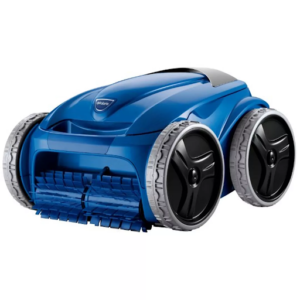 Average Price: Less than $1,000
Highlights:
- Easy-to-access filter canister
- Lightweight design
- Easy to remove from the pool
- 2-year warranty
- Programmable
Aquabot X4
The Aquabot X4 is ideal for all pool shapes and sizes with its 4WD non-marring, high-grip wheels for superior traction. The X4’s ultra-fine mesh filter baskets capture dirt, debris, and fine particulate down to 2 microns in size. The Anti-Tangle Swivel prevents the rover from getting hung up, and the straightforward interface makes it easy to operate and program. You can choose cleaning cycles between one and two hours long while programming for it to run automatically every 48, 72, or 96 hours.
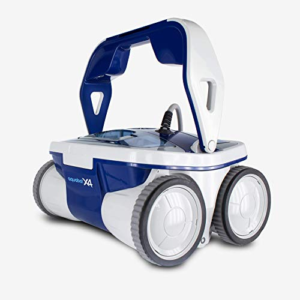 Average Price: Less than $800
Highlights:
- Easy-to-access filter
- Lightweight design
- Pool Length: Up to 60 feet
- Energy-efficient
- 3-year warranty
- Programmable
Looking for more information on fiberglass pool care? Explore Thursday Pools’ Ultimate Fiberglass Pool Maintenance Guide for a thorough look at everything you need to know.
And if you’re ready for personalized advice, connect with a local independent Thursday Pools dealer near you.
Frequently Asked Questions About Robotic Pool Cleaners
Do robotic pool cleaners work with fiberglass pools?
Yes. Robotic pool cleaners work great with fiberglass pools because they use gentle brushes and smart navigation systems that scrub floors, walls, and waterlines without scratching the gelcoat. They lift algae, dirt, and debris while saving you time compared to manual cleaning.
How much do robotic pool cleaners cost?
Most high-quality robotic pool cleaners cost between $800 and $2,000. Prices vary based on features such as Wi-Fi connectivity, programmable timers, and quick-clean modes. While the upfront cost may feel significant, a robotic pool cleaner saves you money long-term by reducing chemical use, conserving energy, and extending the life of your pool equipment.
Do I still need other cleaning tools if I have a robotic pool cleaner?
Yes. Robotic cleaners handle most of the heavy lifting, but you still need a pool brush, skimming net, and manual vacuum for quick cleanups or after storms. These tools complement your robotic cleaner and make sure every corner of your fiberglass pool stays spotless.
How long does it take a robotic pool cleaner to clean a pool?
Cleaning time depends on the model and pool size. Many robotic cleaners can clean an average 20’ x 40’ fiberglass pool in two to three hours. Some models even feature quick-clean settings that finish in as little as 90 minutes.
Are Fiberglass Pools Easier to Maintain?
An inground swimming pool can be a great addition to your home and lifestyle, but many homeowners may be wary of investing time and effort in the necessary maintenance responsibilities. Are you among those asking, “Are fiberglass pools easier to maintain?” The truth is that all pool types have their advantages and disadvantages, and all require regular maintenance.
Are Fiberglass Pools Easy to Maintain?
While they are not maintenance-free, fiberglass pools generally have lower maintenance demands as far as inground pools go. Because fiberglass pools come in one-piece shells, there are no seams where dirt and algae can collect. Their smooth surface is not porous, deterring the growth of algae and bacteria. Other pool types require resurfacing or liner replacements over time, whereas fiberglass can last for decades with simple, regular upkeep.
What Maintenance Does a Fiberglass Pool Need?
Fiberglass pools are relatively easy and inexpensive to keep in good shape. Fiberglass pools typically do not need resurfacing after so many years. With some basic maintenance, your fiberglass pool’s gel coat can last for a very long time.
Most regular fiberglass pool maintenance falls into one of three basic buckets: the filtration system equipment, the pool’s water chemistry, and manual cleaning tools.
Filtration: Your pool’s filtration system includes a filter, skimmer basket, and strainer pot. You’ll need to empty and clean all components at regular intervals.
Pool Water Chemistry: One of the most important regular maintenance tasks is to check your pool’s water chemistry and balance. Balanced water chemistry is important for avoiding corrosion, scaling, and staining while extending the life of your pool. We recommend weekly testing and referring to your pool’s owner’s manual for water chemistry level recommendations for your fiberglass pool shell.
Cleaning Tools: As with any swimming pool, some basic cleaning tasks, tools, and a little elbow grease can keep your fiberglass pool free from dirt and debris. Skim, brush, and vacuum the pool regularly to keep it clean. Use a skimmer net to catch leaves, grass, and other debris that land in your pool. Use a soft pool brush to gently clean any dirt that may collect on the bottom or sides of your pool. Be sure not to use any abrasive tools that could damage the gel coat surface.
What Are the Pros and Cons of Fiberglass Pools?
Fiberglass pools are among the most popular pool options available today, and for good reason. There are many benefits of fiberglass swimming pools, but they may not necessarily be the right choice for everyone.
What Are the Advantages of Fiberglass Pools?
Durability: One of the top reasons pool owners choose fiberglass is durability. Fiberglass is strong and flexible, making it especially resistant to structural damage. Fiberglass is so sturdy that it can withstand the elements for decades without resurfacing if following maintenance best practices.
Maintenance: Fiberglass swimming pools have lower maintenance demands compared to other types of pools, meaning lower maintenance costs and more time enjoying your pool.
Built-in Features: Depending on the design, fiberglass pool shells can come with built-in features such as tanning ledges, swim-outs, wraparound benches, beach entries, and more. Built-in, high-end features are often more expensive or difficult to integrate into other pool types.
Smooth, Safe Surface: Fiberglass pools have a smooth, non-skid surface that is attractive, safe, comfortable, and does not promote algae growth.
Quick Installation: Because fiberglass pools come from the manufacturing facility in one piece, most installations are faster and easier for builders than other inground pool types.
What Are the Disadvantages of Fiberglass Pools?
Cost: Fiberglass pools are an investment, and typically not the cheapest option for initial installation costs. However, choosing fiberglass can save you money on maintenance costs in the long run.
Limited Design Options: While you have plenty of sizes, shapes, and designs to choose from, fiberglass pools cannot receive the same heightened customization as concrete pools because they come from a prefabricated mold.
Potential Installation Issues: If pool builders inexperienced with fiberglass do not install and backfill the shell correctly, underlying issues can lead to damage and expensive repairs in the future. Make sure you hire local professionals with the necessary knowledge and experience for installing fiberglass pools.
How Long Do Fiberglass Pools Last?
While fiberglass pools can involve more upfront costs to install, they also tend to last a very long time. With proper care and upkeep, a fiberglass pool can last for 50 years or longer.
All pools require proper maintenance to maintain their original appearance. Most owners and industry professionals agree that fiberglass pools require less maintenance time and expenses than other pool types.
Looking for more information on the ease of fiberglass pool maintenance? Explore Thursday Pools’ Ultimate Fiberglass Pool Maintenance Guide for a thorough look at everything you need to know.
And if you’re ready for personalized advice, connect with a local independent Thursday Pools dealer near you.
Frequently Asked Questions About Fiberglass Pool Maintenance
-
What maintenance is required for a fiberglass pool?
Fiberglass pools need routine care. Weekly water testing and balancing, cleaning baskets, vacuuming or brushing with a soft nylon brush, and occasional filter maintenance will keep your pool in top shape.
-
Do fiberglass pools need regular maintenance repairs equivalent to resurfacing in gunite pools or liner replacements in vinyl liner pools?
No. Unlike gunite pools that need resurfacing or vinyl pools that need new liners, fiberglass pools maintain their finish for decades with simple routine care.
-
Do fiberglass pools cost more to maintain?
No. In fact, they usually cost less over time because they need fewer chemicals, less energy for cleaning and circulation, and don’t require resurfacing or liner replacements.
How Much is the Smallest Fiberglass Pool?
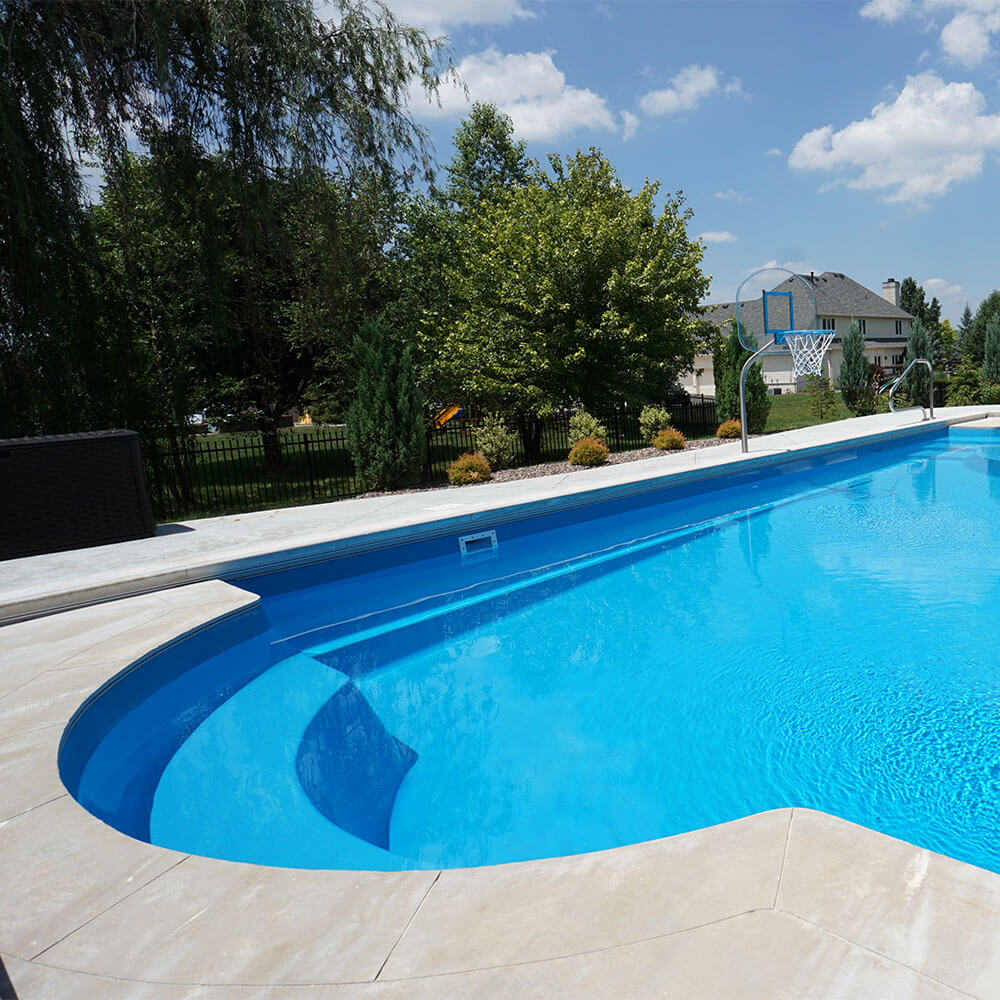
We can’t read minds, but chances are that if you landed here by searching “How much is the smallest fiberglass pool?”, you are interested in both a small fiberglass pool and are concerned with costs. In this post, we’ll define small fiberglass pools and address some cost-related questions.
About Small Fiberglass Pools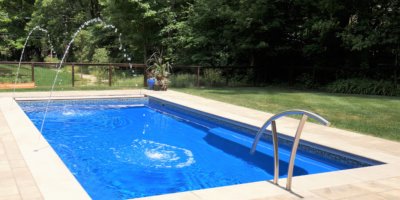
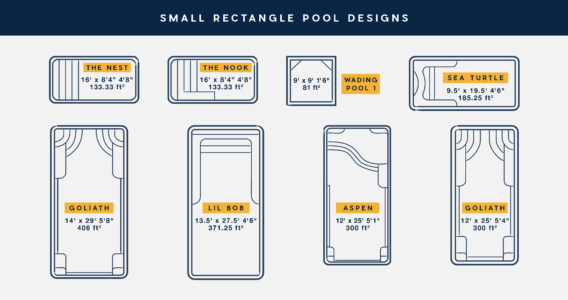
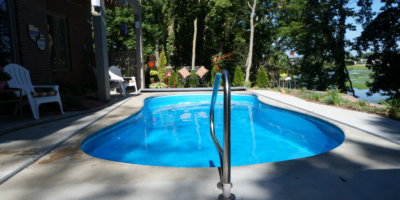
Many fiberglass pools are over 600 square feet (e.g., more than 37.5 feet long by 16 feet wide). Comparatively speaking, a small fiberglass pool may be under 400 square feet. This size will fit into many smaller yards, take up less space, and is still fun and functional. To give you an idea of what that looks like, here are some Thursday Pools small fiberglass pool designs and their dimensions:
Small Fiberglass Pool Prices
Our general suggestion for getting a rough ballpark estimate for our fiberglass pools is to multiply your linear square feet by $1500. Of course, it’s more complicated than that, and you would need to get an estimate from a pool dealer near you to get firm numbers. Every case is different, and fiberglass pool prices vary according to a number of factors, including:
Installation Factors Affecting Pool Prices
- Ease or difficulty of accessing your backyard
- Excavation complications (e.g., rocky or sandy soil)
- Permits and variances
- Barrier requirements (e.g., fencing or safety pool cover)
- Electrical work
- Plumbing (especially rerouting septic fingers)
- Dirt hauling
- Standard pool equipment (filtration system, skimmer and jets, a vacuum head and pole, vacuum hose, skim net, wall brush, thermometer, and chemical test strips)
- Additional pool equipment (e.g., pool heater, automatic vacuum system, salt generator)
- Backfill
- Restoration
Optional Factors Affecting Pool Prices
- Landscaping and hardscaping costs
- Patio furniture
- Ladder
- Slides
- Mosaic tile
- Specialty lighting (such as LED lights)
- Water features such as deck jets, bubblers, and waterfalls
- Swim jet system or spa features
Are Small Pools Cheaper?
Yes. Generally speaking, small pools are less costly than larger pools. Not only do they save space in your backyard, but they also cost less to build initially due to fewer building materials being used and easier installation. Additionally, they cost less to maintain. A smaller pool requires less water and fewer chemicals and is generally easier to maintain than a larger pool.
Are Fiberglass Pools More Expensive?
Fiberglass pools are inground pools that are more expensive than above-ground pools. They are typically more expensive than a vinyl liner pool, but according to Home Guide, a fiberglass pool is generally 10 to 20 percent cheaper than a gunite pool. Additionally, fiberglass pools cost less to maintain than traditional pools. Over the course of 10 years, a fiberglass pool will save you 75 percent on maintenance costs as opposed to a concrete pool.
How Much Does a Fiberglass Pool Cost?
Fiberglass pools range from $45,000 to $85,000 on average, but smaller pools may run less. Use the Thursday Pools Pool Cost Calculator to get an estimate for your pool project based on size and desired options. This tool can help you better understand the cost breakdown behind your pool.
Whether you are looking for a small fiberglass pool because you have a small backyard or you are trying to save money, our best advice is to let us get you in touch with an independent pool dealer in your area. A pool dealer can give you the best estimate based on all the factors that affect pool pricing and can answer your project-specific questions.