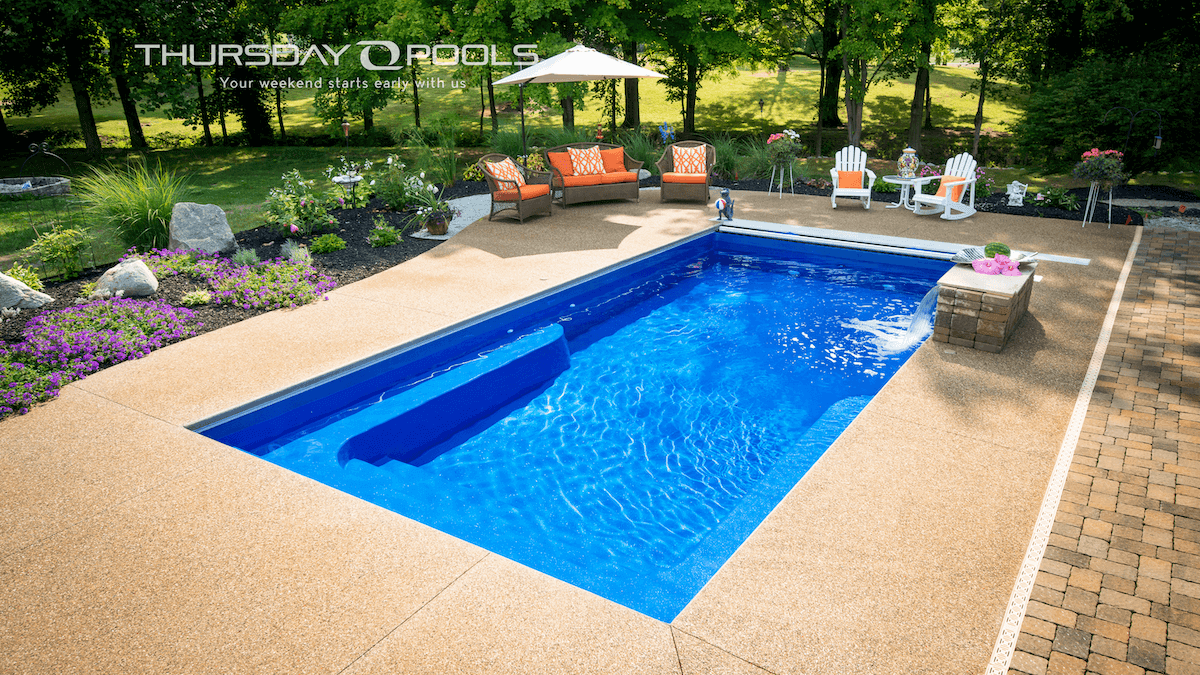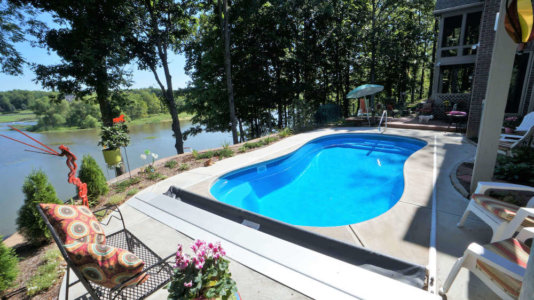
Is a Pool Worth It? Considering the Pros and Cons

When the summer heat rolls in, owning a pool can seem like a dream come true. The last thing any homeowner wants to experience is swimming pool buyer’s remorse, so it’s essential to consider, “Is a pool worth it?” The answer may differ depending on your goals, budget, and the type of pool you want. If you’re considering inground vinyl vs. gunite vs. fiberglass pools, you might want to compare their durability and lifespans. You can learn more about fiberglass pools in our guide, which answers the question, “How Long Does a Fiberglass Pool Last?” For now, let’s explore the pros and cons of simply owning an inground pool.


WHAT ARE THE PROS OF POOL OWNERSHIP? 


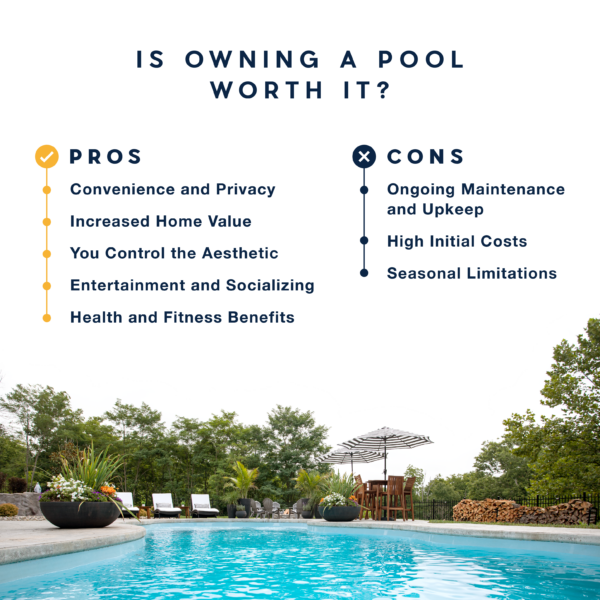
Convenience and Privacy: The pool is always there. You can swim when you want. Public pools have set hours, and you have to plan around their availability. With your pool, you decide if you will take a dip at high noon or midnight. No more having to pack up and drive to your next swimming adventure. Having a pool outside your back door makes getting in the pool much more convenient! Plus, there’s the added benefit of privacy. You have complete control over who uses your pool and when creating a personalized and secure environment.


Increased Home Value: One of the primary reasons homeowners consider installing a pool is the potential increase in home value. A pool can be a desirable feature that sets your property apart from others on the market. A well-maintained pool can attract buyers and, in some cases, lead to higher resale value. However, it’s worth noting that the amount a pool adds to home value varies greatly depending on location, the type of pool, and the condition you keep it in. If we say so ourselves, a fiberglass pool can be a great selling point due to its longevity and low-maintenance reputation.


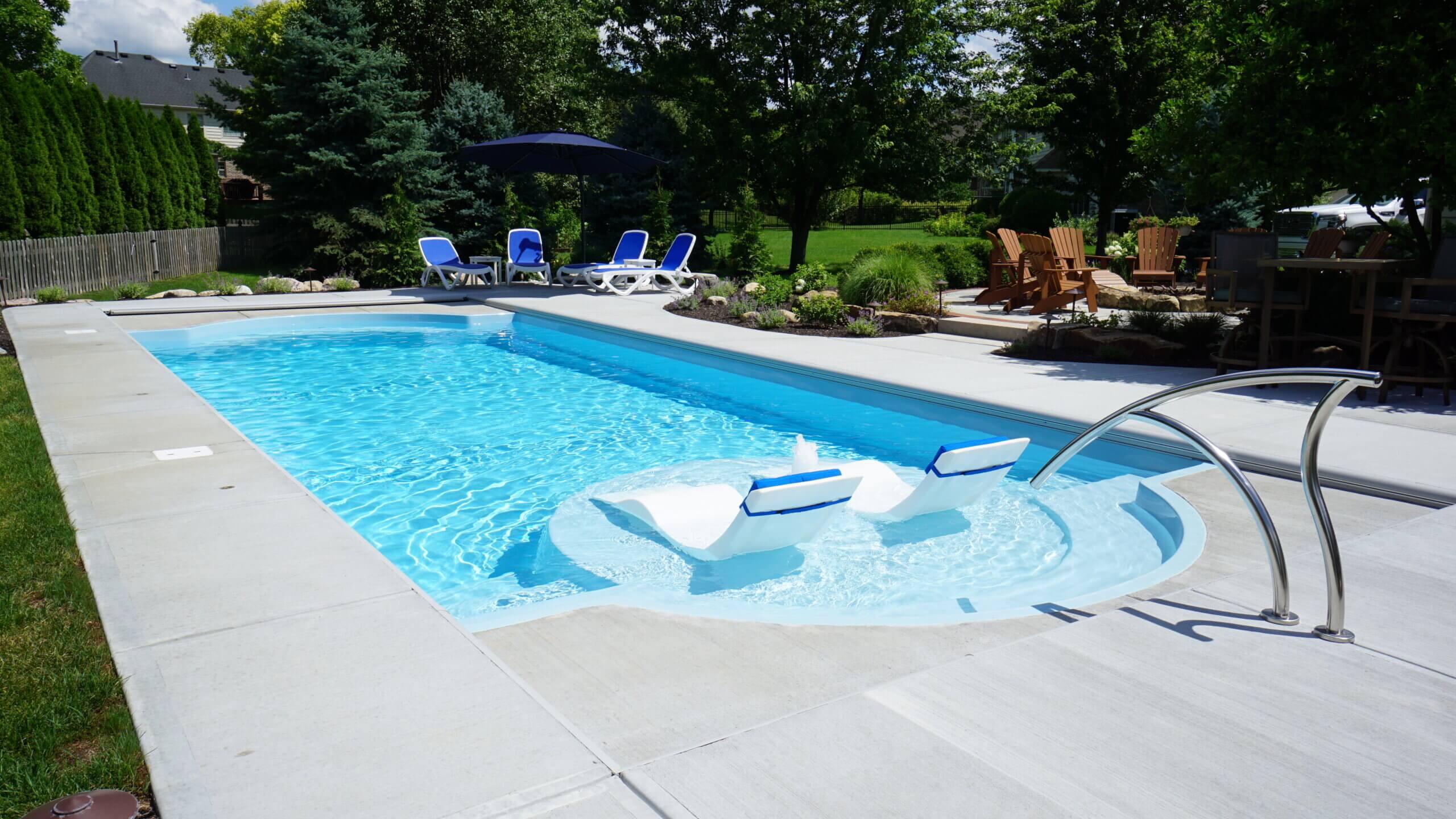
You Control the Aesthetic: One of the often-overlooked advantages of having a pool in your backyard is the ability to control the aesthetic. While you may not care much about the color or design of a public pool, creating a personalized pool experience can be incredibly satisfying. You can choose the shape, color, and design that suits your home and personal preferences. Want a sleek, modern look with a neutral tone or perhaps a more vibrant, tropical escape with bold blues and greens? It’s all up to you!


Entertainment and Socializing: “Value” has many different meanings. For example, if your pool gives your home a luxurious, resort-like feeling, you may feel like it adds value to your life. If you love to entertain or spend time with family and friends, your pool can become the hub of your social life. Pool parties, barbecues, and outdoor gatherings can all seem better with a pool as a centerpiece. It provides an inviting environment for guests of all ages, offering endless fun and enjoyment, especially in summer.


Health and Fitness Benefits: A pool offers fantastic opportunities for exercise and relaxation, making it an appealing feature for families and fitness enthusiasts. Having a pool encourages a more active lifestyle, providing easy access to daily exercise without leaving your home. Pools can also be a place of relaxation, allowing for stress relief after a long day. The sound of water and the calming nature of swimming or simply lounging poolside can promote mental well-being.


WHAT ARE THE CONS OF POOL OWNERSHIP? 


Ongoing Maintenance and Upkeep: Pools require regular upkeep, including cleaning, balancing chemicals, and making necessary repairs. Neglecting maintenance can lead to costly repairs, so it’s important to factor in the time and money it will take to keep your pool in good shape. Fiberglass pools have a distinct advantage here. They require less maintenance compared to vinyl or concrete pools, mainly because the smooth surface resists algae growth and is less prone to staining. However, even fiberglass pools will need regular care to ensure they stay in excellent condition over time. Pool service companies can help you with maintenance and advise you on how to take care of your pool. Regarding fiberglass pools specifically, following any guidelines and care recommendations the manufacturer provides you is essential.


High Initial Costs: The upfront cost is one of the biggest drawbacks to owning a pool, as installing any inground pool is a significant financial investment. While fiberglass pools offer a high return on investment due to their durability and lower maintenance costs, their upfront costs are significantly more expensive than going to your local public pool.


Seasonal Limitations: Depending on where you live, a pool might only be usable for part of the year. Pool owners need to close their pools during the off-season in regions with cold winters. While heated pools or indoor installations can extend the swimming season for pool owners, this comes with additional costs.

Pros and Cons

CONTINUE YOUR QUEST


Considering pool ownership’s pros and cons, you’re probably another step closer to answering whether a pool is worth it. For more information that may inform your decision, check out our eBook on the “things I wish I knew before getting a pool.” If you’d like more information on fiberglass pools, see our resources page and pool cost calculator. If you’d simply like to skip to some advice, book a consultation to speak with an independent dealer to get more specific information for your pool project.

How Long Does a Fiberglass Pool Last?

Where to Find a Fiberglass Pool Dealer Near You

In researching inground pools, you’ve likely compared the different types available, including gunite, vinyl-lined, and fiberglass pools. And perhaps that hunt has you leaning toward an inground fiberglass pool. A natural next question for you might be, “Where can I find fiberglass pools near me?” While entering “fiberglass pools near me” into a search engine will return pool dealer results (and paid advertisements) based on your location, purchasing an inground fiberglass pool is a big deal so, here are our top tips when searching for a fiberglass pool dealer near you.


Selecting a Fiberglass Pool Dealer

  1. Don’t just go with the first dealer you find. We recommend talking to a few. It’s essential that you feel comfortable with them. After all, these folks will be working in your backyard for at least a couple of weeks. 
  2. Get multiple estimates. It’s helpful to get more than one estimate to know that you are on track and not missing something significant in communicating your wants and needs and the dealer’s capabilities. 
  3. Ask for referrals. A quality dealer should have referrals at the ready when asked. You can also go online for reviews. Either way, make sure that the referrals or reviews are recent and not from several years ago. 
  4. Talk to other pool owners. Neighbors or friends with fiberglass pools are good sources. And so are home builders and landscape architects as they often subcontract pool dealers.
  5. Check online review sites. Beyond Google and Facebook, there are services like the Better Business Bureau or Home Advisor that can help distinguish the best pool dealers from their competition. 
  6. Talk to pool manufacturers. You may have zeroed in on a pool and pool manufacturer you like in your research. A fiberglass pool manufacturer can let you know what dealer services your area and get the two of you connected. 


Make Sure You Like the Manufacturers that the Dealer Carries

These are a few of the most common reasons we hear homeowners say they have gone with Thursday Pools when given a choice between inground fiberglass pool manufacturers. They say Thursday Pools inground fiberglass pools are:

  • Drop-dead gorgeous. Thursday Pools uses a high-grade gel coat available to produce a dazzling shimmer. Aside from the good looks, the gel coat also has UV protection and resists the ravages of chemicals, osmosis, and algae. 
  • Durable. The combination of resin, chopped fiberglass, woven roving fiberglass, and honeycomb core creates a nine-layer composite that helps make the industry’s most durably crafted fiberglass composite pool. 
  • Complete with options. Freeform, rectangle, Roman, round, and square. With several different shapes, a good number of designs and sizes, and a variety of available features, there is a pool for practically every lifestyle. 
  • Quicker to install. During typical and precedent pool seasons, inground pool installers of other types might give you a timeline of three to six months. An independent Thursday Pools dealer could have you closer to three to four weeks. Always consult with your dealer early on in the process so you know where you will likely fall in their installation schedule.
  • Focused on innovating. Thursday Pools is dedicated to continuous improvement, being good stewards of the environment, and finding new solutions to make fiberglass pools highly durable.
  • Feature-rich. Features you may have only found in resort pools a few years ago, like tanning ledges and zero-entry, are now easily found when browsing through the Thursday Pool Idea Book and matching up your family’s desires to one of the many pool designs. 
  • Backed by helpful people. With resources about everything from budgeting and financing to providing creative ideas for the installation and build-out, customers and dealers love the array of resources Thursday Pools provides.


Explore Pool Designs 

When searching for fiberglass pools near me, the initial results might lull you into thinking there are only a few design options available. Perhaps you’ve seen a showroom floor model, or you have a couple of neighbors with a similar design. These experiences may cloud your vision of what you can access. Exploring the Thursday Pools website, you’ll discover an entire line-up of fiberglass pool shell shapes, sizes, and colors that can be ordered and delivered to your backyard for quick installation by an independent Thursday Pools dealer.

If you find a Thursday Pools design that piques your interest, we are happy to connect you with a trusted independent dealer near you who can answer all your questions.

Wanting a Pool in Your Small Yard?

No matter the size of your yard, creating a staycation-worthy backyard is within reach. Small fiberglass pools fit compact spaces without sacrificing style, comfort, or function. They offer a low-maintenance, budget-friendly solution with options like plunge pools and other ultra-compact designs, making it easier than ever to add a beautiful, refreshing pool to even the smallest backyard.

Thursday Pools Titus California PoolIs a Small Pool Worth It?

Absolutely! Small pools offer a smart, stylish solution for homeowners who want all the benefits of a pool without overwhelming their outdoor space.

With a compact design, you’ll have more room for other backyard features—like a lounge area, firepit, or outdoor kitchen—so you can truly enjoy a well-rounded outdoor living space. Smaller pools also mean easier upkeep, lower chemical use, and reduced energy costs, making maintenance a breeze.

And when it comes to your budget, going smaller can free up funds for extras like built-in seating, a tanning ledge, or an automatic pool cover. Best of all, small fiberglass pools come in a variety of layouts to suit how you plan to use your space—whether that’s relaxing, exercising, or entertaining a few close friends.


What Are Some Small Pool Options?

Before exploring specific designs, it’s important to understand the three main types of inground pools. Each offers unique benefits, and the best choice depends on your space, budget, timeline, and how involved you want to be with long-term upkeep.

Concrete (Gunite) Pools

  • Install Time: Approximately 3 to 6 months
  • Maintenance: Around 4 to 5 hours per week
  • Cost: $50,000 to $120,000+
  • Customization: Fully customizable in shape, size, and features

Concrete pools are known for their design flexibility and durability. If you have a very specific vision for your pool’s shape or want to maximize every inch of your yard, concrete offers the freedom to create a one-of-a-kind layout. Keep in mind, though, they take the longest to install and tend to require more hands-on maintenance and chemical use over time.


Vinyl Liner Pools

  • Install Time: Approximately 4 to 8 weeks
  • Maintenance: About 2 to 3 hours per week
  • Cost: $25,000 to $65,000
  • Customization: Custom sizes and shapes available

Vinyl liner pools are more affordable upfront, and builders can tailor them to fit many different backyard configurations. They’re a practical option if you want some customization without the higher price tag of concrete. However, the vinyl liner will eventually need replacement, which adds to long-term upkeep and costs.


Fiberglass Pools

  • Install Time: About 3 weeks
  • Maintenance: Around 1 hour per week—or less
  • Cost: $30,000 to $85,000
  • Customization: Limited to pre-designed shapes and sizes

Fiberglass pools come pre-formed from factory molds, which speeds up installation and simplifies maintenance. While you won’t have as much design flexibility, many models are available in compact sizes with built-in seating, tanning ledges, and other features that make the most of smaller spaces. The smooth, non-porous surface also resists algae growth, meaning fewer chemicals and less time cleaning.

Each pool type brings something different to the table—whether it’s complete customization, affordability, or ease of care. If you’re working with a smaller yard, all three can be viable options depending on your goals and preferences. Talking with a pool professional can help you weigh the trade-offs and find the best fit for your backyard.


Small Backyard Pool Ideas

Whether you’re looking for a true plunge pool or just a space-saving pool design, there are plenty of options for full-size enjoyment in smaller spaces. Below are some of Thursday Pools’ most popular compact models, each offering unique features to fit your lifestyle and yard size.


Plunge Pool Options

These pools are deeper than they are expansive, perfect for cooling off, standing, soaking, or even light exercise. A plunge pool is ideal for homeowners who want the experience of a luxurious inground pool without the footprint of a full-size one.


Sea Turtle

Size: 9.5′ x 19.5′ | Depth: 4′6″

The Sea Turtle is a true plunge-style pool with a flat bottom and generous bench seating on both sides. It’s perfect for standing, stretching, or simply soaking on hot days—all while fitting comfortably into a smaller yard.


The Nook

Size: 8′4″ x 16′ | Depth: 4′8″

The Nook offers a balanced blend of comfort and practicality. With a built-in bench and consistent standing depth throughout, it’s ideal for water aerobics, casual conversation, or simply unwinding. Built-in entry steps and a non-skid surface make it a safe and easy-to-maintain plunge pool.


The Nest 

Size: 8′4″ x 16′ | Depth: 4′8″

Petite and purposeful, The Nest is a compact plunge pool for relaxing, cooling off, and casual soaking. It features a flat bottom, wide entry steps, and is auto-cover ready—making it a stylish solution for tight spaces.


Other Compact Pool Options

These pools aren’t plunge-style, but still work well in smaller yards. They offer more swimming space and family-friendly layouts, often with added seating or space for games.


Lil Bob

Size: 13.5′ x 27.5′ | Depth: 4′6″

Lil Bob is all about flexibility. With wrap-around bench seating and a flat, even depth, it’s great for light swimming, games like water volleyball, or simply lounging with friends. It’s a compact design with room to move.


Titus

Sizes:

  • 12′ x 26′ | Depth: 5′5″
  • 14′ x 33′ | Depth: 5′10″

Titus offers a larger swim area while still fitting in smaller backyards. Its rounded shape and built-in seating create a comfortable space for both activity and rest. It’s a good choice if you want a pool that supports swimming as well as relaxation.


Thursday Pools' wading pool that has the color of maya

Wading Pool

Sizes:

  • 9′ x 9′ | Depth: 1′6″
  • 11′9″ x 13′9″ | Depth: 1′6″

Great as a stand-alone feature or a pool add-on, the Wading Pool is ideal for small children, a quick dip, or cooling off without getting fully in. It offers shallow, safe fun in a small footprint.


Thursday Pools Cathedral Wet Deck with decorative tile border

Wet Deck

Size: 8’1” x 14′ | Depth: 1′

The Wet Deck is a shallow splash zone perfect for sunbathing or letting young children play. Use it alongside another pool or on its own as a refreshing, low-maintenance backyard water feature.


Ready to Make a Small-Pool Splash?

Small yard? No problem—smart design and the right pool can help you make a big splash anywhere. Whether you prefer a traditional fiberglass pool, a plunge pool, or a more compact design, there’s a perfect option to fit your space, style, and budget. Connect with a Thursday Pools dealer  to explore what’s possible, check out the Pool Cost Calculator for a quick estimate, and browse our Idea Book for extra inspiration. 

Thursday Pools Rectangle Fiberglass Pool Shell Options by Size, Depth, and Features

Rectangle fiberglass pools come in more variety than many buyers expect. The shape is consistent, with clean lines, straight walls, and sharp corners, but size, depth, and built-in features vary by model. The right shell depends on your yard size, how you plan to swim, and whether you want lounging space, sport depth, a beach entry, a spa, or a deep end.


Compact Rectangle Fiberglass Pool Shells

These models are part of Thursday Pools’ Plunge Pool Series, built for smaller backyards, courtyard spaces, and homeowners who want a genuine pool experience in a compact footprint. All three share the same 8’4″ x 16′ rectangle shell at 4’8″ flat-bottom depth. Sea Turtle offers a slightly larger 9.5′ x 19.5′ rectangle shell. The smallest sizes of Aspen and Goliath are also part of the Plunge Pool Series with 12’ x 25’ rectangle shells.

The Drift

The Drift is designed for lounging as much as swimming. Its full-length wraparound bench supports social gatherings, cool evening dips, and extended relaxation.

  • A full-length wraparound bench creates a comfortable seating zone without giving up the swim area.
  • Built-in steps and a non-skid surface throughout provide safe, easy entry and exit for all ages.

The Nest

The Nest maximizes open water in the smallest Thursday Pools rectangle shell. Full-width entry steps and a clean, unobstructed swim area make it the most activity-forward of the three 8’4” x 16’ options.

  • Full-width entry steps provide a wide, easy point of entry.
  • The open interior layout keeps the swim area clear for exercise and play.

The Nook

The Nook brings minimalist design and integrated seating to the compact rectangle format. It works well as a private courtyard pool or as a compact water feature beside a patio, outdoor kitchen, or seating area.

  • Integrated wraparound bench seating lines both sides of the pool.
  • Built-in steps and a non-skid flat-bottom surface throughout.

Sea Turtle

Sea Turtle steps up to a 9.5′ x 19.5′ rectangle shell at 4’6″ flat-bottom depth. It suits smaller yards that need a bit more swim room than the 8’4″ x 16′ models provide, and adds a swim-jet-ready design for light exercise.
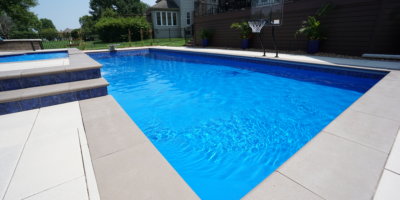
  • A 4’6” flat-bottom depth throughout allows comfortable standing, socializing, and light activity.
  • Wraparound benches flank the entry steps, creating a relaxed conversation area.
  • Swim-jet-system-ready design makes it easy to add a resistance swim system like Badu®.


Sport and Social Rectangle Fiberglass Pool Shells

These models share a flat-bottom sport-depth design, making them well-suited for water games, family play, and active use. All maintain a consistent standing depth of 4’6″ to 4’8″ throughout the pool.

Lil Bob

Lil Bob is built around a 13.5′ x 27.5′ flat-bottom shell at 4’6″ throughout. It’s a strong choice for families who want a sport-focused pool that keeps kids and adults in the game together.

  • Full-width ergonomic steps make it easy for everyone to enter and exit the pool.
  • A standing-depth, flat-bottom design makes Lil Bob a great size for water volleyball.
  • Two facing benches, each 12 feet long and 18 inches deep, run down both sides of the pool, leaving a clear open swim area in the center.

Lil Bob LX

Lil Bob LX extends the Bob family formula to a 13.5′ x 35.5′ shell with a 4’6” sport depth, adding a tanning ledge and wading area while keeping the flat-bottom sport depth.

  • A tanning ledge accommodates two lounger chairs while leaving room to enter and exit the pool.
  • A wading area just past the tanning ledge gives younger swimmers a comfortable shallow zone.
  • Generous wraparound benches run along both sides of the open swim area.

Big Bob

Big Bob is the largest pool in the Bob family. It’s a 16′ x 40′ flat-bottom rectangle with a uniform 4’6″ depth throughout. It gives families who love the Bob design more of everything: more bench space, more open water, and more room for games and laps.

  • Extra-long wraparound benches, 12 feet long and 18 inches deep, run down both sides of the pool.
  • Wide walk-in steps make getting in and out easy for swimmers of every age.
  • The open 16′ x 40′ swim and play area accommodates lap swimming, water volleyball, basketball, and active family games.

Spirit

Spirit runs 13.5′ x 40′ at a flat-bottom depth of 4’6″, giving it one of the longest open swim lanes in the sport-depth rectangle category. Spirit is best for homeowners who want lap-friendly length while keeping the entire pool at a comfortable standing depth.

  • The court-sized flat-bottom design gives swimmers and players plenty of room.
  • Extended bench seating and full-length steps at both ends of the pool create multiple entry and social zones.

Mack Daddy

The Mack Daddy is a 16′ x 36′ flat-bottom rectangle at 4’8″ depth that packs four distinct pool zones into one shell. It’s the only rectangle design in the Thursday Pools lineup with a built-in integrated spa.

  • A built-in tanning ledge accommodates two loungers with room to enter and exit the pool.
  • An integrated spa with a tranquil spillway adds a dedicated relaxation zone.
  • Wraparound bench seating adds a third area for sitting and soaking.
  • A uniform 4’8″ flat-bottom depth keeps the swim lane accessible for games, exercise, and active family use.

Magnate

The Magnate shares the 16′ x 36′ flat-bottom shell at 4’8″ depth with the Mack Daddy but trades the spa for a more streamlined layout built around an oversized sun shelf.

  • A built-in sun shelf accommodates tanning in lounger chairs.
  • Double-entry wraparound benches and step-in stairs form two conversation areas and two points of entry.
  • A wide-open swim lane runs the length of the pool for laps, exercise, and active use.


Deep and Feature-Rich Rectangle Fiberglass Pool Shells

These models offer deeper depth profiles, tanning ledges, swim-out benches, courtesy ledges, and beach entries. They suit buyers who want more traditional swimming depth alongside built-in comfort features.

Aspen

The Aspen is one of Thursday Pools’ most popular rectangle designs, available in five sizes ranging from 12′ x 25′ to 16′ x 40′. It pairs a signature 12-inch tanning ledge with a deep-end design and multiple built-in comfort zones.

  • A 12-inch deep tanning ledge comfortably fits two lounger chairs with room to enter and exit the pool.
  • Curved steps stretch across the width of the pool for wide, easy entry.
  • An extended bench near the steps gives swimmers a place to rest and socialize.
  • Deep-end swim-outs offer a second exit point and a comfortable perch in the deep end.
  • The wide-open swim lane runs down the center of the pool for laps and active use.

Grace Beach Entry

Grace Beach Entry brings a zero-entry, beach-style entrance to a rectangle shell, giving swimmers, children, and pets a gradual way into the water. The patented design (US 10,472,839) is available in three sizes from 14′ x 36′ to 16′ x 40′.

  • A gently sloping beach entry makes getting in and out easy for swimmers and pets alike, and fits two lounger chairs in the shallow zone.
  • A wading area just past the entry works well for young children and doubles as a cool-off zone.
  • An extended bench runs along the pool for relaxing and socializing.
  • Dual deep-end swim-outs provide an additional exit point and resting zone.
  • An open swim area anchors the middle of the pool for laps and active use.

Goliath

The Goliath is available in six sizes from 12′ x 25′ to 16′ x 41′, with depth profiles ranging from 5’4″ to 6’8″. It suits buyers who want a serious deep-end swim experience alongside strong entertaining capacity.

  • A wide-open swim lane runs down the center of the pool for laps and floating.
  • Bench seating flanks the entry steps for a comfortable social zone.
  • Two sets of curved steps in the shallow end and swim-out ledges in the deep end provide multiple entry and exit points.

Monolith

Monolith is Thursday Pools’ deepest rectangle pool model. Its 16′ x 40′ shell reaches 8’6″ at the deep end and includes a flat-bottom shallow end for play. Because diving safety depends on pool dimensions, equipment, installation, and applicable standards, homeowners should consult their dealer, equipment manufacturer, and local requirements before considering any diving or slide use.

  • The 8’6″ deep end qualifies the Monolith as a Type 1 diving pool under applicable standards.
  • A large flat-bottomed shallow end leaves room for pool games and active play.
  • Angled steps make it easy and safe to enter and exit.
  • A shallow-end bench and dual deep-end benches give swimmers options for resting and socializing at both ends of the pool.
Thursday Pools strongly recommends that diving boards and slides not be installed or used with its pools because of the inherent dangers associated with diving boards and slides in residential pools, including severe injury or death.
Thursday Pools does not manufacture or sell diving boards or slides.
If a homeowner chooses to install or use a diving board or slide despite this warning, the homeowner assumes all related risks and is responsible for confirming that the pool, equipment, installation, and use comply with manufacturer specifications, applicable ANSI/NSPI, ANSI/APSP, ANSI/APSP/ICC standards, and all applicable laws, rules, and regulations.


Find the Fiberglass Pool That Fits Your Yard and Lifestyle

Not sure which rectangle fiberglass pool shell is right for your yard? Use the Pool Selector Tool to compare rectangle fiberglass pool shells by yard size, intended use, and desired features. For site-specific guidance, contact a Thursday Pools dealer near you for a yard evaluation and installation estimate.


Frequently Asked Questions About Rectangle Fiberglass Pool Shells

What is a fiberglass pool shell?

A fiberglass pool shell is a pre-molded, single-piece pool structure manufactured from layers of fiberglass and resin in a controlled factory environment. The finished shell is transported to your property, set into the excavated hole, connected to plumbing, and backfilled. Because it arrives as a complete unit, installation is significantly faster than concrete and avoids the on-site curing and finishing work associated with other pool types.

What rectangle fiberglass pool shells does Thursday Pools offer?

Thursday Pools offers a wide range of rectangle fiberglass pool shell designs, including The Drift, The Nest, The Nook, Sea Turtle, Lil Bob, Lil Bob LX, Big Bob, Spirit, Mack Daddy, Magnate, Aspen, Grace Beach Entry, Goliath, and Monolith.

What is the best rectangle fiberglass pool for lap swimming?

Any rectangle pool with a long, unobstructed swim lane works well for lap swimming, but the right choice depends on how seriously you swim. Spirit (13.5′ x 40′), Big Bob (16′ x 40′), Aspen (up to 16′ x 40′), Goliath (up to 16′ x 41′), and Monolith (16′ x 40′) all give you meaningful length. If you want a deep-water feel for laps, Aspen, Goliath, and Monolith offer deeper profiles. If standing depth and open swim area matter more, Spirit and Big Bob are the flat-bottom options at that length.

What is the best rectangle fiberglass pool shell for families with young children?

Flat-bottom pools at 4’6″ to 4’8″ depth are often a strong choice for active family use because the depth stays consistent from end to end. Depending on swimmer height, they may be easier to use for games, supervision, and shared play than pools with a steep depth transition.

What is the difference between flat-bottom and deep-end rectangle fiberglass pools?

Flat-bottom pools hold a consistent standing depth from end to end, typically 4’6″ to 4’8″. That uniform depth suits water sports, family play, water aerobics, and any activity where swimmers of varying heights need to touch the bottom. Deep-end pools slope from a shallow entry zone to a deeper swim area, usually 5’1″ to 6’8″ depending on the model. Deep-end designs offer more vertical swim space and a more traditional pool feel. Monolith is the deepest rectangle pool shell option, reaching 8’6”.

Can I get a small rectangle fiberglass pool shell?

Yes. Thursday Pools’ smallest rectangle shells include The Drift, The Nest, and The Nook, all measuring 8’4″ x 16′ at 4’8″ flat-bottom depth. Sea Turtle steps up to 9.5′ x 19.5′. Buyers who want a larger compact rectangle shell can also compare the smallest Aspen and Goliath sizes at 12′ x 25′.

What features do rectangle fiberglass pool shells come with?

Depending on the model, Thursday Pools ‘ rectangular fiberglass pool shells may include tanning ledges, integrated spas, wading areas, wraparound bench seating, swim-out benches, courtesy ledges, beach entry zones, and auto-cover readiness.

How long does a fiberglass pool shell last?

Fiberglass pool shells are known for long service life when properly installed and maintained. The gel coat surface is designed to resist algae and mineral buildup, and the single-piece construction avoids liner seams and concrete replastering. With proper water chemistry and routine care, a quality fiberglass pool shell can last for decades. Consult your Thursday Pools dealer and review the warranty for specific coverage details.

What Does the Cheapest Inground Pool Cost?

Quick Answer: What is the Cheapest Inground Pool?

Vinyl liner pools carry the lowest upfront installation cost at $25,000 to $65,000. Fiberglass pools typically run $45,000 to $100,000 or more installed. Gunite pools have the widest price range at $50,000 to $120,000 or more. Upfront cost tells only part of the story, though. Annual maintenance, vinyl liner replacement cycles, and concrete resurfacing requirements affect long-term ownership cost significantly.


Finding the cheapest inground pool type to install is a reasonable starting point, but it doesn’t accurately reflect inground pool cost over 10, 20, or 50 years of ownership. 

What Is the Cheapest Inground Pool to Install?

Vinyl liner pools are the least expensive inground option for initial installation. Fiberglass pools typically fall in the middle, while gunite pools carry the widest range and most often land at the high end.

Vinyl Liner Pool Cost: $25,000-$65,000

Vinyl liner pools are generally the most affordable inground pools to build, with an average installed cost of $25,000 to $65,000. That range makes them the entry point for most buyers choosing an inground pool on a tighter budget.

The lower upfront cost comes with a recurring expense built into the pool’s design. Vinyl liners need replacement every 5 to 15 years, and each replacement typically costs $3,000 to $7,500, according to HomeGuide. Custom shapes beyond a standard rectangle add to both the initial liner cost and future replacement costs, because custom liners require specialized manufacturing.

Inground Pool Cost Fiberglass Pool Cost: $45,000-$100,000+

Fiberglass pools typically cost $45,000 to $100,000 or more installed, according to a 2026 survey of independent builders in the Thursday Pools dealer network. A commonly used industry baseline for estimating a fiberglass pool’s starting cost is at least $2,000 per linear foot for the shell and core installation.

For a full cost breakdown by size, design, and region, see the Fiberglass Pool Cost Guide.

The price of a fiberglass pool stays relatively consistent across shapes because the shell comes pre-manufactured. A freeform fiberglass pool and a rectangle of similar length typically cost within the same range. Beach entry designs tend to run 15 to 20 percent more than a standard design of comparable size.

Fiberglass built-in features, including wide steps, wraparound bench seating, tanning ledges, and swim-outs, come molded into the shell at no additional construction cost. In a vinyl liner or gunite pool, those same features are custom-built and add to both the upfront price and ongoing maintenance considerations.

Gunite Pool Cost: $50,000-$120,000+

Gunite pool installation costs range from $50,000 to $120,000 or more, making gunite the most expensive pool type on average. The range is wide because gunite pools are built entirely on-site, and every design decision on shape complexity, size, depth, and features adds labor and material cost. A basic rectangle in a region with high gunite installation volume can land at the lower end. An elaborate custom design in a high-cost market can push well above $120,000.

Sunbelt markets like Texas, Arizona, and Florida see the highest concentration of gunite installations, partly because those climates don’t subject concrete to the same freeze-thaw stress as northern states. Where gunite installation is high-volume, pricing can be more competitive.

What Does Each Inground Pool Type Cost to Maintain Over Time?

Upfront installation is one number. Long-term ownership is a different calculation.

Annual Maintenance Costs

Fiberglass pools typically cost $500 to $1,500 per year to maintain, primarily because the smooth, non-porous gelcoat surface resists algae and requires fewer chemicals than the other pool types. Most fiberglass owners manage the weekly routine of skimming, testing, and basket cleaning in about an hour.

Vinyl liner pools typically cost $1,000 to $2,000 per year in maintenance. The liner surface is more prone to algae and requires more cleaning effort, closer to two to three hours per week on average.

Gunite pools typically cost $2,000 to $4,000 per year to maintain. Concrete is porous, which means algae takes hold more easily and chemical use runs higher. Expect four to eight hours per week of maintenance, plus the recurring cost of acid washing every three to five years.

Long-Term Resurfacing and Replacement Costs

Vinyl liner pools require a new liner every 5 to 15 years. At $3,000 to $7,500 per cycle, per HomeGuide, this is a predictable but recurring cost over the life of the pool.

Gunite pools require resurfacing every 10 to 15 years, typically at $6,000 to $15,000 or more per cycle, per HomeGuide. The porous surface accumulates algae and mineral deposits over time and eventually degrades to the point where a fresh plaster finish is needed.

Fiberglass pools don’t require liner replacements or resurfacing work. The gelcoat surface is non-porous and, with proper chemistry and care, doesn’t degrade the same way that concrete or vinyl does.

Maintenance Comparison

Pool Type Annual Maintenance Estimated 10- to 15-Year Maintenance Cost
Fiberglass $500-$1,500 per year $3,000-$5,000
Vinyl liner $1,000-$2,000 per year $6,000-$10,000+ (plus liner replacement)
Gunite (concrete) $2,000-$4,000 per year $20,000+ (plus resurfacing)

What Factors Make Any Inground Pool More or Less Expensive?

Several variables affect the final project total regardless of pool type.

Pool Size

Smaller pools cost less to install and less to maintain. A compact pool requires less excavation, less water, less chemical maintenance, and less surrounding decking than a large pool. For buyers prioritizing affordability, small pool designs are the starting point.

Pool Shape

For vinyl liner and gunite pools, shape directly affects cost. Simple rectangles cost less because they require less custom labor at installation and, for vinyl, less custom liner fabrication. For fiberglass pools, shape doesn’t significantly affect the price because shells are manufactured at a set cost regardless of contour.

Site Conditions

Rocky soil, clay-heavy ground, steep slopes, and limited yard access all add to installation costs. Excavation in difficult soil conditions can cost significantly more than standard work. Limited access may require crane service to place the pool shell, adding several thousand dollars.

Features and Add-Ons

Heaters, automatic covers, bubblers, deck jets, LED lighting, slides, and water features all add to the project total. Safety fencing, required in most jurisdictions, is frequently excluded from base quotes. According to the 2026 survey of independent Thursday Pools dealers, homeowners can expect to pay an average of $8,115 for a 300-linear-feet fence, depending on material and linear footage.

Region

Labor rates, permit costs, and material supply all vary by location. The same pool project can cost meaningfully more in a high-cost coastal market than in a Midwest suburb, independent of the pool type.

Find the Most Affordable Pool for Your Backyard

The cheapest pool for your backyard depends on your priorities. If the lowest upfront cost matters most, vinyl liner pools are often the easiest and most affordable path to pool ownership. If the lowest total cost over a decade matters more, fiberglass pools typically come out ahead once factoring in maintenance and replacement cycles.

A local Thursday Pools independent dealer can assess your yard, review your budget, and walk you through which designs and pool types fit your goals. The Pool Cost Calculator and Pool Cost Checklist are also good starting points before your first dealer conversation.

Frequently Asked Questions About Cheapest Inground Pool Costs

What is the cheapest type of inground pool?

Vinyl liner pools carry the lowest upfront installation cost at $25,000 to $65,000. Fiberglass pools typically run $45,000 to $100,000 or more installed. Gunite pools range from $50,000 to $120,000 or more. Over time, fiberglass pools typically cost the least to own because they don’t require liner replacement or resurfacing like other pool types.

What is the cheapest inground pool to maintain?

Fiberglass pools are the least expensive inground pool type to maintain. Annual maintenance typically runs $500 to $1,500 per year, compared to $1,000 to $2,000 for vinyl liner pools and $2,000 to $4,000 for gunite pools. Fiberglass pools also avoid the liner replacement costs ($3,000-$7,500 every 5-15 years) that vinyl owners face and the resurfacing costs ($6,000-$15,000 every 10-15 years) that gunite owners face.

How can I reduce the cost of an inground pool?

Choosing a smaller pool is the most direct way to reduce cost. Simpler shapes reduce construction costs in vinyl liner and gunite pools. Avoiding expensive add-ons, such as auto covers, water features, and heaters, at installation keeps the base project lower. For fiberglass buyers, built-in features like steps and benches come at no extra cost, so the savings on those elements are already built in. Comparing fully itemized quotes from multiple dealers is essential, since base estimates can exclude permits, electrical, fencing, and dirt hauling.

Is fiberglass or vinyl liner cheaper?

Vinyl liner pools cost less to install upfront. Fiberglass pools typically cost less over 10 to 15 years of ownership because they don’t require liner replacement. At $3,000 to $7,500 per liner replacement every 5 to 15 years, the cumulative cost narrows the gap between vinyl and fiberglass relatively quickly.

What is not included in a cheap inground pool quote?

Many base inground pool quotes exclude permits, electrical work, safety fencing, water fill, dirt hauling, decking, pool covers, and yard restoration. These line items can add $10,000 to $30,000 or more to the total project cost, depending on location and scope. Always request an itemized quote and ask specifically about each of those items before comparing estimates from different contractors.

Does a cheap inground pool add value to your home?

Inground pools generally add value in markets where outdoor recreation is a priority, particularly in warmer climates. A pool in good condition tends to be viewed more favorably by buyers than one with visible deferred maintenance. A fiberglass pool with no resurfacing needs and low ongoing maintenance presents as a lower-cost ownership experience to potential buyers compared to a gunite pool due for resurfacing.

What is the cheapest inground pool for a small yard?

For small yards, compact fiberglass designs such as plunge pools and small rectangle models starting around 12′ x 25′ provide the smallest footprint at predictable cost. Vinyl liner pools in a small rectangle shape are the least expensive starting point on price alone. Both types can work in limited spaces, though fiberglass offers the advantage of built-in features and lower long-term maintenance.

What is the Downside to Fiberglass Pools? 3 Myths & 3 Truths

Thursday Pools Fiberglass PoolIf you are considering an inground pool, you will quickly realize that much information is available. You will likely first consider what type of pool is right for you as you compare the three different inground pool types. Looking for the pros and cons of fiberglass pools vs. concrete or vinyl liners can help you narrow down your preferred pool type. If you’ve already narrowed it down to fiberglass pools, you may even have Googled, “What is the downside to fiberglass pools?” or  “How long do fiberglass pools last?” to see what results you may get. (Smart move). Though it may seem odd that a fiberglass pool manufacturer is addressing this question, it would be even more strange to pretend that a fiberglass pool is for everyone. Everyone should buy the best pool type for them, so this post will address some myths and truths about the downside to  fiberglass pools.

What are the perceived negatives of a fiberglass pool?


Myth 1: Fiberglass pools are slippery.

Between the clear water shimmering in the sun and the high-gloss finish of a fiberglass pool, it’s logical to think it’s slippery. However, over the years, technological advances have resulted in a gelcoat finish for fiberglass pools that is smooth but non-skid. Fiberglass pools are comfortable on your feet (and your pet’s paws), will not snag your suit, and they aren’t slippery. But of course, anywhere there’s water can cause accidents to happen, so always be careful when entering and exiting or walking around any pool type.


Myth: Fiberglass pool designs are “slim pickins.” 

Some people assume fiberglass pool designs are punched out like widgets because they are manufactured in a controlled environment and shipped to the site. Go back a few decades, and there indeed were fewer options. However, today, fiberglass pools come in an array of sizes, shapes, and colors. Fiberglass pool manufacturers like Thursday Pools are constantly innovating to provide new options and built-in features, such as beach entry pools (Patent US 10,472,839)


Myth 2: Fiberglass pool designs are “slim pickings.” 

While fiberglass pools are manufactured from molds in a controlled environment and shipped to your site, there are many options. Go back a few decades, and that wasn’t the case. However, modern fiberglass pools come in an  array of sizes, shapes, and colors. Thursday Pools is constantly innovating to provide new options and built-in features to our fiberglass pool shells and was first on the scene with  beach entry fiberglass pools (Patent US 10,472,839). 


Myth 3: Fiberglass is weak and brittle compared to other pool types.

Don’t be fooled by the name—fiberglass is not fragile. In reality, fiberglass is incredibly strong and flexible, making it highly resistant to cracking and wear. Fiberglass pools withstand shifts in soil and ground movement, making them durable in varied climates. A testament to their durability, fiberglass pools can last several decades when properly maintained. 


What are the negatives of a fiberglass pool?


Truth 1: Fiberglass pools aren’t customizable in terms of size and shape.  

Because they arrive on site in one piece, and the Department of Transportation limits what can be hauled down our roads without tighter regulations and a more extensive approval process, fiberglass pools are typically only 16 feet wide. So, fiberglass may not be for you if your pool must extend beyond 16 feet wide or 40 feet long. You also can’t get a fiberglass pool shaped like a guitar (unless a fiberglass pool manufacturer adds it to their design lineup).


Truth 2: The initial cost may be higher than other pool types. 

It will likely cost more upfront to purchase a fiberglass pool than some other pool types. However, because you’ll save on maintenance and there is no liner to replace, the lifetime cost of a fiberglass pool is typically lower. So, if you need to spend less upfront, fiberglass may not be your best option. Check out our Pool Cost Calculator if you’d like a ballpark estimate for a fiberglass pool.


Truth 3: It’s not a DIY project. 

A fiberglass pool is a lifetime purchase, but that’s only true if properly installed. A DIY installation voids the pool’s warranty. In any case, we wouldn’t recommend that the average homeowner, or even an above-average DIYer, attempt to install a fiberglass pool. That’s one reason we don’t sell directly to the general public. An experienced pool builder should install a fiberglass pool to prevent horror stories like the pool popping out of the ground or damage to the pool or house from trying to position the pool.


More Research Options

Check out YouTube, Pinterest, Houzz, and fiberglass pool reviews if you want more research options. Use our online resources, such as our  “Everything You Need To Know About Fiberglass Pools” page. Or  talk to an independent dealer. Consider what questions you might ask them in advance. Questions for a pool builder might include: Do they have a warranty? What type of pool is their specialty? What is their lead time, and what does their installation schedule look like? What pool shapes, sizes, and design options do they offer? What about financing? 


There are advantages and disadvantages to fiberglass pools, so it’s essential to determine what you are looking for in your swimming pool to make the best decision for your and your family’s needs. Hopefully, this article has aided your decision, as fiberglass pool regrets are the last thing we’d want a pool buyer to experience.


What Type of Pool is Easiest to Maintain?

What type of inground pool is the easiest to maintain? Is it concrete (gunite)? Or vinyl? Maybe it’s fiberglass? It’s an important question for the prospective pool owner. Maintenance is part of the budget and the pool lifestyle. The pool maintenance conversation is interesting in that the pool types that require the most maintenance require the most explanation. That’s not meant to scare you away from something you have your eye on, but to let you know what to expect when it comes to the time and financial resources you will pour into your pool once it is purchased. 

The variety of pool types exists for a reason. Each leverages different materials and technology toward specific purposes. Fiberglass is unique and manufactured in a controlled setting and then shipped as a unit to its site. Concrete can be very custom, is built on site, and can be quite expensive. Vinyl is also built on site, but it is relatively inexpensive to install. Let’s review the pluses and minuses of each pool type and then talk about where maintenance fits into the purchase decision for different buyers. 

For this conversation, we’ll assume you are an inground pool buyer. Above-ground pools are part of the pool market, of course, and they are incredibly inexpensive by comparison, but they typically do not last as long. In addition, the experience they offer is very different from  an inground swimming pool. We’ll discuss concrete, vinyl-lined, and fiberglass inground pools, and we’ll order that discussion from most maintenance to least maintenance. 

Concrete (Gunite) Pool Pros and Cons

What Type of Pool is Easiest to MaintainConcrete pools allow for customization and creativity. They offer the most flexibility of all pools, allowing the buyer to choose the look, feel, shape, depth, size, and features. The concrete pool surface is typically rough, and as a result, can snag swimsuits and scrape kids’ feet and dogs’ paws. The cost can be higher, ranging from $50,000 to $120,000 and up. Concrete pool costs vary broadly based on customizations and region of the country. 

Concrete pool maintenance is the most involved of the three types of inground pools. The surface’s porosity welcomes algae, and  algae is tough to get at. It typically requires a weekly scraping with a steel brush to get in those nooks and crannies. To stem the algae problem, you’ll probably need a professional cleaning every three to five years for around $500. To protect the surface, you’ll also need to resurface it every 12 to 15 years for approximately $7,000 per 1,000 square feet.

Water chemistry is essential for all pools. It takes extra vigilance to ward off algae and salt, calcium and other minerals with concrete. This care generally requires filtering twice a day, therefore paying a little more in annual electrical costs. Most concrete pool owners will need or choose to hire a professional to open, close, or do a thorough cleaning each year, as well. 

The average concrete pool owner can expect to perform around 4-8 hours of maintenance per week. 

Vinyl Pool Pros and Cons

Vinyl pools also allow for a certain amount of creativity. Vinyl-lined pools can feature ledges, sitting benches, and the like. But the surface is slippery and not as conducive to these features as other types of pools. The soft vinyl surface is prone to ripping and punctures by everything from dog claws to sharp objects dropped in the pool to fallen tree limbs. Vinyl pools are relatively quick to install and, at around $25,000 to $65,000 on average, these pools are the least expensive of the three in upfront costs. 

Vinyl-lined pool maintenance is not as extensive as concrete, and you certainly won’t be using aWhat Type of Pool is Easiest to Maintain steel brush on its more delicate surface. Your level of care will depend in part on how much you use it and how proactive you are with regular maintenance. Its propensity to rip can result in the need for patching and or liner replacements. Liner replacements can be a $3,000 to $7,500 investment every five to seven years. If water chemistry isn’t carefully maintained, the liner may need to be replaced more often. The seams of a vinyl pool can also collect algae, keeping your regular chemistry costs about double to fiberglass. With a vinyl pool, you can save a little money by filtering one time per day and using fewer chemicals than you would with concrete, and you may not need to hire a professional as often as you might with a concrete pool. 

The average vinyl-lined pool owner can expect to perform around 4-6 hours of maintenance per week.

Fiberglass Pool Pros and Cons

What Type of Pool is Easiest to MaintainFiberglass today provides the best of both worlds. Like a vinyl pool, it is quick to install—quicker in that it comes as an entirely manufactured shell ready to be dropped into an excavated backyard spot. While not as customizable as concrete pools, the breadth and creativity of the modern fiberglass pool far surpass the expectations of many first-time pool shoppers. The upfront cost of a fiberglass pool is usually a little more than vinyl and a little less than a comparable concrete pool, ranging from $45,000 to $85,000 on average. 

Fiberglass pools are the most durable of the three. The attractive gel coat that seals the surface of the thick, multilayered fiberglass material resists fading and damage. There are no seams and pores to collect algae, so that alone saves on chemicals and quite a bit of time scrubbing.

Fiberglass pools require fewer chemicals and less filter circulation, even with cutting-edge features like tanning ledges. If a concrete pool can cost close to $700 annually for chemicals and around $600 for electricity related to the filtering, a fiberglass pool should run about a third of that cost. And, you do not need to acid wash the surface every three years as you would with concrete. 

The average fiberglass pool owner can expect to perform around 1-2 hours of maintenance per week. 

Long story short, the type of inground pool that is the easiest to maintain is clearly fiberglass. If you want an even more in-depth comparison of vinyl vs concrete vs fiberglass pools, check out our comparisons of inground pools.

What Are the Main Problems with Fiberglass Pools?

Thursday Pools side view of Sandal Beach Entry with gray border

While fiberglass pools are elegant, have loads of built-in features, are recognized in the industry as the lowest maintenance option available among pool types, and last a very long time, we understand why some may still ask, “what are the main problems with fiberglass pools?”. An inground pool is a significant investment of time and money, and potential pool buyers want to know if they will be happy they chose a  fiberglass pool in the end—after all, no one wants to experience fiberglass pool regrets.

We applaud you for looking into it. Searching for possible negative aspects will bring perspective and prepare you to be a more informed pool buyer because:

  1. It helps dispel common misperceptions of fiberglass pools.
  2. It clarifies the type of care and quality you should expect from manufacturers and installers.
  3. It sets realistic expectations for annual and ongoing maintenance. 

Let’s review common questions related to what people think are the main problems with fiberglass pools and weigh the validity of the concern. 

Is a fiberglass pool worth the money? 

This question often comes from perceptions based on dated or unlikely occurrences. The top three perceptions we hear are:

  1. A fiberglass pool is thin and flimsy and will crack easily. 
  2. A fiberglass pool is prone to separating from its deck, bulging, or even popping out of the ground. 
  3. Last is the belief that there are too few design options with fiberglass pools.

The first perception is related to an outdated image of fiberglass pools. They aren’t what they used to be, and that’s a great thing. Not everyone is familiar with the  advances in fiberglass pool manufacturing and installation, which make fiberglass pools incredibly durable and exponentially increase their lifespan. If you’re new to modern fiberglass pools, it’s probably worth your time to investigate the construction and  design innovation that’s helped fiberglass to grow so popular. 

The second perception is a case of the exception obscuring the rule. You may have read or heard a horror story of a fiberglass pool installation gone wrong, and yes, incorrectly installed fiberglass pools (or any pool type) can fall victim to hydrostatic pressure and come out of the ground if not properly installed. Unforeseen problems like this are why it is important to leave fiberglass pool installation to pool builders and not attempt to tackle it as a DIY project. Additionally, there are innovations out there to help combat these concerns, such as our  Geo-Anchoring Pool System that anchors the walls to the earth so they resist movement or bulging of the pool walls.

The third perception usually comes from either first-time pool buyers or those with fiberglass experiences from decades ago when in-ground  fiberglass pool design options were far more limited than today. If you imagined an oval or rectangular bowl with a metal ladder hanging over one end, you’d be pleasantly surprised by the shapes and options available with fiberglass. The fiberglass pool industry has flourished with accessible and affordable innovations in designs. High-end features like tanning ledges, beach entries, wrap-around bench seating, and swim-outs are built-in. Modern fiberglass pools provide a custom look and feel without the custom expense of some other pool types. However, you are limited to the designs offered by the fiberglass pool manufacturer. Customizing the pool shell itself isn’t an option, and sizes are often limited to no bigger than 16 feet wide due to shipping restrictions. Depending on what you’re looking for in your pool project, these may be potential disadvantages of fiberglass pools. 

Will my inground fiberglass pool come with built-in issues? 

Any pool can develop leaks and warping if poorly manufactured or installed. Expertise is vital at the  manufacturing, transport, and installation stages to prevent issues like these from arising. When you own a pool, damage due to improper maintenance might be in your hands. However, before you can take your first dip, your pool is in the hands of others.

Check if the fiberglass pool shell manufacturer uses the most durable materials and technologically advanced manufacturing methods. Following industry-recognized standards,  like ISO 9001, for quality and safety can indicate a quality manufacturer. Some fiberglass pool shell manufacturers have experienced problems keeping up with production, which is a potential fiberglass pool problem for some. However, Thursday Pools has continually reinvested in expanding our capabilities, enabling us to maintain highly competitive turnaround times.

Can you repair a fiberglass pool?

Yes, you can, but we don’t recommend doing it yourself. It may be tempting to take matters into your own hands and start looking into a fiberglass pool repair kit should issues arise. Unfortunately, certain materials and tools are unsafe for a fiberglass pool’s finish if used or not used correctly, and it’s best left to professionals. The more significant point to remember is that it’s rare that you should need repairs if you properly maintain your new fiberglass pool. 

Fiberglass pools are incredibly durable and are known for being lower maintenance than other inground pool types and may last for many years. Lower maintenance does not mean no maintenance, though!  Maintenance is an important part of owning a fiberglass pool. As with any inground pool, it is vital to follow the manufacturer’s recommended care instructions to ensure the quality of the pool is maintained. Proactively maintaining proper water levels and chemical balance, cleaning filters, and basic upkeep prevent problems with fiberglass pools. 

Congratulations on Doing Your Research

We think it’s great that you are committed to making an informed decision. We hope this information has helped you feel more comfortable in whichever choice you make. If you need more information before deciding, try out our  Pool Cost Calculator for ballpark estimates. Check out our guide on  fiberglass pools, or  connect with an independent dealer near you to discuss your dream pool project.

Everything You Need to Know About Inground Pools: Comparing Fiberglass, Vinyl, and Gunite Options