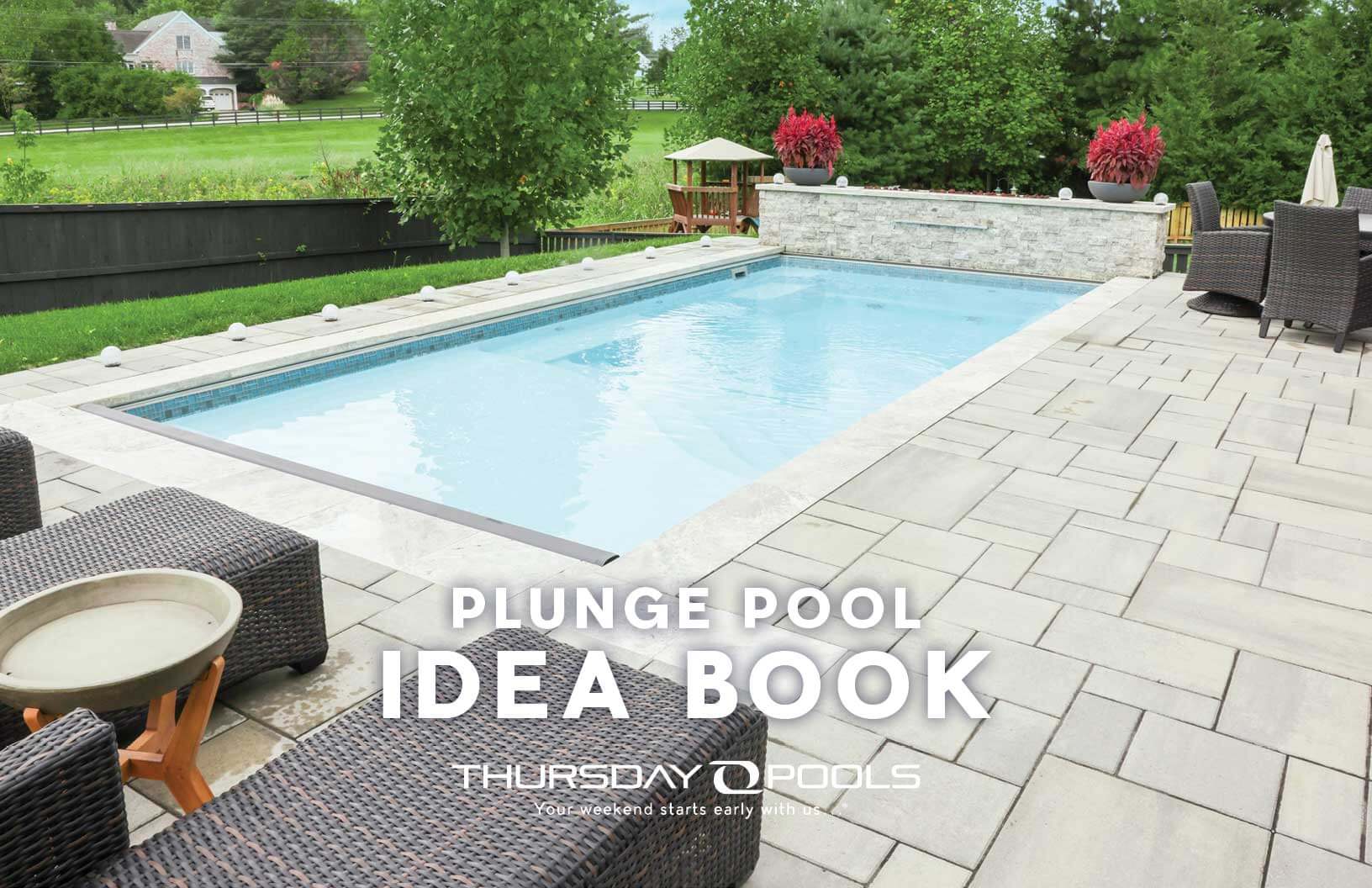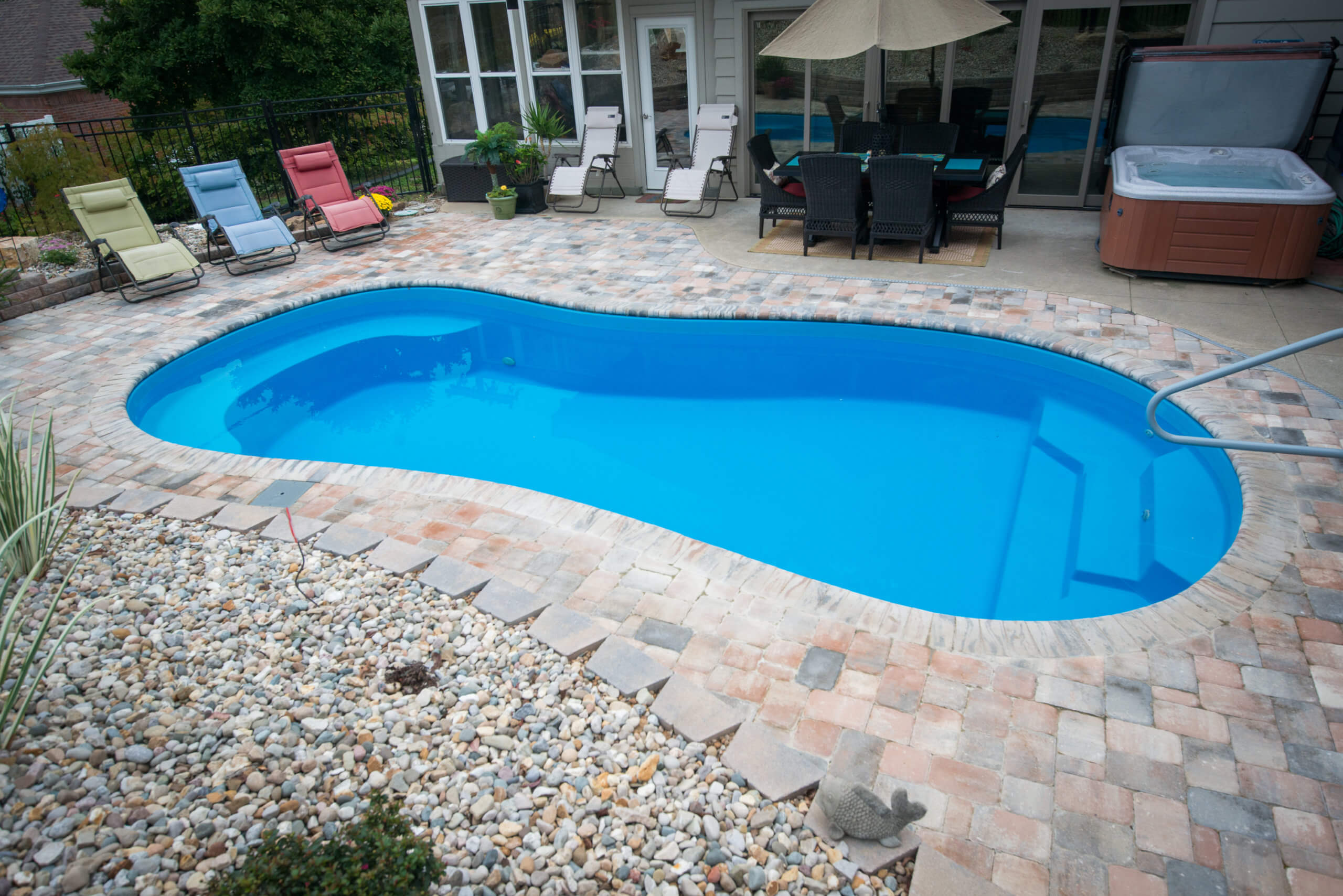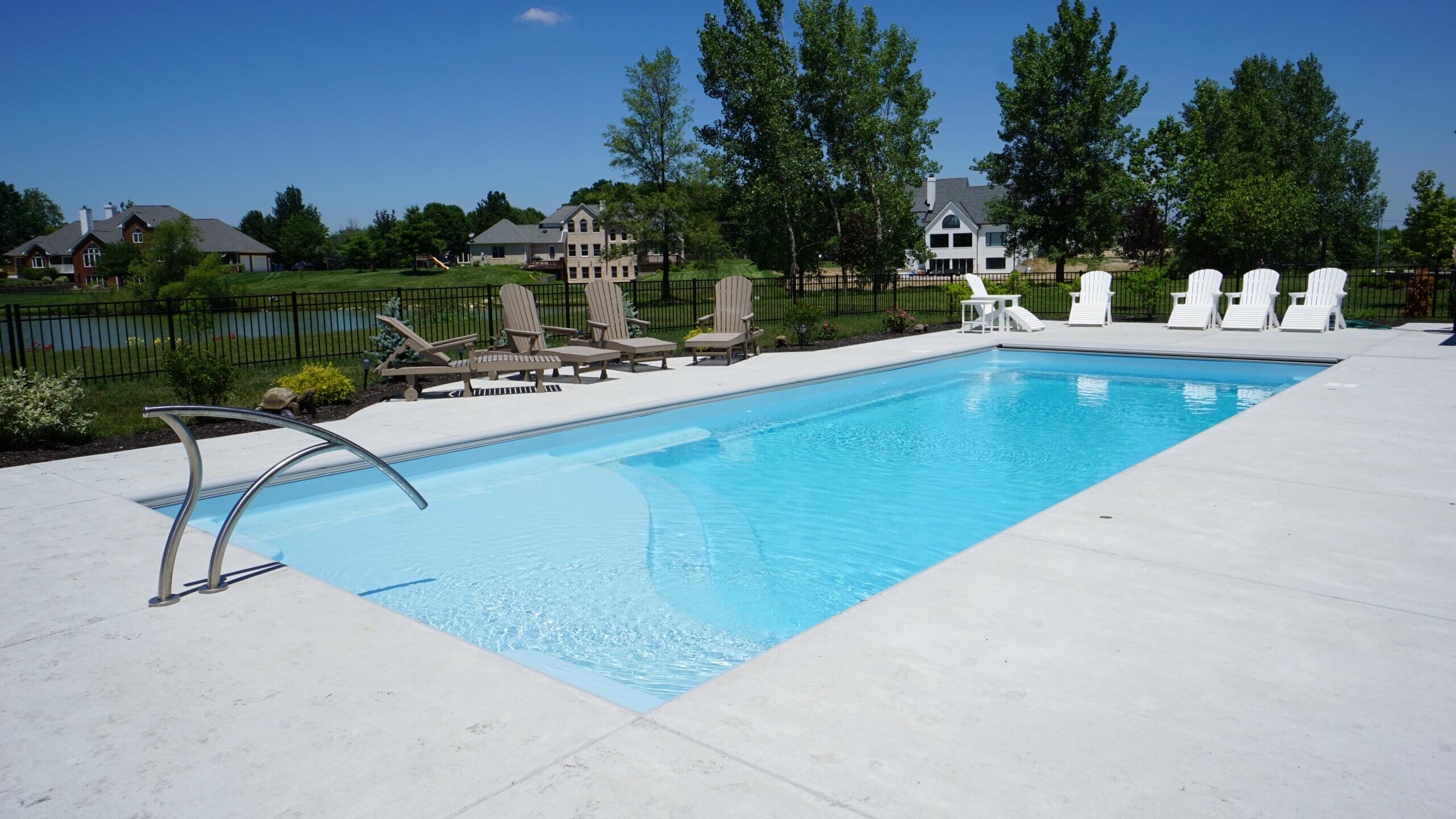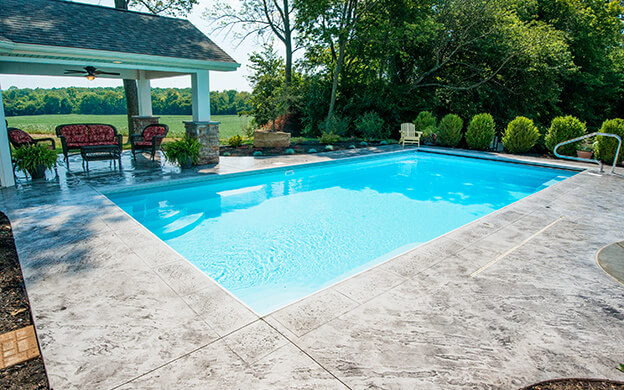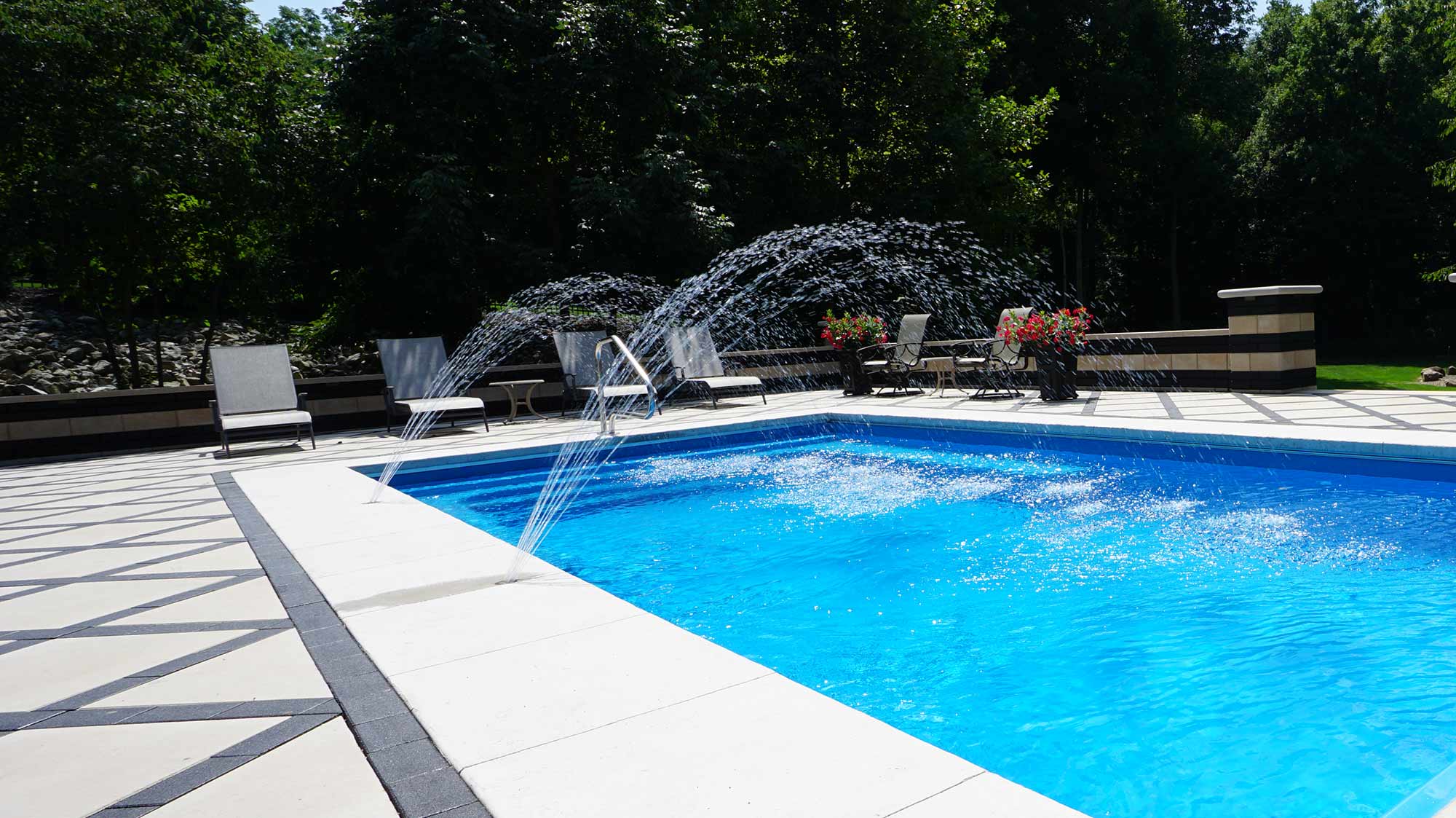
Plunge Pool Idea Book

Get inspired and explore the POSSIBILITIES!

Thursday Pools Plunge Pool Idea Book


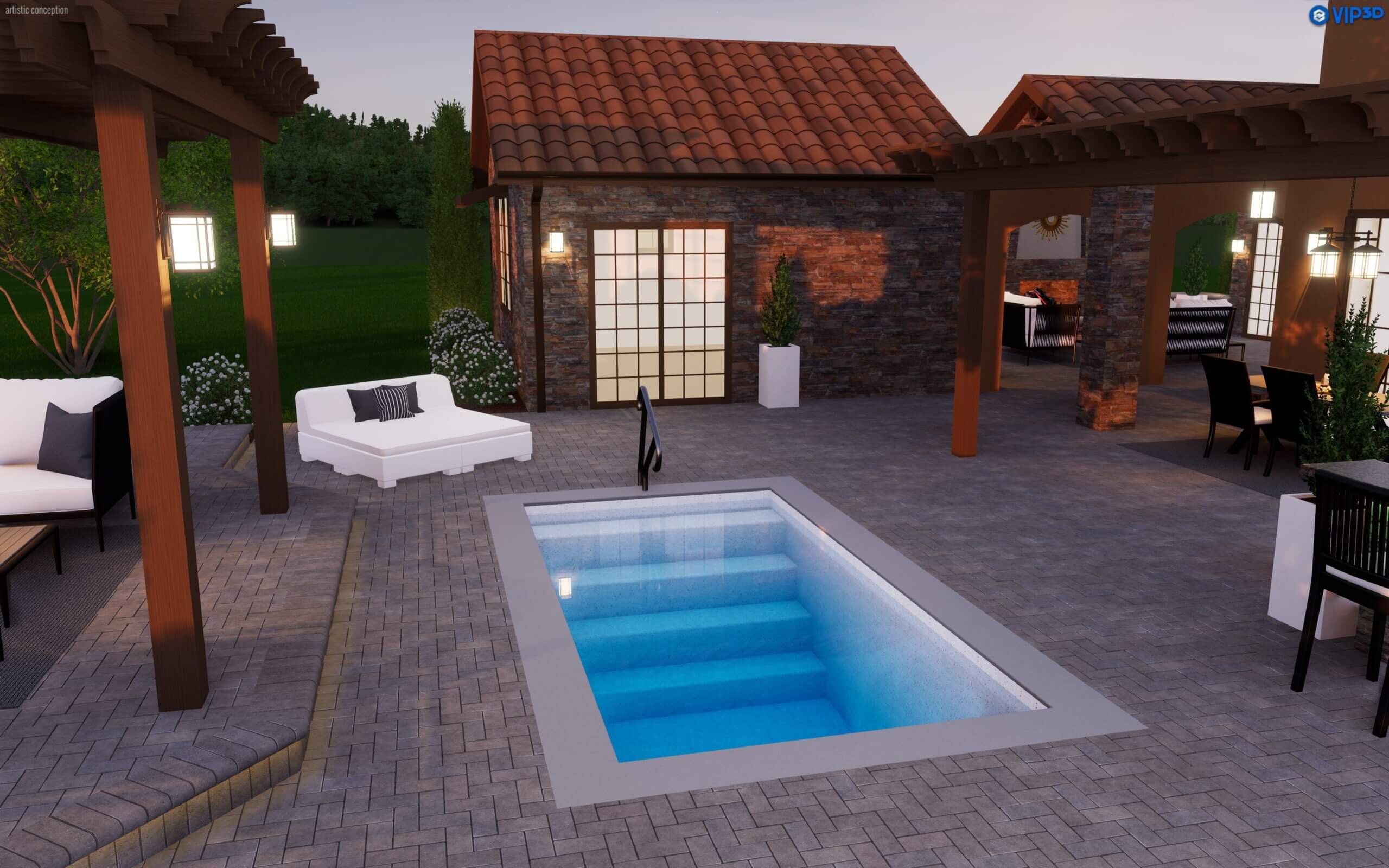
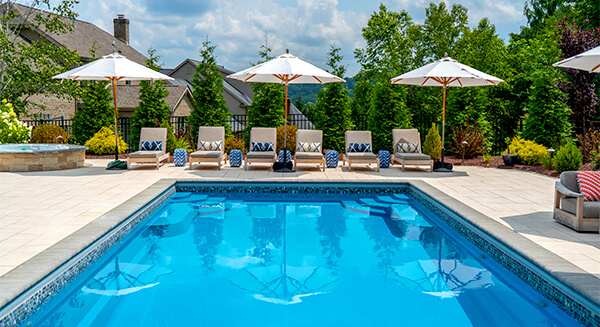
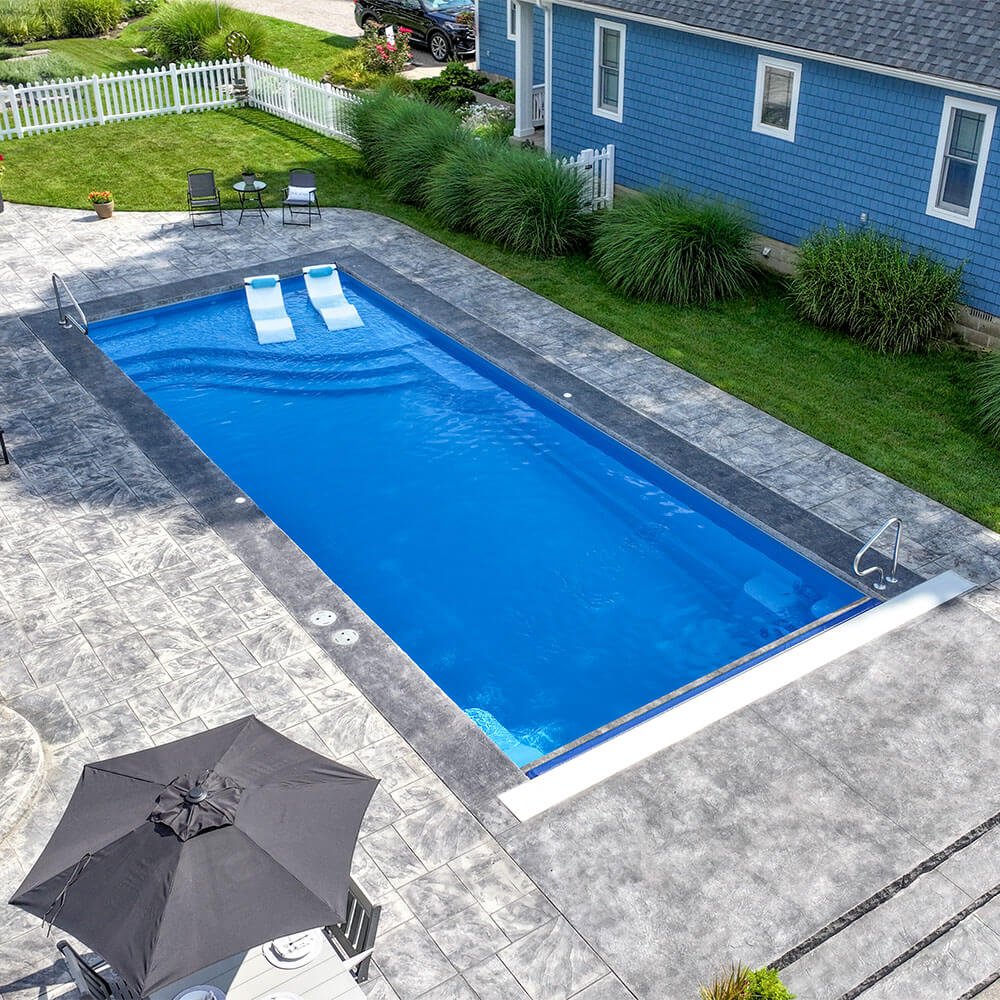
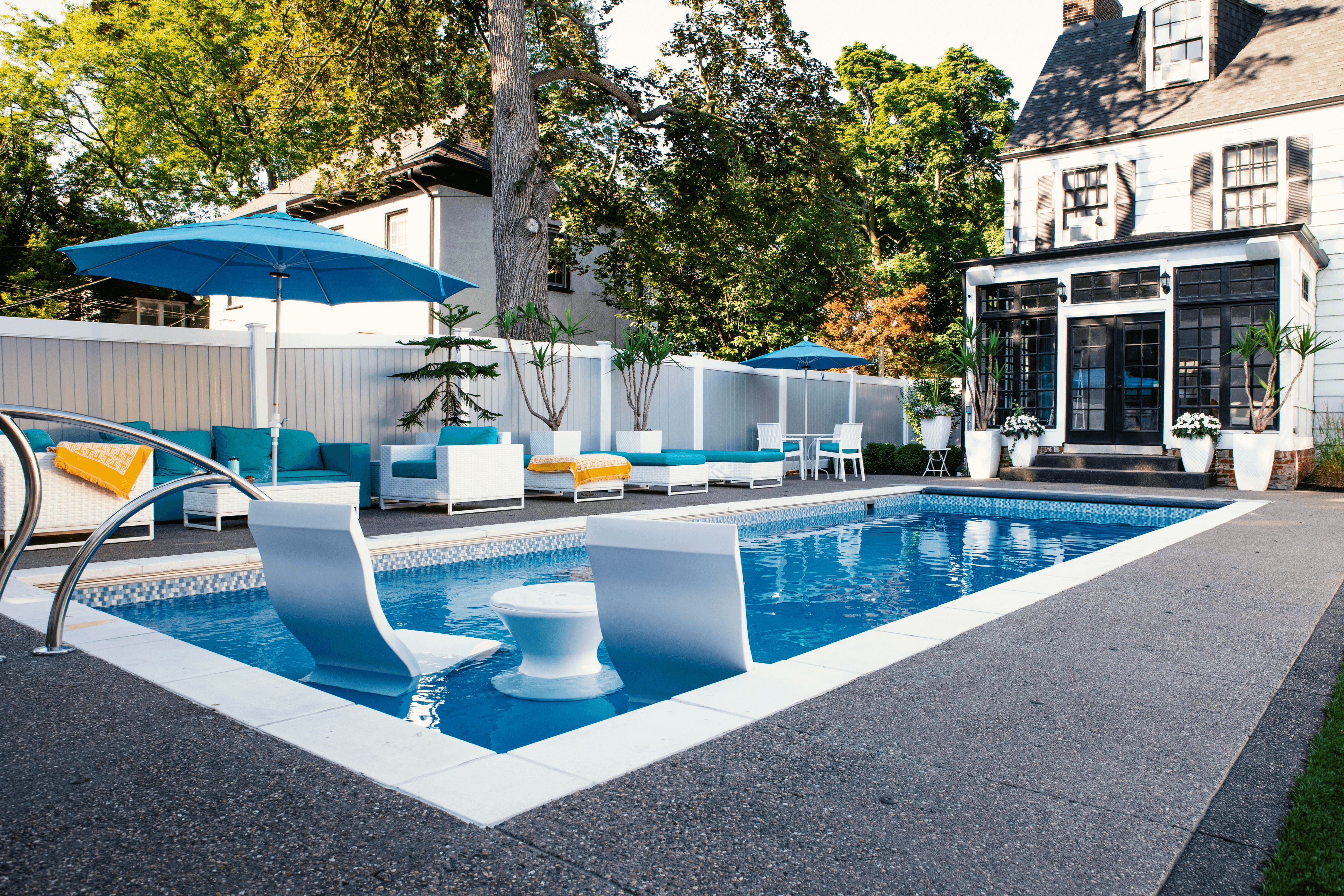
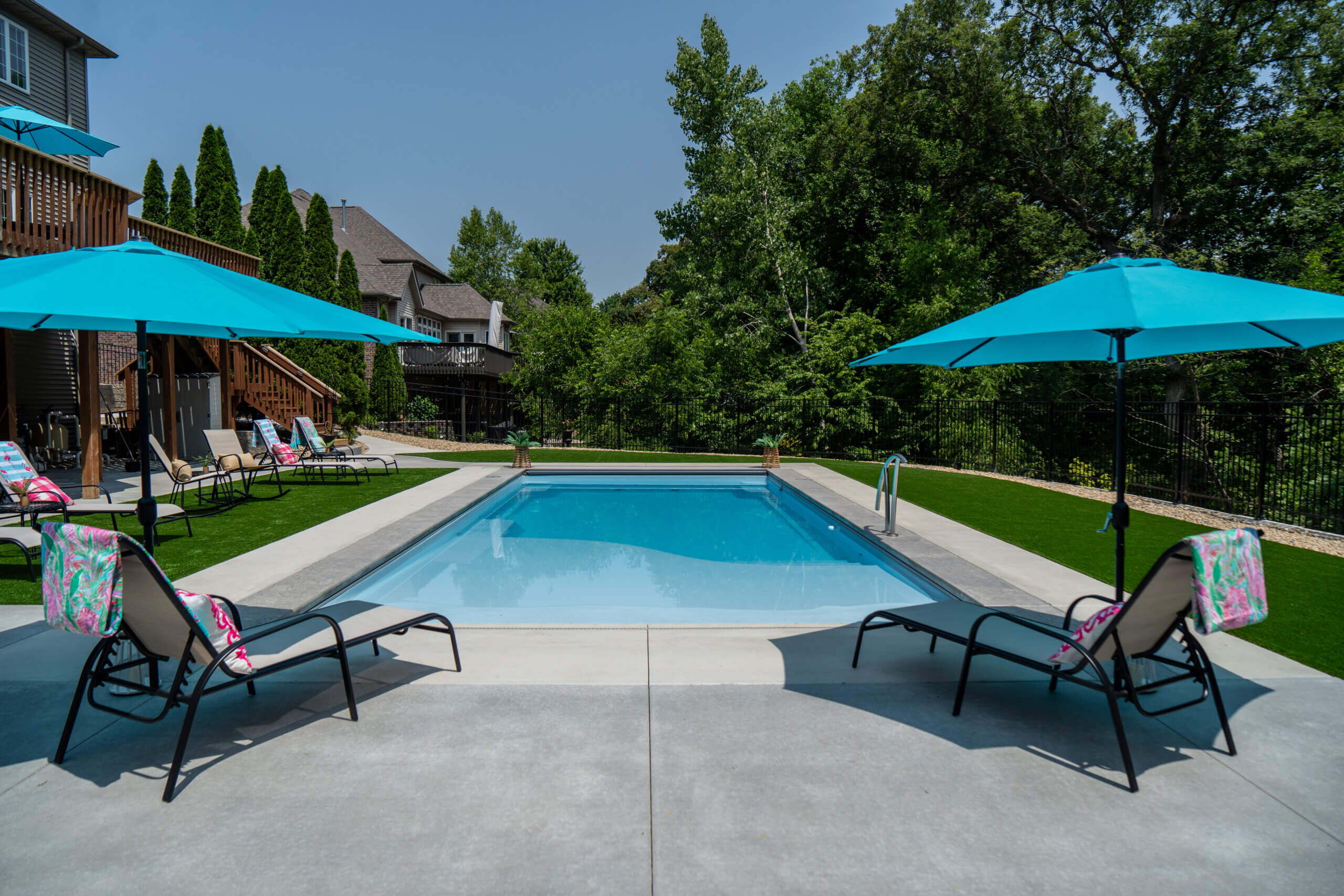
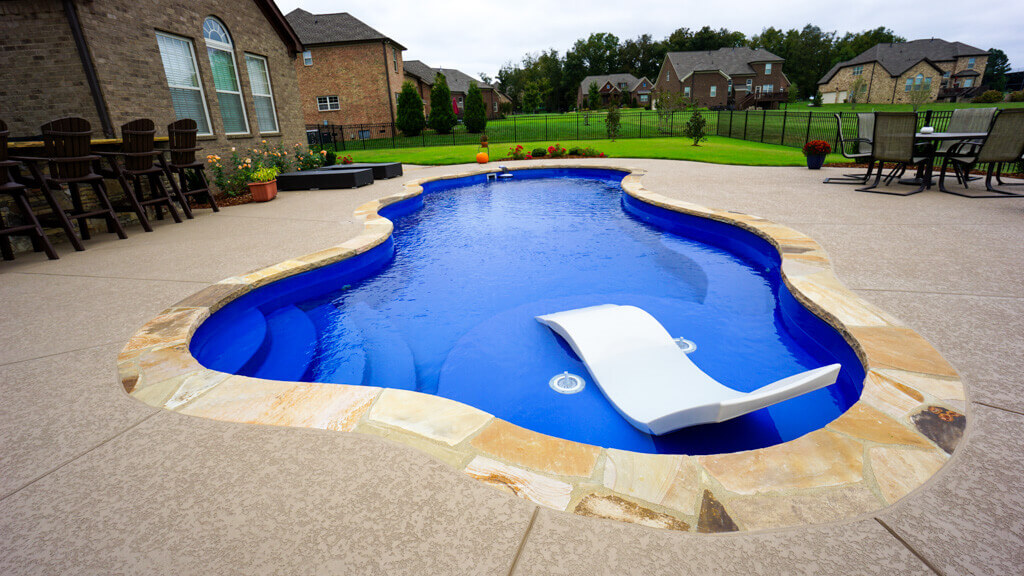
Create a gorgeous, private backyard swimming pool oasis that’s unique and all your own. Now’s the time to get inspired and imagine the possibilities with the Plunge Pool Idea Book.


With this eBook, you can:

  • Get ideas for landscaping and feature options.
  • Explore fiberglass plunge pool designs by shape, size, and color that match your lifestyle. 
  • Imagine an outdoor living space that will become the backdrop for a lifetime of memories. 


How Much Does an Inground Pool Cost in 2026?

Aspen 16x40 in MayaFor many homeowners, adding a pool creates a lasting space for connection, recreation, and relaxation. But costs are shifting with the economy, labor market, and materials. Whether you know what type of inground pool you want or are still researching pool types and materials and building a budget, final inground pool costs in 2026 will depend on the size and shape you choose, location and site conditions, the extra add-ons you want, and even what’s happening in the broader economy. 


2026 Inground Pool Costs by Pool Type

Homeowners’ final inground pool price tags can vary wildly based on location across the country, pool type, and design decisions. Most 2026 inground pool projects include standard installation services, but do not account for additional premium features, lavish landscaping, or a luxurious outdoor living space around the pool.


Vinyl liner pools feature moderate installation pricing ranging from $35,000 to $80,000. Don’t forget liner replacements every 5 to 15 years, costing between $3,000 and $7,500.


Concrete (gunite) pools are highly customizable, but the most expensive to install and maintain. A 2026 concrete inground pool installation can cost from $50,000 to $120,000 or more, and will need $300 to $1,000 acid wash treatments every 3 to 5 years, as well as $8,000 to $10,000 resurfacing every 10 to 15 years.


Fiberglass pools are our specialty, and Thursday Pools can offer unique insight into 2026 fiberglass pool costs through a recent survey of our independent dealer network. 


  • Small fiberglass pools (less than 26 feet long or 400 square feet) average approximately $74,000.


  • Medium fiberglass pools (between 27 and 34 feet long or 400 to 600 square feet) average around $109,000.


  • Large fiberglass pools (35 feet and longer or more than 600 square feet) average near $113,000.


Economic Forces Influencing 2026 Pool Costs

Your location, pool type, and pool size are among the most impactful factors for 2026 inground pool costs, but other macroeconomic currents will also influence prices.


1. Construction Spending and Tariff Pressures

Tariffs on materials like lumber, steel, and aluminum will continue to push up 2026 construction costs. Fiberglass inground pools don’t rely on wood and metal as much as other pool types, but rising costs in areas such as labor, excavation, and concrete work can ripple into all projects and budgets.


2. Tight Construction Labor Market

A 2025 Associated Builders and Contractors model estimates the construction industry needs 439,000 net new workers before the end of the year to meet anticipated demand—and then another 499,000 new workers in 2026. A gap in construction labor supply and demand inflates wages, stretches schedules, and can drive up inground pool installation bids. 


3. Inflation and Interest Rate Outlook

The Kiplinger Special Report on business costs for 2026 expects the Federal Reserve to cut interest rates by 2% by the end of the year, with inflation easing toward 3% and economic growth remaining modest. A softer cost of capital could lower financing costs for inground pool builds, while slower inflation may relieve pressure on materials and labor costs. Lower rates typically reduce contractors’ borrowing costs, which can help keep inground pool installation quotes in check.


Variables Shaping Your 2026 Inground Pool Budget

Even with overall estimates for inground pool installations handy, some details can significantly shift your 2026 inground pool investment.


Permits

Local license fees vary wildly and depend on your city, county, or neighborhood’s regulations and approval processes. Your local pool builder should be familiar with the area’s ordinances and municipalities’ inspection requirements. Permits can cost from $100 to $1,000 or more. Ask your pool dealer who is responsible for acquiring the necessary permits, and whether or not they are part of your installation costs. 


Excavation

Every inground pool needs a hole in the ground, but soil type, accessibility, and sloping yards can change digging complexities and cost. Excavation for a 2026 inground pool dig averages from $1,000 to $5,000. Softer loam soil with a balance of sand, silt, and clay is easiest to excavate, while challenging conditions, such as rocky soil or uneven terrain, could add costs from a few hundred to several thousand dollars to address. Ask your dealer whether their excavation costs also include hauling away dirt.


Fencing

Safety comes first, and many state or local municipalities have codes requiring 4- or 5-foot barrier fencing surrounding new 2026 inground pool builds. Depending on the quality and aesthetics of the fence’s material, homeowners should budget to spend between $10 and $45 per linear foot. For a typical 200- to 300-foot fence, that’s an average total cost between $2,000 and $13,500.


Electrical Work

Reliable electricity is essential for your inground pool’s pump, filter, lights, and other critical equipment or decorative touches. The average cost to hire an electrician for larger projects like an inground pool installation is between $2,000 and $10,000. Your local pool dealer may offer electrical wiring and installation work as part of their standard installation package—either way, we recommend budgeting for at least $3,000 to $5,000 at minimum in electrical work.


Pool Cover

Temporary inground pool covers cost much less than automatic safety covers, which come at a higher price but also enhance convenience and peace of mind. 

  • Winter covers can be inconvenient and cumbersome when closing your inground pool for the season, but they are a relatively inexpensive option with an average cost between $75 and $250.
  • Manual retractable pool covers install a reel with a mechanical roller to cover and uncover the pool quickly, and have an average cost range of $1,500 to $6,000.
  • Automatic pool covers are the most convenient option to open or close your inground pool at the touch of a button. A motor moves the retractable cover along a hidden track system under the pool decking, with installations averaging $8,000 to $20,000.


Pool Heater

Depending on where you live, a pool heater may be an essential inclusion or a luxurious add-on to lengthen your swimming season into cooler evenings and early spring or late fall weather. An electric resistance, natural gas, or propane inground pool heater can cost between $1,200 and $6,000 to install. Solar pool heaters and energy-efficient heat pumps average from $2,000 to $6,500, but feature lower monthly operating costs.


Patio, Decking, and Landscaping

Your inground pool may be the main draw, but the entire outdoor design should reflect your lifestyle and fit your vision. Paving, plantings, hardscape features, and other outdoor living space elements can boost enjoyment—but also your budget. Pool builders often include 3 feet of concrete decking around the pool perimeter, but lavish landscaping, a custom patio, and an outdoor living space with a fire pit or outdoor kitchen are typically additional expenses. Depending on the material—from poured or stamped concrete to brick, pavers, or natural stone—a 20-foot by 20-foot patio can average between $2,000 and $14,000.


FAQs: Saving Money on Your 2026 Inground Pool

Q: How can I keep pool costs manageable without sacrificing quality?
A: Prioritize must-haves first—like pool size, safety features, and basic decking. Extras such as water features or outdoor kitchens can always be added later once the core installation is complete.

Q: Are energy-efficient pool upgrades really worth it?
A: Yes. Variable-speed pumps, LED lighting, and heat pumps may cost more upfront, but they significantly reduce monthly operating expenses and typically pay for themselves over time.

Q: How can I avoid expensive repairs down the road?
A: Plan for maintenance from the start. A good pool cover, routine cleaning, and keeping water chemistry within ranges will protect your pool’s structure and equipment, saving money on repairs.


Planning for Your 2026 Inground Pool and Lifelong Investment

Building an inground pool in 2026 will require careful planning, but it remains one of the most rewarding upgrades you can make to your home. By factoring in size, pool type, site conditions, and the broader economic forces at play, you’ll be better prepared to shape a realistic budget.

To get a clearer picture, use the Thursday Pools Pool Cost Calculator and explore financing options with the Financing Calculator to see how monthly payments may fit your household budget. Then connect with an independent Thursday Pools dealer for tailored guidance. With the right preparation, your 2026 pool project can set the stage for years of enjoyment and value.
Plunge Pool

The Plunge Pool Series

BIG FUN

SMALL FOOTPRINT

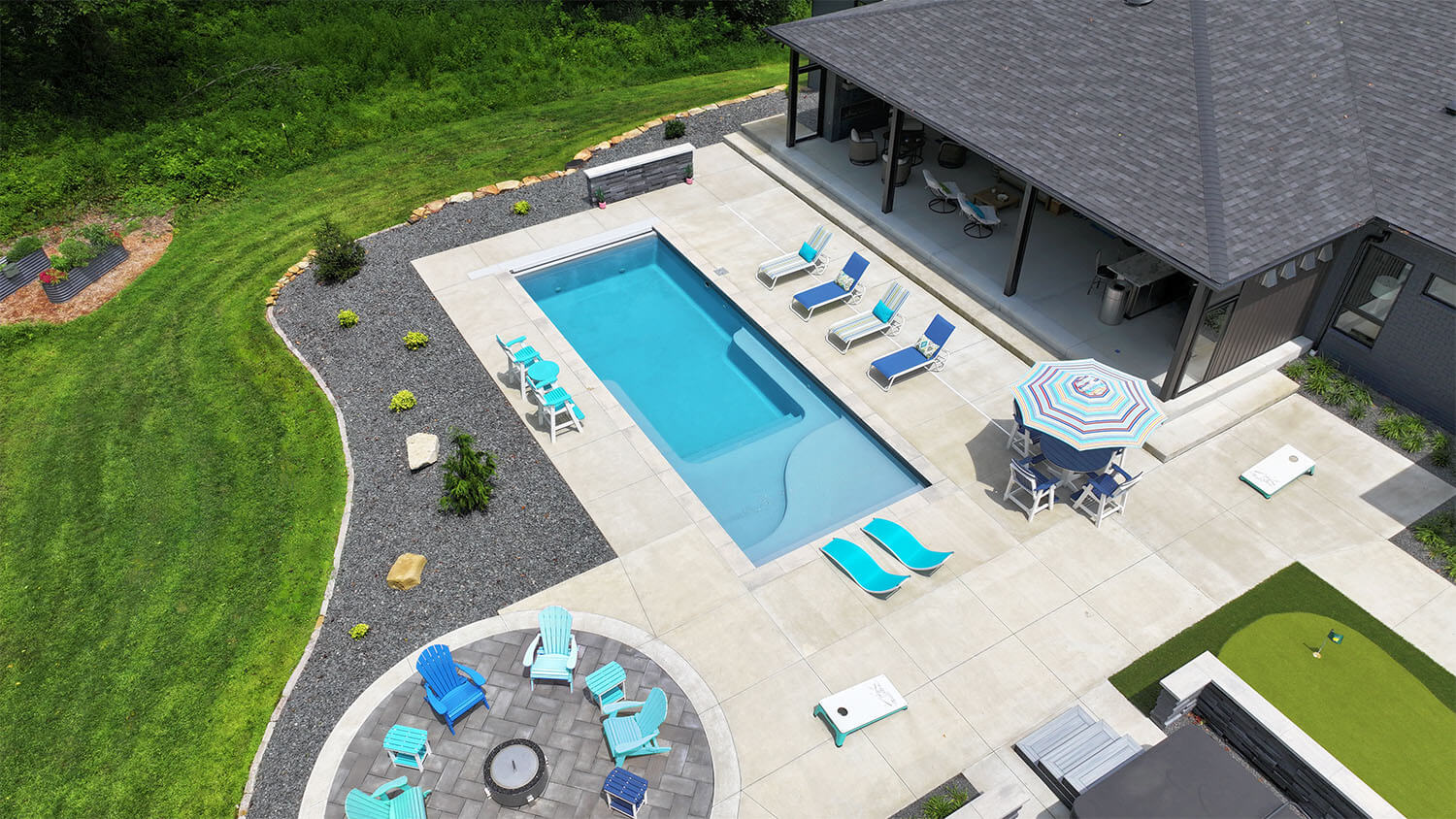
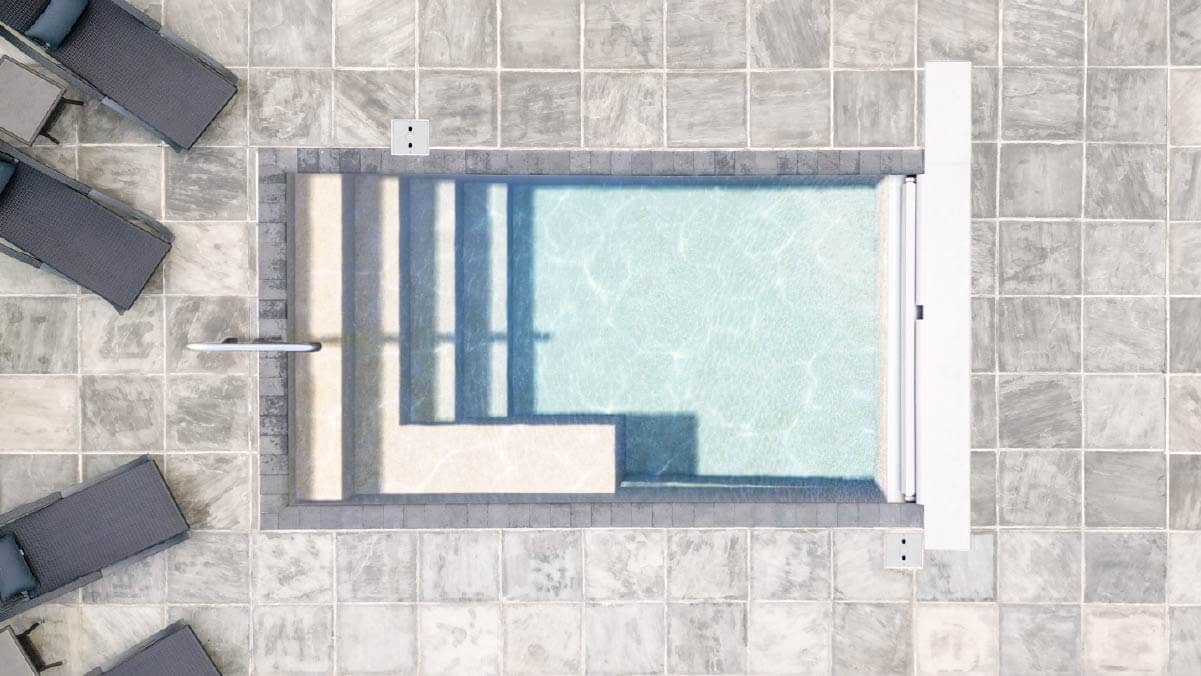
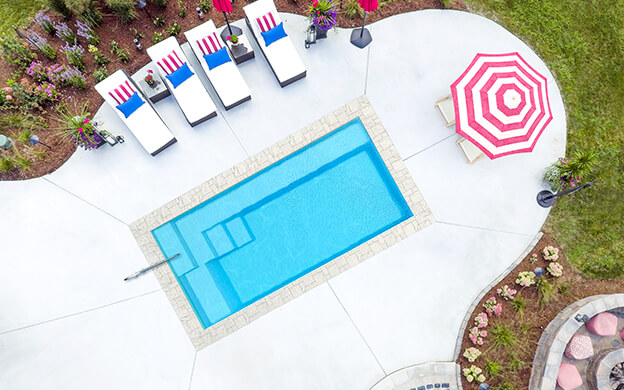
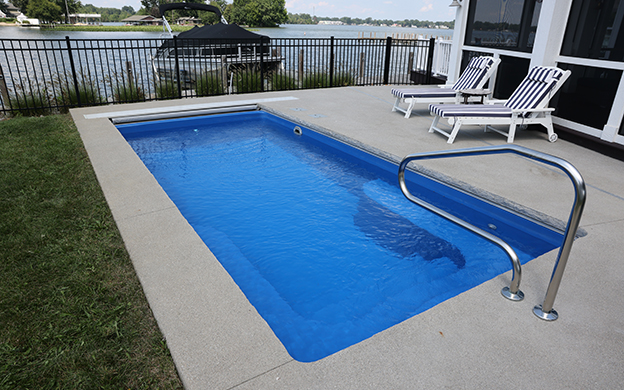
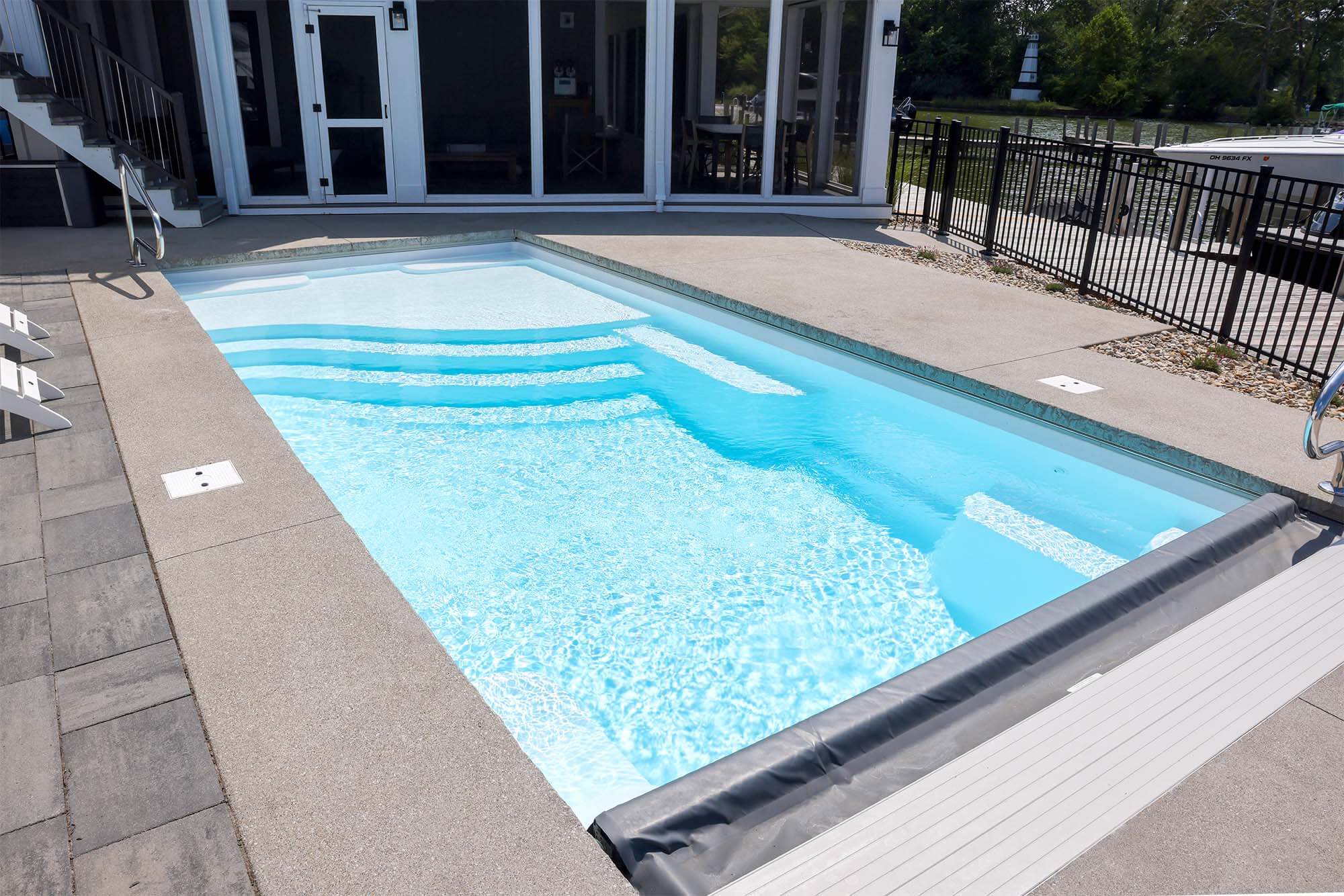
Smaller spaces deserve unforgettable experiences, and our Plunge Pool Series delivers just that. With sleek footprints, flat-bottom depths, and inviting features like built-in steps and wraparound benches, these compact pools maximize style and comfort without compromising yard space. Whether you want a private retreat or a social hub, the Plunge Pool Series elevates the mood.

TAKE THE PLUNGE

THE Nest

Compact, Open, and Inviting

The Nest makes every backyard feel spacious with its full-width entry steps and streamlined design. At 8’ 4” x 16’ with a 4’8” depth, it’s just the right size for light exercise or a quick dip. The Nest offers a balance of style and comfort that feels refreshingly effortless.

The Nest Feature Video
The Nook by Thursday Pools is Auto Cover Ready

THE Nook

Small Footprint, Big Personality

At 8’ 4” x 16’ with a 4’8” depth, the Nook delivers minimalist elegance in nearly any backyard. With integrated wraparound bench seating, built-in steps, and a flat-bottom depth, it’s ideal for cozy courtyards, private retreats, or spur-of-the-moment splashes that turn into long conversations.

THE Drift

Relax, Refresh, Repeat

The Drift takes plunge pool comfort to the next level with a built-in wraparound bench that extends the full length of the pool. Measuring 8’ 4” x 16’ with a 4’8” depth, you’ll have ample space to lounge, chat, or simply unwind. This compact design is perfect for quiet moments and lively gatherings.

The Nest Feature Video
The Nook by Thursday Pools is Auto Cover Ready

The Sea turtle

Playful Size, Endless Splash

The Sea Turtle proves that small can be mighty. Its 9’9” x 19’9” with a 4’6” depth allows room for relaxation, light exercise, or play. This versatile plunge design keeps the good times flowing in even the coziest backyards.

THE TITUS

A Fun-Sized Fan Favorite

At 12’ x 26’ with a 5’5” depth, the mellow lines of the Titus plunge pool make a small backyard feel like an escape. Its compact size softens sharp corners and hard edges, while the curved entry steps and benches invite you to linger.

Thursday Pools' Titus 1226 California Pools by Design 09/19/2014
Hendrick Pools install Aspen by Thursday Pools

The ASPEN

Rocky Mountain High in Compact Size

Our best-selling pool design, the Aspen also comes in 12’ x 25’ with a 5’1” depth. Made for smaller yards, its sleek style and signature features bring the Rocky Mountain high life within reach.

THE GOLIATH

Big Attitude in a Smaller Frame

Goliath is legendary for a reason, and its bold design is available in a more compact plunge size. With the same striking presence and thoughtful details, the 12’ x 25’ with a 5’4” depth. Goliath delivers maximum impact without taking up a lot of space.

Goliath fiberglass pool in color Caribbean Sparkle
Thursday Pools Plunge Pool Idea Book

Flip Through the All-New Plunge Pool Idea Book

Ready to see how a plunge pool can change the way you enjoy your backyard? The Thursday Pools Plunge Pool Idea Book gives you an inside look at every model in the series, with details on sizes, features, colors, and the smart design elements that make each pool feel surprisingly spacious.

You’ll get a feel for the style and personality of each model, plus practical guidance on maintenance, safety, exercise options, and what to expect as you move from choosing your pool to installation. It’s everything you need to start imagining how a plunge pool could elevate your everyday life at home.

Learn More and Get an Estimate

If you have questions about our designs and want to discuss your needs or budget, complete the form below. We will connect you with an independent Thursday Pools dealer in your area who can answer your questions, conduct an on-site consultation, and provide an accurate estimate for your plunge pool paradise.

How Much Will It Cost to Build an Inground Pool in 2025?

Are you planning on turning your backyard into your private paradise next year? With the rising popularity of outdoor living spaces, adding an  inground pool is one of the most rewarding upgrades homeowners make. But before plunging in, you are likely wondering, “How much will it actually cost to build a pool in 2025?” Inground pool costs can vary widely depending on factors like design, materials, and location, making it essential to understand what you’re investing in. Whether you want to build a sleek modern staycation location or a luxurious resort-style retreat, understanding the cost factors can help you plan more effectively.


Inground Pool Costs in 2025

2024 Inground Pool Cost Summary

Before discussing next year’s potential pool prices, let’s start with today’s market. As a baseline, here are the average costs of inground pools as of 2024:

These prices include the installation but do not account for additional features, landscaping, or ongoing maintenance costs.


What Other Key Factors Affect Pool Costs?

Beyond the basic pool types, universal factors will influence the cost of all 2025 pool installations. The following five are among the most significant and impactful.

  1. Excavation Costs: The cost of excavating your yard varies depending on factors such as soil type, digging depth, terrain complexity, and obstructions. Average excavation costs range from $2.50 to $15.00 per cubic yard. Softer soils like sand are the least expensive to excavate, while more challenging conditions, such as rocky soil or bedrock, can cost $50 to over $200 per cubic yard.
  2. Pool Safety: Your insurance company, state government, or local agencies may require pool fencing. Fencing costs average around $15 to $25 per linear foot
  3. Patio & Decking: Some decking around your pool perimeter may be included in your pool quote, but you may want to extend your living space beyond it. Basic concrete decks may cost  $5 to $15 per square foot, while higher-end materials, such as paver patios, can range between  $8 to $50 per square foot.
  4. Pool Equipment & Features: Pool heaters, automatic covers, underwater lighting, and other features are optional, but they can provide priceless comfort and safety. A pool heater with installation ranges from $1,500 to $6,000 for gas, propane, electric resistance, and heat pumps. Solar pool heaters cost between $2,500 and $6,500. An automatic pool cover costs $8,000 to $20,000 installed and $1,000 to $3,600 for a manual cover. Inground pool lights cost $700 to $1,800.

Factors Affecting Pool Prices in 2025

While we wish we had a crystal ball, we can’t predict pool prices with certainty. However, we can look at a few factors that may affect the market in 2025. The following predictions are based on the most recent U.S. economic forecast from Deloitte Global Economics Research Center.

  1. Inflation and Interest Rates: The forecast suggests that inflation will continue to be a concern. However, it is expected to moderate slightly as the Federal Reserve cuts interest rates gradually throughout 2024 and into 2025. Nevertheless, rates will still be higher than pre-pandemic levels, so financing pool construction could remain expensive. High borrowing costs will add to overall project expenses, particularly if you plan to finance your pool.​
  2. Labor Market Pressures: Although job growth is expected to slow in 2025, the labor market remains relatively tight, which could keep wages elevated. Higher wages for skilled construction workers will likely continue to drive up labor costs associated with pool installations. This factor contributes to the overall increase in pool prices, especially for labor-intensive types like gunite pools​.
  3. Consumer Spending and Confidence: Consumer spending is expected to slow as excess savings built up during the pandemic deplete and inflation affects disposable income. However, spending on home improvements, such as pools, may still see interest as homeowners focus on enhancing their living spaces. Continued demand could increase prices as contractors manage backlogs and prioritize high-paying projects.

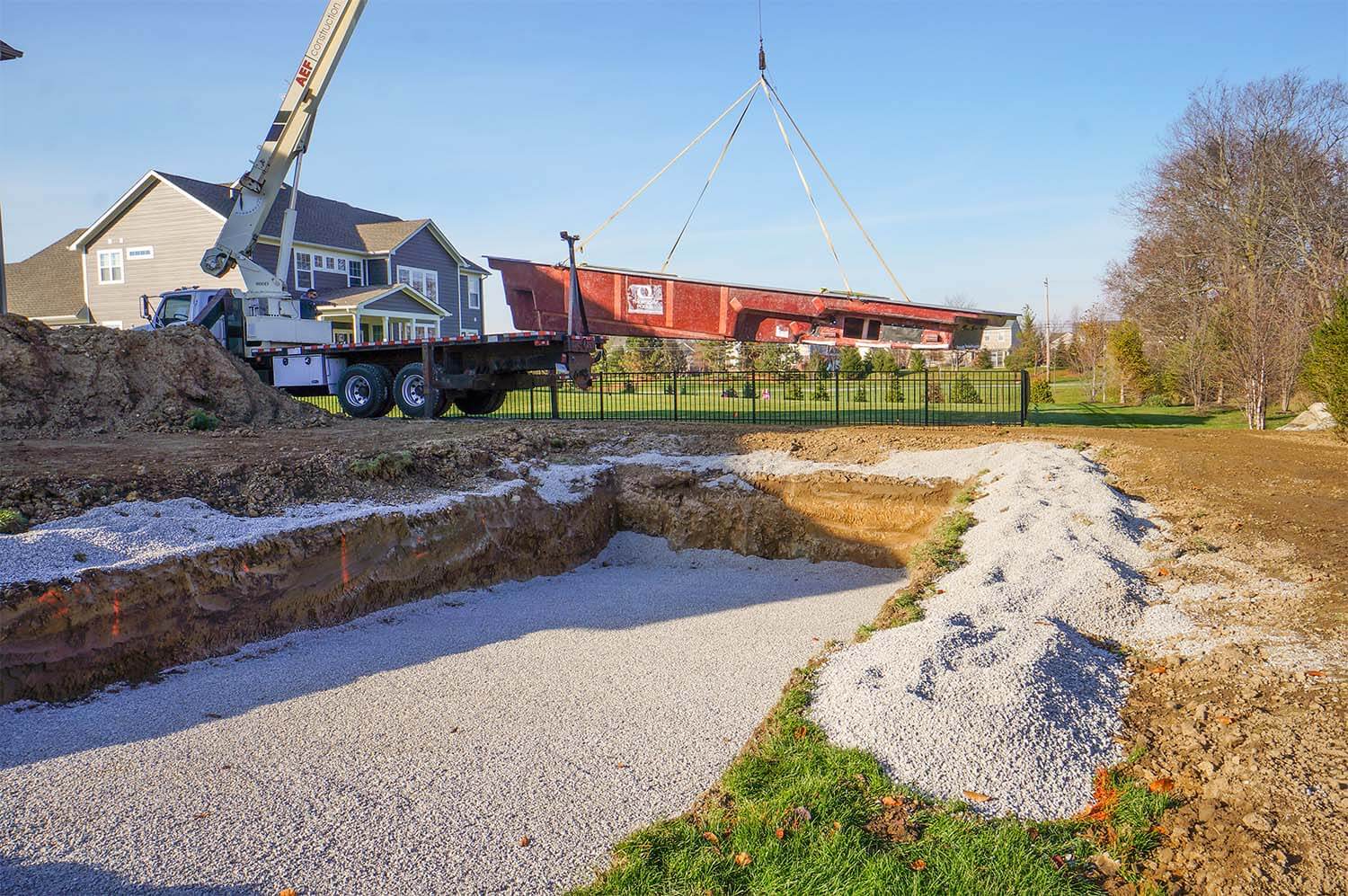
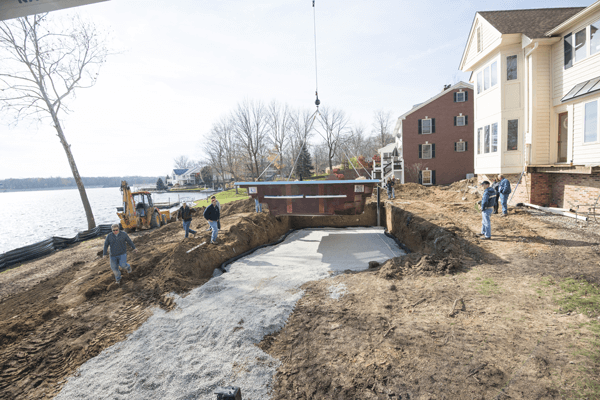
All considered, a price increase for all pool types is possible. One key takeaway is that the more labor-intensive the installation, the more likely prices will increase. Fiberglass pools are the least labor-intensive because they are pre-manufactured off-site and delivered as a single unit. The installation process is much quicker, often taking just a few days to a couple of weeks, with minimal on-site work required beyond excavation and setting the pool into place.


Money Saving Tips for Pool Buyers in 2025

  1. Prioritize Features: Focus on essential features first and consider adding non-essential upgrades later. This approach helps manage costs while still achieving your desired pool experience.
  2. Consider Financing Options: If high interest rates persist, explore all financing options, including home equity loans or pool-specific financing, to find the best terms.
  3. Invest in Energy-Efficient Equipment: Choose energy-efficient options such as variable-speed pumps, LED lighting, and solar heaters. These reduce long-term operating costs and make your pool more eco-friendly, providing ongoing savings on energy bills.
  4. Keep Maintenance Costs Low: Regular maintenance can prevent costly repairs in the future. Investing in a pool cover can help reduce evaporation and keep debris out, saving on water and chemical costs. Efficiently managing your pool’s water levels and chemical balance also helps maintain the pool’s condition while keeping costs manageable.


Building a pool will always be a significant investment, and the type of inground pool you choose in 2025 can significantly impact upfront and long-term costs. Working with a reputable pool dealer and builder who understands your vision and can advise on cost-saving ideas is crucial no matter when or which option you choose.

Begin building a clearer picture of what your inground pool might cost with Thursday Pools’ Pool Cost Calculator, or book a consultation and on-site evaluation with an independent pool dealer near you.

Inground Pool Shapes Guide

Everything You Need To Know About Fiberglass Pool Installation

How to Protect Your Pool Water Balance During the Off-season


As the vibrant days of summer fade into the crisp air of autumn, fiberglass pool owners face the critical task of preparing their pools for the off-season. However, the upcoming period of dormancy does not equate to a halt in maintenance efforts. Instead, the off-season requires a strategic approach to ensure your pool water is neither corrosive nor scaling and will be ready for the next swimming season. Smart homeowners must understand the essential steps for monitoring the pool’s water chemistry balance during the colder months to safeguard against potential damage that winter can bring.


Water Chemistry Challenges in the Off-Season

Fiberglass pools, celebrated for their durability and longevity, are not immune to all the challenges of changing seasons. Fiberglass pool shells are generally resilient against winter conditions thanks to their flexibility, which can withstand stress from freezing temperatures. However, harsh winter conditions can still threaten the water balance and the pool surface if you do not properly winterize the pool. The risk of damage escalates during winter when colder water temperatures can render the water more aggressive. This aggressiveness primarily stems from the water’s chemistry balance shifting with temperature changes, potentially leading to issues that can compromise the integrity of your pool’s finish.


Seasonal Cleaning and Preparation

The first step in your off-season maintenance routine should be thoroughly cleaning your pool. End-of-season cleaning includes wiping down the waterline with a soft brush to eliminate any buildup of debris, sunscreen, body oils, and other contaminants that may have accumulated over the swimming season. Brush all pool surfaces, paying extra attention to corners and steps where algae and bacteria might accumulate. Remove all leaves, debris, and dirt from the water using a skimmer, and vacuum the pool thoroughly to eliminate any settled particles or algae. A clean pool goes beyond attractive aesthetics to create a stable foundation for your off-season water balance efforts.


The Role of a Pool Cover

Investing in a high-quality pool cover offers multiple benefits throughout the year, with its importance magnified during the off-season. A pool cover acts as a barrier against debris, reduces water evaporation, and helps maintain the pool’s water chemistry balance by minimizing external influences. 


Especially important for households with children or pets, a properly secured winter pool cover can also prevent accidental falls into the pool. Safety covers can withstand a person’s weight, providing an extra layer of protection when the pool is not in use. More than a convenience, a pool cover offers peace of mind and ensures your pool remains clean, sealed, and safe throughout the winter.


Enjoy the Benefits of Proactive Off-Season Maintenance

The effort you put into off-season maintenance directly impacts the longevity and condition of your fiberglass pool. By taking steps to clean your pool, adjust its water chemistry for the cold, periodically check its balance, and secure it with a pool cover, you protect your investment and make for an easier and more efficient opening in the spring.


A proactive approach ensures your pool remains a source of enjoyment and relaxation for many years without extensive repairs or adjustments when the swim season arrives. Embrace the off-season as an opportunity to ensure your fiberglass pool’s continued health, beauty, and enjoyment.


Frequently Asked Questions About Off-Season Pool Water Chemistry


Why is water chemistry so important during the off-season?

Cold water can shift your pool’s chemistry and become more aggressive. Keeping pH, total alkalinity, and calcium in check, and routine use of a stain and scale product, helps protect your fiberglass surface and equipment throughout the winter months.


Do I need to clean my pool before closing for the season?

Yes. A thorough cleaning is essential. Brush all surfaces, skim, and vacuum to eliminate algae, dirt, and debris. A clean pool sets the stage for stable water chemistry all winter long.


What role does a pool cover play in off-season maintenance?

A high-quality pool cover keeps debris, dirt, and leaves out of the water, reduces evaporation, and helps preserve your pool’s chemical balance. Covers make winter care easier and spring openings faster.


Should I check my pool’s water chemistry during the winter?

Yes. Weather permitting, check the water’s balance periodically. Cold water’s chemistry can still shift over time, and making small adjustments ensures it remains stable. Regular checks prevent surprises at spring opening and help extend the life and beauty of your fiberglass pool.


What are the most common mistakes pool owners make during the off-season?

The biggest mistakes include failing to balance water chemistry for colder temperatures, skipping a thorough cleaning before closing, and not using a quality pool cover. Neglecting these steps can lead to algae growth, staining, scaling, or corrosion that makes spring opening more difficult and costly.


How does proper off-season care make spring opening easier?

When you clean, balance, and cover your pool correctly before winter, you prevent debris buildup and chemical imbalances. That means fewer surprises—like cloudy water, stains, or equipment issues—when you reopen. A proactive approach saves time, reduces costs, and helps you start swimming sooner in the spring.

What is LSI?

LSI and Fiberglass Pool Chemistry

The Langelier Saturation Index (LSI) is a formula that the gunite pool industry adopted to determine water balance and predict whether water will form calcium scale or dissolve it. Some pool industry professionals insist you should focus strictly on LSI balance, but for fiberglass, that advice can damage your pool. However, an LSI calculator can be helpful for fiberglass pool owners as a secondary tool in keeping critical factors of water chemistry within fiberglass-safe target ranges. 

What Are Fiberglass-Safe Water Chemistry Target Ranges?

  • pH: 7.2 to 7.4
  • Total Alkalinity (TA): 80 to 120 ppm
  • Free Chlorine (FC): 1 to 3 ppm 
  • Cyanuric Acid (CYA): 30 to 50 ppm
  • Calcium Hardness (CH): Less than 120 ppm (NEVERt add calcium)
  • Total Dissolved Solids (TDS): Less than 1,500 ppm (or up to 1,000 ppm above your salt level)

Always use a stain and scale control or chelating and sequestering agent as part of routine care and for winterization. Never use calcium hypochlorite or any calcium-adding products in fiberglass pools. When pH, calcium, and chlorine are all elevated at the same time, the risk of damage to the fiberglass pool gelcoat increases significantly. If only one or two are high, the risk of damage is lower but still present.

What is LSI?

The Langelier Saturation Index was developed in the 1930s by Dr. Wilfred Langelier to help cities predict whether water would deposit calcium carbonate scale inside pipes or dissolve it. The concept later made its way into the pool industry because it’s an easy way to check water chemistry with respect to calcium carbonate.


Simply put, LSI looks at pH, alkalinity, temperature, and calcium levels together and estimates whether water is likely to scale (represented with a positive-number LSI) or dissolve calcium (negative LSI).


Why is LSI Secondary for Fiberglass Pools?

Concrete and plaster pools contain calcium in their walls. If the water is too “hungry” (what pool pros call “aggressive water”), it pulls calcium out of those surfaces, causing rough spots or etching.


Fiberglass pools are different. The shell doesn’t contain calcium, so aggressive water won’t leach anything from it. Instead, the bigger risk is the opposite: too much calcium in the water. When high calcium combines with high pH or high chlorine, it can cause discoloration on the gelcoat. That’s why adding calcium to “fix” LSI—something that works for concrete—can actually damage fiberglass.

How Do I Use LSI in a Fiberglass-Safe Way? Practical Steps to Take

Think of LSI as a final check after you’ve set your fiberglass targets.

  1. Dial in the targets first: pH between 7.2 and 7.4, TA between 80 and 120 ppm, FC at 1 to 3 ppm, CYA at 30 to 50 ppm, and CH less than 120 ppm.
  2. Check LSI last: Aim for roughly -0.30 to +0.30.
    • In cold water, from late fall through winter, a slightly negative LSI is acceptable.
    • Do not push water chemistry factors outside of fiberglass-safe ranges in order to hit perfectly balanced 0.0.
  1. If LSI is too positive and water is scale-prone:
    • Bring pH toward 7.2 to 7.4 without overshooting high.
    • Confirm TA is within 80 to 120 ppm.
    • Do not add calcium. Keep using your stain and scale control.
  1. If LSI is too negative and water is aggressive:
    • Make sure pH is not below 7.2 and adjust gently.
    • Bring TA within 80 to 120 ppm.
    • A cold-weather LSI total slightly below -0.30 can be acceptable for fiberglass.

Looking for more information on water chemistry and fiberglass pool maintenance? Explore Thursday Pools’ Ultimate Fiberglass Pool Maintenance Guide.


And if you’re ready for personalized advice or want to talk about water chemistry ranges with a local pool pro, connect with an independent Thursday Pools dealer near you.


Frequently Asked Questions About LSI

My LSI is +0.5 but my pH is 7.6. Should I add calcium to bring it down?

No. For fiberglass, keep calcium hardness levels less than 120 ppm. Lower pH toward 7.2 to 7.4 and verify total alkalinity between 80 and 120. Keep using a stain and scale control product. Calcium may fix LSI for concrete pools, but it causes more harm than good in fiberglass.

What if my fill water is hard?

Use a stain and scale control product and manage pH and total alkalinity. The goal is to prevent calcium fallout onto the gelcoat, not raise calcium. 

Can I “balance for LSI” during winter?

You can allow a slightly negative LSI in cold water, but always stay within fiberglass-safe pH and total alkalinity ranges, keep calcium hardness less than 120 ppm, and use additional stain and scale control at pool closing.

Do I need to calculate LSI every time I test my pool water?

No. Focus first on fiberglass-safe water chemistry ranges for pH, alkalinity, chlorine, and calcium. 

Why is calcium hardness so important for fiberglass pools?

Fiberglass shells don’t need calcium for structural protection, unlike concrete pools. Too much calcium in fiberglass pools leads to scale, discoloration, and rough surfaces, so always keep levels less than 120 ppm. If you have hard source water and your calcium is high, be sure to use a stain and scale control product.

The Best Robotic Cleaners For Inground Fiberglass Pools

Every fiberglass pool owner should have a thorough and working knowledge of necessary pool maintenance. It’s essential to stay on top of care and maintenance from the time you open your pool in the spring through closing it for the winter. Robotic pool cleaners can be a great help when it comes to keeping dirt and debris out of your pool, saving you time and effort. With an overwhelming amount of options available on the market, all with various features and benefits you may or may not need, deciding on a robotic pool cleaner can feel overwhelming. In our experience, the following four models are great at getting the job done while you sit back and relax.


Hayward TigerShark


A Hayward TigerShark robot can clean a 20’ x 40’ pool’s floors, walls, and waterline in just three hours. There are three configurations to choose from, including the standard TigerShark, the TigerShark Plus with remote control capabilities, and the TigerShark QC featuring a patented 90-minute quick-cleaning alternative mode. All the TigerShark models have an easy-to-clean cartridge filter system and a 24-volt motor to conserve energy and save you pool maintenance costs over time.


Thursday Pools TigersharkAverage Price: Less than $1,500


Highlights:

  • Easy-to-clean cartridge
  • Lightweight design
  • On-board pump for intense vacuum power
  • Pool length: Up to 40 feet
  • 1- to 3-year warranty depending on model
  • Cordless
  • Programmable


Dolphin Nautilus CC Plus with Wi-Fi


Dolphin’s Nautilus CC Plus with Wi-Fi features an award-winning design backed by more than 25 years of technology innovations. The unit weighs less than 21 pounds and includes a 2.5-year warranty. A swivel system enables tangle-free operation, and a smart navigation system allows the vacuum to clean a pool in approximately two hours. The Nautilus CC Plus features rubber tracks that grip the pool surface in order to get into tight corners, up walls, and across tanning ledges. A fine filter traps algae, dirt, bacteria, and biofilm, while a high-RPM system provides a deep clean.


With Wi-Fi connectivity, you can run the Nautilus CC Plus from anywhere with just a few taps on the cleaner’s smartphone app.


Thursday Pools' dolphin robotic cleaner for inground fiberglas pools.Average Price: Less than $900


Highlights:

  • East-to-clean cartridge
  • Lightweight design
  • Pool Length: Up to 33 feet
  • 2.5-year warranty
  • Swivel cables for tangle-free operation
  • Programmable


Polaris 9450 Sport


The Polaris 9450 Sport is a lightweight robotic cleaner that can clean your pool in less than two hours. The “Aqua Trax” tires enable the Polaris to move freely across floors, steps, and walls. It has a navigation system that automatically controls the robot’s position, providing cleaning coverage without hang-ups. The 9450 Sport uses Polaris’s Vortex Vacuum technology that filters out particles and quickly gathers large debris. With a seven-day programmable timer, you can customize your settings and select the cleaning modes that work best for you. After cleaning, the 4950 Sport surfaces at the touch of a button, waits for you to grab it, then automatically evacuates water for effortless removal from the pool.


Thursday Pools' polaris robotic cleaners for inground fiberglass pools.Average Price: Less than $1,000


Highlights:

  • Easy-to-access filter canister
  • Lightweight design 
  • Easy to remove from the pool
  • 2-year warranty
  • Programmable


Aquabot X4 


The Aquabot X4 is ideal for all pool shapes and sizes with its 4WD non-marring, high-grip wheels for superior traction. The X4’s ultra-fine mesh filter baskets capture dirt, debris, and fine particulate down to 2 microns in size. The Anti-Tangle Swivel prevents the rover from getting hung up, and the straightforward interface makes it easy to operate and program. You can choose cleaning cycles between one and two hours long while programming for it to run automatically every 48, 72, or 96 hours.


Thursday Pools' robotic cleaner for inground fiberglass pools called the aquabot.Average Price: Less than $800


Highlights:

  • Easy-to-access filter
  • Lightweight design
  • Pool Length: Up to 60 feet
  • Energy-efficient
  • 3-year warranty
  • Programmable


Looking for more information on fiberglass pool care? Explore Thursday Pools’ Ultimate Fiberglass Pool Maintenance Guide for a thorough look at everything you need to know.


And if you’re ready for personalized advice, connect with a local independent Thursday Pools dealer near you.


Frequently Asked Questions About Robotic Pool Cleaners


Do robotic pool cleaners work with fiberglass pools?

Yes. Robotic pool cleaners work great with fiberglass pools because they use gentle brushes and smart navigation systems that scrub floors, walls, and waterlines without scratching the gelcoat. They lift algae, dirt, and debris while saving you time compared to manual cleaning.


How much do robotic pool cleaners cost?

Most high-quality robotic pool cleaners cost between $800 and $2,000. Prices vary based on features such as Wi-Fi connectivity, programmable timers, and quick-clean modes. While the upfront cost may feel significant, a robotic pool cleaner saves you money long-term by reducing chemical use, conserving energy, and extending the life of your pool equipment.


Do I still need other cleaning tools if I have a robotic pool cleaner?

Yes. Robotic cleaners handle most of the heavy lifting, but you still need a pool brush, skimming net, and manual vacuum for quick cleanups or after storms. These tools complement your robotic cleaner and make sure every corner of your fiberglass pool stays spotless.


How long does it take a robotic pool cleaner to clean a pool?

Cleaning time depends on the model and pool size. Many robotic cleaners can clean an average 20’ x 40’ fiberglass pool in two to three hours. Some models even feature quick-clean settings that finish in as little as 90 minutes.

What is the Average Life of a Gunite Pool?

Gunite Pool

What is the average life of a gunite pool? A quick search on Google will confirm that the general consensus among professional pool builders is, on average, about 30 to 50 years. Your quick reply or thought might be, “okay, that’s a wide range; just how long do they last?” You’re right. It is a fairly wide range, and that’s due to another question you will want to ask yourself.  What type of life do you intend to give your gunite (or fiberglass or vinyl) pool? A gunite pool, like other inground pool types, can be durable and long-lasting but will require a lot of love and care to remain in ideal condition.  

Most homeowners shopping for pools tend to compare  fiberglass, vinyl, and gunite. Head down that path, and you’ll learn some fundamental differences and find that gunite and fiberglass are known for similarly long life spans. When properly maintained, both can last a long time.  What you may not know are some details that figure into the lifespan of a gunite pool. The key to a long pool life is what happens long after installation.  This article will help you understand more about the average life of a gunite pool, what gunite is, and the pros and cons of owning a gunite pool.

Gunite-at-a-glance

What is gunite? It’s easy to adopt construction shorthand and use ‘gunite’ and ‘concrete’ interchangeably, but if you’re a professional pool installer, you may choose to define it a little more tightly. Gunite is a pneumatically-sprayed-on mix of cement, water, and sand. Its properties make it superior to what you might think of as straight-up concrete. Namely, the particles are smaller, and the mix occurs at the point of delivery. With concrete, the blend includes larger aggregates and is pre-mixed. It’s completely understandable if you want to use them interchangeably, though! To the average pool buyer, gunite is concrete, and concrete is gunite.

A gunite pool is typically constructed in layers. Once a hole has been excavated, the steel grid and plumbing make up the first layer. Then the gunite mixture consisting of cement, water, and sand is sprayed on, followed by the third layer consisting of tile and coping. Finally, the last layer includes your electrical and plaster. The entire process usually takes several months.

Let’s deconstruct what makes up the life of a gunite pool.  

There are two ways to look at answering the question. “What makes up the lifespan of a gunite pool?” One, annual maintenance requirements and costs, and two, the “non-annual” periodic events that will be required. From a maintenance perspective, gunite surfaces are more porous, so algae can become a problem if you do not stay on top of it. You will need to chemically treat the pool as long as it holds water and acid wash its surface, on average, about once every four years. Your periodic event to consider to improve the longevity of your gunite pool is that you may need to replaster. How often should a gunite pool be resurfaced? You find it ranges from every 10 to 15 years on average.  Wondering how much does it cost to resurface a gunite pool? According to homeguide.com at least $6,000 – $15,000. And finally, how do you know when your pool needs to be resurfaced? You’ll likely see signs of the plaster peeling or flaking, stains in the pool, and structural damage starting to form. Now that we’ve explored the elements that make up the life of a gunite pool, let’s look at the pros and cons of owning a gunite pool.

Gunite Pools Pros

  • Highly customizable. Builders create gunite pools in various sizes, shapes, and depths. Gunite is for you if you’ve got an unusual backyard footprint or are looking for a highly designed pool, say a lagoon with waterfalls and rock features. Fiberglass pool designs have become more diverse, but the shells still come from a large, pre-designed, reusable mold to generate cost-efficiencies. 
  • Durable. Gunite pools are rock-solid hard because they are typically constructed in layers. Once a hole has been excavated, the steel grid and plumbing make up the first layer. Then the gunite mixture consisting of cement, water, and sand is sprayed on, followed by the third layer consisting of tile and coping.

Gunite Pool ConGunite Pool Durability

  • Initial cost. Gunite pools tend to cost a little more upfront. Depending on the size, depth, other features, and market conditions, the price has recently started at about $100,000, according to Angi.com. It can vary by geography, demand, and other factors.  
  • Annual maintenance — an answer to are gunite pools hard to maintain? The porosity of gunite makes it more sensitive to the elements and nuisances such as algae growth. If you own a gunite pool, you can expect to spend on average around four to five hours a week on regular maintenance. According to Forbes.com, depending on size, your annual gunite pool maintenance costs could amount to $3350 on average. This cost compares to about $900 on average for fiberglass pool maintenance.
  • Lifetime costs. Outside of regular maintenance and opening/closing, you’ll need to make periodic investments that you’ll want to budget for with a gunite pool. First, you’ll need to acid wash the surface about every four years. Second, expect to replaster after about ten to fifteen years. Replastering a gunite pool costs roughly $5500 per 1000 square feet unless you choose a longer-lasting ‘pebble’ option which could be more than double that, according to Angi.com.
  • Potential problems with plaster. Over time, the gunite pool’s plaster surface can deteriorate. Issues you may see include flaking, peeling, stains, roughness, discoloration, cracks, rust spots, and dislodged pebbles or aggregate.
  • Installation time. You could miss the next swim season depending on when your pool project starts. A gunite installation can take two to three months, depending on the weather.

Other potential downsides to gunite pools include relative incompatibility with salt systems, and the feeling of gunite’s rough surface which may not be preferred for some swimmers.

Quick Comparison: Pros and Cons of Gunite and Fiberglass Pools

Pros and Cons of Gunite Pools  

Gunite Pools Average Life Bottom Line

There might not be a true average life of a gunite pool due to their design variability and how well they are maintained. But, if you need a custom design due to an unusual backyard or unique design needs, gunite is an excellent way to go. Of course, you’ll pay a little more upfront and in annual maintenance and wash/resurfacing costs, but you’ll get a durable, long-lasting pool provided that you are diligent in maintaining the pool. So, is a gunite pool worth it? That one is for you to decide based on how much your time is worth, the length of time you’ll be in your home, and other factors.