What Type of Inground Pool is Most Cost-Effective? Comparing Inground Pool Types

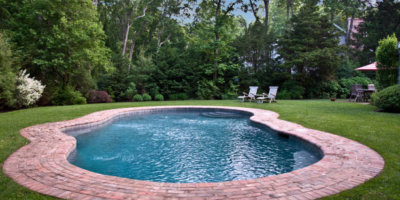
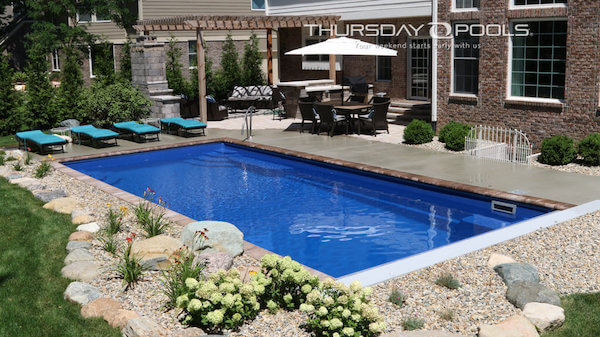
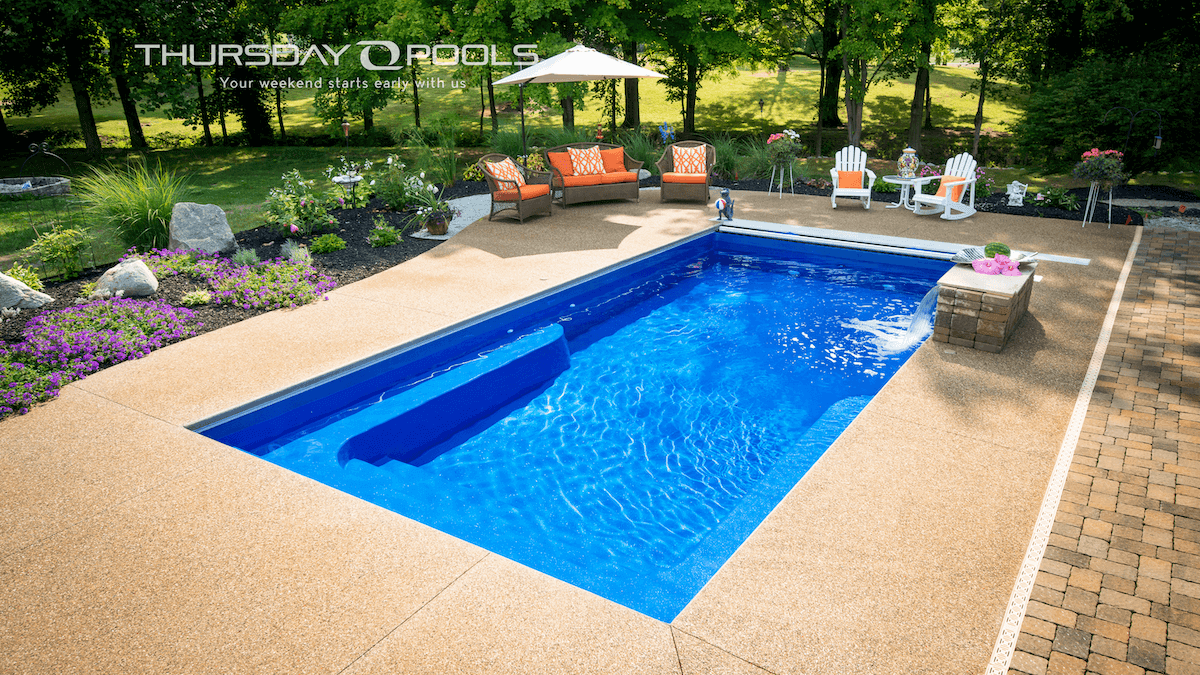
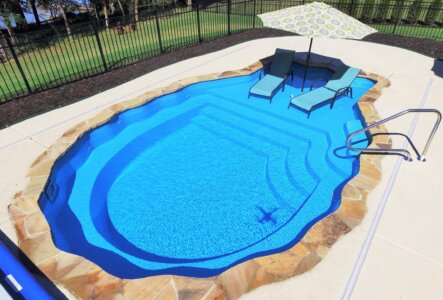
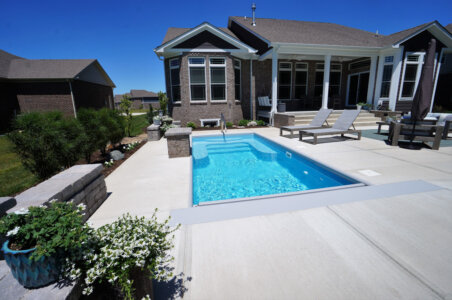
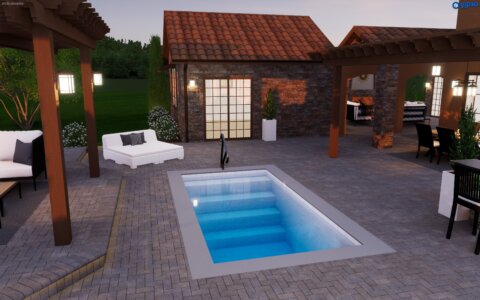
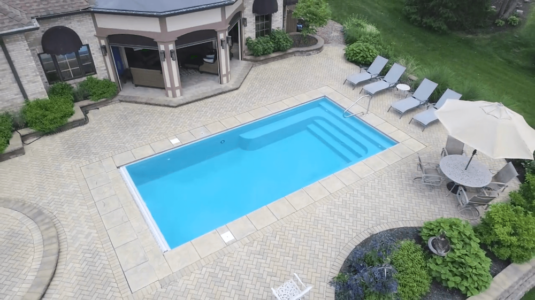
Whether or not you have unlimited funds to build a pool, you probably wouldn’t buy one without considering how much an inground pool costs. Perhaps you ended up on this blog post by searching, “What type of pool is most cost-effective?” or “What kind of inground pool is cheapest to build?” or even “What type of pool is cheapest to maintain?” Regardless of how you got here, the honest answer to these questions is, “It depends.” Inground pools come in three main types: gunite (concrete), vinyl liner, and fiberglass. The initial purchase price, as well as lifetime costs, vary depending on the type you choose. Let’s explore the costs associated with each type of inground pool, breaking down their installation prices and some of their long-term maintenance costs to help you make an informed decision.Thursday Pools Fiberglass Pool

Vinyl Liner Pools

Vinyl liner pools are often considered a budget-friendly choice, making them popular among homeowners seeking to minimize upfront costs. However, higher maintenance and replacement expenses can offset the lower initial investment over time.

  • Initial Purchase Price: The average cost of installing a vinyl liner pool is between  $25,000 and $65,000. This cost covers basic installation but does not account for long-term upkeep or customizations. For our calculations, we’ll use $65,000.
  • Liner Replacement: Vinyl liners need replacing approximately every ten years. Each replacement costs between  $3,000 to $7,500, averaging about $5,250 per replacement. Over a 25-year lifespan, expect to replace the liner twice, totaling about $10,500.
  • Filter Cartridge Replacement: The filter cartridges need replacement every three years, costing between  $250 and $1,200, averaging $725. Over the pool’s lifespan, replacing filter cartridges eight times would cost approximately $5,800.
  • Pool Pump Replacement: On average, pool pumps typically need replacing every ten years, costing between  $300 and $2700 per pump. With an average cost of $1,500 each time, pool pumps add up to $3,000 over 25 years.
  • Heater Replacement: The pool heater, essential for maintaining comfortable water temperatures, usually requires replacement once every 11 years. At $3,400 per heater, heater replacements cost $6,800 over the life of the pool.
  • Chemicals, Opening & Closing: The average cost of pool chemicals for a vinyl liner pool is about  $400 per season, totaling $10,000 over 25 years. Additionally, opening and closing the pool each year costs approximately  $325 and $375, respectively, leading to a combined cost of $17,500 over 25 years.
  • Total Cost Over Lifetime: Adding up all these expenses, the total lifetime cost of a vinyl liner pool is approximately $118,600, averaging $4,744 per year. While vinyl liner pools offer a lower upfront cost, the regular need for liner replacements and other maintenance makes them more expensive over time.

Gunite (Concrete) Pools

Gunite pools are known for their durability and customization options. They are often the go-to choice for homeowners wanting a pool that can be uniquely shaped and designed. However, these benefits come at a higher cost.

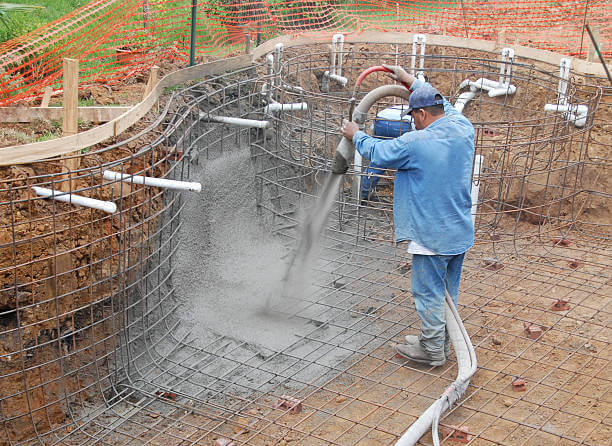
  • Initial Purchase Price: The average cost of installing a concrete pool is between  $50,000 and $120,000, making it the most expensive option upfront. This price reflects the complex construction process involving hand-shaping the pool with rebar and concrete. We’ll use $120,000 for our calculation.
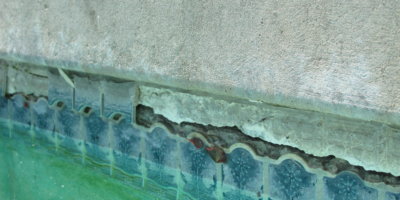
  • Resurfacing (Plaster Refinishing): Concrete pools require resurfacing every ten years to maintain their integrity and appearance. Each refinishing costs  $6,000 to $15,000, or $10,500 on average. Over 40 years, you may resurface the pool four times, totaling $42,000 over the pool’s life.
  • Filter Cartridge Replacement: Similar to vinyl pools, concrete pool filters need replacing every three years, costing about  $725 each time. Over the pool’s 40-year lifespan, this adds up to approximately $9,425.
  • Pool Pump Replacement: Concrete pools usually require pump replacements every ten years at  $1,500 per replacement, totaling about $4,500 over the pool’s lifespan.
  • Heater Replacement: With three  $3,400 replacements over 40 years, the cost adds up to $10,200.
  • Chemicals, Opening & Closing: Concrete pools require more chemicals, costing around  $750 per season due to their porous surface. Over 40 years, chemical costs alone reach about $30,000. Annually  opening and closing the pool adds another $28,000 over the pool’s lifespan.
  • Total Cost Over Lifetime: Including all necessary replacements and maintenance, the total lifetime cost of a concrete pool is estimated at $244,125, averaging $6,103 per year. While concrete pools offer the most customization, their higher initial cost, high maintenance needs, and resurfacing costs make them the most expensive option.

Fiberglass Pools

Fiberglass pools are often considered the most cost-effective inground pool option. These pools are pre-molded and installed in one piece, lowering construction and maintenance costs.

  • Initial Purchase Price: Installing a fiberglass pool costs between  $30,000 and $85,000. This price reflects the ease of installation and the lower labor costs compared to concrete pools. Like the other pool types, we’ll use the higher end, $85,000, for our calculations.
  • Refinishing: Fiberglass pools don’t need resurfacing as long as they are well-maintained and the water remains balanced, providing significant savings over the life of the pool.
  • Filter Cartridge Replacement: Fiberglass pool filters need replacement every three years, costing  $725 each time. Over a 60-year lifespan, expect to spend about $13,775 on filter replacements.
  • Pool Pump Replacement: The average lifespan of a pool pump is about ten years, with replacements costing around  $1,500 each time. Over 60 years, this totals approximately $7,500.
  • Heater Replacement: Pool heaters for fiberglass pools need replacement every 11 years. Over 60 years, at an average of  $3,400 per instance, this cost adds up to $17,000.
  • Chemicals, Opening & Closing: Fiberglass pools have smooth, non-porous surfaces that resist algae, significantly reducing the need for chemicals. On average, expect to spend about  $175 per season on chemicals, totaling $10,500 over the pool’s lifetime. Annual opening and closing costs are around $325 and $375, equaling $42,000 over 60 years.
  • Total Cost Over Lifetime: The total lifetime cost of a fiberglass pool is about $175,775, with an average annual cost of $2,930. These pools offer the best value due to their durability, low maintenance, and long lifespan.

Which Pool Type is Most Cost-Effective?

While vinyl liner pools have the lowest upfront cost, their ongoing maintenance and liner replacement needs add up. Though highly customizable, concrete pools have the highest initial and long-term costs. As demonstrated in the lifetime calculations, fiberglass pools balance durability, low maintenance, and overall cost, making them the most cost-effective choice over time. Try our fiberglass  pool cost calculator for a ballpark estimate of your pool installation, or  schedule a consultation with a builder for advice and a detailed estimate.


How Much Does a 16×32 Inground Pool Cost?

16X32 Pool

When planning to buy an  inground pool, the size of the pool is an important factor that influences how you use the rest of your outdoor space. The pool’s footprint can determine if there’s enough room for additional features. A popular pool size, 16 x 32, is often the top choice for homeowners with medium to large yards as they still allow room to integrate extras such as seating areas, outdoor kitchens, and maybe even a putting green. Naturally, your next question may be, “What does a 16 x 32  inground pool cost?” Let’s discuss how to get a ballpark estimate.

Understanding How Builders Estimate Inground Pools Prices

One of the first things a homeowner should know is that builders estimate each pool differently depending on the material type. The difference in measurement units—square feet for vinyl and gunite pools versus linear feet for fiberglass pools—arises mainly from how these pool types are constructed and estimated.

Vinyl and Gunite Pools (Square Foot):

  • Construction Approach: Vinyl and gunite pools are built directly on-site, providing the flexibility to create nearly any shape or size tailored to the homeowner’s vision.
  • Square Foot Estimation: These pools may be irregularly shaped due to their custom nature, so builders calculate the total surface area when estimating costs. Estimates include material costs—like the vinyl liner or concrete used in gunite pools—and factors in the complexity of the construction process.
  • Pricing Factors: The pool’s square footage significantly determines the required material and labor and the cost of integrating complex features such as built-in steps or tanning ledges.

Fiberglass Pools (Linear Foot):

  • Construction Approach: Fiberglass pools are manufactured as prefabricated units in various shapes and sizes and are then transported and installed at the pool site.
  • Linear Foot Estimation: Pricing for fiberglass pools often depends on the pool’s length. The length affects installation, transport, and site preparation costs. With fewer variables than custom-built pools, fiberglass pool pricing estimation is less complex.
  • Pricing Factors: The extent of excavation, backfilling, and coping required affects fiberglass pool prices. Since fiberglass pools are pre-shaped and built, surface area measurements are more predictable than those of custom vinyl or gunite pools.

Average Pricing for a 16 x 32 Pool by Pool Type

With a better understanding of how pool builders price pools, let’s discuss the formulas and corresponding inground pool cost estimates.

16 x 32 Vinyl Pool Cost: $61,500

According to  HomeGuide’s 2024 pricing guide, vinyl liner pools average $123 per square foot, putting a pool that is about 500 square feet around $61,500.

16 x 32 Fiberglass Pool Cost: $64K

If you are interested in a fiberglass inground pool, we recommend estimating the initial cost at $2Kper linear foot. So, a 16 x 32 inground fiberglass pool’s ballpark estimate is 32′ x 2K = $64K.

16 x 32 Gunite Pool Cost: $89,600

According to the renovation calculator site,  renotag, gunite pools average $175 per square foot; therefore, a 16 x 32  gunite pool may cost around $89,600.

Other Cost Factors to Consider

Naturally, these numbers don’t cover every situation. For instance, the cost of a pool in a coastal Florida region might be different from that of a pool in a mountainous Colorado area due to variations in local regulations, environmental conditions, labor costs, and material availability. Each location has unique factors that can influence the overall cost of installing a pool. A checklist of other items you may consider in developing your cost picture includes: 

  • Driveway Repair
  • Association Fees or Permits
  • Crane Rental
  • Landscaping
  • Retaining Walls
  • Pool Heater
  • Automatic Vacuum Systems
  • Dirt Hauling
  • Slides or Waterfalls
  • Saltwater Option
  • Generator
  • Specialty Tile
  • Led Lights
  • Bubblers or Deck Jets
  • Spas  

Which Pool Type is Best for You?

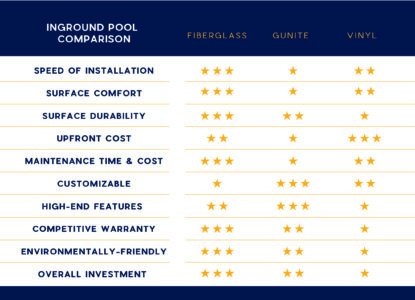
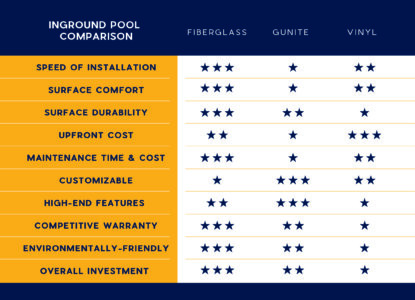
We strongly appreciate fiberglass pools, but it’s essential to consider all your options to make an informed decision. A 16 x 32 inground pool offers various benefits depending on the type you choose. For instance, gunite pools are ideal if you’re looking for a long-lasting option that can fit unique or complex yard shapes. They are also particularly well-suited for expansive properties where custom features and designs are popular. Conversely, you may prefer vinyl pools if you’re aiming for the lowest upfront cost (over the life of the pool, vinyl costs can add up). Each type has its advantages, and considering your specific needs and circumstances will help you make your decision. Here’s a quick reference to some of the pros and cons of each type of inground pool. 

None of the pool types has three stars across the board in our comparison chart. It’s a question of what’s most important to you. Two of the biggest surprises for some buyers are fiberglass’s high marks in “durability” and “surface comfort and safety.” Fiberglass looks so shiny that some mistakenly link it to plastic and worry that it will be brittle and slippery. The fact is that multilayered fiberglass is incredibly durable, and the attractive gelcoat provides a comfortable, non-snag/non-skid surface!


Inground pool comparison Thursday Pools

Need More Tools for Your Quest?

When evaluating fiberglass inground pools, use tools like the Thursday Pools free  pool cost calculator, print out our  pool cost checklist, and  consult a dealer. Every installation is unique, and a dealer can be a great resource in highlighting cost factors specific to your locale, such as site preparation, access issues, fencing, restoration, dirt hauling, or electrical work. The investment in an inground pool can be substantial, but it’s a worthwhile investment in your lifestyle—creating a backyard retreat where unforgettable moments with family and friends can unfold daily!

Wanting a Pool in Your Small Yard?

No matter the size of your yard, creating a staycation-worthy backyard is within reach. Small fiberglass pools fit compact spaces without sacrificing style, comfort, or function. They offer a low-maintenance, budget-friendly solution with options like plunge pools and other ultra-compact designs, making it easier than ever to add a beautiful, refreshing pool to even the smallest backyard.

Thursday Pools Titus California PoolIs a Small Pool Worth It?

Absolutely! Small pools offer a smart, stylish solution for homeowners who want all the benefits of a pool without overwhelming their outdoor space.

With a compact design, you’ll have more room for other backyard features—like a lounge area, firepit, or outdoor kitchen—so you can truly enjoy a well-rounded outdoor living space. Smaller pools also mean easier upkeep, lower chemical use, and reduced energy costs, making maintenance a breeze.

And when it comes to your budget, going smaller can free up funds for extras like built-in seating, a tanning ledge, or an automatic pool cover. Best of all, small fiberglass pools come in a variety of layouts to suit how you plan to use your space—whether that’s relaxing, exercising, or entertaining a few close friends.


What Are Some Small Pool Options?

Before exploring specific designs, it’s important to understand the three main types of inground pools. Each offers unique benefits, and the best choice depends on your space, budget, timeline, and how involved you want to be with long-term upkeep.

Concrete (Gunite) Pools

  • Install Time: Approximately 3 to 6 months
  • Maintenance: Around 4 to 5 hours per week
  • Cost: $50,000 to $120,000+
  • Customization: Fully customizable in shape, size, and features

Concrete pools are known for their design flexibility and durability. If you have a very specific vision for your pool’s shape or want to maximize every inch of your yard, concrete offers the freedom to create a one-of-a-kind layout. Keep in mind, though, they take the longest to install and tend to require more hands-on maintenance and chemical use over time.


Vinyl Liner Pools

  • Install Time: Approximately 4 to 8 weeks
  • Maintenance: About 2 to 3 hours per week
  • Cost: $25,000 to $65,000
  • Customization: Custom sizes and shapes available

Vinyl liner pools are more affordable upfront, and builders can tailor them to fit many different backyard configurations. They’re a practical option if you want some customization without the higher price tag of concrete. However, the vinyl liner will eventually need replacement, which adds to long-term upkeep and costs.


Fiberglass Pools

  • Install Time: About 3 weeks
  • Maintenance: Around 1 hour per week—or less
  • Cost: $30,000 to $85,000
  • Customization: Limited to pre-designed shapes and sizes

Fiberglass pools come pre-formed from factory molds, which speeds up installation and simplifies maintenance. While you won’t have as much design flexibility, many models are available in compact sizes with built-in seating, tanning ledges, and other features that make the most of smaller spaces. The smooth, non-porous surface also resists algae growth, meaning fewer chemicals and less time cleaning.

Each pool type brings something different to the table—whether it’s complete customization, affordability, or ease of care. If you’re working with a smaller yard, all three can be viable options depending on your goals and preferences. Talking with a pool professional can help you weigh the trade-offs and find the best fit for your backyard.


Small Backyard Pool Ideas

Whether you’re looking for a true plunge pool or just a space-saving pool design, there are plenty of options for full-size enjoyment in smaller spaces. Below are some of Thursday Pools’ most popular compact models, each offering unique features to fit your lifestyle and yard size.


Plunge Pool Options

These pools are deeper than they are expansive, perfect for cooling off, standing, soaking, or even light exercise. A plunge pool is ideal for homeowners who want the experience of a luxurious inground pool without the footprint of a full-size one.


Sea Turtle

Size: 9.5′ x 19.5′ | Depth: 4′6″

The Sea Turtle is a true plunge-style pool with a flat bottom and generous bench seating on both sides. It’s perfect for standing, stretching, or simply soaking on hot days—all while fitting comfortably into a smaller yard.


The Nook

Size: 8′4″ x 16′ | Depth: 4′8″

The Nook offers a balanced blend of comfort and practicality. With a built-in bench and consistent standing depth throughout, it’s ideal for water aerobics, casual conversation, or simply unwinding. Built-in entry steps and a non-skid surface make it a safe and easy-to-maintain plunge pool.


The Nest 

Size: 8′4″ x 16′ | Depth: 4′8″

Petite and purposeful, The Nest is a compact plunge pool for relaxing, cooling off, and casual soaking. It features a flat bottom, wide entry steps, and is auto-cover ready—making it a stylish solution for tight spaces.


Other Compact Pool Options

These pools aren’t plunge-style, but still work well in smaller yards. They offer more swimming space and family-friendly layouts, often with added seating or space for games.


Lil Bob

Size: 13.5′ x 27.5′ | Depth: 4′6″

Lil Bob is all about flexibility. With wrap-around bench seating and a flat, even depth, it’s great for light swimming, games like water volleyball, or simply lounging with friends. It’s a compact design with room to move.


Titus

Sizes:

  • 12′ x 26′ | Depth: 5′5″
  • 14′ x 33′ | Depth: 5′10″

Titus offers a larger swim area while still fitting in smaller backyards. Its rounded shape and built-in seating create a comfortable space for both activity and rest. It’s a good choice if you want a pool that supports swimming as well as relaxation.


Thursday Pools' wading pool that has the color of maya

Wading Pool

Sizes:

  • 9′ x 9′ | Depth: 1′6″
  • 11′9″ x 13′9″ | Depth: 1′6″

Great as a stand-alone feature or a pool add-on, the Wading Pool is ideal for small children, a quick dip, or cooling off without getting fully in. It offers shallow, safe fun in a small footprint.


Thursday Pools Cathedral Wet Deck with decorative tile border

Wet Deck

Size: 8’1” x 14′ | Depth: 1′

The Wet Deck is a shallow splash zone perfect for sunbathing or letting young children play. Use it alongside another pool or on its own as a refreshing, low-maintenance backyard water feature.


Ready to Make a Small-Pool Splash?

Small yard? No problem—smart design and the right pool can help you make a big splash anywhere. Whether you prefer a traditional fiberglass pool, a plunge pool, or a more compact design, there’s a perfect option to fit your space, style, and budget. Connect with a Thursday Pools dealer  to explore what’s possible, check out the Pool Cost Calculator for a quick estimate, and browse our Idea Book for extra inspiration. 

Thursday Pools Rectangle Fiberglass Pool Shell Options by Size, Depth, and Features

Rectangle fiberglass pools come in more variety than many buyers expect. The shape is consistent, with clean lines, straight walls, and sharp corners, but size, depth, and built-in features vary by model. The right shell depends on your yard size, how you plan to swim, and whether you want lounging space, sport depth, a beach entry, a spa, or a deep end.


Compact Rectangle Fiberglass Pool Shells

These models are part of Thursday Pools’ Plunge Pool Series, built for smaller backyards, courtyard spaces, and homeowners who want a genuine pool experience in a compact footprint. All three share the same 8’4″ x 16′ rectangle shell at 4’8″ flat-bottom depth. Sea Turtle offers a slightly larger 9.5′ x 19.5′ rectangle shell. The smallest sizes of Aspen and Goliath are also part of the Plunge Pool Series with 12’ x 25’ rectangle shells.

The Drift

The Drift is designed for lounging as much as swimming. Its full-length wraparound bench supports social gatherings, cool evening dips, and extended relaxation.

  • A full-length wraparound bench creates a comfortable seating zone without giving up the swim area.
  • Built-in steps and a non-skid surface throughout provide safe, easy entry and exit for all ages.

The Nest

The Nest maximizes open water in the smallest Thursday Pools rectangle shell. Full-width entry steps and a clean, unobstructed swim area make it the most activity-forward of the three 8’4” x 16’ options.

  • Full-width entry steps provide a wide, easy point of entry.
  • The open interior layout keeps the swim area clear for exercise and play.

The Nook

The Nook brings minimalist design and integrated seating to the compact rectangle format. It works well as a private courtyard pool or as a compact water feature beside a patio, outdoor kitchen, or seating area.

  • Integrated wraparound bench seating lines both sides of the pool.
  • Built-in steps and a non-skid flat-bottom surface throughout.

Sea Turtle

Sea Turtle steps up to a 9.5′ x 19.5′ rectangle shell at 4’6″ flat-bottom depth. It suits smaller yards that need a bit more swim room than the 8’4″ x 16′ models provide, and adds a swim-jet-ready design for light exercise.

  • A 4’6” flat-bottom depth throughout allows comfortable standing, socializing, and light activity.
  • Wraparound benches flank the entry steps, creating a relaxed conversation area.
  • Swim-jet-system-ready design makes it easy to add a resistance swim system like Badu®.


Sport and Social Rectangle Fiberglass Pool Shells

These models share a flat-bottom sport-depth design, making them well-suited for water games, family play, and active use. All maintain a consistent standing depth of 4’6″ to 4’8″ throughout the pool.

Lil Bob

Lil Bob is built around a 13.5′ x 27.5′ flat-bottom shell at 4’6″ throughout. It’s a strong choice for families who want a sport-focused pool that keeps kids and adults in the game together.

  • Full-width ergonomic steps make it easy for everyone to enter and exit the pool.
  • A standing-depth, flat-bottom design makes Lil Bob a great size for water volleyball.
  • Two facing benches, each 12 feet long and 18 inches deep, run down both sides of the pool, leaving a clear open swim area in the center.

Lil Bob LX

Lil Bob LX extends the Bob family formula to a 13.5′ x 35.5′ shell with a 4’6” sport depth, adding a tanning ledge and wading area while keeping the flat-bottom sport depth.

  • A tanning ledge accommodates two lounger chairs while leaving room to enter and exit the pool.
  • A wading area just past the tanning ledge gives younger swimmers a comfortable shallow zone.
  • Generous wraparound benches run along both sides of the open swim area.

Big Bob

Big Bob is the largest pool in the Bob family. It’s a 16′ x 40′ flat-bottom rectangle with a uniform 4’6″ depth throughout. It gives families who love the Bob design more of everything: more bench space, more open water, and more room for games and laps.

  • Extra-long wraparound benches, 12 feet long and 18 inches deep, run down both sides of the pool.
  • Wide walk-in steps make getting in and out easy for swimmers of every age.
  • The open 16′ x 40′ swim and play area accommodates lap swimming, water volleyball, basketball, and active family games.

Spirit

Spirit runs 13.5′ x 40′ at a flat-bottom depth of 4’6″, giving it one of the longest open swim lanes in the sport-depth rectangle category. Spirit is best for homeowners who want lap-friendly length while keeping the entire pool at a comfortable standing depth.

  • The court-sized flat-bottom design gives swimmers and players plenty of room.
  • Extended bench seating and full-length steps at both ends of the pool create multiple entry and social zones.

Mack Daddy

The Mack Daddy is a 16′ x 36′ flat-bottom rectangle at 4’8″ depth that packs four distinct pool zones into one shell. It’s the only rectangle design in the Thursday Pools lineup with a built-in integrated spa.

  • A built-in tanning ledge accommodates two loungers with room to enter and exit the pool.
  • An integrated spa with a tranquil spillway adds a dedicated relaxation zone.
  • Wraparound bench seating adds a third area for sitting and soaking.
  • A uniform 4’8″ flat-bottom depth keeps the swim lane accessible for games, exercise, and active family use.

Magnate

The Magnate shares the 16′ x 36′ flat-bottom shell at 4’8″ depth with the Mack Daddy but trades the spa for a more streamlined layout built around an oversized sun shelf.

  • A built-in sun shelf accommodates tanning in lounger chairs.
  • Double-entry wraparound benches and step-in stairs form two conversation areas and two points of entry.
  • A wide-open swim lane runs the length of the pool for laps, exercise, and active use.


Deep and Feature-Rich Rectangle Fiberglass Pool Shells

These models offer deeper depth profiles, tanning ledges, swim-out benches, courtesy ledges, and beach entries. They suit buyers who want more traditional swimming depth alongside built-in comfort features.

Aspen

The Aspen is one of Thursday Pools’ most popular rectangle designs, available in five sizes ranging from 12′ x 25′ to 16′ x 40′. It pairs a signature 12-inch tanning ledge with a deep-end design and multiple built-in comfort zones.

  • A 12-inch deep tanning ledge comfortably fits two lounger chairs with room to enter and exit the pool.
  • Curved steps stretch across the width of the pool for wide, easy entry.
  • An extended bench near the steps gives swimmers a place to rest and socialize.
  • Deep-end swim-outs offer a second exit point and a comfortable perch in the deep end.
  • The wide-open swim lane runs down the center of the pool for laps and active use.

Grace Beach Entry

Grace Beach Entry brings a zero-entry, beach-style entrance to a rectangle shell, giving swimmers, children, and pets a gradual way into the water. The patented design (US 10,472,839) is available in three sizes from 14′ x 36′ to 16′ x 40′.

  • A gently sloping beach entry makes getting in and out easy for swimmers and pets alike, and fits two lounger chairs in the shallow zone.
  • A wading area just past the entry works well for young children and doubles as a cool-off zone.
  • An extended bench runs along the pool for relaxing and socializing.
  • Dual deep-end swim-outs provide an additional exit point and resting zone.
  • An open swim area anchors the middle of the pool for laps and active use.

Goliath

The Goliath is available in six sizes from 12′ x 25′ to 16′ x 41′, with depth profiles ranging from 5’4″ to 6’8″. It suits buyers who want a serious deep-end swim experience alongside strong entertaining capacity.

  • A wide-open swim lane runs down the center of the pool for laps and floating.
  • Bench seating flanks the entry steps for a comfortable social zone.
  • Two sets of curved steps in the shallow end and swim-out ledges in the deep end provide multiple entry and exit points.

Monolith

Monolith is Thursday Pools’ deepest rectangle pool model. Its 16′ x 40′ shell reaches 8’6″ at the deep end and includes a flat-bottom shallow end for play. Because diving safety depends on pool dimensions, equipment, installation, and applicable standards, homeowners should consult their dealer, equipment manufacturer, and local requirements before considering any diving or slide use.

  • The 8’6″ deep end qualifies the Monolith as a Type 1 diving pool under applicable standards.
  • A large flat-bottomed shallow end leaves room for pool games and active play.
  • Angled steps make it easy and safe to enter and exit.
  • A shallow-end bench and dual deep-end benches give swimmers options for resting and socializing at both ends of the pool.
Thursday Pools strongly recommends that diving boards and slides not be installed or used with its pools because of the inherent dangers associated with diving boards and slides in residential pools, including severe injury or death.
Thursday Pools does not manufacture or sell diving boards or slides.
If a homeowner chooses to install or use a diving board or slide despite this warning, the homeowner assumes all related risks and is responsible for confirming that the pool, equipment, installation, and use comply with manufacturer specifications, applicable ANSI/NSPI, ANSI/APSP, ANSI/APSP/ICC standards, and all applicable laws, rules, and regulations.


Find the Fiberglass Pool That Fits Your Yard and Lifestyle

Not sure which rectangle fiberglass pool shell is right for your yard? Use the Pool Selector Tool to compare rectangle fiberglass pool shells by yard size, intended use, and desired features. For site-specific guidance, contact a Thursday Pools dealer near you for a yard evaluation and installation estimate.


Frequently Asked Questions About Rectangle Fiberglass Pool Shells

What is a fiberglass pool shell?

A fiberglass pool shell is a pre-molded, single-piece pool structure manufactured from layers of fiberglass and resin in a controlled factory environment. The finished shell is transported to your property, set into the excavated hole, connected to plumbing, and backfilled. Because it arrives as a complete unit, installation is significantly faster than concrete and avoids the on-site curing and finishing work associated with other pool types.

What rectangle fiberglass pool shells does Thursday Pools offer?

Thursday Pools offers a wide range of rectangle fiberglass pool shell designs, including The Drift, The Nest, The Nook, Sea Turtle, Lil Bob, Lil Bob LX, Big Bob, Spirit, Mack Daddy, Magnate, Aspen, Grace Beach Entry, Goliath, and Monolith.

What is the best rectangle fiberglass pool for lap swimming?

Any rectangle pool with a long, unobstructed swim lane works well for lap swimming, but the right choice depends on how seriously you swim. Spirit (13.5′ x 40′), Big Bob (16′ x 40′), Aspen (up to 16′ x 40′), Goliath (up to 16′ x 41′), and Monolith (16′ x 40′) all give you meaningful length. If you want a deep-water feel for laps, Aspen, Goliath, and Monolith offer deeper profiles. If standing depth and open swim area matter more, Spirit and Big Bob are the flat-bottom options at that length.

What is the best rectangle fiberglass pool shell for families with young children?

Flat-bottom pools at 4’6″ to 4’8″ depth are often a strong choice for active family use because the depth stays consistent from end to end. Depending on swimmer height, they may be easier to use for games, supervision, and shared play than pools with a steep depth transition.

What is the difference between flat-bottom and deep-end rectangle fiberglass pools?

Flat-bottom pools hold a consistent standing depth from end to end, typically 4’6″ to 4’8″. That uniform depth suits water sports, family play, water aerobics, and any activity where swimmers of varying heights need to touch the bottom. Deep-end pools slope from a shallow entry zone to a deeper swim area, usually 5’1″ to 6’8″ depending on the model. Deep-end designs offer more vertical swim space and a more traditional pool feel. Monolith is the deepest rectangle pool shell option, reaching 8’6”.

Can I get a small rectangle fiberglass pool shell?

Yes. Thursday Pools’ smallest rectangle shells include The Drift, The Nest, and The Nook, all measuring 8’4″ x 16′ at 4’8″ flat-bottom depth. Sea Turtle steps up to 9.5′ x 19.5′. Buyers who want a larger compact rectangle shell can also compare the smallest Aspen and Goliath sizes at 12′ x 25′.

What features do rectangle fiberglass pool shells come with?

Depending on the model, Thursday Pools ‘ rectangular fiberglass pool shells may include tanning ledges, integrated spas, wading areas, wraparound bench seating, swim-out benches, courtesy ledges, beach entry zones, and auto-cover readiness.

How long does a fiberglass pool shell last?

Fiberglass pool shells are known for long service life when properly installed and maintained. The gel coat surface is designed to resist algae and mineral buildup, and the single-piece construction avoids liner seams and concrete replastering. With proper water chemistry and routine care, a quality fiberglass pool shell can last for decades. Consult your Thursday Pools dealer and review the warranty for specific coverage details.

How Much Does An Inground Pool Cost?

What Does the Cheapest Inground Pool Cost?

Quick Answer: What is the Cheapest Inground Pool?

Vinyl liner pools carry the lowest upfront installation cost at $25,000 to $65,000. Fiberglass pools typically run $45,000 to $100,000 or more installed. Gunite pools have the widest price range at $50,000 to $120,000 or more. Upfront cost tells only part of the story, though. Annual maintenance, vinyl liner replacement cycles, and concrete resurfacing requirements affect long-term ownership cost significantly.


Finding the cheapest inground pool type to install is a reasonable starting point, but it doesn’t accurately reflect inground pool cost over 10, 20, or 50 years of ownership. 

What Is the Cheapest Inground Pool to Install?

Vinyl liner pools are the least expensive inground option for initial installation. Fiberglass pools typically fall in the middle, while gunite pools carry the widest range and most often land at the high end.

Vinyl Liner Pool Cost: $25,000-$65,000

Vinyl liner pools are generally the most affordable inground pools to build, with an average installed cost of $25,000 to $65,000. That range makes them the entry point for most buyers choosing an inground pool on a tighter budget.

The lower upfront cost comes with a recurring expense built into the pool’s design. Vinyl liners need replacement every 5 to 15 years, and each replacement typically costs $3,000 to $7,500, according to HomeGuide. Custom shapes beyond a standard rectangle add to both the initial liner cost and future replacement costs, because custom liners require specialized manufacturing.

Inground Pool Cost Fiberglass Pool Cost: $45,000-$100,000+
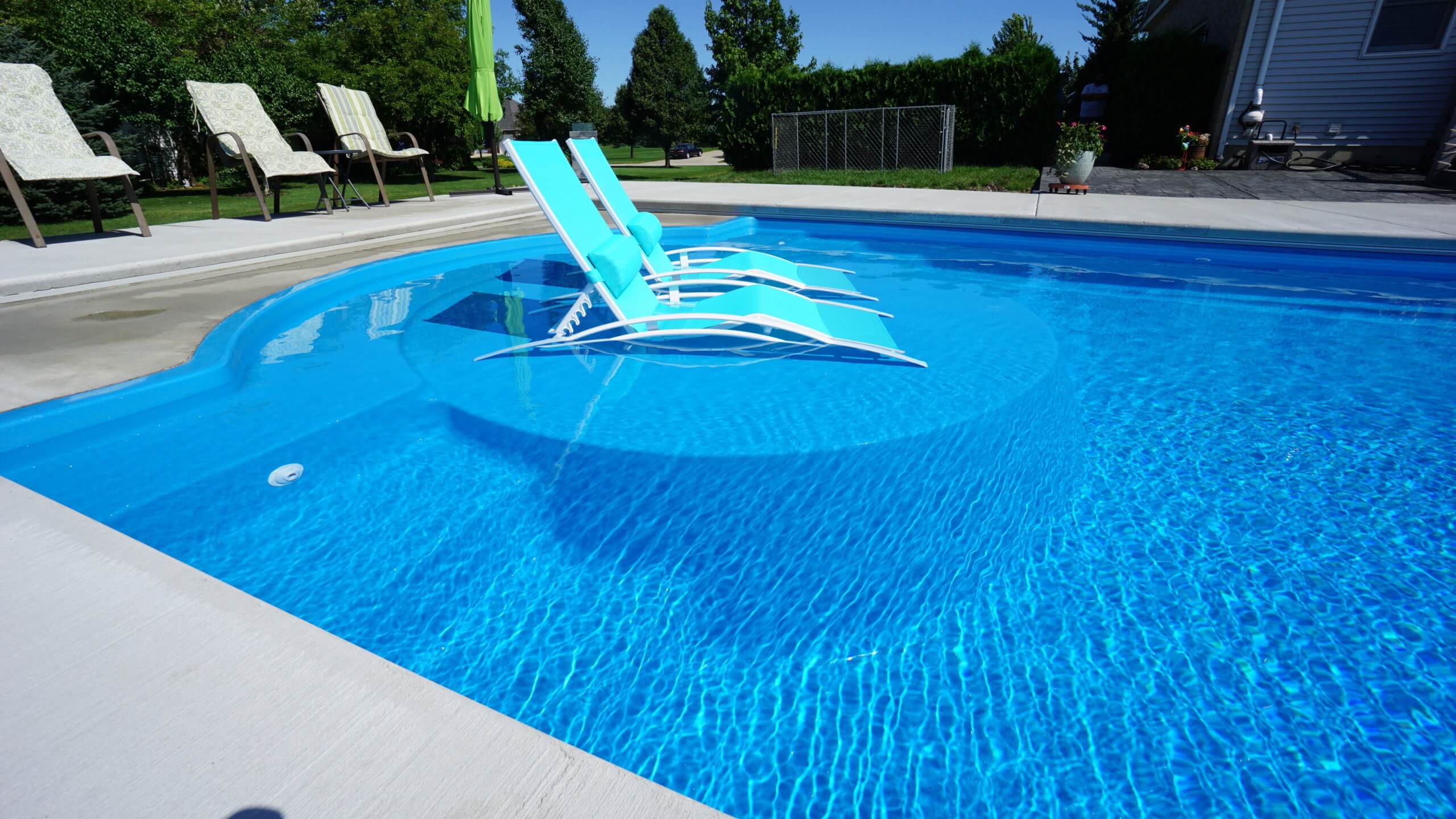
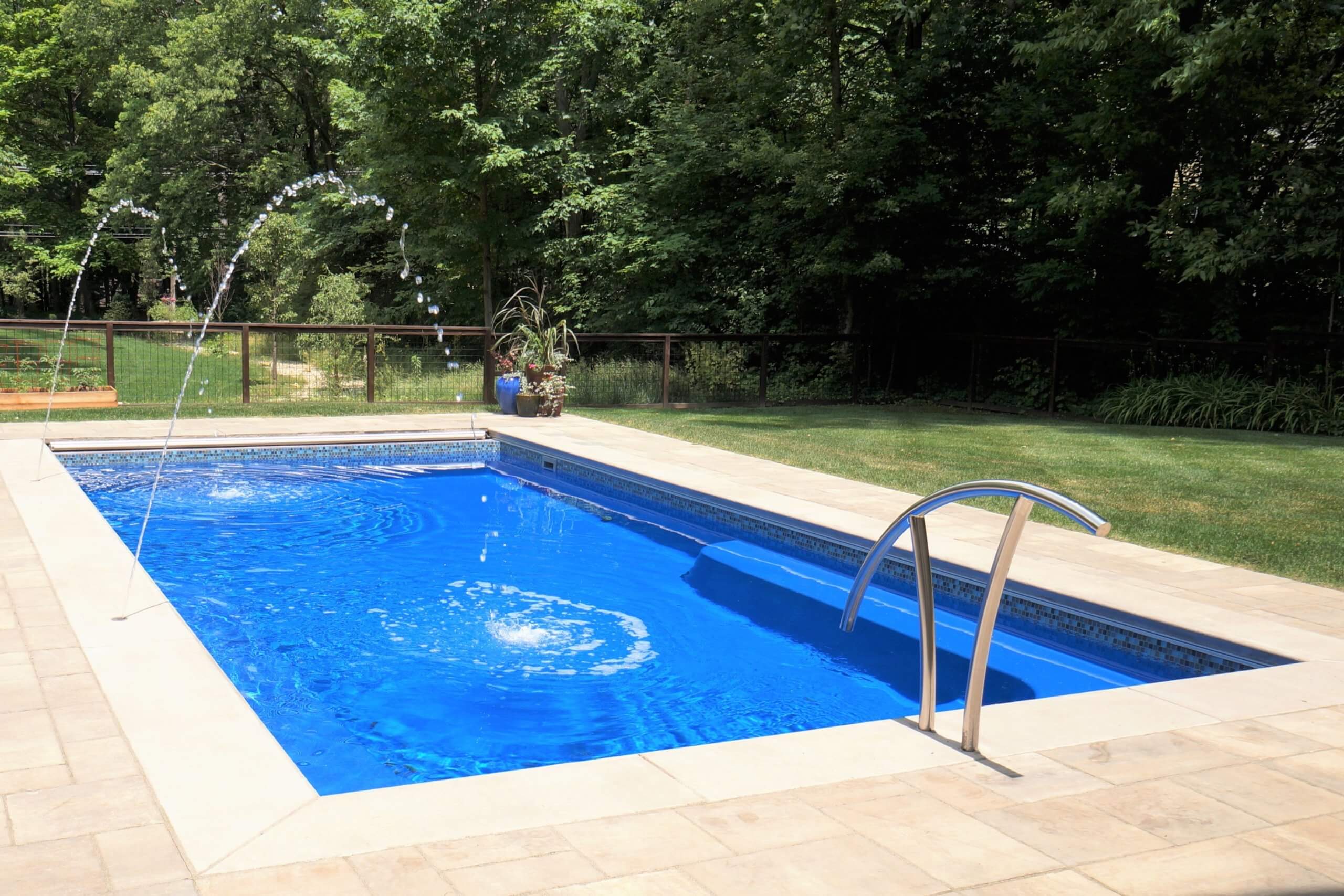
Fiberglass pools typically cost $45,000 to $100,000 or more installed, according to a 2026 survey of independent builders in the Thursday Pools dealer network. A commonly used industry baseline for estimating a fiberglass pool’s starting cost is at least $2,000 per linear foot for the shell and core installation.

For a full cost breakdown by size, design, and region, see the Fiberglass Pool Cost Guide.

The price of a fiberglass pool stays relatively consistent across shapes because the shell comes pre-manufactured. A freeform fiberglass pool and a rectangle of similar length typically cost within the same range. Beach entry designs tend to run 15 to 20 percent more than a standard design of comparable size.

Fiberglass built-in features, including wide steps, wraparound bench seating, tanning ledges, and swim-outs, come molded into the shell at no additional construction cost. In a vinyl liner or gunite pool, those same features are custom-built and add to both the upfront price and ongoing maintenance considerations.

Gunite Pool Cost: $50,000-$120,000+

Gunite pool installation costs range from $50,000 to $120,000 or more, making gunite the most expensive pool type on average. The range is wide because gunite pools are built entirely on-site, and every design decision on shape complexity, size, depth, and features adds labor and material cost. A basic rectangle in a region with high gunite installation volume can land at the lower end. An elaborate custom design in a high-cost market can push well above $120,000.

Sunbelt markets like Texas, Arizona, and Florida see the highest concentration of gunite installations, partly because those climates don’t subject concrete to the same freeze-thaw stress as northern states. Where gunite installation is high-volume, pricing can be more competitive.

What Does Each Inground Pool Type Cost to Maintain Over Time?

Upfront installation is one number. Long-term ownership is a different calculation.

Annual Maintenance Costs

Fiberglass pools typically cost $500 to $1,500 per year to maintain, primarily because the smooth, non-porous gelcoat surface resists algae and requires fewer chemicals than the other pool types. Most fiberglass owners manage the weekly routine of skimming, testing, and basket cleaning in about an hour.

Vinyl liner pools typically cost $1,000 to $2,000 per year in maintenance. The liner surface is more prone to algae and requires more cleaning effort, closer to two to three hours per week on average.

Gunite pools typically cost $2,000 to $4,000 per year to maintain. Concrete is porous, which means algae takes hold more easily and chemical use runs higher. Expect four to eight hours per week of maintenance, plus the recurring cost of acid washing every three to five years.

Long-Term Resurfacing and Replacement Costs

Vinyl liner pools require a new liner every 5 to 15 years. At $3,000 to $7,500 per cycle, per HomeGuide, this is a predictable but recurring cost over the life of the pool.

Gunite pools require resurfacing every 10 to 15 years, typically at $6,000 to $15,000 or more per cycle, per HomeGuide. The porous surface accumulates algae and mineral deposits over time and eventually degrades to the point where a fresh plaster finish is needed.

Fiberglass pools don’t require liner replacements or resurfacing work. The gelcoat surface is non-porous and, with proper chemistry and care, doesn’t degrade the same way that concrete or vinyl does.

Maintenance Comparison

Pool Type Annual Maintenance Estimated 10- to 15-Year Maintenance Cost
Fiberglass $500-$1,500 per year $3,000-$5,000
Vinyl liner $1,000-$2,000 per year $6,000-$10,000+ (plus liner replacement)
Gunite (concrete) $2,000-$4,000 per year $20,000+ (plus resurfacing)

What Factors Make Any Inground Pool More or Less Expensive?

Several variables affect the final project total regardless of pool type.

Pool Size

Smaller pools cost less to install and less to maintain. A compact pool requires less excavation, less water, less chemical maintenance, and less surrounding decking than a large pool. For buyers prioritizing affordability, small pool designs are the starting point.

Pool Shape

For vinyl liner and gunite pools, shape directly affects cost. Simple rectangles cost less because they require less custom labor at installation and, for vinyl, less custom liner fabrication. For fiberglass pools, shape doesn’t significantly affect the price because shells are manufactured at a set cost regardless of contour.

Site Conditions

Rocky soil, clay-heavy ground, steep slopes, and limited yard access all add to installation costs. Excavation in difficult soil conditions can cost significantly more than standard work. Limited access may require crane service to place the pool shell, adding several thousand dollars.

Features and Add-Ons

Heaters, automatic covers, bubblers, deck jets, LED lighting, slides, and water features all add to the project total. Safety fencing, required in most jurisdictions, is frequently excluded from base quotes. According to the 2026 survey of independent Thursday Pools dealers, homeowners can expect to pay an average of $8,115 for a 300-linear-feet fence, depending on material and linear footage.

Region

Labor rates, permit costs, and material supply all vary by location. The same pool project can cost meaningfully more in a high-cost coastal market than in a Midwest suburb, independent of the pool type.

Find the Most Affordable Pool for Your Backyard

The cheapest pool for your backyard depends on your priorities. If the lowest upfront cost matters most, vinyl liner pools are often the easiest and most affordable path to pool ownership. If the lowest total cost over a decade matters more, fiberglass pools typically come out ahead once factoring in maintenance and replacement cycles.

A local Thursday Pools independent dealer can assess your yard, review your budget, and walk you through which designs and pool types fit your goals. The Pool Cost Calculator and Pool Cost Checklist are also good starting points before your first dealer conversation.

Frequently Asked Questions About Cheapest Inground Pool Costs

What is the cheapest type of inground pool?

Vinyl liner pools carry the lowest upfront installation cost at $25,000 to $65,000. Fiberglass pools typically run $45,000 to $100,000 or more installed. Gunite pools range from $50,000 to $120,000 or more. Over time, fiberglass pools typically cost the least to own because they don’t require liner replacement or resurfacing like other pool types.

What is the cheapest inground pool to maintain?

Fiberglass pools are the least expensive inground pool type to maintain. Annual maintenance typically runs $500 to $1,500 per year, compared to $1,000 to $2,000 for vinyl liner pools and $2,000 to $4,000 for gunite pools. Fiberglass pools also avoid the liner replacement costs ($3,000-$7,500 every 5-15 years) that vinyl owners face and the resurfacing costs ($6,000-$15,000 every 10-15 years) that gunite owners face.

How can I reduce the cost of an inground pool?

Choosing a smaller pool is the most direct way to reduce cost. Simpler shapes reduce construction costs in vinyl liner and gunite pools. Avoiding expensive add-ons, such as auto covers, water features, and heaters, at installation keeps the base project lower. For fiberglass buyers, built-in features like steps and benches come at no extra cost, so the savings on those elements are already built in. Comparing fully itemized quotes from multiple dealers is essential, since base estimates can exclude permits, electrical, fencing, and dirt hauling.

Is fiberglass or vinyl liner cheaper?

Vinyl liner pools cost less to install upfront. Fiberglass pools typically cost less over 10 to 15 years of ownership because they don’t require liner replacement. At $3,000 to $7,500 per liner replacement every 5 to 15 years, the cumulative cost narrows the gap between vinyl and fiberglass relatively quickly.

What is not included in a cheap inground pool quote?

Many base inground pool quotes exclude permits, electrical work, safety fencing, water fill, dirt hauling, decking, pool covers, and yard restoration. These line items can add $10,000 to $30,000 or more to the total project cost, depending on location and scope. Always request an itemized quote and ask specifically about each of those items before comparing estimates from different contractors.

Does a cheap inground pool add value to your home?

Inground pools generally add value in markets where outdoor recreation is a priority, particularly in warmer climates. A pool in good condition tends to be viewed more favorably by buyers than one with visible deferred maintenance. A fiberglass pool with no resurfacing needs and low ongoing maintenance presents as a lower-cost ownership experience to potential buyers compared to a gunite pool due for resurfacing.

What is the cheapest inground pool for a small yard?

For small yards, compact fiberglass designs such as plunge pools and small rectangle models starting around 12′ x 25′ provide the smallest footprint at predictable cost. Vinyl liner pools in a small rectangle shape are the least expensive starting point on price alone. Both types can work in limited spaces, though fiberglass offers the advantage of built-in features and lower long-term maintenance.

Everything You Need to Know About Inground Pools: Comparing Fiberglass, Vinyl, and Gunite Options

How Much Does a Small Inground Pool Cost?

Thursday Pools' Lil Bob Maya Jenn James GragUnderstanding how much a small inground pool costs is an important first step when planning for a pool in a compact backyard. Smaller pools offer a practical solution for limited spaces, delivering style, function, and enjoyment without the size or expense of a full-size pool. With the right approach, they can enhance your outdoor space while fitting your budget. Whether you’re dreaming of a quiet retreat or a stylish entertaining spot, a small inground pool can transform even the smallest or simplest backyard into something extraordinary.

Why Choose a Small Inground Pool?

Small inground pools offer numerous benefits for homeowners with smaller yards, families, or those seeking an efficient and stylish pool solution. Thoughtful and creative designs enable these pools to maximize limited outdoor spaces while maintaining sophistication and practicality. Their streamlined size contributes to easier maintenance, reduced water and chemical use, and lower long-term ownership costs. Despite their compact dimensions, these pools do not compromise on features or visual appeal. With careful planning, a small inground pool can become a striking focal point of your backyard, providing a perfect balance of relaxation, recreation, and fitness opportunities. For example, flat-bottom models are particularly well-suited for activities like water aerobics or integrating swim jet systems, combining leisure and exercise in a versatile setting.


How Much Does a Small Inground Vinyl Liner Pool Cost?

As of 2025, HomeGuide’s data indicates that the average cost of a vinyl liner inground pool ranges from $16,600 to $49,000 for pools between 200 and 400 square feet, depending on design and features. This price covers installation, excavation, materials, and labor, but excludes additional expenses like decking, landscaping, and optional upgrades such as lighting or heating. It’s also important to consider that vinyl liners typically need replacement every 5 to 15 years, at a cost ranging from $2,000 to $7,500, which adds to the long-term ownership expenses.


How Much Does a Small Inground Gunite (Concrete) Pool Cost?


Gunite (concrete) pools for smaller yards, typically ranging from 200 to 400 square feet, generally cost between $20,000 and $84,000, according to Renotag’s pricing data, depending on the complexity of the design and regional variables. It’s also important to factor in ongoing maintenance costs such as resurfacing, acid washing, and regular upkeep, which add to the overall long-term expense. Taking all these considerations into account will help ensure a comprehensive budget for both installation and long-term care.


How Much Does a Small Inground Fiberglass Pool Cost?

Inground fiberglass pool costs typically begin around an average $2,000 per foot of pool length. For example, the Sea Turtle model, which measures 19.5 feet long, may cost approximately $39,000, while the 27.5-foot-long Lil Bob design can average $55,000 based on this calculation. These estimates generally cover the pool itself but exclude additional expenses such as decking, spa add-ons, and ongoing maintenance.
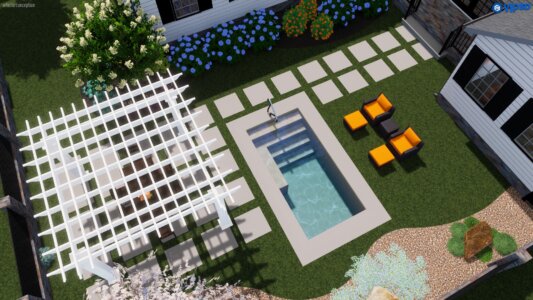
Unlike vinyl liner or gunite pools, manufacturers prefabricate fiberglass pools in a controlled factory environment and deliver them ready for installation, reducing complexity and installation costs. While customization options are more limited, many features come built into the design, minimizing the need for costly add-ons. Although fiberglass pools generally require less maintenance than other types, regular care—including cleaning, chemical treatments, and electricity—remains essential and should be in your budget.


Plunge Pools


Plunge pools offer a peaceful, space-saving retreat ideal for repose, light exercise, and socializing, with several popular designs that bring comfort and style to smaller backyards.

The Nook by Thursday Pools

The Nook
Compact and serene, The Nook measures 8 feet, 4 inches, wide by 16 feet long and features a consistent flat-bottom surface. It’s ideal for lounging or cooling off on warm days. Its simple yet practical design makes it easy to maintain and a perfect escape for calm moments.


Thursday Pools pearl pool with decorative hardscaping border

The Pearl
With a wraparound bench and built-in tanning ledge, the Pearl brings a spa-like experience to your backyard. Measuring 15 feet wide by 25 feet long, it’s designed for elegant ease and effortless conversation. The graceful curves of this pool create a welcoming atmosphere for entertaining guests or unwinding solo.


Sea Turtle in Caribbean Sparkle by Thursday Pools

Sea Turtle
The Sea Turtle combines style with usability, measuring 9.5 feet wide by 19.5 feet long and featuring generous bench seating and wide entry steps. It’s great for socializing or adding a swim jet for light exercise, and the design adds a touch of sophistication while maximizing comfort.


The Nest Feature Video

The Nest
Minimalist in design yet big on comfort, The Nest measures 16 feet long by 8 feet, 4 inches, wide with a flat-bottom surface. It’s easy to navigate, safe for all ages, and ideal for socializing or light water aerobics. Auto-cover compatibility makes it a smart, versatile choice for any backyard.


Other Small Pool Options


These small pool designs provide more room to move while still maintaining a compact footprint. They’re ideal for families, entertaining, or light exercise.

Lower Aerial wide shot of Thursday Pools Lil Bob pool

Lil Bob
Designed with versatility in mind, Lil Bob measures 13.5 feet wide by 27.5 feet long and has full-length benches on both sides. The center swim lane supports low-impact fitness and fun. Its practical layout offers ample space for both relaxation and activity, balancing usability with style.


Thursday Pool Caribbean Sparkle Titus pool

Titus
Titus brings a touch of playful sophistication with its flowing, freeform shape. At 12 feet wide by 26 feet long, it’s perfect for water aerobics, casual swimming, or lounging on the built-in beverage bench. The sinuous design softens your backyard space, making it feel inviting and dynamic.


Aspen Pool with Thursday Pools logo in left corner

Aspen (Small Size)
Aspen offers spa-inspired comfort in a space-conscious design. The smallest model measures 12 feet wide by 25 feet long, featuring a spacious tanning ledge, comfortable bench seating, and a courtesy ledge around the deep end for standing and socializing. Its graceful form and thoughtful details provide a serene retreat that enhances any outdoor living area.


Designed for Small Spaces, Built for Big Enjoyment

Whether you’re dreaming of a private plunge pool or a compact design with room to move, Thursday Pools’ small fiberglass models offer smart design, lasting quality, and low-maintenance appeal perfect for maximizing your outdoor space. While the pricing estimates above provide a helpful starting point, connect with a local pool builder to get an accurate quote based on your specific needs. You can also explore options with the free Thursday Pools Pool Cost Calculator. Whichever model you choose, a small fiberglass pool can turn your backyard into a personal retreat.

How To Close An Inground Pool

Closed Inground PoolFor some, it’s a season of denial, but when that first multi-hued leaf hits the water, it’s hard to ignore the reality that it’s fast becoming time to close the pool. If you’re in a temperate climate, you’ll want to winterize your pool to set yourself up for continued enjoyment when the weather is warmer. Whether closing an above-ground pool or an inground pool, many of the same principles apply. However, your regimen and costs may vary if you are closing a vinyl or gunite inground pool. For a more in-depth comparison of fiberglass vs vinyl vs gunite, download our free eBook. In this post, we will cover how to close an inground pool that is fiberglass. 

STEPS TO AN INGROUND FIBERGLASS POOL CLOSING

    1. Set a date. Get it on your calendar, and if you need to get on the schedule for pool service, it’s wise to make an appointment as early as possible before the time slots fill up.
    2. Balance your water chemistry. Even if you’ve hired a pool service company, there are likely tasks you should perform in advance. One is making sure you’ve established proper water chemistry. That includes checking and balancing for alkalinity, pH, free chlorine, calcium hardness, salt, stabilizer, metals, and dissolved solids. Note: the “eyeball test” will not cut it. Water that is pristine in appearance can still be harmful or out of balance. That’s why we test. Keep in mind that balance also refers to the neutrality of the water, meaning you don’t want water that is too acidic (can cause corrosion) or too basic (can cause scaling/deposit buildup). Your Thursday Pools Owner’s Manual is a great resource for recommended water chemistry levels.
      NOTE: do not treat your fiberglass pool with calcium hypochlorite because the percent of free chlorine is so high that it can damage the pool surface.
    3. Wipe down the scum line. Otherwise known as the “water line” or “tile line,” the “scum line” is a result of body oils, lotions, and environmental contaminants that float on the surface of pools and leave a mark that is usually harmless but doesn’t look good. This blemish could become a bigger problem if left unattended. Note: Be gentle. Use a light touch with a wiping cloth or brush – don’t scrape – to preserve the gel coat of your pool.
    4. Clean. Give your pool a final skim, vacuum, clean the filter baskets, and backwash the filter before the pool service company arrives. (The General gave us a good primer on backwashing and the ins and outs of a sand filter)
    5. Add winterizing chemicals. Add the final chemicals in your winterizing process the day before your service company arrives, allowing time for the chemicals to take effect before their arrival. If your water is properly balanced, no additional chlorine is necessary. With no swimmer use and cooler water temperatures, chlorine demand over the winter months remains very low. 
    6. Tidy up. We’ve talked mostly about chemicals up to this point. Organize and store those chemicals tightly and securely in a well-ventilated space, with special care not to place caustic chemicals too close to each other. In addition, tidy up your pool accessories, toys, and furniture. This could include pulling out ladders, diving boards, and other fixtures and checking them for wear and tear. If you have a secured or immovable element, like a slide, it’s a good idea to give it a protective wax that will set it up for continued use in the spring.
    7. Cover it. We recommend automatic pool covers for safety, security, and pool hygiene. If you get an automatic pool cover, you will be pleased with its contribution to a quality pool closing.

FAQ. A lot of new customers ask, “Should I drain my inground pool for the winter?” The answer is absolutely not. You risk structural damage if you drain your pool of water. Professional pool installers take great care to reduce the abundance of hydrostatic pressure from groundwater, but it is always there, and water in the pool counterbalances that external pressure. Recent technological innovations can lessen the impact of groundwater. 

If you must remove some water from your pool or if water is captured on top of your pool cover, drain it away from the deck, and be careful to leave water in the pool above the skimmer level. If you absolutely must drain the water completely from your pool, please consult with a professional. That can protect you against voiding your warranty. 

HOW MUCH DOES IT COST TO CLOSE A POOL? 

The cost of closing a pool will vary based on your area, but a national average is around $250. For reference, here are monthly cost estimates of pool chemicals: 

  • pH increaser/decreaser $10/mo
  • Calcium hardness increaser $20/mo
  • Stabilizer (cyanuric acid) $25/mo
  • Sanitizer (chlorine) $40/mo
  • Shock $38/mo
  • Algaecide $15/mo 

As previously mentioned, the costs will vary based on your geography, your commitment to regular maintenance, your vigilant use of a pool cover, and other factors. If you’re still pondering questions like “how much shock will I need for my pool?”, we have a guide that provides some size/cost ratios on the most used chemicals. 

BOTTOM LINE 

Winterizing or closing your pool for the season is part of a disciplined approach to pool ownership. The season, and a period of disuse, can have negative consequences for your pool. By keeping a regular maintenance schedule all year long and giving special attention to a proper seasonal closing, you can keep your inground fiberglass pool in good shape for many years to come. 

Do It Yourself Inground Pool

DIY Inground Pool

Having a fiberglass swimming pool in your backyard is a dream for many, offering endless enjoyment and memories. However, fiberglass pool installation costs often tempt people to consider the DIY route. While it might seem like a cost-saving option, DIY pool installation comes with significant risks and potential hidden costs that can far outweigh the initial savings.


Is it possible to build an inground swimming pool yourself? 

The short answer is yes, it is possible to build your own inground swimming pool. With the demand for inground pools surging, many people believe they will save money and get their fiberglass pool installed faster if they opt for a do-it-yourself inground pool installation. Still, the reality is that installing a DIY inground pool, whether you put it in by yourself or with the help of friends, can be dangerous, cause issues with your pool, and be more expensive when all is said and done.


Are DIY inground pool kits worth it?

The initial cost of inground pool kits may save you money over purchasing an installed pool. However, you might spend a lot more money and experience more delays or setbacks in the long run than if you left it up to an experienced professional. It’s important to mention that we are strictly a fiberglass pool manufacturer. Thursday Pools does not offer fiberglass inground pool kits. Our fiberglass pool shells are only available through independent dealers. Additionally, independent dealers install the pools in customers’ backyards.


What are some cons to installing a DIY inground pool?

The complexity of the installation process means that a DIY approach is rarely as simple or cost-effective as it might initially appear. Some known cons of installing a DIY inground pool include:


  • High installation equipment costs. Typically, homeowners will not have the equipment needed to install a pool, so you will have to purchase or rent the equipment yourself. This equipment can be expensive and not easy to find. Knowing which equipment to get and having the resources to obtain them is extremely important. Without the proper equipment, you cannot correctly install the fiberglass pool and risk expensive repair costs if something goes wrong.


  • Installation materials problems. When installing a pool, you will need access to the correct stone “backfill” material and know how much to use. If you use the wrong type of stone or not enough of it, your pool won’t be correctly  backfilled, resulting in an unstable pool that moves, cracks, and leaks.


  • Expensive mistakes. We have seen YouTube videos and heard stories of pools being dropped or crashing into the homeowner’s house. The materials needed to install a pool can be heavy and hard to transport. Stone material and the fiberglass inground pool shell must arrive safely with the proper equipment to pick up and move the pool. If not, you may drop and crack your pool before it gets put in, and that’s on you!


  • Incorrect pool equipment. Selecting the right pool equipment can be overwhelming because there are many options. A professional pool installer will ensure you have the correct equipment for your pool’s size and type, including the pump, filter, water sanitation system, and heater. If this equipment is not compatible with your pool, leaks can happen, and pipes can crack. Additionally, many equipment manufacturers only provide a limited warranty when non-professionals purchase and install it. Dealers may offer extended warranty plans when the manufacturer or retailer installs this equipment. It is expensive to replace if it breaks and is not under warranty.


  • Incorrect component placement. Knowledge of where to place the skimmer, returns, and lights for maximum efficiency is essential. Installing your lights, skimmer, and returns at the wrong height or location can cause poor water circulation and unbalanced water chemistry, which ultimately causes poor water health and damage to the pool’s surface.


  • Excavation issues. When installing a fiberglass pool in your yard, there are things a typical homeowner wouldn’t consider, like drainage, easements, and access. The layout and hole need to be the proper slope and depth. An uneven excavation can cause the fiberglass pool to not be parallel to the house, out of level, and not adequately connected to the base material.


  • Electrical dangers. Obtaining the correct permits is critical for safety. The wrong permits can lead to improper electrical installations and inspections. A professional installer will ensure your fiberglass pool and equipment are bonded to prevent the transmission of any harmful electrical voltage to pool equipment, people, and pets.


  • Void warranty. Having a manufacturer’s  warranty on your fiberglass pool is extremely important. The manufacturer’s warranty is automatically void with our pools if an independent dealer does not install your pool. While we can’t be 100% sure, we believe most, if not all, pool manufacturers do not honor a manufacturer’s warranty on a pool that a professional didn’t install. Check with your pool’s manufacturer’s warranty. If anything goes wrong with your pool, it may not be covered. 


  • Concrete problems. Pouring concrete around a fiberglass pool is trickier than regular flatwork. Inexperienced concrete contractors can set the concrete too close to the pool wall with their equipment, causing the pool walls to move if not done correctly. Concrete can also get into the pool, which can be a nightmare to clean!


  • Longer than expected install time. Fiberglass pools are the  quickest type to install when a professional installs the pool. If you install it yourself, you may run into delays and roadblocks along the way. Additionally, you should take into account that you will most likely be doing this as a side project on the weekends while still working your regular job throughout the week, making the project take longer.


The bottom line:

Use a professional pool installer that you’ve vetted. A professional dealer’s installation knowledge will help install the fiberglass pool correctly, ensuring your manufacturer’s warranty remains intact. Additionally, most pool builders provide a workmanship warranty over the entire project. 


Dealers in our independent dealer network have formed relationships with professionals who can perform the specific tasks you need to install a pool so you can plan to relax in your pool stress-free in no time. 


We may not be able to give you DIY inground pool cost figures, but we will recommend speaking with an installer. You can always let them know what budget you have in mind and see if these are parameters they can work in. If you’d like to spend more time planning your budget first, our  inground fiberglass pool cost calculator tool can give you a ballpark estimate on your project based on your needs!