
Ask the General: New Pool Owner FAQs

new poolDear General-


I think our family is finally ready to take the plunge and get an inground fiberglass pool. We’re excited! But we have so many questions. When should we buy? How should we finance? What should we be thinking about when we’re choosing the features for our pool? What do we need to learn in terms of pool safety and maintenance? Help us be a new pool owner, dear General!

Signed-

Excited in East Chicago


Dear Excited-

Yes, getting a pool IS a very exciting time and yes, there is a lot to think about. I could go on for hours about all the fun you’ll have as a new pool owner. I could also go on about the responsibilities of owning a pool, like assigning pool maintenance chores, pool safety and common pool maintenance mistakes to avoid. But let’s just dip our toes in the water for now… I’ll try to tackle some new pool owner FAQs. You should definitely tune in to my regular posts to learn as much as you can about pool ownership.

  1. When is the best time to buy a pool? Well, I was a pool salesman for years, so I’m tempted to answer “RIGHT NOW AND I’LL BE RIGHT OVER.” But since I’m retired I’ll just give you a little advice. If you live in the Midwest, pool builders near you are already booking (or booked!) for spring installs, so you need to get on the list now for next season. An early start will enable you to finish your landscaping so you have the most time to enjoy the pool. Most reputable pool builders will have a pretty full schedule come spring, but once the season starts, you might get lucky and squeeze onto their schedule for an early summer installation. If the weather gets nice really early and installs run ahead, pool companies may even offer discounts to help fill in gaps in their schedules, but that’s a gamble. My best advice, if you want to be in the swim by summer, is BUY NOW. Fall and winter are the best times to make your decisions and get your pool installation scheduled for the spring.
  2. How should we finance our new inground swimming pool? There are lots of financing options for your new pool project. Just like any other major purchase, you need to do some research and get the best possible deal on your investment. Check out home equity lines of credit (HELOCs.) They allow you to borrow only as much money as you need for your pool project against the equity in your house.
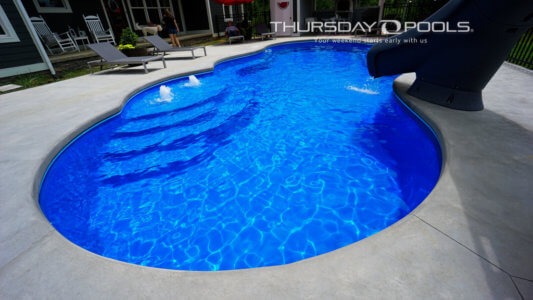
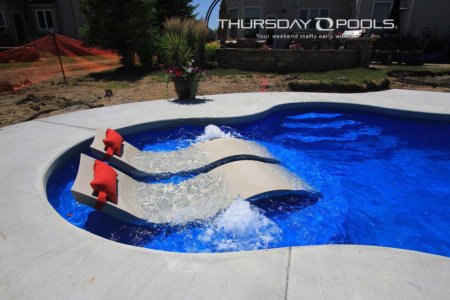
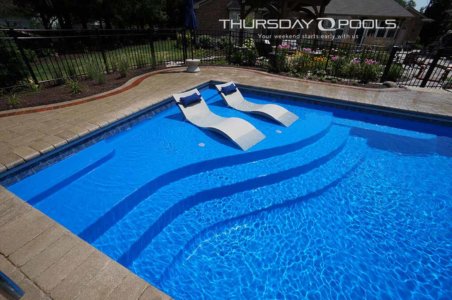
  3. What should we be thinking about when choosing the features for our new pool? Inground pools offer a lot of great benefits: quality family time, exercise, increased social activity with fun pool parties and relaxation, to name a few. Think about which of those add-on features are most important to your family. If it’s exercise, choose a large and deep pool with wide-open swim lanes. If it’s relaxation, think about a pool with a tanning ledge that allows you to lounge in the water while soaking up some rays. If your kids are just learning to swim, consider one of the fiberglass pool industry’s newest innovations– beach entry fiberglass pools (Patent US 10,358,837 and 10,472,839). It’s just a like a day at the beach! Your kids can play on the “shore” and ease their way into gradually deeper water while the big kids swim farther out. Think of all the money you’ll save on vacations when you bring the beach to your own backyard! And don’t forget to add in some add-on features– extras like a slide and water features will make your new pool truly your own.
  4. What about swimming pool safety? While we’re on the subject of kids and pools, seize the window between the time you order your pool and the time your pool is installed to teach your kids the rules of pool safety. Spend some time over the winter helping them learn the rules. You might even come up with some fun games or quizzes to make sure they’re sinking in. Then, by the time summer swim season comes around, the kids will be well-versed in the do’s and don’ts of safe swimming.
  5. What do we need to know about swimming pool maintenance? Your pool builder will give you some great information about maintaining your new pool after it’s installed and you should look for a reliable pool maintenance pro near you. In the meantime, read up on water chemistry and decide if you want a salt or chlorine-based system. There are some misconceptions about pool ownership and pool maintenance that need to be debunked and some common mistakes you can avoid. The biggest trick is to stay on top of daily maintenance from Day One. Split up the tasks amongst all the family members to keep everyone engaged.
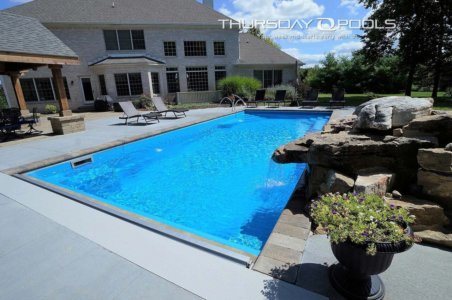
new pool ownerEvery family has different needs, wants and reasons for getting a pool. For my family, being a new pool owner was all about togetherness. My wife worked for the school corporation, and had summers off.  We wanted the kids to have a place to bring their friends so we could keep an eye on them and know who they were hanging out with. We had a place for family cookouts, little league teams, church groups, a wedding reception, many pool parties and a fun, safe place for our children and their friends to hang out.

Your family will find a million ways to enjoy your pool too. Don’t get too bogged down in worrying about maintenance. You’ll figure it out. And your local pool maintenance pro will help you as well. Remember how you felt when you took your first kid home from the hospital? If you can raise kids, you can take care of a pool. It will be wonderful and you’ll have experiences that your kids will remember forever. I know mine do.

Well, these leaves aren’t going to rake themselves. I’d better get to it.

Until next time-

The General


Who is The General?

The man, the myth, the legend….we just call him The General. His organized, systematic approach to pool installations over the years had his crew members calling him “The General” and it stuck. The General has over 30 years’ experience in the pool and spa industry, working for one of Pool and Spa News’ “Top 50 Pool Builders.”

Over that time, he designed, sold, project-managed and installed over a thousand inground swimming pools. As a pool owner himself, he’s the perfect authority to give you the inside scoop, with amazing tips and tricks to make pool ownership a breeze!
How to Close a Pool For Winter

HOW TO CLOSE A POOL FOR WINTER

closing poolThis too, shall pass. For those of us who live for the juxtaposition of the warm sun and luxurious cool pool water while living in a state with four seasons, waiting out the winter is a necessary evil. And making sure you are ready to enjoy your pool as soon as possible means closing your pool properly for the winter. If you live in a state with a freeze/thaw cycle, you may be wondering, “What does a pool closing include?” Some questions to consider when learning how to close a pool for winter may include:
  • How do you know when to close the pool for the winter (i.e. what month do you close a pool?
  • Why is winter water level maintenance important? 
  • How far down do you drain your pool for winter? How low should pool water be in winter? How high should pool water be in winter? And can you winterize the pool without draining?
  • What to put in the pool before closing? What chemicals do you need to close a pool for the winter? Do you need antifreeze to close the pool for winter? Should you shock the pool before closing?
  • What are the steps for closing a pool? How do you winterize a pool step by step? 


Let’s get to answering those questions!

How do you know when to close the pool for the winter? 

What month you close a pool for the winter depends on where you live and whether you have a pool heater or not. Many homeowners keep their pools open from Memorial Day to Labor Day, but if you have a pool heater, you could swim from April to October. You don’t want to close your pool too soon either because closing too early will increase the risk of algae growth. Fiberglass pools are naturally algae resistant, but vinyl liner and gunite pools are more prone to algae growth. So whether you will be swimming in your pool or not, for the health of the water you will be swimming in next season, make sure the water temperature is consistently below 65 degrees before stopping your filtration system and closing your pool.

Why is winter water level maintenance important? 

All inground pools have a common enemy. It’s called groundwater. Groundwater can wreak havoc on every type of pool if you allow its level to rise too close to the water level in your pool. In the winter months, while you’re busy watching football and baking Christmas cookies, you need to be sure that your water level underneath your winter cover doesn’t get out of whack with the groundwater around your pool, or you might be in for a world of hurt (and expense) when you pull that cover off in the spring. Here’s what might happen, based on the type of pool you have:

Vinyl Liner Pools: On a vinyl pool, if the water level inside the pool becomes lower than the water on the outside, the result is something we refer to as “floating the liner” which is not a good thing. It means that the liner is wrinkled and damaged beyond repair. A pool maintenance pro will have to drain the pool completely and replace the liner.

Fiberglass Pools: If the pressure of groundwater exceeds the pressure of the water inside your pool, your fiberglass pool shell might shift, crack, or float. Proper winterization and balancing inner vs outer water levels are the keys to protecting against these issues. Having additional add-ons to secure your fiberglass pool, like the Geo-Anchoring Pool System, can grant you additional support, as well. 

Gunite Pools: Groundwater pressure can cause cracks in gunite pools over the winter as well, resulting in the need for resurfacing. Ceramic tile along the waterline can also be adversely affected. The worst possible issue is flooding. If groundwater is not managed properly, a gunite pool can actually float.

How far down do you drain your pool for winter? 

Lowering your pool water can really cause some problems when Old Man Winter kicks it into high gear and Frosty the Snowman starts dancing across your pool cover. Every pool company has its own opinions and you’ll find conflicting information out there on the world wide web about the proper water level for winterization. 

When water freezes, it expands. The pressure of that expansion can crack your skimmer. Many pool professionals choose a Gizzmo, designed to absorb the pressure from ice expansion to prevent it from destroying the skimmer. It can be used in both above and inground pools. 

The Gizzmo has a plug on the top of it that is left open while air is blown from the pump area through the lines, clearing them of water. Most pool maintenance pros will then pour a gallon of antifreeze through the opening and into the piping to ensure the lines won’t freeze. Once the plug is screwed on tightly, water can’t get back into the piping.

We believe your best bet is to maintain your water level to just below the midway point of your skimmer. Doing so means you’re most likely to keep your water level in balance with groundwater throughout the freezing weather. One of the benefits of an automatic pool safety cover over a standard winter cover is the ease of being able to take a peek periodically at your water level.

What to put in the pool before closing 

If you live in a part of the country where winter temperatures are freezing or below freezing, you’ll need non-toxic antifreeze to protect your plumbing. Just like the summer, you should make sure your pool chemistry is balanced before winterizing.

Chemicals for winterizing your pool:

    • Shock. If your water chemistry is balanced before you close your pool there is no need to shock the pool at closing. During the winter months, your chlorine demand is much lower (if not zero) requiring little to no chlorine in your pool.  Generally the residual chlorine in your pool left over from the standard season is enough to combat algae growth through the fall if you do not close the pool until after the average temperatures are below 65 degrees.
    • Stain and scale treatment. If needed, add stain and scale treatment a day before closing. Adjusting the pool pH to 7.2-7.4 will prevent staining, scaling and algae growth, so you may need a pH increaser or reducer.
    • Winter algaecide. Winter algaecide is generally put in the pool at the time of closing.
  • Non-toxic antifreeze. This chemical is not actually put in the pool water. It’s used in the plumbing lines to prevent cracking and bursting.


What are the steps for closing a pool?

Whether you choose to do some (or all) of it yourself, or hire a pool professional to winterize your inground pool, there are certain steps you’ll want to take to ensure a happy opening in the spring.

Step 1: Clean your pool.

Remove all debris, brush the pool’s walls and vacuum.  


Step 2: Balance water chemistry.

Test the water and adjust with the proper chemicals to reach the following levels:

  • CHLORINE RESIDUAL – 1.0 TO 3.0 PPM
  • PH LEVEL – 7.2 TO 7.4
  • TOTAL ALKALINITY – 80 TO 120 PPM
  • CALCIUM HARDNESS – Less than 120 PPM (Note: if you own a fiberglass pool, be sure to avoid using Calcium Hypochlorite.)
  • CYANURIC ACID (CHLORINE STABILIZER) – 30 TO 50 PPM
  • METALS – 0 PPM
  • TDS – LESS THAN 1500 PPM (Note: if you have a salt system, maximum should be 1000 PPM above safe salt level)
  • SALT – 2700 TO 3400 PPM (Note: this is only necessary if using a salt generator)
  • LANGELIER SATURATION INDEX (-0.3 to +0.3). IDEAL IS 0. (Note: if you have a salt system, your saturation index should be between -0.2 and 0.2 to account for the additional corrosive characteristics of salt)


Step 3: Remove and store equipment/accessories.

Remove solar blankets and ladders from the pool, and store in a clean, dry area for winter. You’ll also want to remove and store skimmer baskets, wall fittings, floating lights, etc. 


Step 4: Achieve proper water level.

Using the filter pump or a submersible pump, you may need to lower the water level. Check your pool manufacturer’s manual or consult your pool dealer.


Step 5: Drain water from equipment.

Drain water from your pump, filter, heater and chlorinator by removing the drain plugs.  All water must be drained or blown out of your equipment so it doesn’t freeze, expand, and crack the equipment. If you have an inground pool, blow out the lines starting at the skimmer and then plug the lines at the pool using expansion plugs. As an additional safety measure, you may also use non-toxic antifreeze in the lines following manufacturer’s instructions.

Step 6: Cover the pool.

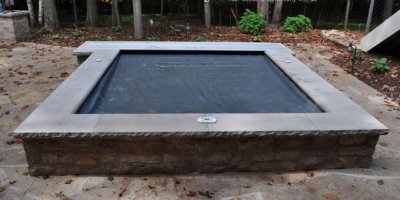
A winter safety cover that fits tightly is needed. You may have a mesh safety cover or solid (non-perforated) cover. Mesh will allow water to seep into the pool, and a non-perforated cover will require you to use a cover pump to remove rain water and snow melt. 


Knowing how to close a pool for winter doesn’t mean you need to do it yourself. It’s good to know what goes into closing a pool for winter so you can be sure that it’s being done correctly. Always follow manufacturer’s instructions as not doing so may result in problems and a voided warranty.

Will an Inground Swimming Pool Add to my Home’s Resale Value?

When considering buying a pool, a popular question people ask is, “Does a pool add value to a home?” The short answer is “yes, it can.” However, it’s essential to acknowledge that while some home buyers see a pool as a huge asset, some buyers would never consider purchasing a home with a pool. In this post, we’ll consider some factors that help determine whether a pool (including a fiberglass pool) increases home value.

Fiberglass Pools increase home value

THE POOL TYPE

Above-ground pools will likely not increase your home value, so we will only consider inground pools. Remember that not all inground pools are created equal. A durable, shimmering blue fiberglass pool that is maintained and cared for will help resale more than a faded-out vinyl-lined pool with an obvious need for repair. Also, a lower maintenance pool will be more attractive to home buyers. 


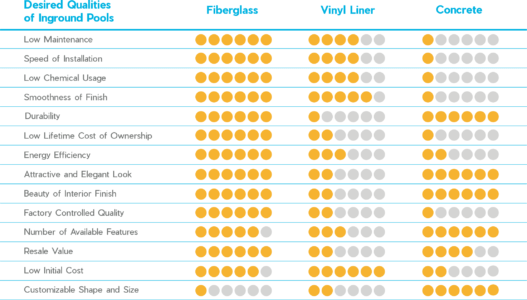
Gunite pool maintenance includes steel brushing the surface every week, acid washing every three to five years, and resurfacing every 10 to 15 years. For vinyl liner pools, you will need to replace the liner every five to nine years. Both gunite and vinyl require more chemicals and maintenance time. With fiberglass pools,  there is no need to resurface and they require fewer chemicals, so a fiberglass pool provides less maintenance and longest-lasting finish. 


YOUR LOCATION

Climate is essential when considering the value-added relative to resale value. Generally speaking, homes with a longer swim season will garner a higher selling price from adding a pool versus a home in a colder, northern climate. 

Your neighborhood is also a factor. If many homes have pools in the neighborhood, homebuyers may expect you also to have a pool. Even in neighborhoods that don’t have a lot of houses with pools, home value can increase because it’s considered a unique selling proposition. A home with a pool is attractive in neighborhoods with a lot of school-aged children. 


YOUR OUTDOOR LIVING SPACE

Fiberglass Pools increase home valueChoose a pool size that’s in balance with the rest of your yard. While you might want as much pool as possible, future buyers may not. Plus, a large pool in a small yard won’t be as aesthetically pleasing. Fortunately, modern inground pools come in a variety of sizes, shapes, and designs, so you can be sure to choose the right-sized pool. 
 

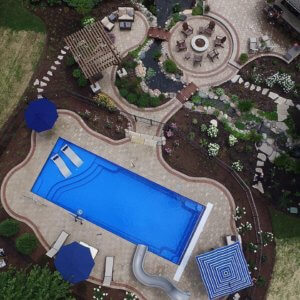
More and more home buyers are looking for outdoor multi-purpose spaces. It’s important that your pool complements the other activities that people want to enjoy outside. Choose a pool that will also give your backyard the feeling of an outdoor living room by adding lounging, cooking, dining and entertainment areas.


HOW MUCH VALUE DOES A POOL ADD TO AN APPRAISAL?

While above-ground pools will likely not add value to your home, inground pools can add 5% to 8% in value to a home on average. That said, how much value does adding a pool add? With a five to eight percent increase in home value, a $400,000 home might see an improved valuation of around $420,000 to $432,000. 


BENEFITS OF A FIBERGLASS POOL

We believe that a fiberglass pool can add to your home value, but aside from that, there are other perks to owning a fiberglass pool by Thursday Pools.

fiberglass pool vs vinyl liner vs concrete

  • Quick to install – Fiberglass pools usually take days or a few weeks to install versus other pool types, which can take up to 6 months to install. This choice can mean the difference between capturing a swim season or being forced to wait until next year. Busy seasons may increase this install time, but a conversation with your dealer can let you know what your pool’s timeline will look like.
  • Attractive – The gel coat finish of fiberglass pools combined with clean, balanced water and sunlight makes for a stunning view. They look pretty great when paired with accent lighting at night, too. 

  • Feel – Some inground pool types can have a gritty surface that might scratch you. Others will have a much smoother surface and might cause you to slip and slide. Modern fiberglass pools feel solid and look slick but are neither slippery nor prone to snag your swimsuit. 

  • Beautiful shapes, sizes, and colors – For pairing a pool with your backyard, climate, and location, Thursday Pools offers pools in shapes, sizes, and colors that match practically every need. 

  • Durability – The durability of fiberglass pools is unparalleled. With vinyl, you will have to be careful to avoid rips or tears, and you’ll need to replace the liner about every 8 to 10 years. Gunite requires a heavier chemical regimen and periodic resurfacing. A fiberglass pool can last years without resurfacing or replacement. 

Built-in features – Fiberglass pools now have built-in features you might have only found in costly custom resort-style pools. Tanning ledges, beach entries, and wrap-around benches are among the features you can find in the Thursday Pools designs.

Ask the General- How Much Water Fits in my Inground Fiberglass Pool?

Ask the General- How much water fits in my inground fiberglass pool

Dear General-

Our pool is fairly new. One of our neighbors recently asked me how much water fits in my inground fiberglass pool and my answer was, “Um… a lot.” I realize that’s probably not the level of detail I should know about my own pool. But math is really not my strong suit. Can you help?

Signed-

Wondering about Water in Wabash


Dear Wondering-

Most of us don’t spend a ton of time doing math to calculate the water volume in our pools. (It’s hard to work a calculator under water.) The easy answer is that your pool installer most likely gave you this information when installing the pool. However, you might have lost that information in your excitement to start swimming. So let’s wade into this water question…

Why Do You Need to Know Your Pool’s Water Volume?

Other than satisfying your neighbor’s curiosity, why would you need to know how much water your pool holds? Well, there are a couple of good reasons.

  1. Determining chemical usage. I know you don’t love math, but you certainly can’t begin to calculate how much volume of any chemical you need to bring your water into balance if you don’t know how much water you’re putting it in. So, if you’re having trouble getting your water chemistry balanced, you could be basing it on incorrect volume.
  2. Refilling your pool. If you’ve had to have your pool drained for any reason, you’ll need to know how much water it’s going to take to fill it back up.
  3. Choosing accessories and equipment. If, for example, you’re considering getting a heater for your pool and you’re shopping online, guess what question you’re going to have to answer? You guessed it–how much water are you looking to heat? The same is true for pool pumps and filters–you’ll need to know the volume of water in your pool to choose the proper capacity for equipment.

How much water fits in my inground fiberglass pool How Can You Determine Your Pool’s Water Volume?
As I mentioned earlier, you probably have this information in your records from your pool installation. But if you’re like me, you have no idea where that paperwork is. So, here are a couple other ways to find out.

  1. Ask a pool professional. All testing centers have the ability to determine pool volume with a chart, computer, or simple calculation. A pool and spa service technician should know how to make these calculations easily and routinely, either by taking a look at the pool itself or reviewing your pool’s specifications. They will consider surface area, volume, deck size and allowable bather load.
  2. Ask your pool’s manufacturer. Check out the customer support on your pool manufacturer’s website. If you can’t find the information for your pool on their website, give them a call. They should be happy to provide you with this information.
  3. Do the math. If you can’t get the information from a pool professional or your manufacturer (or if you really just want to know how this all works) here’s a bit of reference:
  • 1 cubic ft of water contains: 7.48 gallons
  • 1 cubic ft of water weighs 62.4 lbs
  • 1 gallon of water equals .134 cubic ft.
  • 1 gallon of water weighs 8.33 lbs
  • 1 (PPM) part per million represents 8.3 pounds of chemical per million gallons.

Sample calculation:

A train is leaving the station traveling 60 mph. (Ha… I’m just kiddin’…) Seriously– here’s how we do it:

The simplest calculation for pool volume is width x length x average depth. (You’ll get the rough average depth by adding the depth of the deep-end and the shallow-end together and dividing by 2.) That number will give you the cubic feet. Take that number times 7.5 gallons, and that will give you the total water volume of your pool.

So, for example, take a rectangular pool that’s 16’ x 32’ x 6’ deep with a 3’ deep shallow-end. If you apply this formula to this particular pool, you’ll find it holds approximately 18,000 gallons of water. That might not be exact, but it’s a lot more specific than “a lot.” Plus, it will really impress your neighbor.

Fall is approaching, and pool season is starting to slow down here in the Midwest. The kids are back in school, the nights are getting cooler, and the days are getting shorter. But there’s still time to enjoy the pool. I’ve got my heater set to the perfect setting for my pool’s water volume, so I’m going to grab a float, turn on the heater and hop in.

Until next time-

The General


Who is The General?

The man, the myth, the legend….we just call him The General. His organized, systematic approach to pool installations over the years had his crew members calling him “The General” and it stuck. The General has over 30 years’ experience in the pool and spa industry, working for one of Pool and Spa News’ “Top 50 Pool Builders.”

Over that time, he designed, sold, project-managed and installed over a thousand inground swimming pools. As a pool owner himself, he’s the perfect authority to give you the inside scoop, with amazing tips and tricks to make pool ownership a breeze!

How Do I Find a Great Pool Builder Near Me?

How Do I Find a Great Pool Builder Near Me?

After hours of perusing website after website to get ideas and find the exact pool design and color you want, you just need to figure out exactly how to get it! You need a professional, experienced pool builder near you to turn your dream into reality. So you might be asking, “How do I find a great pool builder near me?” pool builder near me

Some pool-building companies are quite large–they do tons of marketing and have a team of installers juggling multiple projects at once. Other pool builders are one-person operations, and you’ll typically have the owner and a couple of helpers working on your pool project. One is not necessarily better than the other– it comes down to who you want to work with and whether you’re happy with the price they give you.

You’ll definitely want to get more than one estimate, and when you’re comparing those estimates, make sure you’re comparing apples to apples. Go through the estimates carefully and consider whether they include the same options. Additionally, compare all their credentials and applicable consumer reviews so you can be sure you’re making the best choice.

As you’re starting your pool builder search, check out these resources to help you compile your short list of pool builders to contact:

  1. Google is a quite popular research tool for good reason. Try using search terms like “Pool builder (or company) near me.” To narrow your search, you might also try “Fiberglass pool builder (or company) near me.” Interestingly enough, different search engines will produce different results, so you might also try Bing, Yahoo or Ask and see what you get. Keep in mind that smaller, independent pool dealers, no matter how high quality their work, might not have the technical savvy or marketing prowess to get their business on page one in a search result. So click through the results pages to ensure you don’t miss any good prospects.
  2. Social media is another great option for finding pool builders near you. Facebook has a handy feature for asking for recommendations. Here’s how it works.
    1. Simply create a post on your page that uses the word “recommend” as in, “Can anyone recommend a fiberglass pool builder near me?” Note: it doesn’t work if you misspell recommend!
    2. Publish the post.
    3. Once the post is published, Facebook will generate a map, and you can type in your city or town and add it to your post.
    4. Your friends who live nearby will be able to see the post and comment with their recommendations if they know of someone.
  3. Referral service sites like Angie’s List and HomeAdvisor can be great resources. You’ll need to create an account, and there may be a charge to use the service based on the membership level you choose. These companies will ask questions about your project and match you with a pool builder near you. Then they will provide your information to the pool builder to contact you directly to discuss your project.
  4. The Better Business Bureau (BBB) has been around for more than 100 years. While it’s best known for handling consumer complaints, it’s also a great resource to help you compile a list of local swimming pool contractors near you. The great thing about the BBB is that they won’t ask for a ton of personal information from you. They can also provide you with quite a bit of good information on the pool company, such as how long they’ve been in business and who the owner is.  
  5. Other pool owners are an excellent resource for the inside scoop on what you can expect from a pool builder. Do you have a friend or neighbor who has a pool, or do they know someone who does? Are they happy with the final result of their swimming pool project? Would they recommend their pool builder to others? Personal recommendations can be your best source of solid information. Area landscapers and home builders have most likely worked with pool builders near you and can also attest to pool builders’ quality and commitment.

Pool builder near me Once you’ve chosen a pool builder, it’s time to relax and let them do their work. In the meantime, you can shop for the fun stuff, like loungers for your tanning ledge, pool accessories, and landscaping. You’ll be in the swim and having pool parties before you know it!
Ask the General; What Can I Expect with New Pool Costs and Accessories?

accessories for poolsDear General:

You can’t possibly imagine how badly my family wants a pool. But we don’t know where to start. What can I expect with new pool costs and accessories?  How can I get us from the dreaming stage to the swimming stage?

Signed;

Pool-less in Plainfield


Dear Pool-less;

Don’t despair. You have to start somewhere. As is the case with any big project, you have to break it down. While I can’t tell you exactly what your new pool will cost and what you might need in addition to the pool, I can give you some advice to help you get started. You’ll need to get in-home estimates from your local pool professionals and decide how you’d like to finance your pool. So let’s break down how you can get a little closer to that “swimming stage.”

Pool Cost

On average here in the Midwest, a basic inground fiberglass pool or inground vinyl liner pool installed with a pump, filter, chlorinator with a simple concrete deck surround (and don’t forget, water) will typically fall somewhere between $25,000 and $65,000 without the optional accessories we’ll discuss later in the post. That said, there are many factors that will affect the overall cost of your pool.

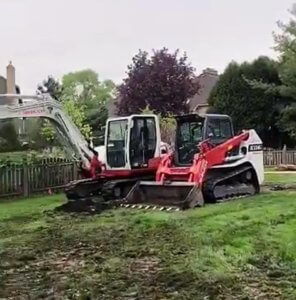
  1. Your location. Unless you happen to have a backyard that’s perfectly level, full of easy-to-dig soil and unobstructed on all sides, your pool builder will have to factor in the challenges of your particular installation location into the price of your pool. You might need to have dirt hauled in. You’ll most likely need to have dirt hauled away.
  2. Pool size. Obviously, a larger pool costs more than a smaller one. You could ballpark estimate about $1800 per linear foot. Also take into consideration how you’ll be using your pool and how much room you’ll need in the rest of the yard for decking, furniture and landscaping.accessories for pools
  3. Pool design and features. A rectangular pool with basic features will be less expensive than a freeform pool with added features such as a beach entry or tanning ledges. Again, think about what’s important to you and your family–do you want to be able to exercise in your new pool? Play games? Or just relax in a little cool water at the end of a long day. Make a list of the features you want and communicate those priorities to your pool estimator.
  4. Your pool builder. Pool companies range from small, independent builders who will oversee every step of your project from start to finish, to big companies with multiple crews that are juggling numerous installations at once. One type is not necessarily better than another. It all comes down to which company you have a good feeling about. Do your research, and always get more than one estimate. Ask for references. Consider experience, honesty, quality, reputation, referrals and design ability. Also ask yourself–”Do I like these people? Would I want them to build my pool?”

Accessories for Pools

accessories for poolsThe term pool accessories refers to everything other than the pool itself, and there are plenty accessories for pools to consider. There are cool built-in features, like tanning ledges, beach entries for freeform pools, beach entries for rectangular pools, infinity edges, wading pools, wet decks and bubblers. There are great add-on features to pump up the atmosphere and fun, like wall and step jets, waterfalls, fountains, custom lighting, diving boards, slides, pool floats and sports equipment. There are convenient ways to keep your pool covered, comfortable, clean and safe, using heaters, chillers, automatic cleaning systems, alternative water purifiers, solar blankets, winter covers and automatic pool covers. And then there’s everything that will surround and enhance your pool, such as landscaping, concrete decking, patio furniture, fencing, ledge loungers and designer handrails. It’s quite a list, isn’t it?  You might not need all of those things, but you’ll need to factor in what you do want when you’re thinking about cost.

Of everything I’ve listed above, probably the biggest consideration in terms of cost is concrete decking. (And fencing, if you need it.) There are so many concrete styles, coatings, and stamping options to choose from, and you’ll probably end up wanting a little more patio than you originally thought. Remember though, it’s a one-time investment, and you want to make sure you’ll have plenty of room to party around the pool. accessories for poolsKeep in mind that any accessory that is structural needs to be done during construction, so you’ll need to talk to your pool builder up front about that. Many of the other accessories are optional, and you can always add them in the years to come, while you’re enjoying your pool.

In future posts, we’ll go into more detail on all of these accessories. There’s so much to talk about, so stay tuned! But for now, it’s once again time to for me to grab a float and enjoy my pool.

Until next time…

The General


Who is The General?

The man, the myth, the legend….we just call him The General. His organized, systematic approach to pool installations over the years had his crew members calling him “The General” and it stuck. The General has over 30 years’ experience in the pool and spa industry, working for one of Pool and Spa News’ “Top 50 Pool Builders.”

Over that time, he designed, sold, project-managed and installed over a thousand inground swimming pools. As a pool owner himself, he’s the perfect authority to give you the inside scoop, with amazing tips and tricks to make pool ownership a breeze!

3 Easy Steps to Hosting the Perfect Labor Day Pool Party

The arrival of Labor Day means the kids are back in school, fall is just around the corner and the joys of the holiday season will be here before we know it, but it’s far from time to close up the pool. We still have some great swim time left!  Designated to appreciate the hard work Americans do all year long, many use the day off by hosting (or attending) a pool party. In this post, we share some of our favorite recipes and Labor Day pool party ideas for an all-American pool party.

Step One: The Decor

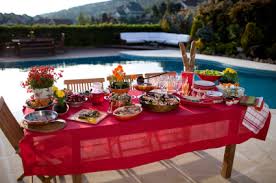
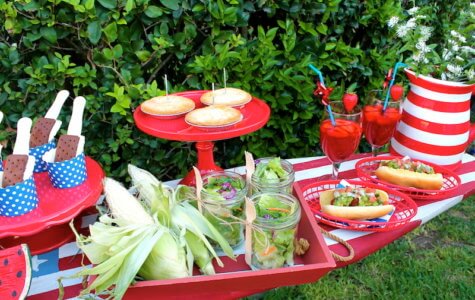
labor day pool party ideasRed, white and blue decor–tablecloths, plates, napkins, streamers and other festive Americana table decor is easy to find this time of year. Check out your local party goods store, or look online. Since this decor will also look great at your Fourth of July pool parties, you might think about investing in some decor that you can use for years to come.
Step Two: The Buffet

labor day pool party ideasLabor Day parties should be easy, laid-back and fun for you as well as your guests. Do yourself a favor, and set up buffets for all your food and beverage. Put the food table near the kitchen and/or the grill, whichever is most convenient for your menu. If you’re hosting a larger group, put the beverages on the opposite end of your pool area to keep your guests from creating a traffic jam. If your group is small, you can keep everything closer together.

Cover your buffet table with a flag themed cloth, and add height with cake towers and vases to it to make it more visually appealing.

Step Three: The Menu

All recipes serve six.

Easy Watermelon Feta Salad with Fresh Basil and Reduced Balsamic

labor day pool party ideas

Sure, we’ve eaten plenty of watermelon all summer long. But this salad gives watermelon a sweet-mixed-with-savory twist your guests will love!

Ingredients:

10 cups seedless watermelon, scooped into balls and placed in a large serving bowl (preferably clear to show the color!)

1 cup crumbled feta cheese

½ cup fresh basil leaves, chopped immediately prior to serving

Reduced balsamic glaze (available in the vinegar section of most grocery stores)

Instructions:

Immediately prior to guest arrival, toss the feta in with the watermelon balls. Stir gently, just to mix. Drizzle reduced balsamic glaze in a crisscross pattern over the salad. Garnish with freshly chopped basil.


Blackened Chicken Sliders with Fig Jam and Arugula

labor day pool party ideas

Burgers are an obvious choice for a cookout, but everyone loves chicken, and these spicy but sweet, bite-size sandwiches will keep everyone coming back for more!

Ingredients:

2 pounds of boneless, skinless chicken thighs

Blackening spice to coat (approximately â…› cup)

Fig jam (found in the jelly aisle of most grocery stores)

2 packages Hawaiian rolls (slider buns)

2 cups fresh arugula

24 4-inch bamboo skewers

Instructions:

Toss the chicken thighs in the blackening spice and let marinate up to two hours. The chicken thighs can be grilled the morning of the party and refrigerated or grilled immediately prior to making the sliders. They’re great hot or cold. Grill the thighs to an internal temperature of 155 degrees. Don’t overcook. Each chicken thigh will yield about two sliders if you cut each one in half after grilling.

About an hour before guests arrive, assemble the sliders. Cut the buns in half and spread the top of the bun with fig jam. Place the chicken on the bottom bun and top with a handful of arugula. Place the lid on and secure with a bamboo skewer. Arrange on a platter.


Grilled Parmesan-Crusted Sweet Corn

labor day pool party ideas

The end of summer means saying farewell to sweet corn until next year, so make sure you include it in your end-of-season soiree! This recipe is easy to make and adds a little zing to a classic summer treat.

Ingredients:

1/2 cup mayonnaise

6 ears corn, husk and silk removed

1 cup shredded Parmesan cheese

1 tablespoon chili powder

1 teaspoon salt

1 teaspoon ground black pepper

Instructions:

Preheat your grill for medium-high heat, and lightly oil grate. Brush a thin layer of mayonnaise on each ear of corn. Sprinkle the corn with the Parmesan cheese, chili powder, salt, and pepper. Wrap each ear with aluminum foil and place on the grill. Grill, turning occasionally, until the kernels begin to brown, about 10 minutes.


Summer Berry Trifle

labor day pool party ideas

Berries are one of summer’s greatest joys. Toss in some angel food cake, yummy pudding and whipped cream and you have the easiest, lightest, summeriest dessert there is.

Ingredients

Two 3.4 oz. packages instant cheesecake flavored pudding mix

4 cups milk

Angel food cake (about 12 oz), cut into pieces

1 cup chopped strawberries

1 cup blueberries

1 cup chopped raspberries

12 oz. cool whip (or homemade whipped cream)

Instructions:

Add the pudding mix and milk to a large bowl and make according to package directions. Next, build your trifle in a clear, footed bowl as follows: Add about half of the angel food cake pieces to the trifle dish. Top with about 1/2 of the prepared pudding. Add a layer of berries (about 1/2 cup of each kind of berry.) Top the berries with about half of the cool whip. Continue layering and finish off the trifle with a decorative layer of berries on top. Refrigerate for 2-3 hours, and remove from refrigerator just before serving.


Happy Labor Day!

We hope you enjoy these quick and easy Labor Day pool party ideas so you’ll have loads of time to enjoy your food, your guests, and especially your pool!


What Qualities Make for a Truly Awesome Tanning Ledge?

What Qualities Make for a Truly Awesome Tanning Ledge?

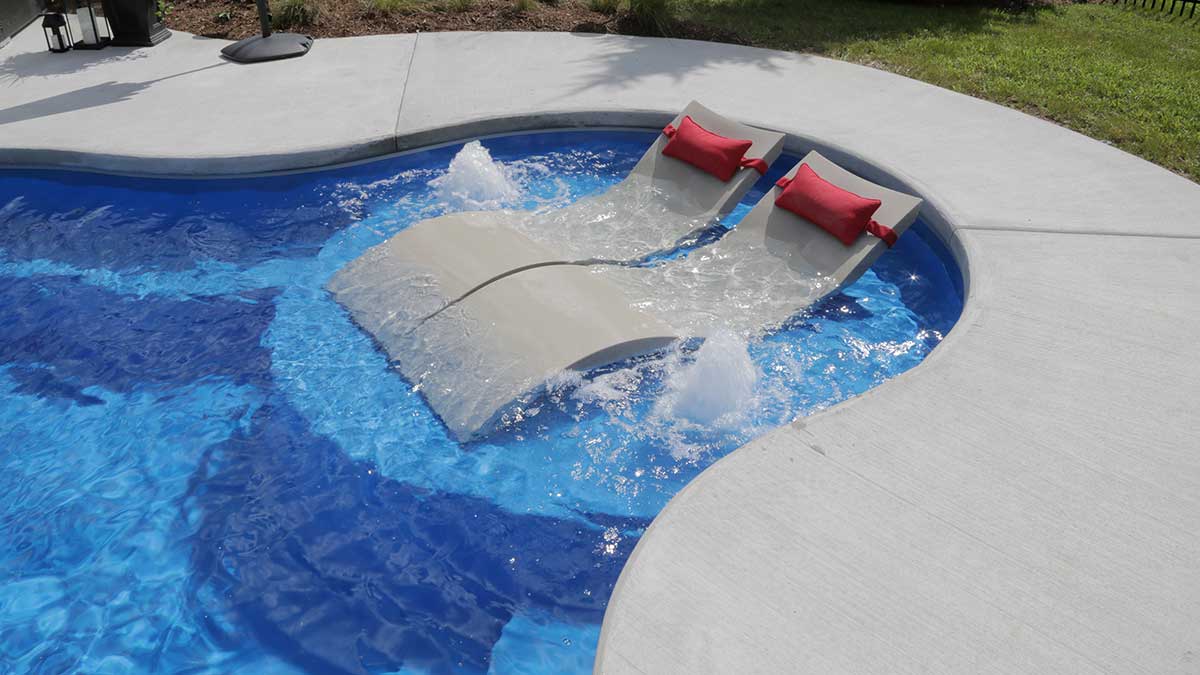
The built-in tanning ledge feature in fiberglass pools has exploded in popularity over the last few years. They’re not just the perfect spot for sun worshippers. They’re also a marvelous place for children to enjoy the water, especially when they’re first learning to swim. Of course the kiddos still need their swim floats, but being able to gradually get used to the water by sitting in a shallow depth can help them get acclimated to being in the pool until they’re ready to take the next step and start to swim. And if you have a dog in the family who also loves the water, you’ll likely be sharing your tanning ledge with him or her as well. Dogs love tanning ledges because it gives them a place to chill between forays into the water. All told, your built-in tanning ledge will be the social center of your backyard pool oasis. So the question really isn’t, “Do I want a tanning ledge in my fiberglass pool?” The question is, “How can I be sure I’m getting the very best tanning ledge for my fiberglass pool?”

Because not all tanning ledges are created equal, let’s take a look at the qualities of a great tanning ledge.

  1. Length and width. Given how many swimmers (both two and four-legged) will want to share the tanning ledge, size is the most important factor. Check into the sizes of the ledge loungers you want, and then make sure that your tanning ledge is long enough to accommodate them. Most ledge loungers will require at least 7 feet by 8 feet each, and you’ll still want room for those who aren’t lounging. As long as you’re at it, you might as well get the tanning ledge possible so there will be plenty of room for everyone to chill on it.
  2. Depth. The ideal depth of a tanning ledge is 12 inches. That gives you just enough water to cool your heels (and your seat!) while still enjoying plenty of sunshine. You’ll find some designs out there that may feature a tanning ledge with a depth of less than 12 inches. They won’t give you quite enough to splash around and keep cool in.
  3. Non-skid surface. Because you’ll be spending lots of time hanging out on your tanning ledge, you’ll want to be sure that it’s has a safe, non-skid surface. The smooth surface of a fiberglass pool is great for kids, pets and adults alike, but non-skid surfaces on tanning ledges ensure that you have solid footing where you need it most.
  4. The extras. To take your tanning ledge experience to the next level, make sure the fiberglass pool design you pick has the option for fun extras such as umbrella holders and bubblers. Since your tanning ledge is about to become party central in your backyard, you might as well kick it up a notch. 
  5. Solid support. This is by far the most important differentiation between a good and a great tanning ledge experience over the life of your fiberglass pool. There are several methods for installing and providing support for built-in tanning ledges, and some methods are much better than others. When you’re choosing your fiberglass pool, make sure you’re also inquiring about how your tanning ledge will be installed and supported. Traditional methods like backfill, flowable fill and pier installation are okay, but if they’re not done by a pool installer with good experience in installing tanning ledges, the ledge can have a hollow feel under your feet, and the backfill underneath it can settle over time. Your absolute best bet is to choose a fiberglass pool that offers the Backfill Eliminator an innovative system that provides solid, lifetime structural support for your tanning ledge. Here’s how it works.

Investing in a fiberglass pool for your backyard will bring a lifetime of fun and great memories for you, your family and your friends. Tanning ledges are just one of the amazing features available in fiberglass pools. Pool buying is a big decision, so be sure to do your research and get the perfect pool for you!

Ask the General: Will a Pool Fit in my Yard?

will a pool fit in my yard

Looking for high-class, very nice pools? See what the General has to say about making your pool dreams a reality!

Dear General; 

My family has been begging for a new inground fiberglass pool (and I want one too!), but our yard is pretty small and I’m worried we can’t fit one. It is also hard to find very nice pools that are a smaller size. How can I find out if a pool will fit in my yard and what it might look like, so we can decide on a pool and get in the swim?

Signed–

Wondering in Winnetka


Dear Wondering;

Will an inground fiberglass pool fit in your backyard? The short answer is: probably! Fiberglass pools come in a wide variety of shapes, sizes and colors. While your yard might not be large enough to accommodate a pool with features such as  built-in tanning ledges, open swim lanes or beach entry, there are still awesome fiberglass pool designs that are as small as 19.5 feet long and 9.5 feet wide that can give you the relaxing oasis you’re dreaming of. The first step is to consult with a professional pool builder. They’ll send an estimator to your house to let you know what your options are and give you a quote so you can be one step closer to having the backyard swimming pool oasis of your dreams. Here’s how to get started:

  1. Do your research. Before you contact anyone, do some research. Check them out with the Better Business Bureau, look at their online consumer reviews, check out their website, and then, once you’ve contacted a company, ask them for recommendations from their customers. Like you’ve heard me say before, just make sure the company is an established, experienced, honest, professional pool builder. And don’t be afraid to check out their competition–most people will get more than one quote.
  2. Get an estimate. Once you’ve done your research, it’s time to schedule an estimate by having a professional pool estimator/designer come to your home. Some companies may have a showroom you can visit, but the standard procedure is to send someone to you. Some pool builders may require a fee to come to your home, but most of them will give you a free estimate. Regardless, at some point in time, someone will actually have to see your backyard in order to give you an accurate quote.
  3. Prepare for your meeting. Your inground fiberglass pool estimator will need to see a plot plan or survey of your property, preferably with the house and setbacks stated on  them. Have this ready for your meeting if you can. During the 30 years I was a design consultant, I spent a lot of time sitting around folks’ dining room tables, discussing pool projects and this was always my first step. Then, we’d head out to the yard to see what was possible. Most yards could accommodate a very nice pool design.
  4. Be ready for a few bumps. Regardless of how large or small your yard is, there are other things to take into consideration when you’re planning and designing your inground fiberglass pool. Some sites can be a little tricky and might require things like:
    • Dealing with setback variances
    • Working around HOA covenant concerns and special  building regulations
    • Cutting down trees and/or moving landscaping
    • Building retaining  walls
    • Shuttling dirt out
    • Shuttling materials in
    • Pumping concrete
    • Moving utilities such as gas, cable and phone lines
    • Moving sewer and water lines and septic  systems
    • Moving, installing or reinstalling fences, wood  decks and concrete patios
  5. Make a plan. An experienced, professional inground fiberglass pool designer should be able to quickly ascertain the size of the pool, the best location for it and the elevation by asking the right questions and listening to what you want including how you plan to use your pool. He or she should also be familiar with the local building codes and permit requirements and have suggestions for ways to work around any of the above issues.  They will then create a design and provide you with a quote.
  6. Remember the big picture. Your new inground fiberglass pool will need some beauty around it. You’ll probably need some new landscaping to complete your design. Some  pool companies have their own landscaping service, but most will use an independent  landscaping contractor to incorporate the pool into a master landscaping design. Using a landscaper who has experience with pool designing will ensure that your finished product is the gorgeous backyard swimming pool oasis you expected.

The takeaway here is this: An inground fiberglass swimming pool in your backyard is most likely doable, regardless of size. But you’ll never know if you just keep wondering! It’s time to take the plunge and pick up the phone. It might seem like a time consuming project, but the years of having family and friends over to swim, the memories you can make with the kids, the entertaining, exercise and pure relaxation make it all worthwhile.

Where I am, it’s 93 degrees today with high humidity. Think I’ll grab a float and enjoy my pool.

Until next time…

The  General


Who is The General?

The man, the myth, the legend….we just call him The General. His organized, systematic approach to pool installations over the years had his crew members calling him “The General” and it stuck. The General has over 30 years’ experience in the pool and spa industry, working for one of Pool and Spa News’ “Top 50 Pool Builders.”

Over that time, he designed, sold, project-managed and installed over a thousand inground swimming pools. As a pool owner himself, he’s the perfect authority to give you the inside scoop, with amazing tips and tricks to make pool ownership a breeze!

Ask the General: How Do I Control Heating Costs in My Pool?

Pool tips and tricks; controlling heating costs Dear General;

I absolutely LOVE my new inground fiberglass swimming pool. What I’m not sure I’m going to love is my pool heating bill. Do you have any tips and tricks for controlling swimming pool heating costs?

Signed– Don’t Want My Dollars Going Down the Pool Drain.

Dear Dollars;

I hear you. No one wants to see their hard-earned money going down the swimming pool drain. Let’s take a look at the various kinds of heaters and ways you can save your money for more fun things.

______________________________________________________________________

Four types of heaters

First of all, pool heaters are NOT the most energy efficient appliances you’ll ever run across. The most popular options are electric and gas. Some folks also use solar or, in rare cases, wood burning. Which is best? That depends on who you ask. Let’s break it down.

Electric

Electric heat pumps use electricity to capture heat and move it from one place to another. In other words, they take the ambient heat surrounding your pool and transfer it into the pool. The electric heat pump manufacturers report that they are the most efficient.

Gas

Gas pool heaters use either natural gas or propane. As the pump circulates the pool’s water, the water drawn from the pool passes through a filter and then to the heater. The gas burns in the heater’s combustion chamber, generating heat that transfers to the water, and that water is returned to the pool.The gas heater manufacturers report they are the most efficient.

Solar

Solar heating units take the heat from the sun and introduce it to the water. They involve a solar collector — the device through which pool water is circulated to be heated by the sun. A filter removes debris before water is pumped through the collector. Then, a pump circulates water through the filter and collector and returns it to the pool. Solar heat manufacturers report they are the most efficient.

Wood burning

Wood burning heaters also use a heat exchanger (similar to gas units) to heat the water. Cold pool water is pumped from the pool via a submersible pump into a coil of copper pipe mounted above the fire, inside the fire pit or grill. By the time the water makes it out of the pipe, the fire has heated the water. This is similar to how a standard hot water heater works.This system is most often used in rural areas. The wood burner manufacturers report they are the most efficient. (Have you noticed a pattern here?)

So which one is the best and most efficient? Well, that’s a tough question to answer. It really depends on pool heating costs in your area and what you already have in your home. Regardless of the heating option you choose, here are some tips and tricks to save money on your pool heating costs:

  • Cover it up. When the pool is not in use, close it off with an automatic safety cover or a solar blanket.
  • Limit run time. Water features like fountains, waterfalls and bubblers are wonderful, but you really only need to run them when you’re in the pool. Turn them off when you get out.
  • Maintain your landscaping. Trim trees and bushes that restrict sunlight from your pool.
  • Block the wind. Install barriers, such as fences or shrubs, that will keep wind from hitting your pool surface and cooling the water.
  • Mind your thermostat. Keep the temperature set between 78-82°. Each degree over that adds about 10% to your pool heating costs.

Maintenance is Key

Ultimately, the key to successfully and efficiently heating your swimming pool is to be proactive with your heater maintenance. You also need to keep your water balanced for optimal performance. Have a certified technician give the heater, along with all your pool equipment, a health checkup every year. Most pool companies will perform a thorough check when they open your pool (or at regular intervals if you live somewhere where your pool is open year-round.) Whether you choose a large service or a one-man show, make sure they are honest, on time, established, insured, heater-certified, knowledgeable and professional. Ask for a checkup report, just like the one you get from the company that services your furnace and air conditioner. They come in handy when you’re dealing with a manufacturer’s warranty.

Now, it’s time to grab a float, relax and enjoy the pool.

Until next time…

The General

______________________________________________________________________

Who is The General?

The man, the myth, the legend….we just call him The General. His organized, systematic approach to pool installations over the years had his crew members calling him “The General” and it stuck. The General has over 30 years’ experience in the pool and spa industry, working for one of Pool and Spa News’ “Top 50 Pool Builders.”

Over that time, he designed, sold, project-managed and installed over a thousand inground swimming pools. As a pool owner himself, he’s the perfect authority to give you the inside scoop, with amazing tips and tricks to make pool ownership a breeze!