Beach Entry or Tanning Ledge? Choosing a Fiberglass Pool Design for Your Lifestyle

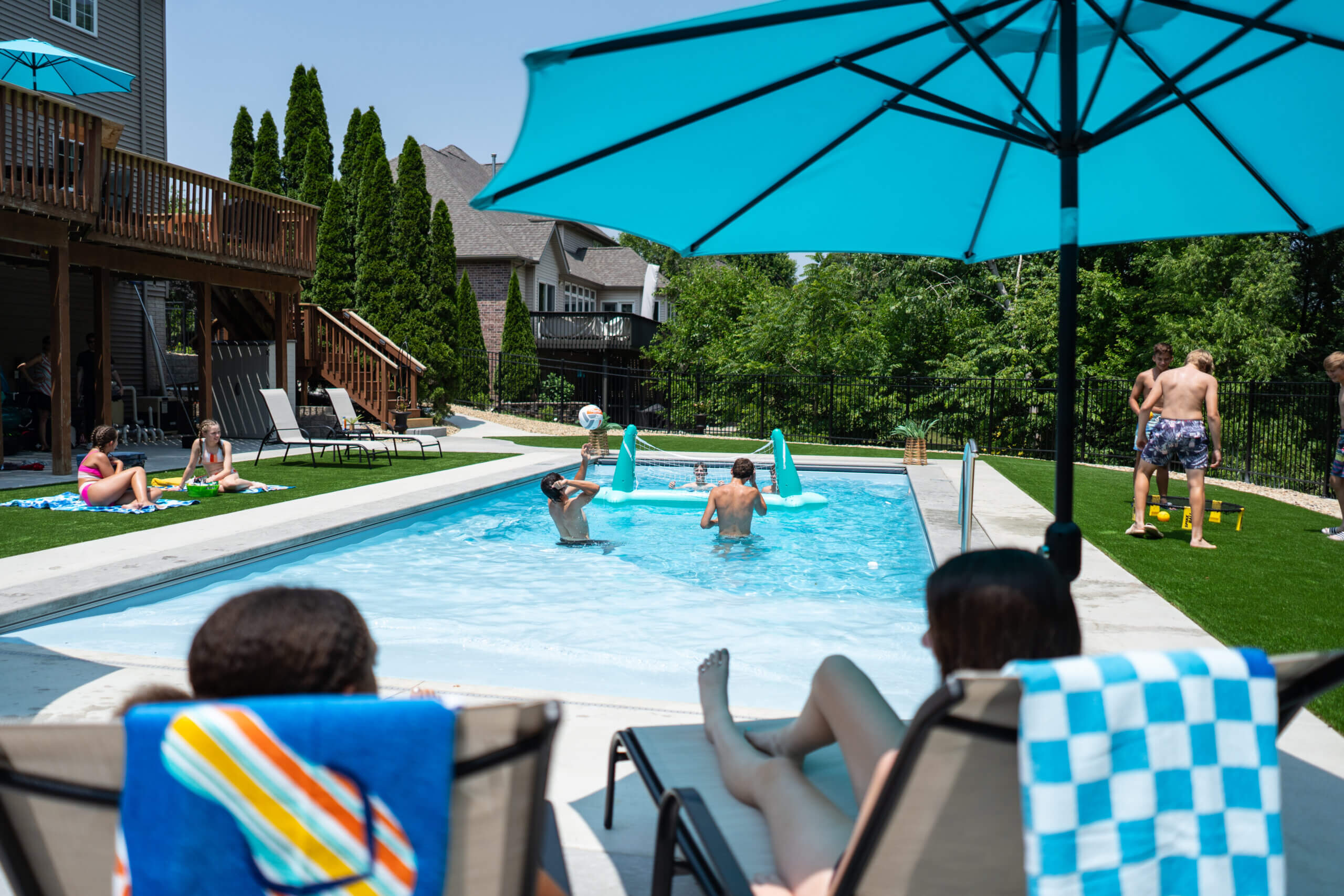
Diamond Grace Beach Entry with Thursday Pools logoPerhaps you have always loved the aesthetic of a zero-entry pool, but you have heard it takes up too much space, so you’re also considering a tanning ledge fiberglass pool design. Choosing between a beach-entry fiberglass pool design or one with a tanning ledge for your backyard is not just about building a pool. It’s about building your home life. A place where you’ll drink your coffee in the morning, splash with your kids at noon, and watch the sunset over rippling water. The choice isn’t about which one is more luxurious—both are. Think about your lifestyle and imagine the moments you’ll create. Here’s how each option shapes up and how you can decide.
 

What’s a Beach Entry?

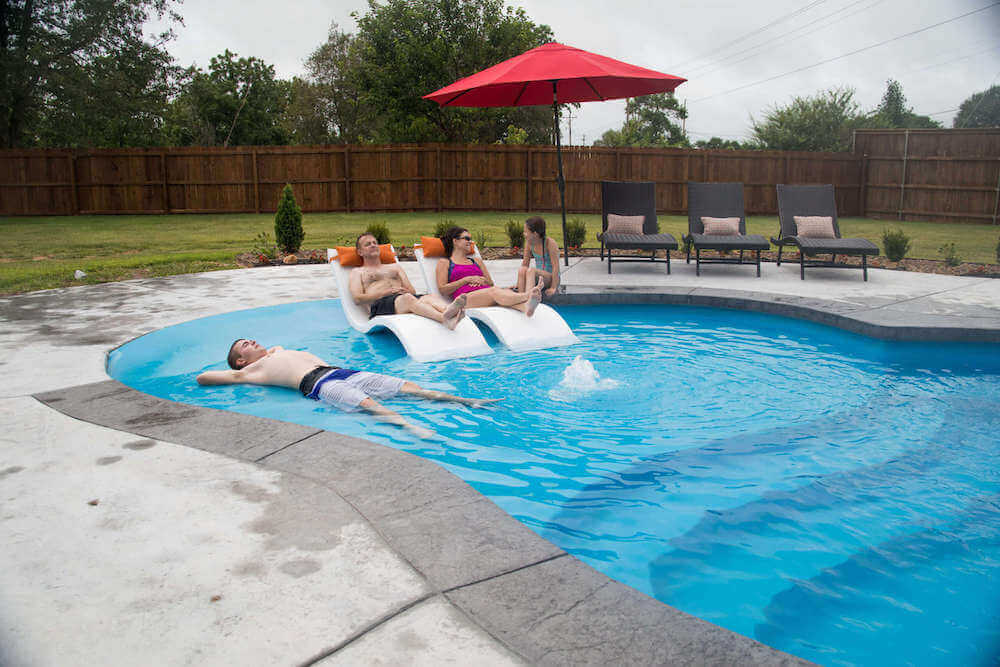
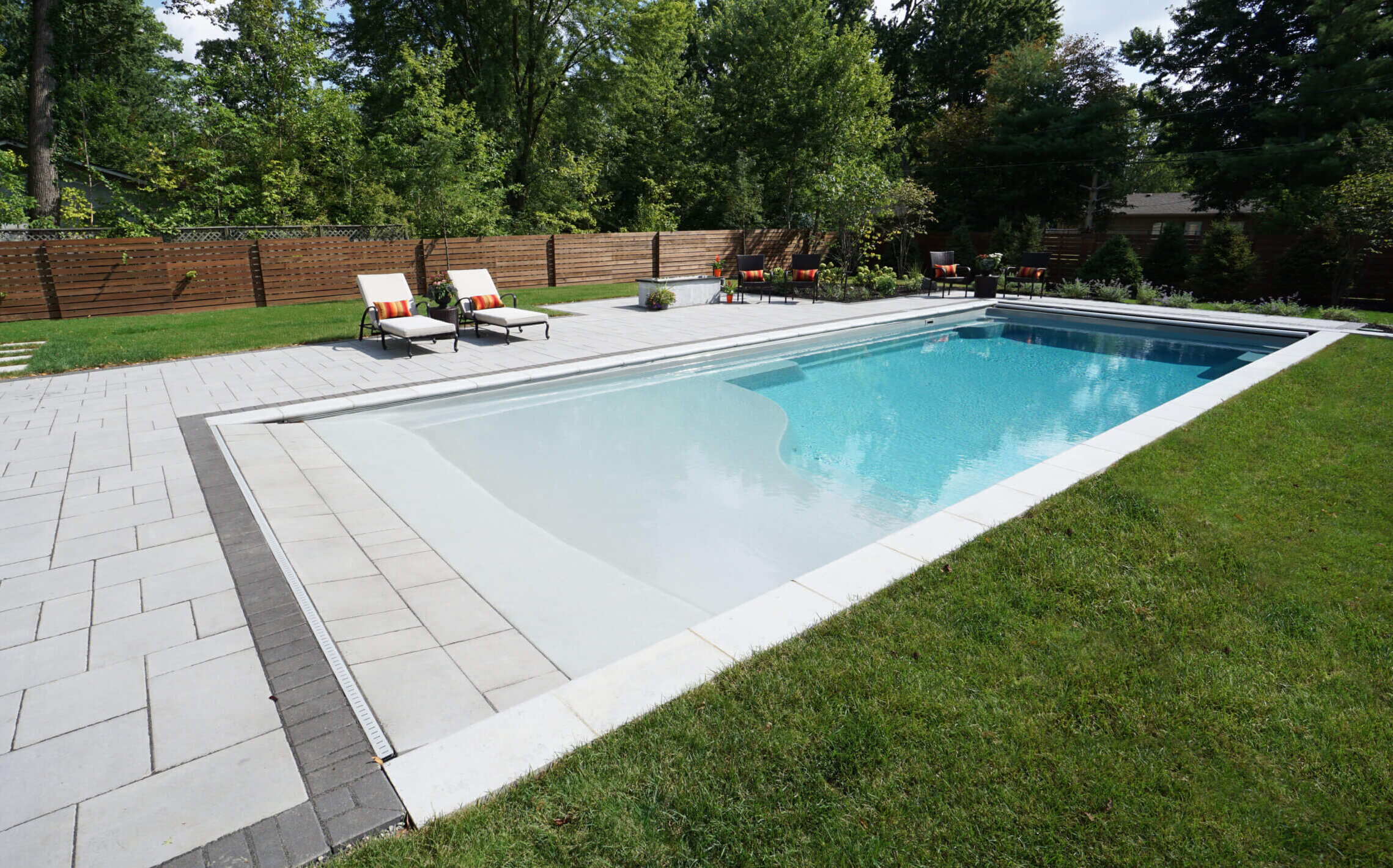
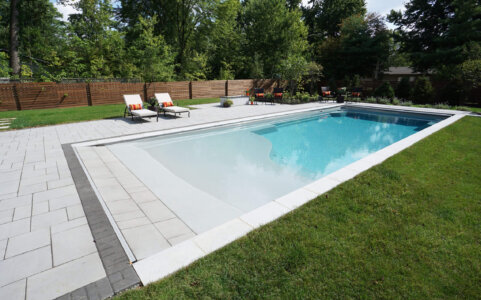
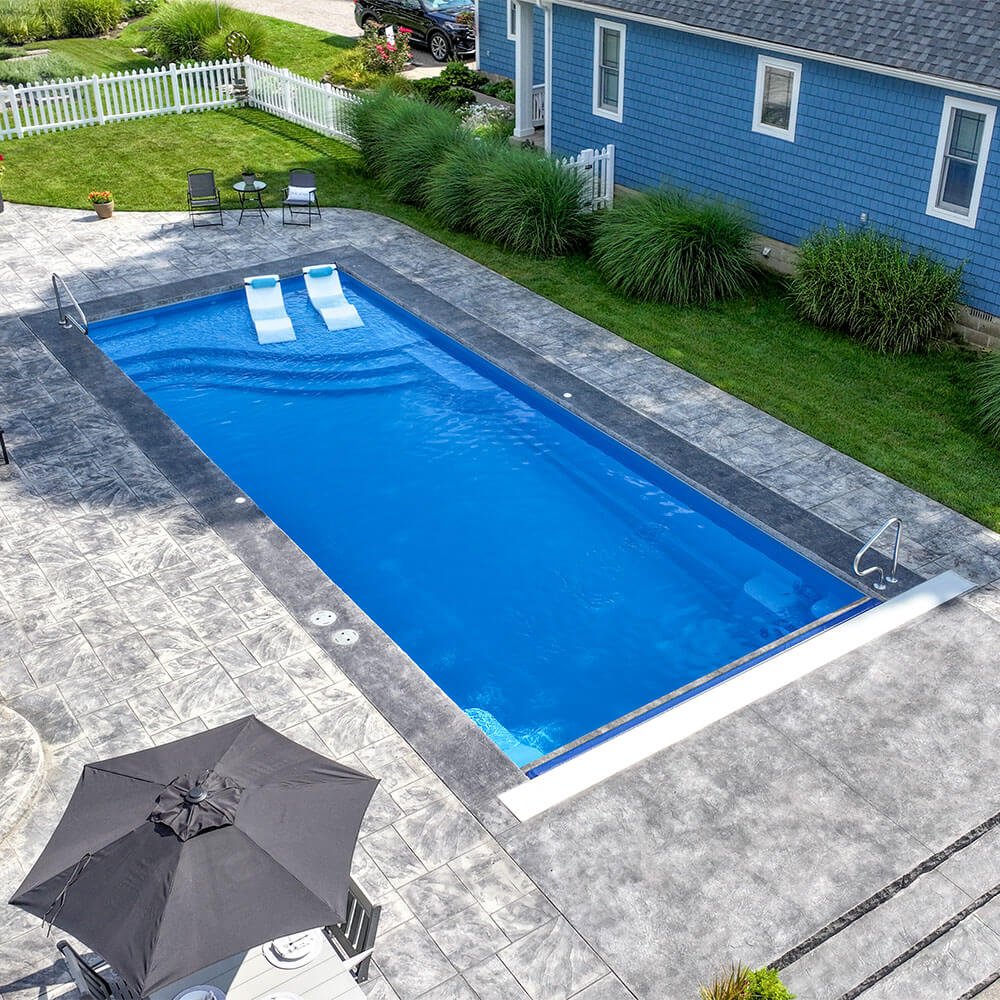
A beach entry is just what it sounds like—a gentle slope into the water that starts at zero depth. It’s like stepping into the ocean, except the sand doesn’t come home with you. The beach entry portion of the pool gradually slopes from 0 inches at the edge to approximately 18 inches deep, where it transitions into the main swim area. The water comes up to you around nine to twelve inches near the end of the downslope.


Why You’ll Love It

  • Natural, Easy Access: Whether you’re five or seventy-five, descending into the water feels effortless and welcoming. It’s particularly great for families with young children or older adults.
  • Built for Togetherness: The gradual slope creates a large wading area where kids can splash, friends can gather, and you can sit and relax without fully submerging yourself.
  • A Resort in Your Backyard: A beach entry evokes a high-end, vacation-like vibe, perfect for turning your backyard into a private escape.


What’s a Tanning Ledge?

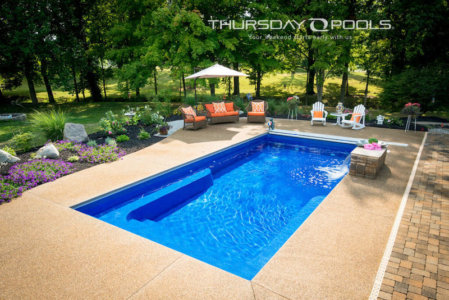
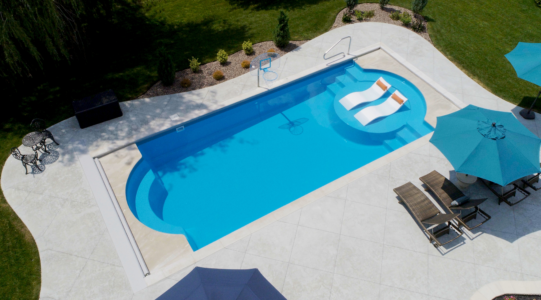
A tanning ledge is a flat, shallow platform—about 12 inches deep—designed for lounging. With no slope, the water comes up to you around six to eight inches across the whole ledge.


Why You’ll Love It

  • Relaxation Central: The tanning ledge is a dedicated space for sunbathing or unwinding with a book and a cool drink.
  • Keeps Swim Space Open: Unlike a beach entry, the tanning ledge is compact, preserving most of the pool for swimming, games, or floating.
  • Versatile for Families with All-Aged Children: It’s great for sunbathing and for small children to play while you keep an eye on them. At the same time, it leaves a larger open space for the active swimmers.


Grace and Aspen: Modeling the Differences

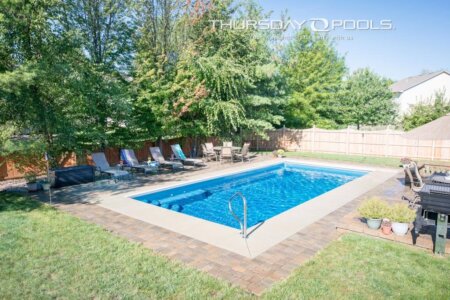
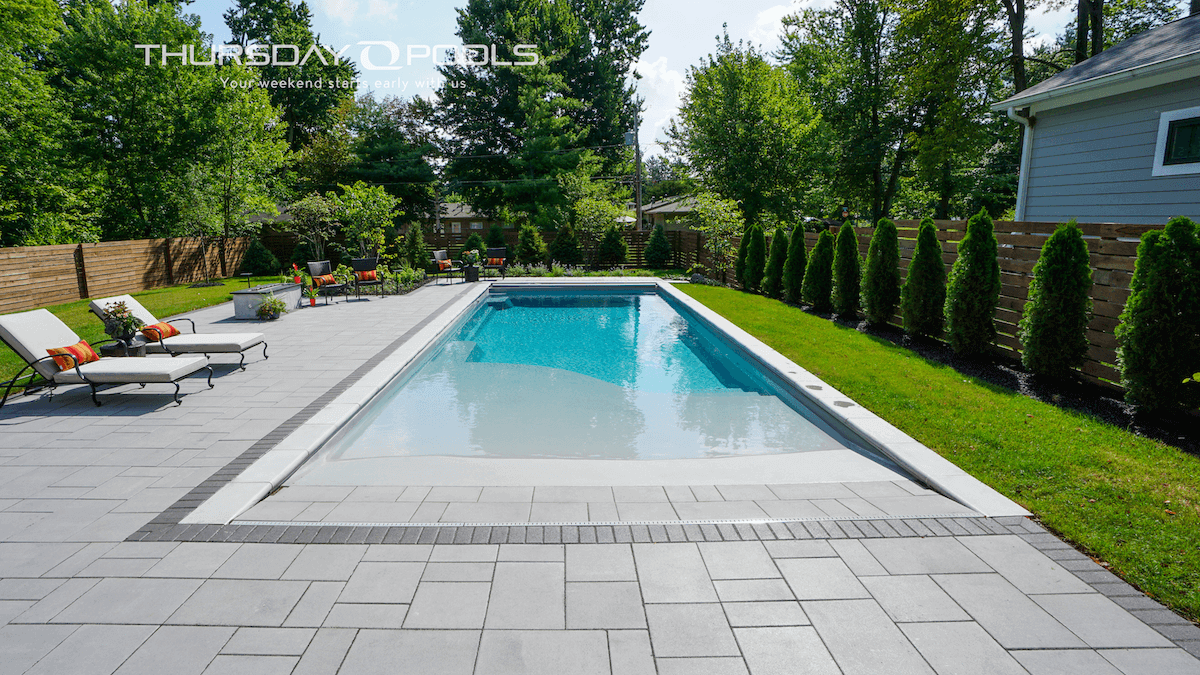
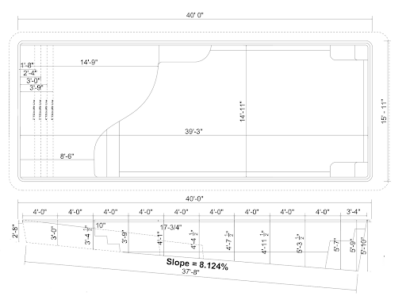
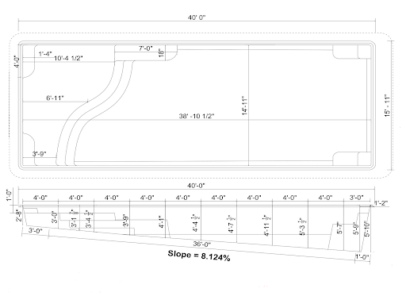
The Grace and Aspen pool designs from Thursday Pools can help illustrate how these two shallow-end features work. Both are rectangular, beautifully designed fiberglass pools with identical dimensions—16 feet wide, 40 feet long, and a deep end of 5 feet, 10 inches. The key difference? The shallow end.


Feature Grace (Beach Entry) Aspen (Tanning Ledge)
Design Specs Grace Beach Entry Dig Spec Aspen Dig Spec
Shallow End Design Gradual slope from 0 inches to ~18 inches Flat platform, ~12 inches deep
Swim Space Reduced due to slope Larger area for active swimming
Relaxation Zone Large wading area Compact, dedicated lounging space
Overall Mood Resort-like, luxurious Modern elegance with practicality


Your Pool, Your Story

How will you use your pool? A beach entry is ideal if your vision includes young kids splashing in the shallows while grandparents dip their toes. Its gradual slope creates a shared space for play and relaxation that everyone can enjoy. On the other hand, if you prefer defined spaces for different activities, like lounging on a tanning ledge while others swim freely, the tanning ledge offers more structure. It keeps the deep end wide open while providing a relaxing spot.


The mood you want to set can also guide your choice. A beach-entry pool creates a resort-like atmosphere that feels luxurious and relaxed. This pool type is perfect for homeowners who want their backyard to feel like a private vacation spot. Meanwhile, a pool with a tanning ledge blends sleek practicality with a stylish aesthetic. This pool design delivers a polished, contemporary look and fits beautifully into a contemporary backyard.


The Final Word: Build the Life You Imagine

Here’s the truth: it’s not really about the beach entry or the tanning ledge. It’s about the memories you’ll create and the life you’ll live around your pool. Either way, you’re not just choosing a pool feature. You’re choosing how you’ll spend your mornings, your weekends, and your summers for years to come. Are you ready to stop debating and start creating? Your pool is waiting for you.  Schedule a design consultation with a dealer today.

Will a Fiberglass Beach Entry Pool Fit in My Yard?

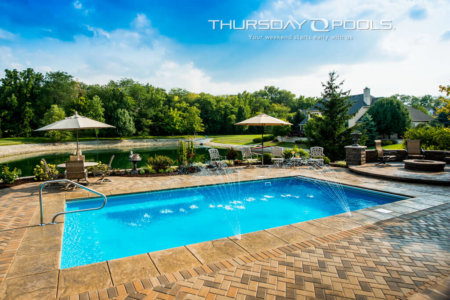
Thursday Pools Diamond Grace Beach Entry pool Will a Fiberglass Beach Entry Pool Fit in My YardInstalling a fiberglass beach-entry pool can transform your outdoor space into a favorite staycation destination. Its smooth, gradual transition into the water is reminiscent of a natural shoreline. However, before deciding on any pool design, you should know whether it will fit nicely in your yard. Evaluating your space, learning about local and HOA regulations, and understanding delivery logistics can help determine whether your yard can accommodate a fiberglass zero-entry pool.


Estimating Your Available Space: Imagine How You’ll Use It

Fiberglass pools are pre-manufactured and come in fixed sizes and shapes. Beach entry pools are no exception. One of your first steps in determining fit is calculating how much usable space you have in your yard. Consider the following:


Pool Dimensions: Measure the available area in your yard to see if it can accommodate the size of the pool itself. For instance, Thursday Pools’ fiberglass beach entry models, Grace and Sandal, are designed with fixed widths and lengths. Grace comes in 14’x36’, 16’x36’, and 16’x40’. Sandal comes in 16’x34.5’ and 16’x39’.


Decking: With the pool accounted for, add in the space you’ll need for your pool deck. You should count on at least three feet around your pool’s perimeter for safe walking areas, but you may want a more substantial deck to accommodate other outdoor features. 


Landscaping: Incorporate pool landscaping into your calculations. Landscaping around your pool creates a cohesive and inviting space. Tropical plants, natural stones, or small water features can enhance the beach entry’s aesthetic and seamlessly integrate the pool into your yard.


Outdoor Amenities: If you’d like features like an outdoor kitchen, dining area, pergola, or fire pit, confirm you’ll have enough space for these elements. Even if you don’t install them right away, you’ll want to make sure you plan for them to avoid extra expense and hassle in the future.


Pro Tip: Using stakes and string to outline the pool’s footprint in your yard will give you a better sense of how much space the pool will require and how much you’ll have left for landscaping and outdoor living areas.


Homeowners Associations (HOAs): What to Check

If your home is part of an HOA community, you’ll need to comply with their rules in addition to local zoning and building codes. HOAs enforce Covenants, Conditions, and Restrictions (CC&Rs) that may have specific pool requirements, including:


Pool Placement and Visibility: HOAs may restrict where you locate your pool on your property, prohibiting them in front yards or areas visible from the street. They may also require landscaping or fencing to screen the pool from neighbors, cutting into your available pool yardage.


Fencing and Barriers: Beyond the safety fencing required by building codes, HOAs often have aesthetic requirements for fences, such as specific materials or measurements that may have space considerations.


Approval Process: Many HOAs require you to submit detailed plans for review and approval, including proposed:

  • Pool dimensions and placement.
  • Materials and colors for the pool and decking.
  • Landscaping plans to integrate the pool into your yard.


Navigating Local Regulations: What You Need to Know

Zoning and building codes help ensure safe and appropriately placed installation on residential properties. These codes can affect whether your fiberglass beach entry pool will fit in your yard.


Setback Requirements: Zoning codes specify how far the pool must be from property lines, houses, and other structures. For example, a setback requirement might state that a pool must be at least 10 feet from the property line and 5 feet from your home.


Utility Line Restrictions: Contact a utility marking service before excavation to identify any underground lines, such as gas or water. Pools cannot be installed directly over or too close to these lines, and their location can affect your available yard space.


Delivery and Installation Logistics: Make Way for Your Pool

Fiberglass pools arrive at your home in a single piece, so logistics factor in determining whether the pool will fit. Some items to think about include:


Access Routes: A clear path from the delivery truck to your yard is essential. Narrow driveways, low-hanging power lines, or tight corners can make delivery challenging or impossible.


Clearance Requirements & Excavation Space: Consider any obstacles or neighboring structures that might limit access. Not only do you need room for the pool, but you also need room for the excavation equipment to dig the pool’s footprint and maneuver during installation.


Yard Adjustments: If you don’t have room, make some. You may be able to temporarily remove fencing, trim trees, or relocate landscaping to facilitate delivery and installation. Once the pool is in place, you can restore these features to their original locations or redesign them to complement your new backyard setup.


Get Advice From a Pool Professional

Fiberglass beach entry pools offer a unique blend of functionality and aesthetics, turning your backyard into a luxurious retreat. Determining whether one will fit in your yard requires careful consideration of your outdoor space, local regulations, and delivery logistics. By measuring your yard, understanding the pool’s dimensions, and accounting for clearances needed, you’ll have a better idea of the possibilities. If you’d like professional guidance and assurance that your chosen pool design is a perfect fit, contact us to schedule a design consultation with an independent dealer today.

Fiberglass Pool Installation Costs: Understanding Your Options

Inground Pool Costs in 2025

Fiberglass Pool Installation Cost Breakdown

If you are considering a fiberglass pool and are comparing costs, you may be interested in knowing that there are often options to meet different budgets. As the pool shell manufacturer, we do not sell our pools directly to the consumer; however, our network of independent dealers works directly with homeowners to meet their needs based on budget, aesthetics, and other factors. Like a new home build, fiberglass pool costs can vary significantly depending on where you live and the additional features you choose. From basic setups to more luxurious options with custom add-ons, here are the fiberglass pool installation options your dealer may offer, based on Thursday Pools’ 2026 Independent Dealer Survey.


Note: All cost estimates that follow are based on a medium-sized pool (between 13.5’x28’ and 14×36 feet) and reflect Thursday Pools’ 2026 Independent Dealer Survey data. Many factors can affect your actual price, so it’s important to get written estimates from your pool dealer.


Basic Fiberglass Pool Installation Costs

A Basic Installation is ideal for homeowners who do not need the pool installer to provide any landscaping. It covers the essentials to get your pool up and running but omits other features you may need to use the space. For example, you would be responsible for adding a deck around the pool area. You’ll likely be offered the following in this entry-level installation:

  • Fiberglass Pool Shell: a single one-piece structure
  • Handrail: a safety device for easy pool entry
  • Shipping: the pool shell is delivered by truck to your backyard
  • Pump and Filter System: the basic mechanicals needed to keep water clean and circulating
  • Building Permit: official government document giving the installer permission to build the pool on your property
  • Excavation and Backfill: digging the hole for the pool and filling the space left by the excavation with a material like gravel
  • Water Fill: water for the initial pool fill could come from a hose, water service truck, or fire hydrant
  • Rough Grading: leveling and smoothing the ground to establish the basic shape of the land
  • Basic Electrical Setup: for powering the pool equipment


Basic Installation Estimated Cost Range: $55,000 – $80,000

Your dealer’s costs for this package depend on many factors, including your location, the size of the pool shell, and specifics like excavation depth and soil makeup. 


Turnkey Fiberglass Pool Installation Costs

For homeowners wanting a more complete setup, a Turnkey Installation includes everything in the Basic Installation and more. It adds foundational elements to give the pool area a more polished, ready-to-use look. This installation type often includes:

  • All Basic Installation Features (listed above)
  • Maintenance and Cleaning Equipment
  • 3-foot Concrete Decking around the pool perimeter
  • Additional Grading and Electrical Work for improved safety and appearance


Turnkey Installation Estimated Cost Range: $65,000 – $100,000+

The concrete deck around the pool perimeter is a valuable addition, providing a neat boundary and space for poolside lounging. 


Enhanced Fiberglass Pool Installation With Add-Ons

Homeowners seeking a resort-like backyard experience may want to consider an Enhanced Installation with add-ons to elevate the aesthetics and functionality of their pool. Some common add-ons and their typical costs include:

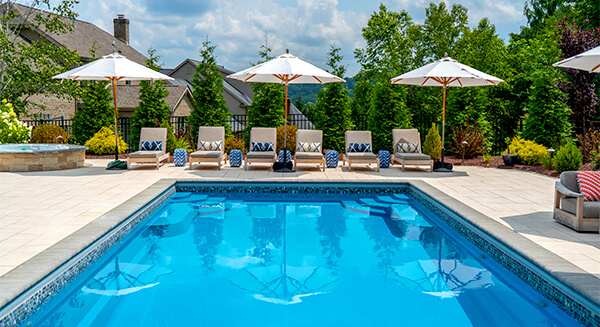
  • Waterline Pool Tiles: Adding decorative tiles along the waterline provides a luxury aesthetic. Tiles typically range between $2,500 and $7,500, depending on the tile style and pool size.
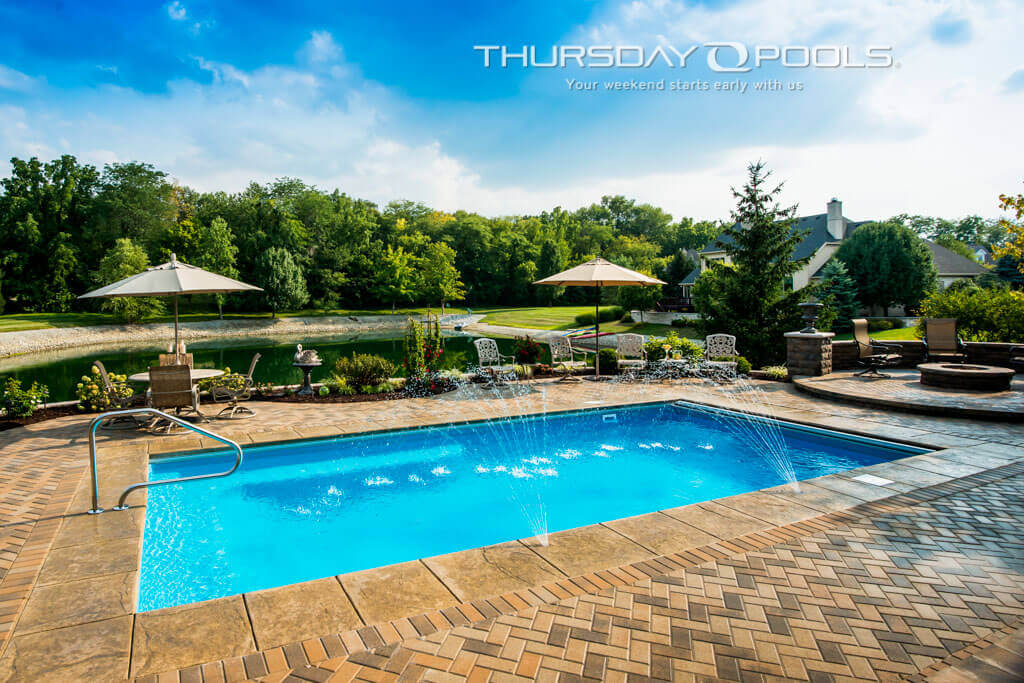
  • Water Features: Pool deck jets, costing between $500 and $1,200 each, create graceful arcs of water into the pool for a touch of elegance. Bubblers, small fountains placed on tanning ledges or beach entries, are around $1,000 each, adding a playful touch. Custom rock waterfalls bring the look and sounds of nature to your outdoor space and typically range from $2,000 to $8,800 or more.
  • Pool Heater: Extending your swimming season with a pool heater can be a worthwhile investment. Heater types include natural gas/propane, electric, heat pumps, and solar, typically ranging from $3,000 to $5,000 or more.
  • Automatic Pool Covers: Pool covers offer safety, keep the water clear of debris, and help maintain water temperature. Automatic covers typically cost $10,000 to $20,000 or more, averaging $17,580.
  • Landscaping: Enhancing the area around the pool with landscaping, like shrubs, pathways, or flower beds, helps your pool seamlessly blend with its natural surroundings. Homeowners spend an average of more than $6,700 on professional landscaping around the pool.


Estimated Cost Range for Enhanced Installation: $90,000 – $150,000+


Choosing the Right Fiberglass Pool Installation Package

Which package makes sense for you comes down to how much of the finishing work you want your dealer to handle versus doing yourself, and how much you want to spend upfront on amenities and landscaping. Your pool dealer may even tailor your package, allowing you to start with a simple design and upgrade as your budget allows. Schedule a consultation to start planning your pool project and get the pool of your dreams without hidden surprises!

Want a deeper look at how these costs come together during installation? Read our guide, Everything You Need to Know About Fiberglass Pool Installation.


Frequently Asked Questions


How much does fiberglass pool installation cost?

Fiberglass pool installation typically ranges from $55,000 for a basic package to $150,000 or more for a fully enhanced installation with premium add-ons, according to Thursday Pools’ 2026 Independent Dealer Survey. Your final cost depends on your location, pool size, site conditions, and the features you choose.


What’s included in a basic fiberglass pool installation?

A basic installation covers the essentials: the pool shell, handrail, shipping, pump and filter system, building permit, excavation and backfill, water fill, rough grading, and basic electrical setup. It does not include decking or landscaping, which you would add separately.


What’s the difference between a basic and a turnkey fiberglass pool installation?

A turnkey installation includes everything in a basic package, plus maintenance and cleaning equipment, three feet of concrete decking around the pool, and additional grading and electrical work. It’s designed to leave your pool ready to use right away, while a basic installation leaves decking and finishing touches up to you.


What add-ons increase fiberglass pool installation costs the most?

Automatic pool covers and custom rock waterfalls tend to add the most to an installation budget, followed by pool heaters and waterline tile. Landscaping and smaller water features like deck jets or bubblers typically add a more modest amount to your total project cost.

Are Fiberglass Pools Worth the Extra Cost?

Thursday Pools Lil Bob pool with water featuresYou’ve heard a lot about how great fiberglass pools are. You may be interested in lower maintenance and long-lasting, or maybe you like built-in tanning ledges or the fact that they’re pet friendly. Still, the one question you can’t get out of your mind is, “Are fiberglass pools worth the extra cost?” While they have surged in popularity over the last decade, fiberglass pool costs can exceed other pool-type costs. On average, you can expect to spend between $40,000 and $100,000 on a fiberglass pool, depending on various factors. To help decide if the investment is worth it, consider both the monetary and non-monetary short and long-term benefits of  fiberglass pools.

Durability and Longevity

One of the biggest selling points of fiberglass pools is their durability. Unlike vinyl pools that can tear or concrete pools that may crack over time, fiberglass pools are made from a flexible yet durable material that is resistant to cracking and damage. Fiberglass pools withstand ground shifts and changes in temperature, which can lead to wear and tear in other pool types.

Fiberglass is an appealing choice for homeowners who want a pool that will stand the test of time with minimal need for repair. This longevity can also mean that the upfront investment balances out over the pool’s lifetime, as you’re likely to face fewer repair and replacement-related costs than other pool types.

Lower Maintenance Requirements

Fiberglass surfaces are non-porous, so they don’t attract algae and other debris as readily as concrete pools. This characteristic can save you countless hours of scrubbing and reduce your need for harsh chemicals to keep the pool water clean. Over the years, lower maintenance costs can add up to significant savings. So, while the initial installation cost may be higher, the savings in chemicals and maintenance time can make fiberglass pools more economical in the long run.

Pet-Friendly and Family-Friendly Design

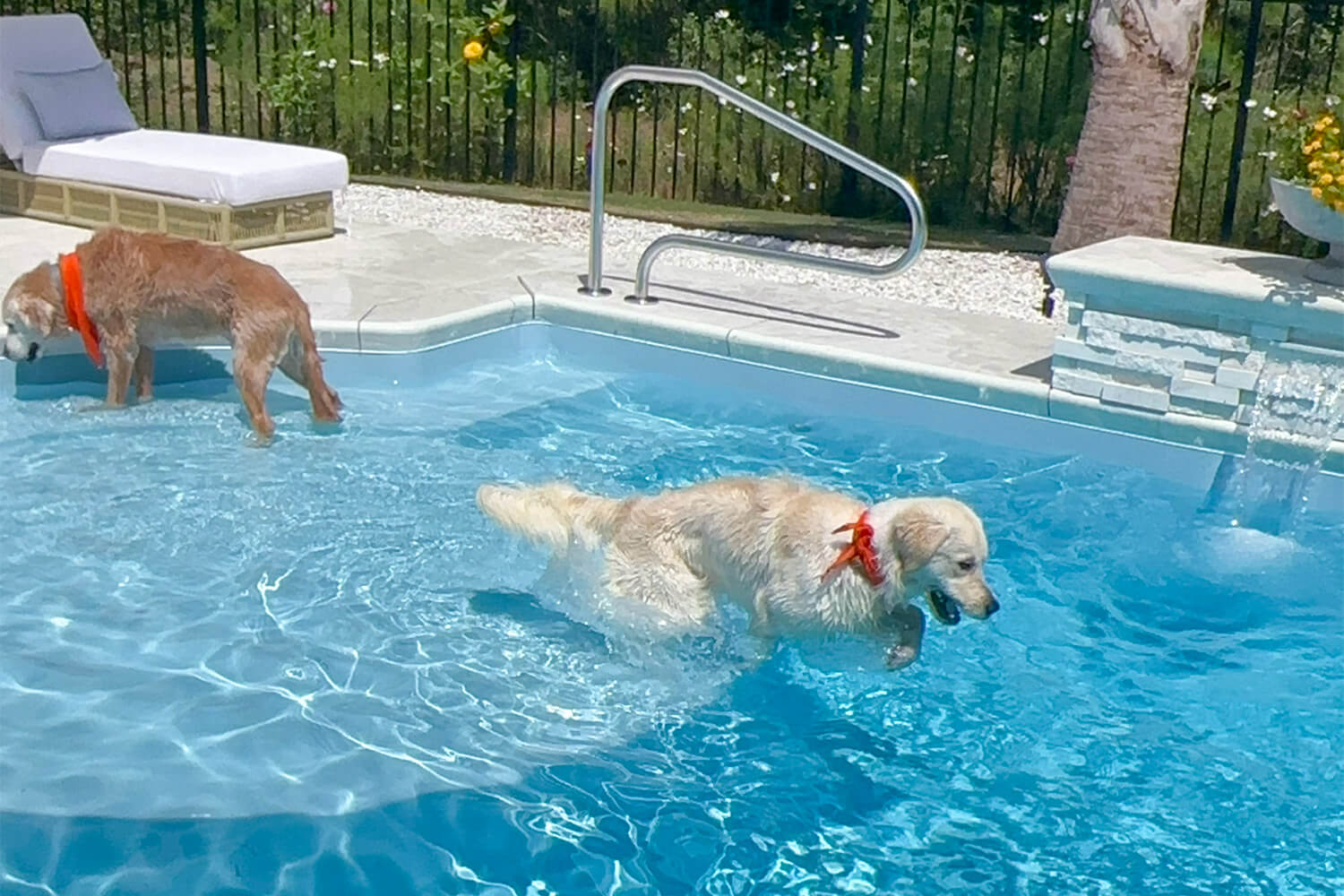
Fiberglass pools are also known for being pet-friendly and family-friendly. The non-abrasive, smooth surface is gentle on human and pet skin, reducing the risk of scratches and abrasions with concrete pools. Additionally, if you consider your pets your family, you can play with them in the pool without worrying about their claws causing damage. Fiberglass pools have many options, like built-in tanning ledges and beach entries for shallow areas perfect for younger children or pets. These family-friendly features add to the pool’s overall value and can be an important factor for families considering the longevity and usability of their pool.

Quick Installation Process

Fiberglass pools are an excellent choice if you’re eager to enjoy your new pool without a prolonged installation process. Installation for fiberglass pools is generally quicker than for pool types that are built on-site. Fiberglass pools can typically be installed in just a few weeks, leading to less disruption in your yard and a faster path to enjoying your investment.

Environmental Impact

Fiberglass pools offer some eco-friendly advantages for homeowners trying to lower their carbon footprint. Because of their non-porous surface, they require fewer chemicals to keep the water clean, reducing the number of harmful substances released into the environment. Additionally, fiberglass pools require fewer repairs over time, so they consume fewer materials and resources, resulting in a lower overall environmental impact than other pool types.

Resale Value

Another consideration when evaluating whether a fiberglass pool is worth the extra cost is the impact on your home’s resale value. While not everyone wants a pool, a fiberglass pool can be a strong selling point for those who do. With reduced upkeep costs and durable construction, a lower-maintenance pool may appeal to potential buyers just as it does to you. If you live in an area where pools are highly desirable, a well-maintained fiberglass pool can definitely add value to your property.

Peace of Mind with a Strong Warranty

A warranty can be significant when evaluating whether a fiberglass pool is worth the investment. Fiberglass pool manufacturers often offer long-term warranties that provide reassurance about the pool’s longevity and quality. For example, Thursday Pools provides a limited lifetime structural warranty and a 15-year surface warranty against osmotic blistering. Thursday Pools also provides a one-time transferable warranty, meaning if you decide to sell your home, the warranty can transfer to the new owner. Fiberglass pool warranty coverage contrasts with on-site built pools like vinyl and concrete, which typically have much shorter or non-existent warranties.


Are You Ready to Learn More?

So, are fiberglass pools worth the extra cost? That depends on what you value. By weighing what’s important to you, you can avoid buyer’s remorse and focus on what matters most–making memories. We hope you continue your research and urge you to  consult a dealer, ask questions, and never stop dreaming.

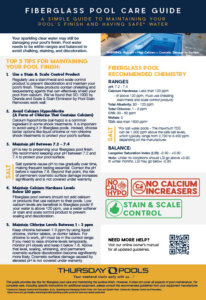
Fiberglass Pool Care Guide

A Simple Guide to Maintaining Your Pool’s Finish and Water Balance

The Thursday Pools Fiberglass Pool Care Guide is your resource for the Top 5 Tips for Maintaining Your Pool Finish.

Inground Pool Shapes Guide

Everything You Need To Know About Fiberglass Pool Installation

What You Need to Know About the Cost of Fiberglass Pools in 2024: The Essentials and Extras

Curious about the financial commitment required for a fiberglass pool? You are not alone. Cost is one of the most common questions among prospective pool owners. Understanding what goes into fiberglass pool cost not only determines the pool design you can afford but also influences the additional features and accessories you might choose to enhance your pool experience. Based on our industry experience, a full fiberglass pool package in 2024—including pool installation, a patio, and a handful of essential accessories—can cost between $70,000 and $135,000.

Essential Fiberglass Pool Costs

Initial Costs

  • Professional Installation: In our experience, professional installation packages typically range from $35,000 to $60,000. Including the pool shell, excavation, backfilling, and setting up the pool, the installation process is relatively quick compared to other types of pools, often completed within a couple weeks.
  • Permits and Site Preparation: Permit costs range from $50 to $200. Site preparation, including excavation, can range from $3,200 to $20,000, depending on the complexity of the site. The terrain and accessibility of your backyard can significantly affect these costs. For instance, rocky or uneven terrain may require additional excavation work, increasing the overall expense.

Maintenance

  • Annual Maintenance: Fiberglass pools have lower maintenance costs than other pool types, averaging $600 to $1200 per year. Whether you perform the maintenance or hire a pool professional, you should consider maintenance costs for cleaning, balancing the water, opening, and closing the pool.

Insurance and Taxes

  • Homeowner’s Insurance: Installing a pool increases your home’s value, potentially raising your property taxes and homeowner’s insurance premiums. Expect an increase of $17 to $25 monthly in insurance costs. It’s advisable to consult with your insurance provider to understand how a pool will affect your premiums.
  • Property Taxes: A new pool can increase property value by five to seven percent, which may result in higher property taxes. The exact increase will depend on local tax regulations and the assessed value of your property.

Extra Pool Costs

Optional Features and Enhancements

  • Automatic Covers: Prices begin at about $8,000. Automatic covers enhance safety and reduce maintenance by keeping debris out of the pool.
  • Lighting: Installing lights in the pool ranges from $500 to $2,000. LED and fiber optic lighting systems can enhance the pool’s aesthetics and safety for night-time swimming.
  • Water Features: Costs between $5,000 and $15,000. Waterfalls, fountains, and other features can add a touch of luxury and tranquility to your pool area.
  • Deck Jets and Bubblers: Pool deck jets cost range from $500 to $1,200 each and can create elegant water arcs into the pool. Bubblers, small fountains installed on tanning ledges or beach entries, cost about $1,000 each and add a playful element to the pool.

Additional Infrastructure

  • Fencing: Required by many jurisdictions for safety. Average costs range from $2,000 to $13,500 for a 200 to 300 linear-foot fence but varies depending on the material and length needed. Options include chain-link, mesh, wrought iron, aluminum, vinyl, and wood. Each type has different cost implications and aesthetic effects.
  • Electrical Work: Essential for operating filtration systems, lighting, and other features, electrical costs average $2,250. Pool electrical work typically includes pumps, heaters, and wiring for lighting systems.
  • Pool Covers: Safety covers range from $1,000 to $20,000, depending on the type. Winter, manual, and automatic covers vary significantly in price and convenience. Winter covers are the least expensive but also the least convenient, while automatic covers are the most costly but offer the best convenience and safety.
  • Heating Systems: Installing a pool heater can extend your swimming season. Gas heaters cost between $1,500 and $6,000, while solar heaters range from $1,5000 to $7,000. Heat pumps, which are energy-efficient, cost between $2,000 and $6500.

Get an Estimate on Your Fiberglass Pool

Investing in a fiberglass pool is a significant decision. By understanding the costs involved and exploring your options, you can make an informed choice that enhances your lifestyle and adds value to your property. Contact an independent dealer today to get an estimate, or try our  Pool Cost Calculator for a ballpark estimate.

Start Making Waves: Fiberglass Pool Financing Advice

Hello, soon-to-be pool owner! If you’re already dreaming of your ideal inground Fiberglass swimming pool and have figured out your budget, the next step is to look into pool financing options to turn those dreams into reality. Navigating pool financing can seem daunting, but with the right information and resources, you can make informed decisions and bring your backyard oasis to life. Let’s plunge into the essentials, starting with a key aspect: the fiberglass pool cost.


Understanding Fiberglass Pool Costs

As of 2024, a turnkey fiberglass installation, including the installed pool, a patio, and a handful of essential accessories, costs between $70,000 and $135,000. Additional costs may arise from landscaping, decking, fencing, and ongoing maintenance. It’s essential to consider these when budgeting for your pool project to avoid unexpected financial strain.


Understanding Pool Loans

Imagine this: You can access pool loans up to $500,000 with annual interest rates ranging from 5.99% to 13%. These personal loans are great because they don’t require home equity or a property appraisal. For a ballpark figure, a $30,000 loan over 20 years usually has monthly repayments of about $225 to $250.


How You Receive the Funds

Once approved, depending on the lender, the loan amount may be directly provided to you in one total payment or it may be provided directly to the builder and dispersed at different stages of the project. Many contractors prefer this direct-to-consumer funding approach, which allows you to directly manage costs for the pool and any additional features like landscaping or accessories.

Pool Financing Advice

Interest Rates and Monthly Payments

Loan interest rates are stable, and you can find loans across all 50 states. For a quick reference, monthly payments on a $30,000 loan might be around $225, scaling up to about $360 for a $50,000 loan over 20 years. If you know how much you want to borrow, you can calculate your monthly payments online.

Pool Interest Rates

What Qualifies as ‘Good Credit’?

Lenders typically look for a strong credit history, including diverse accounts like credit cards, car loans, and mortgages. They value consistent on-time payments, the ability to save (demonstrated by significant down payments), and a favorable debt-to-income ratio. Stable and sufficient income is crucial to secure loan approval. Generally, a credit score of around 600 is acceptable for getting a loan offer from HFS Financial.


Specialized Companies for Pool Financing

Several finance companies offer loans on inground pools. Please note that Thursday Pools is not affiliated with, nor do we receive any payment from the following companies. 

  1. HFS Financial: Known for offering up to $500,000 in loans specifically for pool projects, HFS Financial provides terms of up to 20 years. Longer terms allow for manageable monthly payments and extensive financing options tailored to the scope of your pool project.
  2. Lyon Financial: With a long history in the pool loan industry, Lyon Financial offers various loan amounts up to $500,000. They emphasize unsecured loans, which don’t require home equity, making it easier for homeowners to get the financing they need without leveraging their property.
  3. LightStream: A division of SunTrust Bank (now part of Truist), LightStream offers pool loans with competitive rates and terms. They focus on unsecured loans that can be used for various home improvement projects, including pools. Their streamlined process is convenient for borrowers looking for quick approvals and flexible terms.
  4. Viking Capital: Viking Capital provides pool financing solutions for pool purchases and related home improvements. They offer loans up to a certain amount, requiring specific credit qualifications. Their expertise in the pool industry ensures that their financing options are well-suited to meet the needs of pool buyers.
  5. Paramount Capital: Paramount Capital helps customers find financing for new pool construction and remodeling projects. They offer tailored financing solutions to meet the specific requirements of pool installations, ensuring that homeowners can access the funds they need for their projects.


Preparing for Financing

Before applying for financing, it’s essential to get your financial house in order. Here are some steps to take:

  • Check Your Credit Score: A higher credit score can qualify you for better interest rates and terms.
  • Evaluate Your Budget: Ensure you can comfortably afford the monthly payments without straining your finances.
  • Compare Offers: Don’t settle for the first loan offer. Compare multiple lenders’ rates, terms, and fees to find the best deal.
  • Get Pre-Approved: Pre-approval can give you a clear idea of how much you can borrow and at what terms, helping you set a realistic budget for your pool.

Preparing Finances

Overlooked Costs and Considerations

When budgeting for your fiberglass pool, it’s important to consider additional costs beyond the initial installation. 

  • Maintenance: Regular maintenance is essential to keep your pool in good condition. Whether you do it yourself or hire a pool professional, maintenance costs include cleaning, keeping the water balanced, and opening and closing the pool.
  • Insurance: Adding a pool to your property can increase homeowners’ premiums. Check with your insurance provider to understand how your policy might change.
  • Utilities: Running a pool pump, heater, and other equipment will increase utility bills. Energy-efficient options can help mitigate these costs.
  • Landscaping and Decor: Post-installation landscaping, furniture, and decor can enhance the look of your pool area, but it will also add to the overall cost.


Contact an Independent Thursday Pools Dealer to Get Started!

Navigating pool financing requires careful planning and consideration of various factors, from understanding the fiberglass pool cost to exploring financing options and preparing for overlooked expenses. Doing your homework and making informed decisions can turn your dream of owning a fiberglass pool into a reality without causing financial strain. Are you ready to make a splash now? Contact an independent dealer to schedule a design consultation or get an estimate.

How Do I Backwash a Sand Filter in My Fiberglass Pool?

Keeping your fiberglass pool sparkling clean doesn’t need to be complicated, but it does require some regular care. One of the most critical parts of routine pool maintenance is making sure your filter runs efficiently. If you have a sand filter, you’ll need to know how to backwash it properly to keep your water clear and your system in top shape. The good news? Backwashing is quick, easy, and an essential step toward making every swim as refreshing as the first of the season.

Every pool relies on a filter to remove dirt, debris, and tiny particles that swimmers don’t want sharing the water. There are three main types of filters, each with their own strengths.

  • Cartridge Filters: Low-maintenance and energy-efficient. Just rinse or replace the cartridges to keep the water clear.
  • Diatomaceous Earth (DE) Filters: Ultra-fine filtration for the clearest water possible, but they require a little extra care and handling.
  • Sand Filters: Durable, cost-effective, and easy to maintain. A quick backwash flushes out trapped debris, restoring flow and clarity with minimal hassle.

What is Pool Filter Backwashing?

Backwashing a sand filter is a maintenance procedure that cleans the filter and ensures it operates efficiently. Over time, as water pumps through the sand filter, the sand traps debris and particles to remove them from the pool water. The process gradually accumulates dirt and debris in the filter, which can decrease efficiency and encourage cloudy pool water.

Backwashing temporarily reverses the water flow through the sand filter. Instead of dirty water coming in and clean water going out, backwashing pumps clean water backward through the filter. The reverse flow lifts and flushes trapped debris from the sand bed and the filter through a waste line or drain.

During backwashing, the sand within the filter loosens and allows for trapped debris to make its way out of the system. After backwashing, return the filtration system to its normal operation of filtering the pool water again. Backwashing sand filters is essential for maintaining their ability to clean the pool water effectively and should be a regular part of your pool’s maintenance routine.

Why is Backwashing My Pool’s Sand Filter So Important?

Backwashing keeps your filter functioning properly and clear of debris. It also helps to keep your water clear. Even if you are meticulous about other maintenance and consistently add chlorine to the chlorinator, check its settings, brush all the pool surfaces, empty skimmer baskets, vacuum, test water chemistry, and maintain the correct water level, your pool water will still turn cloudy if you forget to clean the filter. 

What Happens If I Don’t Backwash My Pool’s Sand Filter?

If you don’t backwash your sand filter for some time, you may notice your water getting cloudy or more debris making its way to the surface of your pool water. Other maintenance tasks are still essential, but none will replace the need for backwashing the pool’s sand filter..

How Do I Know If I Need to Backwash My Pool’s Sand Filter?

You will need to check your filter system’s pressure gauge regularly. When clean, your filter will generate a typical reading that you should note as its standard baseline. You’ll know it’s time to backwash once the gauge reaches 8 to 10 psi above your baseline reading. Your water may also look cloudy or dirty when the filter needs backwashing.

What is the Proper Way to Backwash My Pool’s Sand Filter?

  1. Turn the filter system off. 
  2. Remove, empty, and replace the skimmer basket.
  3. Attach a backwash hose to your filter’s backwash port.
  4. Turn your multi-port valve to Backwash. Never turn the multi-port valve handle while the pool filter is on and running.
  5. Turn your filter system back on. Water should flow out the backwash port and through the hose.
  6. Let the water run for about two minutes or until the water runs clear in the site glass.
  7. Turn the filter system off again.
  8. Turn the multi-port valve to Rinse. 
  9. Turn the filter system back on and rinse the filter for about 30 to 60 seconds.
  10. Turn the system off.
  11. Turn the multi-port valve to Filter.
  12. Turn the system back on.

What Are Some Potential Issues With Backwashing a Pool’s Sand Filter?

Sand in the Pool

If you notice sand in your pool during or after backwashing, then you might have cracked off laterals or piping inside the filter. You may also have too much sand in the filter. The open space from the top of the filter to the sand line is called “freeboard,” and having enough space is essential for preventing sand from exiting the filter during backwashing.

Too Much of a Good Thing

While backwashing is essential, it is possible to backwash a sand filter too often or for too long. During backwashing, turn the hose off as soon as the water runs clear. Prolonged backwashing of your sand filter can cause “channeling,” which occurs when channels develop down the sides inside the filter. Water can bypass the sand altogether because of channeling, defeating your sand filter’s purpose.

As with all aspects of your pool’s maintenance and day-to-day operations, please follow your specific sand filter’s instructions carefully. You will likely find directions on the filter itself. Your filter and pump are the backbones of pool cleanliness, safety, and enjoyment, and paying them proper attention is essential. A failure of either will cause problems and cost you money. You should consult a pool professional if you have any pool maintenance concerns.

Looking for more information on fiberglass pool maintenance? Explore Thursday Pools’ Ultimate Fiberglass Pool Maintenance Guide for a thorough look at everything you need to know.

And if you’re ready for personalized advice, connect with a local independent Thursday Pools dealer near you.

Frequently Asked Questions About Backwashing a Fiberglass Pool

  1. How do I know when it’s time to backwash my sand filter?

Check the pressure gauge on your filter. When it reads 8–10 psi higher than the clean baseline, it’s time to backwash. Cloudy water can also be a sign your filter needs cleaning.

  1. What is the correct way to backwash a sand filter?

Turn off the pump, set the multiport valve to Backwash, and restart the pump for about two minutes or until the sight glass runs clear. Then turn the pump off, switch the valve to Rinse for 30–60 seconds, and finally return it to Filter mode. Always shut off the system before moving the valve handle. (See the illustrated instructions above)

  1. Can I over-backwash my pool filter?

Yes. Backwashing for too long or too often can cause “channeling,” where water cuts paths through the sand and bypasses filtration. That’s why it’s important to stop once the water in the sight glass runs clear.

  1. Why is backwashing important for fiberglass pools?

Even with fiberglass’s lower maintenance needs, filters still collect debris, sunscreen oils, and fine particles. Backwashing clears these out, helping your system run efficiently, keeping water clear, and protecting your pump from strain.

  1. What if I see sand in my pool after backwashing?

That usually means the filter has broken laterals or too much sand. A proper freeboard (the space between sand and the top of the filter) is needed to prevent sand from escaping. In this case, inspection or repair is necessary.

  1. Do cartridge or DE filters need backwashing too?

No. Cartridge filters should be rinsed or replaced, and DE (diatomaceous earth) filters require backwashing plus recharging with fresh DE powder. Only sand filters use a standard backwashing cycle.