When Should You Open Your Pool

When spring has sprung, most new fiberglass pool owners ask, “when should you open your pool?” Is April the best time to open the pool? Is it May? The answer can vary by geography and whether or not you have a heater. One thing is for sure, while that first dip of the season is worth waiting for, the waiting is the hardest part!  

If you are in the waiting phase, you want to ensure you’re not waiting too long. You don’t want to miss a single day of swim season, so follow this guide and get prepped to open your pool. 

GET PAST THE FREEZE

Your pool opening and closing schedule will vary based on where you live. If you want to be generally aware, tune into the rhythms of the farmers and gardeners in your area. The answer to the question, “when should you open your pool?” will mirror some of the answers to “when is planting season?” Getting in touch with a local dealer or professional pool cleaning service is a great way to get a sense of the best opening and closing times for your area. Get past that damaging freeze, and it’s safe to kick pool season into gear! 

If you live in Indiana, Ohio, Pennsylvania, or almost any state above the Mason-Dixon line, you may see wild temperature fluctuations in March and April. You can apply another opening-day rule of thumb: if daytime temperatures are consistently above 70°, you can open. You might be surprised how early you can open. Opening the pool and circulating the water helps against pollen accumulation, and it gets backyard grilling season started in style!
 

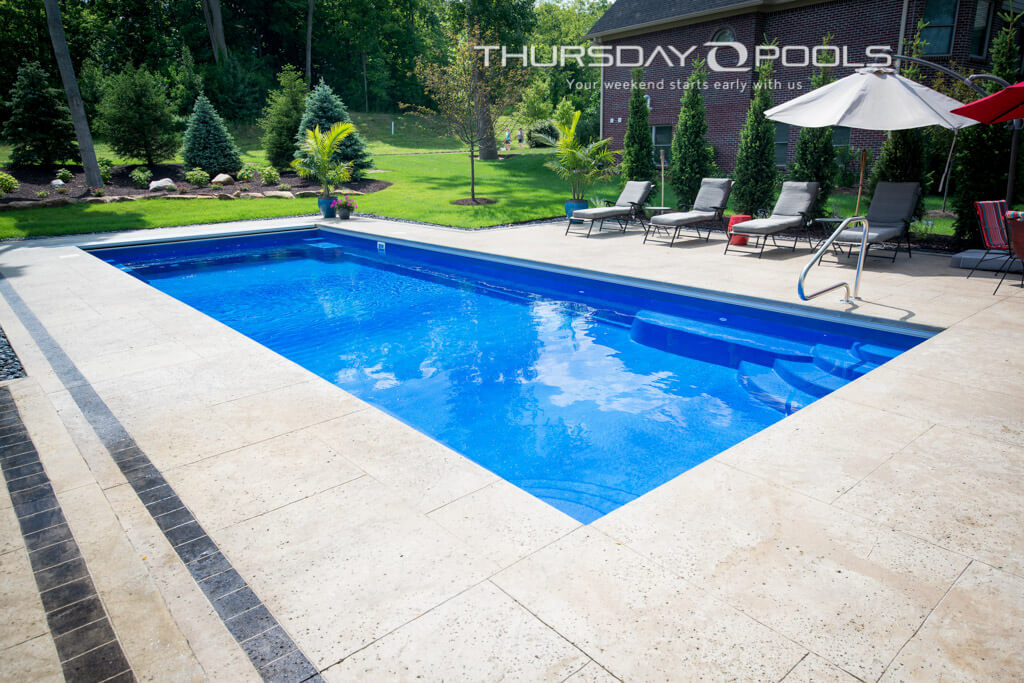
Thursday Pools fiberglass pool

So when should you open your pool? As soon as it’s possible to do so safely. Here’s what you’ll need to get started.


Remember having everything you need to do the job right within an arm’s reach will help the opening of your inground fiberglass pool go smoother. Gather these items:

  • Soft broom
  • Pool chemicals 
  • Safety goggles
  • Chemical resistant gloves
  • Test strips
  • Garden hose 
  • Cover cleaner or car wash soap
  • A good friend or pool service to help
  • Ice cold beverages to celebrate a job well done*

*Hey, you can’t forget to reward yourself! But that’s just the supplies, so don’t celebrate just yet. Here is what to do to open your inground fiberglass pool.    

  • Check your water level. Even with your pool tightly covered, the water level can change over winter. Your water level needs to be mid-way up your skimmer before removing your pool cover. Groundwater levels are often highest in the spring (especially if you got a lot of snow in the winter). If you don’t keep your groundwater pressure equalized, you can damage an inground pool.  Thursday Pools Fiberglass Pool
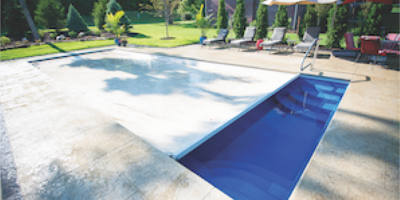
  • Remove your pool cover. After you’re sure your water level is correct, remove any water from the pool cover. Make sure you’re pushing or pumping that water away from your pool, not just adding to the pool-adjacent groundwater. If you’re using a pump to remove water from the top of the cover, be careful – some pumps are powerful.

A leaf blower can help get surface-level debris off the cover. The soft broom will come in handy during this step, allowing you to sweep away dead leaves and other debris collected through the winter months. After that, the process depends on which kind of pool cover you have. 

  1. Automatic pool covers. The virtues of automatic pool covers are many. They make pool openings easy. But, they are mechanized, so make sure you’re opening it gradually with your touchpad so it doesn’t get stuck or crooked as it opens. 
  2. Standard winter covers. Your winter cover needs to be adequately removed, cleaned, and sanitized to store away for your fall pool closing. Be sure to check with your cover’s manufacturer for removal instructions–each one is different. Removing it the wrong way can cause unwanted debris to fall into your water and contaminate it, making it more challenging to get your water healthfully balanced.
  3. Check your equipment. Once the cover is off and your water is at the proper level and skimmed for debris, you can turn on and check your pool equipment. Pumps, filters, filter media, skimmer baskets, and lights sitting idle in the elements all winter might need tuning up or replacing. Here’s a Tip: check the pump housing near the O-ring for cracks. O-ring cracks can cause air to get sucked into your pump and if these are present,the time to find that out is now before the swimming season is in full swing. If you’re doing maintenance yourself, you may need some additional supplies such as thread seal tape and pool gasket lubricant in order to lubricate any O-rings. If you’re leaving your maintenance to the pros, most professional pool opening services will conduct a thorough check and alert you to any problem areas or necessary repairs. If all is working well, leave your pump on and let the water circulate for at least 12 hours.
  4. Check your pool water chemistry. Once your water has had a chance to circulate, you’ll need to test it to determine your water balance starting point. Getting the balance right can be challenging at the start of the season. A pool professional can help get your water balanced after a long winter. They can also be a resource throughout the season. Someswimming pool professionals provide a free, computerized water analysis that tests for more water balance factors than a standard home test kit. Water chemistry is one of the more complex aspects of pool ownership. Whether you monitor it yourself or hire a pro, if you get your water correctly balanced when opening your pool, you’ll have an easier time keeping your water chemistry balanced throughout the swim season.
  5. Give the pool a spring cleaning. Opening day is when to clean your pool before the swim season gets underway. Start by scrubbing the pool walls. The soft broom or sponge is best to use when cleaning your pool walls. Avoid abrasives such as sandpaper and steel wool that can damage the finish of your pool. After giving the walls a good cleaning, it’s time to vacuum. Start from the shallow end and work your way down the slope of the pool. Be sure to clean thoroughly around the steps and other crevices where debris can accumulate.
  6. Inspect your safety equipment and pool accessories. Your handrails and lifesavers need to be swim-ready by the time you are. Take time in the spring to inspect, maintain or replace safety equipment, fiberglass pool accessories, and even outdoor furniture so you can be ready to relax poolside on opening day!

When should you open your pool? After you’ve followed these steps, of course! Hopefully, you feel prepared and can establish a good routine that will provide years of backyard enjoyment. Opening your pool is an excellent opportunity to reflect on what you’re grateful for and the fun times yet to be had. There has never been a better time to have a backyard paradise. If you’re looking for a bit of inspiration to make pool time enjoyable way past opening day, then you may want to check out our Idea Gallery. 

Choosing Your Pool Color eBook Thank You

Click the link below to download the ebook.


Download

Fiberglass Pools: Everything You Need To Know Before You Buy

Ask the General: What’s the Lowdown on Pool Cleaning Systems?

A look at in-floor pool cleaning systems and robotic pool cleaners. 

Dear General:

Is there such a thing as a “self-cleaning pool”? I’ve heard neighbors talking about in-floor pool cleaning systems, and they claim their pools “clean themselves.” Another one of my friends with a gunite pool has a robotic pool cleaner. I’m not sure I understand the difference between the two, or which is the best choice for us. We’re planning to get a fiberglass pool. Can you shed some light on this topic for me? I’m definitely interested in spending as little time cleaning and as much time swimming as I can. 

Signed- Lazy in Lexington, Kentucky

Dear Lazy:

This is a great question. First of all, wanting to spend as much time as possible enjoying your inground pool instead of inground fiberglass poolsmaintaining it isn’t lazy. It’s smart. 
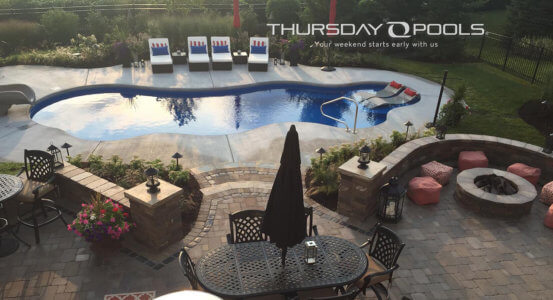
You’re taking a great first step by choosing a fiberglass pool. They’re by far the lowest maintenance pools around, and there’s no single, best choice for everyone when it comes to choosing a system. So, let’s take a closer look at robotic pool cleaners and in-floor pool cleaning systems, considering the merits and drawbacks of each. 

What is a robotic pool cleaner? 

A robotic pool cleaner is like a Roomba for your pool. You plug it in, drop it in the pool and it moves around, gobbling up dirt and debris. They’re certainly a great alternative to hauling out the telescoping poles and pumps of traditional pool vacuuming systems. 

Here are some things you should know about robotic pool cleaners:

  • Get the right brushes for your pool type. Fiberglass pool owners and those who have tiled pool walls need to make sure they choose a model that has a soft, super grip PVA brush. If your pool is gunite all around, the rubber brush models will work just fine. 
  • Get enough cable for the length of your inground pool. This may seem like a no-brainer, but you have to consider the fact that your power supply is most likely at least 12 feet from your pool’s edge. Your robotic cleaner will need to be able to easily reach to the deepest, farthest end of your pool to avoid having to unplug it and move it to the other end. 
  • Get the right features for your pool type. The most basic robotic cleaners will just vacuum your pool’s floor. The top-of-the-line models have power-washing jets and can also scrub the walls and water line. They’ll be able to get into the nooks and crannies of built-in steps and other pool features. Also, look for a system that has high suction power (at least 70 gallons per minute) and the lowest micron value available (2 microns is great because lower micron values give you the best filtration). 

What is an in-floor pool cleaning system? 

In-floor pool cleaning systems are comprised of pop-up heads scattered throughout the pool floor, as well as on benches, steps and walls. They’re flush with the pool surface when they’re not in action, and they work in groups, popping up and spraying pressurized water that moves dirt and debris towards the main drain. The pop-up heads also rotate to get at the dirt from various angles. You’re able to set the speeds and length of activation times based on your pool pro’s recommendations and how much cleaning your pool needs. 

Here are some things you should know about in-floor pool cleaning systems:

  • They must be installed with your pool. Because in-floor cleaning systems are integrated into your pool floor, they must be installed at the time your pool goes in. 
  • They’re compatible with any inground pool type. Whether you’re planning to install a vinyl liner, gunite or fiberglass pool, in-floor pool cleaning systems will be compatible with your pool project. However, because gunite pools have a rougher surface, you’ll need a lot more pop-up heads than you would with a smoother pool surface like vinyl or fiberglass. 
  • You’ll still have some maintenance to do. As the name “in-floor”implies, these systems are mainly just cleaning the bottom of your pool. This is great for warding off stains that can occur from debris sitting on the floor of your pool for too long, but you’ll still want to skim the pool for surface and floating debris. 

Comparing robotic cleaners to in-floor pool cleaning systems

  • Cost. There’s a big cost difference between these two types of pool maintenance systems. Robotic cleaning systems start out around $400 and can go as high as a little over $1000. In-floor pool cleaning systems start out around $5000 and can go as high as $10,000, depending on the size and shape of your pool. 
  • Automation. Robotic cleaners are not fully automatic. You’ll need to put them in the water, take them out of the water, move them around and clean them out. In-floor pool cleaning systems are fully automated. Regardless of which system you choose, you’ll still have to stick to your pool maintenance schedule, perform regular water testing and add chemicals.
  • Noise level. You’ll always know when your robotic cleaning system is running (they’re not exactly ninjas), while in-floor pool cleaning systems are, for the most part, silent. 
  • Energy efficiency. If you run your robotic cleaning system longer than it needs to be run, you might end up using more energy than you would with an automated in-pool cleaning system that does its job and shuts itself off. In-floor pool cleaning systems also help circulate the pool water, which means it’s circulating heat at the same time, which can reduce your pool operating costs. 

To sum it up

So, there’s my two cents on pool cleaning systems. No matter what type of pool cleaning system you choose, you’re going to love having a great quality fiberglass pool. With a pool design for every personality, you’ll have  fun with friends and family and improve the resale value of your home. Happy swimming! 

Until next time, 

The General 


Who is The General? 

The man, the myth, the legend….we just call him The General. His organized, systematic approach to pool installations over the years had his crew members calling him “The General” and it stuck. The General has over 30 years’ experience in the pool and spa industry, working for one of Pool and Spa News’ “Top 50 Pool Builders.” 


Over that time, he designed, sold, project-managed and installed over a thousand inground swimming pools. As a pool owner himself, he’s the perfect authority to give you the inside scoop, with amazing tips and tricks to make pool ownership a breeze! 

Five Fantastic Tips to Close Your Fiberglass Pool Right

Close your pool right in the fall to have a great spring!

Tips For Closing Fiberglass PoolsThey say all good things must come to an end. In the Midwest, that’s a sad but true reality for inground pool season. It’s nearing time to close the pool. To ensure a quick and easy spring fiberglass pool opening, close it properly in the fall. So, here’s a list of five fantastic tips to close your fiberglass pool right.
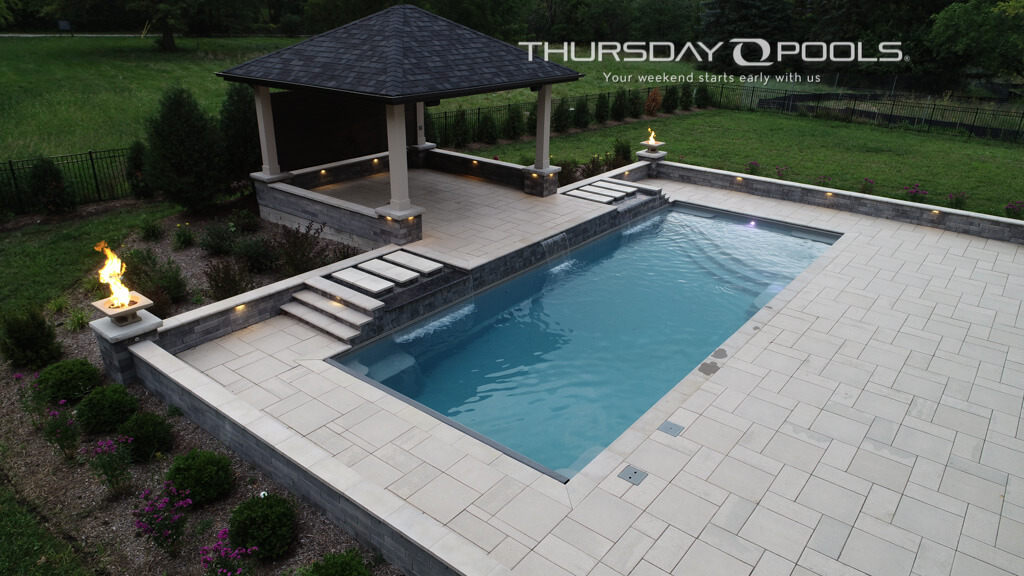
  1. Balance your water chemistry. We recommend having your water tested by a professional. If your pool maintenance schedule is a little out of whack because you’ve been in it less since school started, achieving a properly balanced pool can take a couple of days, so don’t wait until the day before closing to check levels. While test strips are good for a quick dip test, you should have a professional do a complete water analysis. A complete water analysis will check all important chemistry levels including, but not limited to, total alkalinity, pH, free chlorine, total chlorine, calcium hardness, salt, stabilizer, metals and total dissolved solids. Remember, clean and sparkling pool water does not always mean that your pool water is properly balanced. Looks can be deceiving. Some of the prettiest pool water can be the most destructive.
  2. Wipe down the scum line (or tile line.) Body oils, suntan lotions, and airborne contaminants can sometimes build up on the pool surface along the water line. These can easily be wiped away. Microfiber cloths work great. If necessary, you can use a mild detergent, fiberglass or vinyl cleaner. Remember to never use abrasive cleaners, automatic dish detergent, steel wool, metal scrapers, or other brushes or tools because they can cause permanent damage to your beautiful gel coat finish.
  3. Give it a final clean. A few days before your closing, give your pool a final clean. Skim off any debris floating on the top and vacuum any debris or leaves that may have settled on the bottom of the pool. This is also an excellent time to rinse off your pool deck and automatic safety cover tracks.
  4. Add your winterizing chemicals. The day before your pool pros are scheduled to come, add in your winterization chemicals. They’ll need several hours to circulate before your pump is shut off. Clean out your skimmer basket and remove any remaining debris that may be in the pool.
  5. Tidy up. Take the time now to organize and properly store your chemicals. Give your deck furniture and cushions a good cleaning (or you might want to leave them out for any warm and sunny days still to come). Sort through the pool toys, noodles and floats. Toss any that you plan to replace next year and tuck the rest away.

That’s it! Once you’ve zipped through this list, you’ll be prepared for your pool pros to come and finish the job so you can look forward to an easy spring opening.

Renovating, Repairing, Removing or Replacing Your Inground Pool

Not loving your swimming pool as much as you used to? Renovate or repair it, remove it, or replace it with a new, low-maintenance fiberglass pool!  

The staycation lifestyle that a backyard swimming pool creates is appealing to a lot of families. Some people dream of having an inground pool and have talked about it for years. However, some folks who already have a pool may find that they’re not using it as much as they used to, or feel like their pool has lost its luster.

Certainly, a pool that’s never used is a shame. The space it takes up in the backyard could be used for other things, like a garden, playset or a big lawn for touch football games. And a pool that’s fallen into disrepair due to age or lack of pool maintenance isn’t enhancing anyone’s life or living space.

What to do? 

Well, depending on what type of pool you have, here are some options.

  1. Renovate or repair it. If you have a vinyl liner pool with a torn or worn liner, you can replace the liner and bring new life to your pool. A gunite (concrete) pool might need a resurfacing to restore it to its original glory. Unlike fiberglass, both vinyl and gunite pools tend to provide an environment that’s attractive to algae, so if you’re looking outside at green water in your pool, you’ll probably need to enlist the services of a pool professional near you to clear up your water, restore your water chemistry balance and see if there’s underlying damage to your pool that needs to be addressed.
  2. Remove it. If your kids are grown and out of the house, or they are too busy with sports and other extracurricular activities to spend time in the pool with their friends, it might be time to remove your inground pool. However, keep in mind that it’s no small job, and there can be significant costs involved. Removal and fill for a moderately sized gunite pool can cost up to $20,000. Fiberglass and vinyl will cost less, as the materials are lighter weight. Also remember that inground pools typically increase a home’s value. So, this is not a decision to be made lightly. If your old gunite or vinyl liner pool is beyond repair, or, if you’re simply tired of all the pool maintenance involved, there is another way! You can choose to…
  3. Replace it. If you still love the idea of having a pool, but just need a fresh start, you can replace your existing pool. And if you do, a fiberglass inground pool is the way to go. Over the last 20 years, fiberglass pool manufacturers have made huge strides in terms of quality, features, installation innovations, available colors and designs. You can even get a beach entry (zero entry) fiberglass pool today (Patent US 10,358,837 and 10,472,839). This feature was previously only available in high-end, custom gunite pool installations. Recently, sunken living area fiberglass pools have also been introduced to the market. So, the sky’s the limit in terms of how you can transform your current pool area, and turn it into a true backyard swimming pool oasis that your friends and family will all enjoy. Your pool area can once again be the go-to party spot and a beautiful addition to your home.
  4. Fix it or replace it? So, the choice is yours. Will you fix it or replace it? There’s no one right answer. The swimming pool lifestyle is not for everyone, but the people who really do use their pools enjoy all the health benefits that regular swimming exercise can bring, including chronic pain relief, weight loss and stress reduction. They also enjoy the social aspect of spending time with their friends, kids and grandkids in the pool (and it’s often tech-free, or at least low-tech usage time) while folks are playing water games, visiting on the built-in benches or tanning ledges, and genuinely connecting with each other. And you can’t put a price tag on that.

The Zero Entry fiberglass pools 

Thursday Pools is the creator of the beach entry (or zero entry) fiberglass pool. Grace Beach Entry and Sandal Beach Entry (Patent US 10,358,837 and 10,472,839) are currently available to order, so you can bring the shore to your door with your new fiberglass pool.

#PSPExpo #PSPExpo2019 #NewOrleans 

Are you ready to take the plunge and get a FREE estimate on your very own, brand new fiberglass pool? Contact a Thursday Pools dealer today!

Ask the General: Cartridge Filters vs. Sand Filters; Which is Best for Your Pool?

Dear General-

We’re getting a new fiberglass pool this summer! We’ve chosen our fiberglass pool design and our add-on features. Now, we’re wondering what kind of filtration system we should get. We’ve heard pros and cons about both cartridge filtration systems and sand filtration systems. We want what’s best for our pool long-term, but of course we’re excited about low pool maintenance too. What guidance can you give us?

cartridge filtersSigned- Figuring out filtration in Fairfield
Dear Figuring in Fairfield-

Great question! If you’re a regular reader of my articles, you’ve heard me talk about sand filtration already. Cartridge filters are great too. There’s no one system that’s superior to the other, and I’ve used both over the years. But, let’s see if we can filter through some more details and help you choose what’s best for you.

Let’s first take a look at how they work.

Sand filters

Sand filters work quite simply by pushing your pool water through sand that catches the dirt and debris and returns clean water into the pool. You clean your sand filter by backwashing it. This means running water backwards through the filter until the filter is clean. Sand filters are a pretty popular option for residential inground pools.

Sand filter maintenance

Sand filters require very little maintenance, other than the aforementioned backwashing. You’ll need to replace the sand every 2-4 years, depending on how often you use your pool.

Cartridge filters

Cartridge filters have a single layer of filter media made of synthetic fabrics attached in pleats to a cylindrical core. Water is pumped through the filter and passes through the cartridge, trapping dirt and debris in the fabric. Some spas and above-ground pools have a cartridge incorporated in the skimmer. You’ll need to make sure you’ve chosen the appropriately sized filter for your pool.

Cartridge filter maintenance

Cartridge filters must be manually removed to be cleaned. When the filter gauge increases 8 to 10 psi over normal (or, your water flow is visibly reduced), it’s time to clean them. It’s a great idea to keep an extra set of cartridge filters handy, so that you can swap them out when one set is being cleaned. However, with each cleaning, you’ll only recover about 60 percent efficacy. So, after three or four cleanings, you’ll probably have to buy new filters. However, cartridge filters cut energy costs because they require less pump pressure.

Which filtration system is best for you? It depends.

How important is water clarity?

cartridge filtersBoth systems will give you clear water. But for the absolute best water clarity, cartridge filters win.
Cartridge filters typically screen out twice as much dirt and debris as sand filters do. A cartridge filter takes out so fine a particle that your water actually glistens. It can really be witnessed at night when your pool lights are on. That little foggy halo of tiny particles that the light displays is greatly reduced.

Where do you live?

For areas that tend to be debris-heavy, sand filters are your best bet.

For example, I live in an established neighborhood with very little dirt and debris floating around in the air. Therefore, I enjoyed the cartridge system and only cleaned the filters once a season, when I closed the pool for the winter. The filters lasted about four years, but were expensive to replace. However, my daughter lives in the country, and her pool is surrounded by corn, and soybean fields. The dust and pollen factors are very high, especially when the fields are freshly plowed or harvested. She had a devil of a time with her cartridge system because she needed to clean it out so often. It’s time-consuming to take a filter apart, soak it and put it back together. And the more often you clean it, the more often it will need to be replaced. We changed her to a sand filter, and it was smooth sailing from there! And obviously, if you’re planning an indoor pool, cartridge filters are absolutely your best bet.

Ask the pros

You can always consult with your pool professional for advice on what type of pool filtration system will work best for the area you live in and how you plan to use and care for your pool. They can also make recommendations about manufacturers. No matter which system you choose, you’ll love the durability and low-maintenance that a fiberglass pool offers. Happy swimming!

Until next time- The General

Water Safety

Some Cool Pool Rules for Kids!

May is designated Water Safety Month, but we think it’s important to be aware of every month.

Water safety for kids is a serious matter. Kids love to be in the water, and making sure they know how to do so safely is paramount. At Thursday Pools, we’re committed to water safety, so we’ve created a fun, interactive video, along with a coloring book called Some Cool Pool Rules for Kids.

 In addition to our coloring book, we have the following resources available:

PHTA – Children Aren’t Waterproof

PHTA – Layers of Protection Start with You

PHTA – Entrap Avoidance Guidelines

PHTA – The Sensible Way To Enjoy Your Inground Swimming Pool

PHTA – Pool and Spa Emergency Procedures

Download Our Printable Version

No printer? No problem. Fill out the form below, and we can mail you coloring books.

Please note: This free coloring book is available for shipment within the U.S. only. We do not currently offer international shipping.


Ask the General: What Do I Need to Know About General Pool Maintenance?

Dear General-

We live in Kentucky and just got a new pool last year. It’s almost time to open our pool for the season, and we feel like we could use a refresher course on pool maintenance as spring approaches. Can you give us some general (no pun intended) pool maintenance tips to ensure we’ll be in good shape the whole season long?

Sincerely, New Pool Peeps in Petersburg

Dear New Peeps-

pool maintenanceThanks for writing, and go Wildcats! You didn’t say whether you have a vinyl, gunite or fiberglass pool, so I’ll cover a little bit of everything. Obviously, the first step is to get your pool open. If you are using a pool service company, ask what they need you to do before they arrive. Companies often have a “to do list” that will help them efficiently open your inground pool. For example, all your equipment (and parts and pieces that were removed at closing) should be accessible. Be sure to have power available to the equipment area. If you aren’t home when the technician arrives, and a breaker is off in a locked house, it will be a wasted trip. Being prepared when the pool service arrives will result in a quicker, more efficient opening (and possibly save you money on pool parts).

Also, thanks for the great set-up. Because now I can, at long last, create a list called:

The General’s General Pool Maintenance Tips

  • Get on a schedule. Once it’s open, keeping your pool clean is one of the most important things you, as a pool owner, can do. Regular cleaning lengthens the life of the pool, and its auxiliary equipment. Set a pool maintenance schedule, and stick to it to protect your inground pool investment.
  • Keep it debris-free. Use a dip net to remove anything that has settled on the bottom of the pool, and skim the surface to remove leaves, twigs and dead bugs. These items can clog your filter over time, so don’t let them accumulate. If you have an automatic pool cover, keep it closed when your pool is not in use. Auto covers are your best friend when it comes to keeping your pool clean and reducing chemical waste.
  • One other thought while we’re on the subject of skimming. With vinyl pools, don’t be tempted to use your extension pole without the dip net to retrieve things from the pool. I’ve seen lots of “mysterious” half-moon rips in liners over the years, and this has most often been the culprit.
  • Clean the tile and coping, and brush the walls and water line. No matter what type of pool you have, you’ll most likely start to see a “bathtub ring” develop along your water line. This is caused by suntan oils, chemical residues and other contaminants that stick to the pool above the water line. (Heads up: heavy scale along the water line on a gunite pool usually means a serious water chemistry problem.) Clean residue lines with a non-abrasive cleaner. Ask your pool builder/service what kind of cleaner they recommend for your pool type.
  • Vacuum it.  There are tons of pool vacuum options out there, and some great robotic pool cleaners on the market today that make this job a lot easier. I definitely recommend looking into these to minimize cleaning time. Because different pool types require different cleaning heads, just make sure you’re using the right cleaning head for your type of pool. For example, if you try to clean a vinyl pool with a vacuum that’s designed for gunite, you’re most likely going to end up with a damaged liner. Gunite cleaning heads have wheels that can dig into the liner and cause tears.
  • Test and balance your water chemistry. If you’re a regular reader of my articles, this won’t be the first time you hear me preach about the importance of water chemistry. No matter what kind of pool you have, balanced water is balanced water. Remember, Low pH and over-chlorination are especially hard on all types of pools (and equipment as well.)
  • Don’t neglect your equipment and accessories. While you’re thinking about your overall pool maintenance, don’t forget about your equipment–your filter, skimmer, and pump, and accessories (such as your auto cover, slide and diving board). If you have your local pool professional open your pool for you, they’ll check these things out for you. But don’t forget to wax that slide … you don’t want to get stuck halfway down. I could tell you a story about that, but I’ll leave it for another time.

So there you have it … The General’s General Pool Maintenance Tips. Time to get ready for swim season.

Until next time; The General