Topic: Fiberglass Pools
Is a Fiberglass Pool Right for Me?

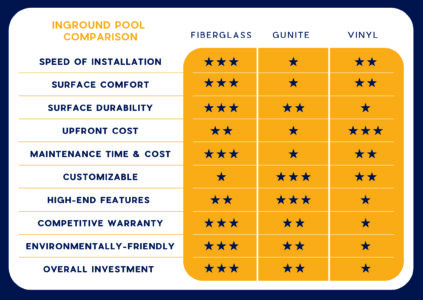
An inground swimming pool is a significant, long-term investment, homeowners should weigh their options carefully and choose the type of pool that will fit their needs for as long as they own their home. We know it’s tempting to just go with the pool type you can get the soonest—resist the urge! Fiberglass pools are an inground pool option that is both worth the wait and fits a wide array of buyers’ lifestyles. You may have questions: Is a fiberglass pool worth the money? How long do fiberglass pools last? What is the downside of fiberglass pools? In this blog post, we’ll discuss fiberglass pools pros and cons.
Fiberglass Pools Pros and Cons
The Pros:
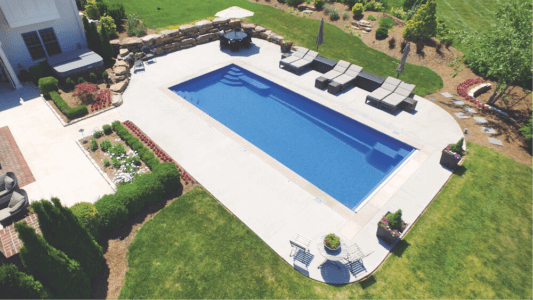
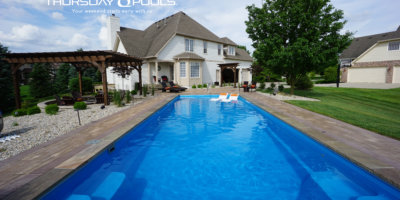
- Design Options. At one time, fiberglass pool design options were limited. Modern fiberglass pools come in various shapes, sizes, and colors that complement any backyard design. Go sleek and contemporary or free-flowing and laid back – there is a design and size for every situation. You can easily customize them with tilework that matches your personality and aesthetic.
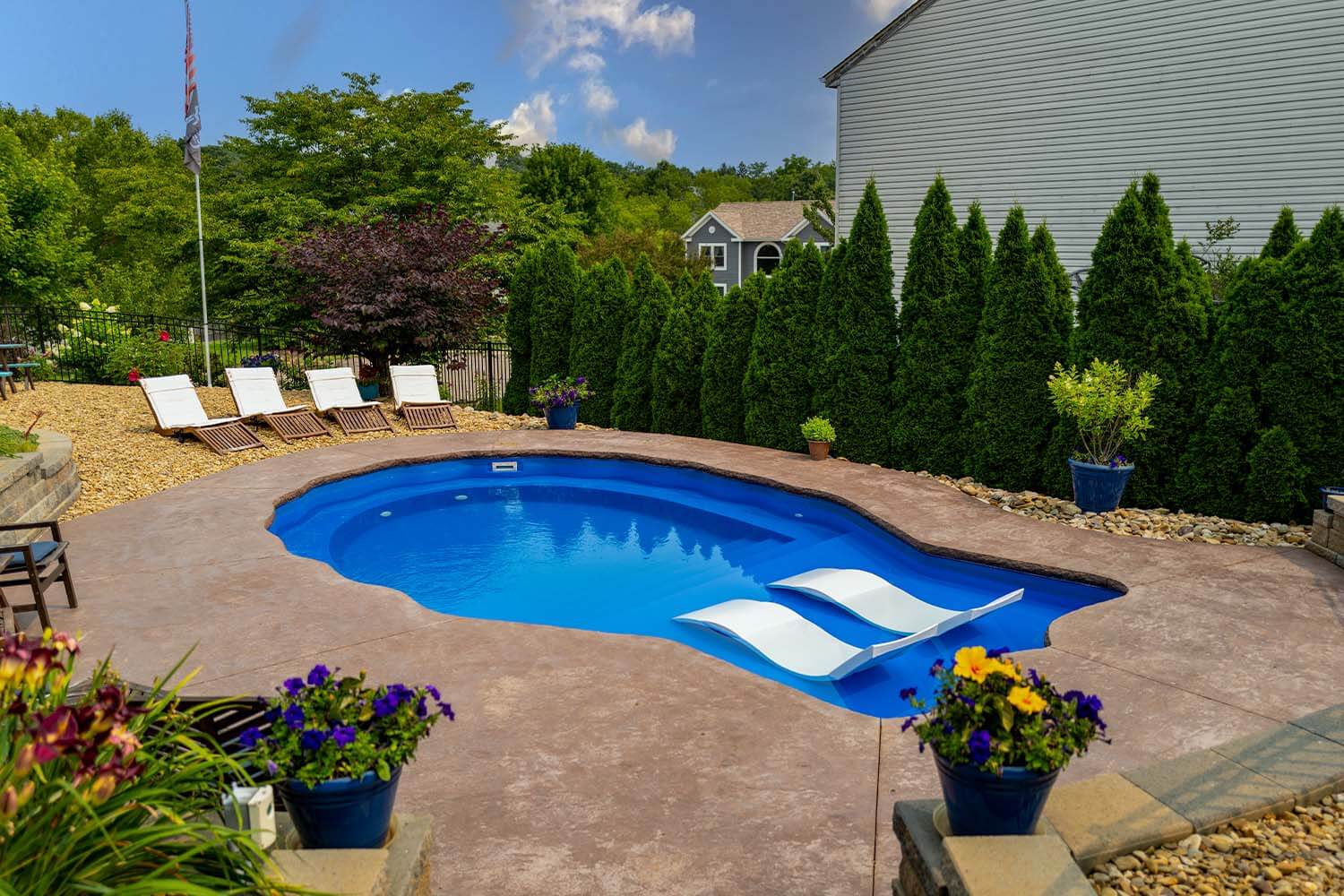
- Built-in High-End Features. Fiberglass pool shell designs include some of the hottest trends in inground pools. Depending on your chosen model, many desirable and artful features like tanning ledges, swim-outs, and wrap-around benches are built-in. Elements once considered only for the realm of resort pools, like beach entries (zero entries), are now built into fiberglass pools.
- Smooth, Non-skid Finish. Concrete (gunite) inground pools tend to have a porous, rough finish, and vinyl pools are often very smooth to the touch but can become slippery when wet. With a fiberglass pool, you have a gel coat finish that looks polished and shiny but is non-skid and non-snag! Of course, any pool type can pose a fall risk, so always be careful as you enter and exit the pool!
- Durable. Don’t be fooled by the “glass” in the word fiberglass. While not all fiberglass pools are equal, we build Thursday Pools fiberglass pools with nine layers of strength, with both the structure and surface lasting for decades with less maintenance required than other pool types. Non-porous fiberglass inhibits algae and other minerals that break down other pool-type finishes. Whereas a vinyl liner typically needs to be replaced every eight to ten years on average and a gunite pool needs replastering after 10 to 15 years on average, a fiberglass pool can last a lifetime with proper pool maintenance!
- Lowest Maintenance. It’s generally accepted that fiberglass pools have the lowest maintenance cost of all three pool types. A fiberglass pool’s ten-year maintenance costs could be around $5,750 on average, whereas other pool types maintenance costs can be much higher. A big part of long-term gunite pool maintenance costs involves steel brushing the surface every week, acid washing an average of every three to five years, and resurfacing an average of every 10 to 15 years. For vinyl liner pools, replacing the liner every five to nine years or so will need to be factored into maintenance cost plans. Because there is seldom a need to resurface fiberglass, and fiberglass pools require fewer chemicals, you can anticipate lower maintenance costs over the pool’s lifetime.
- Quick to Install. Vinyl and gunite pools are built on-site and are subject to the elements and potential delays that inclement weather brings to construction projects. Fiberglass pools are constructed in a controlled factory environment. When it arrives at your home, it is ready to be put into place. The process can occur in as few as three weeks during non-peak seasons. Compare that with concrete pools that typically take three to six months to install and vinyl liner pools that could take six to eight weeks.
- Pet-friendly. Concrete inground pools can be rough on your pet’s paws, and vinyl inground pools can be slick, causing slips or tears when they come in contact with pet nails. The durable, non-skid surface of fiberglass resists scratches and tears from toenails and prevents slipping when your pet attempts to get out of the pool.
- Increased Home Value. As home resale value varies by location and condition, a home with a pool’s resale value also varies by type of pool installed. Because of the lower long-term maintenance costs, fiberglass pools tend to be preferred by homebuyers and can increase the value of your home.
- Environmentally More Friendly. Non-fiberglass pools can leach chemicals and rust back into the groundwater. And acid-washing can result in harm to the environment. Fiberglass pools don’t pose these types of environmental problems. If you go with a fiberglass pool manufacturer committed to the environment, you are taking steps to contribute to a greener world.

The Cons:
- It’s not a DIY Home Project. We recommend that an independent dealer installs your fiberglass pool. If you go with a non-licensed installer, the performance and durability of your pool can suffer. With a DIY approach, you may not get to enjoy your pool until you fix all the mistakes. Common problems people have when trying to install a fiberglass pool on their own are getting the pool level and pouring coping around the fiberglass pool. These can be expensive errors to correct.
- Size Limits. Gunite and vinyl pools are built on-site, so there is flexibility if you want to go big with your pool. One of the disadvantages of fiberglass pools is that they are generally limited in size and shape by what can be transported from the factory to your backyard. Road restrictions limit the size of a fiberglass pool to approximately 16′ wide x 40′-41’ long.
- Customizability. Fiberglass pool designs are surprising in their breadth of features and shapes, but they are pre-built, so the manufacturer’s parameters can limit you. For example, if you have your heart set on building a guitar-shaped pool, you’ll likely need to look into gunite. Additionally, if the fiberglass pool design you want comes with a tanning ledge that you don’t want, you will also need to look at another pool type.
- Access/Space for Installation. Because we transport a fiberglass pool shell in one piece to your backyard, you must have backyard access and space. Installers often use cranes and other heavy equipment to get the pool to its destination and this need for access and freedom to move a large object can be a dealbreaker.
A fiberglass pool is not for everyone, but we still believe there is someone for every Thursday Pools fiberglass pool. Knowing fiberglass pool pros and cons is a step toward finding your fit. Check out our Pool Selector Tool to find your match or get started with an estimate.
Contact a dealer to talk about a new fiberglass pool today. With Thursday Pools, your weekend starts early!
Fiberglass Pool Reviews
When you begin the process of considering a backyard pool, your mind might swirl with questions. You may start with basic questions like, “how much do fiberglass pools cost?” Or, “is a concrete pool or fiberglass pool better?” You should look for reliable information and answers to your questions from people who have already taken the plunge. In this post, we’ll give answers to three common questions pool buyers ask and throw in some fiberglass pool reviews of our own.
Are there many fiberglass pool designs to choose from?
Yes! Over the last 30 years, fiberglass pool manufacturers have taken customers’ most loved inground pool features and designed them into the fiberglass pool shell. When comparing fiberglass vs vinyl pool cost or fiberglass vs concrete pool cost, you should factor in the features because many that are built into fiberglass pool designs may add to the cost of other pool types. Some features you’ll find in Thursday Pools designs include benches and seats, beach entries (aka zero entries) (Patent US 10,472,839), swim outs, built-in steps, tanning and safety ledges.
We just finished the install of our Thursday Pools pool. We chose the 16×33 Goliath for its design to allow lap swimming end to end. We love the multiple sets of stairs and safety ledge on each side. The California finish color looks amazing!! Quality construction!!! Highly recommend. -Eric Demaline
Their beach entry pools are amazing! We love ours, and the beach entry is perfect for pets and children! Thursday Pools has always been a pleasure to work with ☀️” -Bonnie Sommers
We love our new pool! Fiberglass is definitely the way to go!!! -Julie Sue Upchurch
Can I get a small fiberglass inground pool?
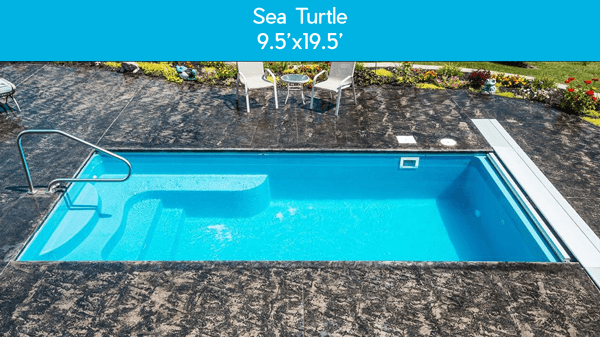
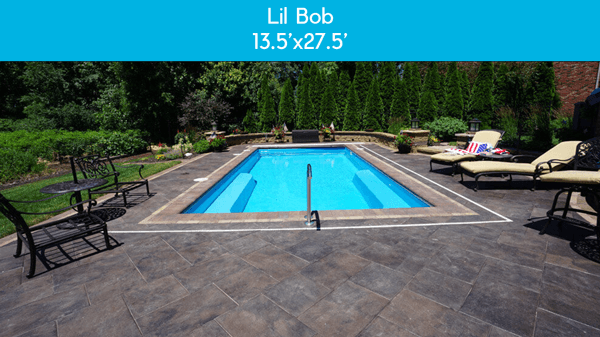
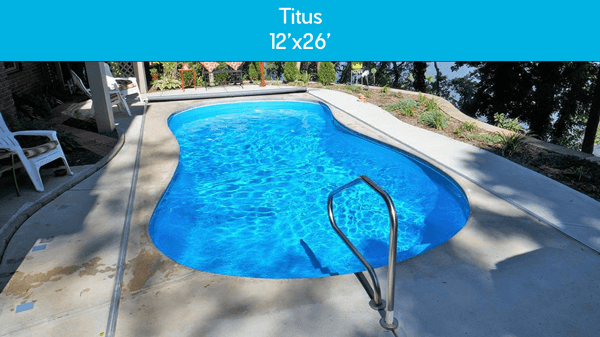
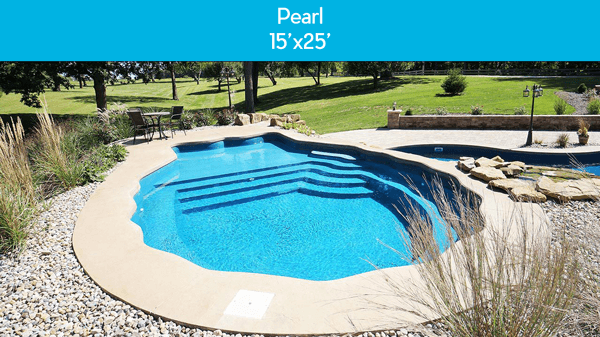
Good news! Thursday Pools has a variety of pool sizes to fit your backyard oasis. Perhaps you have a small yard or simply don’t want a large pool. Regardless, if you’re looking for a small fiberglass inground pool, you have options for fiberglass pool shapes and sizes with all the popular features of larger pools. Let’s look at some.
![]() |
![]() |
![]() |
![]() |
|
![]() |
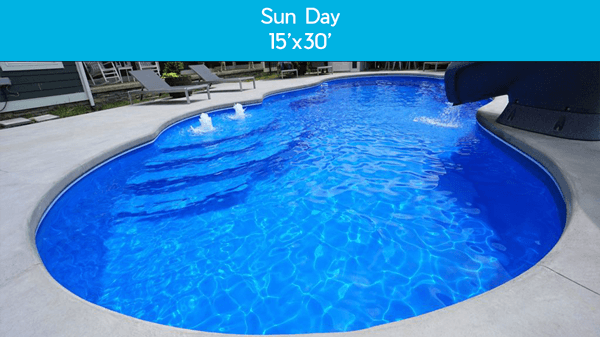
What’s the difference between fiberglass pool manufacturers? Sunday is Funday, swimming in our … Sun Day Fiberglass pool, not only Sunday but everyday we spend is a funday with Sun Day. We lounge on the sun shelf, use the wide open steps with the top one the best for our 2 year old Ava. We love the bench seats with the water spa jet returns flowing the crystal clear water. After just two days after the pool was filled we were amazed how quickly the water warmed up, the fiberglass holds heat and even at night the water remains warm. We have already had a pool party and everyone comments on the design and how beautiful the water looks. we just love our new pool and no need to take a summer vacation, just walk out the door. A special thanks to Justin and all the great staff at American Pool and Spas in Richmond, KY, from start to finish their work was professional. …yes everyday is Funday…thanks! -Will and Ashley Mason and Ava Sheets, and Bruce and Kathy Markley
While we can’t speak for the competition, we can tell you what we think makes us stand out. Thursday Pools believes that passion, care and attention to detail makes the difference. This includes our work with strategic partners, dealers and homeowners. Our pools are hand-crafted by skilled artisans in a factory-controlled environment and are built with multiple layers of strength. We are committed to innovation, quality and the environment.
I spent the winter traveling the country and kicking the tires on several fiberglass pool manufacturers. I’ve been installing auto covers for 15 years, and I have worked on every pool out there. It was time to take it to the next level with my company. I chose Thursday Pools over everything else for several reasons. The main reason I chose Thursday Pools is due to the engineering details that they have pioneered and patented. Geo-wall to anchor the exterior of the pool to the Earth, beach entry pools (Patent US 10,472,839), and pool shells that are tailored to accommodate an automatic pool cover are a few of the most important reasons for me. After I got to meet the owners of Thursday Pools and got a feel for who they are as individuals, we can’t help but to love these guys. Best decision we could’ve ever made was to choose Thursday Pools to be our manufacturers exclusively. -Josh Welsh
Great build quality and knowledgeable staff. Purchased a Titus 14×33 and absolutely love it! Shopped other manufacturers before looking at Thursday Pools. 100% happy with our decision!
-Steve West
Great business, great quality pool. The employees and management are so courteous. -Johnny E. Hatchet
We toured the factory and it was fantastic. Super fine swimming pools. -Christopher Gates
Fiberglass Pools: Everything You Need To Know Before You Buy
What Are the Disadvantages of Fiberglass Pools?
We’ve been in your shoes before. You’ve decided to take the plunge and are looking at inground pools, and now you have to narrow down which type of inground swimming pool is best for you. You may have already compared vinyl vs fiberglass pools or the benefits of fiberglass over concrete pools and thought, “Wow, fiberglass sounds like a pretty solid choice!” But, now you want to know, “what are the disadvantages of fiberglass pools?” In this post, we’ll cover some potential downsides to aid in your pool decision journey.
Durability and Potential Damage
Let’s start with durability. How long do fiberglass swimming pools really last? You may have heard about typical repairs associated with certain inground pools—spider cracks, discoloration, etc.—and fiberglass pools, unfortunately, aren’t immune to these issues. For example, fiberglass pool gel coat problems can arise in the form of discoloration due to improper water chemistry and balance. That’s why we step up on our soapbox to stress the importance of pool maintenance. A fiberglass pool is one of the lowest maintenance inground pool types available, and proper care can ensure a significant decrease in your chances of damage. The life expectancy of a fiberglass pool can be a lifetime with proper upkeep. We’ve known some fiberglass pools to last 50 years!
Spider cracks in fiberglass pools can be the result of improper installation or manufacturing. Too much pressure on a spot in the pool, or a pool that’s built too thin, can lead to these surface cracks. This is why it’s important to go with a manufacturer that prioritizes both durability and flexibility with their fiberglass and an installer who knows their stuff when it comes to installation. Fiberglass pools have also been known to suffer from osmotic blistering. These little lumps form in the pool’s gel coat layer when water molecules are able to pass through. However, some fiberglass pool manufacturers offer surface warranties against osmotic blistering, which can put you at ease if this issue ever were to come up.
Limitations on Size and Shape
If your dream is to have a 70-foot long swimming pool, then you may be disappointed with fiberglass. Fiberglass pool shell manufacturers can typically only produce pools up to 40 feet in length and 16 feet in width due to shipping restrictions. The same can be said for custom shapes. A pool that’s in the exact shape of your dog isn’t going to happen with fiberglass since fiberglass pool shells are crafted from a pre-designed mold. Despite these limitations, there are many unique designs and features available, like zero entries and tanning ledges, that you may find in other types of pools but without the added comfort, safety (fiberglass pools aren’t as slippery when they include non-skid texture), and durability of fiberglass.
More Expensive Installation Than Some Other Pool Types
It’s true. Fiberglass isn’t the cheapest inground pool option on the market. And while how much a fiberglass pool costs, in the long run, depends on many factors, you could spend less upfront if you were to choose a vinyl liner pool. Installation could range anywhere from $25,000 to $65,000 for a vinyl pool. Other pool types may also be easier to install yourself, which can lower installation costs. We’ve all seen those “fiberglass pool installation gone wrong” videos online—this is why having a reputable installation professional is a must. Having an industry expert on your side ensures your project is done right and in a timely manner.
Speaking of costs, keep in mind that while fiberglass pools have higher upfront costs than other pool types, fiberglass pools tend to have lower maintenance costs over their lifetime, especially when you consider that they have manufacturers’ warranties.
We hope to have been helpful by discussing some potential disadvantages of fiberglass pools. If you haven’t already, be sure to check out our eBook that compares the three different types of inground pools side by side. If you’ve decided to take the plunge with fiberglass, then we have some resources to help you get started! Our inground fiberglass pool cost calculator can give you a ballpark estimate for your overall pool installation costs. The Idea Gallery has dozens of pictures of fiberglass pools to give you inspiration for pool colors, pool styles, landscaping, and more. If you’re wondering, “how can I find a fiberglass pool near me?” getting in touch with a pool dealer and getting an estimate would be a great next step.
Fiberglass Pool vs. Vinyl Pool: Which is Better For You?
Quick Answer: Is a Fiberglass Pool or Vinyl Pool Better?
Fiberglass pools typically have a higher upfront cost than vinyl liner pools, but they also offer long-term advantages. They require less maintenance, can often be installed in just a few weeks, and never need a liner replacement. Vinyl liner pools generally cost less initially and provide greater flexibility in shape and design. However, liners can be susceptible to punctures and tears, requiring occasional repairs and eventual replacement every 5–10 years. If you’re looking for a pool with long-term durability and lower maintenance, fiberglass is often the better choice. If your priorities are minimizing upfront costs or creating a highly customized shape, a vinyl liner pool may be a better fit.

Comparing Fiberglass and Vinyl Pools Side by Side
An inground pool is a big purchase, one that changes your living space and your current routines. You’ll want to understand all of your options (meaning vinyl vs. fiberglass vs. concrete pools). And if you’re here, it means you’ve either narrowed your choices down to vinyl or fiberglass or are attempting to do so. Either way, you’ve come to the right place. In this post, we’ll compare fiberglass pools and vinyl pools side by side.
Pros and Cons: Fiberglass vs. Vinyl
| Fiberglass | Vinyl | |
|---|---|---|
| Pros | Quick installation time
Most comfortable on your feet Resistant to algae growth High resale value Pet friendly |
Low installation cost
Relatively quick to install Resistant to algae growth Highly customizable |
| Cons | Limited customization options
Higher upfront cost |
More prone to damage and weathering
Harder to incorporate features like steps and tanning ledges More financial investment over time Lower resale value Not pet-friendly |
How Fiberglass and Vinyl Pools Are Made and Installed
Both vinyl and fiberglass have relatively quick installation times, with vinyl about four to eight weeks and fiberglass about three weeks on average. An inground vinyl pool is 100% crafted on the job site, while fiberglass pool shells are manufactured at a designated facility using a mold. Being created from a mold means more quality control. Once the pool shell is made and delivered, it is placed into the pre-dug hole and leveled. Following this are various processes, including plumbing, electrical equipment, decking, and coping.
Vinyl pool installation takes place directly on the job site, starting with the wall panels, which are typically constructed with steel or plastic. The pool floor is then made with poured concrete, and this also serves as a base for the walls to connect. A blend of vermiculite, cement, and water, or a blend of sand, cement, and water, is used to create the pool bottom. The entire surface is then covered with the vinyl liner, and a vacuum is used to suction the liner into place. Plumbing, electrical equipment, decking, and coping follow suit.
Learn more: Everything You Need to Know About Fiberglass Pool Installation
How Much Each Pool Type Costs
Comparing vinyl pool cost to fiberglass pool cost is a fair comparison, as they both have lower upfront costs than a concrete pool might. According to our 2026 survey of independent Thursday Pools dealers, fiberglass pools typically range from $45,000 to $100,000 or more, while vinyl liner pools typically range from $25,000 to $65,000 or more. Fiberglass pricing will vary depending on many factors, so it’s always best to get a quote from an installation professional.
| Pool Type | Typical Upfront Cost* | Ongoing Replacement Cost |
|---|---|---|
| Fiberglass | $45,000–$100,000+ | None required |
| Vinyl liner | $25,000–$65,000+ | $3,000–$7,500+ every 5–15 years |
*Based on a 2026 Thursday Pools independent dealer network survey. Figures are typical ranges; actual pricing varies by region, size, and dealer scope.
For a full cost breakdown, see our Inground Pool Cost Guide.
How Long Each Pool Type Lasts
The structure of a vinyl liner pool has the potential to last for decades, but the liner wears more quickly and is subject to tearing (especially if you have dogs who like to swim), so it will need to be replaced about every 5-10 years. Groundwater underneath the pool can cause other potential issues with the liner, such as floating. Customization is one of vinyl’s biggest selling points, but it comes at a cost: unique shapes are more expensive to build, more complicated to repair, and more likely to need liner work, all of which can chip away at the overall value.
When it comes to fiberglass, its rigid but flexible structure allows for maximum durability. Quality control in production is what makes the difference. Using a mold means fewer mistakes in the pool’s structure, and thick, even layers of gel coat make the pool more resistant to scratches and other surface damage over time. Innovations in fiberglass pool structures, such as the Backfill Eliminator™, help prevent groundwater accumulation and its associated issues. Maintenance and wear-and-tear repair end up costing you significantly less in the long run, and fiberglass pools can increase your home’s value.
Each Pool Type’s Safety
No matter which pool you choose, we will always shout from the rooftops: “Be careful! Accidents can happen!” Anyone entering or exiting a pool should practice caution. However, fiberglass does a great job of keeping swimmers of all shapes, sizes, and species safe as they enter and exit the pool. Non-skid texture applied to the fiberglass pool’s horizontal surfaces, along with its algae resistance, makes it less slippery and therefore safer. Features such as multiple entry and exit points, toe ledges, and swim-outs add both style and safety to a fiberglass pool and are great for kids (and pets!) who are learning to swim.
Vinyl pools provide a smooth surface for your feet that feels great, but smooth plus water can mean dangerous slips and falls. The potential tears we mentioned before can also pose safety risks for your pets, so you’ll want to keep an eye out.
Problems With Fiberglass Pools
Fiberglass fares well on durability, maintenance, and safety, but it falls short in two areas: custom design and upfront cost. As mentioned previously, fiberglass pools are manufactured based on a mold, meaning the design of that pool is set. Along with the obvious customization limits, like shape, placement, and features (steps or tanning ledges), fiberglass is also often limited in capacity. Fiberglass pools don’t get much wider than 16 feet and are generally less than 44 feet long (with some exceptions) due to transportation limitations, while pools built onsite can be much larger.
Problems With Vinyl Liner Pools
While vinyl pools have their perks, they also have their downside, particularly around durability and overall lifetime value. Vinyl liners need to be replaced fairly often (5-10 years on average with excellent pool care). Because a liner can be torn or punctured, these pools aren’t the best option if you’d like your pets to join you for a swim. It’s also worth considering whether you want a tanning ledge or lounge area, since these features are more difficult to incorporate into a vinyl pool design.
The right choice comes down to what you’re optimizing for: cost and customization, or durability and low upkeep. If you want a quick-to-install pool with boundless shape and size options and a lower upfront cost, a vinyl liner may be right for you. If you want a pool that’s lower maintenance, less likely to need repairs, quick to install, and comfortable and safe for you and your pets, fiberglass is calling your name.
If you’re leaning toward fiberglass, check out our resources that may help plan your pool journey. Our Pool Cost Calculator can give you a ballpark amount for how much your pool project may cost, and our Pool Selector Tool helps you discover which shape and size pool will best accommodate your needs. A local fiberglass pool dealer is always an excellent resource for any questions you may have, and is always our number one recommendation.
Frequently Asked Questions
Is fiberglass or vinyl better for an inground pool?
It depends on what you’re prioritizing. Choose fiberglass if low maintenance and durability matter most; choose vinyl if minimizing upfront cost or getting a custom shape matters more.
How much does a fiberglass pool cost compared to a vinyl pool?
Fiberglass runs $45,000–$100,000+ and vinyl runs $25,000–$65,000+, based on a 2026 survey of independent Thursday Pools dealers. Actual pricing depends on size, features, region, and your local dealer.
Which lasts longer, a fiberglass pool or a vinyl liner pool?
A well-maintained fiberglass pool is designed to provide decades of enjoyment, with some pools lasting a lifetime of 50 years or more with proper care. A vinyl liner pool’s structure can also last many years, but the liner itself typically needs replacing every 5-10 years.
Is a fiberglass pool faster to install than a vinyl pool?
Yes. Fiberglass pools are typically installed in about three weeks on average because the shell arrives pre-manufactured, while vinyl pool installations usually take four to eight weeks since the pool is built entirely on-site.
Looking for “Fiberglass Pool Dealers Near Me”? Get These Top 10 Questions Answered Before Talking to a Dealer.
A lot of people are now looking for ways to enhance their homes and turn their backyards into a place where they can take a staycation. Many are considering a new inground pool and probably searched the internet for “fiberglass pool dealers near me” or simply, “pool dealers near me.” Perhaps that’s how you landed here today. Regardless of how you found us, we’re glad you are here. Before you get in touch with a dealer, you’ll want to know the answers to these top ten questions:
Question 1: Which type of pool is the best for me?
Fiberglass Pools vs. Gunite vs. Vinyl Liner
An inground pool is a big investment. You’ll want to make sure you’re thinking hard about what you’ll get from your investment. There are three different types of inground pools, including fiberglass, gunite (concrete), and vinyl liner. Each has different strengths and weaknesses, depending on your priorities.
If a low, upfront investment is your most important criteria, a vinyl liner pool is probably your best bet. If you’re looking for a completely custom, one-of-a-kind pool—and cost is no object—gunite may be the pool type for you. If you’re looking for a durable, low-maintenance pool with built-in features that’s easy on the eyes, feet, and budget, there’s a fiberglass pool in your future.
See what Thursday Pools’ Annie Brock has to say about choosing the type of pool that is best for you.
Question 2: How much is it going to cost to have my pool installed?
How much your inground pool will cost can depend on various factors – what type of pool you’re looking to get, what add-ons or features you’re interested in, where you live, etc. For example, if you live in a sunbelt state like California, Florida, or Texas, certain inground pool types may be more affordable than if you live in the Midwest. However, keep in mind that the total costs for your pool project depend on a number of other factors.
When you’re working with your pool dealer, you should avoid hidden costs by insisting on a written proposal with all costs calculated, including taxes and extras. A professional dealer will provide a detailed inventory of products, services, and construction prices, and, as long as there are no changes to the scope of the project (such as unexpected problems or changes you request after the project is started), your proposal should be fairly accurate.
However, there are times when no one can anticipate situational costs. I once had a job that was a little difficult to navigate. Unbeknownst to the homeowner or me, we found that the subdivision developer had buried all the tree stumps that were originally cleared from the subdivision into the homeowner’s backyard. To haul away all the stumps, refill, and compact the area, a signed change order would have needed to be agreed upon before any changes were completed. Fortunately, we were able to move the location of the pool. We didn’t need to ask for additional money, and we would never do any work requiring additional money without prior approval from the homeowner. Make sure your builder uses change orders, so you’ll be aware if costs increase as the project progresses.
If you want to learn more about inground pool costs, check out this blog post.
Watch Annie Brock’s answer to “How much is my pool installation really going to be?”
Another question we often get asked related to the cost of installation is what the installation process is like and how long it takes. Annie answers this question in the video below.
Question 3: How do I compare builders?
Research online to find a company with whom you want to work. One of the best ways to check out a dealer’s reputation is by Googling their business and reading the reviews on their Google business listing. You may see a few bad reviews, but that’s not necessarily a reason to avoid the company. What you want to look for is a decent number of reviews and a rating between 4.0 and 4.8. These ratings will give you an indication of whether the company is reliable and good to work with.
Once you narrow down the list to your best few candidates of “fiberglass pool dealers near me,” dig a little deeper. Find out:
- If they are well-organized. Give them a call and ask them to explain their process. It does not take long to figure out if a company is unorganized or is not a seasoned professional.
- Their installation time table. If they are asking for a down payment now, but can’t get started for a few months, they may have cash flow problems.
- More about their reputation. After checking out Google reviews, check their Better Business Bureau profile. If there are any complaints, did they address and correct them?
- If they are good at what they do. They should have multiple examples of their work to show off their design capabilities. Ask them for references from other happy pool owners who they have served.
- Which pool manufacturers they represent. Once you know where they get their pools, you can look at the manufacturer websites and compare them.
To further narrow down your selection, choose your top three builders, and evaluate them against each other. While your first instinct might be to go for the lowest price (and working to your budget is important), remember that you may genuinely get what you pay for. Your pool manufacturer will likely help you find independent builders in your area, but here are a few criteria to help you evaluate and select a pool builder.
- Set an in-person or video-conference with your builder. Expect to be asked about the ideas you have for your backyard and the budget range you’re looking to stay within. If you’re married, experienced pool builders will most likely ask to meet with you and your spouse together.
- Ask for referrals, follow up on them, and watch out for gimmicks. In my experience, as a builder, we were frequently asked for referrals, but the prospective customer didn’t follow up before hiring us. Giving other customers a call is a great way to understand what it’s going to be like to work with your prospective builder. You’ll also want to watch out for gimmicks like giving away “free water,” as most builders already include it in the quote.
Look for builders who guide and educate you through the process. At some point, the builder is going to need to meet at your home, and most good ones will ask for an appointment at your house. Some even require that you visit their design center or store before sending out a representative. You’re looking for a builder that can demonstrate their experience through other projects and by answering your questions. The best builders will ask you how you plan to evaluate builders and guide you through that process. They work hard to help you make the right decision for your family, and that usually results in them having a great reputation in the community.
Question 4: If I choose a fiberglass pool, what do I look for to determine the quality?
Okay, let’s be transparent here. I’m a writer for Thursday Pools. I also agreed to write for them because I believe they are one of, if not the highest quality fiberglass pool manufacturer in the market today. Not only should you do your homework by starting your search looking for a “pool dealer near me,” but you should also search “fiberglass pool manufacturers.” Here are what I consider to be a few key aspects of a high-quality fiberglass pool:
- Unique craftsmanship. It takes master craftsmen who have a lot of experience in the fiberglass composite industry to create elegant and functional designs. Thursday Pools has 35+ years of experience in manufacturing fiberglass and composites.
A proven process. Thursday Pools has a process that takes their innovations from start to finish, ensuring quality is maintained. All Thursday Pools fiberglass pools are built to meet strict ISO 9001 standards for quality of construction materials as well as ISO 140001 standards for environmental stewardship. - Fiberglass pool strength. The durability of the fiberglass pool is tantamount. Thursday Pools is one of the only manufacturers I know that adds vertical and horizontal supports throughout the pool by using a tubular construction method and a honeycomb core. This construction technique is applied to all horizontal surfaces such as steps, benches, and tanning ledges, and vertically along the pool wall. They finish their pools by adding 360 degrees of strength around the pool coping, which provides additional rigidity and strength to the pool.
Texture and surface finish. Every step into your pool should be safe. Ask about the texture of the pool and how the manufacturer is ensuring a non-slip surface while ensuring it isn’t rough. The surface should look stunning while not snagging your swimsuit or being harsh on your feet.
Question 5: How much should I expect to pay in annual pool maintenance?
This is a question some pool buyers really don’t consider before they buy. For example, some inground pool types have an attractively low upfront cost but will end up costing more in repairs and maintenance over the lifetime of the pool. As you conduct your research, make sure to ask the pool builders about estimated maintenance costs, as they will vary based on your geographic location. Make sure they include maintenance costs for the following:
- Balancing your pool water chemistry
- Pool filtration system
- Pool skimmers and returns
Here’s another video from Annie about how much you should expect to pay in annual pool maintenance.
You also might be interested to hear that fiberglass pools are easier to maintain than other inground pool types.
Question 6: How long should I wait to swim after shocking the pool?
There are many variables on this subject, including:
- how much water is in the pool,
- the chemicals that you use,
- how much chemical you have put in the pool,
- and the amount of sunlight.
Thursday Pools recommends that when it comes to water chemistry, you seek advice from your local pool maintenance professional. If your pool was manufactured by Thursday Pools, you should refer to our Owner’s Manual for our recommended water chemistry levels.
I have heard those that say two to five hours, or shock late and let it sit overnight, or wait for the pump to run at least 8 hours. I think the absolute best way to be safe is to test the water, checking for 5ppm of chlorine, or wait 24 hours with the water circulating.
Most importantly, all professional testing pool stores are well versed in what they recommend you add and know the amount of time you should stay out of the pool. As I mentioned above, always consult a professional before managing the water chemistry in your pool.
Question 7: Can a pool be built at any time during the year?
Well, it depends based on where you live. There are year-round builders located in warm, dry climates. Those of us in the northern states are restricted by winter weather where freezing temperatures, snow, and ice are normal. Most of the country has a March through November construction season. Not to say that there are not some fiberglass pool builders near you that are likely giving it a go all year.
As a former pool builder myself, I found it very difficult to try to fight winter. Most builders will agree with that reasoning. Winter is not the best time to install a pool in the Midwest, but with the fluctuations in the weather, it’s getting done more than it was in the past. A fiberglass pool and a vinyl pool are installed very quickly in proper weather conditions, so wait for the right conditions.
Learn more about the best time to buy a pool by watching a short message from my colleague, Annie Brock, at Thursday Pools.
My advice is to plan in the fall for a spring installation. Check with your local builder for the best time and deals they may offer. Ready to connect with an independent fiberglass pool dealer near you? Simply click the button below, and we’ll get you in touch with someone from your area.
Question 8: What kind of built-in features come with inground pools?
More and more pools are becoming a place to socialize with friends and entertain. They create an iconic experience in the privacy of your backyard. When you’re on Google typing in “dealers near me,” one thing you might want to consider before contacting a dealer is the built-in features you’d like to have in your new fiberglass pool.
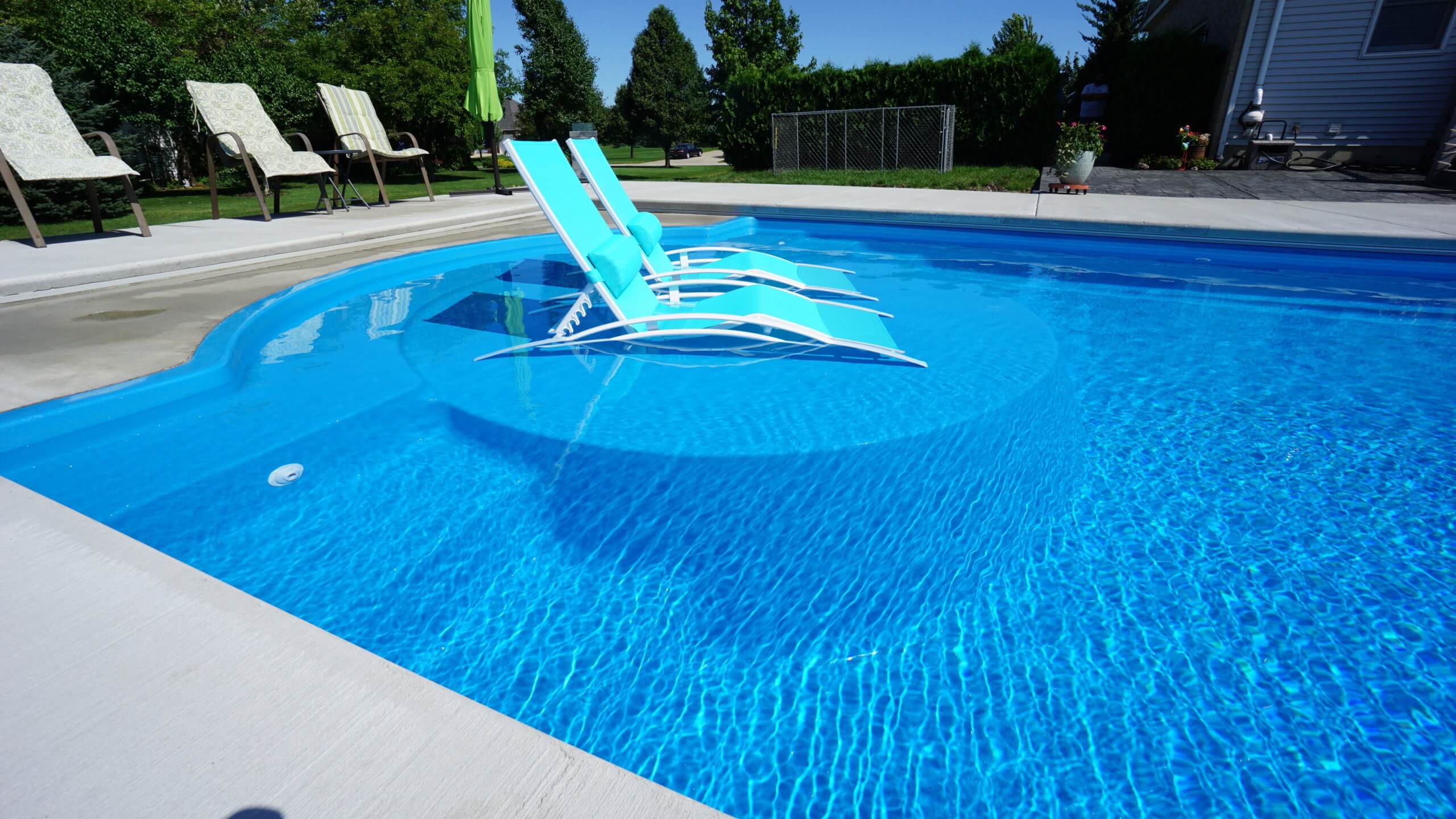
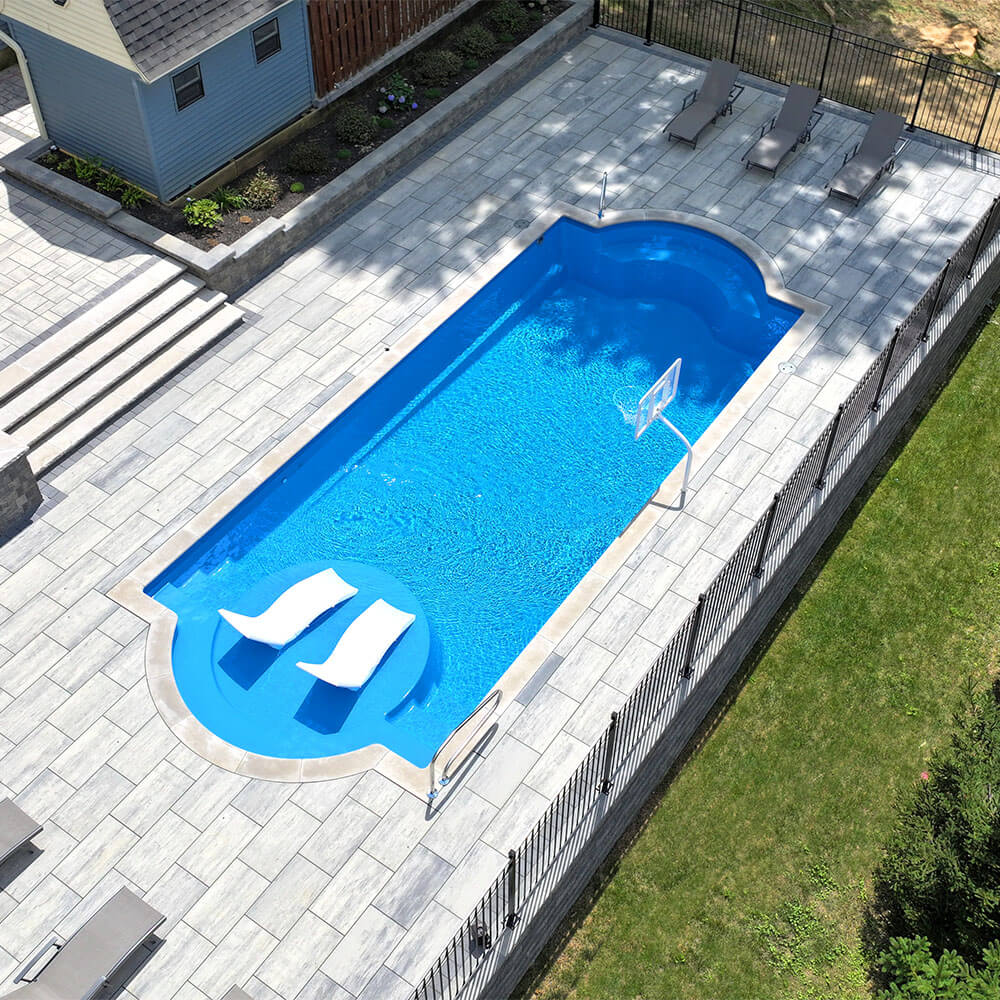
One of the most common trends in built-in features for fiberglass pools are tanning ledges. A tanning ledge is a shallow area in the pool that will allow you to place some additional furniture in the pool. It offers a nice place to sit and cool off when you’re not ready to go for a swim or play in the water.
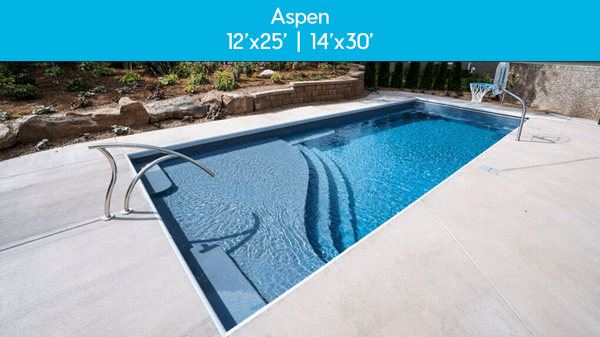
Models like our popular Aspen, pictured to the right, offer a great opportunity to place a couple of ledge loungers in the pool area. Look at that wide-open ledge in the image. It’s perfect for two loungers.
You’ll also see a couple of other great built-in features in the same picture, a bench for lounging or sunbathing in the pool, a courtesy ledge that provides a resting area for swimmers, and two sun shelves located at the deep end of the pool.
When you check out our pool designs, you’ll see many other features, including the beach entry fiberglass pool (Patent US 10,472,839).
Here’s another great video from Annie about built-in features.
Questions 9 & 10: What types of pools are best for dogs and kids?
Seriously, there are certain types of pools that are better for dogs and kids. Wouldn’t it be nice if our dogs could speak for themselves? I’m not sure I’d always want to hear what they have to say, which is why you have to watch this video and see what a couple of dogs had to say about their owner’s antics in the pool.
Okay, I hope you at least got a good laugh from watching that video, but it didn’t really answer the question. So, here’s Annie to give you some advice on the best pools for dogs and kids.
A big thanks to Annie Brock from Thursday Pools for helping me answer your questions.
Now, only one question remains … Are you still searching for “a pool dealer near me?”
If you are, then simply click the button below, and we’ll get you in touch with one of our independent Thursday Pools dealers.
Until next time,
The General
Who is The General?
The man, the myth, the legend….we just call him The General. His organized, systematic approach to pool installations over the years had his crew members calling him “The General,” and it stuck. The General has over 30 years’ experience in the pool and spa industry, working for one of Pool and Spa News, “Top 50 Pool Builders.”
Through that time, he designed, sold, project-managed, and installed over a thousand inground swimming pools. As a pool owner himself, he’s the perfect authority to give you the inside scoop, with amazing tips and tricks to make pool ownership a breeze!
You are by this NOTICE advised that pools manufactured by Thursday Pools are sold by independent dealers and dealerships. Each dealer is an independent business entity, that is completely separate from the manufacturer, Thursday Pools. Each dealer is an independent contractor, and no dealer is an owner, agent (in fact or law), or employee of Thursday Pools, the manufacturer. Thursday Pools, the manufacturer, hereby disclaims any liability for an intentional or negligent act by any dealer, dealership, or installer, or any damage to any Thursday Pools pool caused by an act of any dealer, dealership, or installer.
Pool Specifications
Inground Fiberglass Pool Owners Go Big With Lil Bob LX
Lil Bob LX is what homeowners get when they want to go big and stay at home.
Inground fiberglass pools are more popular than ever. They require less maintenance than other inground pool types, so you can fit more fun time into your day–and Lil Bob LX gives you the versatility to swim laps, soak in the sun, and enjoy a cool down with the beverage of your choice on one of the handy dual benches.
Lil Bob LX is one of our most legendary pool designs.

It all started with its little brother, Lil Bob, and a big radio personality who is a legend in his own right. He was looking for a way to entertain a few of his friends while giving them ample room to sit in the pool and converse.
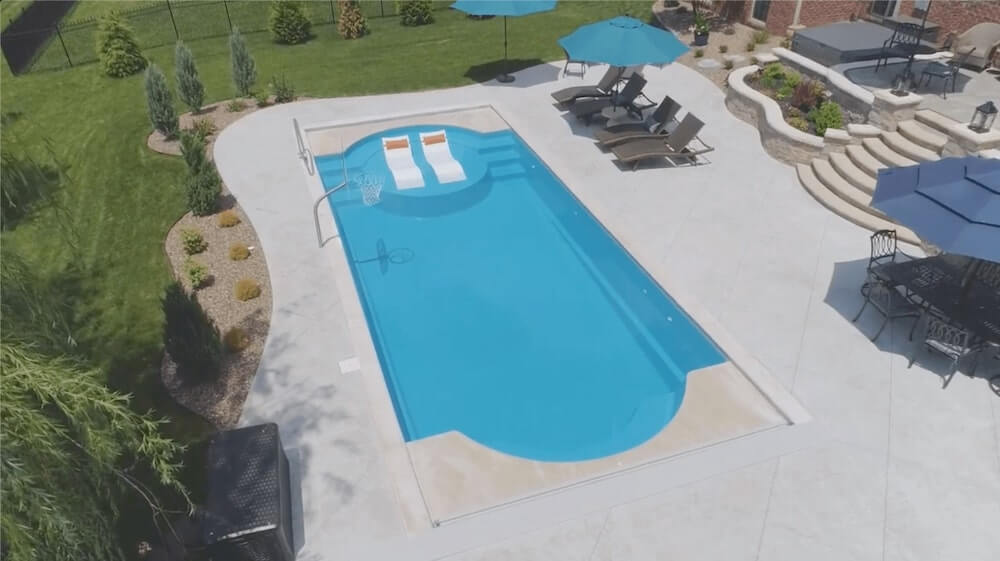
Lil Bob LX delivers that and much more, with the addition of a tanning ledge that fits a larger group of friends than Lil Bob. Plus, the kids will have plenty of room for a game of hoops, giving a whole new meaning to dunking it poolside. With Lil Bob LX, you’ll make some great memories with a small or large group of friends who enjoy each other’s time.
Check out some of the features you’ll enjoy most with Lil Bob LX.
As you can see in the diagram, Lil Bob LX gives you ample area for both activities and relaxing.

13.5’ x 35.5’ x 4’ 6”
Now let’s review the features that make this one of our favorite fiberglass pool designs for large backyards.
-
- Tanning ledge. One of the most popular features of inground pools, Lil Bob LX’s tanning ledge gives you plenty of room to perch two Ledge Lounger® chaises. Even with two loungers on the ledge, swimmers have plenty of room to enter and exit the pool. The ledge is 12 inches deep, so if a 5’ 6” person is sitting on the tanning ledge, the water will come up mid-shin and just below the waist.

- Wading area. Staying cool in the hot summer sun and having ample room for friends or family to join you is the marquee feature of Lil Bob LX. Just past the tanning ledge is a wading area where parents can watch younger kids play who might not be quite ready for the deeper area of the pool.
- Wrap-around benches. Lil Bob LX’s elongated wrap-around benches provide plenty of room for your family and friends to gather and enjoy the water. The water will hit a 5’ 6” person just above the waist.

- Open swim or play area. The kids have plenty of room to float around, enjoy a game of water volleyball, basketball, or even swim laps down the center of the pool.
- Auto-cover ready. Automatic pool safety covers are a fabulous choice for fiberglass inground pool owners. They ensure that no one can enter the pool without your knowledge, reduce pool maintenance, and lower your maintenance costs.
- Walk-in steps and non-skid surface. All Thursday Pools fiberglass pool designs feature our exclusive gel coat finish. It’s non-skid, so you can be assured that swimmers of all ages can safely get in and out of the pool. It’s also impervious to algae, which means easier maintenance and fewer chemicals. Plus, it’s easy on swimmers’ bare feet, pet’s paws, and swimsuits!
- Tanning ledge. One of the most popular features of inground pools, Lil Bob LX’s tanning ledge gives you plenty of room to perch two Ledge Lounger® chaises. Even with two loungers on the ledge, swimmers have plenty of room to enter and exit the pool. The ledge is 12 inches deep, so if a 5’ 6” person is sitting on the tanning ledge, the water will come up mid-shin and just below the waist.
Ready to get an estimate or contact an independent dealer?
Take a 360 tour of the Lil Bob LX pool design.
See where the water comes up to you from different areas of the pool.
Do you wonder where the water might hit you (or your family members) based on your height? Our wet tour will give you a sense of what it feels like as you enjoy every aspect of this artfully crafted pool.
How much does the Lil Bob LX fiberglass inground pool cost?
Fiberglass inground pool prices will vary based on a variety of factors, including where you live and how accessible your yard is. You’ll need to contact a Thursday Pools independent dealer for an actual estimate. To get a more in-depth view of inground pool project costs, try our handy Pool Cost Calculator.
Thursday Pools fiberglass pools are available throughout the U.S., in Alabama, Arkansas, Colorado, Connecticut, Delaware, Georgia, Illinois, Indiana, Iowa, Kansas, Kentucky, Louisiana, Maryland, Massachusetts, Michigan, Minnesota, Mississippi, Missouri, Nebraska, New Hampshire, New Jersey, New York, North Carolina, Ohio, Oklahoma, Pennsylvania, South Carolina, Tennessee, Texas, Utah, Virginia, Washington, West Virginia, Wisconsin and Ontario Canada.
Thursday Pools designs and manufactures fiberglass pool shells that are handcrafted with high standards and craftsmanship. Our one-piece, inground fiberglass swimming pool manufacturing facility is based out of Fortville, Indiana. At Thursday Pools, we aspire to be the world’s most respected fiberglass pool manufacturer. Our innovations, commitment to quality and beautiful designs set us apart. Thursday Pools is known for its innovations within the fiberglass pool industry, such as the beach entry (or zero entry) (Patent US 10,472,839). Get inspired about a backyard swimming pool oasis of your own and get a free estimate on the fiberglass pool of your dreams today. Making that dream a reality is easier than you might think. Thursday Pools: your weekend starts early with us!
Five Tips to Create an Amazing Fiberglass Swimming Pool Oasis
Inground fiberglass pools are a great way to relax with your family and friends. Whether you’re looking for an easy way to refresh your existing backyard pool oasis or build a new one, you’ll find plenty of ideas here to ignite your imagination.
If you’re already a proud fiberglass pool owner, you’ll want to skip the first tip. For those of you who are still considering which fiberglass pool design might be best for your backyard, start at the beginning.
TIP ONE: Select a fiberglass pool design that best suits the experience you want to create.
If you’re after a beach-style staycation, you should check out Sandal, a beach entry fiberglass pool design (Patent US 10,472,839). Or maybe you’re a free spirit who loves the style of a freeform like the Wellspring or something with modern elegance like the popular Aspen design. No matter the case, you can find almost any one of our fiberglass pools to fit your lifestyle here.
TIP TWO: Refresh an existing backyard pool oasis with boho chic.
Boho chic is a mix of bohemian and hippie styles popularized by celebrities such as Sienna Miller and Kate Moss. Today, boho chic is popular both in clothing and decor. To capture this laid-back, artsy feeling, choose bright patterns and flowy, comfy fabrics, and don’t worry so much about “matching.” Check out some inspiration on Pinterest.
TIP THREE: Create a warm, chic conversation area next to your pool.
The best way to extend your swim season is to add features that warm up your pool area so you can still enjoy your fiberglass swimming pool on cooler days and chilly nights. There are loads of ways to stay toasty around the pool, like adding a firepit or a couple of elegant-looking freestanding heaters to create a warm glow. You can even add a spa to your fiberglass inground pool for the ultimate in luxury and relaxation.
TIP FOUR: Enjoy the sun and throw some shade.
As you’re planning the area surrounding your inground fiberglass pool, consider the sunny and shady spots in your backyard. Think about what time of day your house shades your yard and whether or not you have mature trees that might impede your ability to enjoy your tanning ledge. If you want more shade, you can always add a pergola, awning, umbrellas, or other landscaping.

Pictured above: the Cathedral LX with a tanning ledge for sun and umbrellas and landscaping for shade
TIP FIVE: Include ample patio space.
Consider the number of people you envision sharing your backyard swimming pool oasis, and make sure you’ve included ample space for everyone.
If you’re planning to throw pool parties, you might want to increase the square footage of your patio. Most chaise lounges are six feet long, so you’ll need at least nine feet of patio space to allow swimmers to walk around them. You should also allow eight to ten square feet for a standard size dining table and chairs.

There are many cool pool patio options, so you can finish your pool patio in a style that complements the rest of your space and furnishings.
If you create a living space that’s just as comfortable and well-designed as your indoor living area, you might find yourself spending more time out by the pool than inside the house. You may even get the whole family to unplug, get some exercise, and spend some quality family time together.
BONUS TIP: Set the mood with water features and specialty lighting.
There are some great options for customizing your inground pool area using water features like bubblers and waterfalls. The sound of trickling or falling water creates a calming effect, and the bubbling water is fun for kids to splash and play in. Whether you want drama or tranquility, you can alter the mood using in-pool LED lighting. So, ask your pool builder for some suggestions of water features and specialty lighting that will make your backyard oasis truly unique.
Get a free estimate on a new fiberglass pool today. With Thursday Pools, your weekend starts early!