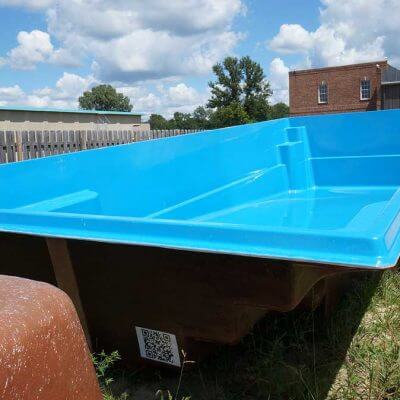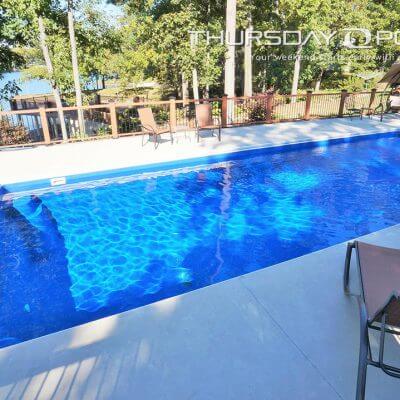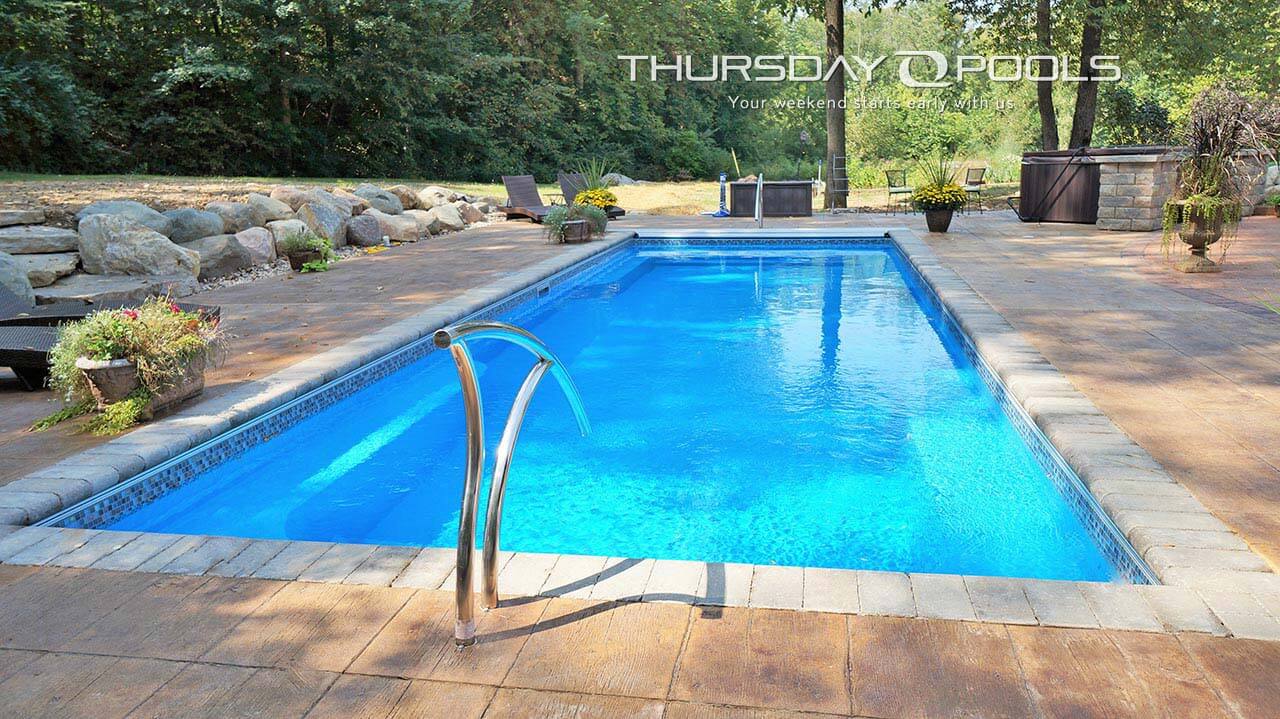
The Top 9 Reasons Pool Builders Recommend Fiberglass Pools

fiberglass poolsThinking of getting an inground pool? If so, you’ll have three types of pool to choose from: vinyl, fiberglass and gunite. You’ll probably want to do some research to determine which type of pool most suits you. If you have friends that have previously bought pools, you can ask them what they love about their pools and what they wish they had known before buying a pool.
As with any big investment, it’s good to ask the salespeople what they would choose for themselves. In recent years, pool builders are increasingly recommending fiberglass pools over vinyl and gunite.

Let’s take a look at the top ten reasons why.

  1. Low upfront investment. Of the three types of pools, vinyl typically has the lowest upfront investment, but fiberglass is not far behind. Unless you live in the Sunbelt, gunite will typically have the highest upfront investment.
  2. Quick turn-around times. Fiberglass pool shells typically have a turn-around time of less than a month, so your pool builder can get it quickly, complete your pool project on schedule and get you in the swim!
  3. Less dependent on fair weather. Like all outdoor work, pool installation schedules are affected by the weather. However, vinyl and gunite schedules are affected to a greater degree. Vinyl liners can wrinkle during installation if the outside temperature is too hot or too cold. Temperature swings and rain can wreak havoc on concrete pouring schedules as well. In contrast, fiberglass pools are manufactured in a climate-controlled environment and shipped in one piece so they allow for installation in varying weather conditions.
  4. Innovations. The fiberglass pool industry is seeing rapid innovation, which has resulted in cool new options for pool buyers, such as beach entry fiberglass pools (Patent US 10,358,837 and 10,472,839). Our pool designs create amazing outdoor entertaining options. Additionally, the beach entry designs are great for both younger and older swimmers who typically need to ease into the water.
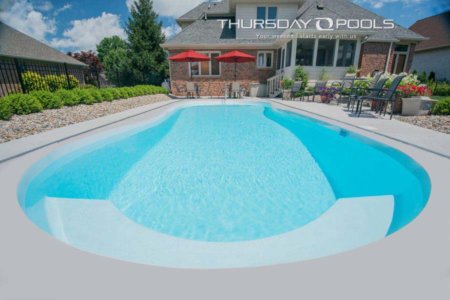
  5. Variety of designs. Unlike vinyl, fiberglass pools come with an awesome array of built-in features, like tanning ledges, swim-outs, wide, non-skid steps, courtesy ledges and beverage benches. These features are also available in gunite, but they’ll be part of a custom design.
  6. A sturdy finish. Fiberglass pools are made of multiple layers of hand-laid fiberglass and finished with a fantastic gel coat finish that’s non-skid and durable for years to come. It’s beautiful, and comes in a marvelous array of colors to complement the rest of your outdoor living space.
  7. Human and pet friendly. The non-skid surface of a Thursday Pools fiberglass pool is the perfect combination of non-skid for safety and smooth (for paws, swimmers’ feet and swimsuit bottoms). If having your four-legged family members in the pool with you is important, fiberglass is the only way to go. Vinyl liners can be easily torn by dog’s paws, and the rough surface of a gunite pool can cause a lot of irritation to the pads on their feet.
  8. Lower regular pool maintenance cost. Because of their impervious surface, fiberglass pools require fewer chemicals to maintain water balance than vinyl or gunite. Choose a fiberglass pool that’s automatic pool cover-ready, and get more savings. On top of the obvious safety benefits, automatic pool covers help keep the pool cleaner and further reduce chemical loss.
  9. Dramatically less long-term maintenance. Vinyl liners will likely need to be replaced every seven years or so. Gunite pools will have to be replastered approximately every fifteen years. Fiberglass pools will always maintain their finish if they are properly maintained (i.e. balanced water chemistry).

Sounds pretty great, right? Let’s sweeten the pot with some expert advice from a couple of pool builders who recommend not just fiberglass pools, but Thursday Pools fiberglass pools.

Doug Thoele, owner of W.E.T. Pools and Spas in Effingham, Illinois had this to say:

“This has traditionally been ‘vinyl liner’ country out here. Over the last few years, I’ve spent a lot of time educating my customers about the benefits of fiberglass over vinylit’s more durable, lower maintenance and will add to the resale value of their house. And as far as fiberglass pool manufacturers go, Thursday Pools is a top-notch company. They do things right, and their pools are easy to install. And their customer service is fantastic.”

And Matt Miller, of Raft to Rafters in Columbus, Indiana, said this:

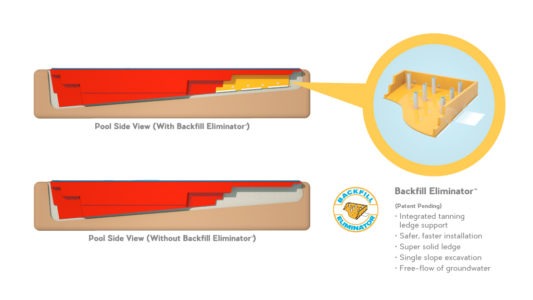
“You can’t beat fiberglass pools for durability and ease of maintenance. As far as installation goes, I’m a big fan of Thursday Pools’ Backfill Eliminator®. Anyone who gets a fiberglass pool with a built-in tanning ledge will benefit from this innovation. It makes the ledge feel super solid, and they’ll save money on their pool project, because it makes our job easier. I also really like the fact that Thursday Pools is ISO 9001 certified. Because we’re near Cummins and Toyota, my customers know what that level of quality assurance means, and it makes them feel good about buying a truly quality product.”

Choose fiberglass pools

So, when you’re ready to take the plunge with a new inground pool, choose a fiberglass pool. You’ll have a place to create a lifetime of memories— not to mention a backyard oasis that will provide you with a place to relax, socialize, exercise, and enjoy quality time with the people you love for years to come.

Get a FREE estimate on a new, inground fiberglass pool today.
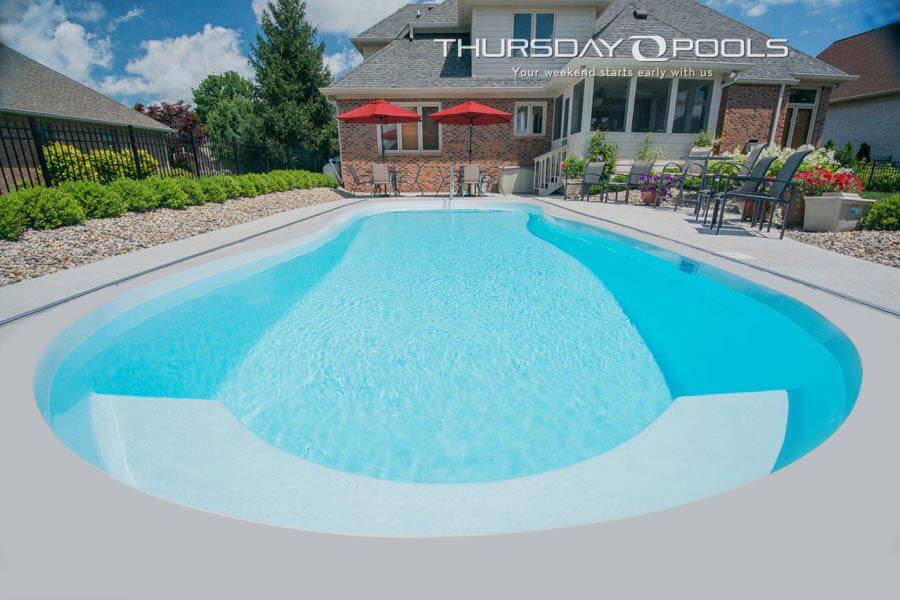
Fiberglass Pools are the Best Choice for Furry Family Members!

If you’re thinking of getting a new inground pool and are wondering which type of pool is the best choice for pets who like the water, read on…

Inground pools are fun for the whole family. If your family includes four-legged kids, don’t forget to consider them when you’re choosing the best swimming pool for your new backyard oasis. When you’re selecting an inground pool, you’ll be choosing between three types of pools: vinyl liner, gunite (concrete) or fiberglass. Each type of pool has its own set of benefits. However, if having a pool that’s dog (or other pet) friendly is important to you, there are some things you need to know. Let’s take a look at the upfront investment, durability factors and ease of entrance and exit on each pool type and see which one gets the furry friend seal of approval!

Vinyl Liner Pools

  • Upfront investment. Folks who are looking for the lowest upfront investment for their pool project will often choose a vinyl liner pool. (However, while low upfront costs are attractive, it’s also important to factor in the cost of vinyl liner repairs and maintenance over time.)
  • Durability factor. If allowing your pets to get in the swim is important to you, you’ll soon find that even small pets can accidentally tear the vinyl liner if their toe nails come into contact with the vinyl. This can lead to the need for repeated repairs and unsightly patching.
  • Ease of entrance and exit. Vinyl liner pools typically have either ladders, composite or fiberglass walk-out steps. Ladders provide no 2nd point of entry or exit for our four-legged friends.

Furry Friend Rating: One.

Low upfront cost of vinyl liner pools can be misleading because repeated repairs to, and replacement of, the vinyl, adds up. For both durability and ease of entrance and exit, vinyl liner pools are not recommended for pet owners. We gave it a one instead of a zero because you could very closely supervise and help your pet in and out of the water.

Gunite (Concrete) Pools

  • Upfront investment. Unless you happen to live in the Sunbelt or other warm, coastal areas, gunite pools typically have a higher upfront investment than vinyl or fiberglass. Pool buyers often choose them for the ability to fully customize a pool project.
  • Durability factor. Gunite pools are more durable than vinyl pools, as there is no liner to repair or replace. However, pool owners should consider the fact that the durable surface of a gunite pool can be very rough on pets’ paws and nails. Gunite pools will also typically require resurfacing over time.
  • Ease of entrance and exit. Because gunite pools are custom, you would be able to have a wide-open step area or beach entry installed that would make it easy for pets to get in and out of the pool. However, you’ll need to keep a watchful eye on pets to ensure they’re not hurting their paws on the gunite surface.

Furry Friend Rating: Six.

Gunite pools do offer better durability as well as ease of entrance and exit (than vinyl liner pools). However, their rough surface can be hard on pets’ paws and nails, especially if they get in and out of the pool numerous times.

Fiberglass Pools

  • pet friendly poolsUpfront investment. In terms of upfront investment, fiberglass pools typically land in the middle of pool cost. Their upfront costs are higher than vinyl liner pools but often quite a bit lower than custom gunite installations. (However, when comparing fiberglass to vinyl, the slightly higher upfront cost is easy to justify due to the dramatically lower maintenance and repair costs over time.)
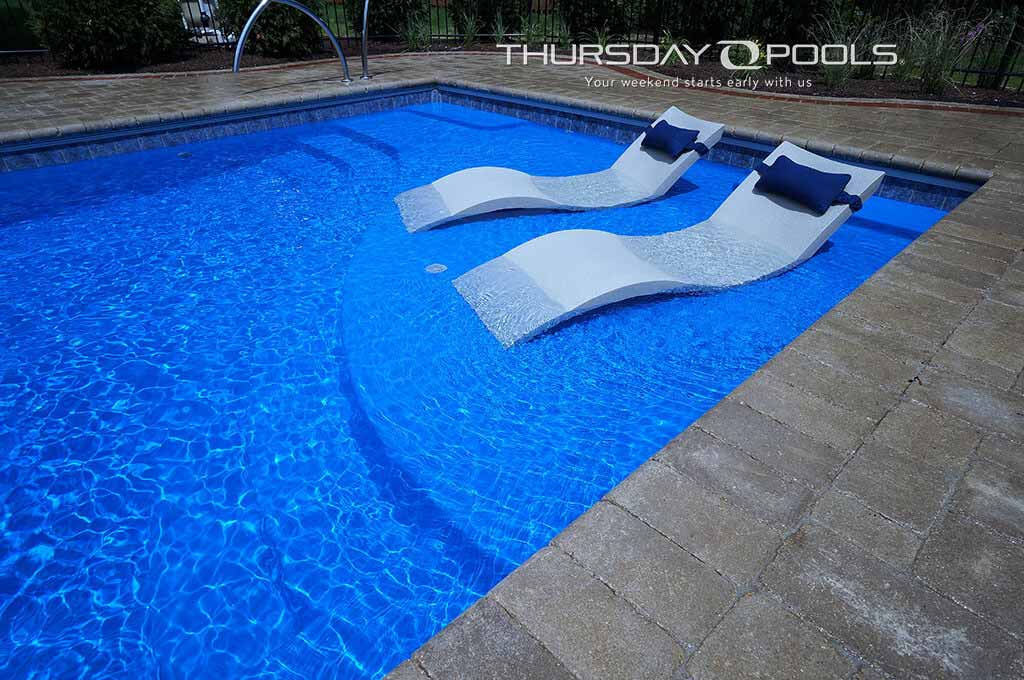
  • Durability factor. Fiberglass pool owners love their pools because the low-maintenance gel coat finish is easy not just on paws, but on swimsuits and tender human feet as well. With a fiberglass pool, you’ll never have to worry about torn liners or injured paws.
  • Ease of entrance and exit. Fiberglass pools are a dream for pets (and humans) in terms of easy entrance and exit. Many designs have wide wrap-around steps and built-in benches. You’ll also find designs with deep-end swim-outs that both pets and owners alike can use to get in and out of the pool in the shallow or deep-end. Fiberglass pools with built-in tanning ledges make a great spot for pets and kiddos to enjoy the water while still having a place to rest their paws (and tiny feet.) Additionally, fiberglass pools are now also available in beach entry designs for the ultimate way to ease into the pool (Patent US 10,358,837 and 10,472,839).

Furry Friend Rating: Ten!

Fiberglass pools are by far the best option for pet owners. With a moderate upfront investment (and years of worry-free, low-maintenance pool ownership ahead,) those who choose fiberglass will have a great spot for swimmers of all types to safely and comfortably enjoy the pool.

So, if you’re thinking of taking the plunge with a new inground pool and would like to bring your furry friends in with you, take a look at the many beautiful fiberglass pool designs Thursday Pools has to offer, and get a FREE estimate today.

Properly Backfilling and Installing Your Fiberglass Pool’s Tanning Ledge

Inground fiberglass swimming pools featuring built-in tanning ledges are, in a word, heaven. They allow swimmers to lounge in just enough water to keep cool while still soaking up the sun’s rays. Whether you’re in tanning ledge chairs or sitting on the ledge itself, they truly offer the best of both worlds. Built-in tanning ledges are also great for young children and family pets. Whether they’re confident swimmers or not, all can enjoy the water and relax on the wading area’s shallow ledge. Add a bubbler or other fun water feature to make a little splash, and you have the perfect backyard pool oasis. However, for all the enjoyment built-in tanning ledges can bring to fiberglass pool owners, proper installation is essential for long-lasting enjoyment.

Properly backfilling under and around a fiberglass pool shell’s tanning ledge can be difficult. The tight spaces and voids the ledge creates at transition areas are hard to reach, and the varying grades needed for excavation add time, money, and potential headaches to the pool-building process. If the pool builder doesn’t backfill and install it correctly, a tanning ledge can develop a hollow or fragile feeling under your feet. Over time, the backfill material can shift and settle under the tanning ledge, leaving voids between the pool shell and the ground below.

How can you be sure the ledge in your tanning ledge pool will feel sturdy and as durable as the rest of the fiberglass shell? Ensure the installer is experienced with similar pool designs and understands proper tanning ledge installation. Various pool builders may have differing opinions about the best way to backfill underneath a tanning ledge, but some of the most reliable strategies include:

  • Enlist multiple resources. Getting the backfill material into every nook and cranny under a built-in tanning ledge is difficult, so pool builders must get creative. Your dealer might use various tools to force backfill material into tight spaces or have the crew’s smallest member squeeze into the small spaces to move material by hand.
  • Use a suitable backfill material. A clean chip stone that is three-eighths to three-quarters inch in size will make it easier for pool builders to move around and get into the tight spaces under the tanning ledge. 
  • Use a flowable fill. Flowable fill is a self-compacting, low-strength material with a flowable consistency. If the pool builder has experience with flowable fill, it can be a good option for reaching those hard-to-reach areas under the tanning ledge. However, flowable fill is non-permeable, and dealers must account for groundwater and ensure proper drainage.
  • Excavate the ledge separately. When excavating the hole for your pool, installers should treat the tanning ledge as a separate pool bottom area with its own measurements. It’s also vital to consider freeze depths in your area. The backfill material should be at least as deep as your frost line.
  • Install Piers. Another option for supporting built-in tanning ledges is for the pool builder to install “piers” along the outside edges of the ledge. The process involves excavating to a point where the builder can stack level blocks forming a pier. They then level the blocks front to back and side to side before lowering the pool onto the pier. Piers should only add complementary support and leveling. Installers must still pack the entire underside of the ledge with backfill material.

If some of these strategies sound a little less sophisticated, it’s because they are. For years, they were the only sound options available to pool builders to support the tanning ledges. Not anymore.

Meet The Thursday Pools Backfill Eliminator® 

The Backfill Eliminator® (US Patent 10,450, 766) is an exclusive Thursday Pools innovation that makes installing a tanning ledge easier, faster, and cost-effective with a stronger and more durable ledge over time. Pool builders used to consistently struggle with the aforementioned strategies for installing built-in tanning ledges, but purchasing a Backfill Eliminator®  eliminates the need for older and near-obsolete strategies.


tanning ledge backfill eliminator

Thursday Pools engineers designed the Backfill Eliminator® to integrate into the bottom of your pool, allowing for a sturdy and level installation. It provides structural support to the tanning ledge and one continuous slope for excavation, making it as easy to install as any other fiberglass pool design.

The Backfill Eliminator® also allows groundwater to flow freely under your pool, eliminating the possibility of stagnant water accumulating underneath or excess groundwater lifting the pool. The device even includes a convenient access point to help builders reach essential plumbing components. The Backfill Eliminator® can work in tandem with Thursday Pools’ Geo-Anchoring Pool System, which helps homeowners secure their investment by providing extra strength to the pool structure. 

Built-in features like a welcoming and relaxing tanning ledge are great for many types of people and pool activities, especially activities of the relaxing-in-a-lounger variety. Many fiberglass pool manufacturers provide pool specification sheets for their designs. If you ever need to know your current (or future) pool’s tanning ledge depth or size to figure out what other pool accessories will work in the unique space, contact a local dealer or the shell manufacturer directly. Are you ready to get in touch with a local independent dealer about your favorite Thursday Pools design with a tanning ledge? Reach out today to schedule a design consultation with a dealer in your area to learn more!


This is the Year You DO It!

get a fiberglass pool
The new year is here. We’ve all got plans for how we’re going to make 2018 our best year yet. Does your plan for the new year include a big new purchase, like an outdoor playground or fiberglass swimming pool?

You can make 2018 the year that you actually DO these things instead of just dreaming about them. The difference lies in your approach.

One way to achieve your goals is to write them down, and break them into manageable chunks. Post them where you can look at them daily, and get your whole family on board.

If you’re thinking of getting a fiberglass pool this year, post a picture of the pool you’ve chosen on your refrigerator and refer back to it every time you’re thinking of making an unessential purchase. Keep your eyes on the prize! If you’re not sure which pool might be the best fit for your family, check out this handy pool selector tool.

Productivity gurus also like to talk about the SMART principle. SMART stands for Specific, Measurable, Assignable, Realistic and Time-bound. It’s a tried and true way to define your goals and finally achieve them.

If, for example, your goal is to save the money for a down payment on a new fiberglass pool, and you decide to set aside $100 per week, your budget might look like this:

Eating at home one night per week instead of going out= a savings of $75.00 per week

Giving up that daily latte: $5.00x 5= a savings of $25.00 per week

Using these criteria to quantify and delineate your action plan to work toward your goal can make all the difference in whether you’re swimming in your beautiful, new fiberglass pool in your outdoor paradise by the time the summer heat kicks in or sitting on the patio with a popsicle in front of a fan.

This is the year you DO it!

Wondering how much a new fiberglass pool might cost? Check out this article.

How Fiberglass Pool Delivery Works: Your Pool’s Journey from Factory to Backyard

A fiberglass pool shell arrives at your home in one piece, up to 41 feet long and 16 feet wide, riding on a specialized wide-load trailer. Getting it from the factory to your backyard requires permits, site preparation, access planning, and in some cases, a crane. Here is exactly what that process looks like, from the day your dealer places the order to the day the water goes in.

What Happens Before Your Fiberglass Pool Shell Is Delivered?

Delivery doesn’t start with the truck. It begins with a site visit. Before Thursday Pools ships the shell, your authorized independent dealer visits your property to assess site conditions, confirm access routes for the wide-load trailer and installation equipment, mark utility lines, and verify that excavation can proceed safely.

Fiberglass pool installations also require local building permits in most jurisdictions, and the approval timeline varies by municipality. Your dealer should know the local processes and manage the application on your behalf. Work cannot legally begin until permits have approval, so proactive submission is essential for maintaining desired project timelines.

Once permits are in hand and the site is ready, the dealer coordinates the excavation schedule and the shell shipment. 

How Does a Fiberglass Pool Shell Get Transported to Your Home?

Thursday Pools manufactures fiberglass pool shells at our facility in Fortville, Indiana. Each completed shell loads onto a flatbed trailer permitted for wide loads and travels to the customer’s property, sometimes hundreds of miles away. Wide-load transport follows state and local routing rules that restrict which roads a vehicle of that size can use. 

What Happens When the Route Gets Complicated?

Most deliveries make it to their destination without incident. Some require an innovative approach to get there. One delivery to a home on Geist Reservoir near Indianapolis required something entirely unique. The homeowner’s street couldn’t accommodate a wide-load truck, so their local Thursday Pools dealer coordinated with Geist Marina personnel to lower the buoyant pool shell into the water and tow it across the reservoir to the customer’s backyard.


That story isn’t an outlier as much as it is an illustration of what delivery logistics actually require. Tight alleys, narrow gates, dense suburban streets, overhead utility lines, and sloped driveways all present real access challenges. Your dealer will assess these conditions during pre-delivery site visits and plan accordingly, whether that means alternative rigging, crane placement, or phasing access differently.

What Happens When the Shell Arrives? How Is the Pool Set?

Once the shell arrives, the installation crew uses a crane or specialized equipment to lift it from the trailer and place it in the excavated hole.

With the shell on its gravel base, the crew begins the simultaneous backfill and fill process. Backfilling material goes in around the outside of the shell at the same rate water goes inside, with the equalizing pressure preventing the fiberglass walls from bowing or deforming under soil load. The shell-setting phase typically takes one to two days for a standard residential installation, depending on site conditions and pool size.

What Does Fiberglass Pool Installation Include After the Shell Is Set?

Pool delivery and placing the shell in the ground are parts of a longer process. After the shell is set and backfilled, installers connect plumbing and electrical systems, complete a local inspection, install coping and decking, and balance the water chemistry before the pool is ready to use.

A complete fiberglass pool installation project typically takes two to four weeks, depending on site conditions, permit inspection scheduling, and the scope of surrounding decking and landscaping. For a detailed walkthrough of every phase, see our complete Fiberglass Pool Installation Guide.

What Affects the Pool Delivery and Installation Timeline?

Several factors influence how long the full process takes from order to water:

Permit Approval Speed: Some municipalities approve pool permits in a week. Others take four to six weeks or longer, particularly in jurisdictions with backlogged building departments or additional HOA review requirements.

Site Conditions: Rocky soil, high water tables, limited access, or significant grade changes all extend the excavation and installation timeline. 

Weather: Heavy sustained rainfall can delay excavation, backfill, and concrete work. Most installers can work through light rain, but saturated ground requires a pause until conditions stabilize.

Decking and Landscaping Scope: The pool itself installs quickly. A large custom patio, retaining walls, or extensive landscaping can extend the overall project timeline independent of how smoothly the shell installation goes.

Talk to a Local Thursday Pools Dealer

Pool delivery and installation details vary by site and geographic location. A yard that looks straightforward may have a buried utility, HOA setback restrictions, or access restrictions that change the logistics.

The best way to understand exactly what delivery looks like for your specific property is to talk with an authorized Thursday Pools independent dealer in your area. They will assess your yard, walk you through the delivery and installation sequence, review design options, and give you an accurate project estimate based on your site.

Frequently Asked Questions About Fiberglass Pool Delivery

How is a fiberglass pool delivered to my home?

Your fiberglass pool shell travels from Thursday Pools’ manufacturing facility on a specialized flatbed trailer permitted for wide loads. The trailer delivers the shell to your property, where a crane or rigging equipment lifts it off the truck and into the excavated hole. Your local independent Thursday Pools dealer coordinates the route, timing, and access logistics for each delivery.

How big is a fiberglass pool shell for transport?

Thursday Pools fiberglass pool shells are up to 16 feet wide, the practical limit set by wide-load transport regulations, and up to 41 feet long. The shell ships as a single one-piece unit, which is why transportation dimensions set the upper size limit for fiberglass pools. A pool that large requires a wide-load trailer permit and, in some states, requires the truck to follow specific state-approved routes.

What if my yard doesn’t have enough access for pool delivery?

Limited yard access is one of the most common delivery complications, but it rarely prevents the project from moving forward. Your dealer will assess access during the initial site visit. Solutions include using smaller specialized equipment, adjusting the trailer approach angle, or bringing in a crane with a longer reach to clear an obstacle. In unusual cases, installers map an alternative delivery method before the truck leaves the factory.

What permits are needed before a fiberglass pool can be delivered?

Most jurisdictions require a building permit before pool excavation or installation can begin, and separate electrical and plumbing permit may also apply. Your dealer will help with managing the permit application and knows the local requirements. Permit approval timelines vary significantly by location, from one week to six weeks or more in some municipalities. Scheduling by early spring helps avoid delays that push delivery deep into summer.

How long does fiberglass pool delivery and installation take in total?

The shell-setting phase typically takes one to two days, while the full installation from excavation through final water balancing usually runs two to four weeks. Site conditions, local inspection scheduling, and the scope of surrounding decking and landscaping all affect where the project lands within that range.

Does the homeowner need to be present during pool delivery?

While your presence is not legally or logistically required for the installation crew to proceed, most homeowners choose to be present for the delivery. Your dealer will advise you on this. The delivery and shell-setting process is one of the more visually dramatic stages of a pool project. That said, your dealer will fully manage the crew and the logistics.

What is a wide-load trailer, and why does fiberglass pool delivery need one?

A wide-load trailer is a specialized flatbed permitted to carry cargo exceeding standard highway width limits (typically 8.5 feet), which is necessary for one-piece fiberglass shells. Because fiberglass pool shells can reach 16 feet in width and 41 feet in length, standard trailers can’t carry them legally or safely. Wide-load transport requires special permits, sometimes requires escort vehicles, and follows routes that accommodate the oversize dimensions.

Press Release -Thursday Pools to Exhibit at the 2013 Indianapolis Home Show

Indianapolis Home Show Since 1922

Thursday Pools at the Indianapolis Home Show

Mark your calendar, Thursday Pools will be exhibiting at the 2013 Indianapolis Home Show!  The show runs from Friday January 25th through Sunday February 3rd at the Indiana State Fairgrounds http://www.indianapolishomeshow.com.  Stop by booth 379 and learn about the company, technical details about fiberglass pools and pricing.  You can order at the show and have your pool ready to install by spring.

-Ed Vondell

Thursday Pools Press Release – Best Diving Rectangular Pool 2013

Thursday Pools is honored to have our Monolith model named Best Diving Rectangular Pool for 2013 by Marcus Sheridan of River Pools and Spas. Connect to his blog to read more…


Thursday Pools strongly recommends that diving boards and slides not be installed or used with its pools, given the inherent dangers associated with diving boards and slides in residential pools. If despite this warning and recommendation, the owner decides to install or use a diving board or slide, Thursday Pools further warns that diving boards and slides require minimum depths and distances and must be installed and used in strict compliance with the equipment manufacturer’s specifications and ANS I/NSPI, ANS I/APSP, and ANS I/APSP/ ICC standards. The owner is responsible for making sure the pool is appropriate for diving boards and slides and otherwise meets all standards for diving pools.